
The Philosophical Essence of Satan and God

I’ve been asked on occasion if I believe in the existence of Satan. My response is layered and nuanced. Philosophically, metaphorically, and symbolically, I acknowledge the concept of Satan, but I don’t subscribe to the personified version of Satan or a devil that is meant to be taken literally. To me, such a belief is irrational. Instead, Satan symbolizes everything evil or negative within the human experience.

Now, one might ask if I believe in God. My answer, while seemingly at the opposite extreme, follows a similar logic. From a literal standpoint, I don’t believe in God as a distinct entity. Rather, I assert that everything in existence is God, including myself, you, everyone, and everything else. This understanding stems from my awakening, which I claim to be a profound truth (though my interpretation of this truth is limited). In essence, God is the absolute—everything in and out of existence.

Religions like Christianity often refer to God as the alpha and the omega, the beginning and the end. If everything is God, then does this include Satan? My answer is unequivocally yes. According to certain texts, God created Satan, formerly known as Lucifer, who was God’s perfect angel. Some might argue that God created Lucifer, but Lucifer isn’t God. To this, I pose a series of questions.

If God created Lucifer, what did God make Lucifer out of? You might say pure light. But what is light made of? Oscillating electric and magnetic fields. Are these fields the alpha and the omega? No. So, what are oscillating electric and magnetic fields made of? Electromagnetic waves. Are electromagnetic waves the alpha and the omega? Again, no. What are electromagnetic waves made from? We can trace this down to the concept of emergent space-time.

Is emergent space-time the alpha and the omega, the beginning and the end? If we consider God as the absolute, then it must be. If emergent space-time is equivalent to God, then at its essence, Lucifer is made out of God. Even if you adhere to the idea that God made Lucifer ex nihilo (out of nothing), and if God is absolute, then this must include nothing (preceding emergent space-time itself). Thus, God encompasses both everything and nothing.

In this holistic view, the existence of Satan and the nature of God merge into a singular, all-encompassing reality. This perspective encourages us to transcend literal interpretations and embrace a deeper, more integrated understanding of existence, where all dichotomies dissolve into the absolute.

Morgan O. Smith

Yinnergy Meditation, Spiritual Life Coaching & My Book, Bodhi in the Brain…Available Now!

https://linktr.ee/morganosmith

The Dissolution of the “I”

A Journey Beyond Self

In the quiet moments of our existence, we often find ourselves pondering the nature of identity and consciousness. What does it mean to truly know oneself? How can we navigate the complex interplay of ego and essence? These questions have occupied the minds of mystics and philosophers for millennia, yet they remain as relevant today as ever.

At the heart of these inquiries lies a profound realization: the dissolution of the “I.” This moment of enlightenment is not merely an intellectual understanding but a visceral, transformative experience. It is a point where the sense of self, the familiar “I” that anchors our daily lives, dissolves into something far greater and more expansive.

In this state, the boundaries that define our individuality blur and eventually vanish. The distinctions between self and other, inner and outer, become meaningless. This dissolution is not an annihilation but a return to the source—a reabsorption into the universal consciousness from which all things arise.

This experience is often described as a merging with pure awareness, where the perceiver and the perceived become one. It is a space where all dualities collapse, leaving only the pure presence of being. Here, there is no longer a separate observer; the “I” that once clung to its identity dissolves within itself, recognizing that it was never separate from the whole.

Such a realization can be both liberating and disorienting. The dissolution of the “I” challenges our deepest assumptions about who we are and what reality is. It invites us to embrace the paradox that while we appear as individuals, we are simultaneously the entirety of existence experiencing itself. This shift in perception allows for a deeper connection with the world, fostering a sense of unity and compassion that transcends the limited scope of personal concerns.

Yet, this journey is not without its challenges. The ego, with its myriad attachments and identifications, often resists this dissolution. It fears the loss of control, the end of its narrative. But in letting go, we do not lose ourselves; rather, we find our true essence—a boundless, infinite presence that is the very ground of being.

In this realization, life takes on a new dimension. Every moment becomes a manifestation of the infinite, every interaction a dance of the divine. The dissolution of the “I” is not an endpoint but a continuous unfolding, a deepening into the mystery of existence. It is an invitation to live from a place of profound openness and love, to see the world through the eyes of the infinite.

As we navigate this journey, let us remember that the dissolution of the “I” is not an escape from reality but a deeper engagement with it. It is a call to awaken to our true nature and to recognize the sacredness of all life. In this space, we find the freedom to be fully present, fully alive, and fully ourselves—beyond the limitations of the ego, in the infinite expanse of pure being.

Morgan O. Smith

Yinnergy Meditation, Spiritual Life Coaching & My Book, Bodhi in the Brain…Available Now!

https://linktr.ee/morganosmith

Emptiness and Form

Exploring the Essence of Ultimate Reality

In the vast expanse of spiritual philosophy, the concept of ultimate reality often emerges as a profound focal point of contemplation. At its core, ultimate reality is a paradox: an emptiness encompassing all that takes form. This paradox invites us to explore the intricate dance between the seen and the unseen, the manifest and the unmanifest, and the ever-present flow between these states of being.

Emptiness, in its essence, is not a void in the conventional sense. It is a fertile ground, a boundless potential from which all phenomena arise. This emptiness is not devoid of life; rather, it is the very source of existence, the womb of creation. It is in this emptiness that the seed of every form, every thought, and every experience is planted and nourished.

When we speak of “everything that takes form,” we refer to the myriad expressions of life—mountains and rivers, thoughts and emotions, stars and galaxies. These forms are the manifestations of the underlying emptiness, brought into being through the dance of energy and consciousness. They are transient, ever-changing, yet intimately connected to the unchanging, formless essence from which they emerge.

This understanding challenges us to look beyond the superficial appearances of the world. It encourages us to see the impermanent nature of forms, not as a cause for despair, but as an invitation to connect with the timeless reality that underlies all existence. This connection fosters a deep sense of peace and acceptance, as we recognize that everything, in its transient nature, is a part of a greater whole.

To truly grasp the nature of this ultimate reality, one must move beyond intellectual understanding and into direct experience. This requires a quieting of the mind, a stilling of the incessant chatter that often distracts us from the subtle truths of existence. In moments of deep meditation or profound insight, we may glimpse this ultimate reality—a state where the distinction between emptiness and form dissolves, and we perceive the unity that lies at the heart of all things.

In this state of awareness, we see that emptiness is not a lack, but a fullness—a fullness that contains all possibilities, all potentialities. It is a space of infinite creativity, where the play of consciousness unfolds without limit. This realization transforms our perception, allowing us to live with a sense of wonder and reverence for the mystery of existence.

As we navigate the challenges and joys of life, this understanding can be a guiding light. It reminds us that, at our core, we are not separate from the world around us, but deeply connected to it. In embracing the paradox of emptiness and form, we find a deeper meaning in our experiences and a greater compassion for all beings.

The journey to this understanding is a lifelong one, filled with moments of clarity and confusion, insight and doubt. Yet, each step on this path brings us closer to the heart of the mystery, where we may find a profound sense of peace and a recognition of the sacredness of all life.

Morgan O. Smith

Yinnergy Meditation, Spiritual Life Coaching & My Book, Bodhi in the Brain…Available Now!

https://linktr.ee/morganosmith

The Paradox of the False Self

The “I” is the false self, but this false self is also true. It just doesn’t know it yet. This realization reveals that our perceived separateness is an illusion, guiding us toward the truth of our inherent unity.

Understanding the False Self
The false self, often identified as the ego, is the aspect of our identity constructed from our experiences, beliefs, and societal conditioning. It is the mask we wear, the persona we present to the world. While it serves a functional role in navigating daily life, it is not our ultimate truth.

The Hidden Truth
Within this false self lies a hidden truth. The ego, though seemingly separate, is an expression of the same source that underlies all existence. The journey of self-realization involves peeling away the layers of this constructed identity to uncover the true self—the essence that connects us all.

The Illusion of Separateness
Our perception of being distinct individuals creates the illusion of separateness. This belief in separateness fosters division, conflict, and a sense of isolation. However, when we begin to see through the false self, we recognize that these divisions are illusory. Beneath the surface, we are all interconnected.

Toward Inherent Unity
Realizing the paradox that the false self is also true propels us toward the recognition of our inherent unity. This understanding dissolves the boundaries that the ego creates, allowing us to experience a deeper connection with ourselves and others. We move from a mindset of “me versus you” to one of “us” and “we.”

Living with Awareness
Living with this awareness transforms our approach to life. We become more compassionate, understanding, and empathetic, seeing others as reflections of ourselves. This shift in perception fosters a sense of peace and harmony, as we align with the deeper truth of our shared existence.

The journey of recognizing the false self as also true is a profound step toward spiritual awakening. It illuminates the path to our inherent unity, guiding us to live with greater authenticity and connection. By embracing this paradox, we uncover the deeper reality that binds us all.

Morgan O. Smith

Yinnergy Meditation, Spiritual Life Coaching & My Book, Bodhi in the Brain…Available Now!
https://linktr.ee/morganosmith

The Shared Heart of Existence

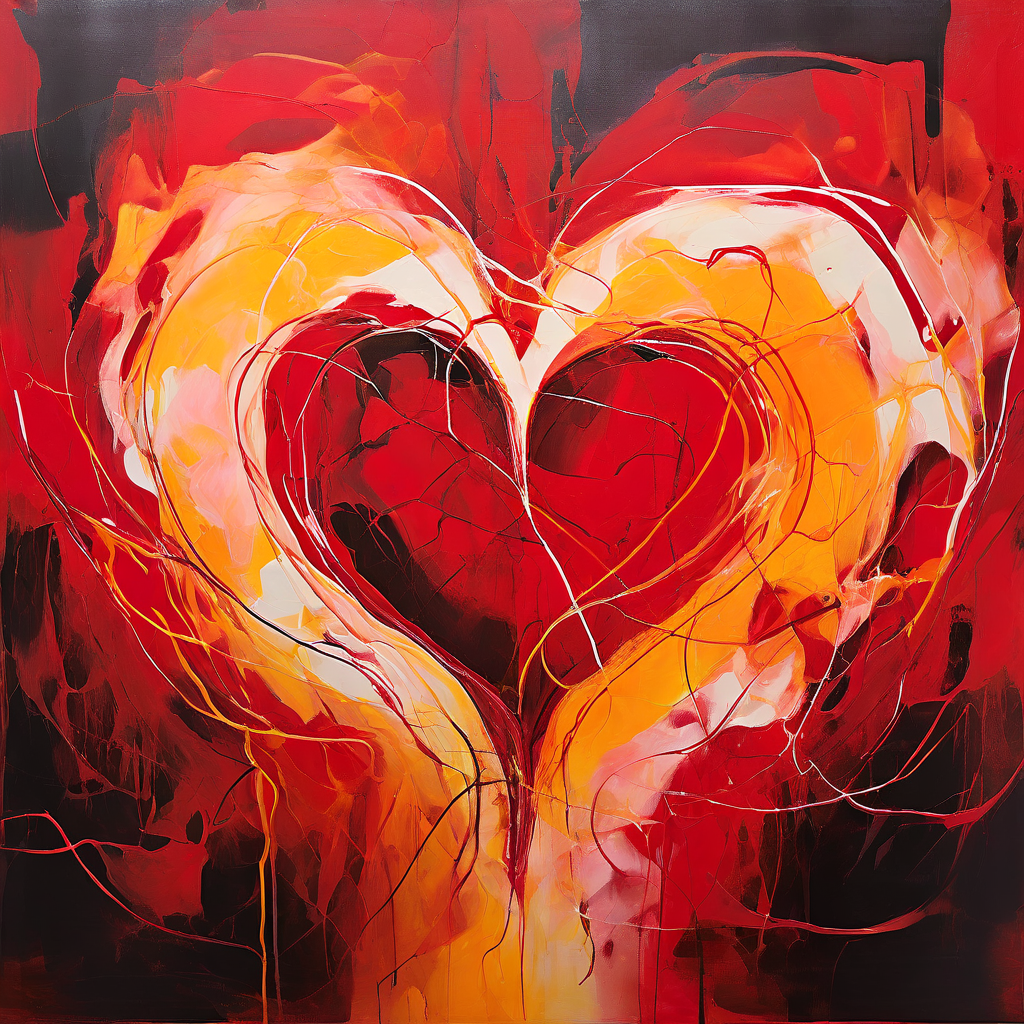
We all share the same beating heart at the core of all existence, a profound unity that transcends individuality. This shared essence connects us deeply, fostering empathy and compassion, and reminding us of our interconnectedness and inherent oneness with all life.

Recognizing Our Shared Essence

Beyond the layers of identity and personal history, the core of our being lies a shared essence that binds us together. This recognition shifts our perception from separation to unity, allowing us to see each other as reflections of the same source. When we understand that we are all connected by this common heart, we begin to treat each other with more kindness and respect.


The Power of Empathy and Compassion

This awareness of our shared essence naturally fosters empathy and compassion. When we see ourselves in others, their joys become our joys, and their sorrows become our sorrows. This deep sense of empathy breaks down barriers and opens the way for genuine connections and supportive relationships. Compassion becomes not just an ideal but a natural expression of our shared humanity.

Embracing Interconnectedness

Understanding that we all share the same beating heart helps us embrace our interconnectedness with all forms of life. This perspective extends beyond human relationships to include animals, plants, and the environment. Recognizing our place within the web of life encourages us to live more harmoniously and sustainably, honouring the interconnected fabric of existence.


Living with Oneness

Living with the awareness of our shared heart transforms our approach to life. It inspires us to move beyond self-centred pursuits and to contribute to the well-being of the whole. Acts of kindness, service, and love become expressions of our recognition of oneness. This shift enriches our personal lives and contributes to a more compassionate and united world.

By remembering that we all share the same beating heart at the core of all existence, we align ourselves with a deeper truth. This truth fosters empathy, compassion, and a profound sense of interconnectedness, guiding us toward a life of unity and harmony with all.

Morgan O. Smith

Yinnergy Meditation, Spiritual Life Coaching & My Book, Bodhi in the Brain…Available Now!

https://linktr.ee/morganosmith

The Quantum Dance of Consciousness

Bridging Absolute Monism and Superposition

In the vast expanse of human experience and scientific inquiry, there are moments when disparate realms converge, revealing profound insights into the nature of reality. One such convergence is the spiritually enlightened peak experience of absolute monism and the quantum phenomenon of superposition. This intersection invites us to explore a deeper, more integrated understanding of existence.

The Experience of Absolute Monism

Imagine a moment of profound stillness, where the boundaries that define you dissolve, and the illusion of separation fades away. In this state, you experience a boundless unity, a seamless oneness with all that is. This is the essence of absolute monism—a direct, transformative experience that reveals the interconnectedness of all existence. It is a realization that transcends intellectual understanding, touching the core of being and altering one’s perception of reality.

Superposition in Quantum Physics

Quantum physics, the realm of the very small, offers a striking parallel to this mystical experience. Superposition is a principle where a quantum system exists in multiple states simultaneously until it is observed. This phenomenon challenges our classical notions of a fixed, definite reality, suggesting instead a universe that is inherently probabilistic and interconnected. The act of observation plays a crucial role in collapsing these multiple possibilities into a single, observable state.

Bridging the Spiritual and the Scientific

At first glance, the realms of spiritual enlightenment and quantum physics might seem worlds apart. Yet, they both point toward a deeper, underlying unity. In absolute monism, the dissolution of duality reveals an undivided reality. Similarly, in quantum physics, superposition reflects a state of potentiality where all possibilities coexist.

The Role of Observation

In the spiritual journey, the realization of absolute monism often emerges through deep meditation or transformative experiences. This form of “observation” collapses the illusion of separateness, unveiling the unity of existence. In quantum mechanics, it is the act of measurement that collapses a superposition into a definite state. Both suggest that consciousness or awareness plays a pivotal role in shaping reality.

Indeterminacy and Unity

The indeterminate nature of superposition aligns with the spiritual insight that ultimate reality transcends fixed forms and definitions. Both perspectives invite us to embrace a more fluid and interconnected understanding of existence. They challenge us to move beyond rigid, binary thinking and to appreciate the complexity and beauty of a reality that is both unified and diverse.

Transformation of Perception

Experiencing absolute monism can profoundly transform how we perceive ourselves and the world. It fosters a sense of unity, compassion, and interconnectedness. Similarly, understanding superposition can expand our perception of the physical world, challenging classical assumptions and inviting us to explore the mysteries of the quantum realm.

Conclusion

The convergence of absolute monism and superposition offers a rich, thought-provoking perspective on the nature of reality. It reminds us that the boundaries between science and spirituality are not as rigid as they seem. Both realms, in their own ways, point toward a deeper truth—a universe where unity, interconnectedness, and the role of consciousness are fundamental. By exploring these intersections, we embark on a journey that not only broadens our understanding but also deepens our appreciation for the profound mysteries of existence.

Morgan O. Smith

Yinnergy Meditation, Spiritual Life Coaching & My Book, Bodhi in the Brain…Available Now!

https://linktr.ee/morganosmith

Annihilation and Kundalini Awakening

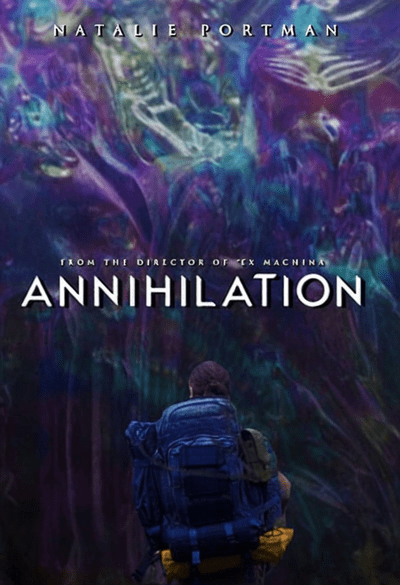
Annihilation is courtesy of Paramount Pictures and Skydance Media

 A Journey Through Transformation

In 2018, Alex Garland’s Annihilation plunged viewers into a surreal and disturbing world, where the familiar dissolves into the unknown, and transformation is inevitable. Watching this movie back then, and rewatching it last night on Netflix, I found myself deeply moved by its haunting imagery and profound symbolism, which echoed my spiritual journey of Kundalini awakening. By delving into the film’s narrative and its vivid scenes, we uncover a rich parallel to the mystical process of awakening dormant energy within.

Spoiler Alert: This post contains spoilers for those who haven’t seen Annihilation.


The Serpent Awakens

One of the most striking and unsettling scenes in Annihilation involves a soldier whose stomach is cut open, and we see his intestines move like a serpent inside him. This visceral image mirrors the ancient depiction of Kundalini energy as a coiled serpent at the base of the spine. In Kundalini traditions, this serpent represents latent spiritual energy, poised to rise and transform the individual. The soldier’s transformation, albeit grotesque, symbolizes the intense and sometimes chaotic nature of this awakening process.

Explosion and Rebirth

In another pivotal moment, the soldier explodes, leaving an intricate and eerie display on the wall. This explosion is reminiscent of the powerful release of Kundalini energy. Such energy can dismantle old patterns and structures, often causing upheaval before a new order can emerge. This scene captures the destructive yet transformative power of Kundalini, which breaks down the old self to pave the way for profound growth and understanding.

Kane’s Ultimate Sacrifice

Kane’s act of sitting cross-legged and detonating a grenade (played by Oscar Isaac) is another profound symbol. His posture suggests meditation or deep introspection, a practice central to awakening Kundalini. The ensuing explosion signifies a profound transformation—an act of self-destruction leading to rebirth. The image left behind symbolizes the remnants of the old self, giving rise to a new state of consciousness. This mirrors the death and rebirth cycle inherent in Kundalini awakening, where the dissolution of the ego precedes the emergence of a higher self.

The Shimmer as the Mystical Realm

The Shimmer, the film’s central enigma, serves as a metaphor for the mystical realm encountered during spiritual awakening. Within the Shimmer, reality bends and mutates, much like the inner landscape experienced during deep meditation and spiritual practices. Here, the boundaries of the self dissolve, and one is confronted with both beauty and terror—reflecting the dual nature of spiritual journeys.

Conclusion

Annihilation offers a hauntingly beautiful exploration of transformation, much like the journey of Kundalini awakening. Through its unsettling imagery and profound symbolism, the film invites viewers to contemplate the nature of change, the dissolution of the old, and the emergence of the new. By examining these parallels, we gain a deeper appreciation of both the cinematic experience and the spiritual process, enriching our understanding of transformation in all its forms.

Despite always wondering if anyone else had made this connection, I haven’t come across mentions of such interpretations. Yet, for me, the resemblance to my own experiences of Kundalini awakening is undeniable, providing a rich array of reflections on inner transformation. Only an individual who has gone through this process would truly understand these connections, as this is an event that must be experienced to be fully comprehended.

Morgan O. Smith

Yinnergy Meditation, Spiritual Life Coaching & My Book, Bodhi in the Brain…Available Now!

https://linktr.ee/morganosmith

The Dance of Awareness

Contextual vs. Content Enlightenment

In the labyrinth of spiritual exploration, the nuanced differences between contextual and content enlightenment invite us to delve deeper into our understanding of consciousness. These dimensions, though intertwined, offer distinct perspectives on our journey toward self-realization. Let us explore the intricate play between whole and detailed awareness, qualities and their absence, and the dichotomy of shape and form versus the formless.

Contextual Enlightenment: Embracing the Whole

Contextual enlightenment transcends the specifics, inviting us to embrace the entire spectrum of existence as a unified whole. It is akin to perceiving the vast, boundless ocean rather than focusing on individual waves. This level of awareness envelops all experiences, thoughts, and sensations, recognizing their interconnectedness and the underlying unity.

In this sense, whole awareness is the recognition of the seamless fabric of reality. It dissolves the boundaries that separate the observer from the observed, the thinker from the thought. It is an expansive, inclusive state where everything is perceived as part of a larger, harmonious cosmic dance.

Content Enlightenment: The Beauty of Details

In contrast, content enlightenment delves into the specifics, illuminating each moment’s unique qualities and characteristics. It is the meticulous study of individual waves within the ocean, appreciating their distinct forms and patterns. This awareness sharpens our focus on the particulars, allowing us to see the intricacies and subtleties that compose the whole.

Detailed awareness is the keen observation of the myriad expressions of existence. It celebrates the diversity of forms, experiences, and sensations, recognizing their intrinsic value and beauty. This level of enlightenment encourages us to engage deeply with the present moment, savouring each nuance and detail.

Qualities vs. Without Qualities: The Essence of Being

The dichotomy of qualities versus the absence of qualities highlights another layer of our spiritual journey. Qualities refer to the attributes and characteristics that define our experiences and perceptions. They are the colours, textures, and flavours of our existence, shaping our understanding of reality.

Without qualities, however, points to a deeper, more subtle aspect of being. It is the state of pure awareness, devoid of any specific attributes or characteristics. This formless essence transcends the dualities of good and bad, pleasure and pain, presence and absence. It is the unmanifest potential from which all qualities arise and dissolve.

Shape and Form vs. The Formless: The Ultimate Paradox

Finally, the interplay between shape and form versus the formless presents the ultimate paradox of our spiritual exploration. Shape and form represent the tangible, perceivable aspects of existence. They are the visible, audible, and tactile manifestations of the underlying reality.

The formless, on the other hand, is the primordial ground of being. It is the unchanging, eternal essence that transcends all forms and shapes. This paradox invites us to see beyond the apparent duality, recognizing that shape and form are but temporary expressions of the formless. In this realization, we find the unity of all existence, the seamless flow between the manifest and the unmanifest.

Conclusion

In our quest for enlightenment, we are called to navigate these intricate dimensions of awareness. Contextual enlightenment invites us to embrace the whole, while content enlightenment beckons us to appreciate the details. The play of qualities and their absence, and the dance between shape, form, and the formless, guide us toward a deeper understanding of our true nature.

By holding these perspectives in balance, we can cultivate a holistic, integrated awareness that honours both the unity and diversity of existence.

Morgan O. Smith

Yinnergy Meditation, Spiritual Life Coaching & My Book, Bodhi in the Brain…Available Now!
https://linktr.ee/morganosmith

The Grand Cycle of Cosmic Renewal

The universe, a magnificent dance of birth, death, and rebirth, mirrors the cycles of life from the smallest of organisms to the grandest of galaxies. At the heart of this cosmic rhythm lies a profound phenomenon: the black hole. Here, in these enigmatic cosmic centres, the renewal of the universe unfolds, echoing the ancient concept of Samsara.

In the vast expanse of the cosmos, our universe is perpetually in flux, ceaselessly evolving through cycles of creation and dissolution. Each iteration of this cosmic cycle marks a step towards a higher state of development. As the universe experiences these cycles, it evolves, fostering more sustainable life forms with each rebirth. This evolutionary process is not merely an incidental aspect of the universe but an intrinsic feature of its very nature.

The concept of Samsara, the cycle of birth, death, and rebirth, is as ancient as the stars themselves. It is a cycle that propels the human soul and the cosmos toward greater levels of consciousness and existence. Every cycle brings the universe closer to a state where life can flourish in every corner, where the seeds of existence can take root and blossom.

This journey towards universal vitality is a profound one. As the universe evolves, the black holes, often perceived as destructive forces, serve as catalysts for this grand transformation. They are the crucibles where the old is dismantled to give way to the new, where the remnants of dying stars are recycled into the building blocks of new celestial bodies.

The black hole, however, is only one part of this cosmic equation. Its counterpart, the white hole, is believed to be responsible for the Big Bang—the ever-continuous moment of awakening. The white hole represents the cosmic breath of creation, the outpouring of energy and matter that initiates the birth of the universe. This interplay between black and white holes symbolizes the dynamic balance of destruction and creation, contraction and expansion.

Once the universe reaches a state where life is omnipresent and self-sustaining, it will strive towards moksha—a liberation from the cyclical nature of Samsara. This state of cosmic enlightenment is not an end but a new beginning. The universe, now free from attachments and the perpetual cycle of renewal, will embark on a journey of liberation, perpetuating a cycle of existence that is free, whole, and unbound.

Interestingly, this grand cosmic cycle is not confined to the universe at large. It is echoed in the myriad smaller black holes scattered throughout the cosmos. Each black hole, in its domain, participates in this dance of renewal and liberation, contributing to the overall evolution of the universe.

In this way, the universe mirrors the spiritual journey of the soul. It evolves, seeks liberation, and strives towards a state of higher consciousness and freedom. This cosmic dance invites us to reflect on our journeys of growth and liberation, encouraging us to embrace the cycles of life with a sense of awe and reverence.

Morgan O. Smith

Yinnergy Meditation, Spiritual Life Coaching & My Book, Bodhi in the Brain…Available Now!
https://linktr.ee/morganosmith

The Profound Simplicity of Enlightenment

Transforming Perspective, Not Action

In the spiritual awakening journey, there is a well-known saying: “Before enlightenment, chop wood, carry water. After enlightenment, chop wood, carry water.” This aphorism captures the essence of a profound transformation that occurs not in the realm of actions but in the realm of perception.

Before enlightenment, we engage with the world through a dualistic lens. Wood is simply wood, and water is merely water. Our actions are routine, grounded in the practical necessities of life. We chop wood to build fires, and we carry water to quench our thirst. The world is divided into distinct entities and tasks, each with its purpose and function.

However, with the dawning of enlightenment, a radical shift in perspective occurs. Once seen as separate objects, the wood and water are now perceived as the divine. Every action, whether chopping wood or carrying water, becomes an act of communion with the sacred. The distinction between the doer and the deed dissolves, revealing the inherent unity of all existence.

This newfound vision unveils a profound truth: God is not a distant, separate entity but is every aspect of the universe. The wood we chop, the water we carry, the tools we use, and even the hands that perform these actions are not only expressions of the divine but are the divine. This realization transforms mundane tasks into sacred rituals, imbued with deep reverence, interconnectedness and beyond.


The environment in which these actions take place also becomes a sacred space. The forest where we gather wood, the river from which we draw water, and the air we breathe are all seen as the divine presence. Every element of our surroundings is woven into the fabric of oneness, blurring the lines between the individual and the cosmos.

This shift in perspective does not alter the actions themselves. We still chop wood and carry water, fulfilling the same physical tasks as before. Yet, the awareness that everything is as is infused these actions with a sense of purpose and meaning that transcends the ordinary.

In this enlightened state, the simplicity of life is revealed in its most profound form. Each moment becomes an opportunity to experience the divine, to engage in a continuous dialogue with the universe. The mundane is elevated to the extraordinary, and every action becomes an expression of love and devotion.


Ultimately, enlightenment is not about escaping the world or renouncing our daily responsibilities. It is about transforming our perception, recognizing the sacredness in every aspect of life, and understanding that we are the intricate, divine dance. By embracing this perspective, we find a deeper sense of peace and fulfillment, knowing that every action, no matter how simple, is an act of communion with the divine, as the divine.

Morgan O. Smith

Yinnergy Meditation, Spiritual Life Coaching & My Book, Bodhi in the Brain…Available Now!

https://linktr.ee/morganosmith