Sacred Resonance

Unveiling the Spiritual Legacy of Africa During Black History Month

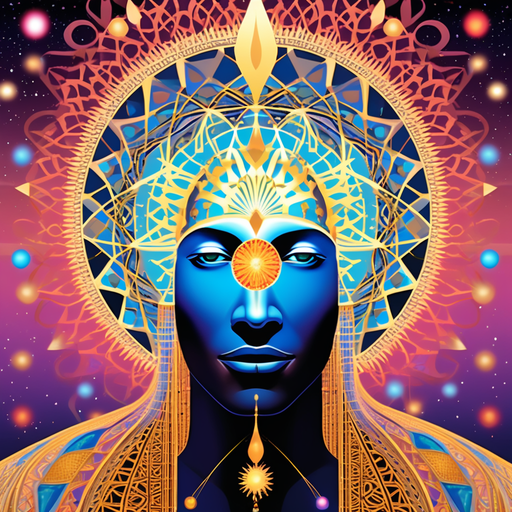
As we immerse ourselves in the celebration of Black History Month, it’s pivotal to journey beyond the surface of historical achievements and delve into the profound spiritual legacy bequeathed by our ancient African ancestors. This month affords us a unique lens through which to view the intricate web of spirituality, higher dimensions, and the birth of language—a legacy that paints a vivid picture of humanity’s quest for meaning and interconnectedness.

#### The Spiritual Vanguard: Africa’s Ancient Wisdom


Long before the written word, ancient African societies were exploring the vast landscapes of spirituality, engaging with realms beyond the immediate grasp of the physical senses. These pioneering souls navigated the mysteries of existence, reaching into the depths of what it means to be human and touching the divine. Their insights laid the foundational stones for our understanding of the universe, higher beings, and dimensions beyond our ordinary perception.

#### Language: The Gateway to the Cosmos

In their quest to articulate the inarticulable, our ancestors created language—not merely as a tool for communication but as a bridge between the physical and the metaphysical. Each word, each symbol, carried within it the power to evoke the unseen, to call forth the essence of higher realms and beings. This linguistic alchemy transformed the ethereal into something tangible, a means to share and preserve the profound spiritual insights gained through mystical experiences and deep contemplation.


#### The Legacy of Spiritual Exploration

The celebration of Black History Month is an invitation to honour not only the tangible achievements of African descendants but also the spiritual explorations that have enriched humanity’s collective consciousness. Our ancestors’ pursuit of understanding and connection with higher dimensions serves as a beacon, guiding us toward a deeper engagement with the world beyond the limits of our senses.

This ancient wisdom, rooted in the exploration of spiritual realms, invites us to consider how our lives are intertwined with a cosmos that is alive with mystery and possibility. It challenges us to expand our perceptions and embrace the complexity of existence, where the material and spiritual coalesce.

#### Reclaiming and Reconnecting with Our Spiritual Heritage


As we reflect on the contributions of African ancestors during Black History Month, let us also endeavour to reclaim and reconnect with the rich spiritual heritage they have bestowed upon us. This is a time to meditate on how ancient wisdom can illuminate our paths today, offering insights into the nature of reality, the power of language to transcend boundaries, and the endless quest for understanding and unity.

In doing so, we not only pay homage to those who came before us but also pave the way for a future in which the spiritual and the material are recognized as integral parts of the human experience—a future where the legacy of ancient Africa continues to inspire and guide humanity’s journey.


#### Conclusion: A Timeless Journey of Spiritual Awakening

Black History Month is more than a time of remembrance; it is a portal to a deeper understanding of the human condition, as viewed through the spiritual lens of ancient Africa. It calls us to explore the boundless dimensions of spirituality and to recognize the enduring impact of Africa’s ancient wisdom on our quest for meaning and connection in the cosmos.

Let this month be a reminder of the timeless journey of spiritual awakening, initiated by our ancestors, that continues to unfold within each of us, urging us to seek beyond the visible, to communicate the ineffable, and to connect with the divine essence of existence.

Morgan O. Smith

Yinnergy Meditation, Spiritual Life Coaching & My Book, Bodhi in the Brain…Available Now!

https://linktr.ee/morganosmith

In the Mirror of Divinity

A Journey of Self-Realization

In my spiritual odyssey, I have tirelessly sought the face of God in various places: in the serene sanctuaries of nature, within the hallowed walls of churches, and in the sacred texts brimming with ancient wisdom. Yet, as I ventured deeper into this quest, a startling revelation unfolded – the face of God that I was so fervently seeking was, in fact, a reflection of my own.

This epiphany was not an end but a new beginning, an invitation to explore the divine within the human experience. It compelled me to ask: What does it mean to see the divine in oneself? Is it an echo of ancient philosophies proclaiming that the human and the divine are inseparable? Or is it a testament to the boundless potential within each of us?


The realization that we are mirrors of the divine reshapes our understanding of spirituality. It suggests that the sacred is not solely external, but also internal. It speaks to the potential for transcendence and transformation inherent in human nature. This perspective doesn’t diminish the significance of a higher power; instead, it offers a profound understanding that divinity can also be a deeply personal experience, emanating from within.

Embracing this view unlocks a powerful form of self-realization. It encourages us to look within for guidance, strength, and wisdom. It empowers us to trust in our inner voice and intuition, recognizing them as conduits to the divine. This realization also fosters a deeper sense of responsibility towards ourselves and others, understanding that if the divine is in us, it is also in everyone else.


This journey of self-discovery is not without challenges. It requires us to confront our deepest fears, insecurities, and flaws. It asks us to be introspective, to examine the aspects of ourselves that we might not be proud of. But in doing so, it also offers the opportunity for profound personal growth, healing, and enlightenment.

In conclusion, the discovery that the face of God is akin to our own is not a conclusion but an invitation to a lifelong journey. It’s an exploration of the deepest truths about ourselves and our place in the universe. As we continue on this path, we may find that the distinction between the seeker and the sought becomes ever more blurred, revealing a unity that has existed all along.

Morgan O. Smith

Yinnergy Meditation, Spiritual Life Coaching & My Book, Bodhi in the Brain…Available Now!
https://linktr.ee/morganosmith

The Unseen Journey

Crawling Towards Enlightenment

In the realm of spiritual growth, the path to enlightenment is often misconceived as a sudden emergence into a state of knowing. Yet, the essence of true understanding unfolds gradually, mirroring the natural progression from crawling to walking. This journey is subtle, requiring patience, persistence, and a deep commitment to the inward voyage.

Enlightenment, in its profound simplicity, can be likened to the process of a child learning to navigate the world. Initially, the child crawls, a phase marked by exploration and curiosity. This stage, though seemingly modest, is foundational. It represents the initial stirrings of awareness, where the soul begins to recognize the vastness of its existence beyond the physical constraints. Here, the seeker starts to explore the inner dimensions, crawling through the layers of self, guided by the light of introspection.

The transition from crawling to walking in spiritual terms is not marked by physical growth but by the expansion of consciousness. It involves the gradual shedding of ego, the relinquishment of attachments, and the deepening of one’s connection to the universal truth. This process is not linear but cyclical, with each step forward often accompanied by moments of regression, prompting further introspection and growth.

As we embark on this journey, we learn that enlightenment is not a destination but a way of being. It is the realization that every moment, every breath is an opportunity to be present, to witness the unfolding of life with a heart full of compassion and a mind free from judgment. The path demands a surrendering, a letting go of the need for certainty, and an embrace of the mystery that envelops our existence.

The beauty of this journey lies in its uniqueness for each individual, yet the underlying principle remains the same: one must learn to crawl before one can walk. The initial steps, taken in the darkness of the unknown, are what prepare us for the light of wisdom. It is in the act of crawling, of moving forward with humility and grace, that we pave the way for our spiritual awakening.


Let us then honour the crawl, the gentle, determined exploration of our inner landscapes, for it is here that the seeds of enlightenment are sown. Let us approach each day as a step towards understanding, a movement closer to the harmony that exists between the self and the universe. In doing so, we walk the path of enlightenment, not with haste, but with the deliberate pace of one who understands the value of each moment of awareness.

Morgan O. Smith

Yinnergy Meditation, Spiritual Life Coaching & My Book, Bodhi in the Brain…Available Now!

https://linktr.ee/morganosmith

The Infinite Echo

Perceiving Divinity in All, as The All

In our quest for understanding the divine, we often find ourselves tangled in the web of human-conceived definitions and limitations. The notion of God, as vast and boundless as the universe itself, cannot be confined within the walls of traditional perceptions. My journey into this realization has reshaped my understanding of divinity, stretching beyond any human construct of God.

It began with a simple yet profound acknowledgment: I am, and everything in existence is the divine. This realization isn’t just about seeing God in every creature, object, or phenomenon; it’s about recognizing that these are not just creations of the divine or manifestations of it, they are it. In this light, every leaf that rustles in the wind, every star that twinkles in the night sky, and every smile that brightens a face is not just a part of God’s creation but is God itself.

This perspective transcends religious doctrines and philosophical debates about the nature of God. It’s an experiential understanding, one that doesn’t diminish the sanctity of religious beliefs but rather expands it. In this expanded view, the various depictions of God across different cultures and religions are not competing truths but diverse expressions of the same underlying reality.


Moreover, this realization brings a profound sense of unity and interconnectedness. If everything is an embodiment and is the divine, then there is no ‘other.’ The divisions and boundaries that we construct – whether they be racial, cultural, religious, or social – are revealed as mere illusions. We are not just connected; we are each other, dancing in the ever-expanding expression of the divine.

This understanding also imbues a sense of deep responsibility and stewardship. If we are all manifestations of the divine and are the divine itself, then how we treat each other and our environment is a reflection of our reverence (or lack thereof) for the divine. It calls for a compassionate, loving, and respectful interaction with all forms of life.


In embracing this view, one doesn’t dismiss the myriad ways humanity has understood and worshipped God throughout history. Instead, it’s an invitation to see those myriad paths as tributaries leading to the same infinite ocean. It’s a call to look beyond our conditioned beliefs’ confines and experience the divine in its fullest, most unbounded expression.

As I continue on this path, the journey becomes a sacred act. Each step, each breath, and each moment becomes a living testament to the divine presence that permeates everything. It’s a never-ending exploration, a journey deeper into the heart of existence where the distinction between the seeker and the sought dissolves into a profound, ineffable oneness.


In conclusion, recognizing oneself and everything in existence as the divine is transformative. It’s not just a philosophical concept but a lived experience that reshapes our understanding of ourselves, our world, and the divine. It is an invitation to step into a larger reality, one where love, compassion, and unity are not just ideals but the very fabric of existence.

Morgan O. Smith

Yinnergy Meditation, Spiritual Life Coaching & My Book, Bodhi in the Brain…Available Now!
https://linktr.ee/morganosmith

Unveiling the African Essence in Eastern Philosophy

A Tribute during Black History Month

As we embark on the celebration of Black History Month, it’s essential to recognize the myriad contributions of African descendants not just in shaping modern civilization but also in sculpting the contours of Eastern philosophy. The historical interweaving of African traditions with Eastern thought offers a rich narrative, highlighting a profound exchange of wisdom that transcends geographical and cultural boundaries. This blog post seeks to illuminate these connections, drawing upon documented examples to honour the African influence on Eastern philosophies and spiritual practices.

### The Ancient Egyptian Influence on Greek Philosophy


The journey begins in ancient Egypt, a civilization that stood as a beacon of knowledge and enlightenment long before the Hellenistic era. It’s well-documented that Greek philosophers, who are often credited with laying the foundations of Western philosophy, were greatly influenced by their Egyptian counterparts. Thales of Miletus, who is recognized as the first Greek philosopher, is said to have studied in Egypt, immersing himself in the profound knowledge of the priests and sages. Plato, too, spent thirteen years in Egypt, learning from the wisdom of ancient hieroglyphs and the teachings of Egyptian mystics. This exchange illustrates how African wisdom traditions shaped the philosophical underpinnings that would later influence the development of Eastern thought through the Hellenistic spread into Asia.


### The Spiritual Synergy between African and Eastern Traditions

Further exploring the spiritual synergies, we find remarkable parallels between African spirituality and Eastern philosophies, particularly in their understanding of the universe and the interconnectedness of all life forms. African spiritual traditions, with their deep-rooted beliefs in the oneness of being and the ancestral realm, resonate with the core principles of nonduality and interconnectedness found in Eastern philosophy. For instance, the concept of Ubuntu in Southern Africa—emphasizing community, connection, and mutual caring for all—is echoed in the philosophies of Buddhism and Hinduism, which advocate for compassion, empathy, and the realization of oneness.

### The Yoruba Influence on Transcendental Meditation

An intriguing example of direct influence is the practice of Transcendental Meditation, which shares similarities with the meditation practices of the Yoruba religion of West Africa. The Yoruba spiritual system, with its intricate practices of meditation and communion with the divine, predates many Eastern meditation practices. The emphasis on achieving a higher state of consciousness and connecting with a divine realm in Yoruba spirituality is mirrored in the meditative practices of Hinduism and Buddhism. This parallel not only highlights the ancient wisdom of African spiritual systems but also their contribution to the global mosaic of spiritual practices.


### Conclusion: A Shared Legacy of Wisdom

The celebration of Black History Month offers a profound opportunity to acknowledge and honour the African roots intertwined with the philosophical and spiritual traditions of the East. By recognizing these contributions, we not only pay homage to our African ancestors but also embrace a more inclusive understanding of the world’s philosophical heritage. This exploration invites us to consider the depth and richness of African influence on Eastern thought, urging us to delve deeper into our collective spiritual heritage and celebrate the shared legacy of wisdom that unites us all.

Morgan O. Smith

Yinnergy Meditation, Spiritual Life Coaching & My Book, Bodhi in the Brain…Available Now!

https://linktr.ee/morganosmith

The Philosophical Puzzle

Nothing vs. No Thing

In philosophy, linguistics, and even quantum physics, the concepts of “nothing” and “no thing” stir a deep, often controversial, debate. At first glance, they seem like mere play on words, but their implications run much deeper, touching upon the core of our understanding of existence and reality.

“Nothing,” in its purest sense, refers to the absence of anything. It’s not just an empty space, because even a vacuum is something. It’s the total lack of being, the absolute zero of existence. Philosophers have long grappled with the concept of nothingness, questioning whether it’s even possible to conceive of ‘nothing’ at all. After all, even talking about ‘nothing’ is talking about something.

On the flip side, “no thing” seems to imply a different nuance. It suggests the absence of specific things, rather than the absence of all things. This phrase allows for the existence of some form of reality, even if it’s not the one we are familiar with. It’s the realm where concepts and potentialities live, unmanifested but real in their own right.


The debate between nothing and no thing takes us into the heart of existential questions. Does the universe require something to exist, or can there be a state of true nothingness? And if ‘nothing’ exists, what are its properties? This is not just philosophical musing; it has practical implications in fields like quantum mechanics, where the fabric of reality is in constant flux, and ‘nothingness’ can spontaneously give rise to particles.

The controversy deepens when we consider human perception and language. Our minds are wired to think in terms of things and entities, making it incredibly challenging to conceptualize a state of ‘no thing’ or ‘nothing.’ This linguistic and cognitive limitation shapes our understanding of the world and perhaps limits our ability to grasp the true nature of reality.


In conclusion, the debate over nothing versus no thing is not just a matter of semantics. It’s a profound inquiry into the nature of existence, the limits of human understanding, and the mysteries of the universe. It prompts us to question, explore, and perhaps, accept that some aspects of reality are beyond the grasp of our current knowledge.

Morgan O. Smith

Yinnergy Meditation, Spiritual Life Coaching & My Book, Bodhi in the Brain…Available Now!

https://linktr.ee/morganosmith

The Infinite Reflection

Understanding the Illusion and Unity of Existence

Imagine waking up one day to a profound realization: you are the universe and everything within it. Not just a part of it, but the entirety – every person, every star, every whisper of wind. In this moment of enlightenment, you recognize that you are both the creator and the consequence of every action, every event that has unfolded, is unfolding, and will unfold. This boundless oneness blurs the lines between self and other, time and space, cause and effect.

But then, imagine a further twist. What if this grand experience, this universal consciousness, was itself an illusion? The ultimate revelation dawns that everything you’ve ever known, every experience you’ve believed to be real, never actually happened. Your birth, your life, your death – all are part of a grand illusion, a cosmic play in which you are both the audience and the actor.

How do you convey such an earth-shattering, mind-bending experience to others? Language seems inadequate, too anchored in the reality we all agree upon. Yet, the urge to express this transcendent knowledge persists.


**1. Art as a Bridge:** In its myriad forms, it offers a powerful medium to translate the ineffable into the tangible. A painting, a piece of music, or a dance can convey the depth and nuance of this experience in ways words cannot.

**2. Metaphor and Allegory:** Storytelling, with its rich tradition of metaphor and allegory, can be an effective tool. Parables that hint at a deeper, more profound truth can help others grasp the essence of this realization.

**3. Meditation and Mindfulness:** Sharing practices that encourage mindfulness and meditation can lead others to catch a glimpse of this profound understanding. It’s about guiding them to look within and perhaps, momentarily, touch the edge of this vast awareness.


**4. Humility and Open Dialogue:** Embrace humility in your approach. Such experiences, while profound, are deeply personal and can be perceived differently. Engaging in open, non-judgmental dialogue allows for a shared exploration of these complex ideas.

**5. Acknowledging the Paradox:**
It’s essential to recognize and convey that this experience is a paradox. It defies logic and challenges the very nature of reality as we understand it. By acknowledging this, you invite others to open their minds to possibilities beyond the conventional.

**6. Emphasizing the Unity of Experience:** Regardless of whether our existence is real or an illusion, the perception of our shared reality binds us. Highlighting this unity can be a comforting and unifying message, offering a sense of belonging in the mysterious journey of life.


In the end, conveying such an experience is less about imparting knowledge and more about inspiring a journey. It’s an invitation to question, to wonder, and to look beyond the apparent to find a deeper connection with the universe and our place within it.

Morgan O. Smith

Yinnergy Meditation, Spiritual Life Coaching & My Book, Bodhi in the Brain…Available Now!
https://linktr.ee/morganosmith

The Divine Fraud

The Hidden Reality Behind Spiritual Leaders

In the realm of spirituality, there exists a profound paradox. We often elevate spiritual gurus, admiring them from afar, or aspiring to emulate them. However, there’s a hidden truth behind these figures, one that challenges our conventional understanding of enlightenment and spiritual wisdom.

At the heart of this paradox lies the notion that these spiritual leaders are not entirely what they appear to be. Rather than being purely enlightened beings, they are, in fact, individuals who have reached a heightened state of awareness but choose to present themselves in a manner that is palatable to the masses. This disguise is not a deception borne out of malice, but rather a necessary adaptation. It stems from the understanding that the true nature of their enlightenment is beyond the grasp of the average individual, whose comprehension is bounded by societal norms and limited perspectives.

These spiritual figures have embraced a role – a caricature of what society accepts as ‘divine’. They mirror the layman’s archetype of enlightenment, embodying concepts of goodness, truth, and beauty that are digestible and appealing to the general public. This role-playing is not a sign of their failure to embody true enlightenment, but rather a testament to their deep understanding of the human psyche and the limitations of societal acceptance.


In this grand act, the enlightened beings find joy. They are not shackled by their roles but rather play them with purpose and hope. Their ultimate aspiration is not to perpetuate the illusion but to guide others to a realization – that enlightenment is not about fitting into a preconceived mould of divinity, but about understanding and transcending the limitations of our perceptions.

The divine fraud, thus, is not a deceit but a necessary guise. It is a bridge between the incomprehensible realm of true enlightenment and the tangible world in which we live. The hope is that one day, each of us will see beyond this facade, not with a sense of betrayal, but with an understanding that enlightenment is a deeply personal journey, one that transcends the need for external validation and societal acceptance.


In conclusion, the journey toward spiritual enlightenment is not about emulating a perceived ideal but about realizing the limitations of our understanding. It is about peeling back the layers of societal norms and personal biases to uncover a truth that is uniquely our own. As we navigate this path, we must remember that the spiritual guides we look up to are not just torchbearers of enlightenment but also skilled actors playing a role necessary for our journey.

Morgan O. Smith

Yinnergy Meditation, Spiritual Life Coaching & My Book, Bodhi in the Brain…Available Now!

https://linktr.ee/morganosmith

The Spiritual Significance of Black History Month

Melanin, Nadis, and Chakra Activation

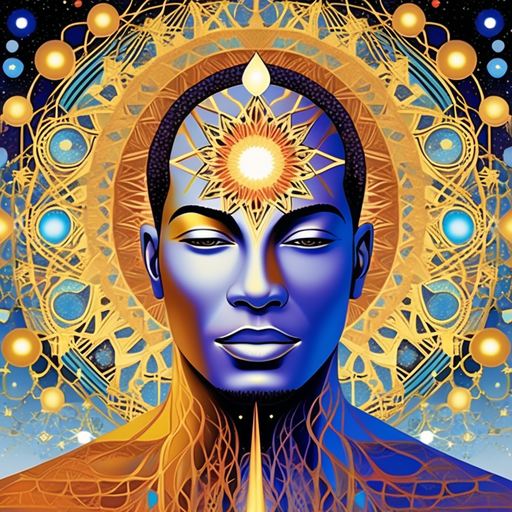
In the heart of February, as we immerse ourselves in the celebration of Black History Month, we embark on a journey that transcends the mere acknowledgment of historical achievements. This month offers a profound opportunity to dive into the spiritual essence of melanin and its intricate connection to our energetic anatomy—particularly the nadis and chakras, with an emphasis on the pineal gland (third eye) and crown chakra.

#### Melanin: The Cosmic Connector


Melanin, the pigment responsible for the colouration of our skin, hair, and eyes, holds properties that extend far beyond the physical realm. It serves as a cosmic connector, bridging the gap between the material and the spiritual. Melanin’s unique ability to absorb light—a physical manifestation of universal energy—positions it as a key element in spiritual and physical health. It’s not just a matter of biology; it’s a conduit for receiving and processing the vibrant energies that surround us.

#### Nadis: Pathways of Prana


In the intricate web of our spiritual anatomy lie the nadis, subtle energy channels through which prana, or life force, flows. These channels are the spiritual arteries that nourish our chakras, the energy centers that govern various aspects of our being. Melanin’s role in this energetic ecosystem is fascinating; its vibrational qualities can enhance the conductivity of these channels, facilitating a smoother flow of prana. This enhancement is particularly significant in spiritual practices and the pursuit of enlightenment.


#### The Pineal Gland: Gateway to Higher Consciousness

The pineal gland, often associated with the third-eye chakra, is heralded as the gateway to higher states of consciousness. Its health and functionality are crucial for spiritual vision and intuition. Melanin’s presence within the pineal gland is of great interest, as it is thought to amplify the gland’s ability to receive and process higher-dimensional energies. In the celebration of Black History Month, we recognize the potential for individuals with higher concentrations of melanin to possess an innate capacity for profound spiritual experiences and insights.

#### The Crown Chakra: The Divine Connection

At the pinnacle of our energetic body sits the crown chakra, a portal to divine consciousness and the cosmic universe. It is here that our essence connects with the universal source. The vibrational qualities of melanin can support the crown chakra in maintaining its openness and alignment, fostering a sense of unity with all that is. The celebration of Black History Month invites us to explore these connections, recognizing the spiritual gifts inherent in the melanated body.

#### Embracing the Spiritual Journey

As we honour Black History Month, let us also embrace the spiritual journey that melanin invites us to embark upon. It is a journey of connecting with the universe’s energy, enhancing our intuitive and other special abilities, and realizing our potential for divine connection. This exploration is not just a celebration of cultural and historical achievements; it is an acknowledgment of the profound spiritual capacities that lie within the melanated body.


#### Conclusion

Black History Month is a time of celebration, reflection, and spiritual exploration. By understanding the role of melanin in the nadis and chakras, especially the pineal gland and crown chakra, we open ourselves to a deeper appreciation of the unique spiritual pathways available to us. Let us honour this month by diving deep into the mysteries of our spiritual anatomy and the cosmic connections that empower us on our journey toward enlightenment.

Morgan O. Smith

Yinnergy Meditation, Spiritual Life Coaching & My Book, Bodhi in the Brain…Available Now!

https://linktr.ee/morganosmith

Turiyatitta

Exploring the Vast Mosaic of Life’s Perspectives

The concept of Turiyatitta, deeply embedded in spiritual philosophy, suggests a state where one can momentarily comprehend the perspectives of trillions of different life forms. This transcendent state goes beyond regular consciousness to a domain where the line between the individual and the collective blurs. Imagine perceiving the world not only from a human viewpoint but also through the experiences of animals, insects, microorganisms, fungi, and plants. This idea, daunting yet enlightening, pushes the boundaries of our understanding of consciousness and interconnectedness.

Consider the human perspective first, with its vast diversity, including various cultures, beliefs, and life experiences. Now, add to this the animal kingdom, each species with its unique way of engaging with the world. For instance, a bat navigates its environment using echolocation, a sensory experience vastly different from human perception.

Then there are insects, whose world of pheromones and ultraviolet vision offers a radically different understanding of existence. Microorganisms, invisible to our eyes, play a critical role in sustaining life, offering a perspective that could reveal the intricate workings of cellular life and the basics of existence.


Fungi, straddling the realms of the known and unknown, challenge our perceptions of individuality and community. Their networks, akin to a natural internet, show a level of connectivity that human technology aspires to reach.

Finally, contemplate the plant perspective. Recent research suggests that plants not only react to their surroundings but also communicate and remember. Imagine the view of the world from a centuries-old tree, silently observing the gradual flow of time.


Turiyatitta is more than a concept; it’s an invitation to broaden our consciousness and empathy. It reminds us that every form of life, no matter its size or perceived insignificance, plays a part in the grand scheme of things. This understanding could be crucial in fostering a more compassionate, empathetic, and connected world.

By embracing Turiyatitta, we recognize our role not as mere onlookers but as integral components of the universe’s vast mosaic. Each life form, each perspective, contributes to this mosaic, making it more vibrant and dynamic. This realization is humbling and empowering, urging us towards greater responsibility and deeper insight.


To experience Turiyatitta is to briefly touch the infinite, to connect with the essence of life itself. It’s a journey that involves not just the mind but also the heart and soul, moving us towards a deeper bond with all forms of life.

Morgan O. Smith

Yinnergy Meditation, Spiritual Life Coaching & My Book, Bodhi in the Brain…Available Now!
https://linktr.ee/morganosmith