Embracing the Moment of Nondual Suchness

Beyond the Realm of Experience

In the intricate journey of understanding consciousness and existence, we often stumble upon a profound concept: the moment of nondual suchness. This concept, deeply rooted in Eastern philosophies, especially in Zen Buddhism, transcends the conventional boundaries of experience and knowledge. It presents a paradox that challenges our fundamental understanding of reality: at the moment of nondual suchness, direct experience cannot be experienced.

What does this mean, and why is it significant? To explore this, we must delve into the nature of nonduality. Nonduality refers to a state of consciousness where the distinction between the subject and object dissolves. It is a realization that there is no ‘me’ separate from the rest of existence. In this state, the usual dualistic framework of perceiver and perceived, experiencer and experienced, falls away.

This leads us to the crux: if there is no separation between the experiencer and the experience, can we truly say that an experience is happening? The moment of nondual suchness suggests that in its purest form, experience transcends the dichotomy of subject and object. You do not experience the moment; you become the moment. There is no ‘you’ observing, feeling, or thinking about the experience; there is just the undifferentiated reality of what is.

This notion can be controversial and thought-provoking because it contradicts our everyday experience where we are constantly distinguishing ourselves from our experiences. We are taught to value our perceptions, emotions, and thoughts as what defines us. Yet, the concept of nondual suchness invites us to consider a state of being where these personal distinctions are not just irrelevant, but nonexistent.

Why is this perspective important? It encourages a radical shift in how we perceive ourselves and the world around us. It challenges us to let go of our habitual patterns of thought, our constant categorization, and our deep-seated need to analyze and differentiate. By contemplating nondual suchness, we open ourselves to a more holistic understanding of existence, one that is not confined by the limits of individual perspective.

In practical terms, embracing this concept can lead to a profound sense of peace and connectedness. When the illusion of separateness falls away, so do the conflicts and struggles born from it. What remains is a state of pure being, unburdened by the complexities of dualistic thinking.
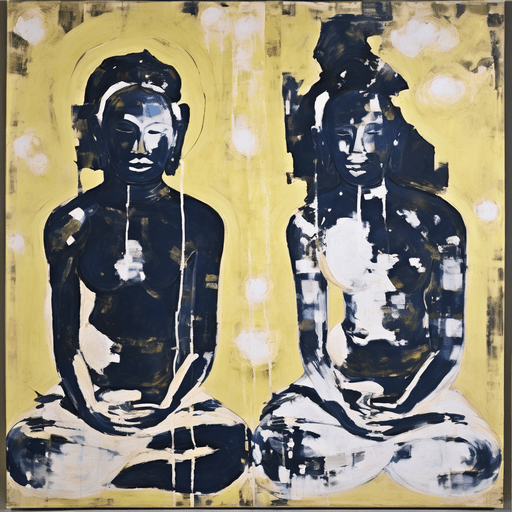

To conclude, the moment of nondual suchness presents a radical and transformative viewpoint that challenges our conventional understanding of experience. It invites us to question the very nature of our existence and to explore a realm of consciousness beyond the limitations of individual perception.

Morgan O. Smith

Yinnergy Meditation, Spiritual Life Coaching & My Book, Bodhi in the Brain…Available Now!

https://linktr.ee/morganosmith

The Cosmic Symphony of Black History

Melanin, Mind, and the Universe

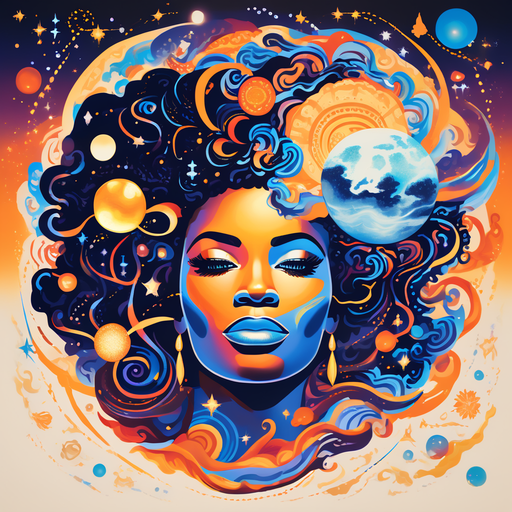
February’s arrival ushers in Black History Month, a time traditionally dedicated to recognizing the achievements and struggles of the African diaspora. However, from an awakened, and Cosmo-centric perspective, this month invites us to delve deeper into the essence of existence and our interconnectedness with the cosmos. Through this lens, Black History Month transcends conventional celebration, guiding us to explore the profound implications of melanin, neuromelanin, and the cosmic mysteries they link us to.

At the heart of this exploration is melanin, a pigment found not only in human skin but also in many aspects of the natural world. Melanin’s presence in the universe is a testament to its significance in the tapestry of life. From the protective hues of Mother Nature’s flora and fauna to the adaptive features of human beings across different climates, melanin speaks to the adaptive, creative force of the cosmos. It’s a reminder that diversity in form and function is a fundamental cosmic principle.

In the human body, neuromelanin plays a crucial role in the brain and nervous system, hinting at the intricate relationship between physicality and consciousness. This pigment within the brain is a frontier of mystery, potentially holding keys to understanding consciousness, intuition, and the profound spiritual capacities of human beings. As we celebrate Black History Month from a Cosmo-centric viewpoint, we recognize neuromelanin not merely as a biological attribute but as a symbol of the profound connection between the cosmos’s dark matter and the inner cosmos of human consciousness.


The greatest mystery, however, lies within the human brain, a universe unto itself. Here, the conversation extends to the nervous system, nadis, and chakras—concepts found in Eastern philosophies that describe the energy pathways and centers within the body. These systems are believed to connect the physical body to the spiritual, serving as conduits for cosmic energy. The presence of neuromelanin in these areas invites a reevaluation of its spiritual significance, suggesting a deeper, possibly cosmic connection that influences spiritual awareness and potential.

Furthermore, the parallel between the dark pigments that colour our existence and the dark matter and dark energy that compose the universe is striking. Just as dark matter and dark energy are invisible forces that hold the cosmos together, melanin and neuromelanin represent unseen yet powerful connections between the universe and our inner selves. This analogy invites us to consider the cosmic importance of Black history and culture, not as isolated phenomena but as integral components of the universal story.

Black History Month, from a Cosmo-centric perspective, becomes an opportunity to honour and explore these connections. It’s a time to reflect on how melanin and neuromelanin symbolize the deep, mysterious bonds between our physical existence and the spiritual, cosmic reality that surrounds us. This celebration is an invitation to acknowledge the African diaspora’s contributions not only to human history but to the cosmic symphony of existence.


As we honour this month, let us do so with a consciousness that reaches beyond the surface, recognizing the profound implications of our interconnectedness with the universe. Let us celebrate the melanin that colours our world, the neuromelanin that connects us to the cosmos, and the cultural and spiritual richness of Black history as essential threads in the fabric of the universe.

Morgan O. Smith

Yinnergy Meditation, Spiritual Life Coaching & My Book, Bodhi in the Brain…Available Now!
https://linktr.ee/morganosmith

Unveiling the Unity

A Deeper Dive into the Essence of Oneness

In the realm of spiritual enlightenment and self-discovery, the distinctions and connections between the notions of sameness, source, and essence often intertwine, leading to profound insights and confounding paradoxes. The journey toward understanding the intricate relationships among these concepts invites us to explore the depths of nonduality, a cornerstone of Eastern philosophy that transcends conventional wisdom and challenges our perception of reality.

**The Illusion of Sameness**


At first glance, the idea that everything and everyone is the same appears to encapsulate the essence of unity. However, this perspective only skims the surface of a far more intricate understanding. It suggests a superficial equality, overlooking the unique expressions and experiences that animate the world. This view, while promoting a sense of universal brotherhood, fails to acknowledge the rich diversity that permeates existence.

**The Depth of Source**

Moving deeper, the realization that all beings and phenomena emanate from the same source introduces a layer of profound connection that sameness alone cannot convey. This shared origin does not erase individual differences but rather celebrates them as expressions of a singular, underlying reality. It is here that we begin to touch the essence of nonduality, recognizing the interconnectedness of all without negating the diversity of the manifest world.


**The Revelation of Being Source**

To say that everything and everyone is source represents a pivotal shift in perception. It is an acknowledgment that the source is not merely an external wellspring from which creation flows but is inherent in every particle of existence. This realization dissolves the illusion of separation, unveiling that at our core, we are not just connected to the divine; we are the divine. This insight invites a radical transformation in how we relate to ourselves, others, and the world around us.

**The Circular Dance of Unity**

The journey comes full circle with the understanding that if everything and everyone is source, then inherently, we are all of the same source, and thus, on a fundamental level, we are the same. This circular logic is not a return to the superficial notion of sameness but an ascent to a higher vantage point from which the interconnectedness of all life is perceived as both the source and manifestation of existence.

**Embracing the Paradox**


The exploration of these concepts is not merely an intellectual exercise but a gateway to transcendent wisdom. It challenges us to embrace the paradoxes of existence: unity and diversity, emptiness and form, the eternal and the ephemeral. By contemplating these truths, we open ourselves to a deeper understanding of the universe and our place within it, fostering a sense of awe and a deeper connection to the mosaic of reality.


**Conclusion**

The path to spiritual awakening and enlightenment is enriched by the contemplation of sameness, source, and essence. Each concept, while distinct, is intricately linked to the others, offering a multifaceted perspective on the nature of existence. As we delve into these themes, we are invited to transcend the ordinary, recognize the divine within and all around us, and awaken to the profound unity that underlies the mosaic of life.

 Morgan O. Smith

Yinnergy Meditation, Spiritual Life Coaching & My Book, Bodhi in the Brain…Available Now!

https://linktr.ee/morganosmith

Beyond Labels

A Journey Through the Essence of Nonduality

In a world quick to cast judgment and affix labels, my exploration of nonduality has often been met with skepticism and disdain. Accusations of being “crazy,” “insane,” and “delusional” are hurled at me through social media, texts, and even face-to-face encounters. Yet, such reactions prompt me to question the very foundation of belief and perception in our society.

Consider for a moment the myriad of beliefs that have shaped human history and consciousness. How many individuals hold steadfast to the notion that the earth was crafted in seven days? Or that Eve emerged from Adam’s rib? Legends of Moses parting the Red Sea, Elijah ascending to heaven in a chariot of fire, Jonah’s survival within a whale, and the virgin birth and resurrection of Jesus Christ are not merely stories but are cornerstones of faith for countless people. These narratives, alongside the belief in entities like Satan or the practice of praying to an unseen force, might seem irrational or imaginary to some, yet they are deeply ingrained in the spiritual fabric of many cultures.


The juxtaposition of such beliefs against the skepticism faced by nonduality advocates raises a compelling question: Who, indeed, is the “crazy” one? This is not to disparage or belittle any set of beliefs but to highlight the subjective nature of sanity and rationality in the context of spiritual understanding. Nonduality, at its core, transcends the dichotomies of belief and disbelief, inviting a profound engagement with the essence of existence beyond the confines of conventional narratives.

Nonduality does not seek to undermine or replace traditional religious beliefs; instead, it offers a lens through which we might perceive unity in apparent diversity, seeing the interconnectedness of all things beyond the superficial separations imposed by language, culture, and individual perspective. It beckons us to explore the depth of our being, to recognize the intrinsic nature that we share with the universe itself.


The resistance faced by nondual perspectives is not a sign of their invalidity but a testament to their power to challenge and expand our understanding of reality. It is an invitation to dialogue, to introspection, and ultimately, to a more inclusive comprehension of the spiritual journey that encompasses all of humanity.

In embracing nonduality, we are not discarding the richness of diverse spiritual traditions but are deepening our engagement with the mystery that lies at the heart of existence. We are invited to witness the unfolding of life with an openness that transcends labels and judgments, recognizing that the true essence of spirituality cannot be confined to words or concepts.

So, as we navigate the waters of belief and skepticism, let us do so with a sense of curiosity and wonder, acknowledging that the quest for understanding is a path shared by all, regardless of the labels we may encounter along the way.

Morgan O. Smith

Yinnergy Meditation, Spiritual Life Coaching & My Book, Bodhi in the Brain…Available Now!

https://linktr.ee/morganosmith

The Spiritual Essence of Black History Month

A World-Centric Reflection

In the heart of February, we embark on a journey through Black History Month, a period that transcends mere remembrance of historical events and figures. From an awakened and world-centric perspective, this month offers a profound opportunity to connect with the universal truths of resilience, interconnectedness, and the inherent dignity of every soul.

#### The Spiritual Dimensions of Resilience

The narratives that emerge during Black History Month are imbued with a resilience that resonates on a spiritual level. This resilience is not just a matter of overcoming adversities but a testament to the indomitable spirit that thrives in the face of challenges. It mirrors the universal journey of the soul towards liberation, reminding us that our spiritual quests are interconnected. The stories of Black individuals and communities navigating through, and triumphing over, systemic challenges inspire a deep respect for the sacred journey of life, encouraging all to perceive obstacles as pathways to inner strength and enlightenment.


#### Interconnectedness: A World-Centric Embrace

Celebrating Black History Month from a world-centric point of view underscores the spiritual principle of interconnectedness. It illuminates the truth that we are all part of a greater whole, where each individual’s history and achievements contribute to the collective human experience. This realization fosters a deep sense of unity and compassion, urging us to transcend our perceived separateness and embrace our shared humanity. By honouring the contributions and struggles of the Black community, we acknowledge the vibrancy and richness that diversity brings to our collective soul.

#### The Dignity of Every Soul


At its core, Black History Month invites us to recognize and honour the inherent dignity of every soul. This recognition is fundamental to spiritual enlightenment, as it calls for an acknowledgment of the divine spark within each person. The celebration of Black achievements and the acknowledgment of the injustices faced by Black individuals and communities challenge us to confront our own biases and cultivate a more inclusive and empathetic understanding of humanity. It is a call to action for every individual to contribute to a world where the dignity of all is upheld and celebrated.


#### A Call for Deep Reflection and Action

As we delve into the depths of Black History Month, let it also be a time for deep spiritual reflection and action. Let us meditate on the lessons of resilience, interconnectedness, and dignity, and how they can inform our paths towards spiritual awakening and societal transformation. It is an opportune moment to commit to practices that foster inner growth and contribute to the healing and upliftment of our global community.

#### In Conclusion

Black History Month, viewed through an awakened and world-centric lens, is a powerful invitation to engage with the deeper aspects of our being and our connection to others. It is a reminder that our spiritual and worldly journeys are enriched by the diversity of experiences and wisdom that each culture and community brings. Let this month inspire us to walk with greater compassion, understanding, and commitment to creating a world that reflects the highest ideals of unity and spiritual fulfillment.

Morgan O. Smith

Yinnergy Meditation, Spiritual Life Coaching & My Book, Bodhi in the Brain…Available Now!

https://linktr.ee/morganosmith

The Paradox of Stillness

Understanding the Dynamic Tranquility of a Tree Trunk

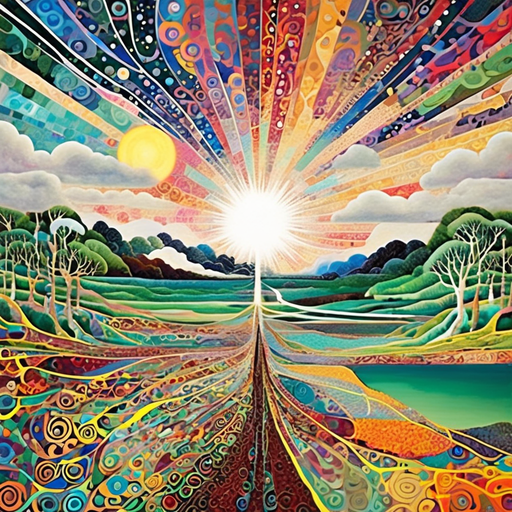
In the heart of nature’s serene expanse, one often overlooks the profound lessons embedded in the simplest of sights. Take, for instance, the trunk of a tree. At first glance, it epitomizes stillness, an unchanging pillar in a world constantly in flux. But this apparent stillness is a mosaic crafted from countless actions and interactions, a profound manifestation of what can be termed ‘absolute stillness’.

The Dynamic World of the Stationary

To truly appreciate the stillness of a tree trunk, we must delve into the bustling world it conceals. The trunk, standing unyielding, is a hub of relentless activity. Sap courses through its veins, carrying life-sustaining nutrients and water from the roots to the leaves. Though invisible to the naked eye, this flow is a ceaseless dance of molecular interactions, a symphony of life that sustains the tree.

Absolute Stillness: A Philosophical Paradox

The concept of absolute stillness arises as a philosophical paradox when we consider the incessant activity that constitutes the tree trunk’s stillness. This paradox nudges us to rethink our understanding of stillness. Is it merely the absence of visible motion, or is it a state achieved through a balance of forces, a harmonious interplay of elements that cancel each other out, resulting in what we perceive as stillness?

A Lesson in Equilibrium and Harmony

The tree trunk, in its majestic calmness, teaches us a vital lesson about equilibrium and harmony. Just as the actions and interactions within it maintain its stillness, our lives too are a constant balancing act. Emotions, thoughts, and actions intertwine, often leading us to a state of internal equilibrium that mirrors the stillness of the tree trunk.

Embracing the Stillness Within

In our fast-paced world, embracing stillness is often challenging. Yet, the tree trunk stands as a testament to the beauty and necessity of finding balance. It reminds us that stillness is not the absence of life or motion but a peaceful coexistence of dynamic forces.

In conclusion, the stillness of a tree trunk is not a mere absence of motion but a dynamic state of balance and harmony. It invites us to explore the depths of our being, find our equilibrium, and appreciate the profound tranquillity that lies in the heart of action.

Morgan O. Smith

Yinnergy Meditation, Spiritual Life Coaching & My Book, Bodhi in the Brain…Available Now!
https://linktr.ee/morganosmith

Embracing Roots

A Journey Through Ancestry and Spiritual Enlightenment

In the heart of Black History Month, a period steeped in reflection and celebration, as a born Jamaican, I embarked on a deeply personal exploration into the labyrinth of my lineage. The unveiling of my genetic heritage—spanning Nigeria, Benin-Togo, Congo-Western Bantu, Ghana, Senegal, and a surprising touch of Sweden-Denmark—initiated a profound contemplation on the spiritual practices that once thrived in these regions, long before the erasure and transformation brought by the slave trade.

The spiritual landscapes of my ancestors were rich with diversity, each culture nurturing a unique relationship with the divine, the natural world, and the community. From the Orishas of Nigeria to the ancestral veneration in the Congo, and from the rhythmic ceremonies of Vodun in Benin-Togo to the profound Serer spirituality of Senegal, these practices were rooted in a deep understanding of interconnectedness. In Ghana, the harmonious balance between the physical and spiritual realms underscored the essence of existence.

The advent of the slave trade and the subsequent imposition of Christianity introduced a seismic shift in the spiritual orientation of many African descendants. This convergence of beliefs, however, did not obliterate the ancestral wisdom but rather embedded it deeper into the collective consciousness of those who were forcibly displaced. Christianity, with its narrative of suffering, redemption, and salvation, offered a new lens through which the spiritual heritage of my ancestors could be reinterpreted.

My spiritual journey, influenced by the intricate web of my genealogy, has been a testament to the resilience and adaptability of faith. It led me to the profound awakening of Nondual Suchness—an understanding that transcends the binary oppositions and dualities that often confine our perception. This realization, that everything is interconnected and every part of the universe is contained within me, has been a transformative experience. It signifies not just a return to the spiritual practices of my ancestors but an evolution of those beliefs into a holistic understanding of existence where everything is included within the gross body of my DNA.

This journey through my ancestral spiritual practices to the enlightenment of Nondual Suchness underscores the notion that we are not merely products of our immediate culture but are deeply connected to a rich historical and spiritual lineage. It highlights how the imposition of a new spiritual system can act as a catalyst for deeper spiritual exploration, leading to a more encompassing awareness that honours both the diversity and unity of our existence.

As we celebrate Black History Month, let us remember the spiritual legacies of our ancestors. Their wisdom, resilience, and spiritual insights continue to guide us, offering a beacon of light as we navigate our paths to understanding and enlightenment. In embracing our roots, we find the strength to transcend and include all that we are, forging a path toward a future where the past is not forgotten but honoured as the foundation of our spiritual growth.

Morgan O. Smith

Yinnergy Meditation, Spiritual Life Coaching & My Book, Bodhi in the Brain…Available Now!

https://linktr.ee/morganosmith


God Through the Lens of Integral Theory

From Archaic Roots to Super Integral Horizons

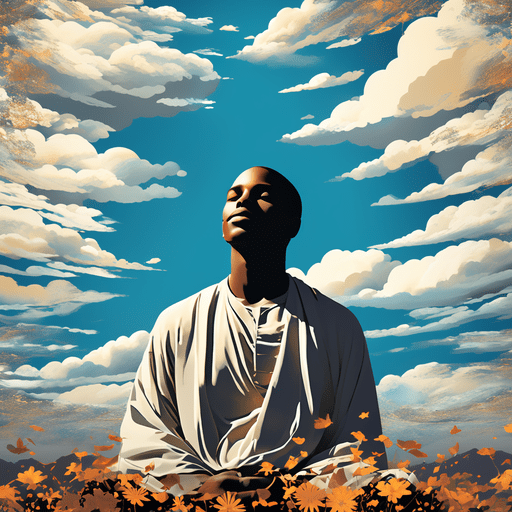
Integral Theory, a comprehensive framework developed by philosopher Ken Wilber, offers a unique lens to understand the evolution of human consciousness and culture. Through this lens, the concept of God, a central figure in many spiritual and religious traditions, has undergone a profound transformation. This blog post explores this transformation from the archaic to the super integral stage, shedding light on how our perception of the divine reflects our developmental stage.

The Archaic Understanding of God

In the archaic stage, the earliest human consciousness, God was perceived in a very elemental and life-centric manner. This stage, characterized by a deep connection with nature and the immediate physical environment, saw God as an omnipresent force, deeply intertwined with the natural world. The divine was not seen as a distinct entity but as an integral part of the living earth.

The Traditional View of God

As humanity entered the traditional stage, God began to take on a more anthropomorphic character. Here, God was often seen as a supreme being, ruling over the universe with omnipotence and omniscience. This stage reflected a hierarchical view of the world, with God at the apex, guiding and judging human affairs according to a set of moral and ethical codes.


The Modern Perspective on God

The modern stage brought a significant shift. The Enlightenment and the rise of scientific rationalism introduced a more skeptical view of God. The divine was often seen as a construct of human thought, a necessary idea to explain the unknown in a pre-scientific world. In this stage, God was often relegated to the margins of society, as human reason and empirical evidence took center stage.

The Postmodern Interpretation of God

Postmodernism, with its emphasis on relativism and subjectivity, offered a pluralistic view of God. Here, God was understood in multiple ways, reflecting the diverse perspectives of various cultures and individual experiences. The divine was no longer seen as a singular, absolute entity but as a concept open to interpretation and personal meaning.

The Super Integral Conception of God


Finally, the super integral stage, a more recent development in human consciousness, presents a holistic and inclusive understanding of God. This stage integrates the insights of all previous stages, seeing God as a multifaceted and evolving concept. Here, God is not just a being or an idea but an all-encompassing reality that transcends and includes all stages of development. This view acknowledges the complexity and depth of the divine, embracing both the immanent and transcendent aspects of God.


In conclusion, the journey from the archaic to the super integral understanding of God reflects our evolutionary path as human beings. As our consciousness expands, so does our perception of the divine, revealing the limitless potential of both humanity and God.

Morgan O. Smith

Yinnergy Meditation, Spiritual Life Coaching & My Book, Bodhi in the Brain…Available Now!
https://linktr.ee/morganosmith

The Awakening to Oneness

A Journey from Individual to Collective Consciousness

In a world brimming with over eight billion unique stories, perspectives, and lives, it’s easy to feel like just another fleeting existence. But what if our true power lies in an ancient, yet often overlooked, truth? The moment you transition from seeing yourself as “one of eight billion” to “one with eight billion,” a profound shift happens.

This is more than a play on words; it’s a paradigm shift in how we perceive our existence and connection with the world. We often navigate life perceiving ourselves as solitary islands in a vast ocean of humanity. Yet, this perspective is limiting, preventing us from realizing our collective potential.


The realization of oneness doesn’t mean losing your individuality. Rather, it’s an awakening to the interconnectedness of all beings. Imagine the impact of eight billion unique individuals, each with their dreams, struggles, and triumphs, coming together in shared consciousness. This unity doesn’t erase our differences but celebrates them, weaving a tapestry of diversity that is our collective strength.

This journey to oneness starts within. It begins with the recognition that every thought, every action, and every word has the power to affect the collective consciousness. When you act with kindness, compassion, and understanding, you aren’t just uplifting yourself; you’re contributing to the elevation of the global consciousness.


The challenges facing our world today – from climate change to social injustice – require more than individual efforts. They demand a collective awakening to the power of oneness. When we start seeing the world’s problems as our own, we mobilize a force of eight billion strong, capable of enacting monumental change.

As you navigate your journey, remember that the realization of oneness isn’t a destination but a continuous process. It’s a daily practice of empathy, understanding, and connection. You are one of eight billion until you become one with eight billion. Embrace this truth, and watch as the world transforms around you.

Morgan O. Smith

Yinnergy Meditation, Spiritual Life Coaching & My Book, Bodhi in the Brain…Available Now!

https://linktr.ee/morganosmith

Spiritually Awakened Beings

Renouncing vs Embracing the World

The journey toward spiritual awakening often leads to a critical crossroad: should one renounce the world or choose to live within its bounds? This decision fundamentally shapes the psychological personality traits of spiritually awakened individuals.

Those who renounce the world often develop traits centred around asceticism, introspection, and detachment. Their lives are marked by minimalism and a profound sense of inner peace. They tend to have a deep sense of empathy but from a distance, often avoiding the emotional entanglements of worldly life. Their focus is inward, striving for personal enlightenment and a disconnection from material desires.


Conversely, spiritually awakened beings who choose to live in the world exhibit a different set of traits. They are often deeply involved in societal issues, embodying compassion and active empathy. Their spirituality is expressed through engagement, seeking to bring about change and healing in a tangible way. They balance their inner work with external responsibilities, often finding spiritual fulfillment in the act of service.

Both paths are valid and profound in their ways, yet they lead to distinct psychological landscapes. Renunciates often find solace in solitude and simplicity, while those who engage with the world thrive on connection and action. The common thread is the pursuit of a deeper understanding and experience of life beyond the superficial.


This dichotomy raises important questions about the nature of spirituality and its role in the modern world. Is true spiritual awakening only attainable through renunciation? Or can it be achieved amidst the chaos of everyday life? The answer might lie in the understanding that spirituality, at its core, is deeply personal and cannot be confined to a singular path.

Morgan O. Smith

Yinnergy Meditation, Spiritual Life Coaching & My Book, Bodhi in the Brain…Available Now!
https://linktr.ee/morganosmith