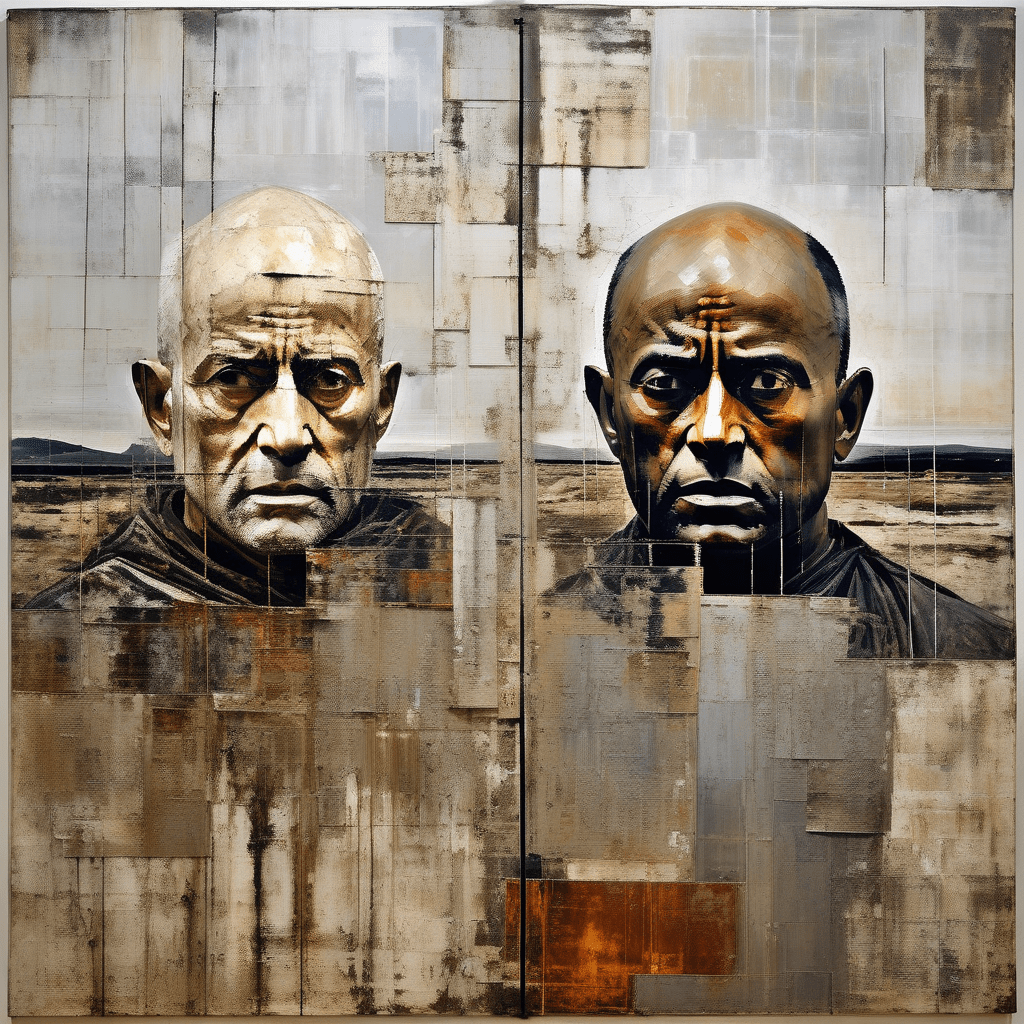
The Ground of All Beings vs. The Ground of All Being

In the realm of philosophy, the concepts of “the ground of all beings” and “the ground of all being” often emerge as central themes in discussions about existence, consciousness, and the nature of reality. These concepts, while seemingly similar, offer distinct perspectives on how we understand the universe and our place within it.

**The Ground of All Beings**


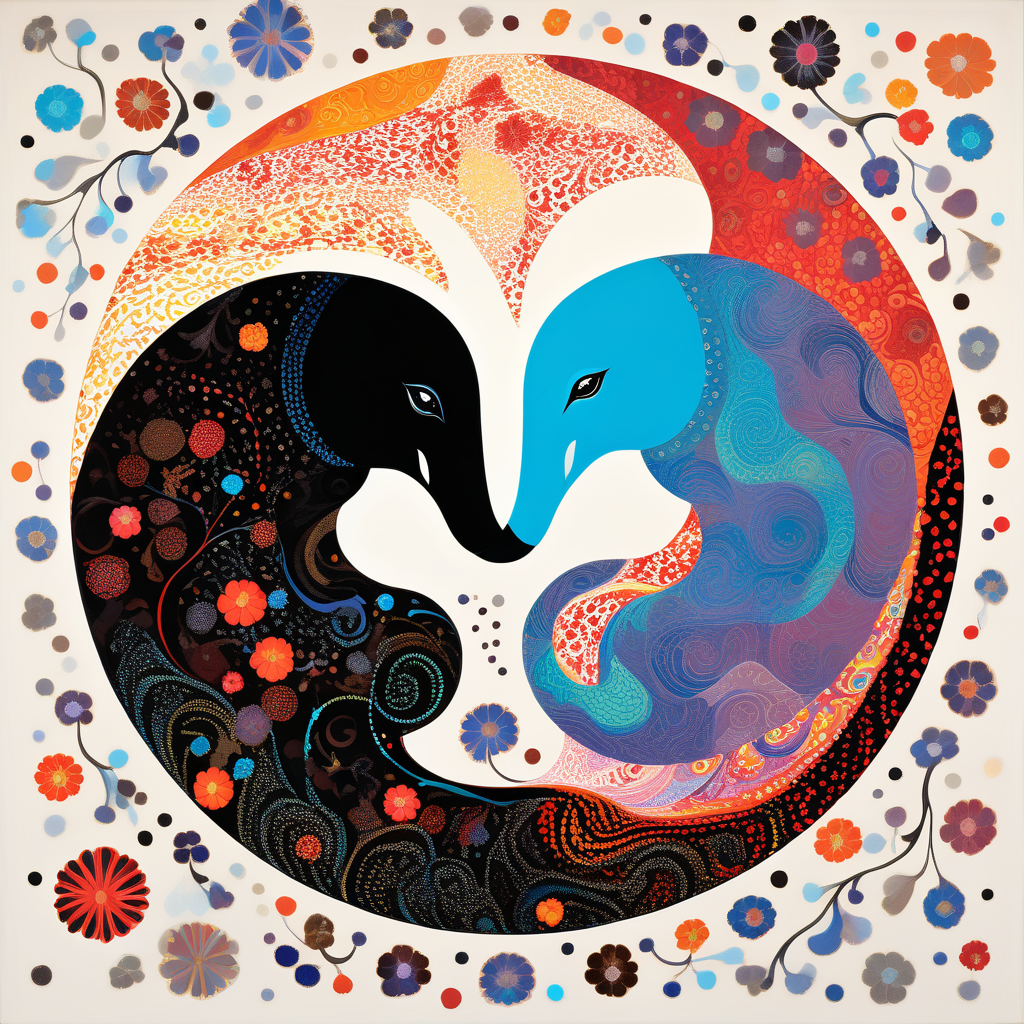
“The ground of all beings” refers to the idea that the foundation of reality is the multitude of individual entities that exist. This perspective sees the universe as a collection of distinct beings, each with its essence and characteristics. According to this view, the diversity of objects, organisms, and entities contributes to the fabric of reality. It emphasizes plurality, acknowledging the unique qualities and experiences of each being. This approach often aligns with perspectives that value individuality and the richness that comes from varied existences.
**The Ground of All Being**

On the other hand, “the ground of all being” suggests a more unified view of existence. Here, the focus is on the underlying reality that connects all things, rather than the things themselves. This concept points to a fundamental source or essence that underpins everything. It’s often associated with ideas of oneness or the belief in a universal substance or consciousness that permeates all. This perspective is prominent in various spiritual and metaphysical beliefs, where the unity of existence is emphasized over individual differences.

**Philosophical Implications**


The debate between these two views is significant in philosophy as it shapes our understanding of the world. If we lean towards “the ground of all beings,” we might focus on the differences and separateness of things, leading to a worldview that celebrates diversity and individuality. Conversely, embracing “the ground of all being” could lead to a more holistic view of life, where interconnectedness and unity are fundamental.


**Conclusion**

Ultimately, these concepts are not just abstract philosophical ideas but are also reflective of our everyday experiences and how we perceive our relationship with the world. Whether we see the universe as a tapestry of distinct threads or as a single, interconnected whole, these views shape our beliefs, values, and actions. As such, the exploration of these concepts is not just a philosophical exercise but a journey into understanding the very nature of existence itself.

Morgan O. Smith

Yinnergy Meditation, Spiritual Life Coaching & My Book, Bodhi in the Brain…Available Now!

https://linktr.ee/morganosmith

Can One Choose to Go Back to Being Unenlightened?

The journey toward enlightenment is often viewed as a one-way path, leading to a state of spiritual awakening that fundamentally changes one’s perception of the world and self. But is it possible to revert to a state of unenlightenment? This question opens a fascinating philosophical debate.

#### The Irreversibility of Enlightenment


Once an individual experiences spiritual enlightenment, it is commonly believed that this transformation is irreversible. In spiritual traditions like Hinduism, Buddhism, and various mystic philosophies, enlightenment—referred to as Sahaja Samadhi, Turiyatitta, Nirvana, Nibbana, Moksha, Bodhi, and other names—is seen as the ultimate achievement. It’s a profound understanding of the universe and one’s place, transcending ordinary perception.

The idea of willingly abandoning such a state seems counterintuitive. Why would one return to a less aware state after enlightenment? For those who have experienced this profound awakening, giving it up, especially while in the human body, seems unimaginable.


#### The Divine Paradox

However, when considering the divine or absolute reality—referred to in various traditions as God, Brahman, Allah, or the Ground of All Being—there’s an intriguing paradox. This ultimate reality is believed to manifest itself in all forms of existence, encompassing every species and aspect of the universe. In doing so, it seemingly relinquishes its state of pure enlightenment to become the myriad forms of life and matter.

#### The Bodhisattva’s Choice

In Mahayana Buddhism, the concept of the Bodhisattva presents another unique perspective. A Bodhisattva is an individual who has caught a glimpse of enlightenment but chooses not to enter this state fully. This choice is made out of compassion, with the vow to help all sentient beings achieve enlightenment before achieving it themselves fully. This represents a profound sacrifice and a different understanding of enlightenment, not as a personal achievement but as a collective goal.


#### Conclusion

The question of whether one can choose to return to unenlightenment is complex and multi-faceted, deeply rooted in various spiritual traditions and philosophical contemplations. It invites us to consider the nature of spiritual awakening, the role of the divine in the cosmos, and the interconnectedness of all beings in the journey toward enlightenment.

Morgan O. Smith

Yinnergy Meditation, Spiritual Life Coaching & My Book, Bodhi in the Brain…Available Now!
https://linktr.ee/morganosmith

Embracing the Absolute

Understanding the Unity of Existence

In the grand tapestry of existence, there exists a profound and often overlooked truth: all is the absolute. This statement, deceptively simple, unravels layers of deep philosophical understanding about our universe and our place within it. The concept of the absolute refers to the ultimate reality, a state of being that transcends the ordinary distinctions and separations that we, as individuals, experience in our daily lives.

The universe, in its infinite complexity, is a manifestation of this absolute reality. Each star, planet, organism, and atom contributes to this holistic entity, making the universe not just a collection of parts, but an interconnected whole. The absolute is not something distant or detached from our reality; it is our reality, in its most profound and all-encompassing form.

Interestingly, this perspective aligns with various philosophical and spiritual traditions, which have long proposed that the fundamental nature of reality is a unified field of existence. In this view, the distinctions we make between ourselves and the world around us are, in a sense, illusions. They are practical and necessary for our survival and daily functioning, but they do not represent the deeper truth of our existence.


The individual ego, the sense of self that each of us carries, is also an expression of the absolute. This notion challenges our conventional understanding of individuality and separateness. The ego, often perceived as a distinct and isolated entity, is, in reality, another aspect of the absolute. It’s not separate from the absolute but a unique expression of it.

This perspective invites us to reconsider the nature of our identity. If our egos are manifestations of the absolute, then the boundaries between ourselves and the rest of the universe become more permeable. We are not isolated beings, but integral parts of a larger, dynamic whole. This realization can be both humbling and empowering, as it connects us to something greater than ourselves and dissolves the illusion of isolation.

However, the ego often operates under the illusion of separateness. It constructs a narrative of individuality that, while necessary for our functional existence, obscures the deeper truth of our interconnectedness. This illusion is not a fault but a feature of the human experience, a necessary aspect of our journey through life.


In recognizing our true nature as expressions of the absolute, we open the door to a more profound understanding of existence. We begin to see the interconnectedness of all things and the unity that underlies the apparent diversity of the universe. This realization has the potential to transform our perspective on life, fostering a sense of connection, compassion, and a deeper appreciation for the mystery and beauty of existence.

Morgan O. Smith

Yinnergy Meditation, Spiritual Life Coaching & My Book, Bodhi in the Brain…Available Now!

https://linktr.ee/morganosmith

The Paradox of Self and No-Self

Navigating Samsara and Nirvana

In the profound journey of spiritual understanding, the concepts of birth, death, and rebirth hold a pivotal place. The intriguing idea that an enlightened being, despite their profound realization, can still be subject to the continuous cycle of reincarnation, presents a paradox that invites deep contemplation.

The pursuit of Nirvana or Moksha, as understood in various spiritual traditions, suggests a state where this perpetual cycle is broken. This liberation, often depicted as the ultimate goal in spiritual endeavours, implies an escape from the continuous loop of birth, death, and rebirth.

However, this raises a thought-provoking question: Can one truly experience and comprehend nondual suchness – a profound realization of their true self as the foundational essence of all existence – and yet remain entangled in the cycle of birth and death? This notion challenges our understanding of spiritual liberation and the nature of self-awareness.


The intricate relationship between Samsara (the cycle of birth and death) and Nirvana (liberation from this cycle) is a complex one. They are often perceived as two distinct realms or states of being. Yet, in a deeper existential sense, they might be seen as the same. This perspective opens up a philosophical exploration into the nature of the self.

The concept of ‘no-self’ is central to this discussion. It posits that the individual self we identify with is an illusion, a transient construct devoid of inherent existence. Paradoxically, this ‘no-self’ is also the self, as there is no true separation between the individual and the universal. Thus, one might refer to it as the ‘no-self,’ questioning the very existence of a label or reference point in this boundless, interconnected reality.

This exploration leads to profound questions: Who labels this existence if the self is an illusion? What is the nature of the self that encompasses everything, yet is nothing in itself? These are the riddles that spiritual seekers have pondered for ages, and they remain mystifying and intriguing today.


This philosophical conundrum invites us to dive deeper into our understanding of existence, self, and liberation. It challenges us to look beyond the conventional notions of identity and existence, urging us to explore the very essence of being.

Morgan O. Smith

Yinnergy Meditation, Spiritual Life Coaching & My Book, Bodhi in the Brain…Available Now!
https://linktr.ee/morganosmith

Exploring the Nondual State of Turiyatitta

Beyond the Ego’s Realm

In the journey of spiritual awakening, particularly during the Enlightenment period, we encounter profound concepts that challenge our understanding of self and existence. Among these concepts is the intriguing idea of the nondual state known as Turiyatitta. This state signifies a pivotal transformation where the individual transcends ordinary consciousness, reaching a realm beyond the ego’s grasp.

### The Death of the Ego


At the heart of this transformation lies the “death of the ego.” This term, often shrouded in mysticism, refers to a significant shift in one’s perception of self. In our usual state, we identify strongly with our ego, which is essentially our constructed self-image, replete with our personal history, beliefs, and idiosyncrasies. The ego thrives on differentiation, seeing the self as separate from others and the world at large.


### Turiyatitta: The Nondual Experience

However, in the state of Turiyatitta, this differentiation dissolves. It is a state where the boundaries that separate the individual from the experience are no longer present. In simpler terms, the experiencer (the individual) and the experience become indistinguishable. This is a profound realization, where one no longer views themselves as an isolated entity navigating through an external world, but rather as an integral part of a unified whole.

### Implications of Nonduality

This nondual perspective offers a radical shift in understanding the nature of existence. It challenges the deeply ingrained notion of individualism that pervades many cultures. In Turiyatitta, the sense of separation, which is the root cause of much of our suffering – be it in the form of loneliness, competition, or conflict – dissolves. What remains is a sense of oneness, a deep connection with all that is.


### The Journey to Enlightenment

Reaching this state is often described as the pinnacle of the spiritual journey, a key milestone in the path to Enlightenment. It requires deep introspection, meditation, and often, guidance from spiritual teachings and mentors. It’s not merely an intellectual understanding but a lived, experiential reality.

### Conclusion


The concept of Turiyatitta, and the experience of nondual awareness it describes, presents a fascinating and potentially transformative perspective on life and existence. It invites us to reconsider our relationship with ourselves, others, and the world around us, promising a path toward greater harmony, peace, and understanding.

Morgan O. Smith

Yinnergy Meditation, Spiritual Life Coaching & My Book, Bodhi in the Brain…Available Now!

https://linktr.ee/morganosmith

Understanding Spiritual Enlightenment and Nirvana

A Journey Beyond Words

The quest for spiritual enlightenment is a journey that transcends mere words and enters the realm of profound inner transformation. In the West, enlightenment is often equated with a comprehensive understanding of one’s true nature. This interpretation focuses on the illumination of the self, its intricacies, and its connection to the larger universe. It’s a state of comprehension, where the veils of ignorance are lifted, revealing the true essence of being.

In Eastern traditions, particularly Buddhism and Advaita Vedanta, enlightenment takes on a different hue. Here, it’s synonymous with Nirvana or Moksha – the liberation from the endless cycle of birth, death, and rebirth, known as samsara. This liberation is not just an intellectual understanding but a profound realization that leads to the dissolution of the self. In Buddhism, this is conceptualized as Anatta or no-self, a realization that the self is an illusion and liberation lies in transcending it.


Similarly, in Hinduism, Moksha aligns with the concept of Brahman – the ultimate reality or universal self. While seemingly different, both Nirvana and Moksha converge on the same endpoint: liberation from all forms of suffering and the cycle of samsara.

However, there’s a subtle yet significant distinction to be made. One can achieve spiritual enlightenment – a deep comprehension of their nature and the nature of reality – yet still be bound by the chains of samsara. It’s a state of awakening, an important step on the path, but not the culmination. True liberation, as seen in the concepts of Nirvana and Moksha, involves not just comprehension but also a complete surrendering of the self, a realization of its illusory nature, and ultimately, liberation from the cycle of existence.


Thus, while spiritual enlightenment and Nirvana (or Moksha) are often used interchangeably, their meanings diverge significantly based on cultural and philosophical contexts. In the West, enlightenment is primarily about understanding, while in Eastern philosophies, it’s about liberation. Only when the facets of comprehension, surrendering, realization, and liberation are all present can we step beyond spiritual awakening into the realm of true spiritual enlightenment.

Morgan O. Smith

Yinnergy Meditation, Spiritual Life Coaching & My Book, Bodhi in the Brain…Available Now!
https://linktr.ee/morganosmith

The Paradox of the Universe

When we gaze into the vast expanse of the universe, a fundamental question arises: What is the universe made of? It seems like a straightforward inquiry, one that science could answer with theories of matter, energy, particles, and forces. However, upon deeper reflection, the answer becomes less about physics and more about philosophy. The universe, in its most enigmatic form, is made of itself, which paradoxically, is nothing.

This concept, while initially sounding absurd, invites us to explore the nature of existence and the fabric of reality. The universe isn’t just a collection of galaxies, stars, and planets; it’s an intricate tapestry of existence, interwoven with the threads of time, space, and consciousness. To say the universe is made of itself is to acknowledge that it is a self-contained entity, not requiring an external creator or an outside source of substance.


Delving deeper, the idea of the universe being ‘nothing’ challenges our understanding of ‘nothingness’. In philosophy, ‘nothing’ is often considered a state of non-existence, an absence of everything. Yet, in the context of the universe, ‘nothing’ transforms into a concept of boundless potential. This ‘nothing’ is not an emptiness (not in the traditional sense) but a source of all creation, a primordial state from which everything emerged.

This perspective aligns with some interpretations of quantum physics, where the vacuum of space is not empty but teeming with energy and potentiality. It’s in this ‘nothingness’ that particles pop in and out of existence, creating the fabric of reality as we perceive it. Therefore, the universe is made of itself and nothing is not a contradiction but a profound insight into the nature of reality.


The implications of this thought are vast and deeply philosophical. It suggests that the universe, and by extension, our existence, is a self-generated, self-sustaining phenomenon. We are not just in the universe; we are of the universe – an integral part of this grand, incomprehensible entity that is both everything and nothing.

In conclusion, the question of what the universe is made of leads us down a path of deep philosophical contemplation. It reveals that the universe, in its essence, is a paradox, defying the conventional understanding of existence and non-existence. It’s a reminder of the mystery and wonder that surrounds us, an invitation to ponder the unfathomable depths of reality.

Morgan O. Smith

Yinnergy Meditation, Spiritual Life Coaching & My Book, Bodhi in the Brain…Available Now!
https://linktr.ee/morganosmith

A Heartfelt Thank You to Aliyah Bey

An Inspiring Yinnergy Participant

As we journey through the myriad paths of life, it’s the connections we forge that often leave the most indelible marks on our hearts and minds. Today, I feel compelled to express my deepest gratitude to a remarkable individual who has been an unwavering pillar of support and inspiration in our Yinnergy community – Aliyah Bey.

I first had the pleasure of e-meeting Aliyah Bey in September of last year, following my appearance on the Canaanland Moors podcast, graciously hosted by my friend and colleague, Kudjo El. Aliyah, a dedicated mother and an exemplary homeschool teacher, stood out with her earnest engagement and insightful contributions.

In this digital age, where interactions often lack the warmth of physical presence, Aliyah’s support for my work and the Yinnergy Meditation community has been nothing short of extraordinary. Despite never having met her in person, her impact is palpable and deeply appreciated. She embodies the spirit of Yinnergy – a willingness to learn, an eagerness to grow, and a heart that generously supports others.

Her consistent communication, eagerness to embrace new knowledge, and encouragement for my writing endeavours – particularly this blog, which she follows regularly – have been sources of immense motivation. It is rare to find someone who so genuinely revels in the success and growth of others, and Aliyah does just that with a grace that is both humbling and empowering.

Aliyah, if you are reading this – and I have a strong feeling you are – I want to extend my sincerest thanks to you. Your presence in the Yinnergy community is a gift that keeps giving. You remind us of the power of kindness, the strength in community, and the beauty of a supportive spirit. From the bottom of my heart, Thank You!

In closing, I hope this message serves as a reminder to us all about the importance of appreciation, support, and community. We may not always have the opportunity to meet those who touch our lives in person, but their influence is no less significant. To Aliyah, and to all who contribute to the tapestry of our shared experiences, thank you for being the light on this journey.

Morgan O. Smith

https://linktr.ee/morganosmith

Embracing the Spectrum

Perspectives on Nonduality

In the realm of spirituality and philosophy, nonduality presents a fascinating paradox. It’s a term that evokes both simplicity and complexity, challenging our understanding of reality and existence. At its core, nonduality means ‘not two’ or ‘one without a second’. This concept, often rooted in Eastern philosophies such as Advaita Vedanta, posits that there is no fundamental division in the universe. Everything, at its essence, is the same.

But here’s where it gets intriguing: within this notion of oneness, myriad perspectives and interpretations exist. Each of these perspectives offers a unique lens through which we can view nonduality. Some may see it as a spiritual realization of oneness with the universe, others as a philosophical understanding that transcends physical distinctions. Some approach nonduality through the lens of science, seeking to understand how this concept aligns with the interconnectedness revealed in quantum physics.


What’s remarkable is that all these perspectives are valid and encompassed within the unified reality of nonduality. This inclusivity is precisely what nonduality is about – it’s not just a concept of ‘no distinctions’ in a literal sense, but also a recognition that every interpretation, every perspective, is part of the whole. The variety of viewpoints doesn’t dilute the concept but enriches our understanding and appreciation of it.

This leads us to a profound realization: nonduality isn’t just a concept to be understood intellectually, but an experiential truth to be lived. It encourages us to look beyond the apparent separations and differences that define our everyday existence. In recognizing nonduality, we find a deeper connection with the world around us, seeing ourselves not as isolated beings but as integral parts of a greater whole.


In essence, nonduality teaches us that while we may perceive distinctions and separations in the world, at a fundamental level, these distinctions are illusory. It invites us to experience life not just through the lens of separation but through a lens of unity and interconnectedness. This shift in perspective can be transformative, offering a pathway to greater understanding, compassion, and peace.

As we explore this concept further, it’s essential to remember that nonduality isn’t about negating diversity or individual experiences. Instead, it’s about recognizing the underlying unity that encompasses all diversity. It’s a journey of discovery, where each step in understanding brings us closer to the profound simplicity at the heart of existence.

Morgan O. Smith

Yinnergy Meditation, Spiritual Life Coaching & My Book, Bodhi in the Brain…Available Now!
https://linktr.ee/morganosmith

The Paradox of Understanding

Embracing the Ground of All Being

As we embark on the journey of understanding the essence of our existence, we often find ourselves entangled in a paradoxical quest. The profound pursuit of comprehending the ‘ground of all being’ – the foundational reality that underpins our very existence – is a path treaded by philosophers, mystics, and thinkers alike. Yet, this quest often comes to a halt, not because of a lack of effort, but because of the nature of what we seek to understand.

The ground of all being, by its very definition, transcends the boundaries of human comprehension. It is an entity or a state that exists beyond the limits of our cognitive abilities. We, as beings limited by our perceptions and understanding, often find this concept elusive. It’s akin to asking a fish to describe water; the fish knows it exists within water, but cannot perceive it as something separate from its existence.


However, the journey doesn’t end here. There’s a transformative realization that emerges when we stop trying to intellectually grasp this foundational reality. It’s when we let go of the need to understand and become one with the comprehension itself. This shift in perspective is profound. We move from a state of trying to ‘know’ to a state of ‘being’ in knowledge.

This transformation leads to a profound understanding of ourselves. We are not merely what we appear to be – physical entities navigating through life’s complexities. Instead, we are embodiments of comprehension, part of the vast, interconnected web of existence. We are both the seekers and the embodiment of what is sought.


Upon this realization, the world transforms before our eyes. Everything we perceive becomes imbued with an intrinsic beauty. This beauty is not a superficial aesthetic; it’s a deeper recognition of the interconnectedness and the sacredness of all that is. In comprehending our place in this grand tapestry, we find beauty in the mundane, the ordinary, and even the chaotic.

In conclusion, the quest to comprehend the ground of all being leads us back to ourselves. It’s a journey from seeking understanding outside to finding it within. As we embrace this journey, we find that beauty lies not just in what we see, but in the eyes of the comprehensive – in our newfound ability to perceive the world through the lens of interconnectedness and oneness.

Morgan O. Smith

Yinnergy Meditation, Spiritual Life Coaching & My Book, Bodhi in the Brain…Available Now!

https://linktr.ee/morganosmith