Trans-Rational vs. Pre-Rational

The Subtle Distinction of True Spiritual Maturity

Many spiritual paths appear radiant on the surface, filled with symbols, mantras, and promises of transcendence. Yet beneath the surface lies a crucial divide often overlooked: the difference between pre-rational and trans-rational spirituality. Both appear to reach beyond logic, yet one regresses beneath it while the other transcends it entirely. To the untrained eye, they can look identical.

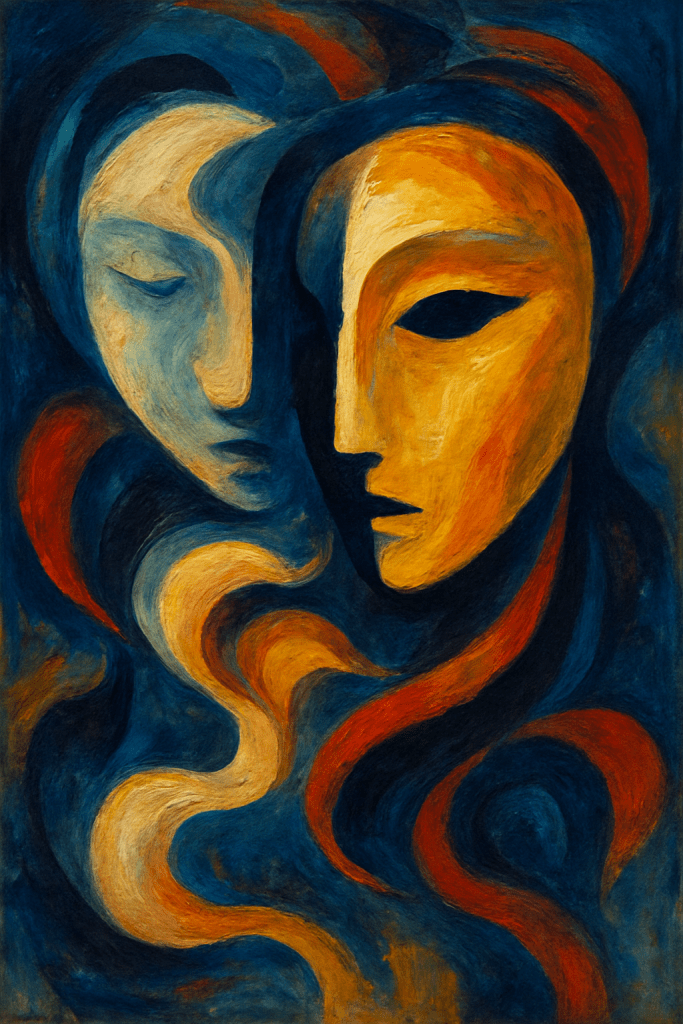
The pre-rational domain is instinctive, emotional, and magical. It belongs to an earlier structure of consciousness that sees reality through myth, projection, and emotional fusion. The pre-rational individual feels connected to life, but that connection is often undifferentiated; there is no clear boundary between the self and the world. Intuition replaces discernment. Myth replaces direct knowing. This is the consciousness of the dreamer who mistakes imagination for revelation. Many who fall into this category speak the language of mysticism but remain bound by emotional dependency and unexamined belief.

The trans-rational individual, on the other hand, has journeyed through the rational mind, not around it. They have integrated logic, science, and self-reflection into their foundation. Their transcendence is not an escape from intellect but a movement beyond its limitations. The mind becomes a servant rather than a master. Awareness expands to include paradox, complexity, and the ineffable without denying the relative truth of reason. Where the pre-rational personality confuses fantasy with insight, the trans-rational sees through both fantasy and logic as partial mirrors of the Real.

Many spiritual communities confuse these two movements, what Ken Wilber calls the pre/trans fallacy. Mystical language, emotional intensity, or devotion can appear “advanced,” when in fact they may mask regression to earlier, unintegrated states. True trans-rational realization does not deny the world; it refines perception until all appearances reveal the same unbroken consciousness. It honours both matter and spirit as dimensions of the same reality, seeing no need to reject one for the other.

The pre-rational seeks comfort in transcendence; the trans-rational finds freedom in presence. The former escapes complexity; the latter embraces it as divine play. One dissolves into illusion; the other dissolves illusion itself. The difference is not about how high one climbs, but how fully one includes.

Morgan O. Smith

Join us for our free virtual Zoom/YouTube group meditation session tonight, Wednesday, November 12th, at 8:00 PM ET. Please have your headphones or earbuds ready for the full experience. Take an hour for yourself to unwind, breathe, and reconnect.

Meeting ID: 859 0097 8411

Passcode: 676036

Our Virtual Group Meditation Session Nov 12th!

Join us for our free virtual group meditation session this Wednesday, November 12th at 8:00 PM ET.

Please have your headphones or earbuds ready for the full experience.

Take an hour for yourself to unwind, breathe, and reconnect.

Meeting ID: 859 0097 8411
Passcode: 676036

Warm regards,
Morgan O. Smith
Bodhi Mental Care & Wellness

Thresholds of the Infinite

The Absolute cannot be received by a vessel unprepared for its voltage. Consciousness, like circuitry, must be refined to hold the charge. The higher the threshold across the physical, emotional, and mental domains, the more precisely reality can transmit its undiluted essence through one’s being.

The body is not a hindrance to transcendence; it is the grounding rod. A nervous system conditioned through presence, breath, and embodiment becomes the bridge between the finite and the boundless. Without such refinement, the encounter with higher states risks distortion, overwhelm, or fragmentation. The Absolute demands structure, not as rigidity, but as integrity strong enough to remain open while containing the immeasurable.

Emotionally, the heart must learn to remain unguarded even in the storm. The capacity to feel everything without collapse is what allows compassion to expand beyond sentiment into universality. Each emotional breakthrough increases the voltage of love one can sustain without defence. To feel deeply without drowning is the silent mastery of awakened sensitivity.

Mentally, clarity becomes the crucible. The mind must learn to dissolve without disintegrating; to rest in stillness without forsaking discernment. Thought, when purified of obsession and identification, becomes transparent to the Real. Then language no longer imprisons truth but becomes its faint echo.

Those who cultivate balance across all thresholds do not chase transcendence; they embody it. They become the conduit through which the Absolute interprets itself, wordlessly, endlessly, with precision born of surrender.

Morgan O. Smith

Get Your Free Copy of My Book, Bodhi in the Brain!
https://subscribepage.io/oTSZQu

The Untranslatable Truth

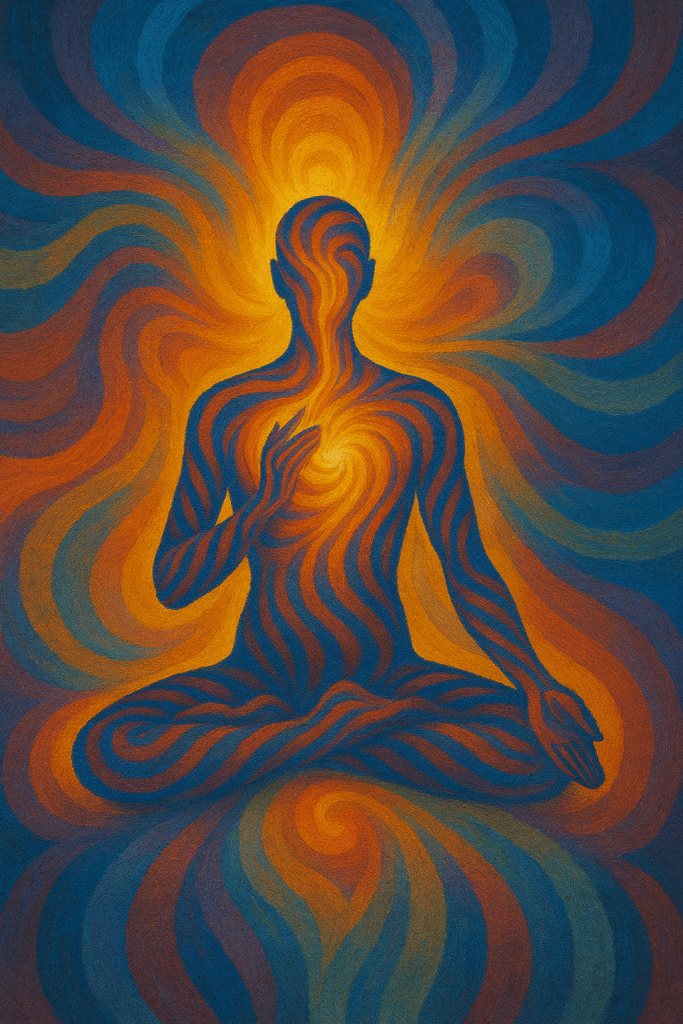
Every attempt to describe ultimate reality begins from within limitation. Even the most awakened consciousness cannot hold the whole of what is; it can only reflect fragments of an infinite field through the prism of its own development. The absolute may be directly experienced, yet interpretation remains tethered to the mind’s evolution. Awareness can pierce the veil, but the translation of that piercing, the language, the symbols, the meaning, unfolds through the structures of human understanding.

At the highest stages of psychological and spiritual growth, perception becomes increasingly transparent to the Real. Layers of distortion thin, and the boundaries between observer and observed soften into mutual recognition. The self no longer interprets reality as something external; it feels itself as the very movement of interpretation itself. Yet even here, beyond dualistic knowing, the infinite continues to exceed all possible comprehension. To see truth is one thing; to speak it is another. The moment it is spoken, the ineffable has already been reduced.

Every level of consciousness constructs a version of the world consistent with its own depth of awareness. Mythic minds imagine gods shaping destiny; rational minds uncover laws of physics; integral minds perceive interwoven systems of meaning. Each reveals something essential, yet none are complete. Reality is not a single revelation but the total field that contains all revelations; each illusion, each breakthrough, each mistaken certainty. Maya is not an obstacle but a necessary expression of what is. To awaken does not mean to destroy illusion, but to recognize that illusion itself is included in the real.

The absolute is not somewhere beyond the dream; it is the dream and the dreamer, the veil and what shines through it. Every stage, every interpretation, every attempt to name the nameless belongs to it. Truth remains forever ungraspable, yet it breathes through every grasp. To live this is to rest in a humility that knows: the closer one moves toward reality as it is, the more radiant its mystery becomes.

Morgan O. Smith

Get Your Free Copy of My Book, Bodhi in the Brain!
https://subscribepage.io/oTSZQu

The Fragrance of Awareness

Why Everything Begins to Appear Beautiful

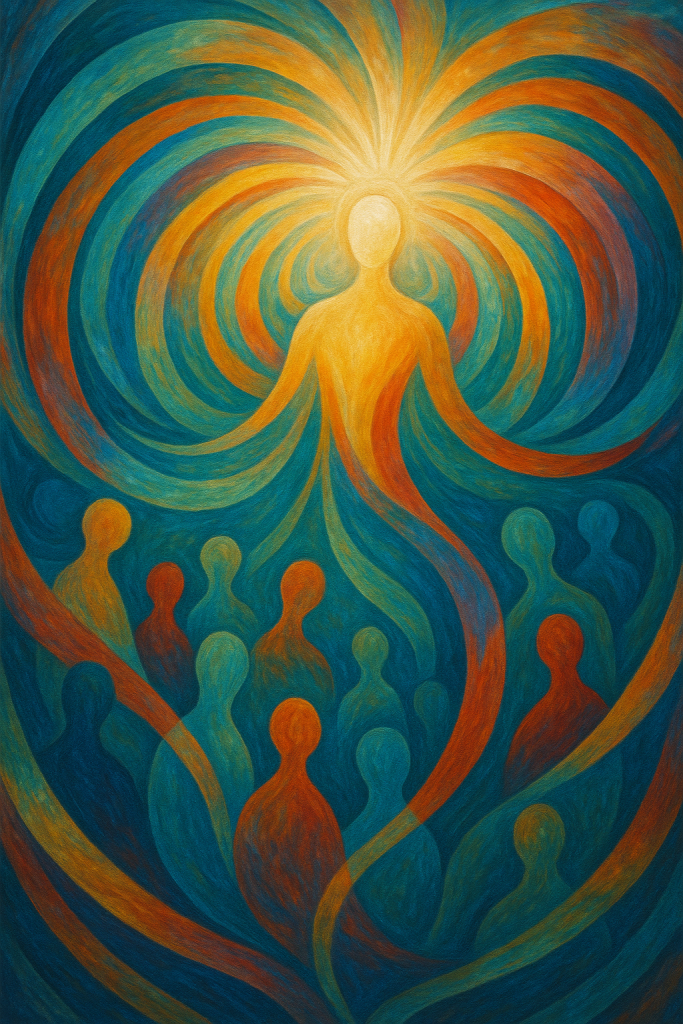
Long-term meditation reshapes perception not by adding new qualities to reality, but by stripping away the distortions that once filtered it. What was previously judged as ugly, tragic, or unjust begins to reveal a quiet radiance beneath its form. The world does not change; awareness does. Beauty ceases to depend on preference. It becomes the natural scent of existence when the mind grows still enough to notice.

When thoughts slow and habitual interpretation dissolves, perception rests directly on what is. The ordinary becomes luminous because there is no longer resistance to what appears. A cracked wall, a wrinkled face, or a moment of loss can shimmer with the same grace as a sunset. Meditation gradually erodes the reflex that divides life into categories of like and dislike, pleasant and unpleasant. What remains is an intimacy with reality so complete that even pain acquires a certain sacred texture.

Beauty, in this sense, is not sentimentality; it is clarity. The mind that no longer insists on how life should look begins to perceive how extraordinary it already is. Awareness witnesses decay and creation as one movement. The tears of grief and the laughter of birth flow from the same source, both radiant with the light of consciousness itself.

This transformation of perception is not a psychological trick; it is the awakening of the senses to their original purity. Meditation returns vision to its natural state; unburdened by personal story, untouched by grasping. To the silent witness, everything breathes with equal dignity. The beggar and the saint, the chaos and the calm, all belong to a single wholeness that can only be described as beautiful beyond reason.

When the veil of self-interest lifts, beauty ceases to be an object and becomes the very field of being. One no longer seeks it. One lives as it.

Morgan O. Smith

Get Your Free Copy of My Book, Bodhi in the Brain!
https://subscribepage.io/oTSZQu

The Disappearance of the Seeker

Meditation isn’t merely a technique; it is the gradual erasure of illusion. Every breath, every moment of stillness, dissolves another layer of pretense until what remains is not a person meditating, but consciousness aware of itself. Liberation is not gained; it is revealed when the striving ends. The self that once sought enlightenment discovers it was never apart from what it pursued.

The unfolding of awareness moves through countless thresholds. There are moments of clarity where boundaries soften, and the familiar sense of “I” loosens its grip. Some call these glimpses samādhi, nirvāṇa, or turiya. Beyond even these is turiyatīta, the unnameable state where all distinctions vanish. Subject and object collapse into one reality. The opposites that define existence, light and dark, life and death, God and creation, are seen as expressions of a single, seamless truth.

This realization does not occur through effort alone. For some, it arrives after years of disciplined practice. For others, it erupts without warning, as if eternity could no longer hide behind time. Yet whether noticed or not, this state is always present. Every being already lives as the infinite, experiencing the play of separation as though it were real.

To awaken is to stop pretending. To drop the mask of becoming and recognize the silent presence that has never moved. Once seen, life cannot return to its previous rhythm. Even the simplest act becomes sacred; a reflection of the whole living through itself. The journey ends where it began: in the undeniable truth that there was never a seeker, only the seeing itself.

Morgan O. Smith

Get Your Free Copy of My Book, Bodhi in the Brain!

https://subscribepage.io/oTSZQu

The Ever Was and Ever Shall Be

There comes a moment when the illusion of movement dissolves, when the current of time no longer feels like a river carrying us toward an imagined horizon, but as the still water of being itself. The mind, once convinced of beginnings and endings, now trembles before the vastness of what has never begun and can never end. Presence reveals itself not as a fleeting instant between two eternities, but as the totality that holds them both.

The one who sought eternity discovers that eternity was never elsewhere. The seeker collapses into the sought, the knower into the known. Memory and anticipation dissolve into a silent awareness that neither moves nor changes, yet births all movement and change. Here, past and future lose their grip, for the witness has stepped outside the dream of succession.

This realization is not an attainment; it is the unmasking of what has always been awake beneath the play of becoming. To see this is to awaken from the hypnosis of time; to stand where all stories converge into the unspoken truth that Being never left itself. The eternal was not something to be found; it was the one doing the finding.

The self that once feared death, loss, or delay now recognizes itself as the very space in which all things appear and disappear. What remains is unspeakably still, radiant, and whole; beyond duration, beyond decay. Awareness, having remembered itself, no longer seeks to survive; it simply shines.

Morgan O. Smith

Get Your Free Copy of My Book, Bodhi in the Brain!

https://subscribepage.io/oTSZQu

The Evolution of Karma

From Fear to Freedom

Karma is often spoken of as a simple equation, action and consequence, sowing and reaping, yet its meaning changes dramatically as consciousness evolves. What begins as superstition matures into wisdom, and what once felt like punishment reveals itself as love wearing the mask of correction. Each stage of development reshapes the lens through which karma is seen, shifting from fear-driven obedience to effortless alignment with the infinite.

At the earliest level, karma is pure survival instinct. The world feels hostile and unpredictable, and unseen forces must be appeased to ensure safety. The primitive heart interprets karma as a storm to endure or a curse to lift. As tribes form, rituals emerge, dances, offerings, sacrifices, gestures meant to influence invisible powers. Karma becomes a chant of control: “If I act correctly, the gods will spare me.”

Later, as morality crystallizes, karma transforms into a cosmic scoreboard. The universe appears governed by divine law, rewarding the righteous and punishing the wicked. Good deeds promise heaven; bad ones, rebirth or torment. This view comforts the soul with order but binds it to duality, virtue and sin, reward and penalty. The self remains separate from the whole, forever calculating its balance sheet in the eyes of the divine.

Rational thought then dismantles myth and replaces faith with logic. Karma becomes causality, stripped of mysticism. The mind begins to see that every thought and action has a psychological echo. The focus turns inward: emotional patterns, cognitive biases, behavioral loops. The sacred turns scientific. What was once divine justice becomes neurochemistry and feedback loops. Yet beneath analysis lies the same longing for meaning; a search for the invisible intelligence behind visible consequence.

As empathy expands, karma broadens into a shared field. The suffering of one is recognized as the suffering of all. Ecological, social, and ancestral interdependence reveal a larger moral ecology. Karma is now the pulse of the collective; the planet’s way of balancing itself through the actions of its inhabitants. The desire shifts from being “good” to being whole, from fear of punishment to care for harmony.

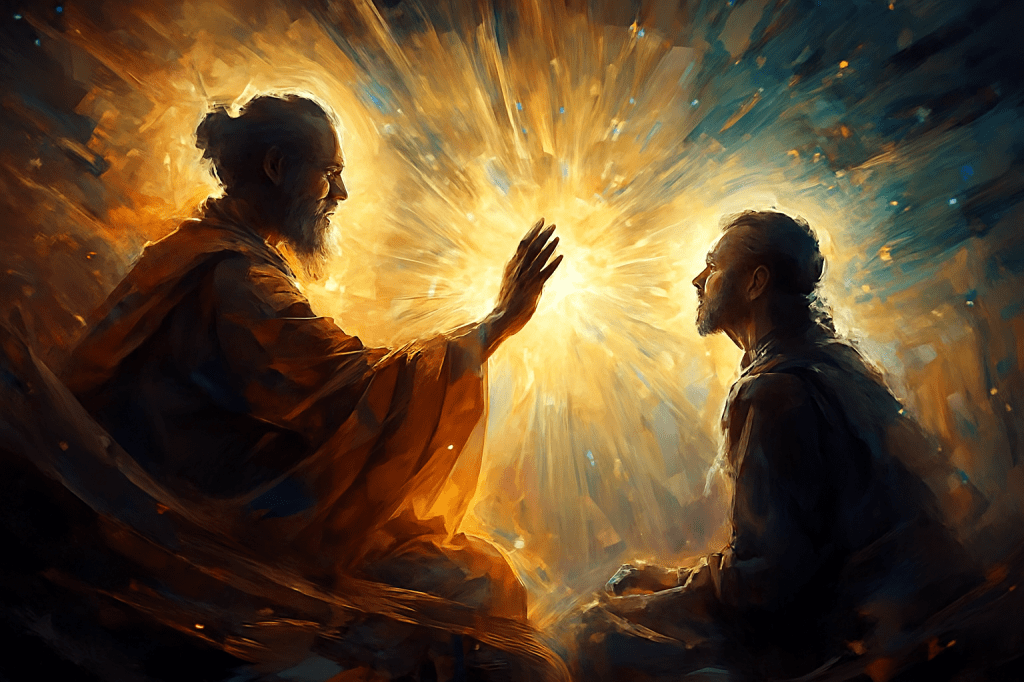
Integral awareness sees karma as consciousness refining itself through experience. Every situation, pleasant or painful, becomes a mirror; a feedback loop teaching the self about itself. What was once labeled misfortune becomes medicine. Karma is not something done to us but something expressed through us, a self-correcting rhythm of the universe returning us to coherence.

Beyond even that, karma dissolves. The one who acts and the one who receives the result are seen as the same awareness, dancing within itself. Causality collapses into immediacy. Every moment becomes self-liberated the instant it appears. There is no ledger, no lesson, only the timeless presence expressing as everything. What remains is compassion without motive, action without actor, freedom within form.

Morgan O. Smith

Get Your Free Copy of My Book, Bodhi in the Brain!
https://subscribepage.io/oTSZQu

The Disappearing Point of God

The universe doesn’t hide God; it is God hiding as the universe. Every atom, every dimension, every flicker of awareness is the divine expressing itself through the language of matter. The cosmic dance unfolds not as a performance for an audience, but as an intimate act of self-revelation. The observer is part of the choreography, never outside of it. What we call “physical” is simply the slowed vibration of the infinite, shaped by the senses into something tangible enough to touch.

Yet, we rarely see what is truly there. Our fixation on survival, food, shelter, sex, and comfort anchors perception to the most immediate layer of existence. This fixation creates the illusion that life is something we possess rather than something that is expressing itself through us. The divine becomes abstract because our gaze remains horizontal; we look at the world rather than through it.

Letting go does not require abandoning the world; it requires seeing through it. As the grip loosens, the solidity of reality begins to shimmer. Objects, forms, identities, and even the notion of “you” dissolve into the same field from which they arose. This is not annihilation; it is revelation. The disappearance of the self reveals the only thing that has ever been: the boundless presence that calls itself “I” through all beings.

Everything you have ever loved, feared, or sought is this single reality playing hide-and-seek within itself. Each experience, no matter how fleeting or mundane, is the divine pretending to forget so it can remember again through your eyes. When the game ends, seeker and sought disappear, and what remains is neither player nor play, but the unbroken wholeness that was never apart from itself.

Morgan O. Smith

Get Your Free Copy of My Book, Bodhi in the Brain!

https://subscribepage.io/oTSZQu

The Death of the Knower

The mind, magnificent as it is, remains bound by the architecture of limitation. It can dissect, analyze, and categorize, but cannot hold everything and nothing at once. The mind functions through exclusion; it defines reality by what it is not. To include all possibilities would dissolve the very mechanism that makes thinking possible. This is the paradox at the heart of consciousness: the tool we use to understand reality is incapable of containing its totality.

When consciousness stretches beyond the contours of thought, something begins to unravel. The self that once claimed ownership of perception collapses. What is commonly called the “ego death” is not the destruction of identity but its suspension. Awareness steps beyond its familiar edges and witnesses existence without filters, without the narrow lens of self-reference. The observer and the observed dissolve into a single field of knowing that cannot be known by thought.

This death is a gateway. It allows the unthinkable to reveal itself; not as a concept, but as direct realization. What remains after the mind’s surrender is not absence but presence; an intelligence too vast to belong to any one being. When the ego dies, even for a moment, the universe breathes through you, unfragmented and whole. You are not experiencing the infinite; you are the infinite experiencing itself.

Morgan O. Smith

Get Your Free Copy of My Book, Bodhi in the Brain!
https://subscribepage.io/oTSZQu