Brahman Through a Christian Lens

Exploring the Divine Tapestry

In the lush gardens of spiritual thought, there exist concepts that, at first glance, may appear to belong to entirely different landscapes. Yet, upon closer examination, one finds threads that weave them together into a grand tapestry of the divine. Such is the case when one seeks to understand the Hindu concept of Brahman from a Christian perspective.

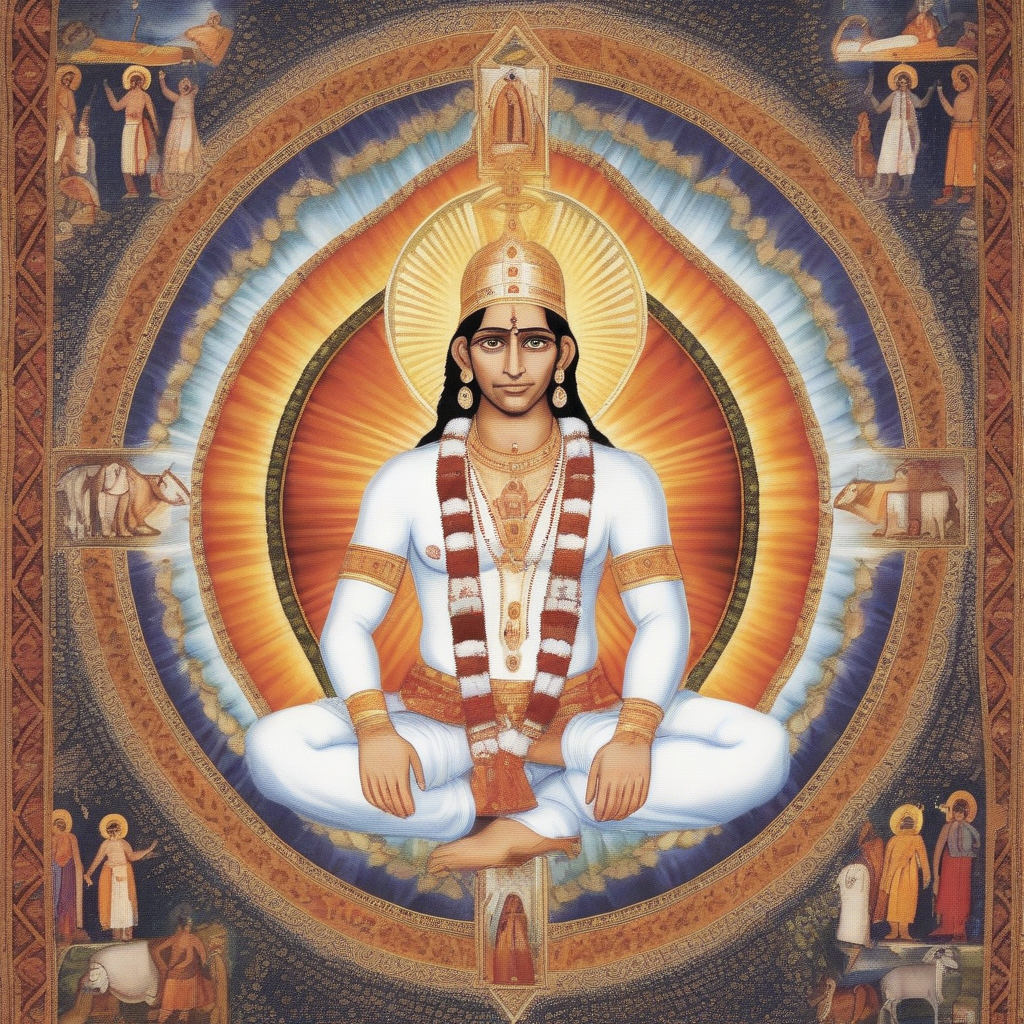
At the heart of Hindu philosophy lies Brahman, the ultimate reality, the absolute existence, knowledge, and bliss. Brahman is not merely a god among many but the ineffable ground of all being, beyond form, beyond limits, the essence of everything that was, is or will be. It is an ocean of consciousness, infinite and eternal, from which the universe springs forth like waves from a boundless sea.

How, then, can a Christian approach this concept? Christianity speaks of God in terms of a personal deity, a Trinity of Father, Son, and Holy Spirit, yet also affirms that God is beyond all comprehension, omnipresent, and the source of all that exists. The Christian mystical tradition, with its contemplative gaze, has long sought union with the divine, echoing the Hindu pursuit of realizing one’s oneness with Brahman.

In the Christian mystical experience, one might glimpse parallels to the understanding of Brahman. The Apostle Paul, in his letter to the Colossians, speaks of Christ as the one “in whom all things hold together.” This echoes the sense of Brahman as the underlying reality that upholds the universe. Theologians like St. Augustine have described God as being closer to us than we are to ourselves, resonating with the Hindu notion of Atman, the innermost self, ultimately one with Brahman.

Furthermore, the Christian concept of agape, or self-giving love, can be seen as a reflection of the blissful aspect of Brahman. In creation, God pours out love, which might be understood as a movement from the fullness of divine bliss. The Incarnation, the event of God becoming human in the person of Jesus, is a profound expression of this divine self-outpouring, analogous to the way Brahman manifests as the universe.

Yet, there are also profound differences. Christianity insists on a personal relationship with God, while the realization of Brahman is often described in impersonal terms. The Christian God enters into history and suffers with humanity, whereas Brahman is often seen as beyond all duality and unaffected by the play of cosmic forces.

In exploring Brahman from a Christian standpoint, we tread a path of mystery and paradox, where words falter and concepts blur. It is a journey that calls for humility, for what we encounter is the divine mystery, which, whether named Brahman or God, ultimately eludes all attempts at definition.

As we reflect on Brahman through a Christian lens, we are invited not to a debate but to a dance of understanding, where diverse beliefs can enrich each other. It is a reminder that our grasp of the Infinite is always incomplete and that perhaps, in the silent spaces between our words and concepts, there might be more that unites than divides.

Morgan O.  Smith

Yinnergy Meditation & My Book, Bodhi in the Brain…Available Now!

https://linktr.ee/morganosmith

The Liberation in Letting Go

Emptiness, Ignorance, and Identity

In a world incessantly clamouring with the din of possession, certainty, and self-promotion, the mantra “Embracing emptiness, cherishing ignorance, surrendering identity” arrives like a whisper from another realm. It calls on us to consider the counterintuitive notion that there is profound freedom and wisdom to be found in the very things we are conditioned to avoid.

**Embracing Emptiness**

Emptiness often conjures a sense of lack, yet in many Eastern philosophies, it is a profound concept, pregnant with possibilities. To embrace emptiness is not to fall into the void, but rather to make space for the new, the unforeseen, the life-affirming. It is the fertile ground of being from which all things spring and to which they return. In the spaciousness of emptiness, we find the flexibility and resilience to move with life’s undulating rhythms.

**Cherishing Ignorance**

Cherishing ignorance may seem antithetical in our knowledge-driven society. However, this is not an advocacy for willful naivete, but a reverence for the acknowledgment of our limitations. Socrates’ declaration of wisdom beginning with the admission of one’s ignorance holds here. Cherishing our not-knowing is an invitation to perennial learning, to the humility that keeps the mind supple, and the heart open to the mystery that is existence.

**Surrendering Identity**

Our identities, the personas we cultivate and present to the world, are often elaborate constructs grounded in who we think we should be or who we want others to believe we are. To surrender this identity is to strip away the superfluous and encounter the authentic self, the self not defined by accolades or attributes, but existing in simple beingness. This surrender is not a loss but a homecoming, a release from the exhausting endeavour of upholding our masks.

In combining these three tenets—emptiness, ignorance, and identity—we approach a way of living that is at once liberating and grounding. It invites a life lived with open hands, where attachment is a choice rather than a compulsion, and authenticity guides our interactions.

As we contemplate this mantra, we might find ourselves stepping into a flow of existence that is less about accumulation and more about experience, less about certainty and more about exploration, less about being someone and more about being part of something greater.

The journey toward embracing this wisdom is counter-cultural. It moves against the grain of our societal norms, urging us to let go of what we cling to most tightly. Yet, the promise it holds is nothing short of transformational—freedom from the self-imposed prisons of material excess, intellectual rigidity, and egoic constraint.

In this space, we find that emptiness is fullness, ignorance is wisdom, and surrender is power. And so, we continue to explore, with hearts wide open to the vastness of the unknown.

Morgan O.  Smith

Yinnergy Meditation & My Book, Bodhi in the Brain…Available Now!

https://linktr.ee/morganosmith

Mirrors of the Self

Seeing the Divine in All

In the vast expanse of existence, each entity and every moment is a reflective surface, giving us a glimpse of our deepest selves. When we peer into the world, what we encounter is not just matter arranged in space but a mosaic of mirrors, each offering a unique reflection of who we are. The idea that everything we perceive is a reflection of our face is not just a poetic sentiment but a profound philosophical proposition that invites introspection about the nature of self and the universe.

The reflections we see are not literal but abstract, distilling our essence in the myriad forms and phenomena around us. This abstraction is where the beauty of perception lies; it is a canvas where the mind can project its inner workings—its hopes, fears, and dreams. The world outside becomes a screen for the drama of the self to unfold, the grand play of consciousness where every actor wears a mask that resembles something within us.

In this grand reflection, if we are to see the face of God, then it must be understood that this divine visage is not an entity separate from us but interwoven into our being. The divine reflection is the totality of the cosmos itself, a unity where every face is indeed an aspect of a greater countenance. If we are made in the image of the divine, as many traditions suggest, then it follows that the divine is also made in the countless images reflected to us.

Every interaction, every glance at nature, every piece of art, and every human invention is a facet of this divine reflection. We are constantly in dialogue with the divine through the medium of our experiences. In recognizing this, we might come to treat each moment with reverence, understanding that in the act of observation, we are participating in a sacred exchange.

As we walk through the world, let us consider that the beauty, the ugliness, the sublime, and the mundane are all part of the same tapestry, woven with threads of the divine. It is not just in the extraordinary that we can glimpse the face of God, but in the ordinary, the overlooked, and the understated. By recognizing the divine reflections in all that we encounter, we open ourselves to a more profound sense of connection and purpose.

In the end, the philosophy that everything is a reflection of our face does not isolate us in solipsism but connects us to a greater whole. It offers a vision of unity, where the self is not an isolated entity but a vibrant echo of the universe, a reflection of the divine face in the mirror of existence.

Morgan O.  Smith

Yinnergy Meditation & My Book, Bodhi in the Brain…Available Now!

https://linktr.ee/morganosmith

The Infinite Self

Time Travel and the Nondualistic Journey Within

In the silence that stretches between thoughts, in the space that houses the cosmos, there exists a philosophy that stretches the bounds of conventional understanding—nondualism. It’s an ancient perspective that posits a simple, yet profound truth: all of existence, the myriad forms and vacuous voids, the dance of particles and the march of time, are expressions of a singular, unified reality. You are not a mere participant in the universe; you are the universe itself, experiencing itself endlessly.

Consider the concept of time travel, a staple of science fiction and a tantalizing possibility for the human imagination. Time, from a nondual standpoint, is not a river that flows from past to future, nor a serpent that eats its tail in an eternal loop. It is a dimension of existence that is inseparable from you. You are time, as much as you are matter, energy, thought, and consciousness. If you could traverse the temporal plane, to cavort in the gardens of Babylon or witness the birth of a star eons from now, would you be visiting foreign lands or would you be exploring the contours of your boundless self?

By recognizing time as an aspect of the self, the idea of time travel takes on a new dimension. It becomes a metaphor for self-exploration and self-understanding. Each journey back to the past can be viewed as an introspective dive into our collective memory, our shared history, and the unconscious mind. Moving forward, then, is an imaginative leap into potential futures, the realm of dreams, hopes, and the unmanifested aspects of the self.

This perspective invites a radical shift in consciousness. The anxieties of the past and the uncertainties of the future are not separate from the present moment; they are all-encompassing and present within the now that is perpetually experienced. Every moment is an act of creation, a reconfiguration of the universe, a reinterpretation of the self. Through the lens of nondualism, time travel becomes a poetic expression of the human desire to know the self fully, to experience all facets of being, and to embrace the ultimate unity of existence.

If we can see ourselves in the stars and the stones, in the ebbs and flows of civilizations and the silent growth of a seedling, then perhaps the ultimate journey does not require us to break the physical bonds of time but to transcend the psychological barriers that prevent us from seeing the unity of all things. In doing so, we might find that every step we take, every choice we make, and every path we walk or leave untrodden, is an exploration of the infinite self.

As you ponder this unity, this grand tapestry of existence where you are both the weaver and the thread, the observer and the observed, consider what destinations you might seek within the boundless realms of your being. What would you discover in the recesses of millennia past, and what futures could you paint with the brush of your current intentions and actions? The voyage of time is but a journey within, and every moment is a destination waiting to be understood.

Morgan O.  Smith

Yinnergy Meditation & My Book, Bodhi in the Brain…Available Now!

https://linktr.ee/morganosmith

The Convergence of Nonduality and Humility

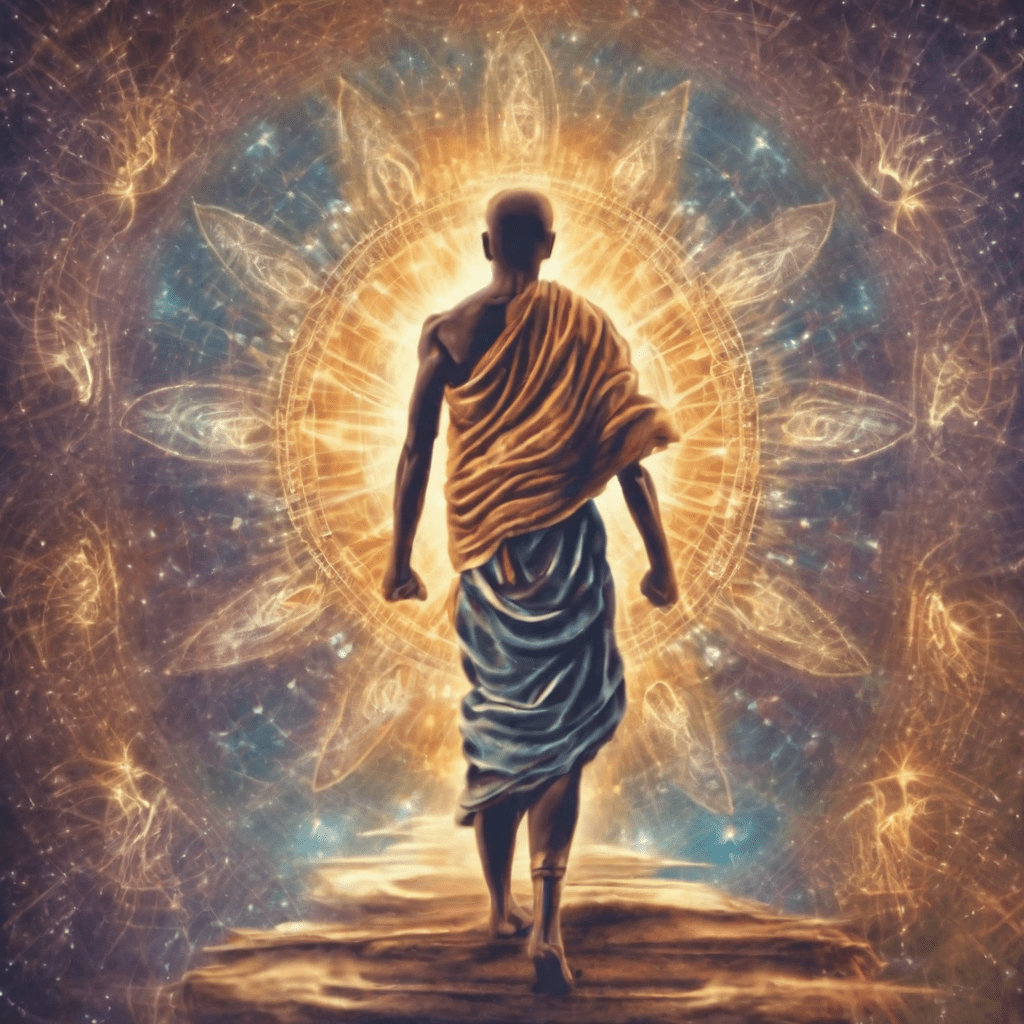
Walking the Cosmic Mile

When we speak of enlightenment and spiritual awakening, images of radiant beings, wise sages, and ethereal experiences come to mind. Yet, at the heart of these lofty ideals lies a profound simplicity: the understanding that we are all interconnected, and the ability to empathize deeply with every being we encounter.

Consider the enlightened being who, in a flash of realization, experiences the nondual nature of existence. In this state, the boundaries that separate ‘self’ from ‘other’ dissolve. There isn’t just a connection with all there is; there is the profound realization that one *is* everything. Every tree, every star, every laughing child, and every tear shed in solitude — all of it converges into this singular experience. One is no longer an individual peering out at the universe, but the universe itself looking in every conceivable direction.

Yet, juxtapose this with the experience of the humble Saint who, rather than merging with the universe, takes a deep dive into the souls of individuals. This Saint, in their profound spiritual journey, has walked in the shoes of every person they’ve met. They’ve felt the weight of their struggles, the joys of their triumphs, and the mundane moments in between. While the enlightened being sees the forest, the Saint sees every individual tree, every leaf, and every bird that takes flight from its branches.

While these two experiences may seem opposed, they are, in essence, two sides of the same coin. Both perspectives bring about a profound understanding of interconnectedness and unity. Where the enlightened being grasps the vastness of existence, the Saint recognizes the depth of individual experience. And in their unique ways, both lead to compassion, love, and a deeper connection with all of existence.

Perhaps, then, the journey is not about aspiring to one experience over the other, but in recognizing the value in both. For in the vastness of the universe, there is room for both the cosmic dance of everything and the intimate waltz of individual souls.

Morgan O.  Smith

Yinnergy Meditation & My Book, Bodhi in the Brain…Available Now!
https://linktr.ee/morganosmith

The Never-Ending Marathon of Spirituality

Many compare life to a race. We’re told to run fast, be the first, and not fall behind. But what if life, particularly the spiritual journey, isn’t about finishing first or even finishing at all? What if it’s a marathon that never ends, where every finish line is simply a starting point for another, deeper quest?

Walking the spiritual path can feel like running a marathon that goes on infinitely. Just when you think you’ve attained enlightenment or reached a higher state of consciousness, another level unfolds. This isn’t to say progress isn’t made, but rather that true spiritual growth is an ever-evolving, never-ending process.

In traditional races, runners have a clear goal: to reach the end as swiftly as possible. But on the spiritual path, the destination is less defined. One might even argue there is no destination. Instead, it’s a continual journey of self-discovery, of understanding, of peeling back layers to find the core of one’s true self.

The beauty of this endless marathon is not in reaching a finish line but in the journey itself. Every step, every challenge, and every revelation is an opportunity for growth and transformation. The hurdles faced along the way aren’t obstacles but lessons, guiding us towards deeper understanding.

In embracing this never-ending journey, we come to see that it’s not about “finishing” or “winning.” It’s about embracing the unknown, learning, evolving, and most importantly, enjoying every step. After all, isn’t the joy of running not in the end but in the very act itself?

When we shift our perspective from a race with an endpoint to a journey without one, we open ourselves to infinite possibilities and depths of understanding. It’s a liberating realization that our spiritual evolution is limitless, bound only by our willingness to keep moving forward.

In conclusion, while the marathon of spirituality may not have a finish line in the traditional sense, it offers something far more valuable: the promise of endless growth, self-discovery, and a deeper connection to the universe and ourselves. So, lace up your spiritual sneakers and embrace the never-ending journey. Because in this marathon, the real prize is the journey itself.

Morgan O.  Smith

Yinnergy Meditation & My Book, Bodhi in the Brain…Available Now!
https://linktr.ee/morganosmith

The Perfect Symphony of the Universe

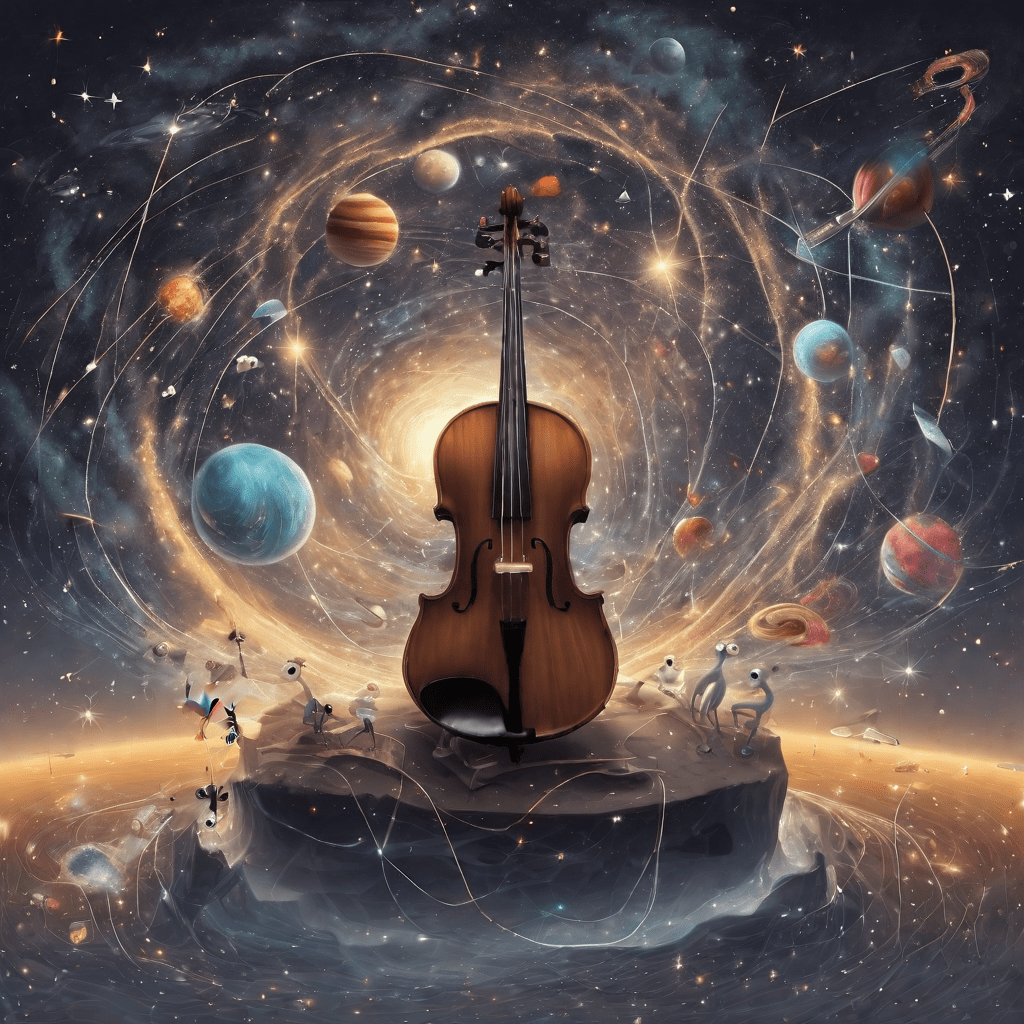
There’s a profound beauty in pondering the vastness of the universe and all that it encompasses. The stars, the galaxies, the black holes, the planets, and everything in between – all orchestrated in an unfathomable cosmic dance. Closer to home, even the simple rustling of leaves or the intricate patterns of relationships and human behaviours are a part of this grand tapestry. But what if every single occurrence, no matter how significant or inconsequential it seems, is exactly as it should be?

Imagine a world where every event, every interaction, every impulse, and every action has its place and purpose. No occurrence is out of place; everything fits. There is a certain harmony, an intrinsic order in this idea. Even the most chaotic and seemingly random events play their part in this universal symphony.

It’s easy to look at experiences that cause us pain or challenge our perceptions and label them as ‘bad’ or ‘wrong’. However, by doing so, are we not resisting the natural flow of the universe? If we embrace the belief that everything is as it should be, we free ourselves from the constraints of judgment, regret, and resistance. Instead, we can find peace in acceptance, growth in challenges, and a deeper understanding of the intricate balance of life.

This perspective also brings forth a realization about our role in this vast cosmos. We are not mere spectators; we too are playing our part perfectly. Whether we’re undergoing personal growth, facing challenges, or simply experiencing the highs and lows of life, each of our actions and decisions is a note in the universal song.

It’s not about labelling events as ‘good’ or ‘bad’ but rather seeing the bigger picture. Understanding that pain might lead to growth, challenges can result in strength, and every experience is a lesson in disguise. It’s about trusting that the universe, with its boundless wisdom, is unfolding exactly as it should, with every piece, no matter how big or small, contributing to its magnificent design.

In closing, consider this: If everything in the universe is as it should be, then every moment is an opportunity. An opportunity to learn, to grow, to love, and to embrace the perfect imperfections of this cosmic journey.

Morgan O.  Smith

Yinnergy Meditation & My Book, Bodhi in the Brain…Available Now!
https://linktr.ee/morganosmith

The Environment’s Role in Spiritual Growth

Spiritual growth is an inward journey that involves deepening self-awareness, a connection to a higher purpose, and a pursuit of inner peace and enlightenment. Though one might perceive spiritual growth as purely internal, the environment plays an instrumental role in shaping this voyage.

**The Outer Reflects the Inner**:
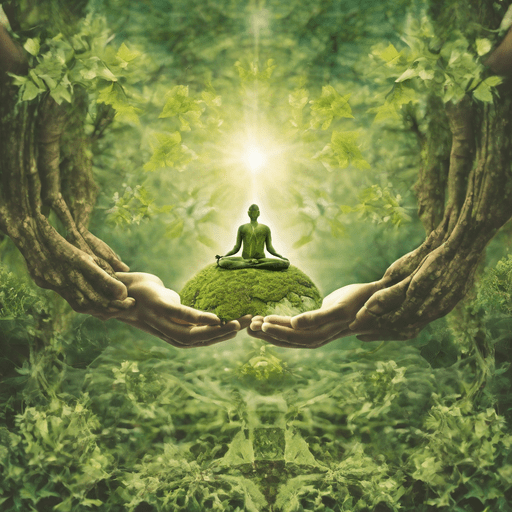
Spirituality isn’t limited to the realm of meditation, prayers, or religious practices. It’s also about understanding oneself to the larger world. The environment serves as a mirror, reflecting the chaos or calm we feel within. A serene setting, like a tranquil forest or a quiet beach, can provide the space needed for introspection, while a tumultuous environment might challenge and refine our spiritual resilience.

**The Playground of Experiences**: Our experiences, heavily influenced by our environment, serve as lessons that guide our spiritual evolution. Facing economic hardships might teach us humility and gratitude while being in a nurturing emotional environment can facilitate feelings of love and empathy. Each environment, with its unique challenges and blessings, offers distinct lessons for our soul’s growth.

**Environmental Genetics and The Enlightened Individual**:
Modern scientific understanding acknowledges that both genes and the environment play roles in determining our characteristics. This interplay is also valid for spiritual inclinations. An individual with a genetic predisposition towards introspection and an environment that encourages self-reflection might have a smoother path toward enlightenment. Conversely, someone genetically predisposed to anxiety but raised in a supportive environment might learn to channel that anxiety into a deeper spiritual quest.

Yet, it’s crucial to remember that enlightenment isn’t a one-size-fits-all concept. The combination of genetics and environment produces a spectrum of enlightened individuals, each with unique strengths, perspectives, and wisdom to offer.

### Balancing Agency with Environmental Influences

While the environment significantly shapes us, spiritual growth also involves recognizing and exercising our agency. It’s about acknowledging environmental influences while taking proactive steps to seek experiences and environments that align with our spiritual goals.

For many, this might mean seeking spiritual communities, immersing oneself in nature, or actively creating a personal sanctuary that facilitates inner reflection and growth. For others, it might involve challenging and transforming their environments.

In conclusion, the environment isn’t just a backdrop against which the drama of life unfolds; it’s an active participant, a teacher, a mirror, and a guide on our spiritual journey. Recognizing its influence can empower us to harness its lessons, navigate its challenges, and embark on a more profound, fulfilling spiritual voyage.

Morgan O.  Smith

Yinnergy Meditation & My Book, Bodhi in the Brain…Available Now!
https://linktr.ee/morganosmith

The Nondual Peak

Tapping into the Universal Consciousness

Imagine for a moment that you could not only experience life from your perspective but from the perspective of every life form that has ever existed. This means not just every human, not just every creature on Earth, but every being, in every corner of the universe. An overwhelming idea? Certainly. Impossible? Not in the realm of nondual peak experiences.

## Understanding Nonduality

Nonduality, a term rooted in Eastern philosophies, refers to the idea that there is no division between the self and the universe. Everything is interconnected, woven into the fabric of existence. In the state of a nondual peak experience, one transcends individuality and becomes everything. This is more than mere empathy; it is a profound realization of oneness with the entire cosmos.

## The Universal Consciousness

There exists a universal consciousness – a singular, boundless awareness that permeates every atom, every galaxy, every dimension. In a nondual peak experience, one is not merely tapping into this consciousness but becoming it.

When you share the perspectives of every life form during such a moment, it’s not about sequentially having each of their individual experiences, like flipping through a book. Instead, it’s about feeling a profound sense of unity, where you realize that every experience is, in essence, your own. Every joy, every sorrow, every moment of curiosity or discovery is a facet of the universal experience.

## Why This Matters

Recognizing this interconnectedness challenges our understanding of individuality and separateness. It fosters a sense of universal compassion and underscores the importance of every life. If we all stem from the same consciousness, if we all share the same experiences at a cosmic level, then every act of kindness, every gesture of understanding, resonates through the ages and across galaxies.

It’s not about diminishing the value of individual experiences or perspectives but about elevating them. For in a universe where we are all connected, every voice matters, every story is significant, and every life is a unique expression of the whole.

**In Conclusion**

The idea of a nondual peak experience might sound sensational, but it offers a profound insight into our place in the universe. We are not isolated entities but parts of a vast, interconnected whole. And in recognizing this, we find not only our insignificance but our infinite significance.

Morgan O.  Smith

Yinnergy Meditation & My Book, Bodhi in the Brain…Available Now!

https://linktr.ee/morganosmith

To Reach Beyond the Luminous

A Contemplation on Enlightenment and Distractions Along the Path

In our intrinsic pursuit of enlightenment, myriad entities, experiences, and spiritual phenomena often unveil themselves, presenting a paradoxical tapestry where understanding and distraction intertwine. When such entities or guides emerge along our path, they necessitate neither fixation nor rejection. For if they come, let them come, and if they decide to part, let them go. They are merely visitors, not permanent dwellers in our spiritual quest.

The venerable aphorism, “If you meet the Buddha on the road, kill him,” underscores the necessity of liberating ourselves from attachments and anticipated experiences in our spiritual pursuit. For, anything that becomes an object, a tangible or conceptual entity in our path, is not the ultimate truth. Therein, even the luminous light, an experience that many consider synonymous with spiritual ascension, is merely an objective reality, one that still exists within the domain of duality and separation.

The spiritual path unfurls itself as a journey where psychic powers, or Siddhis, may develop. If they do, they are not to be clung to. Enlightenment is neither a culmination nor an accumulation of powers or experiences, but a transcendence that paradoxically both surpasses yet includes all phenomena. It is an unceasing journey toward non-duality, where there is no seer, no seen, and no seeing – only a unified, unblemished consciousness that permeates all.

Phenomena, be they seemingly mundane or extraordinarily mystical, are to be acknowledged, witnessed, and permitted to drift away without attachment or aversion. They are waves on the surface of the ocean of consciousness, significant in their momentary existence, yet ultimately rejoining the vast, undulating expanse from whence they came.

Our ego becomes the most subtle, pervasive, and potentially pernicious impediment in this spiritual journey. It distorts, distracts, and sometimes destructs, coaxing us into traps that appear as enlightening experiences. The seductive allure of these experiences has ensnared many seekers, captivating them in a web that is woven from the threads of spiritual materialism.

The aspiration is not to annihilate the senses but to transcend and include them, to experience them in their fullest, most vibrant expressions, and yet remain unbound by them. It is to dive deep into the very essence of existence until all dichotomies, dualities, and senses converge into a singular, unified experience where distinctions cease, and all that remains is the unbounded, immeasurable expanse of Being.

Hence, the spiritual path might be perceived not as an endeavour of attaining or achieving, but as a continuous unfolding of letting go, a perpetual surrender. For in this surrender, we do not become devoid or nihilistic, but rather, we open ourselves to the entirety of existence, unshielded and unbounded.

All is a dream within the mind of God, and you, the dreamer, are no distinct from the dream you conjure, for at the ultimate level of who and what you are, is even beyond the luminous, beyond objectivity. To witness without becoming witnessed, to experience without becoming experienced – this is the path to enlightenment, where letting go is the ultimate embrace.

Morgan O.  Smith

Yinnergy Meditation & My Book, Bodhi in the Brain…Available Now!

https://linktr.ee/morganosmith