Unveiling the Mystical Journey

Morgan O Smith Explores ‘Bodhi in the Brain’ in His Third Encounter on Guru Viking Podcast

A dive into the serenity of mind through the Yinnergy meditation program, as Morgan O Smith shares insights on his latest book in episode 220 of the Guru Viking Podcast.

September 27, 2023

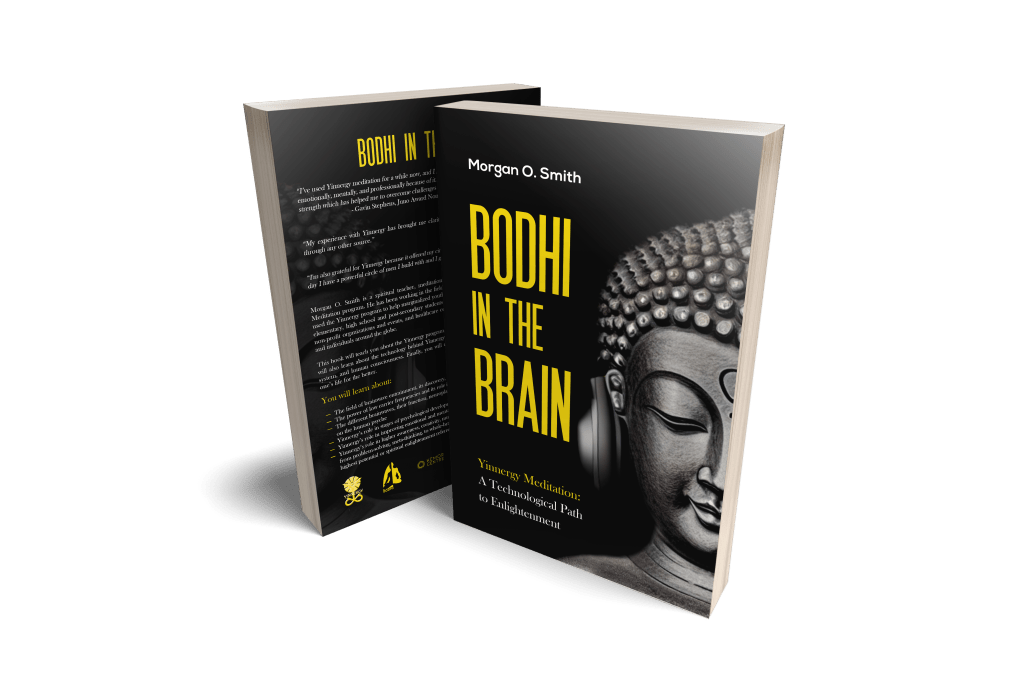
The spiritual landscape has found a remarkable voice in Morgan O Smith, who graced the Guru Viking Podcast for the third time on September 22nd, delving into the profundities of his latest book ‘Bodhi in the Brain’. The episode, aptly titled ‘Bodhi in the Brain (Ep 220)’, was a harmonious blend of enlightened dialogue between host Steve James and Morgan. The discussion revolved around the inspiration and creation of Yinnergy, a low-carrier frequency brainwave entrainment program, which forms the basis of the book.

Morgan’s invention of the Yinnergy program has been a beacon of transformation for many, mirroring a journey of emotional, mental, and spiritual growth. The conversation shed light on the program’s beneficial impact on individuals, elucidating the deeper realms of mind, consciousness, and spiritual awakening.

If this episode was your first encounter with Morgan’s spiritual dialogue on the Guru Viking Podcast, you have a wealth of wisdom waiting for you. His prior appearances include:

Morgan invites everyone to join this journey of self-discovery and enlightenment, to listen, reflect, and perhaps find a fragment of oneself within these conversations. The gateway to explore the Yinnergy experience and delve into the philosophical depth of ‘Bodhi in the Brain’ is now wide open for seekers:

https://linktr.ee/morganosmith

A reminder for the ardent seekers: Guru Viking unfolds wisdom every Friday on YouTube, fostering a space of exploration and profound understanding. The soul-nurturing conversations are also available on Apple, SoundCloud, and Spotify, ensuring a reach to every soul yearning for a deeper connection.

https://www.guruviking.com/

Embark on a journey that promises a serene yet transformative exploration into the mystical realms of mind and spirituality with Morgan O. Smith on Guru Viking Podcast.
When Silence Echoes

The Power of Unspoken Revelations

We exist in a world where sound often dictates our experiences. From the cacophony of traffic to the incessant chimes of social media notifications, we’re constantly immersed in a sea of noise. But every so often, in the rare moments of introspection and spiritual awakening, we come to realize that the loudest voice doesn’t always need to be heard; it can be felt.

“During a mystical experience, my silence is the loudest voice in the room.” This quote encapsulates a profound truth about human existence. Amid a mystical experience, words often fall short. They are too limited, too confined by human construct, to adequately convey the depth of such moments. In these times, it is our silence that speaks volumes.

Silence, in this context, isn’t the absence of sound. It’s a resonant force, brimming with emotions, insights, and revelations. When we’re silent during a mystical encounter, we’re not devoid of expression; we’re teeming with it. The silence carries the weight of the universe, the wisdom of ages, and the profundity of personal epiphanies.

Our world tends to value verbosity. We admire those who can articulate their thoughts eloquently, who can debate, discuss, and declare with conviction. But what about those moments when words are insufficient? When does the experience transcend the boundaries of human language? That’s when silence takes center stage.

Imagine being in a room where everyone is talking, but you alone are silent. Yet, your presence is palpably felt, more so than anyone else’s words. That’s the power of silent revelation during a mystical experience. It’s not about shutting out the world, but about tuning into a frequency that words cannot reach.

As we navigate our lives, it’s crucial to recognize and respect these moments of silent resonance. Whether it’s during meditation, in nature, or the midst of a profound spiritual experience, let’s honour the voice of silence. For, in its depth, we might just find the answers we’ve been seeking.

Morgan O. Smith

Yinnergy Meditation & My Book, Bodhi in the Brain…Available Now!

https://linktr.ee/morganosmith

When the Golden Shadow Presents Itself as a Spiritual Peak Experience

Throughout our lives, we often come across moments of profound clarity, moments when the essence of the universe seems to touch our very souls. These experiences, often termed ‘peak experiences’, can be transformative. But when these encounters emerge from our ‘golden shadow’, the exploration takes on an added dimension.

The ‘golden shadow’, a term rooted in Jungian psychology, represents the unacknowledged positive aspects of oneself. It is not just the dark shadow that contains repressed desires and fears; the golden shadow holds our unrealized strengths and potential. When it manifests in our conscious experiences, it showcases what we could be, what we haven’t yet embraced about our greatness.

A spiritual peak experience arising from the golden shadow is not just a fleeting moment of enlightenment, but a glimpse into the vast reservoir of our untapped potential. It is the universe’s way of saying, “This is you. This is what you’re capable of.” Such moments aren’t just spiritual highs; they are profound realizations of the grandeur within us that’s waiting to be unveiled.

However, there’s a challenge. The nature of the golden shadow is that it’s often elusive. We may feel overwhelmed by the brilliance of our potential, believing that it’s too grand, too beautiful, too powerful to belong to us. But that’s the illusion. It’s imperative to remember that the golden shadow is as much a part of us as our flaws and insecurities.

Embracing these spiritual peak experiences means recognizing that the brilliance we witness during such moments is our own. It’s a call to action, an invitation to integrate this vast potential into our everyday lives. By doing so, we’re not only elevating our consciousness but also contributing to the collective evolution of humankind.

In the end, when the golden shadow presents itself as a spiritual peak experience, it’s a reminder of our intrinsic connection with the universe and our rightful place within it. We are each one of us, magnificent galaxies of potential, waiting for the right moment to shine.

Morgan O. Smith

Yinnergy Meditation & My Book, Bodhi in the Brain…Available Now!

https://linktr.ee/morganosmith

The Evolution of Ego

From Self to the Kosmic

Often, when we contemplate human actions, we trace their roots back to the ego. Even when one scales the highest peaks of spiritual enlightenment, at the base of such pursuits, lie the ever-pervasive ego. But what if, instead of viewing the ego as an obstacle, we see it as a dynamic force that evolves alongside our personal growth?

**The Self-Driven Ego**


At its most rudimentary level, the ego is self-driven. It is concerned with the ‘I’, with personal achievements, desires, and aspirations. This is the phase where individuals are primarily driven by self-interest. It’s about survival, personal gratification, and the projection of one’s identity.

**The Ethno-Driven Ego**

As humans grow and mature, their egos often expand to encompass a larger group, leading to an ethnic-driven ego. Here, the concerns shift from individual welfare to the welfare of the community. National pride, cultural preservation, and group identity come to the forefront.

**The World-Driven Ego**


Further evolution leads to the world-driven ego, where an individual feels connected and responsible for the global community. Environmental concerns, global peace, and humanitarian causes become primary. The world becomes one’s ‘in-group’, and there is a deep desire to foster global unity.

**The Kosmic-Driven Ego**

The pinnacle of this egoic evolution is the Kosmic-driven ego. Here, individuals are driven by the interconnectedness of all existence. They perceive the universe as a singular entity, where every action has ripples that affect the whole—their pursuits, whether spiritual or otherwise, are directed towards the harmony of existence itself.

**Conclusion**

It’s fascinating to realize that while the ego remains a constant companion throughout our lives, its scope and concerns can evolve drastically. Instead of demonizing the ego, perhaps it’s more productive to recognize its potential for growth and guide it in a direction that aligns with our higher aspirations.

Morgan O. Smith

Yinnergy Meditation & My Book, Bodhi in the Brain…Available Now!

https://linktr.ee/morganosmith

A Peak Experience vs. Spiritual Awakening

Journeying the Depths of Human Experience

In the labyrinth of human experience, two moments often stand out: the peak experience and spiritual awakening. While both can deeply transform an individual, they arise from different sources and lead to distinct outcomes. Here, we delve into the nuances that set them apart.

**Peak Experience: The Ephemeral Summit**

A peak experience is a fleeting moment of intense happiness, realization, or connection. Often arising from external stimuli, it can be a monumental achievement, the thrill of an adventure, or even the profound beauty of a piece of art. These experiences are characterized by a heightened sense of wonder, clarity, or ecstasy. There are moments when we feel most alive, when everything seems to “click,” and the universe feels perfectly aligned.

Such experiences, while transient, can offer a deepened perspective on life. They remind us of our capacities, the beauty around us, and the potential for human joy.

**Spiritual Awakening: The Eternal Depth**


On the other hand, a spiritual awakening is a profound, internal shift in consciousness. It is not a fleeting moment but a transformative process that often unfolds over time. This awakening can emerge from prolonged introspection, existential crises, or profound meditation. It is characterized by a profound understanding of oneself, the universe, and the interconnectedness of all things.

A spiritual awakening challenges and reshapes our core beliefs, values, and perceptions. It is a departure from the materialistic worldview, leading to a realization of the deeper, spiritual essence of existence. Often, those who undergo such an awakening describe a sense of peace, oneness, and a newfound purpose.

**Distinguishing Between the Two**

While both the peak experience and spiritual awakening have the power to reshape one’s life, they differ fundamentally in their nature, origin, and impact. The former is a brief, intense moment, often evoked by the external world. In contrast, the latter is a sustained internal transformation, born from a deeper understanding of existence.

**Conclusion**

Both the peak experience and spiritual awakening offer insights into the vast spectrum of human experience. At the same time, one provides a glimpse of life’s peaks, and the other delves into its profound depths. Together, they remind us of the beauty, complexity, and potential of the human journey.

Morgan O. Smith

Yinnergy Meditation & My Book, Bodhi in the Brain…Available Now!

https://linktr.ee/morganosmith

A Return to Guru Viking

An Odyssey into “Bodhi in the Brain”

As the leaves turn golden and the scent of autumn fills the air, my journey with the Guru Viking podcast continues to unfold. I’m ecstatic to share that my third appearance on this enlightening platform with the ever-insightful host, Steve James, is now live for all of you to indulge in.

This episode centers around “Bodhi in the Brain”, a manifestation of my passion, research, and personal experiences. This book is more than just words on paper—it’s a beacon of the transformative power that the Yinnergy meditation brainwave entrainment program harnesses. A program I poured my soul into, mathematically designing and birthing it in the serene month of August 2010. It has since become a transformative tool, sculpting the lives of countless individuals, with me being its first beneficiary.

For those who might’ve missed my initial sojourns on Guru Viking, here’s a glance:

Ep176: The Awakening of Mista Mo – A peek into my spiritual renaissance.

Ep195: Enlightened Comedian – A celebration where humour intertwines with spiritual profundity.

I’d love for all of you to journey with me. Listen, reflect, and maybe, find a part of yourself within these conversations.

🔗 For those yearning for a transformative meditative experience or eager to delve into the philosophical depth of “Bodhi in the Brain”, the gateway awaits: https://linktr.ee/morganosmith A friendly reminder for seekers everywhere: Guru Viking continues to unfurl wisdom every Friday on YouTube. Enrich your spiritual palette on Apple, SoundCloud, and Spotify as well. https://www.guruviking.com/

The Ouroboros of Samsara

An Endless Cycle of Self-Inflicted Suffering

The universe is filled with symbols that describe the cyclical nature of existence. One of the most captivating is the concept of ‘Samsara’ from Eastern traditions and ‘Ouroboros’ from ancient civilizations. While they emerge from different cultural contexts, they bear striking resemblances, encapsulating the endless cycle of birth, death, and rebirth and the continuous loop of life-consuming itself.

### Samsara: The Wheel of Existence

Samsara, derived from Sanskrit, signifies the cyclical process of birth, death, and rebirth. It’s a fundamental concept in Buddhism, Hinduism, and Jainism. Many Eastern spiritual practices aim to break free from this relentless cycle and attain enlightenment or Moksha. Why? Because Samsara is not just about rebirth – it’s about suffering. Every birth brings with it aging, sickness, and ultimately, death. The attachments, desires, and ignorance in life lead to actions (karma) that bind us to this wheel, causing endless suffering.

### Ouroboros: The Eternal Circle


The Ouroboros is an ancient symbol depicting a serpent or dragon eating its own tail. Found in many cultures, from ancient Egypt to the indigenous traditions of the Americas, it’s emblematic of the eternal cyclical nature of the universe. Creation out of destruction, life out of death. Just as the snake sheds its skin only to be reborn, life continually renews itself even as it ends.

### Biting One’s Tail: The Self-Caused Suffering


The fascinating aspect of the Ouroboros is the act of the snake biting its own tail. It’s a voluntary act of self-consumption, symbolizing self-reflection and the cyclical nature of things. But what if we viewed this act as a representation of self-inflicted suffering, much like the karmic traps in Samsara?

Every time we hold onto grudges, indulge in harmful habits, or remain ignorant of our true nature, we bite our own tail. We become both the cause and the recipient of our suffering. And just like the snake cannot see beyond its circular path, we often find it challenging to envision a life beyond our self-inflicted pain.

### Breaking the Cycle

While these symbols might paint a bleak picture of existence, they also offer hope. Just as the cycle of Samsara can be broken through enlightenment, the Ouroboros signifies rebirth and renewal. But this requires self-awareness.

By recognizing the patterns of our actions, understanding the roots of our desires, and embracing self-reflection, we can begin to release our grip on our own tails. This doesn’t mean the cessation of life’s challenges, but rather an enlightened approach to them, devoid of self-inflicted suffering.

In conclusion, Samsara and the Ouroboros serve as profound reminders of the cyclical nature of existence and the potential pitfalls of living unconsciously. They beckon us to awaken, to understand our role in our suffering, and to seek paths that transcend these ancient cycles. As we navigate the journey of life, may we always strive to understand the deeper meaning behind these symbols and find the courage to let go of our tail.

Morgan O. Smith

Yinnergy Meditation & My Book, Bodhi in the Brain…Available Now!

https://linktr.ee/morganosmith

FOR IMMEDIATE RELEASE

Author Morgan O. Smith Champions Dementia Support with Generous Donation

September 21, 2023 – Morgan O. Smith, the distinguished author behind the transformative guide, “Bodhi in the Brain,” has donated $1,000 to the newly inaugurated charitable foundation, “A Rose For Grandma Wellness Hub.” This heartfelt contribution resonates deeply with Smith, whose own paternal grandmother passed away due to dementia in 2019.

A Rose For Grandma Wellness Hub’s mission focuses on offering much-needed assistance and resources for Black, Indigenous, and People of Colour (BIPOC) contending with dementia. The organization’s efforts revolve around extending vital support to affected families, a cause Morgan feels a profound connection.

Smith’s groundbreaking book, “Bodhi in the Brain,” presents Yinnergy Meditation – an avant-garde approach to harnessing the latent power of the subconscious mind. Drawing upon state-of-the-art research from the realms of neuroscience and psychology, the Yinnergy Meditation program stands out as an effective and unparalleled tool for ameliorating mental and emotional health, while also enriching overall well-being.

Designed for individuals across all walks of life and varying levels of meditation experience, Yinnergy Meditation taps into the brain’s inherent neuroplasticity. It aids in restructuring thinking patterns, boosting mental resilience, and achieving a harmonious equilibrium. With its step-by-step guidance, coupled with exclusive audio technology, users embark on a transformational journey to discover their innate potential.

Smith’s dedication to mental wellness goes beyond the written word. In 2011, he spearheaded the Yinnergy Meditation grassroots initiative, emphasizing emotional, mental, and spiritual growth through deep, audio-aided meditation. Moreover, in acknowledgment of the exceptional contributions of young changemakers, Smith established the Yinnergy Appreciation Awards.

Whether you aim to alleviate stress, break free from negative thought cycles, or elevate your overall life quality, “Bodhi in the Brain” emerges as an indispensable guide to mental fortitude and tranquillity.

For more information on “Bodhi in the Brain,” Yinnergy Meditation, or to explore potential collaborations, please contact Morgan innovativecoaching@gmail.com.

About Morgan O. Smith:
Morgan O. Smith stands at the forefront of modern meditation and neuroscience literature. With a fervent passion for mental well-being and community upliftment, Smith’s endeavours reflect his commitment to societal betterment, both on the individual and collective front.

###ENDS###

https://linktr.ee/morganosmith

You Are What You Eat, and Also What You Don’t

The Eastern Philosophy of Consumption and Abstention

In the intricate dance of life, we often hear the adage, “You are what you eat.” Rooted in the wisdom of many cultures, this phrase suggests that our physical and mental well-being is profoundly influenced by the food we consume. But just as importantly, the choices we make about what we refrain from eating also define us. In the vast expanse of Eastern philosophy, whether feasting or fasting, you are that.

The concept of ‘Ahara’ in Ayurveda, the ancient Indian science of life, teaches that everything we consume, be it food, thoughts, or experiences, becomes a part of our inner and outer constitution. It’s not merely about the nutrients we obtain, but the energy, the ‘prana’, that comes with it. A meal cooked with love nourishes the soul, just as a dish prepared in haste or anger might leave us feeling unsettled.

Conversely, the act of abstention or fasting, common in Eastern practices like Buddhism, Jainism, and Taoism, is not merely a physical exercise. Fasting is as much a mental and spiritual activity as it is a physical one. By abstaining, we aren’t merely depriving ourselves; we’re creating space. Space for reflection, for inner growth, and for reconnecting with the self.

In the Zen Buddhist tradition, the act of eating mindfully, paying attention to every morsel, and being grateful for the nourishment is a form of meditation. On the other hand, moments of abstention teach us about the impermanence of desires. As Lao Tzu stated in the Tao Te Ching, “To attain knowledge, add things every day. To attain wisdom, subtract things every day.”

In the end, the balance between consumption and abstention is a personal journey, an inner dialogue. It’s about recognizing that every choice we make, whether to indulge or to refrain, is a reflection of our inner state, our philosophies, and our connection to the world around us.

As we navigate through the rhythms of life, let us remember: that we are not just shaped by what we consume but also by what we choose to let go. And in that delicate balance lies the true essence of existence.

Morgan O. Smith

Yinnergy Meditation & My Book, Bodhi in the Brain…Available Now!

https://linktr.ee/morganosmith

A Dive into the Spiritual

Self-evidence vs. Scientific Evidence

In a world where science reigns supreme, defining our truths and challenging our beliefs, we find ourselves at a crossroads between what is self-evident and what is scientifically validated. The realm of spiritual awakening serves as the perfect backdrop for this intricate dance between subjective truth and empirical evidence. Herein lies the question: Why does a self-evident event often feel more profound and true than mountains of scientific evidence?

**The Nature of Self-Evidence**

When we speak of something being “self-evident,” we refer to truths that do not require external validation to be known. They are, by their very nature, immediately recognized and accepted. A genuine spiritual awakening, which often results in a profound shift in one’s perception of self and universe, is typically such an experience. Those who have undergone such awakenings often recount feelings of interconnectedness, transcendent love, and a deep-seated knowledge that what they’ve experienced is indisputably real.

Yet, this poses a challenge for the scientific community. How does one quantify an experience so profoundly personal and transformative?

**The Limitations of Scientific Evidence**

Science, with its rigorous methods and empirical approaches, seeks to understand the universe by observing, categorizing, and predicting phenomena. It operates within the framework of the observable universe, relying on the senses and instruments to gather evidence. But can it measure the immeasurable? Can it truly capture the essence of a spiritual epiphany or the profound realization of oneness with the universe?

Moreover, while science deals with averages, generalities, and repeatable experiments, spiritual experiences are deeply personal, unique, and often non-reproducible. Just as we cannot generalize the depth of a mother’s love or the intricacies of individual human emotions, so too, perhaps, we cannot wholly quantify the nature of spiritual awakenings.

**Finding a Balance**

This isn’t to negate the importance of scientific inquiry. Science brings invaluable insights into the nature of reality and has transformed our world in countless ways. But perhaps there are realms where science, with its current methodologies, cannot thoroughly tread. In these spaces, self-evidence might be the only beacon of truth we have.

A genuine spiritual awakening, bathed in the light of self-evidence and, serves as a poignant reminder that not all truths lie in the domain of the observable and measurable. Sometimes, the most profound truths are those that resonate deep within, requiring no external validation to be felt and known.

Morgan O. Smith

Yinnergy Meditation & My Book, Bodhi in the Brain…Available Now!

https://linktr.ee/morganosmith