Agape: The Dichotomy of Universal Love

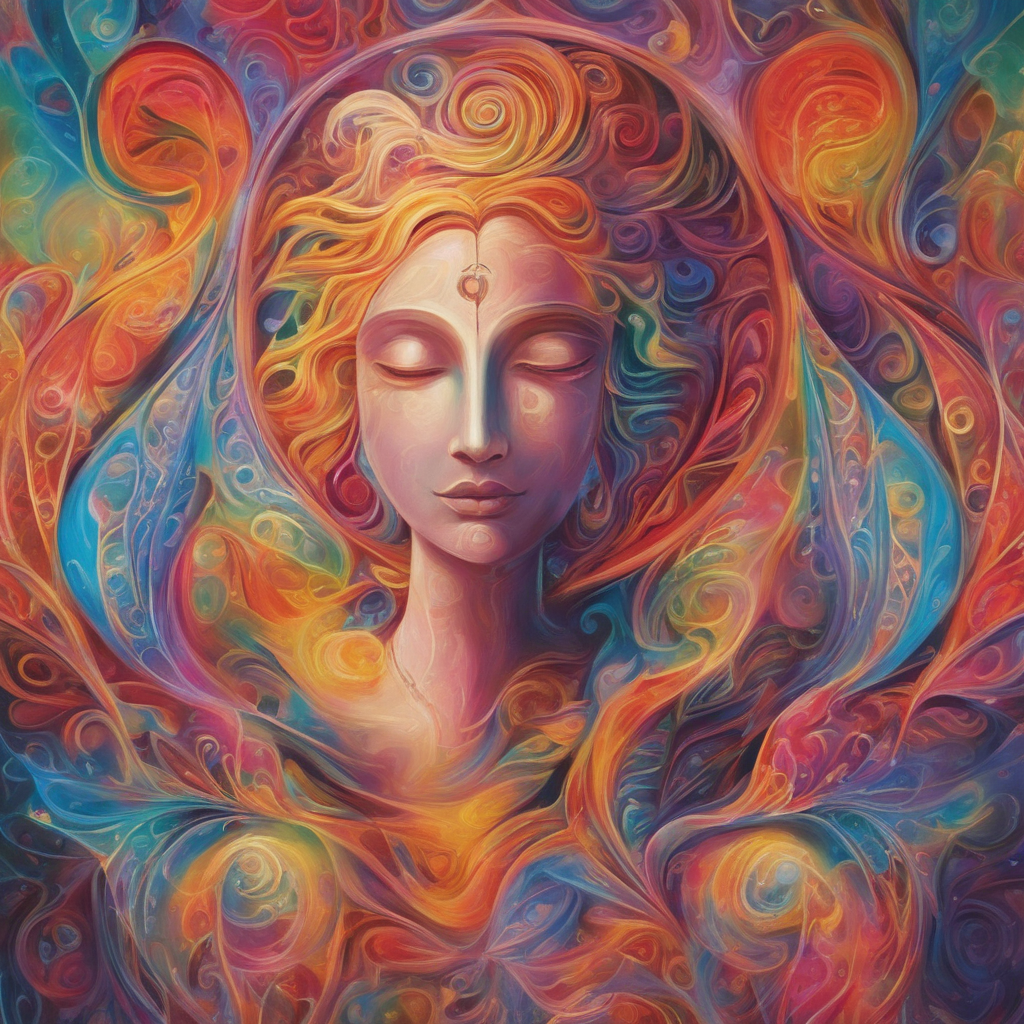
In the spiritual journey towards understanding and living in universal love, or agape, two enlightened beings emerge on parallel paths. They both embrace agape, yet their personalities and the way they manifest this profound love are strikingly different.

The Introverted Universal Love

The first enlightened being, whom we shall call Seraphina, channels agape through introverted universal love. This means her love is directed inward, nurturing the self and radiating outwards in subtle, non-obtrusive ways.

Impact on Others

Seraphina’s love affects others through quiet acts of kindness and a gentle presence. She may not actively seek to spread love, but those who come into contact with her feel a calm, loving energy that often leads to inner transformation. Her love is a tranquil pond, reflecting the beauty of the world without rippling its surface.

The Extroverted Universal Love

On the other hand, we have Gabriel, who embodies extroverted universal love. His love is outward-facing, actively engaging with the world, and seeking to connect with others.

Impact on Others

Gabriel’s love is a dynamic force, touching lives through acts of charity, teachings, and open-hearted connections. His love is a roaring river, sweeping people along in its powerful current and leaving change in its wake.

A Harmonious Dichotomy

While their approaches differ, both Seraphina and Gabriel contribute to the universal energy of love. They show us that love is not a one-size-fits-all concept. It’s a multifaceted gem that can shine through various personalities.

The Introverted Love: A Deep Well

Seraphina teaches us that love does not always have to be loud or grand. It can be a silent force, a deep well that nourishes the soul. Her love invites contemplation and self-reflection, allowing for a profound connection with oneself and the universe.

The Extroverted Love: A Brilliant Flame

Gabriel, on the other hand, shows us that love can be a brilliant flame that illuminates the world. It’s about embracing others, taking action, and spreading joy. His love is a call to action, urging us to engage with the world and make a difference.

Conclusion

The paths of introverted and extroverted universal love, though different, are equally valuable. They teach us that love can be manifested in diverse ways, tailored to our unique personalities and life paths.

In a world torn by division and conflict, the lessons from Seraphina and Gabriel remind us that agape is within everyone’s reach. It’s a love that transcends boundaries and unites us all. Whether you’re drawn to the tranquil pond or the roaring river, the journey toward universal love is an expedition worth embarking on.

Morgan O. Smith

Yinnergy Meditation & My Book, Bodhi in the Brain…Available Now!

https://linktr.ee/morganosmith

Agape

Embracing Universal Love for All of Creation

Introduction

In a world rife with division, turmoil, and individualism, the concept of Agape, or universal love, emerges as a beacon of hope and harmony. Rooted in various philosophical, spiritual, and religious traditions, Agape transcends borders, biases, and barriers, inviting us to embrace a love that binds all of creation. This blog post delves into the profound essence of Agape, its significance, and how it calls us toward a greater realization of our interconnectedness.

What is Agape?

Agape, often translated as “universal love” or “divine love,” represents a love that goes beyond the personal, emotional, or conditional. It’s a selfless love, free from judgment, that recognizes the inherent value and interconnectedness of all beings.

The Roots of Agape

The concept of Agape can be traced back to various traditions:

– **Christianity**: In Christian theology, Agape is the highest form of love, mirroring God’s unconditional love for humanity.
– **Buddhism**: Concepts like Metta (loving-kindness) reflect universal compassion and love for all sentient beings.
– **Hinduism**: Bhakti, the devotional love for the Divine, can be seen as a form of Agape that transcends worldly distinctions.

Agape in Everyday Life

The beauty of Agape is that it’s not confined to mystical experiences; it applies to our daily interactions. How can we embody Agape in our lives?

– **Seeing Beyond Differences**: Agape challenges us to recognize the common humanity in each other, regardless of race, religion, or nationality.
– **Cultivating Compassion**: Agape invites us to feel empathy for others’ suffering and respond with kindness and understanding.
– **Living Selflessly**: Embracing Agape means letting go of ego, self-interest, and judgment, allowing love to flow freely.

Agape and the Environment

Agape is not limited to human relationships. It extends to our relationship with nature and the environment. Recognizing the sacredness in all forms of life fosters respect and stewardship for the Earth.

Conclusion: The Transformative Power of Agape


Agape is more than a philosophical concept or mystical state; it’s a way of being. It calls us to expand our hearts, to love without conditions, to see the Divine in all, and to recognize our profound interconnectedness.

The journey toward Agape is not just a personal transformation; it’s a collective awakening. It heals, unites, and elevates our existence, turning love from a mere emotion into a universal principle that guides our lives.

In a world that often feels fragmented, the embrace of Agape offers a path toward wholeness and harmony. It’s not just a love for one another; it’s a love for all of creation.

As we contemplate Agape, we are invited to ponder: What would our world look like if we all lived with such love? How would it transform our relationships, our communities, and our very essence?

The answers to these questions may lie in the very heart of Agape, waiting for us to discover, embrace, and embody this universal love.

Morgan O. Smith

Yinnergy Meditation & My Book, Bodhi in the Brain…Available Now!

https://linktr.ee/morganosmith

Exploring the Emotional Spectrum

A Journey Through Plutchik’s Wheel and the Hindu Subtle Body

Introduction

The exploration of human emotion transcends disciplines, cultures, and time. From psychological models such as Plutchik’s Wheel of Emotions to the spiritual teachings within Hinduism concerning the subtle body, the pursuit to understand our emotional selves is as complex as it is enriching. This blog post takes a deep dive into these seemingly disparate concepts, examining the intersection of emotion, spirituality, and subtle awakening.

Plutchik’s Wheel of Emotions

Plutchik’s model identifies eight basic emotions:

1. **Joy** – A sense of happiness and fulfillment.
2. **Trust** – Confidence in something or someone.
3. **Fear** – A response to perceived danger or threat.
4. **Surprise** – A reaction to the unexpected.
5. **Sadness** – A feeling of loss or despair.
6. **Disgust** – A strong aversion or repulsion.
7. **Anger** – A reaction to perceived wrong or injustice.
8. **Anticipation** – Expectation or excitement for what’s to come.

These primary emotions combine to form complex emotions and are mapped in a way that each emotion has an opposite.

The Emotional Subtle Body in Hinduism

Hindu philosophy introduces the concept of the subtle body, an intricate and vital part of our spiritual being, separate from the physical body. Comprised of the mind (Manas), intellect (Buddhi), ego (Ahamkara), and conditioned consciousness (Chitta), the subtle body is responsible for our thoughts, emotions, and consciousness.

Connecting the Dots: Emotions and the Subtle Body

The profound connection between Plutchik’s emotional spectrum and the emotional subtle body within Hinduism lies in the universality of emotions and the depth of human experience. Here’s a breakdown:

– **Joy & Trust**: These positive emotions align with spiritual awakening and the cultivation of inner peace and compassion, reflecting a higher level of consciousness.

– **Fear & Anger**: These emotions can be linked to spiritual blocks or ignorance (Avidya) within Hinduism, which hampers spiritual growth.

– **Surprise & Anticipation**: These emotions speak to our deep connection with the universe and the ever-changing nature of life, echoing the Hindu belief in the transient nature of our physical existence.

– **Sadness & Disgust**: Often seen as negative emotions, they can be channels for growth and understanding of the self, mirroring the Hindu concept of Dharma or righteous living.

Conclusion: Emotions as Pathways to Spiritual Awakening


The emotional spectrum is not merely a psychological construct but a spiritual pathway. By understanding emotions through the lens of both Plutchik’s model and Hindu philosophy, we can embark on a journey toward subtle spiritual awakening.

The nuances of emotions, their combinations, and their reflections within the emotional subtle body offer us tools to navigate our spiritual paths. The profound connection between these concepts suggests that our emotions are not transient or superficial but deeply entwined with our very essence.

This exploration encourages us to recognize emotions as more than reactions to the world around us. They are signposts guiding us toward self-realization and a deeper connection with the divine within.

Morgan O. Smith

Yinnergy Meditation & My Book, Bodhi in the Brain…Available Now!
https://linktr.ee/morganosmith

Embracing Anatta and Sunyata

A Buddhist Exploration of Spiritual Enlightenment

In the rich and intricate fabric of Buddhist philosophy, two profound concepts stand out: anatta, or the principle of no-self, and sunyata, or the notion of emptiness. These ideas challenge our conventional understanding of self and reality, offering a transformative path to spiritual enlightenment.

This blog post delves into the fascinating journey of embracing anatta and sunyata and what changes might occur in a person as a result.

Anatta: The Principle of No-Self

Anatta challenges the notion of a fixed and permanent self, a radical idea that has profound implications on how we perceive ourselves and the world. Upon realizing anatta, an individual may undergo the following transformations:

– **Loss of Attachment to Self-Identity**: Labels, roles, and personal narratives lose their grip, allowing for a more fluid and adaptable understanding of self.
– **Decrease in Ego-Driven Desires**: The pursuit of personal gain or recognition may fade, replaced by selfless compassion and loving-kindness.
– **Deepened Interconnectedness with Others**: Seeing beyond the illusion of separate selves fosters a profound connection with all beings.

Sunyata: Embracing the Emptiness

Sunyata refers to the empty nature of all phenomena, a state where things are devoid of inherent existence. The realization of sunyata leads to:

– **Transcending Dualities**: Ordinary distinctions such as good and bad, self and other, become irrelevant, replaced by an all-encompassing view of reality.
– **Detachment from Material Pursuits**: Recognizing the empty nature of material things may lead to a detachment from worldly desires and a more mindful way of living.
– **Harmony with the Present Moment**: Seeing things as they are, empty of inherent existence, nurtures a profound connection with the present moment.

The Journey Toward Enlightenment


Understanding anatta and sunyata is not an intellectual exercise but a profound experiential realization. The individual may engage in various practices such as meditation, mindfulness, and ethical living to cultivate this understanding.

The Impact on Relationships and Society

Embracing these principles fosters compassion, empathy, and altruism, reshaping relationships and offering a model of social harmony. It moves us towards a society rooted in wisdom and compassion, rather than division and selfishness.

Conclusion

The realization of anatta and sunyata is a transformative and enlightening experience that shifts our perception of self and reality. It dissolves the barriers that separate us and leads to a more compassionate and interconnected way of living.

In a world filled with complexity and conflict, these age-old Buddhist principles offer timeless wisdom and a path to inner peace. They invite us to let go of rigid self-identities and material pursuits, to see beyond the surface, and to embrace a more profound and holistic view of existence.

May the teachings of Anatta and Sunyata guide us towards a more awakened and compassionate life, where we recognize the interconnectedness of all beings and live in harmony with ourselves and the world.

Morgan O. Smith

Yinnergy Meditation & My Book, Bodhi in the Brain…Available Now!

https://linktr.ee/morganosmith

Bridging Quantum Realms and Turiyatita

The Web of Interconnection

In the intricate and mystifying world of quantum mechanics, one phenomenon stands out as particularly thought-provoking: quantum entanglement. It’s a concept that defies our everyday logic, connecting particles across vast distances in such a way that the state of one instantly influences the state of the other. This interconnectedness, existing beyond space and time, might find an unlikely companion in an ancient spiritual concept: turiyatita, the attainment of spiritual enlightenment.

The Interconnected Universe

Quantum entanglement illustrates how, at the fundamental level, all things in the universe are interconnected. This idea resonates with spiritual teachings across cultures that speak of the oneness of existence and the interconnectedness of all life. In Indian philosophy, turiyatita represents a state of consciousness that transcends the conventional realms of waking, dreaming, deep sleep, and even the transcendental state known as turiya. It’s a state of realization that everything is part of a singular divine essence.

Could these two concepts, one rooted in the cutting-edge science of quantum physics and the other in ancient spiritual wisdom, have something to say to each other?

A Metaphor for Enlightenment


Quantum entanglement could be seen as a metaphor for the experience of spiritual enlightenment. The entangled particles, seemingly separate but inherently connected, might symbolize how everything in existence is part of the same cosmic dance. Likewise, the experience of turiyatita transcends the illusion of separateness, revealing an underlying unity.

In this metaphorical sense, the realization of enlightenment could be likened to experiencing the world in its entangled state, where divisions melt away and a profound interconnectedness is revealed.

A Dance of Mystery

Yet, the relationship between quantum entanglement and turiyatita is more than a simple analogy. Both concepts challenge our conventional understanding of reality. They both hint at a world far more complex and interconnected than our ordinary senses can perceive.

Is it possible that these two ideas, one from the realm of science and the other from the domain of spirituality, are glimpses of the same underlying truth? Is there a hidden dance of connection that plays out both in the microscopic world of quantum particles and the expansive world of human consciousness?

Conclusion

The connection between quantum entanglement and turiyatita may be speculative and metaphorical, but it invites us to ponder the profound mysteries of existence. It’s a reminder that the world is far more complex and beautiful than we often realize and that science and spirituality, seemingly disparate, might have something profound to say to each other.

This dance of connection between the physical and the metaphysical invites us to explore, wonder, and perhaps even transcend our conventional understanding of reality. It’s a poetic reminder that we are all interconnected, in ways that both science and spirituality continue to explore and celebrate.

Morgan O. Smith

Yinnergy Meditation & My Book, Bodhi in the Brain…Available Now!

https://linktr.ee/morganosmith

Drugs, Mystical Experience, and the Value of Service

Post-Live Stream YouTube Event
Sunday, August 20

Michael and Linda Molina from the Emerging Sciences Foundation hosted a live interview with Morgan O. Smith to discuss the process of spiritual awakening.

Morgan O. Smith is a revered meditation instructor and spiritual guide. His life took a transformative turn in 2008, leading him to commit wholeheartedly to assisting others in discovering their inner tranquility. This led to the establishment of Yinnergy Meditation, a grassroots movement that utilizes the potency of audio-guided deep meditation practices to foster emotional, mental, and spiritual growth.

He has penned the newly released book, “Bodhi in the Brain”, which delves deeply into the symbiotic relationship between meditation and neuroscience. He has collaborated with the Institute of Noetic Sciences (IONS), and presented at the Institute for Consciousness Research’s 37th Annual Conference. He has also appeared on podcasts such as “Guru Viking” and “Waking the Wild.”

He used to be a comedy writer, stand-up comedian and an acclaimed television personality. He co-hosted the award-winning show, “Buzz” and shared the stage with comedy legends and featured in nearly 50 television shows, indie films, and documentaries. His insights influenced Arian Herbert’s compelling book, “The God Behind The God.”

Morgan’s unique journey from entertainment to the tranquil realm of mindfulness enables him to resonate with diverse audiences and guide them toward a life enriched with inner peace.

The Cosmic Symphony

Rethinking the Chain of Events

In the realm of philosophy, we often view the universe as a logical sequence of events where causes lead to effects, neatly arranging our reality into an orderly timeline. This classical cause-and-effect paradigm has long governed the way we think about the nature of existence. But what if we looked at this differently? What if cause and effect were more than just a linear progression from past to present to future?

## A Symphony of Causation

Imagine a universe where everything is in a constant state of becoming and dissolving, a universe where all causes are effects and all effects are causes. In this intricate web, each cause is simultaneously an effect, and each effect is a cause. A seemingly inconsequential event could trigger a chain reaction of unforeseeable consequences, while a major event could ripple back through time, shaping the past.

## The Non-Linear Universe

The idea that the future affects the present, and the present affects the past, is a profound shift from our linear understanding. It challenges our perception of time and the very nature of existence. This philosophical perspective acknowledges that the universe is not a static entity but a dynamic and ever-changing process, where creation and destruction happen at every moment.

### Creation and Destruction at Every Moment

In this paradigm, the universe is in a continuous process of creation and destruction, breathing life into every possibility and then allowing it to dissolve back into the cosmic fabric. This perspective invites us to consider our individual lives and events not as isolated occurrences but as part of an interconnected dance that shapes the whole universe.

Imagine a world where our actions are not merely consequences of past decisions but active participants in creating the future and reshaping the past. How would we act if we knew that every choice, every action, and every thought is both a cause and an effect in a never-ending cycle?

## Conclusion: An Invitation to a Deeper Understanding

By embracing this novel perspective of cause and effect, we can begin to see ourselves not as separate entities but as integral parts of a grand cosmic dance. This view challenges our conventional understanding, urging us to contemplate the dynamic, interconnected nature of existence.

As we ponder the nature of cause and effect, recognizing the interconnectedness of all things, we might find new insights into our place in the universe, our responsibility for our actions, and our potential to shape reality in ways we never thought possible.

The universe is not something that merely happens to us; we are active participants in its unfolding. As we move, so does the universe, and in that dance, we find our existence intertwined with everything else. It is a thought-provoking view that invites us to see ourselves and the universe in a new and profound light.

Morgan O. Smith

Yinnergy Meditation & My Book, Bodhi in the Brain…Available Now!

https://linktr.ee/morganosmith

The Profound Transformation of Realizing Oneself as Brahman

A Journey Beyond the Self

In the boundless tapestry of human existence, few ideas are as profound and transformative as the realization of oneself as Brahman. A central concept in Hindu philosophy, Brahman refers to the ultimate reality or cosmic spirit, a principle that transcends the individual self and unites all living beings.

This blog post explores the many changes an individual might experience upon this realization, a journey that transcends mundane existence and awakens a new consciousness.

### The Loss of Ego and the Embrace of Unity

Perhaps the most radical shift in consciousness comes from losing the individual ego. Recognizing oneself as part of the universal oneness leads to a dissolution of the self, allowing the individual to see beyond the superficial distinctions that often characterize human perception. This leads to a profound sense of unity, empathy, and compassion, transcending barriers like race, nationality, and religion.

### A Shift in Values and Desire

The realization of Brahman changes the very fabric of desire and ambition. Material possessions, social status, and even relationships may lose their significance, replaced by spiritual growth and a deepened understanding of the cosmic order. The individual might pursue selfless service, finding fulfillment in contributing to the well-being of all.

### The Embrace of Paradox and the Transcendent Nature of Existence

This profound awakening allows for a comfortable acceptance of paradoxes and contradictions. Time becomes more fluid, creativity blossoms, and the person might develop an ability to recognize synchronicities, meaningful coincidences that reveal the interconnected web of existence.

### Living in Harmony and Transcending Social Constructs


Living in harmony with nature, respecting all life, and transcending conventional gender roles and social constructs, the enlightened individual moves through life with grace, mindfulness, and effortless action. Their actions are unforced, carried out with a sense of reverence and alignment with universal ethics.

### The Physical and Emotional Manifestations

The journey to realizing oneself as Brahman does not merely affect the mind but also resonates through the body and emotions. The individual may find improved physical well-being, experience deeper states of meditation, and become almost entirely devoid of internal and external conflict.

### The Inspiration to Others

Through this transformation, the individual becomes a living example of peace, love, and wisdom, inspiring others simply through their presence and way of being. They embody a philosophy that sees beyond the limitations of material existence and offers a path to spiritual awakening.

### Conclusion

The realization of oneself as Brahman is a profound spiritual concept that encompasses every aspect of being—mental, physical, emotional, and spiritual. It offers a glimpse into a state of consciousness that transcends the mundane and awakens a new way of perceiving reality.

In a world often driven by material pursuits and divisive ideologies, the teachings surrounding Brahman provide a timeless wisdom that calls for unity, compassion, and a life centred on spiritual truth. Whether viewed as a philosophical concept, a religious belief, or a spiritual experience, the realization of Brahman invites us to look beyond the self and embrace a vision of existence that is all-encompassing, transcendent, and profoundly transformational.

As we navigate the complexities of modern life, may we find inspiration in the ancient wisdom that teaches us to see ourselves not as isolated beings but as part of a grand, interconnected cosmos, guided by a principle that is at once beyond us and within us. It is a journey of discovery, a path to enlightenment, and a call to a deeper, more meaningful existence.

Morgan O. Smith

Yinnergy Meditation & My Book, Bodhi in the Brain…Available Now!
https://linktr.ee/morganosmith

The Dark Night of the Soul vs. The Dark Knight of the Soul

A Spiritual Odyssey

In the labyrinthine corridors of the soul, there lies a path seldom tread, shadowed by mystery and often enveloped by fear. It is a path that leads to a place known as the “dark night of the soul,” a phase of spiritual desolation that has baffled seekers across generations. Yet, within the enigmatic darkness, emerges an unexpected companion – the “dark knight of the soul.”

The Dark Night: A Crisis of Faith

The “dark night of the soul,” a term coined by St. John of the Cross, represents a profound spiritual crisis, a period where the familiar becomes strange, and the divine seems distant. It is a time of purging, where doubts, fears, and the hidden shadows of the soul rise to the surface. The comfort of belief evaporates, replaced by a void that challenges the very core of spiritual identity.

In the “dark night,” one is forced to confront the most profound existential questions. What is the nature of divinity? Why does it seem so elusive? What is the purpose of suffering? The answers are not easily found, and the path becomes obscured.

The Dark Knight: The Warrior Within

In contrast to the disorienting emptiness of the “dark night,” the concept of the “dark knight of the soul” represents a heroic inner archetype. It is the spiritual warrior within, forged not in battles against external foes but in the internal struggles against one’s demons.

The “dark knight” is not a saviour but a guide, a symbol of the courage, resilience, and wisdom needed to navigate through the night. It embodies the willingness to face the darkness, wrestle with doubt, challenge fears, and integrate the shadows rather than shunning them.

The “dark knight” does not vanquish the night but learns to dance with it, finding grace in struggle and meaning in confusion.

The Dance of Darkness and Light

The interplay between the “dark night” and the “dark knight” is a profound spiritual odyssey. One cannot exist without the other. The “dark night” provides the terrain, the challenge, and the abyss that must be crossed. The “dark knight” offers the tools, the strength, and the inner fire that illuminates the way.

In this spiritual dance, the darkness is not something to be feared but embraced. It is a crucible where the false self is burned away, leaving only the authentic soul, raw and unburdened.

The path through the “dark night” is not a path of despair but a journey toward enlightenment. The “dark knight” is not a symbol of battle but a metaphor for inner harmony.

Conclusion

The journey through the “dark night of the soul” and the guidance of the “dark knight of the soul” offers a rich tapestry of spiritual exploration. It reminds us that darkness is not an end but a beginning, a transformation that leads to a deeper connection with the self and the divine.

In embracing both the “dark night” and the “dark knight,” we find a roadmap to authenticity, wisdom, and a spirituality that transcends superficial understanding. The darkness and the knight are not foes but partners, leading us toward a horizon where the soul’s true radiance shines.

The odyssey through the dark night is an invitation, a calling to all who seek. The dark knight awaits, a silent companion ready to guide us through the shadows into the embrace of our luminous essence.

Morgan O. Smith

Yinnergy Meditation & My Book, Bodhi in the Brain…Available Now!

https://linktr.ee/morganosmith

The Unburned Heart of Thích Quảng Đức

A Testament to Unyielding Compassion

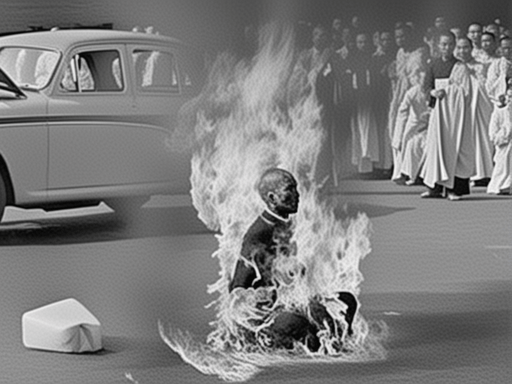
In the vast annals of human history, few images stand as starkly haunting as that of Thích Quảng Đức, a Vietnamese monk who, in a profound act of protest, set himself ablaze on a Saigon street in 1963. While the flames consumed his physical form, Quảng Đức remained motionless, embodying the epitome of tranquillity and peace. As if this act was not profound enough, an even more astonishing testament to his spirit was the heart that remained unburned, not only in the initial act but even upon re-cremation.

**The Unyielding Heart**

What does it mean to have a heart that does not burn? In the literal sense, it defies the expectations of nature and science. But on a more profound level, the heart of Thích Quảng Đức symbolizes the ultimate emblem of pure, unyielding compassion. In a world often ruled by tumultuous fires of hate, prejudice, and indifference, Quảng Đức’s heart serves as a poignant reminder that true compassion is unassailable. It can neither be burned nor extinguished.

**Compassion Amidst Chaos**

The metaphorical imagery of a heart that remains intact, even amidst the raging fires, is a testament to the enduring nature of compassion. The flames that consumed Quảng Đức were not merely physical; they represented the societal and political upheavals of his time. Yet, his heart, like his spirit, stood resolute, undeterred, and most importantly, compassionate.

In the face of adversity, many of us allow our hearts to be overtaken by the metaphorical fires of anger, resentment, or apathy. Yet, Thích Quảng Đức’s heart is a beacon, calling upon us to rise above the flames of malice and to foster a heart that, metaphorically speaking, can never burn.

**A Legacy Beyond the Flames**

Today, housed in a glass chalice at Xá Lợi Pagoda, Thích Quảng Đức’s heart serves as a perpetual reminder of his teachings and spirit. To the Vietnamese Buddhists and many others across the globe, he is revered as Bồ Tát Thích Quảng Đức, a bodhisattva. A being filled with such boundless compassion that he chose to remain in the cycle of samsara to help others attain enlightenment.

This unburned heart serves as a testament not just to the man, but to the idea that compassion, when deeply rooted in one’s being, can transcend even the most harrowing circumstances. It challenges each of us to reflect on the state of our hearts. Do we nurture a heart that is impenetrable to the flames of hatred, bitterness, and indifference?

**In Conclusion**


The legacy of Thích Quảng Đức is not simply about the act of self-immolation. It’s about a heart—a pure, compassionate heart that remained untouched despite the circumstances. As we traverse through our trials and tribulations, may we strive to cultivate such a heart, a heart that remains compassionate, resilient, and most of all, unburned.

Morgan O. Smith

Yinnergy Meditation & My Book, Bodhi in the Brain…Available Now!

https://linktr.ee/morganosmith