Enlighten Up! – w/ Special Guest, Nathalie Delorme (Ep 03)

Welcome to Episode 3 of “Enlighten Up!” Join us for another riveting conversation as spiritual teacher Morgan O. Smith and comedian Nathan Griffith welcome special guest Nathalie Delorme, a dedicated Spiritual Life Coach.
In this episode, Morgan scolds Nathan about not being ready for Yinnergy Level 4, despite nearly a decade of meditation practice. He delves into an explanation of the different levels of the unconscious mind and aspects of the dark shadow.
Our discussion revolves heavily around Yinnergy Meditation, a Brain Entrainment Program created by Morgan. He talks about the carrier frequencies that are the backbone of Yinnergy and explains the role of high amplitude and low entropy binaural beats within entrainment.
Morgan sheds light on the specific frequencies embedded in Yinnergy Purge Level 1 and their influence on the subtle bodies. He also explores lower and slower frequencies, linking them with the experiential stage of development, and discusses their connection to subtle bodies.
This episode goes deeper into the unique Yinnergy Audio Coil and how it was created through microdosing. Morgan elaborates on the distinct frequencies responsible for triggering ultimate love and various types of spiritual awakenings, even sharing an experience of a nature spiritual awakening he had in the delta state.
Join Morgan, Nathan, and Nathalie for this insightful discussion that promises to illuminate your understanding of spirituality, meditation, and consciousness. Make sure to check out Nathalie Delorme’s transformative work on Instagram @evolution.nathalie and remember, Yinnergy Meditation is available at https://linktr.ee/morganosmith.
Don’t forget to grab a copy of Morgan’s book, “Bodhi in the Brain,” now available on Amazon and Barnes & Noble. Like, share, and subscribe to stay updated on upcoming episodes!

Three Perspectives on Divinity

A Journey of Self-Discovery and Cosmic Connection

Every human being, at some point, grapples with the concept of divinity. How we perceive the divine greatly influences how we understand ourselves and our place in the cosmos. While there are many ways to envision divinity, let us ponder the “Three Faces of God” – “I am That,” “Thou art,” and “It, the Ground of All Being.” Each provides a distinct lens through which we may view and experience the divine.

1. Divine Within: The Face of “I am That”

“I am That” is a call to recognize the divine within us. It is not just a statement; it’s an acknowledgment of our inherent divinity. This perspective dissolves the illusion of separateness, helping us realize that we’re not merely fleeting existences in an indifferent universe, but integral fragments of a divine whole.

This face asks us to engage in deep introspection, to see beyond the veil of our mundane identities, and to understand that our true essence is not our transient ego, but the eternal spirit. Could it be that we’re more divine than we’ve ever imagined? This face prompts us to explore that possibility.

2. Divine As Other: The Face of “Thou Art”

The face of “Thou Art” offers a contrasting perspective. Here, the divine is seen as the ‘Other,’ an entity outside ourselves with whom we can establish a personal connection. This relationship with the divine, filled with reverence and love, is akin to the bond between a devotee and their deity.

In this model, God is the figure we pray to, seek comfort from, and surrender our troubles to. It’s a perspective that creates a powerful, intimate bond with the divine, letting us experience the divinity not as a part of us, but as a separate, caring, and guiding entity.

3. Divine As All: The Face of “It, the Ground of All Being”

The third face, “It, the Ground of All Being,” portrays God as an impersonal essence, the primal energy that permeates the cosmos. This face of divinity does not personify the divine but sees it as the raw material of existence. It is the unchanging reality amidst the ceaseless flux of the universe.

This view urges us to go beyond the traditional understandings of God and probe deeper into the mysteries of existence. Could it be that the divine is not just a deity or a spirit within, but also the very fabric of reality?

Wrapping Up

The Three Faces of God offer a multidimensional understanding of the divine, guiding us on our spiritual and philosophical quest. They propose different ways to connect with the divine, based on our personal inclinations and spiritual needs. More than a simple triad, they represent a spectrum of possibilities on our spiritual journey.

In acknowledging these perspectives, we can foster a richer understanding and experience of God, allowing us to discover the divine within ourselves, in an intimate relationship, and as the underlying reality of existence. Such an exploration can become a catalyst for personal growth and spiritual evolution, leading us to new levels of self-discovery and cosmic connection. After all, isn’t that what the quest for understanding divinity is all about?

Morgan O. Smith

Yinnergy Meditation & My Book, Bodhi in the Brain…Available Now!

https://linktr.ee/morganosmith

Embracing Paradox and Nonduality

Exploring the Paths to Spiritual Awakening

Introduction:
In the realm of philosophy and spirituality, two captivating concepts often spark profound contemplation and open doors to expanded understanding: paradox and nonduality. Both concepts challenge our conventional modes of thinking and invite us to explore the nature of reality and consciousness. In this thought-provoking blog, we will delve into the differences and similarities between paradox and nonduality, and delve into their roles in the context of spiritual awakening.

Paradox: Illuminating the Mystery Within
Paradoxes are enigmatic statements or situations that defy our logical expectations and challenge our understanding of reality. They present us with apparent contradictions, forcing us to question our assumptions and explore deeper layers of truth. Paradoxes are often the gateways to expanded consciousness, as they push the boundaries of our thinking and invite us to embrace the complexities and mysteries of existence. They are the mind’s playground, a fertile ground for philosophical inquiry and intellectual growth.

Nonduality: Beyond Duality, Towards Unity

Nonduality, on the other hand, transcends the realm of paradox by recognizing the illusory nature of dualistic distinctions altogether. It is a profound philosophical and spiritual concept that asserts the fundamental unity of all things, beyond conventional boundaries. Nonduality suggests that the apparent separation between self and other, subject and object, is an illusion that obscures the deeper truth of interconnectedness. It invites us to explore the essence of oneness that lies at the heart of existence, beyond the limitations of dualistic thinking.

Differences and Similarities:
While paradox and nonduality are distinct in their approaches, they share some intriguing similarities. Both concepts challenge our preconceived notions and invite us to embrace uncertainty. Paradoxes expose the limitations of linear thinking and expand our intellectual horizons, while nonduality goes beyond the realm of paradox by embracing a holistic view of reality. They both foster an open-mindedness that allows for new perspectives and insights to emerge.

In the realm of spiritual awakening, both paradox and nonduality play crucial roles. Paradoxes serve as catalysts, shaking us out of our complacency and inviting us to question our deeply held beliefs. They disrupt our habitual patterns of thinking and awaken us to the inherent mystery and wonder of existence. Nonduality, on the other hand, offers a framework for understanding the ultimate truth of interconnectedness. It guides us towards a direct experience of unity and helps dissolve the illusory boundaries that separate us from the world and others.

Conclusion:
Paradox and nonduality are two fascinating concepts that contribute to our philosophical and spiritual growth. Paradoxes challenge our intellect and expand our understanding, while nonduality transcends dualistic thinking and reveals the profound interconnectedness of all things. By embracing both paradox and nonduality, we can embark on a transformative journey of self-discovery and spiritual awakening. They invite us to explore the depths of our consciousness and contemplate the profound mysteries of existence. Let us embrace the paradoxes that confront us and open our hearts to the boundless unity that nonduality reveals. In this harmonious dance, we find the keys to unlocking the doors of awakening and embracing the vastness of our being.

Morgan O. Smith

Yinnergy Meditation & My Book, Bodhi in the Brain…Available Now!

https://linktr.ee/morganosmith

Enlighten Up! – w/ Special Guest, Gabrielle Bell (Ep 02)

Welcome back to the second episode of “Enlighten Up!” – your ultimate source for all things spiritual. We have our regular hosts, Morgan O. Smith, a former comedian turned spiritual teacher, and Nathan Griffith, a comedian with a deep spiritual quest. Our special guest, Gabrielle Bell, an autobiographical cartoonist and spiritual seeker, also joins us for another enlightening conversation.

In this episode, Nathan, aka The Light-Skinned Guru, asks a profound question, “If you’re having an experience, how do you know it’s real?” Meanwhile, Gabrielle seeks to understand the sacrifices needed for spiritual awakening, “What does one have to give up to experience waking up?”

Morgan introduces the topic of Absolute Presence, a state of being that transcends yet includes rationality. He also shares an awe-inspiring experience with a multi-dimensional being, which he refers to as a demigod.

Gabrielle shares her experience with Yinnergy Meditation, Morgan’s brainwave entrainment program, which she combined with her traditional meditative practice over the past week. The insights she gained paved the way for more deep discussions about various states of consciousness and the causal awakening known as Nirvikalpa Samadhi.

Morgan also provides an overview of the Vedanta schools and their key differences. He explains nature mysticism, a spiritual experience deeply connected to the natural world, yet distinct from The Absolute.

Nathan shifts the discussion towards a more existential question: “Why would God create all this?” This leads Morgan to discuss the purpose of understanding our true selves and the ultimate liberation it can bring. He also delves into the motivational potential of near-death experiences, and their power to spark a spiritual path.

Join us for this insightful episode. Dive deep into these spiritual discussions and transform your understanding of existence. Don’t forget to check out the Yinnergy Meditation program: https://linktr.ee/morganosmith

And Morgan’s enlightening book, “Bodhi in the Brain,” is still available on Amazon and Barnes & Noble.

Like, subscribe, and share this episode. Stay enlightened!

The Trikaya and the Trinity

Parallel Philosophies Across Cultures

Introduction:

In the realms of spirituality, the Buddhist concept of Trikaya and the Christian doctrine of the Trinity share an intriguing resemblance. Trikaya, which translates to ‘Three Bodies’, refers to the Dharmakāya, the Saṃbhogakāya, and the Nirmāṇakāya, while the Trinity consists of the Father, the Son, and the Holy Ghost. This blog delves into the philosophical parallels between these central tenets in Buddhism and Christianity.

Trikaya in Buddhism:

The Dharmakāya or “Truth Body” represents the unmanifested aspect of Buddha, embodying the ultimate nature of reality and enlightenment. The Saṃbhogakāya or “Enjoyment Body” refers to the celestial Buddha who brings teachings to enlightened beings. The Nirmāṇakāya or “Emanation Body” represents the historical and physical form of the Buddha, which is accessible and relatable to ordinary beings.

The Trinity in Christianity:
The Trinity comprises the Father, the Son, and the Holy Ghost. The Father signifies the unmanifest aspect of God, the ultimate creator. The Son, Jesus Christ, symbolizes the physical embodiment of God’s will. The Holy Ghost represents the guiding spiritual force, which brings wisdom and understanding to believers.

Philosophical Parallels:

1. Unmanifest and Eternal:
In Buddhism, the Dharmakāya is akin to the Christian concept of the Father. Both represent the unmanifest, eternal aspects of the divine. While the Dharmakāya embodies the ultimate truth and wisdom, the Father signifies the ultimate creative force.

2. Physical Embodiment:
The Nirmāṇakāya in Buddhism and the Son in Christianity are manifestations of the divine in human form. They are relatable and accessible to ordinary beings. Through their physical forms, they guide and lead by example. The Nirmāṇakāya (Buddha) through enlightenment and the Son (Jesus) through sacrifice and resurrection.

3. Guiding Force:

The Saṃbhogakāya and the Holy Ghost serve as the connecting link between the divine and the earthly realms. The Saṃbhogakāya, through celestial teachings, guides enlightened beings, while the Holy Ghost acts as a messenger of God, bringing wisdom and understanding to the faithful.

Conclusion:
The Trikaya and the Trinity represent complex theological concepts that offer deep insights into the nature of divinity. The parallel elements in these concepts hint at a universal human yearning to understand the divine and to connect with it. While they emerge from different cultural and religious traditions, their striking similarities foster an appreciation of the rich tapestry of spiritual thought across the world. Through the exploration of such parallels, we can find common ground in our quest for spiritual understanding and fulfillment.

Morgan O. Smith

Yinnergy Meditation & My Book, Bodhi in the Brain…Available Now!

https://linktr.ee/morganosmith


Enlighten Up! – w/ Special Guest, Gabrielle Bell

Welcome to the first episode of “Enlighten Up!” hosted by Morgan O. Smith, a former comedian turned spiritual teacher. In this engaging talk show, Morgan and his co-host Nathan Griffith, also a comedian turned spiritual seeker, explore spirituality’s vast and often complex world. Today, we’re joined by special guest, Gabrielle Bell, an autobiographical cartoonist and spiritual seeker. Tune in as we dive into deep conversations about spiritual awakenings, the commitment required to reach higher states of consciousness, and the experiences that transcend human intellect. We discuss the concept of holarchy versus hierarchy based on the work of Ken Wilber, examine life after death, and debate reincarnation about Parinirvana and Videhamukti. Gabrielle shares her meditative practices, her journey in expressing love and compassion, and the fears she faced after a partial kundalini experience. Morgan introduces Yinnergy Meditation, his original creation designed to foster whole-brain thinking and facilitate mystical experiences leading to spiritual awakening. A lighter note to our profound discussion is Nathan’s rather unexpected question about… lions! Our conversations vary from lucid dreaming to the roles of spiritually awakened individuals in addressing world issues. Join us on this journey toward enlightenment. Discover, discuss, and question all things spiritual. Don’t forget to check out Morgan’s new book, “Bodhi in the Brain,” available now on Amazon and Barnes & Noble. Get started with Yinnergy Meditation today: https://linktr.ee/morganosmith Subscribe, like, and share if you enjoyed the episode, and stay tuned for more enlightening discussions. Peace and love!

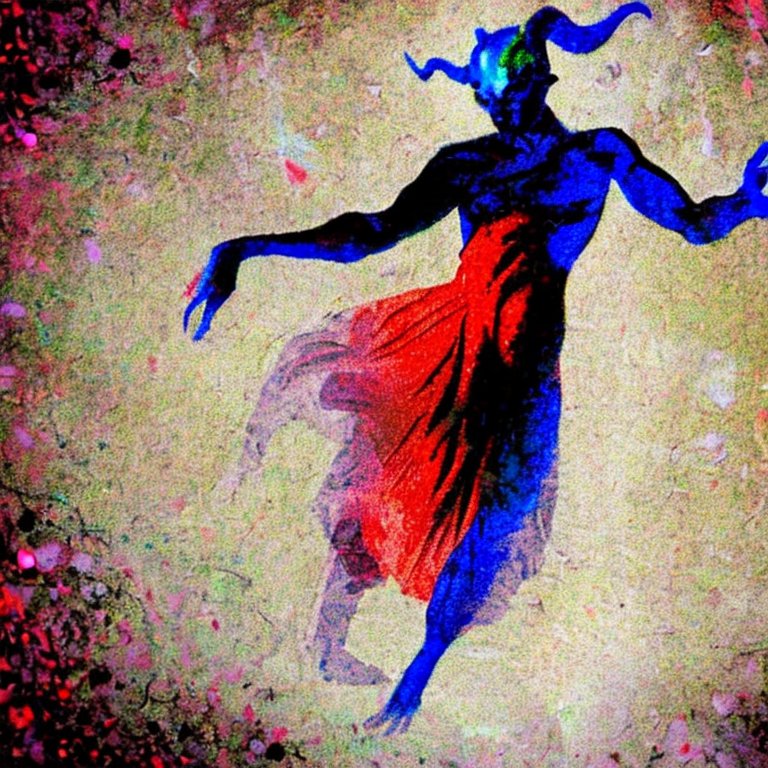
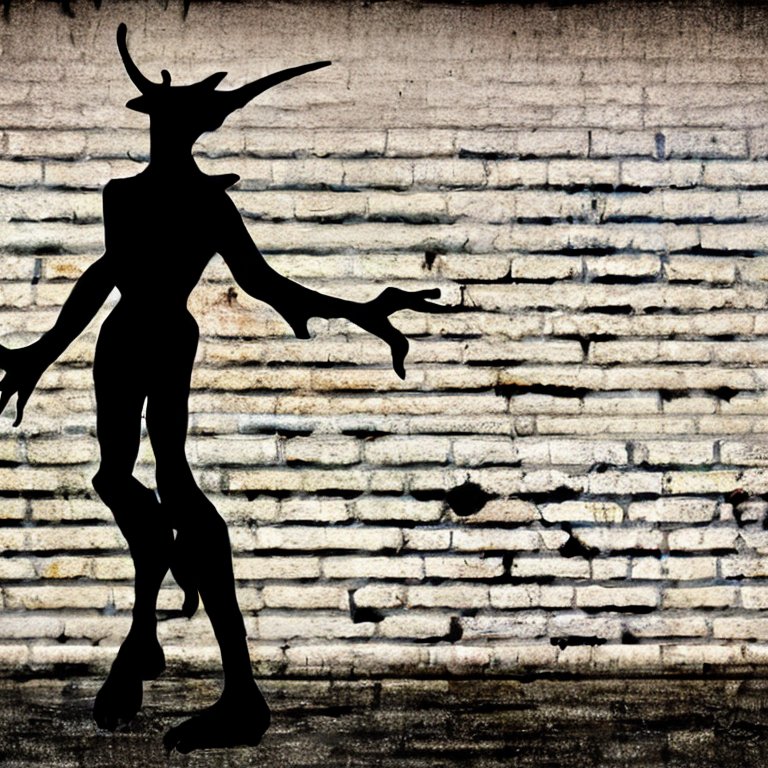
Dancing with Shadows

The Devil as Society’s Dark Projection

Intro:

As we sail through the oceans of human consciousness, we often encounter tempests that unveil the darker facets of our nature. If the divine represents society’s golden shadow, virtues, and aspirations, could the devil figure embody society’s dark shadow, a reflection of our collective id and repressed instincts? This article plunges into the depths of this unsettling yet captivating hypothesis.

Understanding the Dark Shadow:

Carl Jung posited the existence of the shadow as a component of the unconscious, housing both positive and negative elements that are not integrated into the conscious self. The dark shadow encompasses the negative aspects – our fears, impulses, and darker instincts.

The Devil as Society’s Dark Shadow:

Across cultures, the devil often symbolizes the epitome of evil, temptation, and the darker aspects of human nature. By projecting these qualities onto a devil figure, society externalizes its inner darkness, creating a ‘scapegoat’ onto which it can cast its sins and unwanted characteristics.

The Collective Unconscious and the Id:

Sigmund Freud’s concept of the id complements Jung’s shadow. The id is the instinctual part of the mind that contains sexual and aggressive drives and desires. Society’s projection of the id onto the devil may represent a form of collective defence mechanism, an attempt to deal with the disconcerting aspects of our nature.

The Devil as an Archetype:

In Jungian terms, the devil can be seen as an archetype, a universal symbol that dwells in the collective unconscious of mankind. This archetype manifests in various forms in different cultures, but its core characteristics usually represent the antithesis of societal norms and moral values.

Facing Our Demons:

Recognizing the devil as a projection of society’s dark shadow calls for the courageous endeavour to face our inner demons. Individuals and societies can work towards a more balanced and authentic existence by accepting and integrating these shadow aspects.

Conclusion:

The notion of the devil as society’s dark shadow casts a new light on the traditional narratives of good and evil. It invites us to reflect upon how the figures of deities and demons are not only external entities but also potent symbols of the complexities of human nature. Through understanding these shadows, society stands on the precipice of deeper self-awareness and a more holistic grasp of the human condition.

Morgan O. Smith

Yinnergy Meditation & My Book, Bodhi in the Brain…Available Now!

https://linktr.ee/morganosmith

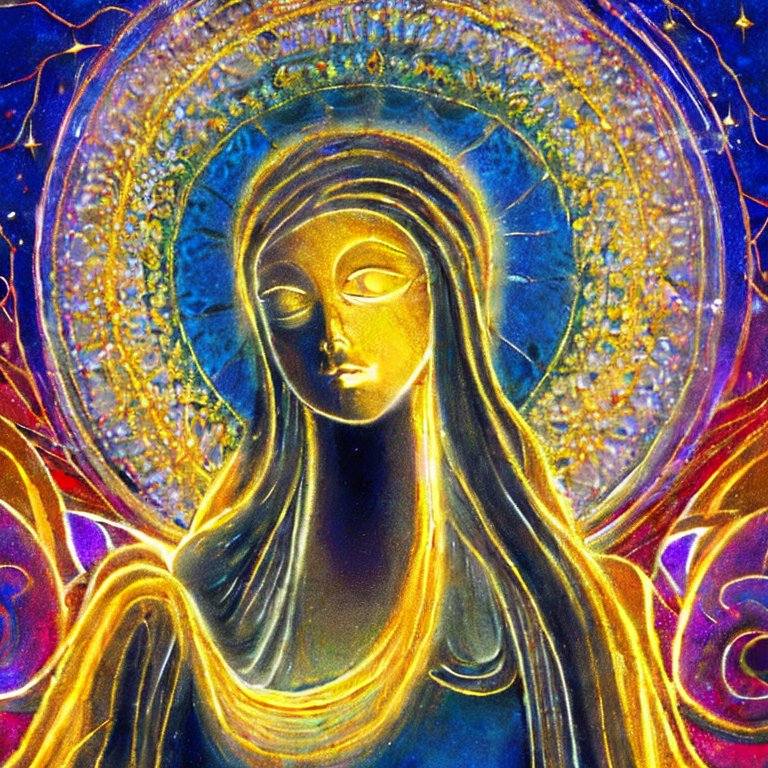
In Divine Light

Society’s Golden Shadow 

Intro:

In a world where the quest for meaning continues to stir the human soul, spirituality and reverence for the divine emerge as quintessential human experiences. But what if the collective admiration and worship of God are manifestations of society’s golden shadow – the unexplored, positive aspects of our shared unconscious? This post delves into the notion that the sacred spaces we turn towards in times of despair or joy are indeed reflections of the inherent greatness within ourselves.

Understanding the Golden Shadow:

Drawing from Carl Jung’s concepts, the golden shadow encompasses the positive attributes within our unconscious minds that we might not recognize. When these attributes are exemplified by an external entity, such as a deity, we project our golden shadow upon it.

God as the Epitome of Society’s Golden Shadow:

The divine figures across cultures are often epitomes of virtues – love, compassion, wisdom, and more. Society’s adoration for these figures could be interpreted as an admiration for the virtues themselves. The deities become mirrors, reflecting what individuals and societies aspire to embody.

Religion as a Path to Self-Realization:

One could argue that the rituals, prayers, and moral teachings of religion serve as vehicles for cultivating the qualities represented by the divine within ourselves. In essence, by worshipping or admiring God, individuals are also venerating and nurturing their own latent potential.

The Challenges:

This perspective might not sit well with everyone, especially those who believe in the transcendental nature of God. Moreover, using religious practices solely as tools for self-improvement might seem reductive. It’s essential to approach this hypothesis with respect for the diversity of beliefs and experiences.

Conclusion:

The notion that society’s worship and admiration for God is a projection of its golden shadow is thought-provoking. It offers a lens through which we can perceive religious and spiritual practices as not just pathways to the divine, but also as avenues to recognize and cultivate the virtues within ourselves. Whether or not one subscribes to this idea, it invites reflection on the profound interconnectedness between the human spirit and the sacred.

Morgan O. Smith

Yinnergy Meditation & My Book, Bodhi in the Brain…Available Now!

https://linktr.ee/morganosmith

Sand Castles of Consciousness

Discovering the Essence Within

Introduction:


In the tranquil tapestry of Eastern philosophy, where contemplation converges with existence, there lies a profound revelation – Everything in existence is composed of Pure Consciousness. Here, Consciousness is not merely an attribute; it is capitalized, symbolizing its omnipresence as the very fabric that weaves through the cosmos. It is akin to an ancient tale of a castle crafted from sand, reflecting that though it may don the guise of a majestic structure, it remains, in essence, sand.

The Sand and the Castle:

Visualize a child meticulously building a sand castle on the shore. The grains of sand, amassed and sculpted, assume the shape of a castle. Does the sand cease to be sand when shaped into a castle? Certainly not. This allegory mirrors the realization that while the myriad forms around us may appear different, they are all permutations of the same unyielding Consciousness.

The Essence of Consciousness:

Consciousness is akin to Brahman in Hinduism or the Tao in Taoism in the Eastern philosophical context. The unchanging, infinite, immanent, and transcendent reality is the Divine Ground of all matter, energy, time, space, being, and everything beyond. Our ephemeral existence is a mere reflection, a ripple in the vast ocean of Consciousness.

Flow of Forms:


Just as a sand castle is subjected to the whims of waves and winds, forms in the material world are in a constant state of flux. The ancient Hindu text, the Bhagavad Gita, illustrates this with the concept of ‘Lila’, depicting the world as a divine play of forms. The Taoist philosophy also reverberates with this thought through the Tao, which flows through and is the inherent nature of all things.

The Inner Alchemy:

One might inquire, how does this realization benefit our daily lives? Understanding that we are not just isolated entities, but integral threads woven into the fabric of Consciousness, can be transformative. It helps us transcend the illusion of separateness and cultivates compassion, humility, and interconnectedness with all beings and the natural world.

Conclusion:


As we embrace the wisdom of Eastern philosophy, let us be mindful of the sand castles we build and the sands that shape them. Let us embark on a spiritual odyssey to unearth the Consciousness within and around us, recognizing that the essence is unchanging, infinite and all-encompassing. Like the sand castles by the sea, our forms are transient, but the Consciousness that shapes us is eternal.

Morgan O. Smith

Yinnergy Meditation & My Book, Bodhi in the Brain…Available Now!

https://linktr.ee/morganosmith

The Singular Thought

Unravelling The Fabric Of Existence

Introduction:
Deep within the cosmos, lies an interconnected web of creation. Many spiritual traditions and contemporary philosophies propose the notion of Nonduality – the idea that everything in the universe is woven from a single thread. This post delves into an intriguing proposition: that every single thing in the entire universe was, is, and will be created with just one thought.

The Essence of Thought:
Thought, in its purest form, is an emanation of consciousness. The ancient sages believed that the universe itself is a manifestation of cosmic consciousness. This single, all-encompassing thought is the seed from which the boundless universe springs forth.

The Nature of Nonduality:
Nonduality implies that there is no separation between the observer and the observed, between subject and object. This interconnectedness suggests that the whole of creation is intrinsically linked to our own consciousness. The singular thought that manifests the universe is also the foundation of our individual thoughts and perceptions.

The Scientific Angle:
In modern times, the field of quantum physics has begun to echo the ancient wisdom of Nonduality. Particles can be in multiple places at once and are deeply interconnected. Some physicists even posit that consciousness itself may be a fundamental aspect of the universe, interweaving thought with the fabric of reality.

The Ripple Effect:
Considering the idea that creation stems from a single thought, our own thoughts take on new significance. Each thought could be seen as a ripple in the cosmic ocean, interacting with and shaping the universe in ways beyond our comprehension. Our thoughts, emotions, and actions might have a more profound impact on the fabric of existence than we realize.

Practical Implications:
If we accept the notion of a singular thought behind creation, how does this affect our daily lives? It could be a call to mindfulness; to recognize the power and potential in our own thoughts. By aligning ourselves with the constructive, compassionate aspects of thought, we can contribute to the positive unfolding of the universe.

Conclusion:
The idea that everything is born of a single thought is a profound and enchanting concept that bridges ancient wisdom with contemporary science. As we navigate the waves of existence, let us be mindful of the ripples we create. The universe, in all its complexity, might just be the echo of one resounding thought.

Morgan O. Smith

Yinnergy Meditation & My Book, Bodhi in the Brain…Available Now!

https://linktr.ee/morganosmith