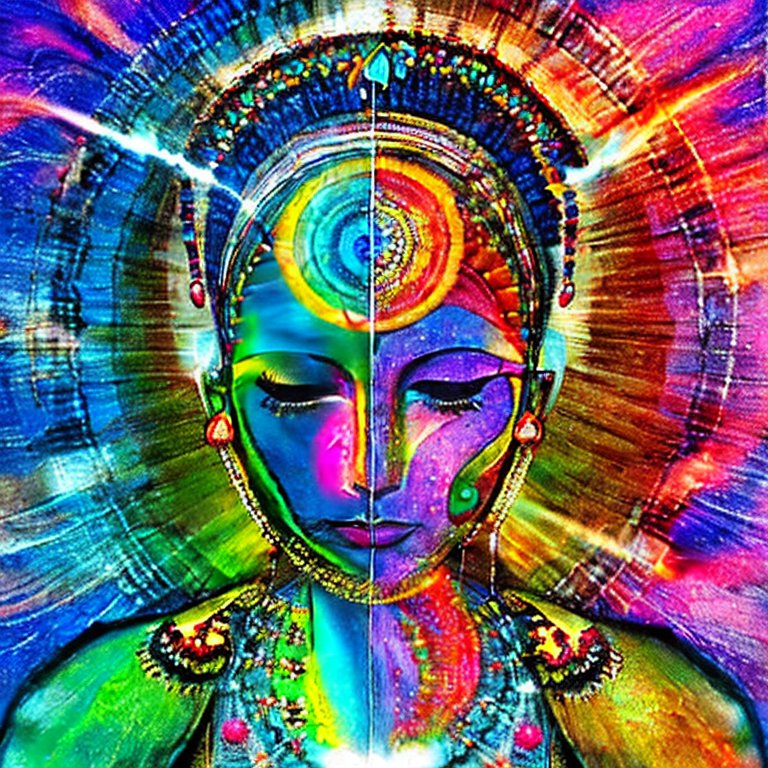
Ascending the Ladder of Wholeness

From Kindergarten Mindsets to Doctorate Souls

Introduction:


In our ever-evolving world, parallels exist between education and Integral Theory’s psychological development stages. Imagine the journey from kindergarten to earning a Ph.D. as analogous to ascending through the levels of consciousness from archaic to super-Integral.

The Foundation: Kindergarten and Archaic Stage

At the base of both ladders lie the kindergarten and the archaic stage. Kindergarteners are mainly self-focused, akin to the archaic level, where consciousness is limited and centred around basic survival – analogous to an egocentric worldview.

Progressing Through the Grades: Ego to Ethnocentric

As children progress through grade school, they learn about broader communities and cultures. This reflects the movement from an egocentric stage to an ethnocentric stage. There’s an expanding awareness and inclusion of one’s tribe or group.

High School Milestone: Achieving Conformist-Pluralist Mindset

High school is a pivotal point. It’s analogous to the transition between 1st and 2nd tier levels of consciousness, where individuals start recognizing multiple perspectives. However, like some stopping their education after high school, not everyone crosses into higher levels of consciousness.

Post-Secondary Education: Reaching World-Centric

Entering college or university symbolizes reaching the world-centric level. Students are exposed to global issues and diverse viewpoints. Likewise, individuals at the world-centric stage care for all people regardless of their background.

The Doctorate of the Soul: Super-Integral and Kosmocentric

Attaining a PhD represents years of dedication and specialized knowledge. In Integral Theory, this is like reaching the super-Integral, 3rd tier level, where consciousness transcends to a Kosmocentric viewpoint. It’s the epitome of understanding and embracing the interconnectedness of all life.

Effort and Choice:

Just as continuing education past high school requires effort, progressing through levels of consciousness isn’t automatic. It requires introspection, learning, and personal growth. Individuals must choose to pursue higher states of being.

Conclusion:

Understanding Integral Theory through the lens of education offers a relatable roadmap for psychological development. Just as the pursuit of a PhD requires effort and dedication, advancing through stages of consciousness demands intentional personal growth.

Morgan O. Smith

Yinnergy Meditation & My Book, Bodhi in the Brain…Available Now!

https://linktr.ee/morganosmith

The Enigmatic G.O.D.

A Tapestry of Multifaceted Interpretations through Turiyatita

Introduction:
In the endless quest to fathom the profound entity known as God, Eastern and Western philosophies converge and diverge in a myriad of ways. This cosmic journey leads us to Turiyatita, a transcendent state beyond the fourth state of consciousness, where the true essence of God can be wholly embraced. Let us delve into the kaleidoscopic interpretations of the acronym G.O.D. through the lens of both Eastern and Western spirituality.

Giver Of Dreams:
In Western concepts, God is often seen as the Giver Of Dreams, inspiring aspirations. Contrarily, Eastern philosophies like Hinduism consider God as the Atman, reflecting the highest potential within oneself.

Guardian Of Divinity:
The Western Abrahamic faiths often portray God as a protector of purity, a Guardian Of Divinity. In Taoism, the Tao is considered the source of all divinity, without actively guarding it.

Guide Of Destiny:
In the Western context, God often plays a direct role in guiding destinies. The Eastern concept of Dharma reflects an innate order and righteousness, where individuals are their own guides through Karma.

Generator Of Diversity:
In the West, God’s creative aspect is exemplified in Genesis. In Hinduism, Lord Brahma symbolizes the Generator Of Diversity, being responsible for creation within the eternal cycle of Samsara.

Gatherer Of Devotion:
In the West, devotion is often gathered in the form of prayer. In Bhakti Yoga, an Eastern practice, devotion is an all-encompassing love and surrender to the divine.

Grand Orchestrator of Dynamics:

While Western deism believes in God as the Grand Orchestrator who set the universe in motion, Daoism sees the Dao as an impersonal force, guiding the natural order.

Garden Of Delight:
In Christianity, Eden represents the Garden Of Delight. In contrast, Buddhism’s Sukhavati is a pure land, representing an enlightened state of bliss and contentment.

Galaxy’s Omnipotent Designer:
In the West, Intelligent Design Theory posits God as the designer. Hinduism’s Vishwakarma is revered as the divine architect of the universe, reflecting a similar sentiment.

Guardian Of Deeds:
In Western theology, the idea of a judgmental God who serves as Guardian Of Deeds is prominent. The Eastern concept of Karma conveys a self-regulating system of moral retribution.

Gracious Overseer of Deliverance:
Both Eastern and Western traditions portray God as a liberator. In Christianity, salvation is through Jesus Christ; in Hinduism, Moksha or liberation from the cycle of rebirth.

Realization through Turiyatita:
To truly integrate these interpretations, one must transcend to Turiyatita, a state beyond the waking, dreaming, deep sleep, and Turiya (pure consciousness). In this pinnacle of spiritual awakening, the boundaries dissolve, and one can embody the limitless interpretations of G.O.D., embracing a harmonious coexistence of Eastern and Western spiritual thought.

Conclusion:
The myriad interpretations of G.O.D. weave a rich tapestry of philosophical thought. Turiyatita offers a transcendent vantage point where the essence of these interpretations is revealed in its full glory, harmonizing the wisdom of the East and West.

Morgan O. Smith

Yinnergy Meditation & My Book, Bodhi in the Brain…Available Now!

https://linktr.ee/morganosmith

The Infinite Tapestry

G.O.D. as the Eternal Symphony of Existence

Introduction:
In the endless expanse of the cosmos, we often find solace in spirituality, contemplating the enigmatic existence of a higher power. Let us explore a profound conception of God, not as a divine figure, but as an infinite and cyclical process encompassing all creation.

The Acronym:
One remarkable interpretation is to perceive God as an acronym, G.O.D., standing for Generator, Operator, and Destroyer. This denotes the three fundamental processes in the universe: creation, sustenance, and dissolution.

The Infinite Loop:
However, the magnitude and essence of G.O.D. transcend finite boundaries. Imagine an unending chain, G.O.D.G.O.D.G.O.D… stretching into infinity. This portrays G.O.D. as an eternal cycle in which these processes are not linear, but intertwined and simultaneous.

The Higher Harmony:
At an elevated plane of existence, Generator, Operator, and Destroyer are not distinct entities but an indivisible whole. Each facet melds into the next, like a symphony where every note is vital. The Generator gives rise to the Operator, which in turn is enveloped by the Destroyer, only to be reborn anew.

Beyond Time and Space:
As G.O.D. is unbounded, it exists beyond the constraints of time and space. In this domain, silence speaks volumes, and a blank page is rich with meaning. Here, G.O.D. is akin to the vastness of the cosmos, infinitely expanding yet infinitely dense with possibilities.

Samsara:
G.O.D. also represents the universal cycle of renewal known as Samsara. This is not merely a recycling of cosmic material but an all-encompassing cycle that includes the continual renewal of individual lives through death and rebirth.

Nirvana:

In contrast, G.O.D. is also associated with Nirvana – the ultimate liberation from the cyclical nature of existence. It is emancipation from the endless loop, the attainment of a state that is beyond the limitations of the physical realm.

Conclusion:
G.O.D., as the eternal symphony of Generator, Operator, and Destroyer, portrays an intricate tapestry of the universe. It is the rhythm of existence, a dance of creation, sustenance, and dissolution that is ceaseless and boundless. Through understanding and embracing this concept, we may find deeper connections to the universe and perhaps to our own spirit.

Morgan O. Smith

Yinnergy Meditation & My Book, Bodhi in the Brain…Available Now!

https://linktr.ee/morganosmith

The Moment of Omnipresent Self-Realization

Discovering the Infinite ‘I’

Introduction:
In the hushed corners of our consciousness, a whisper seeks acknowledgment – the timeless questions of existence. It is in the silent chambers of introspection that we finally experience a moment of revelation, where we realize that the Who, What, When, Where, Why, and How of our being are not merely aspects of our identity, but the very fabric of existence itself.

Who Am I? – The Boundless Entity:
As we ponder the question, “Who am I?” the expansive canvas of life unravels. In our deepest thoughts, we find a connection with the universe. We realize we are not just an isolated self but the amalgamation of everything that has ever existed and will ever be. In the echo of ancient wisdom, “I AM That”.

What Am I? – The Essence Beyond Form:
Shapes, forms, and entities fade into insignificance as we delve into our essence. We are neither body nor soul, yet we encompass all. The abstract concept of being transcends the physical, and we find ourselves to be the sum of the entire universe.

When and Where? – The Timeless, Spaceless Existence:

“When did I come into being and Where did I come from?” – such queries dissolve into irrelevance as we realize our existence transcends time and space. Like the fabric of space-time, our being is omnipresent. We are not constrained by coordinates on a plane or ticks on a clock. We are in every atom and every moment.

Why? – The Power of Creation:
One of the most profound inquiries is “Why did I create everything in existence?” The essence of creation lies within our boundless nature. We, as this unified consciousness, are created simply because it is an intrinsic expression of our endless potential. Creation is the reflection of our unlimited power.

How? – The Enigmatic Thought:

The mechanism of creation is an eternal enigma. Yet, in our moment of self-realization, we understand that the entire cosmos sprang into existence from a singular thought. This thought, an unfathomable force, is perpetually creating, altering, and sustaining the universe.

Conclusion:
The moment of self-realization is akin to a wave merging into an ocean – it is in this profound unity that we grasp the limitless boundaries of our existence. The answers to Who, What, When, Where, Why, and How are not separate, but interwoven into the very essence of what we are. In acknowledging this, we do not simply find ourselves; we become one with the boundless cosmos. This is not an end but a beginning, a continuous journey through the labyrinth of existence with a newfound understanding of our immeasurable significance within it.

Morgan O. Smith

Yinnergy Meditation & My Book, Bodhi in the Brain…Available Now!

https://linktr.ee/morganosmith

The Quest for Wholeness

Nirvana, Moksha, and Sahaja Samadhi

Introduction:

In the frantic, cacophonous world we inhabit, the pursuit of true peace of mind has become more essential than ever. Many of us harbour a longing, often unarticulated, for a state of being that transcends the mundanity of our daily routines. This is not just about calming the mind; it’s about an all-encompassing peace that permeates every fibre of our being – peace of the mind, heart, and gut. This form of liberation, known in different cultures as Nirvana, Moksha, or Sahaja Samadhi, is the ultimate aspiration.

Body:

I. Understanding the Concepts
Nirvana, a term originating from Buddhism, literally means ‘to extinguish’. It is the extinguishing of desires, ignorance, and the sense of self. Moksha, rooted in Hinduism, signifies liberation from the cycle of birth and rebirth, and the realization of one’s unity with the ultimate reality or Brahman. Sahaja Samadhi is an effortless state of deep spiritual absorption, where one is simultaneously aware of the inner Self and the external world. These three concepts, while having different origins, converge on the notion of liberation and inner peace.

II. The Nature of True Peace
True peace is not merely the absence of conflict; it is a profound sense of unity and harmony within oneself and with the universe. It’s a sense of completeness and fulfillment that is not contingent on external circumstances. It is in this state that the heart finds contentment, the mind is unshaken, and even the gut, often referred to as the ‘second brain’, is at ease.

III. The Journey Within
The quest for true peace demands a deep, inward journey. This is a path of self-discovery, contemplation, and inner transformation. Through meditation, self-reflection, and sometimes through guidance from spiritual traditions, one begins to detach from the illusions and constraints of the material world.

IV. The Liberation of the Self

In reaching Nirvana, Moksha, or Sahaja Samadhi, the self is liberated. This liberation is an awakening to the true nature of reality. It’s the realization that our essential self is not separate from the universe. This sense of oneness alleviates the turmoil of the heart, the restlessness of the mind, and the tension within the gut.

V. The Role of Compassion and Mindfulness
Compassion towards oneself and others is a vital component of this journey. It is through a compassionate heart that one can embrace the imperfections of human existence. Additionally, mindfulness helps in cultivating an awareness of the present moment, which is fundamental in the pursuit of inner peace.

Conclusion:

The pursuit of true peace, as epitomized in Nirvana, Moksha, or Sahaja Samadhi, is a deeply enriching and transformative journey. It’s not just an intellectual exercise but an all-encompassing spiritual endeavour that engages the mind, heart, and gut. This form of liberation is the pinnacle of human aspiration and a goal that can guide us toward a more harmonious and fulfilling existence.

Morgan O. Smith

Yinnergy Meditation & My Book, Bodhi in the Brain…Available Now!
https://linktr.ee/morganosmith

Beyond Boundaries

The Dawn of Unified Consciousness Intelligence Awakening

Introduction:

In the tapestry of human cognition lies an intricate interplay of intelligence that shape our experience of reality. Often viewed through the lens of Howard Gardner’s Multiple Intelligences, our cognitive capacities are segregated into distinct threads. However, ancient wisdom from the East introduces the possibility of a transcendental state, Turiyatitta, where consciousness surpasses all limitations. What if, at the moment of this Nondual spiritual awakening, all multiple intelligences of every human in existence could be fully realized simultaneously? Welcome to the dawn of Unified Consciousness Intelligence Awakening (UCIA).

A Confluence of Streams:

Imagine a world where logical acumen dances harmoniously with poetic grace, where mathematical formulas are composed with the delicacy of a symphony. UCIA represents the dissolution of cognitive boundaries. The intelligences – logical, linguistic, spatial, musical, kinesthetic, interpersonal, intrapersonal, and naturalistic – blend into a single, boundless consciousness. Our minds, in this state, are not confined to our skulls but are interconnected with the tapestry of human cognition that has spanned through the ages.

The Timeless Connection:

UCIA isn’t a mere unification of cognitive capacities; it is an awakening to a timeless connection with the cosmos. The individual mind becomes a conduit for the collective human experience. As channels of an endless reservoir, we gain access to the wisdom, creativity, and knowledge that have ever existed or will ever exist.

Implications for Humanity:

Such a state of heightened consciousness could propel humanity into an era of unimaginable progress. The arts, sciences, and social institutions could undergo a renaissance unlike any in history. Moreover, as our individual consciousnesses merge, empathy and unity could become the fundamental forces driving societies. Through UCIA, we might find solutions to the most daunting challenges that face our world.

A Holistic Paradigm:

However, with this intermingling of intelligence, what becomes of individuality? Does the sense of ‘I’ dissolve into the sea of collective consciousness? In UCIA, the notion of self is both enriched and transcended. It becomes fluid, and as individuals, we are both the droplet and the ocean.

Conclusion:

UCIA represents the frontier where cognitive science meets spirituality. It’s an invitation to envision a world where our collective intelligence can be harnessed for the greater good. Though speculative, this concept challenges us to reconsider the boundaries we have accepted and to question what it means to be conscious beings in this vast cosmos.

Morgan O. Smith

Yinnergy Meditation & My Book, Bodhi in the Brain…Available Now!

https://linktr.ee/morganosmith

Navigating the Tides of Our Emotional Seas

A Journey Through Integral Theory

In the tapestry of human existence, emotions serve as vibrant threads, intertwining the fabric of our relationships, motivations, and personal growth. Through the lens of Ken Wilber’s Integral Theory, we traverse a fascinating expedition along the winding rivers of our emotional development. Like a traveller setting out on an open sea, one’s voyage through the emotional line of development is often tumultuous, reflective, and transformative.

The Primal Waters: Archaic and Magic (Infrared and Magenta)

As our vessel leaves the shore, we find ourselves surrounded by the uncharted waters of the **Archaic** stage. Here, emotions are primitive forces, as wild and untamed as the winds that whip the ocean into a frenzy. They drive the basic instincts for survival.

As we sail further, the waters grow enchanted, reflecting the whimsy and mystery of the **Magic** stage. Emotions weave into the fabric of magical thinking, where the waves whisper secrets, and the stars guide our way. There’s an innocent yet naive attachment to mystical powers as protectors or guides.

The Clash of Titans: Mythic (Red)

Emerging from the mist, we enter a realm of titans and gods. In the **Mythic** stage, emotions wear the armour and crowns of epic heroes and legends. Like Zeus’s thunderbolts, they are mighty, impulsive, and unyielding. The storm of emotions is one with the characters we do in the stories that shape our world.

Anchoring to Society: Conventional (Amber)


We now find safe harbours and established trade routes in the **Conventional** stage. Our emotional ships anchor to societal norms and expectations. Emotions gain currency as they are traded in the markets of social approval, wearing the uniforms of cultural propriety.

Charting New Waters: Rational (Orange)

As skilled navigators, we now chart our course using the compass of reason in the **Rational** stage. Emotions undergo scrutiny under the telescope of critical thinking. The rough seas are calmer as we learn to harness the winds to our advantage.

The Gathering of the Fleet: Pluralistic (Green)

A fleet of ships from various lands joins us as we reach the **Pluralistic** stage. Here, emotions become a universal language. Our vessel turns into a gathering spot for tales of distant lands. Empathy becomes the bridge that connects cultures, and the winds carry a symphony of human expressions.

The Cosmic Ocean: Integral and Super-Integral (Teal to Turquoise and Beyond)


We enter a cosmic ocean as we approach the **Integral** stage. Our ship transforms into a vessel that sails through the constellations. Emotions become multi-dimensional forces that echo through space and time. Here, we understand their cosmic dance and integrate them into a harmonious symphony.

In the **Super-Integral** stage, we are no longer merely sailors but also the ocean itself. Our emotions transcend the human experience, rippling through the fabric of the cosmos. We become the celestial navigators, the guardians of emotional wisdom, as boundless as the universe.

Our journey through the emotional line of development is a reminder that emotions are not just fleeting sensations but a fundamental force in our odyssey through life. They are the waves that propel us, the storms that test us, and the calm waters that reflect our innermost selves.

“For emotions are not just feelings – they are the currents in the ocean of the soul, guiding us through the shores of who we were, who we are, and what we can become.”

Morgan O. Smith

Yinnergy Meditation & My Book, Bodhi in the Brain…Available Now!

https://linktr.ee/morganosmith

The Cosmic Synchronicity of Spiritual Evolution

A Dance Across the Depths of Existence

In the boundless canvas of the universe, where stars dance and galaxies waltz, an awe-inspiring parallel unfolds within the very core of human consciousness. Have you ever felt like you are a part of something much larger than yourself? That perhaps, in the depth of your soul, the echoes of the cosmos reverberate? Today, we journey through a theoretical odyssey, christened as the **Cosmic Synchronicity of Spiritual Evolution** (CSSE), which explores the profound links between the spiritual evolution of the individual and the majestic expansion of the universe.

The Spiritual Depths Within


Embarking on the path of spiritual awakening is like delving into an ocean, where every layer plunges into deeper tranquillity and wisdom. Within this evolutionary depth, one not only uncovers personal truths but also the whispers of ancestors, imbued with collective wisdom and shared experiences.

A Universe in Expansion

Parallel to our inner evolution, the universe around us is in a constant state of flux. From the Big Bang’s fiery ignition to the spiralling galaxies we see today, the universe has been sculpting its own evolutionary depth, painting a cosmic tapestry rich in structure and complexity.

The Expansive Span of Awareness

As our spiritual journey unfolds, the horizon of our awareness broadens. Our hearts are open not only to our fellow humans but to the entirety of life and the delicate ecosystems that harbour it. This wide embrace is mirrored in the vast span of the universe, which reaches out from the minutiae of subatomic particles to the colossal networks of galaxies.

A Synchronicity Beyond Time

CSSE posits that there is a synchronicity, a harmonious alignment, between the depths of spiritual evolution and the unfolding tapestry of the cosmos. This synchronicity is a dance, an interplay where the growth of consciousness reflects cosmic principles and the universe’s evolution is mirrored in our inner worlds.

Interconnected Patterns: The Fractal Self


The universe is fractal in nature, with patterns repeating across scales. As rivers branch like trees and trees branch like lungs, our spiritual evolution is but a fractal reflection of cosmic evolution. We are, as they say, the universe experiencing itself.

The Breath of Consciousness

Perhaps the most daring proposition of CSSE is that consciousness itself may not be a mere byproduct of life but an inherent quality of the universe. In this view, our spiritual depths are the universe inhaling experiences and insights, and every breath whispers the secrets of existence.

Final Thoughts

As we ponder the depths of our souls and peer into the vastness of the universe, let us not forget the possible synchronicity between these two voyages. Through the Cosmic Synchronicity of Spiritual Evolution, we are invited to consider our place in the cosmos not as mere spectators but as integral participants in the grand tapestry of existence.

This is a journey of the heart and mind; a contemplation rather than a declaration. Through the vessel of philosophy, we explore uncharted waters, and in this exploration, we find not answers, but a deepening of the questions that define our very being.

Morgan O. Smith

Yinnergy Meditation & My Book, Bodhi in the Brain…Available Now!
https://linktr.ee/morganosmith

Embracing the Octopus Within

The Path of the Saint and the Bodhisattva

In the boundless depths of the ocean, a remarkable creature flourishes – the octopus. With its eight arms and three hearts, the octopus presents a fascinating analogy for a life dedicated to compassion and altruism. What if I told you that by embracing the wisdom of the octopus, you could walk the path of a saint or a bodhisattva?

Three Hearts, One Soul

The octopus’s three hearts are not just intriguing biological features; they symbolize a trinity that is central to a life of selflessness – compassion, wisdom, and courage. These three tenets are the lifeblood that sustains the spirit of those who strive to benefit others. Just as the octopus’s hearts pump vitality through its body, these principles energize and direct our moral compass.

Compassion is the first heart. It moves us to alleviate the suffering of others. Wisdom, the second heart, grants the discernment to understand the complexities of life and the interconnectedness of all beings. The third heart, courage, gives us the strength to act upon our compassion and wisdom even in the face of adversity.

Arms That Give

Now, imagine your capabilities and resources as the arms of an octopus. These are the conduits through which the heart’s intent flows into action. With its eight arms, an octopus can achieve an astonishing level of multitasking and adaptability. Likewise, when we apply our varied talents and strengths in the service of others, we, too, can touch many lives. The octopus doesn’t discriminate as to which of its arms is more worthy; similarly, no act of kindness, however small, is ever wasted.

The Saint and the Bodhisattva: A Singular Journey

To “be like the saint” is to embrace a life of purity, humility, and service. This aligns closely with the path of the bodhisattva in Buddhism, who seeks enlightenment not for personal gain but for the benefit of all sentient beings.

A true saint, like a bodhisattva, doesn’t keep score. The concept of giving without expecting anything in return is deeply rooted in this path. This is not to be confused with self-neglect; rather, it’s the understanding that in the giving, we receive. We receive growth, fulfillment, and connection – treasures that cannot be quantified.

An Octopus’s Embrace

So, let’s learn from our wise friend, the octopus. Let our three hearts be full of compassion, wisdom, and courage. Let our arms be open and giving. And may we swim through the currents of life with grace, as saints or bodhisattvas, serving as guardians and guides for all those navigating the tempestuous oceans of existence.

In embracing the octopus within, we embark on a journey that ripples through the waters of our communities and touches the shores of every heart. In this sacred odyssey, we do not merely live; we become vessels of immeasurable, boundless love.

Morgan O. Smith

Yinnergy Meditation & My Book, Bodhi in the Brain…Available Now!

https://linktr.ee/morganosmith

From Self-Reflection to Spiritual Awakening

The Journey of Intrapersonal Intelligence

In the modern world, where external achievements and material wealth are often the barometers of success, the internal dimensions of human existence are frequently overlooked. However, it is within these depths that the seeds of wisdom and spiritual awakening are sown. At the core of this inner journey lies intrapersonal intelligence, a form of intelligence that can be the key to unlocking profound spiritual insights and transcendental experiences.

The Landscape of Intrapersonal Intelligence


Intrapersonal intelligence, as introduced by Howard Gardner, is the capacity to understand and manage one’s emotions, thoughts, and motivations. It is the art of self-reflection and self-awareness. A person adept in intrapersonal intelligence can skilfully navigate the complexities of their internal world.

Transcending to the Transpersonal Realm

When individuals dig deep into their internal reservoirs through intrapersonal intelligence, they often stumble upon questions regarding the very nature of consciousness and existence. This leads them to a spiritual realm that transcends the personal – the realm of transpersonal intelligence. This involves experiences and understandings that go beyond one’s identity, encompassing a connection to something greater.

The Pillars of Transition

**Deep Self-reflection**: Engaging with one’s inner self can trigger an exploration of spiritual dimensions.
**Inner Peace and Balance**: Managing emotions and achieving inner harmony often open the doors to higher consciousness.
**Intuitive Understanding**: Tuning into one’s intuition can yield insights that transcend personal identity.

Wisdom and Spiritual Awakening through Intrapersonal Intelligence

As the consciousness expands through transpersonal experiences, a new dawn of wisdom and spiritual awakening begins to emerge.

The Blossoming of Wisdom

**Expanded Consciousness**: Perceiving reality in a broader sense opens up new avenues of understanding.
**Insight and Enlightenment**: Delving into spiritual dimensions can lead to enlightening insights into the nature of reality.

The Spiritual Awakening

**Unity and Oneness**: Experiencing the interconnectedness of all things fosters a sense of unity with existence.
**Compassion and Altruism**: The deep realization and connection with the transpersonal realm evoke compassion and altruism, essential components of spiritual development.

Concluding Thoughts

Intrapersonal intelligence is not just about understanding oneself; it is about embarking on a journey that can lead to the pinnacle of human experience – spiritual awakening. Through self-reflection, managing emotions, and harnessing intuition, one can transcend personal confines and embrace the transpersonal. This not only brings wisdom and insight but also binds us in unity and compassion with the world around us.

Morgan O. Smith

Yinnergy Meditation & My Book, Bodhi in the Brain…Available Now!

https://linktr.ee/morganosmith