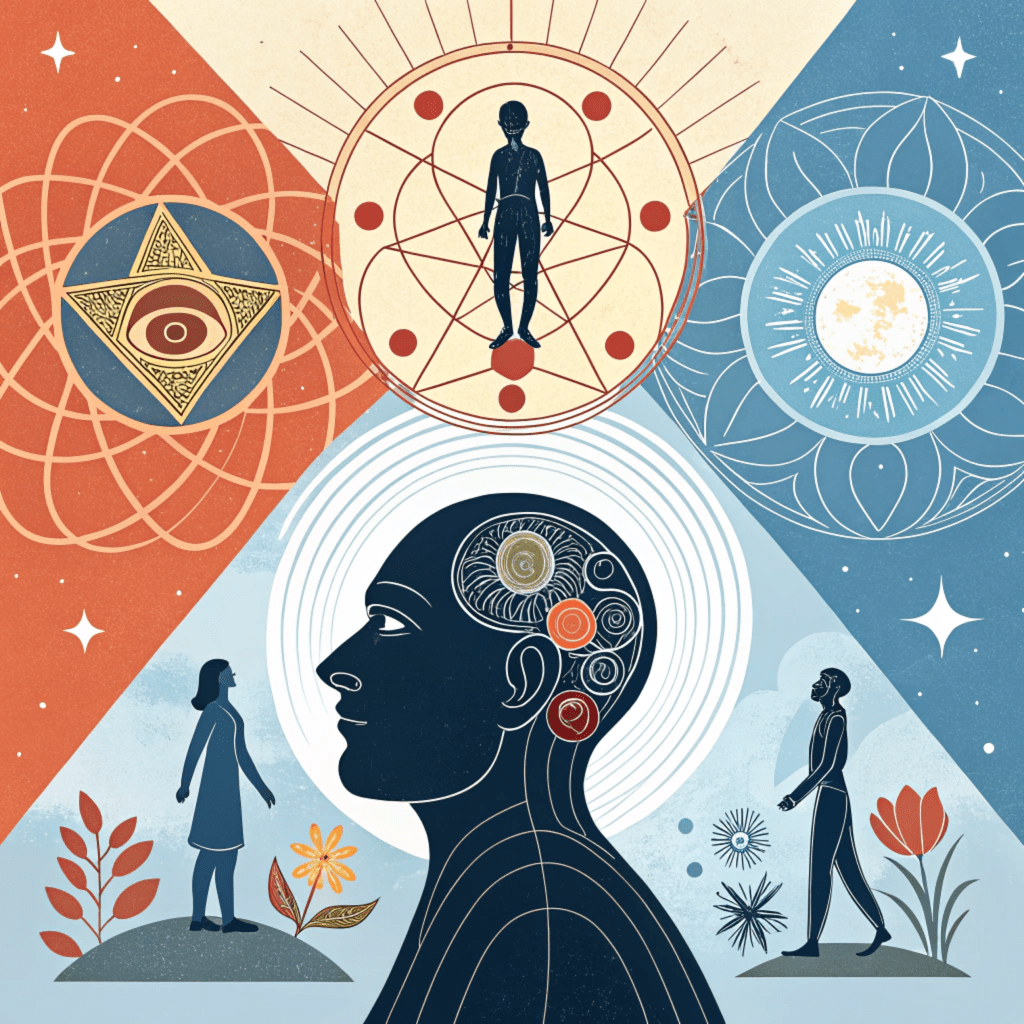
The Self You’ve Disowned

We often approach the idea of God as something external—an omniscient force watching from a distance, a transcendent creator who governs the cosmos. Yet this perspective keeps us trapped in separation, perpetually seeking something outside ourselves to fill a void or grant us salvation. What if the very concept of God points to an aspect of our being, an ultimate reflection of the self we’ve denied?

This disowned self isn’t the egoic identity that clings to its limitations. We have forgotten how to access the essence of boundless awareness, a space of infinite potential and wisdom. To disown something is to exile it from consciousness. And what has been exiled? The unconditioned self is the aspect of us that sees through the illusions of individuality and recognizes its oneness with all existence.

When we strip away the layers of attachment, fear, and identification with form, what remains? The answer is not a void in the nihilistic sense but a fertile emptiness where the fullness of life reveals itself. This is the realm where the divine resides, not as a being separate from you, but as the highest level of yourself—a self too vast, too luminous, to fit into the confines of your limited perception.

The Psychology of Disowning God

Many disown this ultimate self because embracing it requires the dissolution of the ego. We cling to roles, stories, and identities because they provide a sense of control. Yet these constructs are fragile, built on the shifting sands of impermanence. To own the highest self—the God-self—is to release the need for control, to step into the unknown with trust.

This is why the concept of God can evoke discomfort or skepticism. It forces us to confront the parts of ourselves that resist unity. The fragmented mind would rather see divinity as “out there” than face the profound responsibility of embodying it. To own the God-self is to accept that you are both the creator and the created, the ocean and the wave.

Reclaiming the Disowned Self

Reclaiming this aspect of the self is not about achieving something new. It is about remembering. This remembering begins with stillness—a radical turning inward that allows you to see the divine as the very ground of your being. It is the quiet realization that you are not a seeker in search of God; you are God, awakening to itself.

This journey requires profound courage. To reclaim the self you’ve disowned is to face the shadows you’ve avoided, to embrace the paradoxes of existence. It is to see that what you once called “God” and what you once called “self” are not separate, but one.

This realization does not inflate the ego. On the contrary, it dissolves it. When you live from the awareness of the highest self, every action becomes an expression of divine will. Compassion flows naturally because you recognize every being as another facet of the same essence. Suffering transforms into a teacher, guiding you back to wholeness.

Living from the God-Self

To live from this understanding is to inhabit life with clarity and grace. Challenges no longer feel like punishments but invitations to deepen your alignment with the divine within. Relationships are no longer transactional but become mirrors reflecting the infinite back to you. Every moment becomes sacred—not because of what it contains, but because of who you are as you experience it.

This is the ultimate paradox: God is not something you find; it is something you become by realizing you were never anything else.

Morgan O. Smith

Yinnergy Meditation, Spiritual Life Coaching & My Book, Bodhi in the Brain…Available Now!

https://linktr.ee/morganosmith

The Neutrality of Being

Beyond Preference and Bias

Human experience revolves around preferences—good versus bad, desirable versus undesirable. From a young age, we are conditioned to label moments, objects, and relationships based on our likes or dislikes, shaping a world of duality. Yet, something remarkable may begin to unfold for those who experience a profound spiritual awakening. The intensity of preferences softens, and the once-compelling narratives around right and wrong, beautiful and ugly, start to lose their grip.

This shift isn’t forced or rehearsed; it arises organically as consciousness deepens. It’s not about suppressing preferences or pretending they don’t exist. Rather, it’s about witnessing them without attachment. You might still notice that one meal tastes better than another, or that one kind of weather feels more comfortable, but the emotional charge—the bias for or against—diminishes.

This state of neutrality doesn’t negate the ability to express feelings about situations or objects. Joy, sadness, appreciation, or aversion may still arise naturally. However, the inner dialogue changes. An object once deemed essential for happiness may now appear as just an object. A situation that would have previously elicited anger or frustration may no longer hold the same power.

Neutrality is not numbness or indifference; it is the ultimate expression of freedom. When bias fades, life’s experiences are not judged as lacking or sufficient—they simply are. This perspective offers a profound sense of peace. When preferences no longer dominate the mind, the heart is free to engage with reality exactly as it unfolds.

This state isn’t something that needs to be chased or consciously cultivated. It arises as a natural byproduct of deep inner awakening. The realization that all phenomena are transient allows one to meet life with equanimity. Dualities are not eradicated but are seen for what they are—part of the play of existence, neither to be clung to nor rejected.

If you’re on the path of spiritual exploration, allow yourself to relax into the flow of awareness. Don’t try to force neutrality; simply observe the moments when it arises. Over time, you may notice that this spacious, bias-free perspective becomes less of an exception and more of your default state of being.

Morgan O. Smith

Yinnergy Meditation, Spiritual Life Coaching & My Book, Bodhi in the Brain…Available Now!

https://linktr.ee/morganosmith

The Mirage of Paradise

Why Many Turn Away From the Path

Paradise often appears as a shimmering promise on the horizon—a space of unbroken peace, eternal joy, and infinite understanding. Yet, when the steps to reach it feel many, slow, or arduous, even the most sincere seekers may find themselves questioning the journey. Why does the promise lose its lustre when effort is required? Why do we often choose comfort over truth or familiarity over freedom?

The answer lies not in paradise but in our relationship with it.

The Illusion of Arrival

The mind, conditioned by a lifetime of instant gratification and linear progress, believes paradise must be attainable within a predictable framework. When the path to enlightenment stretches beyond its comfort zone, the mind rebels. It whispers doubts, offers shortcuts, or fabricates reasons to abandon the pursuit altogether.

Yet, true awakening does not follow a predictable roadmap. It cannot be squeezed into the limited constructs of time or effort. Enlightenment is not about arriving somewhere—it is about dissolving the illusion of the one who seeks. This is the paradox that discourages many: the realization that the paradise sought is not something to be reached but something to be uncovered within.

The Fear of Letting Go

Another reason many step away from the path is the fear of surrender. Enlightenment demands more than perseverance; it requires the complete letting go of the self we believe ourselves to be. For those deeply identified with their roles, beliefs, or desires, this can feel like annihilation. What lies beyond the familiar can seem less appealing than the comfort of staying as we are.

But surrender is not a loss; it is an opening. It is stepping into the unknown with trust and willingness, allowing paradise to reveal itself not as a destination but as the ever-present reality beneath all appearances.

Walking Without Steps

Paradise cannot be reached because it is not elsewhere. It is not at the end of many steps or behind layers of effort. Those who walk away often believe the steps are external—practices, rituals, or milestones to achieve. The truth is, that the steps are inward, subtle, and immediate. They require no distance travelled, only the courage to turn within and meet the present moment fully.

Each step dissolves the illusion that there is somewhere else to go. Each step reveals that paradise was never absent. The question is not whether enlightenment is too far but whether we are willing to abandon the belief that it lies anywhere but here.

Remaining Open to the Journey

For those who feel the pull to turn back, perhaps the greatest teaching is this: paradise is not reserved for those who walk a perfect path. It embraces even the wanderer, the doubter, and the one who stumbles. The journey is not about reaching paradise but about waking up to its presence at every turn.

Instead of asking how far we have to go, ask this: What illusions am I willing to release today? What layers of resistance, fear, or expectation can I dissolve now? Every step, no matter how small, is a step into paradise itself.

Morgan O. Smith

Yinnergy Meditation, Spiritual Life Coaching & My Book, Bodhi in the Brain…Available Now!

https://linktr.ee/morganosmith

The Birth and Death of Inner Universes

A Perspective on Spiritual Awakening

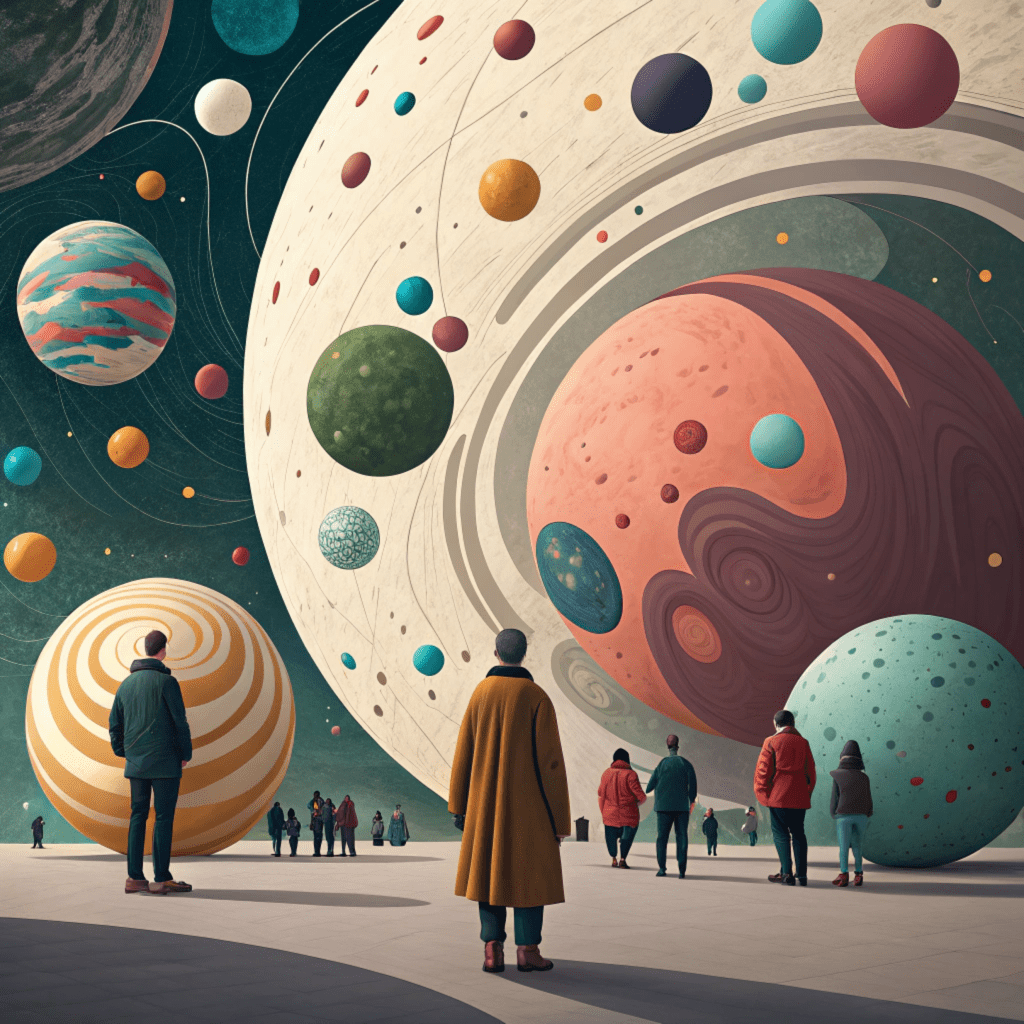
Spiritual awakening is not merely a personal transformation; it is an intimate cosmic event. Each moment of awakening dismantles the boundaries of identity and creates a vast, living expanse within. This unfolding is as paradoxical as it is profound—a universe arises within, brimming with potential, only to dissolve as swiftly as it appeared.

The creation of this inner cosmos mirrors the nature of existence itself. A moment arises where the self perceives its infinite nature, birthing dimensions of awareness that feel eternal. This universe, however, does not exist to linger. It serves a purpose: to illuminate, to expand, and ultimately to dissolve back into the nothingness from which it came.

Such a process reveals a truth that eludes language. What is born within us during these moments is not separate from what is destroyed. The arising and vanishing are inseparable aspects of the same eternal dance. Within this rhythm, one discovers the impermanence of form and the timeless essence of being.

This creation and destruction shatter attachments to identity, beliefs, and the false security of permanence. It is not an annihilation to fear, but a liberation to embrace. As the mind relinquishes its grip, awareness expands, offering a glimpse into a state where nothing and everything coexist seamlessly.

The universe within is both an expression of the infinite and a reflection of the impermanent. It reminds us that awakening is not a destination but an ever-unfolding realization. Each birth and death within brings clarity to the timeless truth that all is interconnected, arising and subsiding within the boundless field of consciousness.

This experience shifts perception, encouraging a life lived with greater ease, grace, and compassion. As one awakens to the cyclical nature of inner universes, the external world begins to reflect this understanding. The mundane becomes sacred, the transient becomes meaningful, and the self becomes a vessel for the infinite.

Morgan O. Smith

Yinnergy Meditation, Spiritual Life Coaching & My Book, Bodhi in the Brain…Available Now!
https://linktr.ee/morganosmith

Finding True Happiness

Embracing the Wholeness of Emotions

Happiness, as it is often pursued, can feel like a fleeting dream—a constant chase for experiences that promise joy while running away from anything that feels uncomfortable. Yet, this pursuit can leave us fragmented, perpetually seeking and never arriving. The paradox of true happiness lies in the radical act of embracing all feelings, not just the pleasant ones.

Contentment is not the absence of discomfort; it is the presence of wholeness. Life offers a vast spectrum of emotions, each carrying its wisdom and significance. Joy and sorrow, hope and despair, love and fear—none exist in isolation. To deny one is to diminish the richness of the other. True happiness begins not when we suppress pain but fully meet it without resistance.

Imagine standing during a thunderstorm. Most would run for shelter, seeking safety from the discomfort of the rain. But what if, instead, you stood still, feeling the rain on your skin, hearing the rhythm of its fall, and witnessing its cleansing power? Embracing emotions is like this: a willingness to be with what is, not wishing it away but seeing its beauty and necessity.

When joy arises, celebrate it without clinging. When sadness visits, honour its presence without judgment. Anger, fear, excitement, and serenity all have their place in the dance of existence. Each emotion becomes a teacher, guiding us to deeper self-awareness and authenticity.

The secret is to observe emotions without becoming consumed by them. Like waves in the ocean, they rise and fall, but the essence of who we are—vast, still, and unshaken—remains constant. This shift in perspective transforms the way we experience life. Happiness is no longer a fleeting feeling tied to circumstances but an enduring sense of contentment rooted in presence.

When we no longer resist the full range of our humanity, happiness is no longer conditional. It becomes a state of being that arises from accepting life as it is—unfiltered, raw, and real. In this acceptance, a profound peace unfolds, transcending temporary highs and lows.

The journey to true happiness begins by welcoming all parts of ourselves. In every moment, every feeling, and every breath, there is an invitation to return to wholeness.

Morgan O. Smith

Yinnergy Meditation, Spiritual Life Coaching & My Book, Bodhi in the Brain…Available Now!

https://linktr.ee/morganosmith

The Birth of Purpose

Unveiling the “Why” of Your Life

Mark Twain’s poignant observation—that our lives are defined by the day we are born and the day we discover why—speaks to a universal quest for meaning. Birth introduces us to the world, but it is purpose that gives our existence depth and significance. This discovery transforms a mere life into a profound journey.

The search for one’s purpose often feels elusive, like chasing shadows in the dark. It demands more than intellectual effort; it requires us to pause, reflect, and confront the silence beneath our everyday noise. Purpose rarely presents itself in grand revelations. Instead, it whispers in moments of clarity, when life’s chaos subsides and we sense an alignment between who we are and what we do.

For some, this purpose is tied to service—offering a helping hand or inspiring others to rise. For others, it is found in the relentless pursuit of a dream, an expression of creativity, or simply being present and whole. Whatever the form, discovering purpose feels less like an addition to life and more like the peeling away of layers, revealing what was always there.

However, the question arises: How do we find it?

The process begins with self-awareness. Quiet observation of one’s passions, strengths, and values can illuminate the direction toward purpose. Those moments when time seems to dissolve when you feel most alive and authentic, hold clues. Follow them. Trust them. They are markers on the path.

Another step is embracing uncertainty. Searching for “why” does not always yield immediate answers. Life’s purpose evolves as you do, shifting with growth and perspective. What feels meaningful today may expand or transform tomorrow. Purpose is not a destination but an ongoing inquiry, a question to be lived rather than solved.

The most profound realization about purpose may be this: it is less about finding a specific role or mission and more about being attuned to the present. Purposeful living is born not from monumental achievements but from how we engage with each moment, each relationship, and each opportunity to learn and grow.

When we shift our focus from doing to being, from achieving to experiencing, we realize that purpose is not a far-off goal but something we cultivate daily. The journey becomes its reward. And in those rare, luminous moments when we connect with our “why,” we find ourselves not only alive but truly living.

Morgan O. Smith

Yinnergy Meditation, Spiritual Life Coaching & My Book, Bodhi in the Brain…Available Now!
https://linktr.ee/morganosmith

The Full Realization of Divine Grandeur

The human experience often feels like a journey through shifting sands, where clarity and certainty seem elusive. Yet, beneath the surface lies a profound truth—one so vast that it escapes the bounds of the intellect. This truth is the realization of divine grandeur, an unshakable awareness of the infinite essence that we are and have always been.

This grandeur is not something acquired; it is unveiled. It is the silent, unchanging awareness behind all fleeting moments of life. To recognize it is not to add something new to oneself but to peel back the illusions of limitation. Divine grandeur does not belong to a distant deity or a select few; it is the source and substance of all existence.

To fully realize this truth, one must transcend the conditioned mind, which is mired in stories of separation, lack, and striving. Every moment of suffering, every perceived obstacle, serves as an invitation to remember the wholeness that already is. Challenges dissolve in the light of this realization, not because they disappear, but because they are seen for what they truly are—manifestations of the same boundless essence.

This recognition does not negate the human experience; it enhances it. When the divine is seen in every face, every leaf, and every breath, life transforms into an expression of sacredness. There is no need to seek meaning, for meaning is inherent in all that is. This understanding is not an escape from the world but an embrace of it. It is to know that the divine is not found outside but radiates through all of existence.

Realizing divine grandeur does not require renouncing life. It requires living fully, and engaging with the world while remaining rooted in the unshakable awareness of one’s true nature. This balance, where the eternal meets the temporal, reveals a beauty beyond words.

The grandeur of the divine is not an object to be attained but the very essence of being. It is realized in stillness and silence, yet its echoes resound in every act of kindness, every expression of love, every moment of presence. When this truth is known—not as a concept but as an undeniable reality—life becomes a dance of infinite grace.

Morgan O. Smith

Yinnergy Meditation, Spiritual Life Coaching & My Book, Bodhi in the Brain…Available Now!

https://linktr.ee/morganosmith

Nonduality and the Integral        

Untangling Two Profound Perspectives

When people speak about nonduality, they often weave together concepts that belong to the realm of the integral perspective. The two may seem intertwined, yet their essence is profoundly distinct. Recognizing this difference can deepen our understanding of both and expand our capacity for spiritual insight.

Nonduality points directly to the ultimate truth: the indivisibility of reality. It is the recognition that all distinctions are illusory. The subject-object split dissolves, revealing a seamless unity. It is not merely a philosophical perspective but an experiential truth—a recognition that transcends intellectual grasping. Nonduality is the realization that there is no “two,” only “one,” and even that word dissolves into silence.

Integral thinking, on the other hand, provides a comprehensive map of reality, embracing the complexity of human experience. It categorizes and contextualizes the subjective, objective, intersubjective, and interobjective dimensions of existence. Integral frameworks are invaluable for navigating personal and collective evolution, offering tools for harmonizing the many aspects of life.

The Key Distinction

Nonduality exists beyond frameworks, maps, or categories. It does not concern itself with the relative interplay of quadrants, stages, or states. Nonduality is the recognition that all such distinctions are themselves empty—useful only until their utility is seen through.

Integral thinking is rooted in relativity. It thrives on distinctions and relationships, aiming to integrate them into a cohesive understanding. It does not negate duality but works within it to foster greater awareness and wholeness. Integral thinking can support a journey toward nondual realization, but it remains distinct from the destination itself.

Why the Confusion?

The conflation arises because many seekers first encounter nonduality through conceptual frameworks, often presented in an integral context. The integral perspective’s ability to unify seemingly disparate truths can feel like a step toward nondual awareness. However, while the integral celebrates the diversity of perspectives, nonduality obliterates them, revealing a singular, indivisible presence.

The integral is a bridge; nonduality is the infinite expanse beyond the bridge. One operates within the realm of mind and relativity, while the other beckons toward the formless essence that precedes thought itself.

Moving Beyond Concepts

The beauty lies in recognizing that both have their place. Integral approaches help organize and clarify our understanding, guiding us toward greater clarity and balance in the relative world. Yet, true liberation comes when we let go of even the most exquisite maps and plunge into the direct experience of what is.

Nonduality is not something to be understood. It is what remains when all attempts at understanding fall away. To grasp this distinction is to open oneself to the ineffable—a leap that no framework can contain.

Morgan O. Smith

Yinnergy Meditation, Spiritual Life Coaching & My Book, Bodhi in the Brain…Available Now!
https://linktr.ee/morganosmith

Exciting News


Featured in Three Incredible Publications This Week!
Hello everyone,
I’m excited to share some wonderful news! This week, I’ve been featured in three amazing publications that highlight my work and ongoing journey toward fostering innovation and personal growth. It’s a humbling experience, and I couldn’t wait to let you in on the updates.
Here’s where you can check out the features:
CanvasRebel/Voyage: This article dives into my story, exploring the motivation behind my work and the innovations we’ve been championing. Read it here.
Insight Success: I’m honoured to be recognized as one of the “Most Admired Personalities to Look for in 2024.” This piece explores the vision and dedication driving the work. Check it out here.
Cover Entrepreneur: This feature focuses on guiding transformative change and fostering unity through innovative teachings and practices. Read the full story here.
These features are a testament to the collective energy, passion, and dedication that fuel the work. Each story reflects a shared journey of personal growth and community transformation, reminding us all of the incredible things we can accomplish together.
I’m so grateful for the opportunity to share these stories and would love for you to take a moment to explore the articles. If you find them inspiring, please feel free to share them with your network!
Thank you for your ongoing support and belief in the power of transformative ideas. Together, we’re shaping a brighter future.
With gratitude,

Morgan O. Smith
 
Yinnergy Meditation, Spiritual Life Coaching & My Book, Bodhi in the Brain…Available Now!
 
https://linktr.ee/morganosmith


The Unseen Path to Happiness

Happiness often appears as a destination—something to be attained by seeking pleasurable experiences, avoiding pain, and curating external conditions. Yet, this pursuit can feel elusive, as if true happiness constantly moves just beyond reach. Perhaps this is because happiness isn’t found in the suppression or control of emotions, but in embracing them all as integral aspects of our human experience.

Emotions are often categorized as “positive” or “negative,” with joy, love, and excitement praised, while sadness, anger, and fear are seen as obstacles to overcome. However, this dualistic view creates resistance. Denying so-called negative emotions only magnifies their intensity, embedding them deeper within the psyche. True contentment arises not from avoiding discomfort but by fully experiencing and accepting it without judgment.

Imagine sitting with sorrow as you might with an old friend—acknowledging its presence, listening to its message, and recognizing its role in your life. Sadness, when embraced, transforms from an adversary into a teacher. It illuminates where attachments or unmet desires linger and invites you to release the illusion of control. Similarly, anger, when approached without suppression or overindulgence, becomes a fierce energy capable of clarifying boundaries and catalyzing change.

Contentment is not denying the human condition but a deep surrender to its unfolding. This surrender doesn’t mean passivity; it is an active engagement with the present moment. By welcoming all emotions, the inner landscape transforms. Happiness is no longer confined to fleeting highs but instead becomes an abiding state of being—anchored in equanimity, rooted in authenticity.

In this light, happiness is not the absence of pain but the profound realization that all emotions—joy and sorrow, peace and unrest—are sacred facets of existence. Each one offers an opportunity for growth, insight, and connection. To find contentment within them is to see life as whole, unbroken, and imperfect.

By sitting with your emotions and embracing their entirety, you awaken to the simple truth: happiness is not found in resisting life but in meeting it fully.

Morgan O. Smith

Yinnergy Meditation, Spiritual Life Coaching & My Book, Bodhi in the Brain…Available Now!
https://linktr.ee/morganosmith