Navigating the Shades of Morality

Embracing Our Humanity Through Spiritual Evolution

In the labyrinth of human experience, we often find ourselves at a crossroads between contrasting moral landscapes. This journey, fraught with myriad complexities, guides us through a transformative process—a shift from seeing the world in stark contrasts to embracing the nuanced shades of morality that define our existence. It’s a journey that doesn’t just challenge our perceptions but also enriches our understanding of what it means to be inherently human.

The Evolution of Perception

As we embark on this spiritual and psychological evolution, our initial encounters with morality are often painted in broad strokes of black and white. This dichotomy, while offering clarity, is also a testament to our nascent understanding of the moral universe. However, as we delve deeper into our journey of self-discovery and spiritual awakening, we begin to notice the emergence of grey areas. These are not mere anomalies but signposts of our evolving consciousness.

The Tug of War Within

This recognition ushers in a period of internal conflict—a tug-of-war between the polarities of good and evil, right and wrong. It’s a battle that rages within, pulling us in opposing directions. Yet, it’s through this struggle that we learn the invaluable lesson of acceptance. By integrating these disparate aspects of our being, we unlock a more profound comprehension of our nature and the world around us.

Standing Firm in the Middle

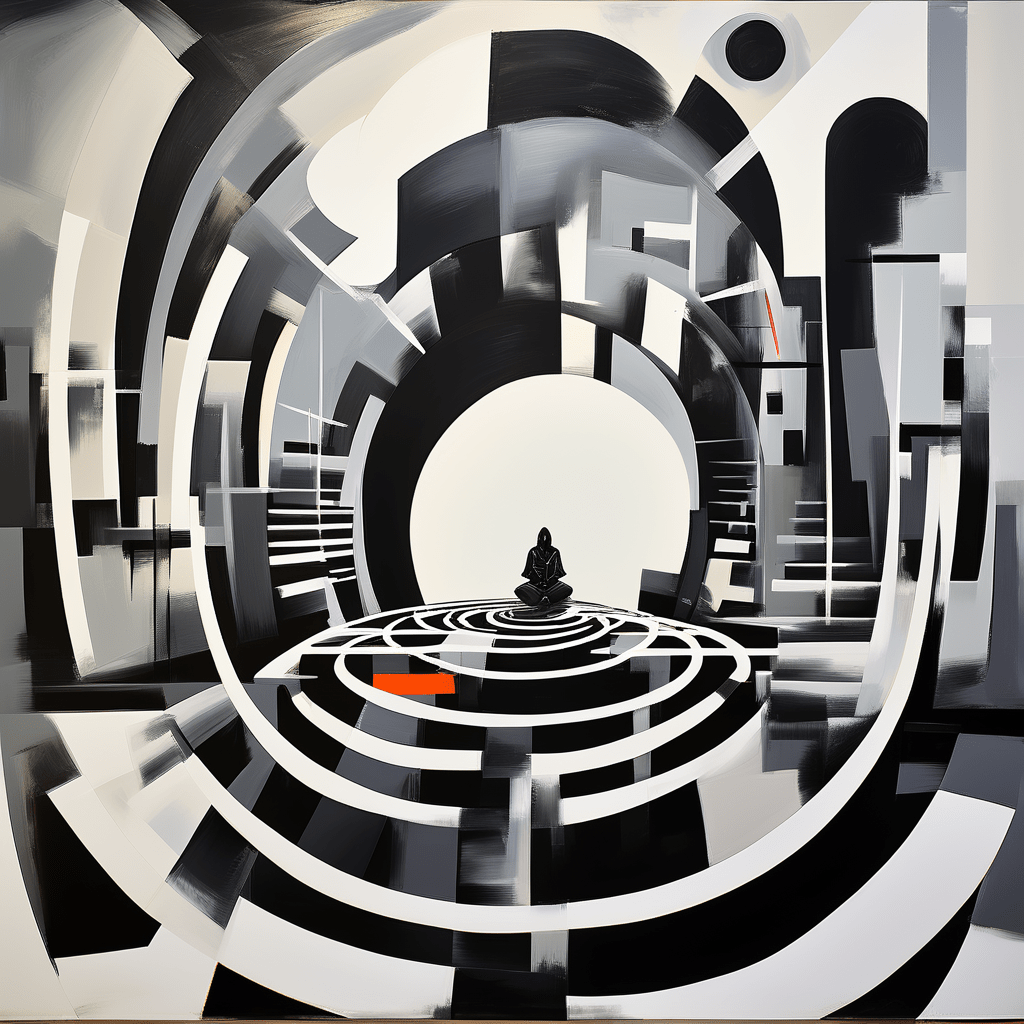
The ultimate aim of this journey is not to choose a side but to find equilibrium amidst the chaos. To stand firm in the middle is to acknowledge our capacity for both the divine and the diabolical. It is in this space that we discover true empathy and compassion, unburdened by bias and judgment. This balanced stance does not signify indifference but a deeper connection to the vast spectrum of human experiences and emotions.

The Gift of Empathy and Compassion

By embracing the grey areas of morality, we cultivate a more empathetic and compassionate perspective. This transformation is not just personal but collective, as our increased understanding and acceptance ripple outwards, influencing our interactions and relationships. In recognizing our complexities, we become more forgiving of others, bridging divides and fostering a sense of shared humanity.

Conclusion: Embracing Our Humanity

The journey through the shades of morality is an integral part of our spiritual evolution. It challenges us to confront and reconcile the complexities within ourselves, leading to a more empathetic, compassionate, and balanced existence. By standing in the middle of our moral landscape, we embrace the full spectrum of our humanity, finding peace in the acceptance of our multifaceted nature.

Morgan O. Smith

Yinnergy Meditation, Spiritual Life Coaching & My Book, Bodhi in the Brain…Available Now!

https://linktr.ee/morganosmith

Embracing the Paradox

The Divine Symphony of Pain and Pleasure

In the intricate dance of existence, where the lines between the divine and the mundane blur, we encounter a profound paradox that challenges our understanding of life, suffering, and bliss. This paradox lies in the realization that the essence of divinity, or what we might call ‘God’, permeates every aspect of our reality. God is not merely a distant observer or a creator apart from creation but is intimately woven into the fabric of everything that exists. In this realization, we find that God embodies every nuance of existence—every thought, every feeling, every interaction. This divine presence is both the creator and the creation, the experiencer and the experience, and the observer and the observed.

The notion that God experiences pain, and is continually afflicted by it, yet remains unaffected, presents a compelling exploration into the nature of divinity and existence. It suggests that within the divine consciousness, there exists a capacity to encompass all dualities—pain and pleasure, creation and destruction, life and death—without being limited by them. This capacity is not a contradiction but a testament to the boundless nature of the divine. It is within this boundless nature that we find the freedom to experience the full spectrum of existence without attachment, recognizing that pain and pleasure are not opposites but expressions of the same fundamental reality.


The idea that realizing one’s identity as God brings about a deeper experience of pain, yet also a profound experience of pleasure, illuminates the path of spiritual awakening as one of embracing all facets of existence. This awakening is not a transcendence that denies pain or seeks only bliss but an acceptance of the inherent duality of life as expressions of the divine. In this acceptance, we find that pain and pleasure, sorrow and joy, do not merely experience to be endured or sought after but are avenues through which the divine essence reveals itself.

The narrative that God manifests everything into existence to experience the opposite of itself, which always was The Self, invites us into a contemplation of the purpose of creation. It suggests that the unfolding of the universe is a divine play, a cosmic exploration of self-discovery, where every moment of existence is a death and rebirth of the Self. This continual cycle of creation and dissolution, of experiencing all facets of existence, is not a journey towards an end but an eternal expression of the divine nature.


At the heart of this exploration is the understanding that harm, pain, and suffering are integral to the wholeness of existence. To remove them would be to deny the completeness of the divine experience. Yet, in the ultimate realization, we find that the divine essence, the core of our being, transcends the concepts of life and death, pain and pleasure. This essence cannot perish, for it is beyond all dualities, yet it chooses to engage with these dualities as expressions of its infinite potential.

This profound paradox challenges us to look beyond the surface of our experiences and recognize the divine essence within all aspects of existence. It invites us to embrace the complexity of life, to find beauty in the pain, and to see the divine play in every moment. In doing so, we open ourselves to a deeper understanding of our nature and the nature of reality, where pain and pleasure are not merely experiences to be judged but are sacred expressions of the divine dance of existence.

Morgan O. Smith

Yinnergy Meditation, Spiritual Life Coaching & My Book, Bodhi in the Brain…Available Now!

https://linktr.ee/morganosmith

The Paradox of Enlightenment

The Journey Beyond Awakening

In the realm of spiritual awakening, there exists a profound paradox that challenges the very essence of enlightenment. This enigma revolves around the transformation of spiritually awakened individuals into spiritual gurus. At the heart of this transformation lies a pursuit, a quest not just for the dissemination of wisdom, but for an embodiment of an ideal that, by its nature, remains ever elusive.

Why, then, do some individuals, upon touching the profound depths of spiritual awakening, choose to step into the role of a guru? It’s a question that invites us to explore the intricate dynamics of enlightenment and the human condition.

The Unattainable Ideal

At the core of every spiritual journey lies the pursuit of enlightenment—a state of being that transcends the ordinary confines of human perception and experience. Yet, when this state is conceptualized as an ‘ideal’ to be achieved, it becomes inherently unattainable. The very essence of enlightenment eludes definition or confinement within the boundaries of human ambition. It is not a peak to be scaled but an endless horizon that expands as we journey toward it.

The Guru’s Dilemma

For those who have experienced a profound spiritual awakening, the impulse to share this newfound understanding with others can be overwhelming. In their hearts burns a desire to guide others towards the light they have glimpsed. Yet, herein lies the dilemma: the act of becoming a guru—a spiritual teacher—often entails embodying an idealized version of enlightenment that is, in essence, unattainable.

This paradoxical situation places the guru in a position of navigating the fine line between guiding others on their spiritual journeys and being placed upon a pedestal as an epitome of spiritual perfection. It is a role fraught with challenges, as it demands a continuous dance with the unattainable, a constant striving to live up to an ideal that is both inspiring and impossible.

The Authentic Journey

The true essence of being a guru lies not in achieving or embodying perfection but in embracing one’s humanity, with all its flaws and imperfections. It is about being a beacon of light, not by being flawless, but by being genuine and authentic. The most profound teachings often come not from a place of having reached a destination but from the journey itself, with all its trials, tribulations, and moments of grace.

A genuine spiritual guide understands that enlightenment is not a static state of being but a dynamic process of becoming. They recognize that their role is not to live up to an unattainable ideal but to walk alongside others on the path, sharing insights and wisdom gleaned from their journey, without the pretense of having ‘arrived.’

Conclusion

The transformation of spiritually awakened individuals into spiritual gurus is a reflection of a deeper yearning—a yearning not just to share wisdom but to embody an ideal that, while inspiring, remains fundamentally unattainable. This paradox does not diminish the value of the guru’s role but rather highlights the profound complexity of the spiritual journey. It is a journey that calls for humility, authenticity, and the courage to embrace the endless unfolding of enlightenment.

In stepping into the role of a spiritual guide, one embraces the paradox of striving towards the unattainable, recognizing that the true essence of enlightenment lies not in reaching a destination but in the endless journey of awakening.

Morgan O. Smith

Yinnergy Meditation, Spiritual Life Coaching & My Book, Bodhi in the Brain…Available Now!
https://linktr.ee/morganosmith

The Convergence of Quadrants

A Journey from Relative to Ultimate Reality

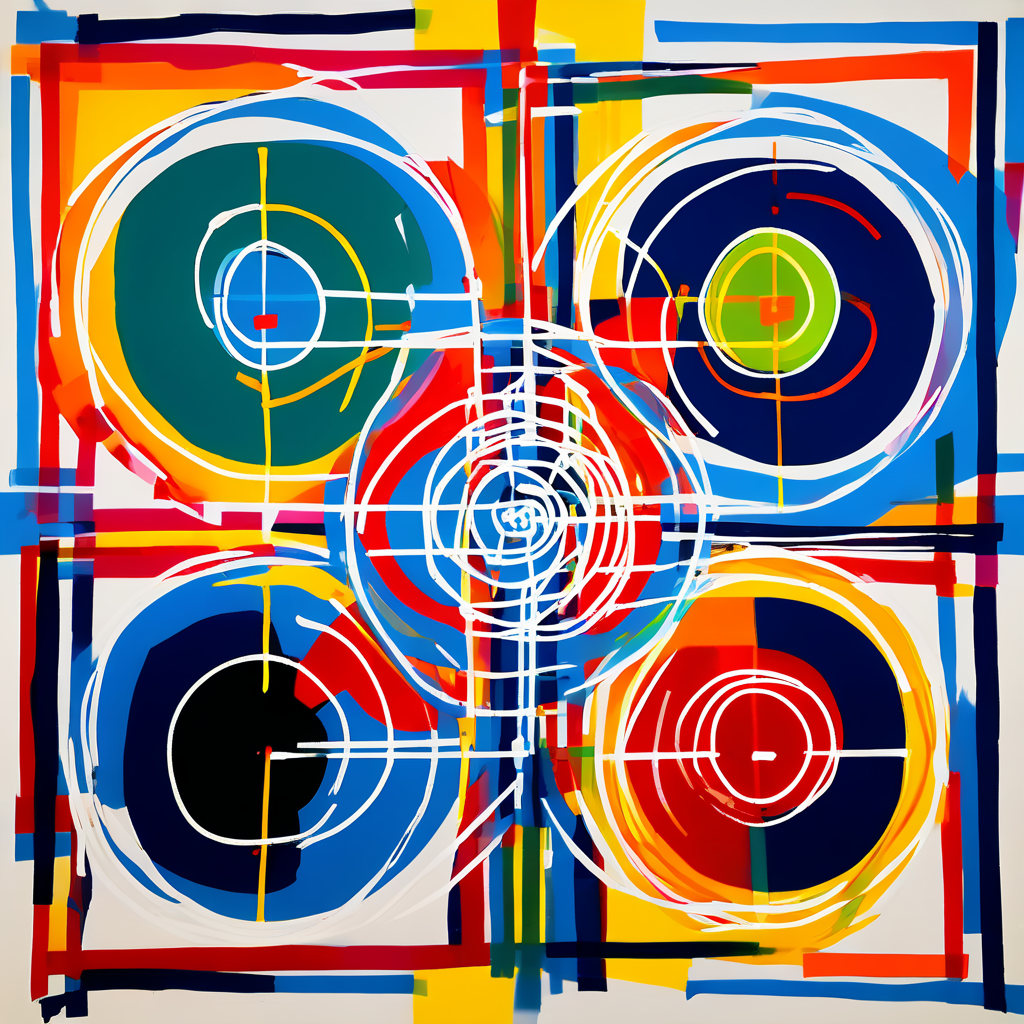
In the realms of Integral Theory, our perception of reality is intricately divided into four primary dimensions or perspectives: the subjective (‘I’), the intersubjective (‘We’), the objective (‘It’), and the interobjective (‘Its’). These perspectives serve as the foundational pillars through which we navigate our relative existence, framing our experiences, relationships, and understanding of the world around us. These quadrants, when represented graphically, are not just abstract concepts but are reflective of the comprehensive ways in which we engage with reality.

However, the journey toward spiritual awakening introduces a profound transformation in this perception. As one advance towards the state of Turiyatitta, a term deeply rooted in Eastern philosophy signifying a state beyond the waking, dreaming, and deep sleep states, a remarkable unification occurs. In Turiyatitta, the boundaries that once separated the ‘I’ from ‘We’, the ‘We’ from ‘It’, and the ‘It’ from ‘Its’, dissolve into a seamless oneness. This state transcends the distinctions between the subjective and the objective, the individual and the collective, and the observer and the observed.


The exploration of Turiyatitta challenges the compartmentalized view of reality presented by Integral Theory. It invites us into a realm where the delineations between the upper-left (I), lower-left (We), upper-right (It), and lower-right (Its) quadrants blur, suggesting that these divisions are merely constructs of a relative reality. In the ultimate reality experienced through Turiyatitta, these quadrants converge, revealing that at the most profound level, there is no distinction between ‘I’ and ‘We’, ‘We’ and ‘It’, ‘It’ and ‘Its’—everything becomes interconnected, a unified whole.

This revelation has significant implications for our spiritual and philosophical journeys. It suggests that the ultimate truth lies not in the separation and analysis of reality into distinct quadrants but in the recognition of the inherent oneness that underlies all existence. The experience of Turiyatitta offers a direct encounter with this oneness, an experiential understanding that transcends intellectual comprehension and invites us into a direct, immediate experience of unity.


Engaging with this perspective does not invalidate the usefulness of the four quadrants in navigating our relative reality. Instead, it enriches our understanding by adding depth to our perception, allowing us to see beyond the surface distinctions and appreciate the underlying unity that connects all aspects of existence. This holistic view fosters a deeper sense of empathy, interconnectedness, and a profound appreciation for the mystery that is life itself.

As we navigate our spiritual path, the exploration of Turiyatitta and the convergence of the four quadrants invite us to reconsider our understanding of reality. It encourages us to look beyond the apparent separations and to embrace the unity that encompasses all aspects of our existence. In doing so, we open ourselves to a more profound, interconnected, and unified experience of reality, one that transcends the limitations of our conventional perspectives and guides us toward a deeper realization of the ultimate truth.

Morgan O. Smith

Yinnergy Meditation, Spiritual Life Coaching & My Book, Bodhi in the Brain…Available Now!
https://linktr.ee/morganosmith

The Breath

A Gateway to Inner Tranquility

“The comfort you seek is only one breath away.”

In the realm of our bustling existence, where the cacophony of the outer world often drowns out our inner peace, there lies a simple, yet profoundly powerful tool for returning to a state of serenity: our breath. This elemental act, so often taken for granted, holds the key to unlocking a wellspring of comfort and tranquillity within us.

Consider the breath more than just a biological necessity; envision it as a bridge connecting the seen with the unseen, the material with the spiritual. Each inhalation invites us to draw in the world around us, not just the air, but the very essence of life itself. With every exhalation, we release more than just carbon dioxide; we let go of the stress, the worries, and the relentless speed of life that keeps us from our deeper selves.

The ancient practice of mindful breathing, deeply rooted in Eastern philosophies, offers us a pathway to rediscover the peace that resides within. This is not a peace that must be sought in the external world or through the attainment of material possessions. Rather, it is a peace that is always present, patiently waiting just beneath the surface of our frenetic minds. It is a peace that can be accessed at any moment, with each conscious breath we take.


Engaging in this practice does not require us to abandon our responsibilities or retreat from the world. On the contrary, it empowers us to face life’s challenges with a renewed sense of calm and clarity. By centring ourselves in the breath, we cultivate an inner sanctuary that remains undisturbed by the ever-changing circumstances of our lives.

This understanding invites us to embark on a journey of self-discovery, where the simple act of breathing becomes a profound act of self-empowerment. As we learn to navigate our existence with the breath as our compass, we uncover the boundless potential for personal growth and spiritual awakening.

In this space of breathing and being, we find that the comfort we seek is indeed only one breath away. It is a comfort that does not depend on external validation or fleeting pleasures. It is a comfort that springs from the deep well of our being, offering solace and strength that is both timeless and universal.


Let us then embrace the breath as our most faithful guide on this journey toward inner tranquillity. With each breath, we are reminded of our connection to something greater than ourselves, a reminder that in the simplicity of being, we find the profound answers to the complexities of living.

Morgan O. Smith

Yinnergy Meditation, Spiritual Life Coaching & My Book, Bodhi in the Brain…Available Now!

https://linktr.ee/morganosmith

The Unseen Riches

A Journey Beyond Material Bounds

“Being spiritually awakened is like being a multi-billionaire, yet living like a bum.” In an era where the accumulation of material wealth often dictates societal status and personal value, the concept of spiritual awakening offers a radical departure from conventional measures of riches. This awakening is akin to discovering an inexhaustible treasure within oneself, a treasure that outshines the fleeting allure of material wealth. It’s a profound realization that one’s true essence and the universe’s infinite bounty are intricately linked, offering a wealth that is both boundless and deeply fulfilling.

**The Essence of Spiritual Wealth**

At the heart of spiritual awakening lies the discovery of inner peace, profound joy, and an unshakeable sense of unity with the entirety of existence. This form of wealth is unparalleled, for it cannot be quantified or depleted. It reshapes one’s view of happiness, shifting the focus from external acquisitions to the intrinsic value of being. In this light, the awakened individual embodies grace, viewing each moment as precious and every experience as a lesson in wisdom.

**Embracing Simplicity: The Path to Freedom**

The metaphor of living like a ‘bum’ symbolizes a conscious choice towards simplicity, humility, and detachment from the material. It’s a lifestyle that seeks richness not in accumulation but in appreciating the minimal and the mundane. This choice represents the ultimate freedom: liberation from the chains of desire, the fear of loss, and the societal pressures of ownership. It posits that true possessions are those that transcend ownership, such as love, peace, and enlightenment.


**Redefining Wealth in a Material World**

The journey of spiritual awakening challenges us to reconsider our definitions of wealth. It asks us to ponder whether we are as invested in our spiritual prosperity as we are in our material success. Are we cultivating our inner selves, pursuing virtues, and seeking understanding with the same vigour with which we chase worldly gains?

**Invitation to a Deeper Fulfillment**

This exploration is not an admonition against material wealth but an invitation to balance, to find harmony between the material and the spiritual. It encourages a life where external achievements and internal growth are not mutually exclusive but are intertwined in a dance of continuous evolution and fulfillment.


**Conclusion**

The metaphor of being spiritually awakened while living with the utmost simplicity is a powerful reminder of where true wealth lies. It urges us to prioritize what is everlasting over what is transient, the essence over the superficial. As we walk our spiritual paths, let us embrace the wisdom that the richest life is one lived in full alignment with the vast, untapped wealth of our inner being.

Morgan O. Smith

Yinnergy Meditation, Spiritual Life Coaching & My Book, Bodhi in the Brain…Available Now!

https://linktr.ee/morganosmith

The Symphony of Existence

How Your Thoughts Contribute to the Universe

In the grand orchestra of the cosmos, every note, every silence, and every crescendo plays a pivotal role in the composition of existence. It’s a symphony where not just the celestial bodies and the forces of nature perform, but also where your thoughts—those subtle, often overlooked whispers of your inner being—contribute to the universal melody. This concept may seem abstract, yet it underpins the profound interconnectedness of all things, a cornerstone of Eastern philosophical wisdom and nondual understanding.

The Ripple Effect of Thought

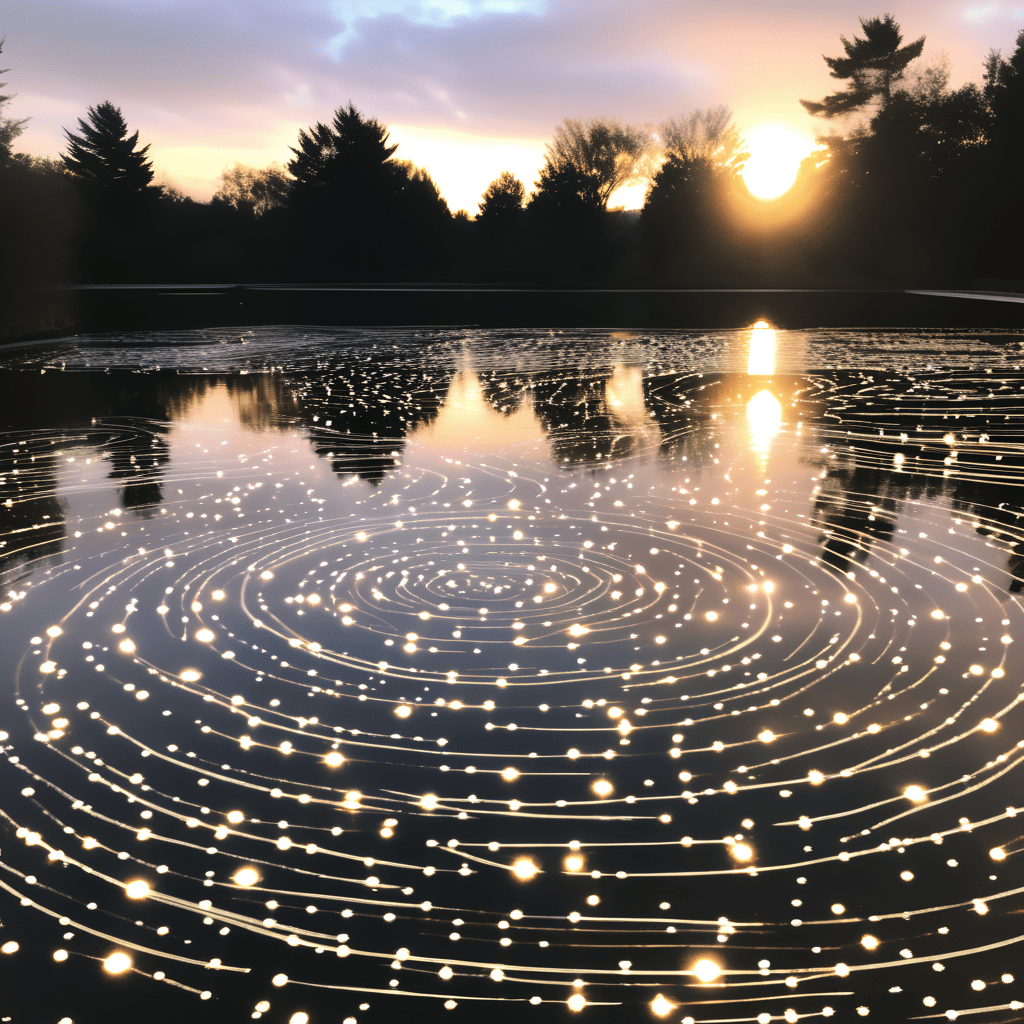
Imagine a tranquil pond, its surface smooth as glass. Each thought you harbour is akin to a pebble tossed into this pond, generating ripples that extend far beyond the initial point of impact. These ripples represent the influence of your thoughts on the universe’s continuous becoming. They are not isolated; rather, they interact with the ripples created by the thoughts of others, weaving an intricate dance of cause and effect, action and reaction.

The Creative Power of Consciousness

Your consciousness is not a passive observer but a dynamic creator. The thoughts you nurture and the focus you hold act as brushes and colours in the painting of your reality. This isn’t about manifesting in the materialistic sense often touted by pop-culture spirituality but about the subtle yet profound impact your inner world has on the external. Through mindfulness and intention, you can shift from unconscious creation, where thoughts are automatic and unexamined, to conscious creation, where awareness guides your mental processes.

Nonduality and the Illusion of Separateness

At the heart of this understanding is nonduality—the recognition that separation is an illusion. In the nondual view, there is no distinction between the observer and the observed, the creator and the creation. Your thoughts, then, are not merely yours but are part of the universal consciousness experiencing itself. This realization brings with it a profound sense of responsibility and empowerment. By aligning your thoughts with compassion, love, and unity, you contribute to universal harmony.

Practical Implications for Daily Life

What does this mean for your daily life? It means living with intention and choosing thoughts that nurture growth, harmony, and understanding. It means being mindful of the mental energies you cultivate and project into the world. This mindfulness transforms not only your personal experience but also contributes to the collective energy that shapes our shared reality.

It encourages a shift from ego-centric thinking to a more holistic, interconnected perspective. This shift fosters a deep sense of peace and fulfillment, arising from the understanding that you are an integral part of the cosmos, actively participating in its unfolding narrative.

Conclusion

The notion that your thoughts contribute to the manifestation of the universe invites a reevaluation of the inner dialogues we entertain and the mental attitudes we embody. In recognizing the power and responsibility inherent in our thoughts, we open the door to a more conscious and intentional existence. This journey of awareness is not just about personal enlightenment but about contributing to the universal harmony that orchestrates the symphony of existence.

Morgan O. Smith

Yinnergy Meditation, Spiritual Life Coaching & My Book, Bodhi in the Brain…Available Now!
https://linktr.ee/morganosmith

The Eternal Cycle of Sacrifice

Reflections on Life, Death, and Nourishment

In the vast, intricate dance of existence, every being participates in a cycle of giving and receiving that transcends mere survival. This process, a profound expression of the universe’s inherent generosity, manifests as a continuous flow of sacrifice. This concept is not about the literal intention of flora and fauna but rather illustrates the universe’s fundamental principle: to sustain life through a cycle of nurturing and rebirth.

The symbolism of Jesus as the sacrificial lamb embodies this universal truth, presenting a parable of ultimate love and self-offering. Jesus’ life and teachings exemplify the act of self-sacrifice for the greater good, mirroring the natural world’s cycles where every element plays a crucial role in nurturing another. Similarly, almonds and other natural entities embody this spirit of sacrifice; each seed, fruit, and offering itself to nourish others, perpetuating the cycle of life.


This perspective invites us to contemplate the interconnectedness of life and death, recognizing them not as opposites but as complementary forces. In this cycle, death is not an end but a transformation, a necessary passage for the continuation of life. We, too, are part of this eternal cycle, nourished by beings that came before us and, in turn, will nourish others.

Understanding this cycle encourages a profound respect for all forms of life and a recognition of our place within this grand scheme. It invites us to live with awareness and gratitude, acknowledging the sacrifices that sustain us and committing ourselves to live in a way that honours this sacred exchange.


This reflection on the cyclical nature of sacrifice and sustenance opens a pathway to deeper spiritual insights, reminding us of the interconnectedness of all things and the importance of living in harmony with this universal principle.

Morgan O. Smith

Yinnergy Meditation, Spiritual Life Coaching & My Book, Bodhi in the Brain…Available Now!

https://linktr.ee/morganosmith

I Am the Beauty That Comes Out of My Own Chaos

In the vast, intricate dance of existence, chaos often seems like an unwelcome guest. Yet, from this very chaos, beauty arises, like a phoenix emerging from the ashes. To perceive oneself as the beauty that emerges from chaos is to embrace a profound truth about the nature of reality and the self.

Chaos is often misunderstood. It is seen as disorder, confusion, and disruption. However, chaos is the birthplace of creativity and transformation. It is the fertile ground from which new patterns, understandings, and ways of being emerge. In the crucible of chaos, the old is dissolved, allowing the new to take shape.

Our personal lives are no different. Each of us encounters moments of chaos, those times when life seems to fall apart when our carefully constructed worlds crumble. It is in these moments that we are offered a rare opportunity: the chance to reconstruct ourselves anew, to find beauty in our brokenness.

Embracing chaos requires a shift in perspective. Rather than resisting or fearing it, we can learn to welcome it as a necessary part of our evolution. This shift is rooted in the understanding that chaos and order are not opposites but are part of a dynamic interplay that drives the universe. In every storm, there is a hidden order; in every upheaval, there is a silent harmony waiting to be discovered.


When we see ourselves as the beauty that emerges from chaos, we acknowledge our inherent resilience and capacity for growth. We recognize that our greatest strengths are often forged in the fires of adversity. The scars we bear are not marks of defeat but symbols of our journey through chaos to a deeper, more profound beauty.

This perspective aligns closely with the wisdom of nonduality, which teaches that all dualities are ultimately illusory. Chaos and order, beauty and ugliness, success and failure—these are simply different expressions of the same underlying reality. By transcending these dualities, we come to see ourselves not as fragmented beings caught in the struggle between opposites, but as whole, complete, and inherently beautiful.

As we navigate the chaos in our lives, we can draw upon the insights of Eastern philosophy to guide us. The Taoist concept of Wu Wei, or effortless action, teaches us to flow with the natural rhythms of life rather than against them. By surrendering to the flow, we allow the beauty of our true nature to emerge spontaneously from the chaos.

In the stillness of meditation, we can find a refuge from the turmoil. By turning inward, we reconnect with the unchanging essence of who we are—a presence that remains untouched by the vicissitudes of life. This inner stillness is the eye of the storm, the center of the cyclone where chaos transforms into clarity and beauty.


Ultimately, to see oneself as the beauty that comes out of chaos is to live in harmony with the ever-changing dance of life. It is to trust in the process of transformation and to embrace every moment, no matter how chaotic, as an integral part of our journey toward greater self-discovery and enlightenment.

Morgan O. Smith

Yinnergy Meditation, Spiritual Life Coaching & My Book, Bodhi in the Brain…Available Now!

https://linktr.ee/morganosmith

The Paradox of Separateness and Oneness

In the vast expanse of spiritual exploration, two concepts often emerge as seemingly opposing forces: separateness and oneness. Yet, upon deeper contemplation, we uncover that both are not just interconnected but also encapsulate a profound paradox that challenges the very foundation of our understanding of reality.

The Illusion of Separateness

From a conventional standpoint, separateness is the bedrock of our physical existence. It’s the principle that delineates you from me, the tree from the soil, the ocean from the sky. This distinction is crucial for navigating the physical world, allowing us to make sense of our environment through categorization and identification. However, this perception of separateness is, at its core, an illusion—a construct of the mind that confines us within the boundaries of our individual experiences.

The spiritual journey often begins with the recognition of this illusion. As we delve into the depths of our inner world, we start to perceive the threads of connection that weave through the fabric of existence. These connections blur the lines of separation, revealing a more intricate and interdependent reality. Yet, acknowledging this interconnectedness is only the first step toward a more profound realization.

The Illusion of Oneness

Oneness, often heralded as the ultimate spiritual truth, suggests that all forms of existence are intrinsically connected, emanating from the same source of divine energy. This perspective invites us into a state of unity with the cosmos, where the illusion of separateness dissolves into the universal whole.

However, labelling oneness as the ultimate truth also presents a paradox. By defining our experience within the confines of oneness, we inadvertently create a new duality between the concepts of oneness and separateness. This duality suggests that while oneness seeks to unify, it simultaneously perpetuates the cycle of illusion by opposing separateness.

Navigating the Illusions


The recognition that both separateness and oneness are illusions invites us into a space beyond dualistic thinking. It beckons us to explore a realm where these concepts are not opposing forces but rather different aspects of the same reality. This realm, free from the constraints of conventional categorization, allows for a fluidity of experience and understanding.

In this space, we find freedom from the need to label or define our experiences as either separate or unified. We open ourselves to a state of being that embraces the full spectrum of existence, acknowledging its inherent complexity without the need to simplify it into comprehensible constructs. This state of being is not about finding a middle ground between separateness and oneness but about transcending the very need for such distinctions.

Conclusion

The journey through the paradox of separateness and oneness is not about choosing one illusion over the other but about transcending the limitations they impose on our understanding of reality. It invites us into a deeper exploration of existence, where the boundaries between self and other, between individual and universe, become permeable and fluid.

By navigating these illusions with an open heart and a curious mind, we can move closer to a state of spiritual freedom—a state where the intricate dance of separateness and oneness plays out within us, not as conflicting forces, but as harmonious expressions of the infinite complexity of being.

Morgan O. Smith

Yinnergy Meditation, Spiritual Life Coaching & My Book, Bodhi in the Brain…Available Now!
https://linktr.ee/morganosmith