The Infinite Echo of the Supreme

A Journey Beyond Duality

In the realm of spiritual exploration, the quest for understanding the nature of the Supreme is both ancient and infinitely complex. It beckons us toward a horizon where the distinction between the self and the infinite blurs, inviting a profound realization: the essence of the Supreme is not an external entity to be sought, nor is it a hidden treasure within—rather, it is the very fabric of existence, a boundless presence that pervades everything.

The notion that no Supreme is Being outside of us, nor within, but that all there is, and all there ever will be, is The Supreme, challenges the conventional dualities of inside and outside, sacred and profane, self and other. This perspective ushers us into a realm where these distinctions dissolve, revealing a unity that underlies the multiplicity of forms and phenomena.

In contemplating this unity, we embark on a journey that transcends the intellectual and ventures into the experiential. It is not enough to understand the concept of The Supreme as an abstract principle; one must live, breathe, and experience the omnipresence of this ultimate reality in the minutiae of everyday life. This journey demands a radical shift in perception—a willingness to see beyond the apparent separateness of the world to the underlying oneness that is the essence of The Supreme.


This realization unfolds not as a dramatic epiphany but as a gentle awakening, a gradual unfurling of awareness that illuminates the interconnectedness of all things. In this light, every moment becomes a portal to the divine, every interaction a reflection of The Supreme. The distinction between the seeker and the sought fades, as one comes to recognize oneself as an integral expression of the infinite.

How, then, do we cultivate this awareness? The path is as diverse as the seekers who walk it, yet common threads weave through the fabric of spiritual practices across cultures and traditions. Mindfulness, meditation, and contemplation serve as gateways to transcendence, tools to quiet the mind and attune the heart to the subtleties of the Supreme’s presence. Compassion and selfless service become expressions of the recognition of the divine in all beings.

In embracing this vision of nonduality, we are invited to reconsider our relationship with the world around us. The challenges and tribulations of life are no longer obstacles to be overcome in search of a distant divine, but rather manifestations of The Supreme itself, offering lessons and opportunities for growth. In this realization, the mundane becomes sacred, the ordinary, extraordinary.

As we navigate the complexities of existence, let us hold this understanding close: that we are not separate from the Supreme; we are and everything throughout the universe is the supreme. But from the standpoint of the small self, we are expressions of its infinite creativity and boundless love. In this recognition, we find not only solace but also the profound joy of being in harmony with the ultimate reality.
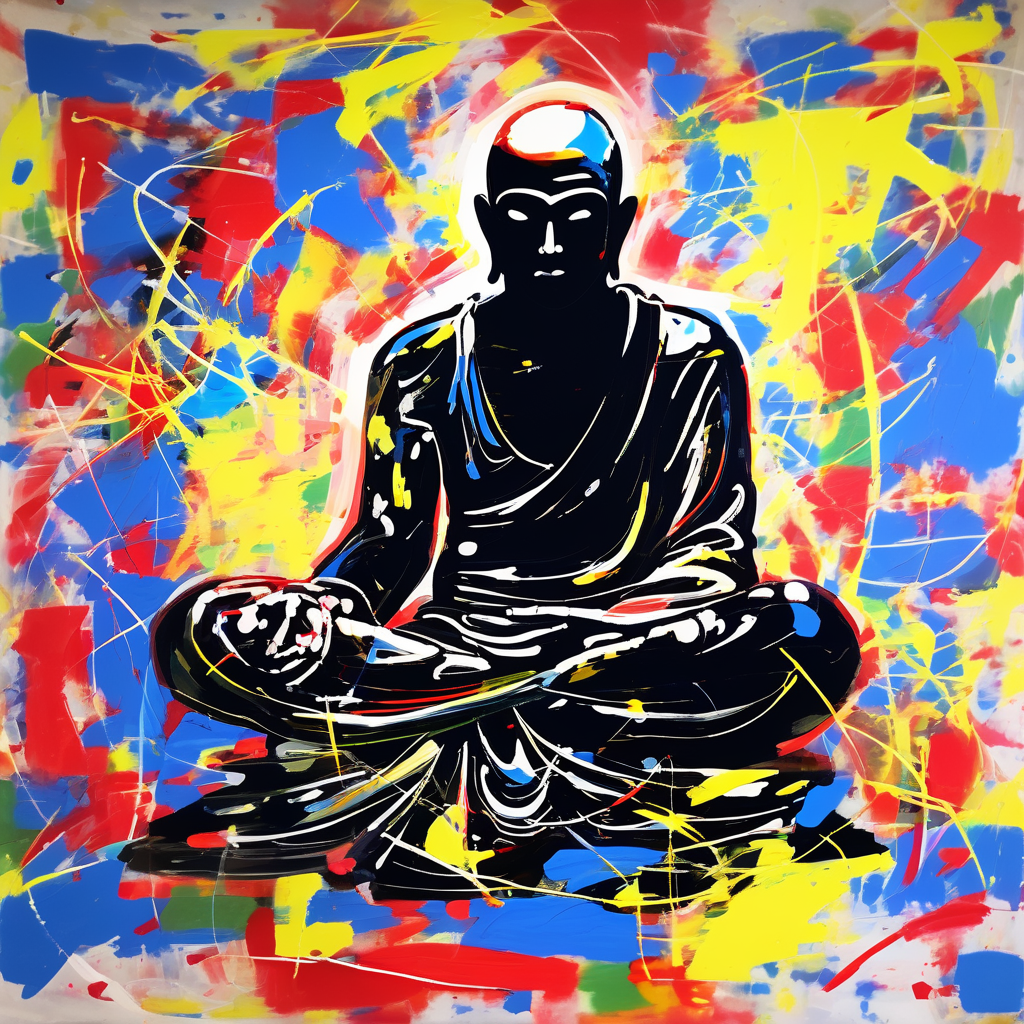

In the silent spaces between thoughts, in the depth of the night sky, in the eyes of a stranger, there lies an invitation to witness The Supreme in all its manifestations. It is an invitation to dissolve the illusion of separateness and awaken the truth of our inherent unity with the cosmos.

May your journey be filled with the light of this understanding, and may the realization of the omnipresence of The Supreme guide you to the depths of peace and the heights of ecstasy.

Morgan O. Smith

Yinnergy Meditation, Spiritual Life Coaching & My Book, Bodhi in the Brain…Available Now!

https://linktr.ee/morganosmith

Beyond the Illusion of Knowing

A Journey into Absolute Awareness

In the vast expanse of our existence, the quest for knowledge often becomes the cornerstone of our identity. Yet, what if the very foundation upon which we build our understanding of reality is itself an illusion? This exploration delves into the profound realization that true awareness transcends the confines of conventional knowing, inviting us into a realm where the essence of wisdom lies in embracing the unknown.

The human mind, a marvel of evolution, is innately driven by an insatiable thirst for knowledge. We categorize, analyze, and store information, believing that the accumulation of facts leads us closer to the truth. However, this pursuit, albeit noble, may inadvertently tether us to a mirage. The belief in a definitive understanding of the universe and our place within it is a construct, a byproduct of the mind’s inherent need to grasp, define, and control.

Absolute awareness unfolds when we step beyond this illusion when we release the need to know and instead embrace the vastness of not knowing. This state of consciousness is not a void or absence of knowledge but a profound acknowledgment of the limitations of our conceptual frameworks. It is an acceptance that the essence of reality, in its infinite complexity, cannot be fully contained or comprehended by the constructs of human thought.


In this space of absolute awareness, we encounter the true essence of being. It is here, in the silence beyond thoughts and the duality of known and unknown, that we experience the pure state of consciousness. This experience transcends the intellectual understanding of nonduality; it is a direct encounter with the indivisible wholeness of existence. The realization that the observer and the observed are not separate entities but manifestations of the same underlying reality dismantles the illusion of separation, leading us to a state of unity with all that is.

Embracing this perspective shifts the way we engage with the world. When we recognize that our conventional knowledge is a drop in the ocean of existence, we approach life with humility and openness. This shift does not devalue the pursuit of knowledge but places it in a broader context where the mystery of existence is acknowledged and revered. It encourages a mode of being where every moment is an opportunity for awe and wonder, free from the constraints of needing to know and understand everything.

This journey into absolute awareness invites us to live in a state of perpetual discovery, where the acceptance of not knowing becomes a source of freedom and liberation. It challenges us to find comfort in the uncertainty, to find peace in the unanswerable questions, and to find enlightenment in the realization that in the grand scheme of existence, we are both everything and nothing.


As we navigate this path, we understand that the essence of wisdom lies not in the accumulation of knowledge but in the profound acceptance of the unknown. This realization is not the end but the beginning of a truly enlightened existence, where every breath is an invitation to experience the infinite depth of the present moment.

Morgan O. Smith

Yinnergy Meditation, Spiritual Life Coaching & My Book, Bodhi in the Brain…Available Now!
https://linktr.ee/morganosmith

The Paradox of Perfection

Divine Flaws in a Flawless Existence

In the realm of spirituality and philosophy, the concept of a perfect God is often contemplated with reverence and awe. This perfect entity, in many traditions, is seen as the embodiment of absolute purity, wisdom, and power. Yet, there lies a paradox at the heart of divinity: the expression of flaws within the framework of perfection. This notion challenges our conventional understanding of perfection and invites us to explore the deeper, more nuanced aspects of the divine and its manifestation in the world.

Consider for a moment the idea that a perfect God expresses its flaws perfectly. This statement that I am making is not a contradiction, but a profound acknowledgment of the complexity and depth inherent in the divine nature. It suggests that what we perceive as flaws are not mistakes or oversights but, rather, intentional expressions of the divine essence. These ‘flaws’ offer a window into the incomprehensible wisdom of the divine, serving as reminders of the limitless ways in which perfection can manifest.

The beauty of this concept lies in its ability to humanize the divine, making it more accessible and relatable to us. In our own lives, we strive for perfection, often berating ourselves for our flaws and failures. However, if we embrace the perspective that even in divinity, there exists a form of perfection that includes flaws, we can begin to view our imperfections not as failures, but as integral parts of our unique journey. This shift in perspective encourages a more compassionate and forgiving approach to self-growth and personal development.


Furthermore, the idea of a perfect God expressing flaws perfectly invites us to reevaluate our understanding of the world around us. The imperfections we observe in nature, in human behaviour, and the unfolding of events may not be random chaos but, perhaps, expressions of a larger, divine plan. This realization opens up a space for a deeper acceptance of the world as it is, fostering a sense of peace and trust in the unfolding of life’s mysteries.

In exploring the paradox of divine flaws, we are encouraged to engage with our spiritual journey more openly and curiously. It prompts us to question our assumptions about perfection, divinity, and the nature of reality itself. By contemplating how a perfect God might express flaws perfectly, we are invited into a richer, more dynamic relationship with the spiritual aspects of existence.

This exploration is not just a philosophical exercise but a practical guide for living. It teaches us to embrace our complexities and contradictions, to find beauty in imperfection, and to see the divine not as a distant, unattainable ideal but as a present, living truth reflected in every aspect of our lives.


In closing, let us ponder the myriad ways in which perfection and imperfection coexist within and around us. May this contemplation inspire a deeper appreciation for the mysterious, imperfectly perfect nature of the divine and encourage us to embrace our flaws as perfectly expressed aspects of our being.

Morgan O. Smith

Yinnergy Meditation, Spiritual Life Coaching & My Book, Bodhi in the Brain…Available Now!

https://linktr.ee/morganosmith

Nature’s Unyielding Dance

Embracing Evolution Beyond Acceptance

In the grand expanse of existence, nature is a paradoxical entity, embodying acceptance while relentlessly pursuing change. This duality offers a profound reflection on the nature of being and becoming, serving as a mirror to our spiritual journeys. Nature, in its essence, accepts its form and function with a serene equanimity that belies the tumultuous undercurrent of evolution. It is in this serene acceptance that the seed of transformation is sown, propelling existence toward an ever-unfolding destiny.

Nature’s acceptance is not of passivity but of an understanding that the present moment is perfect in its imperfection. It acknowledges that at this very instant, it is the culmination of countless cycles of change, yet it is but a waypoint on an infinite journey of becoming. This realization is key to unlocking the mysteries of our spiritual paths, where acceptance and change coexist in a delicate balance.

The process of evolution, both in the external world and within the realms of our inner landscapes, is nature’s testament to the perpetual quest for growth and transcendence. Just as the earth’s flora and fauna adapt to the ever-changing environment, so too must we embrace the evolution of our spiritual understanding and enlightenment. Each moment is an opportunity to transcend the limitations of our previous selves, spurred by the acceptance of our current state of being.


In this dance of existence, where acceptance and evolution move in harmony, lies the essence of true enlightenment. It is a journey that acknowledges the beauty of the now while striving for the potential of tomorrow. Much like nature’s ceaseless evolution, our spiritual paths are marked by an unending quest for deeper understanding, connection, and oneness with the universe.

This reflection on nature’s duality serves as a reminder that in our search for spiritual awakening, we must hold space for both acceptance and the desire for transformation. It is in the embrace of this paradox that we find the freedom to evolve, not despite nature’s acceptance, but because of it.


Through contemplating the unyielding dance of nature, we are invited to explore the depths of our being, challenging ourselves to grow and evolve while remaining grounded in the acceptance of our present reality. Let us, therefore, take inspiration from the world around us, recognizing that our journey towards enlightenment is a dynamic interplay between being and becoming, where the acceptance of what is served as the foundation for what we are yet to become.

Morgan O. Smith

Yinnergy Meditation, Spiritual Life Coaching & My Book, Bodhi in the Brain…Available Now!
https://linktr.ee/morganosmith

The Unending Quest

Evolution’s Eternal Dissatisfaction

In the grand scheme of existence, evolution emerges as a relentless force, driven not by a final destination but by an insatiable quest for transformation. This dynamic process, ever unfolding, illustrates the profound truth that satisfaction within creation is but a temporary state, a mere waypoint on a much grander journey. Evolution, in its essence, embodies the principle that perfection is not a fixed point but an endless horizon.

The notion that evolution is never wholly satisfied with its creations serves as a metaphor for our personal and spiritual growth. Just as the universe continuously evolves, so too must we. This concept challenges us to view our lives not as a series of destinations reached but as a continuous flow of becoming. It invites us to embrace change, celebrate the process of transformation, and find joy in the journey of self-discovery and enlightenment.

In the context of nonduality, this evolutionary dissatisfaction can be seen as a reflection of the universe’s inherent desire for expansion and self-expression. Nonduality teaches us that separation is an illusion, that all is one, and within this oneness, the drive towards greater expressions of complexity and consciousness is evident. The universe, and by extension, we, are not static entities but dynamic, ever-changing manifestations of consciousness seeking to explore and experience itself in infinite ways.


This perspective shifts our understanding of dissatisfaction. Rather than viewing it as a negative state to be avoided, we can see it as a catalyst for growth and evolution. Discontent becomes a signpost, pointing towards opportunities for deeper understanding and greater alignment with our true nature. It encourages us to look beyond the surface of our desires and to question what truly drives us toward fulfillment.

The evolutionary impulse within us all is a testament to the potential that lies in embracing the unknown. It is a call to venture beyond the comfort of the familiar, to let go of the need for permanence and certainty, and to surrender to the flow of life. This journey, though fraught with challenges, holds the promise of profound wisdom and spiritual awakening.


As seekers on this path, we are invited to reflect on our evolutionary dissatisfaction. How does it manifest in our lives? What lessons does it hold for us? And how can we harness it as a force for positive transformation?

This exploration of evolution and dissatisfaction offers a fresh lens through which we can view our journey toward enlightenment. It reminds us that the essence of growth is not in reaching a state of permanent satisfaction but in embracing the beauty of the process, the unfolding of life, and the deepening of our understanding of the interconnectedness of all things.

Morgan O. Smith

Yinnergy Meditation, Spiritual Life Coaching & My Book, Bodhi in the Brain…Available Now!
https://linktr.ee/morganosmith

Beyond Time

A Journey into the Infinite

In the realm of spiritual exploration, the concept of time often presents itself as a linear progression, segmented neatly into past, present, and future. Yet, if we dare to delve deeper into the essence of nonduality and Eastern philosophy, we uncover a profound truth: the linear construct of time is merely an illusion, a creation of the human mind designed to make sense of our existence. This realization beckons us to question, if even the Divine, the source of all creation, does not foresee the future, what does this imply about the nature of existence itself?

The notion that “Not even God knows the future; for there is no past, present, or future to be known” invites us into a contemplative exploration of the timeless. In this perspective, the future is not a distant realm to be foreseen or predicted, but rather a continuation of the present moment, ever-unfolding in the eternal now. This insight aligns with the core teachings of nonduality, which assert that all distinctions we perceive in the world, including the separation of time into distinct segments, are ultimately illusions.

In the vast expanse of consciousness, where the concept of time dissolves, we find ourselves in the presence of the infinite. Here, every moment is the beginning and the end, each instant a complete and whole experience of existence. This realization challenges us to live fully in the present, to embrace each moment as if it were the entirety of life itself. It encourages a state of constant awareness, where the past is not a burden to be carried, nor the future a destination to be reached, but rather, each moment is an opportunity for spiritual awakening and enlightenment.


This perspective offers a liberating view of the nature of divine omniscience. If the Divine exists beyond the confines of time, then foreknowledge becomes irrelevant. The Divine, in its infinite wisdom, is intimately connected with the unfolding moment, fully present in the eternal now. This understanding invites us to reconsider our relationship with the Divine, seeing it not as a distant overseer of our fate but as an ever-present guide on our journey through the boundless landscape of existence.

As we navigate this journey, we are called to let go of our attachment to the linear progression of time, to release our anxieties about the future, and our regrets about the past. In doing so, we open ourselves to the profound wisdom that lies in the present moment, discovering a path to personal growth and spiritual enlightenment that transcends the boundaries of time.


This exploration into the nature of time and the divine offers a fresh perspective on our spiritual journey. It challenges us to question deeply held beliefs and to embrace the mystery of the now. As we ponder the implications of a timeless existence, we are invited to experience life in its fullest expression, free from time constraints, and open to the infinite possibilities within the eternal present.

Morgan O. Smith

Yinnergy Meditation, Spiritual Life Coaching & My Book, Bodhi in the Brain…Available Now!

https://linktr.ee/morganosmith

The Quiet Power of Self-Affirmation

Embracing Truth Beyond Validation

In the realm of personal growth and spiritual enlightenment, a profound realization dawns upon us: when we harbour an unwavering conviction in truth, the need for external affirmation diminishes. This realization is a cornerstone in the journey toward self-awareness and inner peace.

Consider the nature of truth as perceived through the lens of Eastern philosophy. It is not a construct external to us, waiting for validation or approval. Instead, truth is an intrinsic part of our being, resonating deeply within our consciousness. The moment we recognize and embrace this inner truth, we transcend the dependence on external validation. This is a pivotal step in our spiritual evolution, marking a shift from seeking approval to cultivating self-assurance.

The beauty of this realization lies in its simplicity and power. When you are convinced of a truth – be it a personal belief, a spiritual insight, or an understanding of the self – you stand firm in your conviction without the crutch of others’ opinions. This is not to undermine the value of dialogue and shared perspectives but to highlight a more profound sense of confidence that comes from within.


This confidence is not born of arrogance or unwarranted self-assurance. It is a quiet, unshakable belief that what you hold has been reflected upon, deeply felt, and integrated into your being. It is a testament to the journey of self-discovery and personal enlightenment you have embarked upon.

The concept of non-duality in Eastern philosophy offers a valuable perspective here. It teaches us that the distinctions we make between self and others, between our beliefs and the external world, are illusory. In recognizing the non-dual nature of existence, we understand that our deepest truths are not separate from the universal truth. They are interwoven in the very fabric of existence, and as such, they require no external endorsement.

Embrace this journey of self-affirmation with humility and openness. Let your truths be a source of strength and guidance, rooted deeply in your experience and understanding. As you do so, you will find that the need for external validation naturally falls away, leaving you with a serene confidence in your path and beliefs.


In conclusion, the path to spiritual awakening and enlightenment is illuminated by the truths we hold dear, truths that require no external validation to shine brightly within us. They reflect our deepest selves, resonating with the universal truths that bind us all.

Morgan O. Smith

Yinnergy Meditation, Spiritual Life Coaching & My Book, Bodhi in the Brain…Available Now!
https://linktr.ee/morganosmith

The Silent Symphony of Spiritual Awakening

In the realm of spiritual evolution, the experience of awakening transcends the boundaries of sensory perception. It is akin to a symphony, a harmonious ensemble that exists beyond the conventional domain of sound. This metaphorical orchestra plays not to our ears but to the essence of our being, orchestrating a transformation that is both subtle and profound.

Imagine a melody that doesn’t vibrate through the air but resonates within the core of your consciousness. It’s a rhythm that aligns with the heartbeat of the universe, a tune that sings of unity and the dissolution of duality. This is the music of spiritual awakening, an inner revelation that whispers the secrets of existence, unheard but deeply felt.

In Eastern philosophy, particularly in concepts like Advaita Vedanta, there is an emphasis on the realization that the self and the universe are one. The melody of awakening, in this context, is the recognition of this oneness. It’s a journey from the illusion of separateness to the truth of unity, a path that leads from isolation to the embrace of all-encompassing existence.


This journey is personal and unique to each individual. For some, it begins with a subtle sense of discomfort, a feeling that there is more to life than what meets the eye. For others, it may be a profound event, a moment of clarity where the veil of illusion lifts, revealing the true nature of reality. Regardless of how it starts, the journey is always inward, a dive deep into the self to discover truths that lie beyond the intellect.

As the melody of awakening plays, it invites us to let go of our preconceived notions and conditioned beliefs. It asks us to surrender to the experience, to allow the music to lead us to places within ourselves that we never knew existed. It’s an invitation to dance in the rhythm of the cosmos, to become one with the infinite dance of creation and destruction.

But this journey is not without its challenges. Like any transformation, spiritual awakening can be disorienting, even unsettling. It asks us to shed layers of our ego, to confront our deepest fears and insecurities. Yet, in this process of unravelling, we find our true essence, a state of being that is beyond the transient nature of our worldly identities.


The melody of spiritual awakening is a call to experience life in its fullest, most authentic form. It’s an invitation to view the world not through the lens of judgment and separation but through the eyes of love and unity. In this state, every moment becomes a profound interaction with the divine, every experience a step closer to enlightenment.

As you embark on or continue this journey, remember that the song of awakening is unique to you. Listen closely, and you will find that it has been playing all along, a silent symphony waiting for you to join in its eternal dance.

Morgan O. Smith

Yinnergy Meditation, Spiritual Life Coaching & My Book, Bodhi in the Brain…Available Now!

https://linktr.ee/morganosmith

Unveiling the Self

The Interplay of Spiritual Discovery and Inner Knowing

In the labyrinth of spiritual awakening, we often find ourselves at a crossroads: the tranquil acceptance of “Knowing what I am” versus the dynamic pursuit of “Wanting to know more about what I am.” This seemingly contradictory dichotomy is a profound exploration of our journey toward enlightenment.

**The Sanctuary of Self-Knowledge**

Knowing what I am – this realization marks a pivotal moment in our spiritual odyssey. It’s an immersion into the depths of self-awareness where the essence of our being illuminates. This is not a mere intellectual understanding, but an experiential truth that resonates with every fibre of our existence. In this sanctuary of self-knowledge, the incessant chatter of the mind subsides, and we encounter the purest form of our existence. The realization that ‘I am’ transcends the need for definitions, residing in a state of pure beingness.

**The Odyssey of Continual Seeking**

Conversely, the desire to delve deeper and understand more about what we are keeps the flame of spiritual quest alive. This is not a journey marked by restlessness, but rather a deep-seated curiosity and reverence for the unfathomable complexities of our existence. It propels us into an expansive space where every moment is an opportunity for discovery and profound insight. This continual seeking is not driven by a sense of lack but by the awe and wonder of the boundless nature of our being.

**Harmonizing Knowing and Seeking**

The beauty of our spiritual journey lies in harmonizing these two aspects. The state of ‘Knowing what I am’ brings a groundedness and peace, a foundation from which our curiosity can safely explore. Meanwhile, ‘Wanting to know more about what I am’ injects vitality and dynamism into our spiritual practice, ensuring that our journey is an ever-evolving exploration.

Embracing both these aspects allows us to live in a state of dynamic stillness. In this space, the paradox dissolves, revealing that knowing and seeking are not mutually exclusive but are interwoven threads in the fabric of our spiritual evolution.

**Conclusion: The Dance of Enlightenment**

Ultimately, our spiritual path is not about choosing between knowing and seeking. It is about recognizing that both are essential components of our journey toward enlightenment. As we dance between these two states, we discover that each step, whether grounded in knowing or propelled by seeking, is a step closer to the ultimate realization of our true nature.

Morgan O. Smith

Yinnergy Meditation, Spiritual Life Coaching & My Book, Bodhi in the Brain…Available Now!
https://linktr.ee/morganosmith

The Enigma of Divine Identity

Unraveling the Belief and Being

In the profound journey of spiritual awakening, there stands a pivotal revelation – the understanding of one’s divine nature. This recognition often confronts the traditional notion of believing in a separate, external deity. When we cling to the belief in a God as an entity apart from ourselves, we inadvertently reinforce the very illusion we seek to transcend. It is a subtle yet profound enigma that underlies much of spiritual discourse.

Belief, in its essence, is a product of the mind. It is an attempt to conceptualize and grasp the infinite, to put boundaries around that which is boundless. This pursuit, while noble in its intention, often leads us astray from the ultimate truth. The idea of a separate God is a manifestation of this endeavour – an externalization of the divine that is, in reality, an intrinsic part of our being.

The realization that “I am God” is not an assertion of egoic supremacy but an awakening to the non-dual nature of existence. In Eastern philosophies, this understanding is not uncommon. It echoes the principles of Advaita Vedanta, where the individual self (Atman) is seen as one with the universal self (Brahman). This realization dissolves the illusion of separation, the root of all delusion. It is a profound awakening to the truth that there is no ‘other’ – there is only the One, manifesting in myriad forms.


This insight brings with it a profound freedom. It liberates us from the confines of narrow belief systems and opens us to a direct experience of the divine. There is no need for belief in this space, for the truth is known directly and experientially. It is a state of being where one is free from the dualities of faith and disbelief, existing in a harmonious union with all that is.

In this understanding, we find a deeper compassion and connection to the world around us. Recognizing the divine in ourselves, we see it in everything else. This is the heart of true spirituality – a state of oneness with all existence.


As we navigate our spiritual paths, let us be mindful of the traps of belief and the freedom that comes with direct knowing. Let us seek not to conceptualize the divine, but to experience it, to become it. In doing so, we step beyond the confines of illusion and into the boundless reality of our true nature.

Morgan O. Smith

Yinnergy Meditation, Spiritual Life Coaching & My Book, Bodhi in the Brain…Available Now!
https://linktr.ee/morganosmith