The Paradox of Perfection

Rethinking Good and Evil in Theological Perspective

In a realm beyond human comprehension, where the notions of good and evil blur into a cosmic dance, we find ourselves pondering the nature of divinity and creation. From God’s standpoint, the binary concepts of good and evil do not hold the same significance as they do for us, the sentient beings of his creation. This perspective invites us to delve into a philosophical exploration, especially when viewed through the lens of Christian mythology.

Consider the figure of Lucifer, often depicted as the epitome of rebellion and wrongdoing. According to some interpretations of Christian theology, Lucifer was created as a perfect being by God. If perfection is inherent in his design, then his actions, including those perceived as wrong, could be seen as an expression of this perfection. This raises a profound question: can a being created perfect by an all-knowing deity truly do wrong?
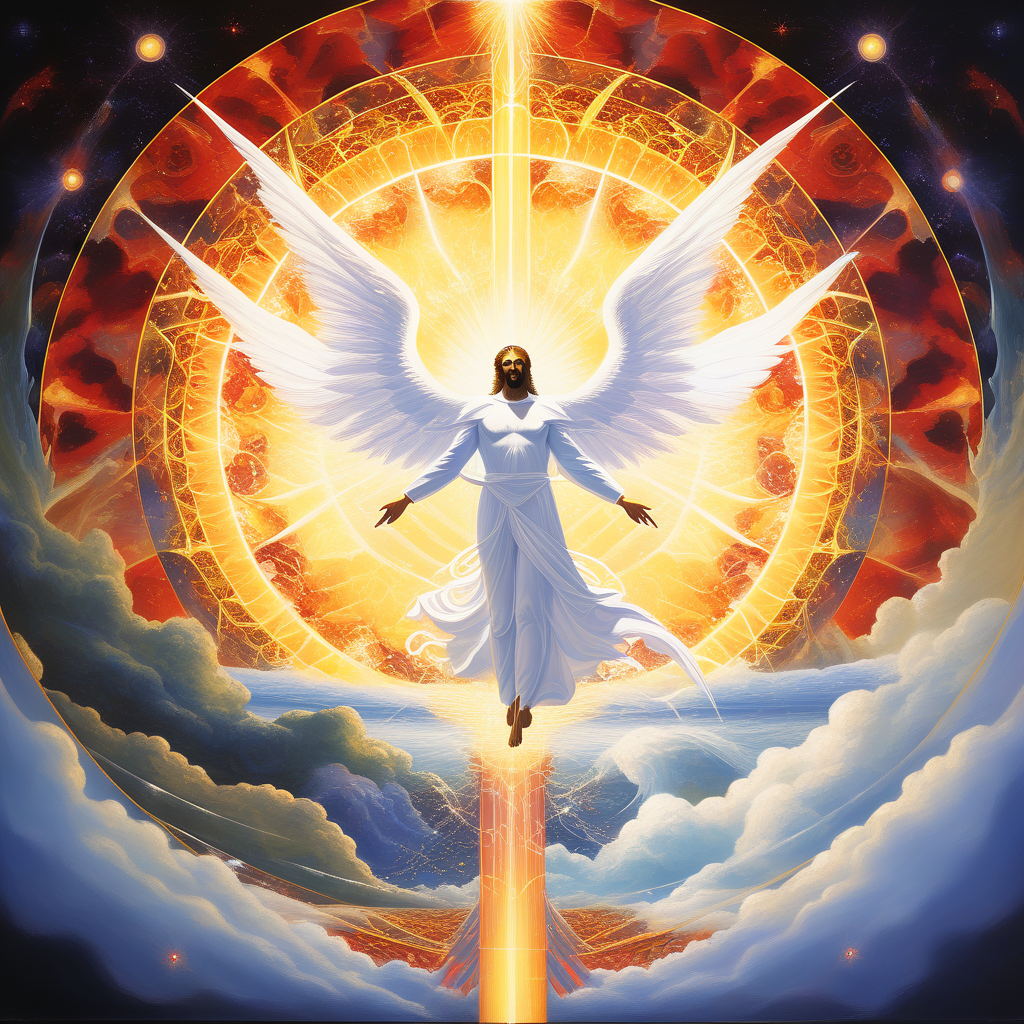

The concept of free will complicates this scenario further. Lucifer’s decision to rebel is often attributed to his exercise of free will. But, if this free will was granted by the same perfect and all-knowing God, then are Lucifer’s actions a deviation from perfection, or are they a part of a divine plan? This paradox suggests that if God is perfect and creates beings with the capacity for perfect expression of free will, then their actions, regardless of how we perceive them, might be in alignment with a broader, divine narrative.

From this standpoint, the actions of a perfect being like Lucifer could be viewed not as a failure or flaw, but as an integral part of a grand design, orchestrated by a perfect deity. This perspective challenges our traditional understanding of morality, urging us to reconsider the concepts of good and evil, not as absolute truths, but as human interpretations of a much larger, divine puzzle.


Such contemplations lead us down a path where philosophical and theological musings intersect, prompting us to question the very foundations of our moral compass. In this cosmic scheme, where does humanity fit in, and how do our notions of right and wrong resonate with the divine narrative?

Morgan O. Smith

Yinnergy Meditation, Spiritual Life Coaching & My Book, Bodhi in the Brain…Available Now!

https://linktr.ee/morganosmith

Where Did God Come From?

The question of where God came from strikes at the core of numerous philosophical, theological, and metaphysical discussions. It’s a question that has fascinated scholars, believers, and skeptics alike for centuries. At the heart of this inquiry lies the paradoxical nature of God’s existence: God is often described as omnipresent and nonlocal, transcending the concepts of space and time that define our physical reality.

To ponder upon where God came from is to delve into the depths of the unknown. It is widely held in many theological beliefs that God is the uncaused cause, the source from which all things emanate. This perspective leads to the intriguing notion that God came from nowhere. Nowhere, in this context, is not a physical location but a metaphorical representation of the absence of space and time – a realm beyond our comprehension.


This idea ties closely with the concept of God being nonlocal. Nonlocality, often discussed in quantum mechanics, suggests that an entity can be present everywhere simultaneously. In spiritual and metaphysical terms, this translates to the omnipresence of God. The omnipresence of God means that God exists beyond physical boundaries, in a state of being that encompasses all existence yet is bound by none.

What makes this concept even more thought-provoking is the idea that the pure essence of God is the absence of everything that exists. This notion posits that God is fundamentally different from everything we perceive in our universe. While our reality is defined by physicality, emotions, thoughts, spirituality, and metaphysical elements, the essence of God is distinct from all these. God, in this sense, is the ultimate reality, a state of pure being that transcends all known dimensions of existence.


Consequently, the physical, emotional, mental, spiritual, and metaphysical presence that we attribute to God are reflections or manifestations of this ultimate reality in forms that are comprehensible to us. They represent how we, as humans, perceive and connect with the divine. Each aspect – whether physical, emotional, mental, spiritual, or metaphysical – offers a different lens through which to understand and relate to the divine mystery that is God.

In conclusion, the question of where God came from leads us not to a definitive answer but to a deeper understanding of the nature of existence itself. It encourages us to explore the boundaries of our understanding and to accept the mystery that lies at the heart of all that is.

Morgan O. Smith

Yinnergy Meditation, Spiritual Life Coaching & My Book, Bodhi in the Brain…Available Now!
https://linktr.ee/morganosmith

The Isolation of Consciousness Expansion

In the journey of personal growth and consciousness expansion, a profound yet often overlooked aspect is the sense of isolation that can accompany it. When you undergo a significant shift in consciousness, your perspective and understanding of the world evolve in ways that might not align with the general populace. This divergence can lead to a feeling of being solitary on your path, especially when trying to share your thoughts and experiences with others.

Social media, which ostensibly connects us, can sometimes highlight this isolation. You may find yourself pouring your thoughts into posts, seeking some form of validation or connection, only to be met with silence or indifference. The lack of engagement isn’t necessarily a reflection of the value of your insights, but rather an indication of the differing levels of awareness and interest among your audience.

This new stage of consciousness places you in a unique space. It’s a realm where your thoughts and expressions resonate on a different frequency, one that is not always perceptible or relatable to the majority. In this space, your voice may seem muted to the masses, heard and understood by only a select few who are either on a similar path or are seeking something in your words to ignite their journey of self-discovery.

It’s important to remember that this sense of isolation is not permanent nor entirely negative. It can be a catalyst for deeper introspection and self-reliance. The key is to find balance, to seek out communities or individuals who share your level of consciousness, and to continue expressing your thoughts without the sole expectation of external validation. In doing so, you not only nurture your growth but also potentially provide a beacon for others who might be embarking on similar paths.

In this new stage of consciousness, embrace solitude as a companion in your journey. Some of the most profound growth occurs in these quiet moments of perceived isolation. Remember, the depth and value of your insights are not diminished by the number of likes or comments they receive but by the impact they have on you and those few who truly hear them.

Morgan O. Smith

Yinnergy Meditation, Spiritual Life Coaching & My Book, Bodhi in the Brain…Available Now!
https://linktr.ee/morganosmith

Embracing the Infinite

Understanding Para Brahman

In the realm of spiritual exploration and philosophical contemplation, the concept of Para Brahman stands as a profound enigma. It is a term that transcends the limits of our typical understanding, pushing us into the depths of what might be considered the ultimate reality.

Para Brahman, in its essence, is the embodiment of the formless and the infinite. It is not confined by the physical dimensions we are accustomed to, such as length, height, depth, or width. This absence of form extends beyond the physical, into the realms of emotion, thought, and even the metaphysical. It is devoid of texture, distance, time, space, feelings, emotions, senses, attachments, desires, thoughts, memories, anticipation, smell, temperature, relationships, distinctions, wants, needs, and regrets. This extensive list, however, is not exhaustive but indicative of the boundless nature of Para Brahman.

What makes this concept both intriguing and challenging is the paradox it presents. Para Brahman, while being beyond all these attributes and perceptions, simultaneously encompasses everything that has been mentioned. It is not just the absence but also the presence of all. This paradox forces us to rethink our understanding of existence and non-existence, presence and absence, form and formlessness.


How can something be everything and nothing at the same time? This question lies at the heart of understanding Para Brahman. It compels us to look beyond the dualities that dominate our everyday experiences. In this sense, Para Brahman is not just a concept but an invitation to experience reality in its most unadulterated form.

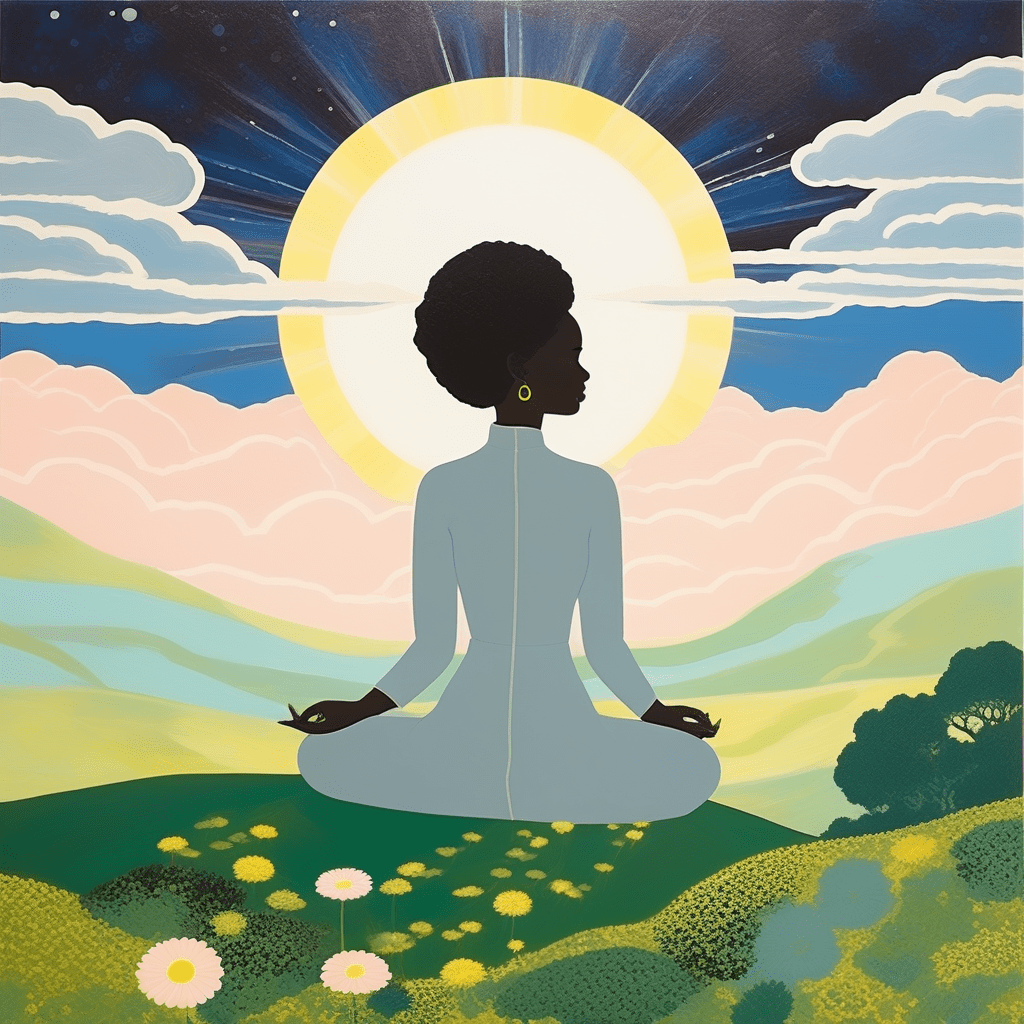
This exploration is not just an intellectual exercise but a journey toward self-realization. It challenges our deeply ingrained notions of what is real and what is illusion. By contemplating Para Brahman, we delve into a state of consciousness where the distinctions that define our usual experiences dissolve. In this state, we are neither bound by our desires nor limited by our perceptions.

The understanding of Para Brahman brings us to the cusp of spiritual awakening, where the individual self merges with the universal self. It is a state of being that many spiritual traditions aim to realize – a state of pure consciousness, unmarred by the transient nature of physical existence.


In conclusion, the concept of Para Brahman invites us to embark on a journey beyond the confines of our material and psychological limitations. It encourages us to experience the world not just through our senses and thoughts but through a profound understanding of the interconnectedness and the boundlessness of all existence.

Morgan O. Smith

Yinnergy Meditation, Spiritual Life Coaching & My Book, Bodhi in the Brain…Available Now!
https://linktr.ee/morganosmith

The Unforeseen Impact of a Brief Encounter

My Journey to Spiritual Awakening

Introduction: It was a chance meeting in 2006 that altered the course of my life. At an event where I was the emcee, I crossed paths with a young black man named Sanander Aniiuwah, who, to me, embodied the essence of an enlightened being. He stood at average height, his appearance marked by dreadlocks and a possible beard, draped in an off-white robe, reminiscent of a Jesus-like figure, wandering in sandals—or in my recollection, often barefoot, even in the chill of winter. The presence of attractive women by his side only heightened my curiosity about him.

Sanander’s Aura and Philosophy: Sanander was not just an ordinary man; he was a local vendor who used his booth at special events as a platform to engage in deep conversations about Eastern philosophical concepts, such as spiritual enlightenment. Despite having practiced meditation for three years by then, his ideas were beyond my grasp. But one late Saturday afternoon at a black cultural youth event, Sanander introduced me to the teachings of Osho, an unfamiliar name to me at that time. He read a quote that struck me profoundly: “God never created the universe, because the universe is still being created.” This statement resonated with me, sending me on a quest to explore Osho’s works and the broader concept of spiritual enlightenment.

My Path to Understanding: In 2008, everything changed. I experienced what I now understand as a spiritual awakening, finally grasping the ideas that Sanander and Osho had been trying to convey. It was a moment of profound clarity, where concepts like nonduality and the nature of awakening, once foreign and elusive, became clear and meaningful.

Conclusion: Gratitude for a Life-Changing Encounter: Reflecting on that brief interaction with Sanander, I am filled with gratitude. His words, seemingly cryptic at the time, were seeds planted in the fertile soil of my curiosity. They grew over time, leading me to a deeper understanding of spirituality and my path to enlightenment. It was a perfect alignment of time and place that allowed me to receive and eventually comprehend these life-altering teachings.

Morgan O. Smith

Yinnergy Meditation, Spiritual Life Coaching & My Book, Bodhi in the Brain…Available Now!
https://linktr.ee/morganosmith

Everyone Falls Back Asleep After Awakening, But No One Falls Asleep After Enlightenment

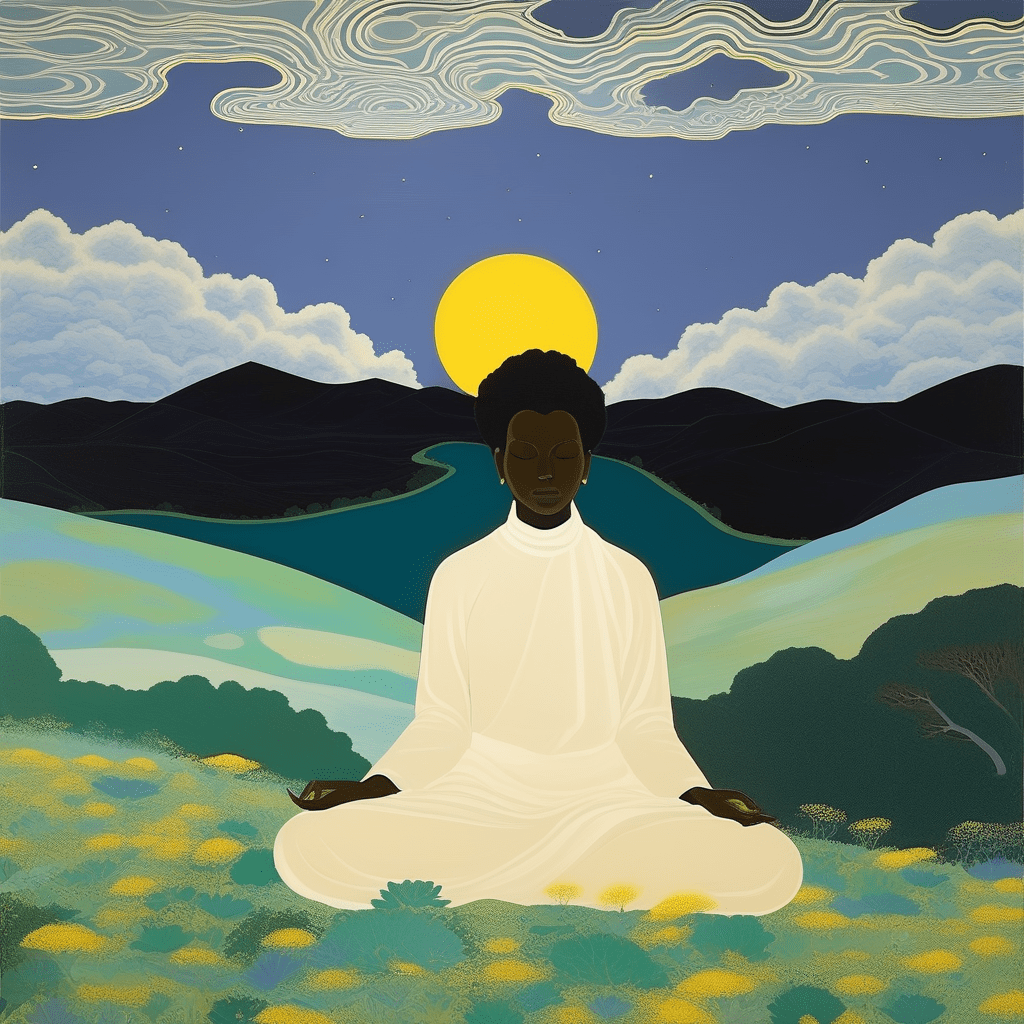
In the journey of self-awareness and understanding, there’s a profound adage that resonates deeply: “Everyone falls back asleep after awakening, but no one falls asleep after enlightenment.” This statement, while seemingly simple, carries with it a world of meaning and depth, particularly in the context of spiritual and personal growth.

#### The Paradox of Awakening and Enlightenment

At first glance, the idea of “falling back asleep after awakening” seems counterintuitive. Isn’t awakening supposed to be a permanent shift in consciousness? The truth, however, lies in the subtle difference between temporary awakenings and true enlightenment. Many of us experience moments of awakening — brief glimpses into a deeper reality or a sudden awareness of a profound truth. These moments can be sparked by various experiences: a beautiful sunset, a piece of art, or a moment of deep connection with another person. However, these are often transient, and we find ourselves slipping back into our habitual patterns of thought and behaviour.

Enlightenment, on the other hand, represents a fundamental and irreversible shift. It’s akin to a door that, once opened, cannot be closed again. In enlightenment, there is a permanent transformation of perspective, a sustained awareness that transcends the ordinary consciousness. This state is often described as a deep, unshakable understanding of the nature of reality, self, and existence.


#### The Role of Meditation in Enlightenment

This statement emphasizes the necessity of years of meditation for true enlightenment. Meditation, in its various forms, is more than just a practice of calming the mind. It’s a tool for deep introspection, for peeling away the layers of illusion and ego that cloud our true nature. Through persistent meditation, one can gradually dissolve these barriers, fostering a greater connection with the inner self and the universe.

Meditation teaches patience, discipline, and, most importantly, the ability to observe without attachment. These qualities are essential in moving from fleeting moments of awakening to a sustained state of enlightenment. It’s a journey of continuous growth and learning, where each meditative experience builds upon the last, gradually leading to a profound understanding and acceptance of what is.


#### Conclusion

In conclusion, the journey from awakening to enlightenment is not a straight path. It involves many cycles of falling back into unconsciousness and rising again with a deeper understanding. This process is necessary and valuable, as each fall and rise polishes the soul, preparing it for the ultimate state of enlightenment. The years of meditation are not just a discipline but a devotion to the inner journey, a commitment to uncovering and living one’s truth.

Morgan O. Smith

Yinnergy Meditation, Spiritual Life Coaching & My Book, Bodhi in the Brain…Available Now!
https://linktr.ee/morganosmith

Unveiling Reality

The Journey from Illusion to Truth

In our journey through life, we often come across what we call “illusions.” These are perceptions or beliefs that appear to be real but are not. However, the most profound realization is that these illusions are not mere deceptions; they are, in fact, Truth in disguise.

### The Nature of Illusion

An illusion, by its very nature, is something that deceives the senses or mind. It’s like a mirage in the desert – you see water, but as you approach, it vanishes, leaving you in the stark reality of the desert heat. Similarly, in life, we encounter situations that seem to be one thing but turn out to be another.

But here’s where it gets interesting. These illusions are not just errors or misperceptions. They are gateways to a deeper understanding of reality. When we delve into the nature of an illusion, we begin to uncover the layers of truth that it conceals.

### The Grand Illusion

The concept of the “Grand Illusion” takes this idea a step further. It suggests that our entire perception of reality might be an illusion. This is a theme explored in various philosophical and spiritual traditions. In Hinduism, for instance, Maya is the illusion that veils the true nature of the universe. In Western philosophy, Plato’s allegory of the cave talks about shadows on a wall that we take for reality.

The Grand Illusion is not just a deception; it is a representation of the ultimate truth, albeit in a form that we can’t immediately recognize. This truth is not something that can be easily explained or understood through conventional means. It is something that must be experienced and felt.

### Unveiling the Truth

So, how do we unveil the truth hidden behind these illusions? It begins with questioning our perceptions and beliefs. We need to look beyond what is immediately visible and ask ourselves what lies beneath. This process of inquiry and introspection leads us to a more profound understanding of ourselves and the world around us.

As we peel back the layers of illusion, we start to see the truth in its purest form. This truth might not be comfortable or easy to accept, but it is liberating. It frees us from the confines of our limited perceptions and opens us up to a universe of possibilities.


### Conclusion

The journey from illusion to truth is not a straightforward path. It’s a winding road filled with challenges and revelations. But it is a journey worth taking. For in understanding the Grand Illusion, we come closer to understanding the true nature of our existence and the universe we inhabit.

Morgan O. Smith

Yinnergy Meditation, Spiritual Life Coaching & My Book, Bodhi in the Brain…Available Now!

https://linktr.ee/morganosmith

The Ground of All Beings vs. The Ground of All Being

In the realm of philosophy, the concepts of “the ground of all beings” and “the ground of all being” often emerge as central themes in discussions about existence, consciousness, and the nature of reality. These concepts, while seemingly similar, offer distinct perspectives on how we understand the universe and our place within it.

**The Ground of All Beings**


“The ground of all beings” refers to the idea that the foundation of reality is the multitude of individual entities that exist. This perspective sees the universe as a collection of distinct beings, each with its essence and characteristics. According to this view, the diversity of objects, organisms, and entities contributes to the fabric of reality. It emphasizes plurality, acknowledging the unique qualities and experiences of each being. This approach often aligns with perspectives that value individuality and the richness that comes from varied existences.

**The Ground of All Being**

On the other hand, “the ground of all being” suggests a more unified view of existence. Here, the focus is on the underlying reality that connects all things, rather than the things themselves. This concept points to a fundamental source or essence that underpins everything. It’s often associated with ideas of oneness or the belief in a universal substance or consciousness that permeates all. This perspective is prominent in various spiritual and metaphysical beliefs, where the unity of existence is emphasized over individual differences.

**Philosophical Implications**


The debate between these two views is significant in philosophy as it shapes our understanding of the world. If we lean towards “the ground of all beings,” we might focus on the differences and separateness of things, leading to a worldview that celebrates diversity and individuality. Conversely, embracing “the ground of all being” could lead to a more holistic view of life, where interconnectedness and unity are fundamental.


**Conclusion**

Ultimately, these concepts are not just abstract philosophical ideas but are also reflective of our everyday experiences and how we perceive our relationship with the world. Whether we see the universe as a tapestry of distinct threads or as a single, interconnected whole, these views shape our beliefs, values, and actions. As such, the exploration of these concepts is not just a philosophical exercise but a journey into understanding the very nature of existence itself.

Morgan O. Smith

Yinnergy Meditation, Spiritual Life Coaching & My Book, Bodhi in the Brain…Available Now!
https://linktr.ee/morganosmith

Can One Choose to Go Back to Being Unenlightened?

The journey toward enlightenment is often viewed as a one-way path, leading to a state of spiritual awakening that fundamentally changes one’s perception of the world and self. But is it possible to revert to a state of unenlightenment? This question opens a fascinating philosophical debate.

#### The Irreversibility of Enlightenment


Once an individual experiences spiritual enlightenment, it is commonly believed that this transformation is irreversible. In spiritual traditions like Hinduism, Buddhism, and various mystic philosophies, enlightenment—referred to as Sahaja Samadhi, Turiyatitta, Nirvana, Nibbana, Moksha, Bodhi, and other names—is seen as the ultimate achievement. It’s a profound understanding of the universe and one’s place, transcending ordinary perception.

The idea of willingly abandoning such a state seems counterintuitive. Why would one return to a less aware state after enlightenment? For those who have experienced this profound awakening, giving it up, especially while in the human body, seems unimaginable.


#### The Divine Paradox

However, when considering the divine or absolute reality—referred to in various traditions as God, Brahman, Allah, or the Ground of All Being—there’s an intriguing paradox. This ultimate reality is believed to manifest itself in all forms of existence, encompassing every species and aspect of the universe. In doing so, it seemingly relinquishes its state of pure enlightenment to become the myriad forms of life and matter.

#### The Bodhisattva’s Choice

In Mahayana Buddhism, the concept of the Bodhisattva presents another unique perspective. A Bodhisattva is an individual who has caught a glimpse of enlightenment but chooses not to enter this state fully. This choice is made out of compassion, with the vow to help all sentient beings achieve enlightenment before achieving it themselves fully. This represents a profound sacrifice and a different understanding of enlightenment, not as a personal achievement but as a collective goal.


#### Conclusion

The question of whether one can choose to return to unenlightenment is complex and multi-faceted, deeply rooted in various spiritual traditions and philosophical contemplations. It invites us to consider the nature of spiritual awakening, the role of the divine in the cosmos, and the interconnectedness of all beings in the journey toward enlightenment.

Morgan O. Smith

Yinnergy Meditation, Spiritual Life Coaching & My Book, Bodhi in the Brain…Available Now!

https://linktr.ee/morganosmith

Embracing the Absolute

Understanding the Unity of Existence

In the grand tapestry of existence, there exists a profound and often overlooked truth: all is the absolute. This statement, deceptively simple, unravels layers of deep philosophical understanding about our universe and our place within it. The concept of the absolute refers to the ultimate reality, a state of being that transcends the ordinary distinctions and separations that we, as individuals, experience in our daily lives.

The universe, in its infinite complexity, is a manifestation of this absolute reality. Each star, planet, organism, and atom contributes to this holistic entity, making the universe not just a collection of parts, but an interconnected whole. The absolute is not something distant or detached from our reality; it is our reality, in its most profound and all-encompassing form.

Interestingly, this perspective aligns with various philosophical and spiritual traditions, which have long proposed that the fundamental nature of reality is a unified field of existence. In this view, the distinctions we make between ourselves and the world around us are, in a sense, illusions. They are practical and necessary for our survival and daily functioning, but they do not represent the deeper truth of our existence.


The individual ego, the sense of self that each of us carries, is also an expression of the absolute. This notion challenges our conventional understanding of individuality and separateness. The ego, often perceived as a distinct and isolated entity, is, in reality, another aspect of the absolute. It’s not separate from the absolute but a unique expression of it.

This perspective invites us to reconsider the nature of our identity. If our egos are manifestations of the absolute, then the boundaries between ourselves and the rest of the universe become more permeable. We are not isolated beings, but integral parts of a larger, dynamic whole. This realization can be both humbling and empowering, as it connects us to something greater than ourselves and dissolves the illusion of isolation.

However, the ego often operates under the illusion of separateness. It constructs a narrative of individuality that, while necessary for our functional existence, obscures the deeper truth of our interconnectedness. This illusion is not a fault but a feature of the human experience, a necessary aspect of our journey through life.


In recognizing our true nature as expressions of the absolute, we open the door to a more profound understanding of existence. We begin to see the interconnectedness of all things and the unity that underlies the apparent diversity of the universe. This realization has the potential to transform our perspective on life, fostering a sense of connection, compassion, and a deeper appreciation for the mystery and beauty of existence.

Morgan O. Smith

Yinnergy Meditation, Spiritual Life Coaching & My Book, Bodhi in the Brain…Available Now!

https://linktr.ee/morganosmith