The Evolution of Ego

From Self to the Kosmic

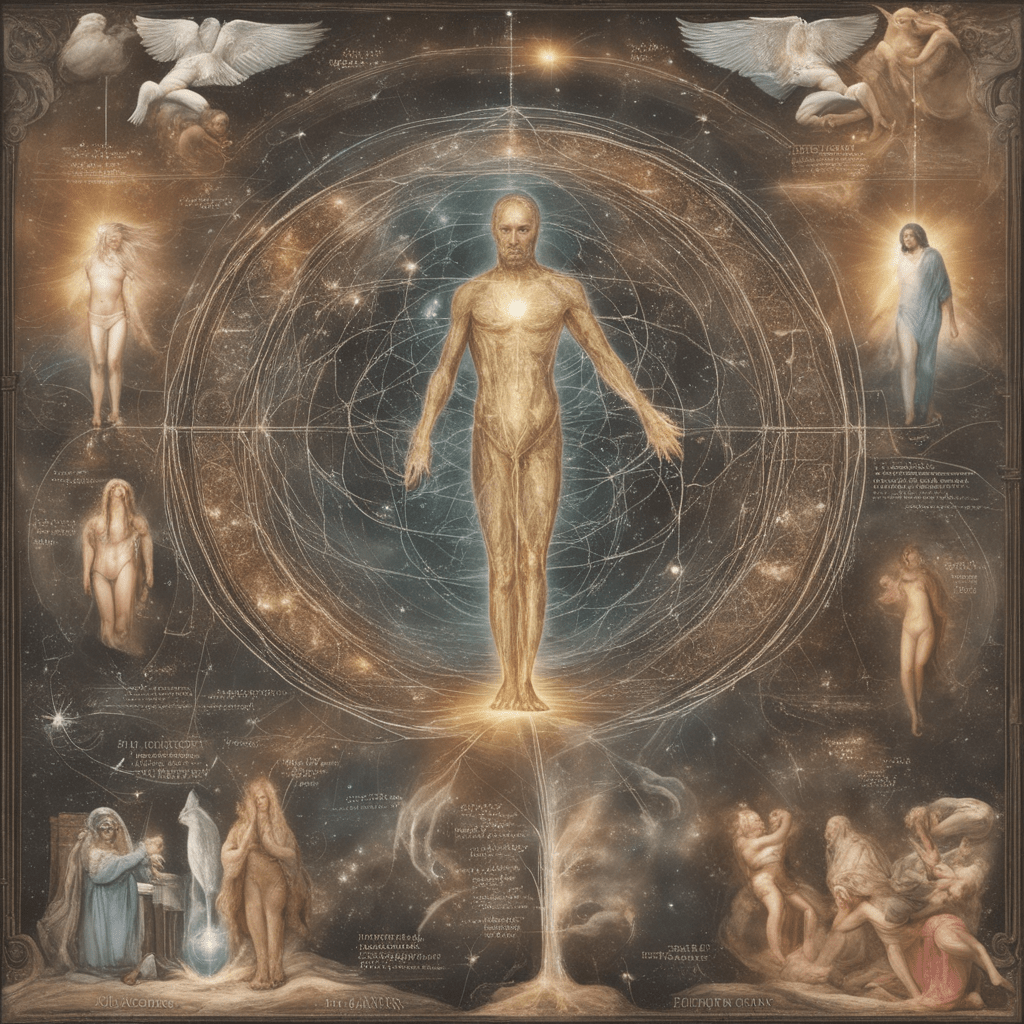
Often, when we contemplate human actions, we trace their roots back to the ego. Even when one scales the highest peaks of spiritual enlightenment, at the base of such pursuits, lie the ever-pervasive ego. But what if, instead of viewing the ego as an obstacle, we see it as a dynamic force that evolves alongside our personal growth?

**The Self-Driven Ego**


At its most rudimentary level, the ego is self-driven. It is concerned with the ‘I’, with personal achievements, desires, and aspirations. This is the phase where individuals are primarily driven by self-interest. It’s about survival, personal gratification, and the projection of one’s identity.

**The Ethno-Driven Ego**

As humans grow and mature, their egos often expand to encompass a larger group, leading to an ethnic-driven ego. Here, the concerns shift from individual welfare to the welfare of the community. National pride, cultural preservation, and group identity come to the forefront.

**The World-Driven Ego**


Further evolution leads to the world-driven ego, where an individual feels connected and responsible for the global community. Environmental concerns, global peace, and humanitarian causes become primary. The world becomes one’s ‘in-group’, and there is a deep desire to foster global unity.

**The Kosmic-Driven Ego**

The pinnacle of this egoic evolution is the Kosmic-driven ego. Here, individuals are driven by the interconnectedness of all existence. They perceive the universe as a singular entity, where every action has ripples that affect the whole—their pursuits, whether spiritual or otherwise, are directed towards the harmony of existence itself.

**Conclusion**

It’s fascinating to realize that while the ego remains a constant companion throughout our lives, its scope and concerns can evolve drastically. Instead of demonizing the ego, perhaps it’s more productive to recognize its potential for growth and guide it in a direction that aligns with our higher aspirations.

Morgan O. Smith

Yinnergy Meditation & My Book, Bodhi in the Brain…Available Now!

https://linktr.ee/morganosmith
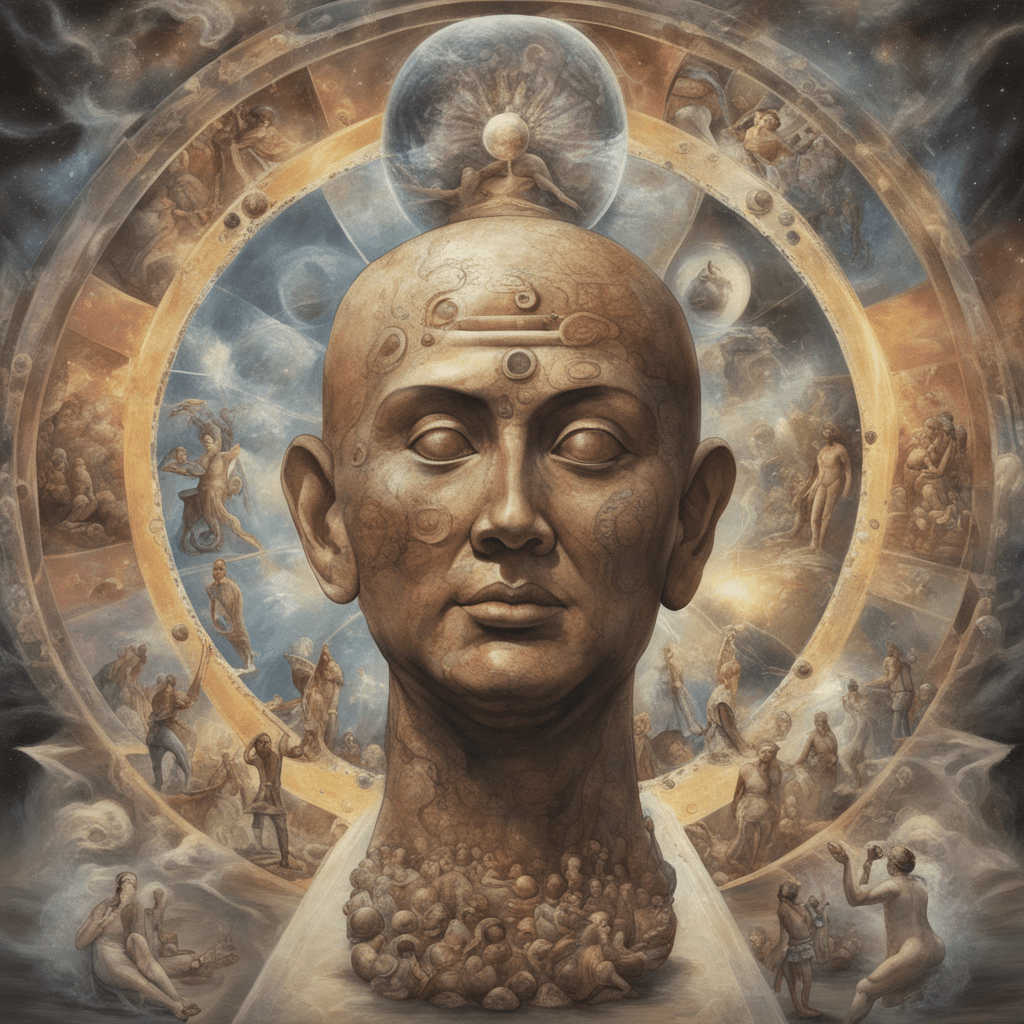
A Peak Experience vs. Spiritual Awakening

Journeying the Depths of Human Experience

In the labyrinth of human experience, two moments often stand out: the peak experience and spiritual awakening. While both can deeply transform an individual, they arise from different sources and lead to distinct outcomes. Here, we delve into the nuances that set them apart.

**Peak Experience: The Ephemeral Summit**

A peak experience is a fleeting moment of intense happiness, realization, or connection. Often arising from external stimuli, it can be a monumental achievement, the thrill of an adventure, or even the profound beauty of a piece of art. These experiences are characterized by a heightened sense of wonder, clarity, or ecstasy. There are moments when we feel most alive, when everything seems to “click,” and the universe feels perfectly aligned.

Such experiences, while transient, can offer a deepened perspective on life. They remind us of our capacities, the beauty around us, and the potential for human joy.

**Spiritual Awakening: The Eternal Depth**


On the other hand, a spiritual awakening is a profound, internal shift in consciousness. It is not a fleeting moment but a transformative process that often unfolds over time. This awakening can emerge from prolonged introspection, existential crises, or profound meditation. It is characterized by a profound understanding of oneself, the universe, and the interconnectedness of all things.

A spiritual awakening challenges and reshapes our core beliefs, values, and perceptions. It is a departure from the materialistic worldview, leading to a realization of the deeper, spiritual essence of existence. Often, those who undergo such an awakening describe a sense of peace, oneness, and a newfound purpose.

**Distinguishing Between the Two**

While both the peak experience and spiritual awakening have the power to reshape one’s life, they differ fundamentally in their nature, origin, and impact. The former is a brief, intense moment, often evoked by the external world. In contrast, the latter is a sustained internal transformation, born from a deeper understanding of existence.

**Conclusion**

Both the peak experience and spiritual awakening offer insights into the vast spectrum of human experience. At the same time, one provides a glimpse of life’s peaks, and the other delves into its profound depths. Together, they remind us of the beauty, complexity, and potential of the human journey.

Morgan O. Smith

Yinnergy Meditation & My Book, Bodhi in the Brain…Available Now!

https://linktr.ee/morganosmith
A Return to Guru Viking

An Odyssey into “Bodhi in the Brain”

As the leaves turn golden and the scent of autumn fills the air, my journey with the Guru Viking podcast continues to unfold. I’m ecstatic to share that my third appearance on this enlightening platform with the ever-insightful host, Steve James, is now live for all of you to indulge in.

This episode centers around “Bodhi in the Brain”, a manifestation of my passion, research, and personal experiences. This book is more than just words on paper—it’s a beacon of the transformative power that the Yinnergy meditation brainwave entrainment program harnesses. A program I poured my soul into, mathematically designing and birthing it in the serene month of August 2010. It has since become a transformative tool, sculpting the lives of countless individuals, with me being its first beneficiary.

For those who might’ve missed my initial sojourns on Guru Viking, here’s a glance:

Ep176: The Awakening of Mista Mo – A peek into my spiritual renaissance.

Ep195: Enlightened Comedian – A celebration where humour intertwines with spiritual profundity.

I’d love for all of you to journey with me. Listen, reflect, and maybe, find a part of yourself within these conversations.

🔗 For those yearning for a transformative meditative experience or eager to delve into the philosophical depth of “Bodhi in the Brain”, the gateway awaits: https://linktr.ee/morganosmith A friendly reminder for seekers everywhere: Guru Viking continues to unfurl wisdom every Friday on YouTube. Enrich your spiritual palette on Apple, SoundCloud, and Spotify as well. https://www.guruviking.com/

The Ouroboros of Samsara

An Endless Cycle of Self-Inflicted Suffering

The universe is filled with symbols that describe the cyclical nature of existence. One of the most captivating is the concept of ‘Samsara’ from Eastern traditions and ‘Ouroboros’ from ancient civilizations. While they emerge from different cultural contexts, they bear striking resemblances, encapsulating the endless cycle of birth, death, and rebirth and the continuous loop of life-consuming itself.

### Samsara: The Wheel of Existence

Samsara, derived from Sanskrit, signifies the cyclical process of birth, death, and rebirth. It’s a fundamental concept in Buddhism, Hinduism, and Jainism. Many Eastern spiritual practices aim to break free from this relentless cycle and attain enlightenment or Moksha. Why? Because Samsara is not just about rebirth – it’s about suffering. Every birth brings with it aging, sickness, and ultimately, death. The attachments, desires, and ignorance in life lead to actions (karma) that bind us to this wheel, causing endless suffering.

### Ouroboros: The Eternal Circle


The Ouroboros is an ancient symbol depicting a serpent or dragon eating its own tail. Found in many cultures, from ancient Egypt to the indigenous traditions of the Americas, it’s emblematic of the eternal cyclical nature of the universe. Creation out of destruction, life out of death. Just as the snake sheds its skin only to be reborn, life continually renews itself even as it ends.

### Biting One’s Tail: The Self-Caused Suffering


The fascinating aspect of the Ouroboros is the act of the snake biting its own tail. It’s a voluntary act of self-consumption, symbolizing self-reflection and the cyclical nature of things. But what if we viewed this act as a representation of self-inflicted suffering, much like the karmic traps in Samsara?

Every time we hold onto grudges, indulge in harmful habits, or remain ignorant of our true nature, we bite our own tail. We become both the cause and the recipient of our suffering. And just like the snake cannot see beyond its circular path, we often find it challenging to envision a life beyond our self-inflicted pain.

### Breaking the Cycle

While these symbols might paint a bleak picture of existence, they also offer hope. Just as the cycle of Samsara can be broken through enlightenment, the Ouroboros signifies rebirth and renewal. But this requires self-awareness.

By recognizing the patterns of our actions, understanding the roots of our desires, and embracing self-reflection, we can begin to release our grip on our own tails. This doesn’t mean the cessation of life’s challenges, but rather an enlightened approach to them, devoid of self-inflicted suffering.

In conclusion, Samsara and the Ouroboros serve as profound reminders of the cyclical nature of existence and the potential pitfalls of living unconsciously. They beckon us to awaken, to understand our role in our suffering, and to seek paths that transcend these ancient cycles. As we navigate the journey of life, may we always strive to understand the deeper meaning behind these symbols and find the courage to let go of our tail.

Morgan O. Smith

Yinnergy Meditation & My Book, Bodhi in the Brain…Available Now!

https://linktr.ee/morganosmith

FOR IMMEDIATE RELEASE

Author Morgan O. Smith Champions Dementia Support with Generous Donation

September 21, 2023 – Morgan O. Smith, the distinguished author behind the transformative guide, “Bodhi in the Brain,” has donated $1,000 to the newly inaugurated charitable foundation, “A Rose For Grandma Wellness Hub.” This heartfelt contribution resonates deeply with Smith, whose own paternal grandmother passed away due to dementia in 2019.

A Rose For Grandma Wellness Hub’s mission focuses on offering much-needed assistance and resources for Black, Indigenous, and People of Colour (BIPOC) contending with dementia. The organization’s efforts revolve around extending vital support to affected families, a cause Morgan feels a profound connection.

Smith’s groundbreaking book, “Bodhi in the Brain,” presents Yinnergy Meditation – an avant-garde approach to harnessing the latent power of the subconscious mind. Drawing upon state-of-the-art research from the realms of neuroscience and psychology, the Yinnergy Meditation program stands out as an effective and unparalleled tool for ameliorating mental and emotional health, while also enriching overall well-being.

Designed for individuals across all walks of life and varying levels of meditation experience, Yinnergy Meditation taps into the brain’s inherent neuroplasticity. It aids in restructuring thinking patterns, boosting mental resilience, and achieving a harmonious equilibrium. With its step-by-step guidance, coupled with exclusive audio technology, users embark on a transformational journey to discover their innate potential.

Smith’s dedication to mental wellness goes beyond the written word. In 2011, he spearheaded the Yinnergy Meditation grassroots initiative, emphasizing emotional, mental, and spiritual growth through deep, audio-aided meditation. Moreover, in acknowledgment of the exceptional contributions of young changemakers, Smith established the Yinnergy Appreciation Awards.

Whether you aim to alleviate stress, break free from negative thought cycles, or elevate your overall life quality, “Bodhi in the Brain” emerges as an indispensable guide to mental fortitude and tranquillity.

For more information on “Bodhi in the Brain,” Yinnergy Meditation, or to explore potential collaborations, please contact Morgan innovativecoaching@gmail.com.

About Morgan O. Smith:
Morgan O. Smith stands at the forefront of modern meditation and neuroscience literature. With a fervent passion for mental well-being and community upliftment, Smith’s endeavours reflect his commitment to societal betterment, both on the individual and collective front.

###ENDS###

https://linktr.ee/morganosmith

You Are What You Eat, and Also What You Don’t

The Eastern Philosophy of Consumption and Abstention

In the intricate dance of life, we often hear the adage, “You are what you eat.” Rooted in the wisdom of many cultures, this phrase suggests that our physical and mental well-being is profoundly influenced by the food we consume. But just as importantly, the choices we make about what we refrain from eating also define us. In the vast expanse of Eastern philosophy, whether feasting or fasting, you are that.

The concept of ‘Ahara’ in Ayurveda, the ancient Indian science of life, teaches that everything we consume, be it food, thoughts, or experiences, becomes a part of our inner and outer constitution. It’s not merely about the nutrients we obtain, but the energy, the ‘prana’, that comes with it. A meal cooked with love nourishes the soul, just as a dish prepared in haste or anger might leave us feeling unsettled.

Conversely, the act of abstention or fasting, common in Eastern practices like Buddhism, Jainism, and Taoism, is not merely a physical exercise. Fasting is as much a mental and spiritual activity as it is a physical one. By abstaining, we aren’t merely depriving ourselves; we’re creating space. Space for reflection, for inner growth, and for reconnecting with the self.

In the Zen Buddhist tradition, the act of eating mindfully, paying attention to every morsel, and being grateful for the nourishment is a form of meditation. On the other hand, moments of abstention teach us about the impermanence of desires. As Lao Tzu stated in the Tao Te Ching, “To attain knowledge, add things every day. To attain wisdom, subtract things every day.”

In the end, the balance between consumption and abstention is a personal journey, an inner dialogue. It’s about recognizing that every choice we make, whether to indulge or to refrain, is a reflection of our inner state, our philosophies, and our connection to the world around us.

As we navigate through the rhythms of life, let us remember: that we are not just shaped by what we consume but also by what we choose to let go. And in that delicate balance lies the true essence of existence.

Morgan O. Smith

Yinnergy Meditation & My Book, Bodhi in the Brain…Available Now!

https://linktr.ee/morganosmith

A Dive into the Spiritual

Self-evidence vs. Scientific Evidence

In a world where science reigns supreme, defining our truths and challenging our beliefs, we find ourselves at a crossroads between what is self-evident and what is scientifically validated. The realm of spiritual awakening serves as the perfect backdrop for this intricate dance between subjective truth and empirical evidence. Herein lies the question: Why does a self-evident event often feel more profound and true than mountains of scientific evidence?

**The Nature of Self-Evidence**

When we speak of something being “self-evident,” we refer to truths that do not require external validation to be known. They are, by their very nature, immediately recognized and accepted. A genuine spiritual awakening, which often results in a profound shift in one’s perception of self and universe, is typically such an experience. Those who have undergone such awakenings often recount feelings of interconnectedness, transcendent love, and a deep-seated knowledge that what they’ve experienced is indisputably real.

Yet, this poses a challenge for the scientific community. How does one quantify an experience so profoundly personal and transformative?

**The Limitations of Scientific Evidence**

Science, with its rigorous methods and empirical approaches, seeks to understand the universe by observing, categorizing, and predicting phenomena. It operates within the framework of the observable universe, relying on the senses and instruments to gather evidence. But can it measure the immeasurable? Can it truly capture the essence of a spiritual epiphany or the profound realization of oneness with the universe?

Moreover, while science deals with averages, generalities, and repeatable experiments, spiritual experiences are deeply personal, unique, and often non-reproducible. Just as we cannot generalize the depth of a mother’s love or the intricacies of individual human emotions, so too, perhaps, we cannot wholly quantify the nature of spiritual awakenings.

**Finding a Balance**

This isn’t to negate the importance of scientific inquiry. Science brings invaluable insights into the nature of reality and has transformed our world in countless ways. But perhaps there are realms where science, with its current methodologies, cannot thoroughly tread. In these spaces, self-evidence might be the only beacon of truth we have.

A genuine spiritual awakening, bathed in the light of self-evidence and, serves as a poignant reminder that not all truths lie in the domain of the observable and measurable. Sometimes, the most profound truths are those that resonate deep within, requiring no external validation to be felt and known.

Morgan O. Smith

Yinnergy Meditation & My Book, Bodhi in the Brain…Available Now!

https://linktr.ee/morganosmith
The Ground of All Being

The Universe Expressing Itself as Us

The ground of all being is an enthralling concept that presents a holistic perspective on existence. It implies that the very essence of reality, the foundational principle upon which all things stand, is a singular, pervasive entity. It is like a canvas upon which the entire universe is painted, a silent symphony playing every note of existence. And if we dig deeper, the mesmerizing idea emerges: this entity expresses itself through every form and facet of the universe.

Now, consider our galaxy, our planet, and finally, us. Amidst the vast expanse of stars, black holes, and nebulae, here we are — a small species on a tiny planet. But what if we’re not just passive inhabitants? What if we’re the universe experiencing itself, attempting to understand its nature?

Every human being, with their myriad of talents, skills, ideas, and interests, is a unique representation of the universe. Each song we sing, each painting we create, and every scientific theory we develop, is the universe expressing a fragment of its infinite complexity. Our personalities, whether introverted or extroverted, logical or emotional, are simply different melodies in the grand cosmic orchestra.

If one subscribes to this perspective, it brings forth profound implications. Firstly, it fosters a deep sense of interconnectedness. When we grasp that we are not isolated entities but interwoven threads in the cosmic tapestry, our interactions with others take on a new depth. It also emphasizes the importance of self-expression. By understanding and expressing our unique talents and traits, we allow the universe to manifest itself in new and beautiful ways.

In conclusion, by viewing ourselves as expressions of the ground of all being, we can cultivate a deeper sense of purpose and interconnectedness. It’s a reminder that we’re not just in the universe, but the universe is in us, experiencing and exploring through every thought, action, and emotion.

Morgan O. Smith

Yinnergy Meditation & My Book, Bodhi in the Brain…Available Now!

https://linktr.ee/morganosmith

The Expansive Self

Beyond the Boundaries of Individual Identity

In the vast tapestry of human experience, one of the most profound and transformative realizations is the awakening to a sense of identity that stretches far beyond the individual self. This philosophical journey, explored by thinkers, mystics, and seekers throughout history, offers an exploration into the very essence of what it means to be human, and more profoundly, what it means to be a part of the cosmos.

### The Layers of Self

**1. The Individual Identity**: Our daily lives are governed by our personal experiences, histories, and beliefs. This individual self, encapsulated by our distinct personalities, desires, and aspirations, is like a drop in the vast ocean of existence.

**2. The Collective Identity**: There are moments, often inspired by shared experiences, when we resonate with a group, whether based on nationality, religion, or shared purpose. Here, the boundaries blur slightly, and the drop becomes a wave, united in its motion with other droplets.

**3. The Universal Self**: Delving deeper, we encounter a realm where the wave realizes it’s not just a part of the ocean, but the ocean itself. This vast sense of identity, encompassing all of life, the universe, and the myriad forms within it, is an experience of unity and oneness with all that exists.

### The Power of Oneness


With an expanded identity, empathy and compassion naturally flourish. The pain and joy of another are no longer abstract experiences; they become deeply personal as if they were our own. This profound interconnectedness also extends to nature, leading to an intrinsic desire to safeguard the environment and all its inhabitants.

Moreover, as one navigates this expanded identity, the grip of personal desires and ego-based needs loosens. Life begins to flow with an acceptance of its unfolding mystery, reducing resistance and enhancing serenity.

### Mystical Insights and Modern Science

Historically, mystics from various traditions spoke of experiences of union with the divine, the universe, or the underlying essence of reality. Today, intriguingly, modern science, especially in fields like quantum physics, hints at ideas of interconnectedness and non-locality. Such insights suggest that the ancient intuitions of interconnectedness may have parallels in our current understanding of the cosmos.

### Challenges of the Expansive Self


However, this journey is not without its pitfalls. As we embrace a broader sense of self, there’s the risk of “spiritual bypassing” – a tendency to use these expansive realizations to sidestep personal issues or challenging emotions. An expansive identity doesn’t negate personal responsibilities or the need for personal boundaries. It invites a deeper engagement with life in all its complexity.

### Conclusion

Our identity’s evolution, from a solitary droplet to the vast ocean, is a journey of consciousness and profound realization. It reminds us that beneath the multiplicity and diversity of existence lies an undercurrent of unity, urging us to rediscover and embrace our place in the cosmos.

As we ponder on the vastness of our identity, it serves as a beacon, guiding us toward a life of deeper meaning, connection, and purpose. In recognizing our expansive self, we find not only our place in the universe but also the universe within ourselves.

Morgan O. Smith

Yinnergy Meditation & My Book, Bodhi in the Brain…Available Now!

https://linktr.ee/morganosmith
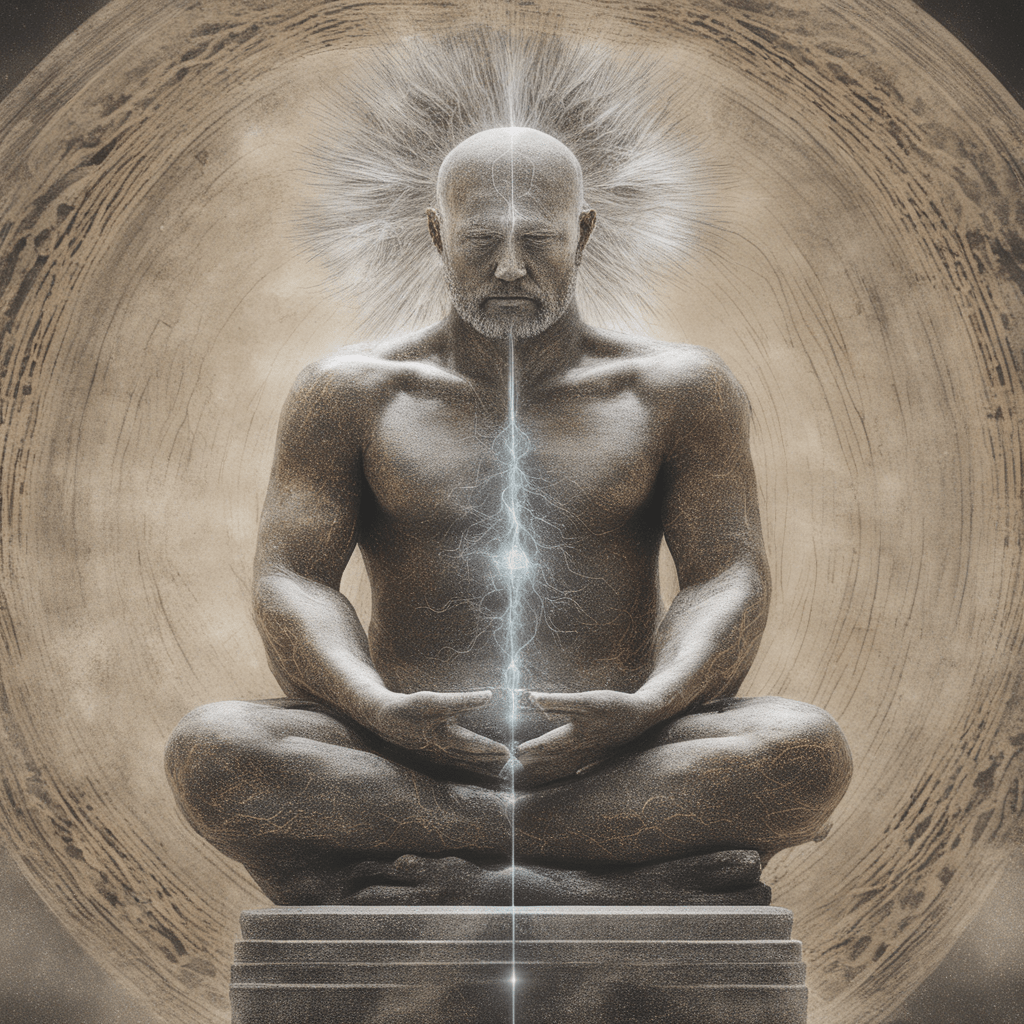
You are God Divided

The Infinite Dichotomy of Existence

Every atom, every particle, and every conscious entity in the universe has a story to tell. It’s the story of division, multiplication, and infinite expansion. At the heart of existence lies a profound mystery, one that has perplexed philosophers, scientists, and theologians for millennia. Could it be that we are all fragments of a single entity that chose to divide and diversify, just to experience itself in infinite ways?

Imagine the Absolute Singularity, a singular point of pure potentiality and absolute unity. A point where all is one, and one is all. But, for reasons beyond our comprehension, this singularity chose to divide. First, into two, then four, and so on, in a cascading process of division and multiplication. Each division produced a unique variation, a unique perspective, and a unique experience.

Why would the singularity choose to divide? Perhaps it’s an inherent desire to experience, to know, to feel. Each division brings about a new facet, a new lens through which the universe can observe itself. As we delve deeper into this concept, the notion emerges that we, as conscious beings, are those very lenses. Each of us is a unique perspective, a unique manifestation of that original singularity, trying to make sense of its existence.

The beauty of this perspective is that it places an inherent value on every individual, every creature, and every entity in existence. We are all part of the grand mosaic of life, each playing our part in the unfolding narrative of the universe. As we interact, love, fight, and explore, we contribute to the ever-expanding tapestry of existence.

It’s both humbling and empowering to think of ourselves in this light. If we are all fragments of the same original entity, then there’s an intrinsic connection that binds us all. A cosmic kinship that transcends race, gender, nationality, and even species. It’s a call for unity, compassion, and understanding. For if we harm another, we’re essentially harming a part of ourselves.

As you navigate through life, remember this perspective. See the divine in yourself and others. Understand that your experiences, emotions, and aspirations are all part of a grander narrative. You are both the storyteller and the story, the observer and the observed.

In embracing this duality, we can foster a world where understanding, love, and unity become the norm rather than the exception. It’s a journey worth embarking on, for in understanding our origins, we might just find our destiny.

Morgan O. Smith

Yinnergy Meditation & My Book, Bodhi in the Brain…Available Now!

https://linktr.ee/morganosmith