Author, Philosopher, Spiritual Teacher, A Lead Facilitator at Sacred Media's Integral Mastery Academy, Founder of Yinnergy Meditation/Neurofeedback, Bodhi Mental Care & Wellness, Co-founder of KeMor Centre for Innovative Development
In the boundless journey of spiritual exploration, there are realms where the intellect bows to the profound experiences of the soul. During my dialogue with Steve James on Guru Viking, I ventured into the profound depths of non-duality and absolute monism, sharing experiences and realizations that have illuminated my path and understanding of the cosmos.
Non-duality, a state where the illusion of separateness dissolves into the boundless ocean of oneness, has been a pivotal aspect of my spiritual journey. It is a space where the dichotomies of self and other, subject and object, and observer and observed merge into a singular, unified existence. My experiences within this realm have not only been transformative but have also opened portals to deeper understanding and exploration of existence.
Absolute monism, on the other hand, is the philosophical perspective that everything emerges from and returns to a singular, absolute reality. It is a viewpoint that aligns seamlessly with my experiences of non-duality, where the myriad forms and phenomena of the universe are expressions of a singular, boundless reality.
In my explorations, I have navigated through different levels of non-duality, each revealing unique insights and perspectives on the nature of existence and consciousness. From the interconnectedness of all beings to the profound realization of the self as a manifestation of the infinite, each level of non-duality has been a step into deeper realms of understanding and perception.
One of the profound realizations that have emerged from my journey is that all perspectives on non-duality are valid. Each individual’s experiences and realizations are unique expressions of their journey through the infinite landscapes of consciousness. From the absolute monism that speaks of the oneness of existence to the diverse expressions of non-dual experiences, every perspective is a unique facet of the boundless crystal of reality.
Morgan O. Smith
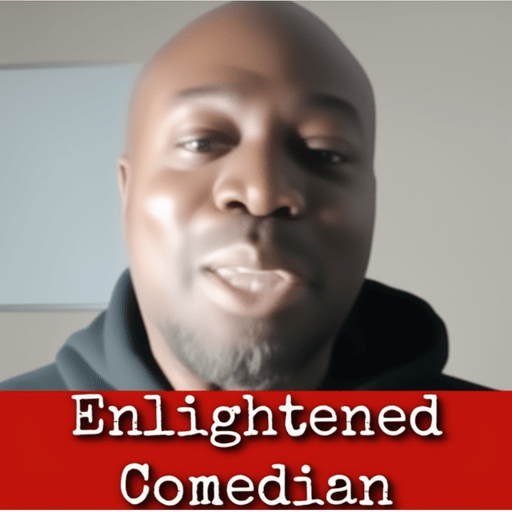
Watch Enlightened Comedian
Ep195: Enlightened Comedian
Welcome to Episode 195, “Enlightened Comedian,” where humour meets the profound depths of spiritual awakening. In this episode, we explore the whimsical yet insightful journey of a comedian whose quest for laughter led him to the shores of enlightenment. Through a blend of comedy and consciousness, we delve into a narrative that celebrates the divine gift of laughter and the profound wisdom it unveils. Tune in to this heartwarming episode as we unravel the laughter-laden path to self-realization.
A friendly reminder for seekers everywhere: Guru Viking continues to unfurl wisdom every Friday on YouTube. Enrich your spiritual palette on Apple, SoundCloud, and Spotify as well. https://www.guruviking.com/
Yinnergy Meditation & My Book, Bodhi in the Brain…Available Now!
In the vast expanse of philosophical discourse, few concepts challenge the contours of human understanding as the idea of Absolute Monism. At its core, it posits that everything is essentially a unified, singular reality, but herein lies a paradox: If all is One, how does one account for the seemingly infinite multiplicity that populates our universe? The answer, surprisingly, might be found in understanding that singularity and multiplicity are two sides of the same coin.
### The Illusion of Separation
We begin by reflecting on the perceived reality around us. Trees, oceans, planets, galaxies—on the surface, they appear distinct, diverse, and separated. Yet, each atom, molecule, and cell in these entities share a common origin in the Big Bang. If we could rewind time, all that exists would coalesce into a single point of infinite density—a singularity.
The illusion of separation emerges from our limited human perception. Just as a wave is not separate from the ocean, individual entities are not separate from the cosmic singularity; they are mere manifestations of the same unified reality.
### The Duality Paradox
Dualities pervade human thinking. Good and evil, light and dark, self and other. But these are merely conceptual constructs, artificial divisions we impose on the unified reality to navigate it. In Absolute Monism, these dualities dissolve. The line that separates singularity from multiplicity is a mirage.
Imagine a hologram. Every fragment of a hologram contains the whole image. Similarly, every fragment of our universe—no matter how minuscule—contains the imprint of the whole. Singularity is encoded in multiplicity and vice versa. ### Infinity within the Finite
It’s a profound thought that within every grain of sand, and every drop of water, the vastness of the universe is contained. In the singularity of Absolute Monism, the infinite exists within the finite. It challenges the linear perspective of beginning and end, suggesting instead a cyclical, intertwined existence where singularity births multiplicity and multiplicity reflects singularity. ### Embracing the Unity
Recognizing that all is One has profound implications for how we lead our lives. Embracing Absolute Monism is a journey towards compassion, understanding, and unity. When we realize that the ‘other’ is merely a reflection of the ‘self’, prejudices and divisions melt away.
To view the world through the lens of Absolute Monism is to appreciate the dance of singularity and multiplicity. It is to find solace in the idea that while we may appear separate, at our core, we are all interconnected fragments of the same cosmic story.
In conclusion, the essence of Absolute Monism serves as a gentle reminder of our shared journey in this vast universe—a universe where singularity is not opposed to multiplicity but is, in fact, its very essence.
Morgan O. Smith
Yinnergy Meditation & My Book, Bodhi in the Brain…Available Now!
The vast universe, with its manifold entities and infinite complexities, often bewilders human minds. Philosophers and thinkers from time immemorial have grappled with questions about the nature of existence and the ultimate reality. One profound idea that surfaces recurrently is that of Absolute Monism: the belief that beneath the apparent multiplicity, there is but one undivided reality. Let’s take a deeper look into this captivating worldview. ### A Universe from One Thread
At the heart of Absolute Monism lies the assertion that all differences and diversities we perceive are mere illusions. This assertion may seem contradictory to our daily experiences. After all, isn’t the world teeming with diversity?
Yet, this is where Eastern and Western philosophies converge. Ancient Hindu scriptures speak of *Brahman* as the ultimate, undifferentiated reality. The Hindu philosophy of Advaita Vedanta encapsulates this belief by stating that the world’s multiplicity, driven by *Maya*, is an illusion. Meanwhile, in the West, the philosopher Spinoza proposed that God and Nature are two names for the same reality, implying a singular, infinite substance. These ideas, separated by continents, come together to champion a singular reality beneath the apparent diversity.
### Seeing Beyond the Illusion
The concept of illusion is integral to understanding monism. In life, appearances can often be deceiving. A mirage in the desert, a rainbow after the rain, and even our reflection in the water are all illusions. If such simple things can deceive our senses, might it be possible that our entire perception of diverse reality is similarly mistaken?
*Mysticism* has been one avenue through which individuals across cultures have described experiences consistent with Absolute Monism. The interconnectedness of all things, a theme found in the tapestry of monism, speaks to the heart, nudging us to see beyond divisions and differences.
### Implications for Modern Times
If Absolute Monism holds that all is one, then what does this mean for us in the present age, surrounded by divisive forces and fragmented views?
Firstly, on an ethical plane, it implies that harm inflicted upon one is harm to the entirety. This perspective could drastically alter how we approach interpersonal relationships, environmental concerns, and global crises. If we truly internalize this philosophy, then every act of kindness and harm has far-reaching consequences.
Secondly, it brings to the fore the importance of self-realization. In many monistic traditions, the realization of this singular truth is the end goal, bringing about an end to suffering.
Lastly, it sparks curiosity about the nature of our universe. With advancements in modern physics and cosmology, we find theories that echo monistic thoughts. The Big Bang, for instance, suggests that everything we see, touch, and experience emerges from a singular point.
### Embracing Diversity within Unity
Absolute Monism does not negate the value of diversity. Rather, it calls for a deeper understanding. Imagine a tapestry. Up close, one can see the myriad of colours, textures, and patterns. But from a distance, it’s one cohesive artwork. Similarly, monism asks us to appreciate the individual threads while recognizing the grand design.
In an age teeming with division, perhaps the idea of Absolute Monism can be the bridge that reminds us of our interconnectedness. As we stand at the cusp of profound global challenges, this ancient philosophy might just hold the key to a unified, harmonious future.
—
Embracing the ideas of Absolute Monism requires introspection and openness. Whether you fully resonate with its tenets or not, it undoubtedly serves as a beacon, guiding us toward unity, understanding, and profound interconnectedness.
Morgan O. Smith
Yinnergy Meditation & My Book, Bodhi in the Brain…Available Now!
The Dance of Oneness **Introduction:** The 99 beautiful names (Asma’ul Husna) of God, as described in Islamic tradition, have long been celebrated as diverse facets of the Divine. From an Absolute Monism or non-dualistic perspective, these names are not mere titles or attributes but profound expressions of one unbroken Reality. Let’s embark on an exploration of how nondualism weaves these names into a tapestry of Oneness.
**The Unity Behind Diversity:** While the 99 names may initially appear as separate attributes or facets, they can be seen from a non-dualistic viewpoint as interwoven threads of a single Reality. Each name is but a drop in the ocean of Divine essence, which itself is nondual.
**Beyond Dualities:** Names such as Al-Mu’min (The Giver of Peace) and Al-Mumit (The Bringer of Death) may seem contradictory, but in nondualism, these apparent opposites reconcile. They represent the play and dance of the universe, where creation and dissolution are two sides of the same coin.
**The Singular Source:** Names like Ar-Rahman (The Beneficent) and Ar-Rahim (The Merciful) are emanations from a singular source. They underscore that all acts of love, mercy, and compassion in the world reflect the undivided nature of the Divine.
**The Ever-Present Witness:** Names such as As-Sami (The All-Hearing) and Al-Baseer (The All-Seeing) emphasize an ever-present witness. From a nondual perspective, this points to pure awareness, an omnipresent consciousness that perceives without being tainted by dualities.
**The Dance of Manifestation:** Names like Al-Khaliq (The Creator) and Al-Bari (The Evolver) highlight the dynamic play of manifestation. In nondualism, this is the spontaneous unfolding of the universe from the singularity of Absolute Reality. **Towards Absolute Oneness:** Al-Ahad (The One) and As-Samad (The Absolute) direct us towards the purest essence of nondualism. They indicate the unbroken, undivided reality that underlies all existence.
**Conclusion:** The 99 beautiful names of God, when viewed from a nondualistic lens, invite us to see beyond distinctions and to recognize the underlying unity in diversity. They beckon us to explore a deeper, holistic understanding of the Divine – not as a sum of attributes, but as the singular essence that manifests in myriad forms.
Morgan O. Smith
Yinnergy Meditation & My Book, Bodhi in the Brain…Available Now!
A Symphony of Sense and Surrender into the Nondual Existence
The ego, a fortress of our individuality, a custodian of our senses, crumbles during a profound psychological event termed ego death. This process, which is akin to crossing the Rubicon of our minds, signifies the temporary dissolution of our self-identity, the fading of our senses, and the surfacing of a cosmic oneness often linked to deep meditative states, transcendental experiences, or psychedelic journeys.
Neurologically, ego death presents an intriguing event. Our brain’s default mode network (DMN), which curates our self-narrative and sets us apart from others, shows a marked decrease in activity. We can compare it to a maestro leaving the stage, silencing the orchestra of our everyday consciousness that incessantly plays symphonies of thoughts, memories, and future projections.
In the ensuing stillness, our senses embark on an incredible transformation. The self-nonself dichotomy wavers, and feelings of oneness and interconnectedness seep in.
The conventional five senses, along with lesser-known ones such as proprioception (spatial orientation of our body parts), and thermoception (sense of temperature), recede, rendering the self imperceptible. Even the sense of agency – the consciousness of controlling one’s actions – seems to dissolve.
In place of the sensory absence comes the phenomena of nonduality – the essence of existence, unblemished by ego-driven distortions. Here, the biological reality of our senses converges with an intense metaphysical experience.
Kundalini rising – a sensation akin to a large serpent ascending the spine, activating each energy center or ‘chakra’ – might manifest in this transformative journey. Biologically, it could be perceived as a surge in nervous energy influencing neural circuits, engendering a radical alteration in perception.
The dissolution of our sense of time – chronoception – engulfs us in a timeless realm. Our sense of spatial orientation capitulates, inducing a feeling of non-locality, a state where one’s existence feels omnipresent.
This whole process might seem like an experiential validation of ‘absolute monism’ – a philosophical school of thought propounding the universe’s oneness, discrediting any duality between the individual and the world.
Yet, ego death is not an end; it’s a transformative beginning. The insights gleaned about the interconnectedness of all life forms and the illusory separateness sculpted by our ego can significantly reshape our lives.
From a wider perspective, ego death can be seen as a philosophical odyssey leading to an experiential understanding of consciousness, the essence of selfhood, and the nature of reality. The unravelling of our senses and ego sheds light on our inherent unity, nurturing a profound sense of compassion that percolates into every aspect of our existence.
Ego death’s exploration and its impact on our senses offer an avenue to challenge our conventional ways of perceiving, question our established sense of being, and dive deeper into the mysteries of our inner and outer universe. It’s not merely a psychological event but a spiritual expedition and a philosophical exploration that propels us toward a truer understanding of existence.
Morgan O. Smith
Yinnergy Meditation & My Book, Bodhi in the Brain…Available Now!
The Spiritual Awakening of Absolute Monism & Integral Theory
Introduction:
In our diverse universe, imagine a state of consciousness where everything converges into a singular, unified essence. A state where you’re not just you, but rather, an intricate piece of the grand cosmic tapestry, seamlessly woven into the fabric of existence. Welcome to the spiritual awakening of Absolute Monism via the lens of Integral Theory—a journey that transcends the self and experiences the whole, simultaneously, in all its diverse magnificence.
The Quadrants of Integral Theory:
1. The ‘I’ Awakening: Transcending the Self Personal subjective experiences make up our individual worlds. But what happens when these individual worlds collapse into a singular, universal experience? This is the spiritual awakening in the “I” quadrant. Here, you no longer perceive yourself as separate from the universe. You recognize your thoughts, emotions, and consciousness as expressions of the universal consciousness, leading to an inner peace that extends beyond conventional understanding. You start identifying with the all-encompassing “One”. 2. The ‘We’ Awakening: Dissolving Boundaries The “We” quadrant is where cultural experiences and shared values reside. Awakening here means transcending societal constructs. The realization dawns that every life form, despite its apparent differences, shares the same underlying essence. A profound sense of empathy, compassion, and unity replaces the illusion of separation between “us” and “them”.
3. The ‘It’ Awakening: Synchronized Existence The “It” quadrant focuses on our actions and behaviours, the outward expression of our internal states. In the Absolute Monism context, you begin to see yourself as an integral part of the cosmos, operating under universal laws. This awareness induces a deep resonance with nature, promoting a harmonious co-existence with all beings and a seamless flow in action.
4. The ‘It’s’ Awakening: Unified Reality In the “Its” quadrant, the focus shifts to societal structures and systems. A spiritual awakening in this quadrant facilitates the understanding that these structures are not independent but are integral parts of the all-encompassing One. Society, nature, and the cosmos are seen as interconnected facets of a singular, unified reality.
Conclusion:
Experiencing all four quadrants simultaneously leads to a profound shift in consciousness—an unwavering sense of interconnectedness, an innate understanding of the unity of existence, and an indomitable peace with the ebb and flow of life. It’s a transcendence that integrates all aspects of reality into an all-encompassing experience of oneness—an embodiment of Absolute Monism through the framework of Integral Theory.
Indeed, this spiritual awakening illuminates the essence of Absolute Monism—the philosophical view that all aspects of reality are manifestations of the same ultimate essence or spirit. Are we ready to embark on this journey toward a unified consciousness? For, in this ultimate spiritual awakening, we discover the extraordinary in the ordinary, and the universe in ourselves.
Morgan O. Smith
Yinnergy Meditation & My Book, Bodhi in the Brain…Available Now!
In the expansive universe of philosophical perspectives, a novel theory that challenges conventional notions of time and causality has begun to make ripples – the Simultaneous Cause-Effect Monism.
In a realm where most theories exist within a linear framework of time, this theory disrupts traditional boundaries. It suggests an existence where every event, every entity, and every circumstance is not simply a cause or an effect but rather, both simultaneously.
The concept of the universe being born and ending in the same moment challenges our perception of time. According to Simultaneous Cause-Effect Monism, the Big Bang was not just the inception of the expanded universe but also its endpoint. The universe’s lifespan, then, is perceived as a singular moment.
Every action, from the minuscule to the macroscopic, is entwined in a web of causality, serving both as the cause and the effect. This applies not just to the celestial bodies and vast galaxies, but also to the subatomic particles and everything smaller, hidden deep within the fabric of existence. Every aspect of existence and non-existence contributes to the perpetual construction and deconstruction of the universe from its own unique perspective.
The Simultaneous Cause-Effect Monism, in its unique way, asserts that every action is not an isolated event. Instead, it is an intrinsic part of the universe’s vast tapestry. This intrinsic nature implies that each action, each event, and each moment, in being both the cause and the effect, resonates in a perpetual cycle of creation and destruction.
The acknowledgment of this intricate network of causality is what this theory denotes as “Turiyatitta”. This is not just a moment of epiphany, but a state of ultimate enlightenment. At this juncture, the individual gains complete knowledge of this causality web. The recognition of this intertwined causality brings forth a sense of unity and comprehension of the universe’s functioning, as proposed by Simultaneous Cause-Effect Monism.
In conclusion, the Simultaneous Cause-Effect Monism offers a thought-provoking perspective. It reshapes our understanding of existence, pushing us to question the linear, one-directional nature of time and causality we have grown so accustomed to. By opening up to this perspective, we move closer to the ultimate understanding of the universe and our place in it.
Are we ready to embrace this dance of simultaneous causality and venture towards the path of enlightenment – towards Turiyatitta? The future of philosophical discourse awaits.
Morgan O. Smith
Yinnergy Meditation & My Book, Bodhi in the Brain…Available Now!
Introduction: Just yesterday, I had the privilege of participating in a spirited and thoughtful dialogue as a guest speaker on “The Seekers Mind,” a distinguished forum on Clubhouse, renowned for its intellectual rigour and engaging discourse. The topic of this profound conversation was a thought-provoking question: “To Merge with The Divine – Can The Infinite and Finite Meet?” This insightful exploration brought together a multitude of perspectives, each contributing its own unique colour to the vibrant tapestry of thoughts and opinions. It served as a shared journey into the metaphysical depths of our understanding, a true meeting of minds seeking to grasp the essence of the divine.
In the vast landscape of the spiritual realm, teeming with a multiplicity of views and beliefs, the prospect of ‘merging with the divine’ often stirs up lively debates and discourses. As an absolute monist, I view these differing perspectives as individual facets of the divine itself, each one adding its own depth and dimension to the overall understanding. I recognize the importance of acknowledging various viewpoints, even those that assert a separation between the individual and the divine, considering them valid perspectives in this grand dialogue.
In this blog post, we delve deeper into the intriguing concept of merging with the divine, appreciating the richness of the diverse perspectives that emerged during our discussion. Our exploration is not limited to any one viewpoint but rather seeks to embrace the full spectrum of thought, providing an all-encompassing perspective on this profound topic.
The Absolute Monist’s View: As an absolute monist, I see a fundamental unity that pervades all existence. From this perspective, merging with the divine is a realization that the individual identity is an illusion, and there is a pre-existing oneness that transcends all apparent boundaries. It’s an epiphany that the divine and the individual are not two separate entities, but different expressions of the same ultimate reality, often called Brahman.
Inclusivity of Perspectives: While our discussion last night was thought-provoking, it could only touch on a limited range of perspectives. There are numerous other viewpoints often expressed in conversations about spirituality that I feel are crucial to mention. These perspectives stem from a myriad of beliefs, each born from individuals who perceive themselves as separate from the divine. Recognizing and acknowledging this multiplicity of viewpoints is a fundamental step in embracing the broad spectrum of beliefs in the realm of spirituality. Such acknowledgment lends to a comprehensive understanding of the various ways people interpret and experience the profound concept of merging with the divine. It’s this rich diversity that enriches our collective spiritual journey, offering a multifaceted understanding of our quest to connect with greater power.
Dualism and Separation: Some people adhere to dualistic beliefs, positing a fundamental separation between human and divine. They argue that absolute merging with the divine is impossible because of the inherent distinction between the two realms. From this perspective, practices and rituals serve as conduits to establish a connection with the divine, rather than as a means to achieve complete union.
Pantheism and Immanence: Pantheistic perspectives perceive divinity as immanent in all aspects of existence. Hence, the concept of merging with the divine may be deemed unnecessary as the divine is inherently present everywhere. In this belief system, recognizing the divine nature within oneself and the world can evoke a deep sense of unity and interconnectedness.
Theistic Religions and Union: Various theistic religions offer unique perspectives on merging with the divine. Some emphasize a personal relationship with a transcendent deity, where merging with the divine is interpreted as attaining union or closeness with the divine being. Devotion, surrender, and adherence to religious practices are seen as integral components in seeking this connection.
Agnosticism and Uncertainty: Agnostic viewpoints approach the idea of merging with the divine with skepticism, questioning the very knowability of the divine. They argue that human knowledge and experiences are limited, making it challenging to ascertain whether merging with the divine is a factual possibility. Agnostics often maintain an open-ended stance, acknowledging the limitations of human understanding.
Atheism and Rejection: Atheistic perspectives outrightly reject the existence of any divine entity. From this viewpoint, merging with the divine is considered irrelevant or illusory since there is no divine being to merge within the first place. Atheists often focus on personal growth, societal well-being, and ethical principles as their guiding values.
Philosophical Skepticism and Inquiry: Philosophical skeptics approach the idea of merging with the divine with a sense of inquiry and caution. They contend that such claims often hinge on subjective experiences or unverifiable beliefs, making it difficult to establish their truth. Skeptics advocate critical thinking and challenge unfounded assumptions.
Conclusion: The concept of merging with the divine invites profound contemplation and exploration. From an absolute monist’s standpoint, all beliefs and perspectives emanate from the divine, and is the divine, affirming the unity and interconnectedness of existence. I embrace the understanding that all views, including dualism, pantheism, theistic religions, agnosticism, atheism, and philosophical skepticism, are expressions of the divine exploring itself through different lenses.
In this journey of understanding and merging with the divine, we must approach each perspective with respect, curiosity, and a willingness to learn. By engaging in meaningful dialogue and embracing a diversity of beliefs, we can deepen our understanding of the human experience and the various paths by which people seek connection with the divine.
The question of merging with the divine may not have a definitive answer that satisfies all individuals or belief systems. It is an inherently personal and subjective exploration, shaped by cultural, religious, and spiritual backgrounds. However, the shared recognition of the inherent sacredness of existence and the desire to connect with something greater than ourselves is universally beautiful.
In the grand tapestry of existence, let us celebrate the multitude of perspectives, knowing they all contribute to our rich, ever-unfolding exploration of merging with the divine. Through open-mindedness, compassion, and a willingness to transcend individual identities, we may come closer to experiencing the underlying oneness that pervades all things.
May we continue our exploration in the spirit of unity and understanding, honouring the divine in ourselves and each other, while appreciating the vast tapestry of beliefs and experiences that comprise our collective journey toward merging with the divine.
Morgan O. Smith
Yinnergy Meditation & My Book, Bodhi in the Brain…Available Now!





 Morgan O. Smith