Embracing the Absolute

Understanding the Unity of Existence

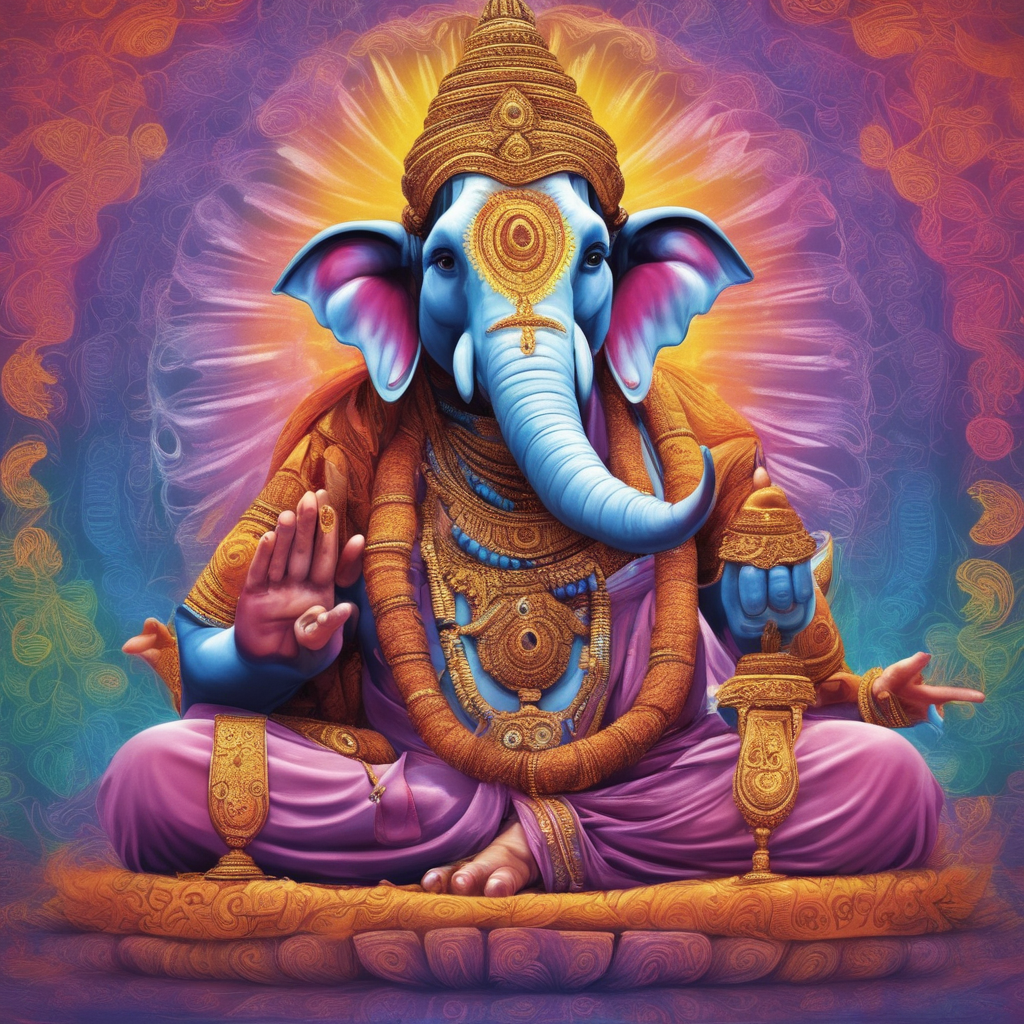
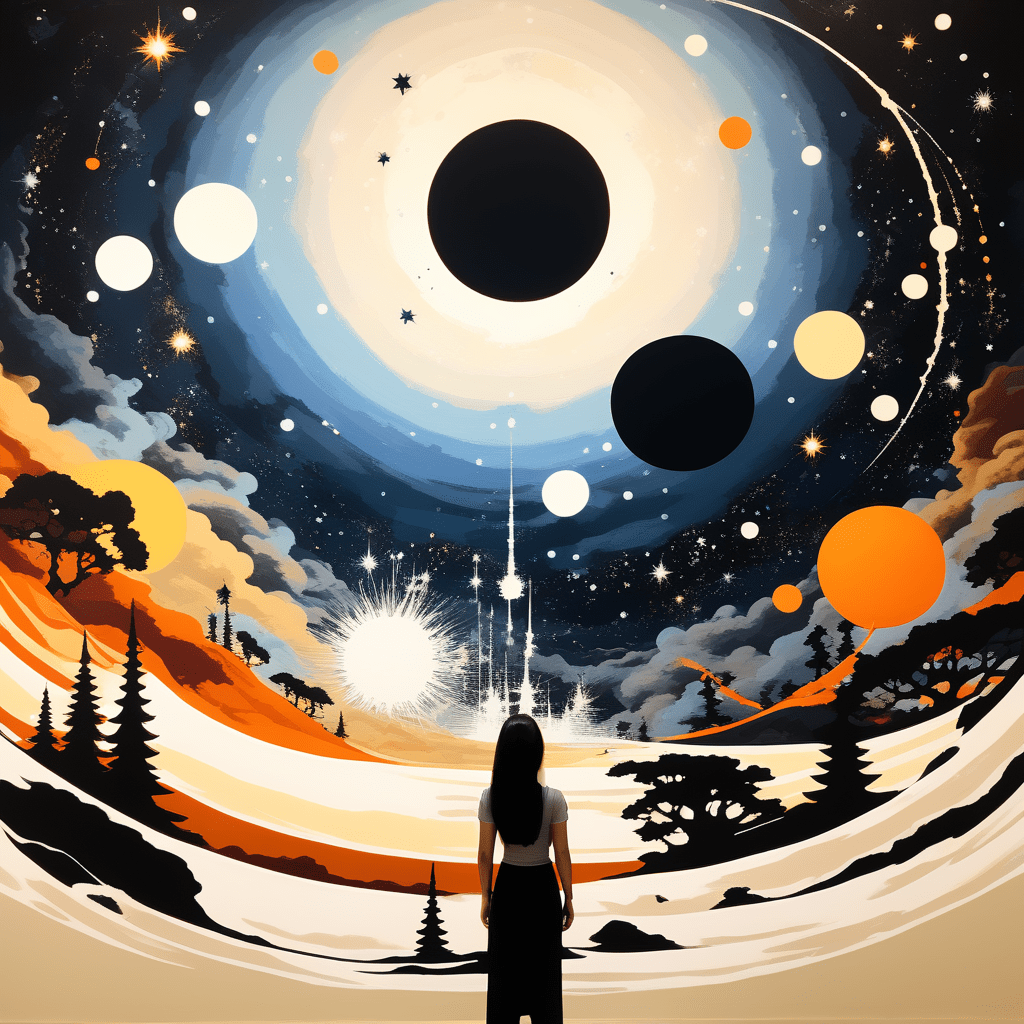
In the grand tapestry of existence, there exists a profound and often overlooked truth: all is the absolute. This statement, deceptively simple, unravels layers of deep philosophical understanding about our universe and our place within it. The concept of the absolute refers to the ultimate reality, a state of being that transcends the ordinary distinctions and separations that we, as individuals, experience in our daily lives.

The universe, in its infinite complexity, is a manifestation of this absolute reality. Each star, planet, organism, and atom contributes to this holistic entity, making the universe not just a collection of parts, but an interconnected whole. The absolute is not something distant or detached from our reality; it is our reality, in its most profound and all-encompassing form.

Interestingly, this perspective aligns with various philosophical and spiritual traditions, which have long proposed that the fundamental nature of reality is a unified field of existence. In this view, the distinctions we make between ourselves and the world around us are, in a sense, illusions. They are practical and necessary for our survival and daily functioning, but they do not represent the deeper truth of our existence.


The individual ego, the sense of self that each of us carries, is also an expression of the absolute. This notion challenges our conventional understanding of individuality and separateness. The ego, often perceived as a distinct and isolated entity, is, in reality, another aspect of the absolute. It’s not separate from the absolute but a unique expression of it.

This perspective invites us to reconsider the nature of our identity. If our egos are manifestations of the absolute, then the boundaries between ourselves and the rest of the universe become more permeable. We are not isolated beings, but integral parts of a larger, dynamic whole. This realization can be both humbling and empowering, as it connects us to something greater than ourselves and dissolves the illusion of isolation.

However, the ego often operates under the illusion of separateness. It constructs a narrative of individuality that, while necessary for our functional existence, obscures the deeper truth of our interconnectedness. This illusion is not a fault but a feature of the human experience, a necessary aspect of our journey through life.
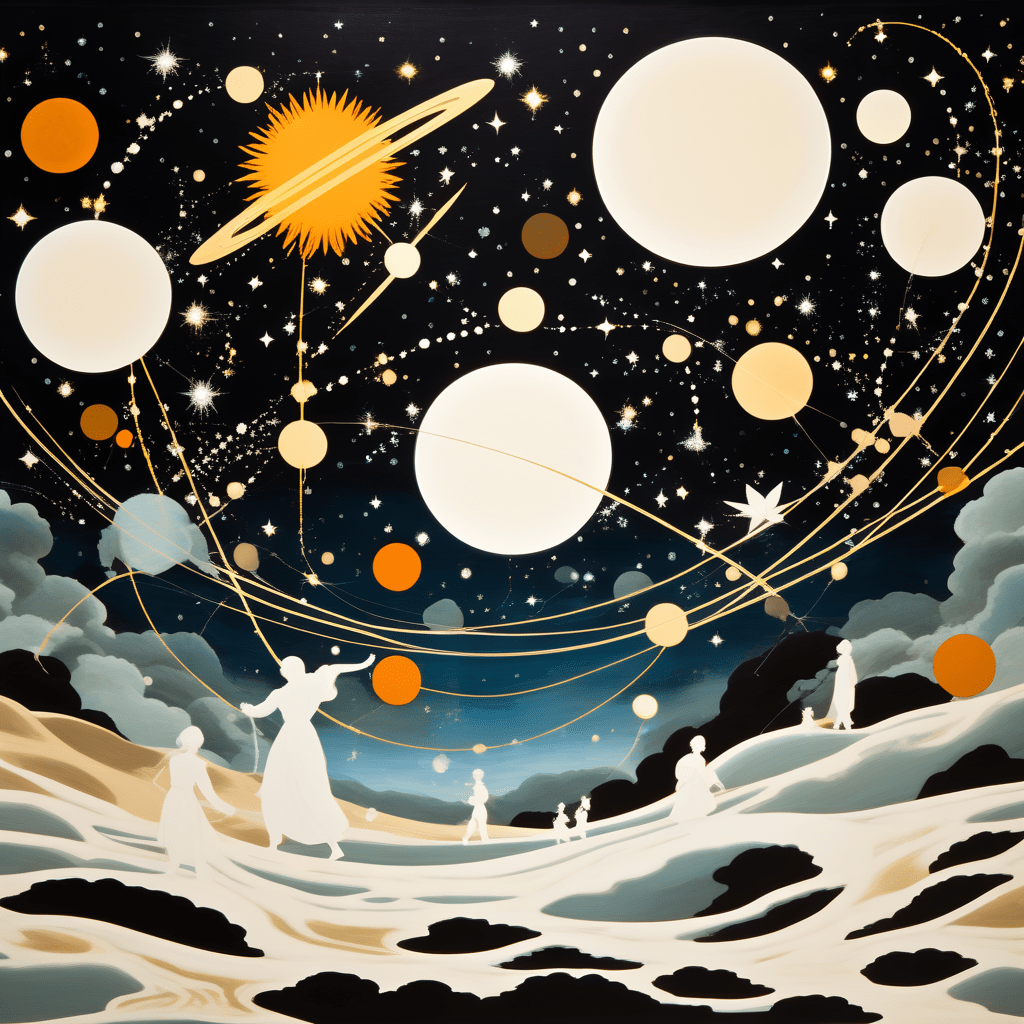

In recognizing our true nature as expressions of the absolute, we open the door to a more profound understanding of existence. We begin to see the interconnectedness of all things and the unity that underlies the apparent diversity of the universe. This realization has the potential to transform our perspective on life, fostering a sense of connection, compassion, and a deeper appreciation for the mystery and beauty of existence.

Morgan O. Smith

Yinnergy Meditation, Spiritual Life Coaching & My Book, Bodhi in the Brain…Available Now!
https://linktr.ee/morganosmith

Kundalini and Beyond

Unraveling the Layers of Absolute Reality

In the realm of spiritual exploration, Kundalini is often revered as a pinnacle experience, a symbol of ultimate awakening and enlightenment. Yet, it’s crucial to understand that Kundalini, as profound as it may be, is not the zenith of absolute reality unless one chooses to define absolute reality as Kundalini itself.

Kundalini, described in many spiritual traditions as a dormant energy located at the base of the spine, is often associated with a powerful awakening, leading to heightened awareness and spiritual enlightenment. This transformative energy is said to travel up through the chakras, or energy centers, culminating in a profound expansion of consciousness. However, this is not the final destination in the journey of spiritual realization.


The concept of absolute reality, in various philosophical and spiritual systems, goes beyond any single experience or state. It is the ultimate truth that underlies all existence, transcending the limits of individual consciousness and phenomena. While Kundalini awakening can be a significant milestone in one’s spiritual journey, it is, in essence, a part of the grand tapestry of experiences that guides us toward understanding this absolute reality.

This brings us to an intriguing point: the journey toward absolute reality is not linear, nor is it the same for everyone. Kundalini might be a crucial step for some, while others may tread a different path toward the same destination. The beauty of spiritual exploration lies in its diversity and the individualized paths we embark upon.


In conclusion, while Kundalini is a powerful and transformative experience, it is a facet of a larger, more complex journey toward understanding absolute reality. This journey is rich with various experiences and insights, each contributing to our understanding of the profound truth that underlies our existence.

Morgan O. Smith

Yinnergy Meditation, Spiritual Life Coaching & My Book, Bodhi in the Brain…Available Now!

https://linktr.ee/morganosmith

Beyond the Infinite

Contemplating the Vastness Beyond Para-Brahman

In the profound depths of Hindu philosophy, the concept of Para-Brahman represents the ultimate, unchanging reality, the absolute existence that transcends all forms and phenomena. It is an entity beyond human perception, beyond all attributes, the substratum of both the manifest and the unmanifest. But the human mind, insatiably curious and inherently uncontent with limits, dares to ponder—what, if anything, lies beyond Para-Brahman?

To consider what is beyond Para-Brahman is to engage in a philosophical exercise that stretches the boundaries of thought and existence. It is like trying to illuminate the space beyond the edge of the universe’s observable horizon. Para-Brahman itself is defined as the highest Brahman, beyond which nothing further can be conceptualized within the traditional frameworks of Hindu philosophy. However, this does not deter the most adventurous minds from speculating on the nature of the absolute’s transcendence.

In attempting to name that which is beyond the ultimate, we delve into a realm of thought that precedes language and form. Such a pursuit may lead us to the Sanskrit term “Anirvachaniya,” meaning that which cannot be expressed or described. In this context, the term acknowledges the limitations of human language and understanding when faced with the immensity of the infinite.

Yet, it is in the silence of meditation and the stillness of contemplation that Hindu tradition often finds its deepest insights. Here, the individual soul (Atman) comes into direct experience with Brahman, and it is perhaps in the dissolution of the self where one might fleetingly encounter the hint of something even more profound than Para-Brahman—something that, by its very nature, cannot be encapsulated by any concept or word.

We might then call this speculative beyond “Ananta,” the infinite, a term that suggests an endlessness that extends even beyond the ultimate expanse of Para-Brahman. It is not a place, entity, or state that can be reached or understood; it is the possibility of infinity within infinity, the essence of boundlessness that permeates every aspect of the cosmos and yet is apart from it, untouched and untouchable.

To ponder what lies beyond Para-Brahman is to embrace the essence of the Upanishadic inquiry, “Neti, neti,” not this, not this. By negating all that can be known, we are left with silent wonder, an acknowledgment that the truth is ever beyond the grasp of our finest conceptions. It is a journey not toward another concept, but towards an ever-deepening mystery that invites us to find peace in the acceptance of the unknown.

The spiritual endeavour to reach beyond even the concept of Para-Brahman invites us to a profound humility, an understanding that what we know and experience is only a fragment of the vastness of reality. It is a cosmic reminder that the journey is not just about seeking answers, but also about appreciating the beauty of the questions themselves.

In this exploration, we are not just students of Hindu philosophy but of the universe itself, engaged in a ceaseless dialogue with the essence of existence. And perhaps, in that very dialogue, we come to realize that the ultimate truth is not a distant reality to be pursued but an ever-present mystery to be lived.

Morgan O.  Smith

Yinnergy Meditation & My Book, Bodhi in the Brain…Available Now!
https://linktr.ee/morganosmith


Nondualism and the 99 Beautiful Names of God

The Dance of Oneness

**Introduction:**
   
The 99 beautiful names (Asma’ul Husna) of God, as described in Islamic tradition, have long been celebrated as diverse facets of the Divine. From an Absolute Monism or non-dualistic perspective, these names are not mere titles or attributes but profound expressions of one unbroken Reality. Let’s embark on an exploration of how nondualism weaves these names into a tapestry of Oneness.

**The Unity Behind Diversity:** 
While the 99 names may initially appear as separate attributes or facets, they can be seen from a non-dualistic viewpoint as interwoven threads of a single Reality. Each name is but a drop in the ocean of Divine essence, which itself is nondual.

**Beyond Dualities:**   
Names such as Al-Mu’min (The Giver of Peace) and Al-Mumit (The Bringer of Death) may seem contradictory, but in nondualism, these apparent opposites reconcile. They represent the play and dance of the universe, where creation and dissolution are two sides of the same coin.

**The Singular Source:**   
Names like Ar-Rahman (The Beneficent) and Ar-Rahim (The Merciful) are emanations from a singular source. They underscore that all acts of love, mercy, and compassion in the world reflect the undivided nature of the Divine.

**The Ever-Present Witness:**   
Names such as As-Sami (The All-Hearing) and Al-Baseer (The All-Seeing) emphasize an ever-present witness. From a nondual perspective, this points to pure awareness, an omnipresent consciousness that perceives without being tainted by dualities.

**The Dance of Manifestation:**   
Names like Al-Khaliq (The Creator) and Al-Bari (The Evolver) highlight the dynamic play of manifestation. In nondualism, this is the spontaneous unfolding of the universe from the singularity of Absolute Reality.

**Towards Absolute Oneness:**
   
Al-Ahad (The One) and As-Samad (The Absolute) direct us towards the purest essence of nondualism. They indicate the unbroken, undivided reality that underlies all existence.

**Conclusion:**   
The 99 beautiful names of God, when viewed from a nondualistic lens, invite us to see beyond distinctions and to recognize the underlying unity in diversity. They beckon us to explore a deeper, holistic understanding of the Divine – not as a sum of attributes, but as the singular essence that manifests in myriad forms.

Morgan O. Smith

Yinnergy Meditation & My Book, Bodhi in the Brain…Available Now!
https://linktr.ee/morganosmith

Horizontal and Vertical Nonduality

A Dance Between the Manifest and the Formless

Nonduality, a term often tossed around in philosophical and spiritual circles, is frequently misunderstood or oversimplified. But a deeper dive into its nuances, especially the concepts of horizontal and vertical nonduality, offers a rich tapestry of understanding that challenges our perception of reality. So, let’s embark on a journey between these two dimensions of experience.

**Horizontal Nonduality: A Symphony of Connection**

In the cacophony of life, amidst the myriad of forms, species, and people, there lies a silent song of unity. This is the realm of horizontal nonduality, where everything, regardless of its outer appearance, dances to the same rhythm, made of the same substance or essence.

This perspective is akin to viewing a vast ocean. On the surface, we see waves of various sizes and shapes crashing and retreating. They seem separate, each with its own identity. However, dive a little deeper, and one quickly realizes that all waves are part of the same vast body of water. Similarly, horizontal nonduality emphasizes the interconnectedness of all beings, revealing that the distinctions we observe are mere waves on the surface of a more profound unity.

**Vertical Nonduality: The Abyss of the Absolute**

Beyond the bustling dance of life and form, there lies an infinite silence, a void, a realm untouched by time and space. This is the territory of vertical nonduality. It speaks of an experience that transcends our worldly understanding, pointing towards an absolute reality that’s formless, timeless, and spaceless.

If horizontal nonduality is about recognizing the unity of the ocean’s waves, vertical nonduality is about plunging into the depths, where the concept of a wave doesn’t even exist. It’s about the direct realization that one’s true essence is beyond the ephemeral play of forms.

**Integrating the Two: A Holistic Dance**

While it may seem like these two dimensions stand at odds, a truly profound understanding of nonduality weaves them together in a harmonious dance. It’s neither about negating the beauty and diversity of the world (horizontal) nor about solely transcending it (vertical). Instead, it’s about holding both in a delicate balance.

Imagine living in a world where you can marvel at the beauty of individual snowflakes while being deeply rooted in the knowledge that they all share the same watery essence. This balance provides a holistic lens, allowing us to engage with the world with depth, compassion, and wisdom.

In conclusion, the dance between horizontal and vertical nonduality offers not just a philosophical perspective, but a transformative way of engaging with life. By understanding and integrating both these dimensions, we open ourselves to a richer, more profound experience of reality, where the play of forms and the formless essence coexist in a beautiful, harmonious symphony.

Morgan O. Smith

Yinnergy Meditation & My Book, Bodhi in the Brain…Available Now!
https://linktr.ee/morganosmith