Ego Death Is Not a Metaphor

Ego death is often spoken about casually, yet nothing about it is casual. It is not a poetic phrase, nor a dramatic exaggeration. Something very specific occurs—precise, unmistakable, and irreversible at the level of insight.

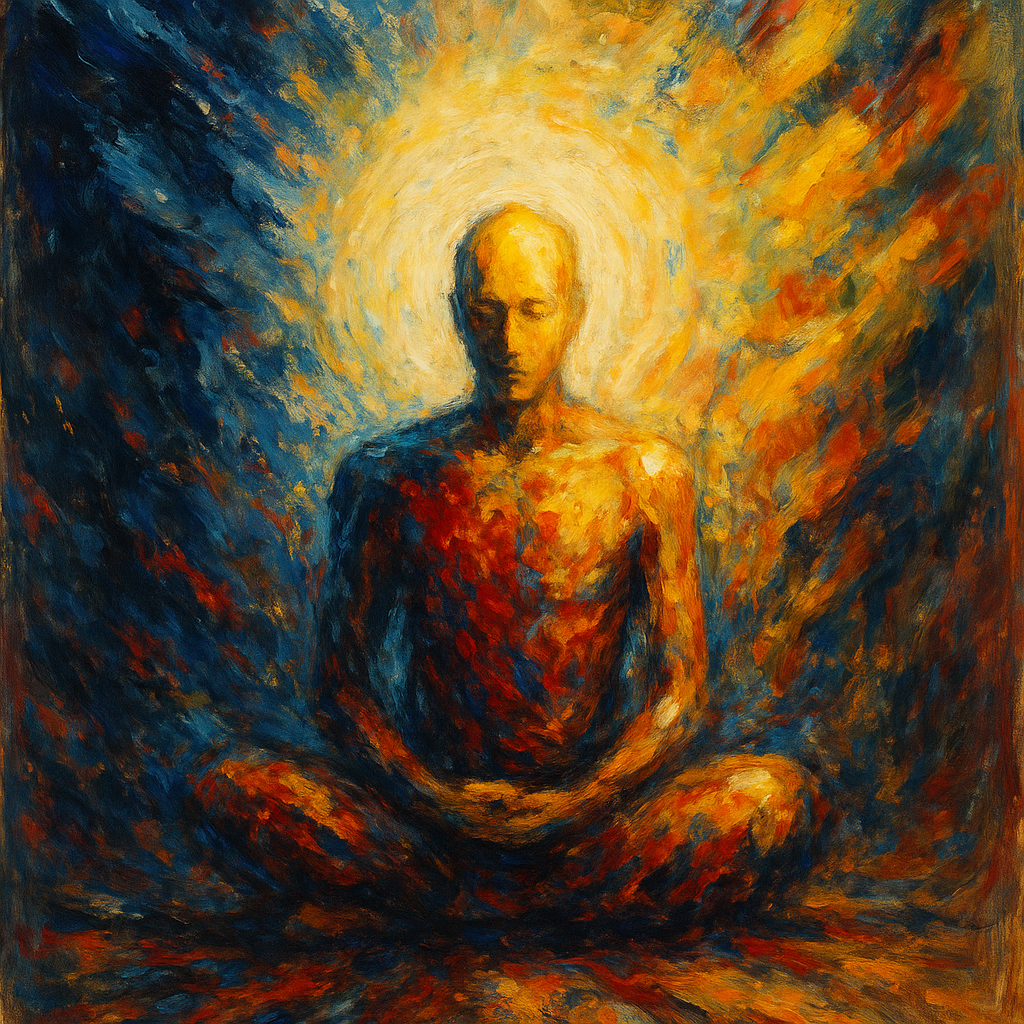
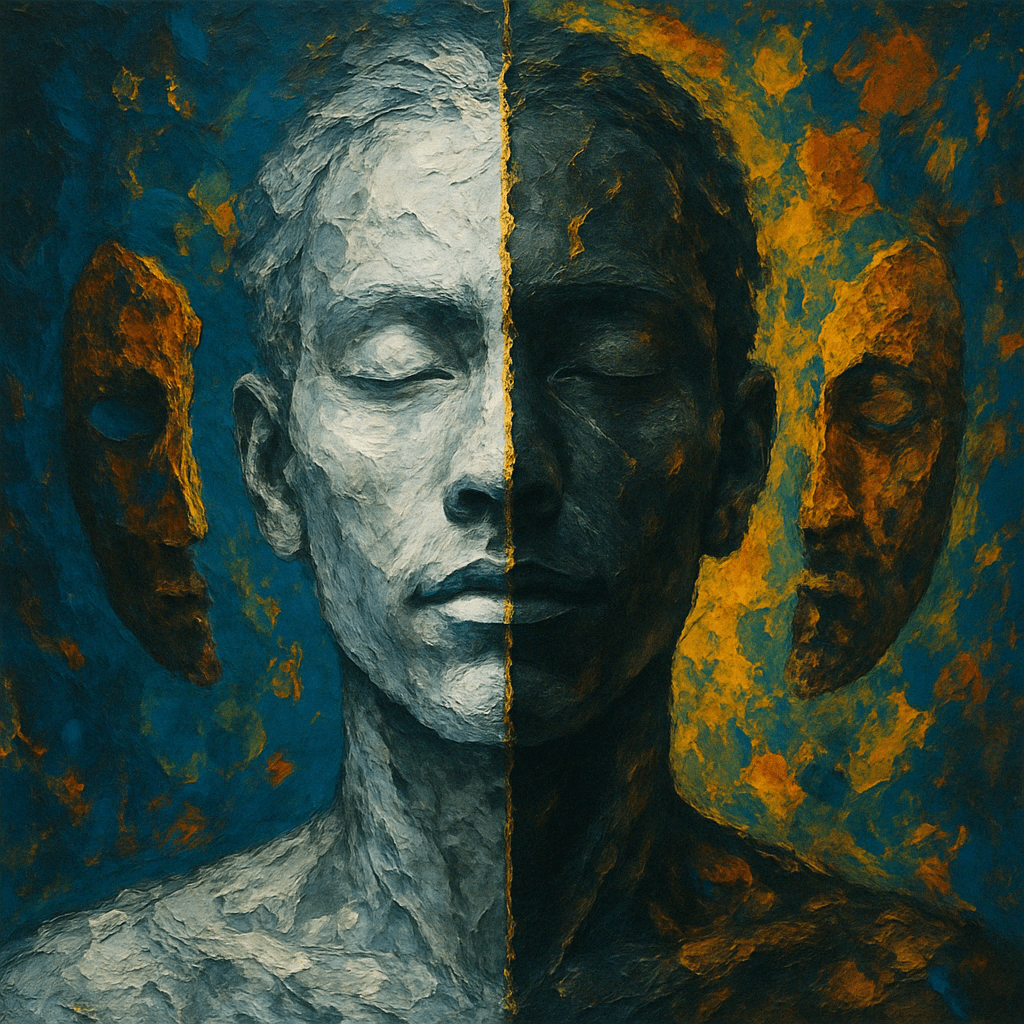
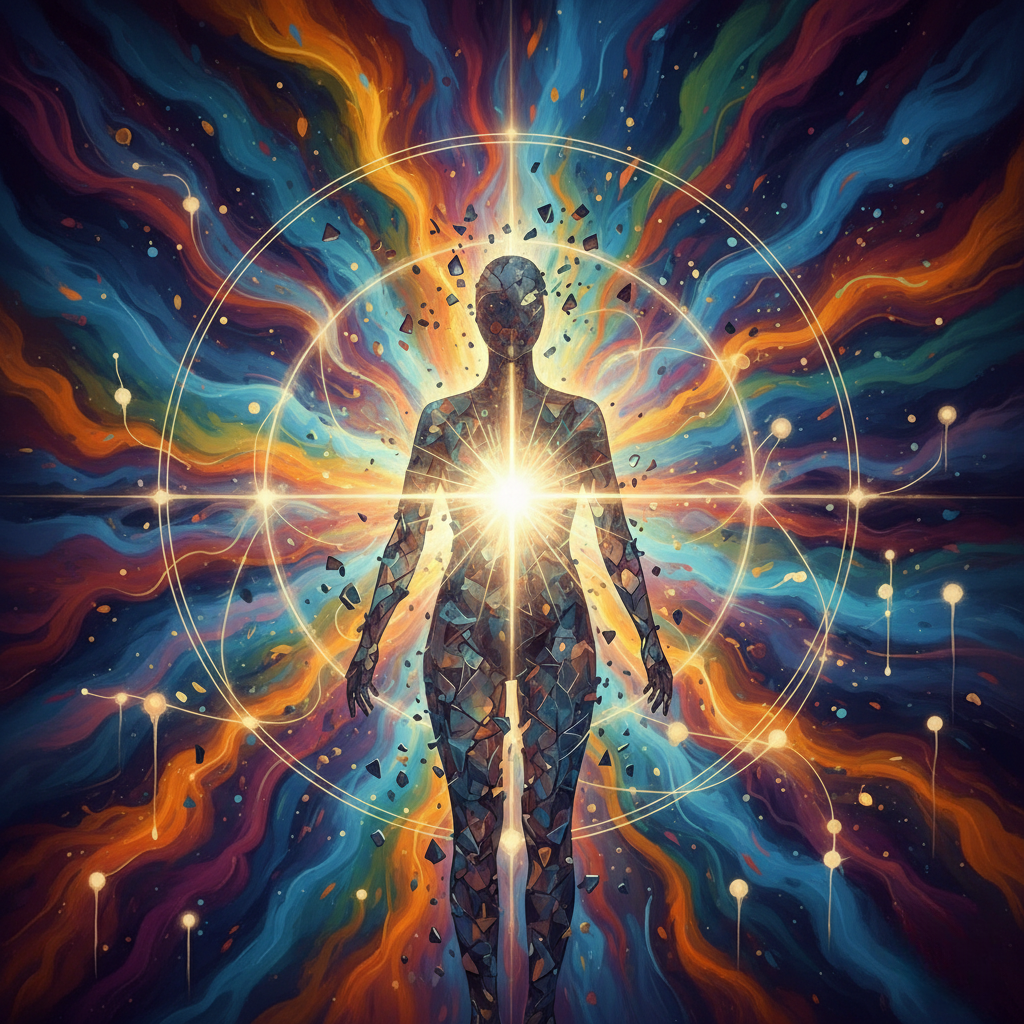
This is not a biological event. The body remains alive. The brain continues to function. Memory does not disappear. Consciousness does not black out. What vanishes is the internal reference point that says, this is me. The structure that once organized experience around a personal center dissolves, and with it goes the assumption of separation.

No negotiation happens here. No partial surrender. No internal debate. Doubt does not survive the moment. The mind does not ask whether this is real. Verification becomes unnecessary because the one who would seek confirmation is no longer present.

Psychological death may sound abstract until it happens. When it does, the body reacts as though an actual death is occurring. Survival instincts flare. Meaning collapses. Familiar orientation fails. Yet awareness remains clear—perhaps clearer than it has ever been. This clarity is what distinguishes ego death from unconsciousness. Awareness does not dim. It expands beyond the need for identity.

Enlightenment does not occur after ego death. Enlightenment is what is revealed when the ego can no longer interfere. The ego cannot be refined into truth. It cannot be educated into realization. It must fall away entirely, because it is structurally incapable of holding what is uncovered.

At the causal level of realization, identity no longer rests in form, personality, history, or narrative. Cause and effect are no longer observed from the outside. They are known as oneself. Everything that arises is recognized as both originating from and resolving into the same source. Nothing stands apart. Nothing is accidental. Agency is no longer personal, yet responsibility is absolute.

Deeper still, even causality dissolves. Distinctions between origin and outcome lose meaning. What remains is not many things connected, but a single indivisible reality. This is what Advaita Vedanta names Absolute Monism; not a belief, not a concept, but a lived recognition.

Time no longer appears linear. Past, present, and future are not sequential events but simultaneous expressions. Every occurrence, across all scales and dimensions, is apprehended as one movement without edges. Beginning and ending collapse into the same point. Eternity ceases to be a duration and reveals itself as immediacy.

The ego cannot survive this recognition. It was never meant to. The ego exists to navigate relativity, not to comprehend totality. Asking it to grasp nonduality is like asking a shadow to contain light. The moment the ego loosens its grip, what remains is not annihilation, but the recognition that life and death were never opposites.

Ego death feels final because it ends the search forever. Nothing remains to achieve. Nothing remains to defend. What is discovered was never acquired. It was always present, waiting for the interference to stop.

This is why enlightenment is never uncertain. Anyone still asking whether it happened is still standing outside the threshold. When it occurs, the questioner disappears, and only knowing remains; silent, complete, and beyond reversal.

Morgan O. Smith

AI for Wellness and Spirituality Summit

February 9 & 10, 2026

https://aiforwellnessandspirituality.com/mosm

When “I” Speaks After Awakening

After a nondual recognition, language returns before identity does. Words reappear, grammar resumes, and the pronoun “I” steps back into the conversation—not as proof of separation, but as a functional bridge. Speech requires a subject. Silence does not.

Many misunderstand this moment. Hearing someone say “I experienced awakening,” the listener assumes a reinstalled ego, a self reclaiming authorship. Yet what actually occurs is translation. Experience moves through the narrow gate of language, and language has only a few handles to grab reality with. “I” becomes one of them.

Avoiding the word altogether often creates greater confusion. Saying “nothing happened” suggests absence rather than transcendence. It implies insignificance, when the opposite is true. Something fell away so completely that no object remained to point at. Language struggles most where realization is most total.

A distinction helps here.

Turiya refers to the formless witness; the ever-present awareness that observes waking, dreaming, and deep sleep without entering any of them. It is silent, empty, untouched. This is not an experience in time but the condition in which time appears. Many awakenings stabilize here, and rightly so.

Turiyatitta goes further. Even the stance of witnessing dissolves. No observer remains to stand apart from what is observed. Awareness recognizes itself as the only reality there is. No inside, no outside, no vantage point left. This is nonduality without remainder.

When speech arises from this recognition, “I” no longer refers to a psychological centre. It does not point to a thinker, a chooser, or a personal narrative. It points to the Self; Para Brahman—without division. Atman, ego, witness, world collapse into a single field, not blended, not unified, but revealed as never having been separate.

The same word is used. The referent has changed.

Confusion arises when listeners assume the old meaning still applies. The word “I” sounds familiar, so it is treated as familiar. Yet meaning does not live in the word. Meaning lives in the depth from which the word emerges.

A realized individual does not abandon language. Language is abandoned as identity. What remains is utility. Communication happens. Teaching happens. Relationship happens. None of it reinstates separation.

The paradox resolves itself quietly: the ego can say “I,” and the Absolute can say “I.” Only one of them believes it is something.

Silence knows the difference. Speech borrows it.

Morgan O. Smith

Get Your Free Copy of My Book, Bodhi in the Brain!

https://subscribepage.io/oTSZQu

The Stage Beyond Oneness

When Even the Kosmos Falls Away

There comes a point when even the most expansive vision collapses—not from error, but from completion.

On the path of awakening, seekers often journey from the confines of selfhood to a union with all things. Ego dissolves, and what once felt separate now reveals itself as interconnected. Compassion grows. The heart blooms for all beings. One begins to live for the Whole.

But for some, even this union becomes too crowded.

Even the notion of “One” becomes too noisy.

This is the threshold where Kosmocentric awareness—a state of profound unity with all life and existence—gives way to something quieter, more radical. Not a deeper connection, but the quiet erasure of the very need for connection. Not expansion, but the release of expansion itself.

This is acentric awareness.

Not centered on the self.

Not centered on the world.

Not even centered on the All.

Acentricity does not point toward identification with something greater. It simply makes no identification at all. No vantage point. No witness. No center from which to perceive. It does not declare that all is One—it no longer needs such declarations. Truth requires no thesis here.

Reality just appears.

Without context.

Without a watcher.

Without the echo of a thought that says, “I am aware.”

Call it suchness.

Call it the absence of everything, shimmering as everything.

Call it the stillness that doesn’t oppose movement, because it was never still.

This isn’t transcendence. It isn’t detachment. It isn’t a stance. It’s the utter end of stance—the collapse of spiritual architecture, without the rubble. It doesn’t reject the world. It simply no longer perceives it as something to accept or reject.

And what does such a life look like?

Unremarkable.

Utterly simple.

Perhaps quiet, perhaps animated.

But always empty of claim, even the claim to be empty.

There are no teachings left to transmit. Not because truth has been mastered, but because it was never a possession. No more climbing. No more seeking. No more union. Not even rest—because rest would imply effort once existed.

This is the unborn silence that does not speak—not even through the mouths of sages.

It appears as a leaf falling, as someone stirring soup, as the sound of a crow at dusk.

And you might pass by it without knowing.

Because it doesn’t need to be known.

It just is.

And it is no one’s.

Morgan O. Smith

Get Your Free Copy of My Book, Bodhi in the Brain!

https://subscribepage.io/oTSZQu

The Final Disappearance

What happens at the moment of death?

Not from the standpoint of biochemistry or theology, but from the lived silence of awakened seeing—the vantage where death and self are no longer two.

At the summit of awakening—whether called Moksha, Nirvana, Turiyatitta, or Nirvikalpa Samadhi—the idea of death unthreads itself. What dies never truly lived, and what lives has never been touched by time. The dissolution of the body is not the end, nor is it a doorway. It is the falling away of questions that were never yours.

There is no climactic revelation at that edge. There is only this. The suchness that never began, never moved, and never faded. At peak realization, death ceases to be an event. It is not an exit. It is the unspeaking of form—a gentle vanishing into what was always here.

This is not metaphor.

Consciousness, unfragmented and clear, neither resists death nor awaits it. It has already passed through it, endlessly. Not as a journey from point A to point B, but as a revelation that neither point exists.

You don’t meet death. You realize you were never separate from it.

At this depth, what we call life no longer hangs from a timeline. What we call death no longer casts a shadow. No more witness is watching the last breath. Only the unnameable recognizes itself through the temporary flicker of form.

The body may fall away, but the body was never the one who knew. The breath may stop, but the breath was never yours. That which remains doesn’t remain—it is. Before and after mean nothing to it.

Some call this realization peace. Others call it extinction. But it’s neither stillness nor silence nor bliss. It’s before all that. It’s the absence of absence. The presence of presence. Not two.

When the last ripple of self dissolves, what’s left is not a person merging with eternity. There is no one to merge. There is only what was always whole.

This is death at the level of freedom. This is life without division.

Not a conclusion.

A cessation of seeking.

Morgan O. Smith

Get Your Free Copy of My Book, Bodhi in the Brain!

https://subscribepage.io/oTSZQu

When Spirit Dreams Itself Into Matter

Spirit does not need a mirror, yet it gazes anyway—projecting forms into the formless, assigning names to the unnamed. What we call the world is not something separate from Spirit, but a spontaneous gesture of its own imagination, experienced as if it were other.

This is the paradox.

There is no true division between creator and creation. What appears as the external world is not a stage for a lost soul to find its way back, but Spirit animated—forgetting itself to taste the illusion of separation. Not as punishment or accident, but as a dance, a play, a sacred hallucination.

To believe the imagination is real is not error. It is the very means by which Spirit hides and finds itself. Each identity clung to, each role performed, each belief defended—these are costumes worn by the formless to remember itself as form.

Awakening doesn’t arrive like a conclusion; it dissolves the argument. You do not awaken from the dream by force or by will, but by remembering that it was always Spirit dreaming. The character fades, but not as death—more like laughter that remains after the joke has dissolved.

What changes when you see this?

Nothing. Everything. The world continues. You walk, eat, speak. But there’s an intimacy now. A recognition that what you once took to be real is neither unreal nor merely imagined—it is Spirit, playing with itself through light and shadow.

The one who seeks is the sought. The one who prays is the prayed to. Spirit folds into its own image, not to be found, but to be felt. That is the point. Not escape. Not transcendence. But the sacred absurdity of being itself.

Morgan O. Smith

Get Your Free Copy of My Book, Bodhi in the Brain!

https://subscribepage.io/oTSZQu

Beyond the Great Divide

White Supremacy, Caste, and the Collapse of Constructed Hierarchies through Nondual Perception

What happens to white supremacy when whiteness is no longer seen as a centre?
What becomes of caste when the hierarchy collapses into the unbroken Whole?
These aren’t abstract questions, but intimate ruptures in perception that strike at the root of separation.

From the nondual view, the machinery of supremacy and caste is not just unethical—it is illusory. A dream born of mistaken identity. These systems persist because the world is filtered through the lens of difference. They rely on “me” and “you,” “above” and “below,” “pure” and “impure.” Once those constructs dissolve, the scaffolding that held them together trembles.

To see with undivided awareness is not to turn away from injustice—it is to see it with such clarity that the illusion loses power.

The mind behind supremacist ideology must first construct a self that is isolated, then build defences around that self using race, status, bloodline, and geography. But once this boundary is questioned—not through philosophy, but through direct experience—an entire civilization of “better than” collapses into silence.

There is no whiteness in the Absolute. No Brahmin, no Dalit. No legacy of conquerors, no lineage of slaves. These roles, though ferociously enacted on the stage of form, do not survive the fire of presence. They belong to the play of names and forms—real enough to cause suffering, yet ultimately not what is.

Nonduality does not excuse or erase suffering. It reveals the mechanisms that perpetuate it: misidentification, grasping, and fear. And it points to the only true revolution—the recognition of what was never divided.

When someone rooted in supremacist delusion awakens to the groundless reality of Being, they are not offered a spiritual bypass, but a mirror. One that reflects every role played, every belief clung to, and the emptiness beneath them all. This is not comfort. It is unmaking.

Likewise, those dehumanized by caste are not told to ignore injustice. Rather, they are invited to witness that their essence was never touched by degradation. The soul, if we may call it that, has no fingerprints. No brand of subjugation can mark the formless.

The end of separateness is not utopia. It is not the promise of a better structure. It is the absence of structure where no one rules and no one serves. Where self and other melt into something wordless.

Once you know yourself as that which sees without division, supremacy is not just immoral—it’s absurd. The belief that one appearance of the Whole is more worthy than another is like believing one wave owns the ocean.

And so, from this stillness, something radical emerges: not activism rooted in identity, but action arising from unity. Compassion that does not pity, but recognizes itself. Justice that is not vengeance, but restoration of clarity. Love that is not sentimental, but annihilating.

The real threat to white supremacy and caste is not education alone, nor protest alone. It is the awakening of even one being to what cannot be divided. For when the illusion of separation dies, the systems built upon it cannot survive.

Morgan O. Smith

Yinnergy Meditation/Neurofeedback, Spiritual Life Coaching & My Book, Bodhi in the Brain…Available Now!

https://linktr.ee/morganosmith

Beyond Distinctions

Exploring Turiyatita and Absolute Monism in Advaita Vedanta

In the spiritual landscape of Advaita Vedanta, the concept of nonduality transcends the mere absence of distinctions—it ushers us into the realm of Absolute Monism, or Turiyatita—the state of “the one without a second.” This profound philosophical framework challenges our everyday perceptions, urging us to look beyond the apparent separateness of the world.

Nonduality in this context does not imply a simplistic erasure of distinctions, but a deeper recognition that all forms and phenomena arise from the same underlying reality. This reality is not one of many, but a singular existence that pervades all, without an other or a second to stand beside it.


The journey to understanding Turiyatita involves peeling back the layers of illusion that fabricate duality within our experiences. Common perceptions of separation between self and other, observer and observed, are seen as just that—perceptions. These are not absolute truths but conditioned responses to the world. The realization of Turiyatita invites a shift from these conditioned views towards a holistic awareness, where dualities merge into a singular, expansive consciousness.

This path to enlightenment challenges the seeker to transcend the intellectual and embrace a lived experience of oneness. It is not about negating diversity but understanding the underlying unity that makes diversity possible. By recognizing the unity underlying all diversity, one does not lose the uniqueness of individual expressions; rather, one gains an appreciation of how these expressions emerge from the same source.


The implications of this understanding are vast and transformative. Embracing Turiyatita can lead to profound peace, as conflicts often stem from perceptions of separation. When one sees all beings and things as extensions of the same infinite reality, compassion and empathy flow naturally.

Advaita Vedanta’s discourse on nonduality and Turiyatita thus offers not just a philosophical stance, but a practical guide to living more harmoniously within the apparent complexities of the world. It beckons us to experience life from a place where the oneness of existence becomes not only a concept but a living reality.

Morgan O. Smith

Yinnergy Meditation, Spiritual Life Coaching & My Book, Bodhi in the Brain…Available Now!

https://linktr.ee/morganosmith

The Enigma of Divine Identity

Unraveling the Belief and Being

In the profound journey of spiritual awakening, there stands a pivotal revelation – the understanding of one’s divine nature. This recognition often confronts the traditional notion of believing in a separate, external deity. When we cling to the belief in a God as an entity apart from ourselves, we inadvertently reinforce the very illusion we seek to transcend. It is a subtle yet profound enigma that underlies much of spiritual discourse.

Belief, in its essence, is a product of the mind. It is an attempt to conceptualize and grasp the infinite, to put boundaries around that which is boundless. This pursuit, while noble in its intention, often leads us astray from the ultimate truth. The idea of a separate God is a manifestation of this endeavour – an externalization of the divine that is, in reality, an intrinsic part of our being.

The realization that “I am God” is not an assertion of egoic supremacy but an awakening to the non-dual nature of existence. In Eastern philosophies, this understanding is not uncommon. It echoes the principles of Advaita Vedanta, where the individual self (Atman) is seen as one with the universal self (Brahman). This realization dissolves the illusion of separation, the root of all delusion. It is a profound awakening to the truth that there is no ‘other’ – there is only the One, manifesting in myriad forms.


This insight brings with it a profound freedom. It liberates us from the confines of narrow belief systems and opens us to a direct experience of the divine. There is no need for belief in this space, for the truth is known directly and experientially. It is a state of being where one is free from the dualities of faith and disbelief, existing in a harmonious union with all that is.

In this understanding, we find a deeper compassion and connection to the world around us. Recognizing the divine in ourselves, we see it in everything else. This is the heart of true spirituality – a state of oneness with all existence.


As we navigate our spiritual paths, let us be mindful of the traps of belief and the freedom that comes with direct knowing. Let us seek not to conceptualize the divine, but to experience it, to become it. In doing so, we step beyond the confines of illusion and into the boundless reality of our true nature.

Morgan O. Smith

Yinnergy Meditation, Spiritual Life Coaching & My Book, Bodhi in the Brain…Available Now!

https://linktr.ee/morganosmith

The Whisper of Infinity

Traversing the Path to Turiyatita

In the vast expanse of human history, there exists a realm beyond the tangible—a realm where the essence of being transcends the known layers of consciousness. This realm, elusive and profound, is the state of turiyatita. It’s a state that defies the confines of language, a realm where the self dissolves into the boundless, where the duality of existence merges into the singularity of the absolute.

The Quest for the Unquantifiable


The pursuit of turiyatita, a concept deeply rooted in Advaita Vedanta, represents the pinnacle of spiritual exploration. It’s a journey beyond the fourth state of consciousness (turiya), into a domain where the lines between the seeker, the search, and the sought blur into non-existence. But how many have crossed the threshold into this profound state?

Speculation suggests that only a whisper of humanity, approximately 0.0000139%, have truly experienced the boundless unity of turiyatita. Yet, this number is not just a statistic; it’s a reflection of the intense dedication, the years of unwavering meditation, and the profound inner transformation required to reach such heights of spiritual realization.

A Journey Beyond Numbers

The essence of this journey lies not in the attainment but in the pursuit itself. It’s a path that demands not just spiritual discipline but a complete surrender of the ego, a dissolution of the self into the cosmic oneness. This pursuit is rare, not because of its difficulty, but because of its depth—it asks of us to let go of everything we believe to be true, to transcend not just the physical, but the very concept of existence.


The Rarity of Realization

Why is it that so few have reached the state of turiyatita? It’s a question that invites us to reflect on the nature of spiritual attainment itself. Is it the rarity of the state, or the rarity of the pursuit? In a world preoccupied with the tangible, the pursuit of something so profoundly intangible is itself a rarity.

Yet, the path to turiyatita is open to all who seek it. It’s a journey that begins not with a step, but with a leap—a leap of faith into the unknown, into the spaces between thoughts, into the silence beyond sound. It’s a path that demands everything and offers nothing, yet in that nothingness lies everything.

Invitation to the Infinite

The state of turiyatita, then, is not just a destination; it’s a journey toward the ultimate realization of our true nature. It’s an exploration of the infinite within us, a call to experience the profound unity of existence. This journey is available to anyone willing to venture beyond the confines of the known, to those brave enough to explore the depths of their consciousness.


Conclusion: A Call to the Seeker

As seekers, we stand on the threshold of the infinite, invited to explore realms beyond the reach of conventional understanding. The path to turiyatita is arduous and elusive, but it’s a journey that holds the promise of the ultimate realization. It’s a call to look within, to transcend the self, and to embrace the boundless unity of existence. The realization of turiyatita, represented by a minuscule fraction of 0.0000139%, is not just a figure but a beacon of possibility for every seeker on the path to enlightenment.

Morgan O. Smith

Yinnergy Meditation, Spiritual Life Coaching & My Book, Bodhi in the Brain…Available Now!

https://linktr.ee/morganosmith

Illuminating the Path

Celebrating Black History Month through the Contributions of Black Spiritual Leaders in Advaita Vedanta and Neo-Advaita

In the heart of Black History Month, we turn our focus to the luminous contributions of Black spiritual leaders who have enriched the realms of Advaita Vedanta and Neo-Advaita. This period of reflection and celebration offers a unique opportunity to acknowledge and honour the profound impact of these figures, whose wisdom transcends the boundaries of race, inviting us into a deeper understanding of non-duality and the essence of our true nature.

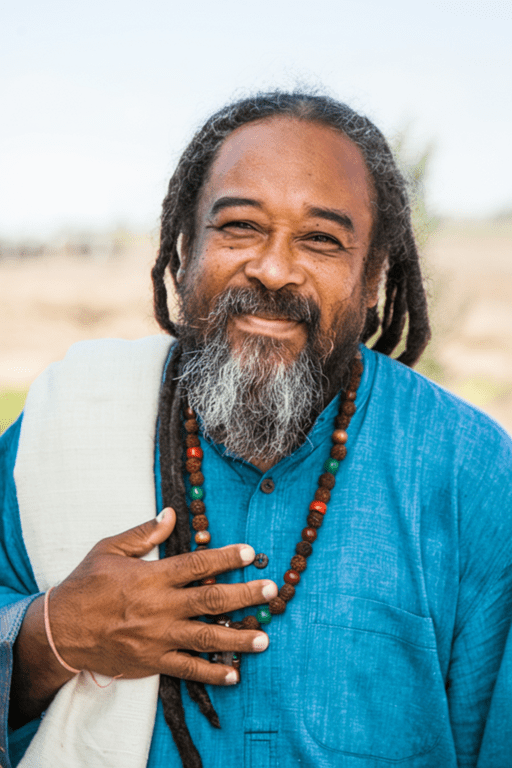
Among the voices that have echoed through the corridors of spiritual awakening, Mooji, a beacon of clarity and compassion, stands out. His teachings, deeply rooted in the principles of Advaita Vedanta, serve as a bridge to self-discovery and enlightenment. Mooji’s approach, characterized by its simplicity and accessibility, has opened doors for countless individuals to explore the depths of their being, beyond the constructs of identity and form.

In the landscape of Neo-Advaita, which simplifies traditional Advaita teachings for contemporary understanding, the presence and insights of Black spiritual teachers are invaluable. Their perspectives offer a rich, multifaceted view of spirituality, unbounded by cultural or racial limitations, encouraging a universal embrace of our shared essence.

The journey of spirituality and enlightenment is profoundly personal, yet universally connected. As we celebrate Black History Month, let us honour the diverse contributions of Black spiritual leaders in Advaita Vedanta and Neo-Advaita. Their legacy is not just in their teachings, but in the inclusive, boundless space they create for all individuals to explore their inner worlds and discover the ultimate truth of their existence.

In recognizing these luminaries, we are reminded that the path to enlightenment is enriched by the diversity of its travellers. Their voices, a symphony of wisdom, continue to inspire and uplift, guiding us toward a deeper, more inclusive understanding of spirituality and non-duality.

As we reflect on the significance of Black History Month, let us carry forward the lessons and insights of these remarkable individuals. Their contributions are a testament to the power of spiritual exploration and the unifying essence of truth, transcending the divisions of race and inviting us all into a collective journey of awakening.

Morgan O. Smith

Yinnergy Meditation, Spiritual Life Coaching & My Book, Bodhi in the Brain…Available Now!

https://linktr.ee/morganosmith