Embracing the Spectrum

Perspectives on Nonduality

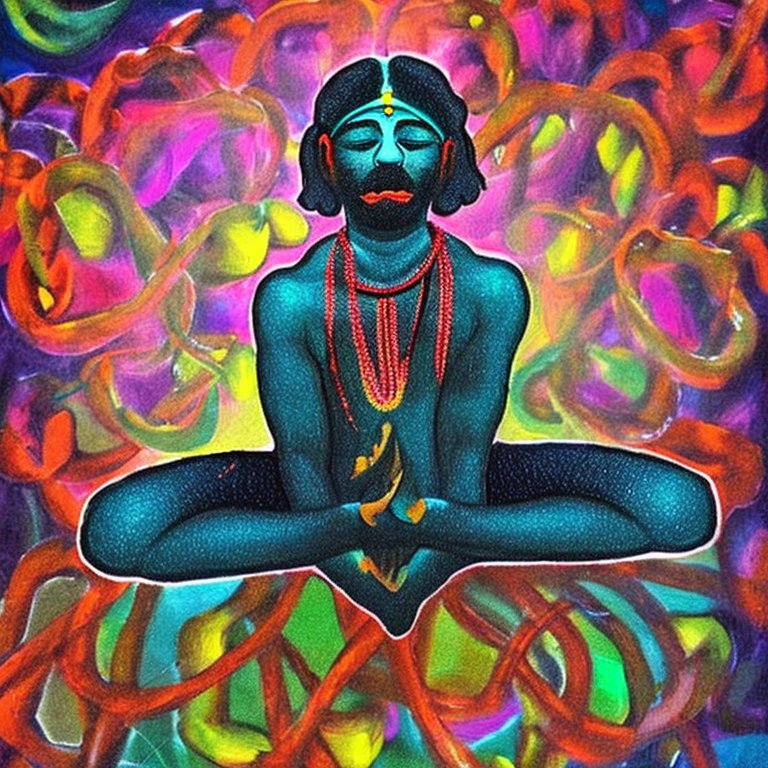
In the realm of spirituality and philosophy, nonduality presents a fascinating paradox. It’s a term that evokes both simplicity and complexity, challenging our understanding of reality and existence. At its core, nonduality means ‘not two’ or ‘one without a second’. This concept, often rooted in Eastern philosophies such as Advaita Vedanta, posits that there is no fundamental division in the universe. Everything, at its essence, is the same.

But here’s where it gets intriguing: within this notion of oneness, myriad perspectives and interpretations exist. Each of these perspectives offers a unique lens through which we can view nonduality. Some may see it as a spiritual realization of oneness with the universe, others as a philosophical understanding that transcends physical distinctions. Some approach nonduality through the lens of science, seeking to understand how this concept aligns with the interconnectedness revealed in quantum physics.
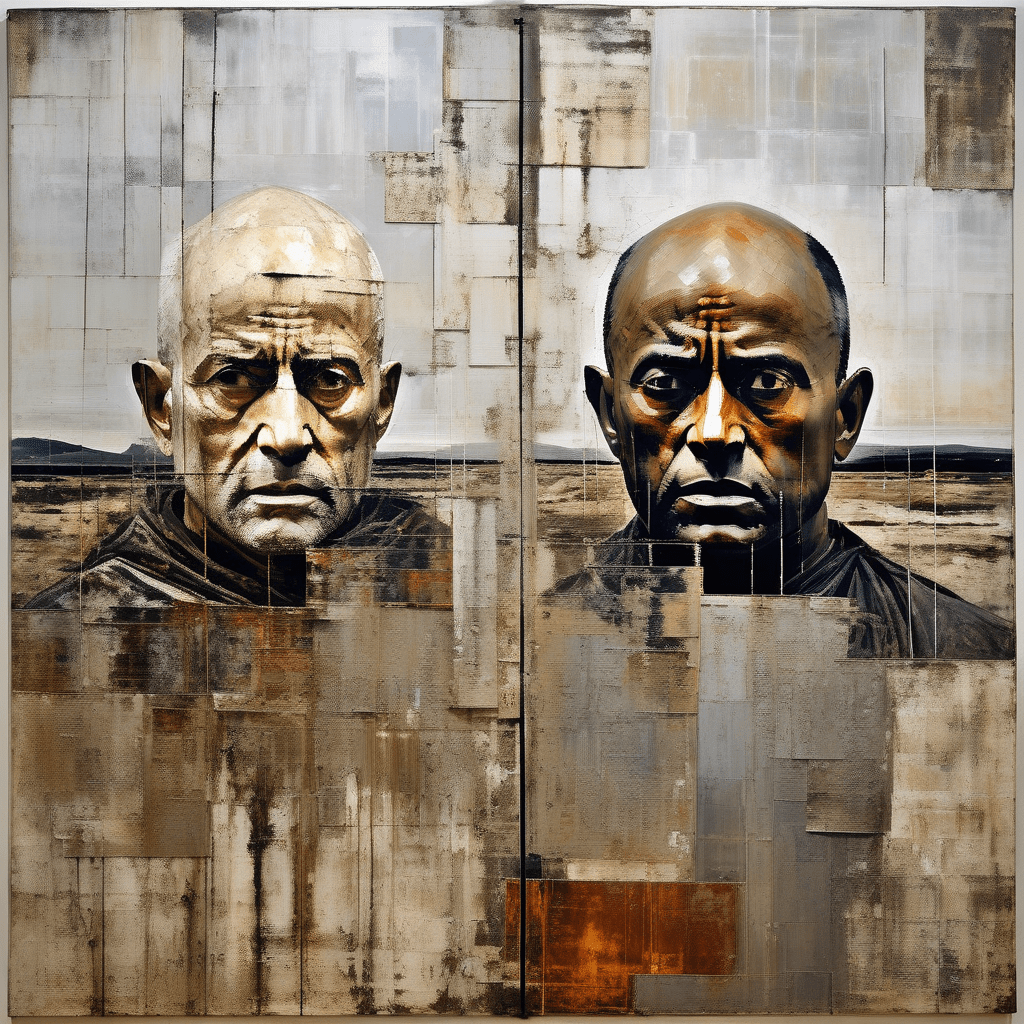

What’s remarkable is that all these perspectives are valid and encompassed within the unified reality of nonduality. This inclusivity is precisely what nonduality is about – it’s not just a concept of ‘no distinctions’ in a literal sense, but also a recognition that every interpretation, every perspective, is part of the whole. The variety of viewpoints doesn’t dilute the concept but enriches our understanding and appreciation of it.

This leads us to a profound realization: nonduality isn’t just a concept to be understood intellectually, but an experiential truth to be lived. It encourages us to look beyond the apparent separations and differences that define our everyday existence. In recognizing nonduality, we find a deeper connection with the world around us, seeing ourselves not as isolated beings but as integral parts of a greater whole.


In essence, nonduality teaches us that while we may perceive distinctions and separations in the world, at a fundamental level, these distinctions are illusory. It invites us to experience life not just through the lens of separation but through a lens of unity and interconnectedness. This shift in perspective can be transformative, offering a pathway to greater understanding, compassion, and peace.

As we explore this concept further, it’s essential to remember that nonduality isn’t about negating diversity or individual experiences. Instead, it’s about recognizing the underlying unity that encompasses all diversity. It’s a journey of discovery, where each step in understanding brings us closer to the profound simplicity at the heart of existence.

Morgan O. Smith

Yinnergy Meditation, Spiritual Life Coaching & My Book, Bodhi in the Brain…Available Now!

https://linktr.ee/morganosmith

Navigating the Depths

Nonduality vs. Absolute Monism

In the intricate tapestry of philosophical thought, two concepts often emerge as profound and perplexing: Nonduality and Absolute Monism. These philosophical gems, though seemingly similar, hold distinct perspectives on the nature of existence and the universe.

**Nonduality: The Unity of Existence**

Nonduality, a term often associated with Eastern philosophies, particularly Advaita Vedanta, posits a fundamental principle: reality is one, and the perception of duality or separation is illusory. It suggests that what we experience as separate entities – ourselves, others, and the world around us – are not distinct, but part of a unified whole. The philosophy of Nonduality encourages us to transcend this illusion, to realize that at the core of our being, we are not separate from the universe but one with it.


**Absolute Monism: The Dance of Oneness and Multiplicity**

Absolute Monism, on the other hand, takes a slightly different approach. While it agrees with the principle of oneness, it also acknowledges the existence of multiplicity. This philosophy, as I interpret it, embraces the paradoxes of existence: one and not two, two and not one, one and two, two and one, one within two, two within one, yet simultaneously neither one nor two. It reflects a deeper understanding of the cosmos as a dynamic interplay of unity and diversity, where the singular and the plural coexist in a harmonious yet complex relationship.

**The Interplay and Implications**

The discussion of Nonduality versus Absolute Monism is not just a theoretical exercise but has profound practical implications. In Nonduality, the path to enlightenment or understanding involves the realization of oneness, leading to a sense of peace and connectedness with all. In Absolute Monism, the journey is about embracing and understanding the complexity and paradox of existence, leading to a deep appreciation of life’s multifaceted nature.

Both philosophies, in their essence, guide us toward a greater understanding of our place in the universe. They invite us to look beyond the superficial and to question the very nature of reality.


**Conclusion: A Journey of Understanding**

In the end, whether one leans towards Nonduality or Absolute Monism, the journey is one of deep introspection and understanding. It’s about peeling back the layers of what we perceive and understanding the deeper truths of our existence. As we delve into these philosophies, we find not just answers, but also a greater appreciation for the questions themselves.

Morgan O. Smith

Yinnergy Meditation & My Book, Bodhi in the Brain…Available Now!

https://linktr.ee/morganosmith

Absolute Monism

Unraveling the Tapestry of Oneness

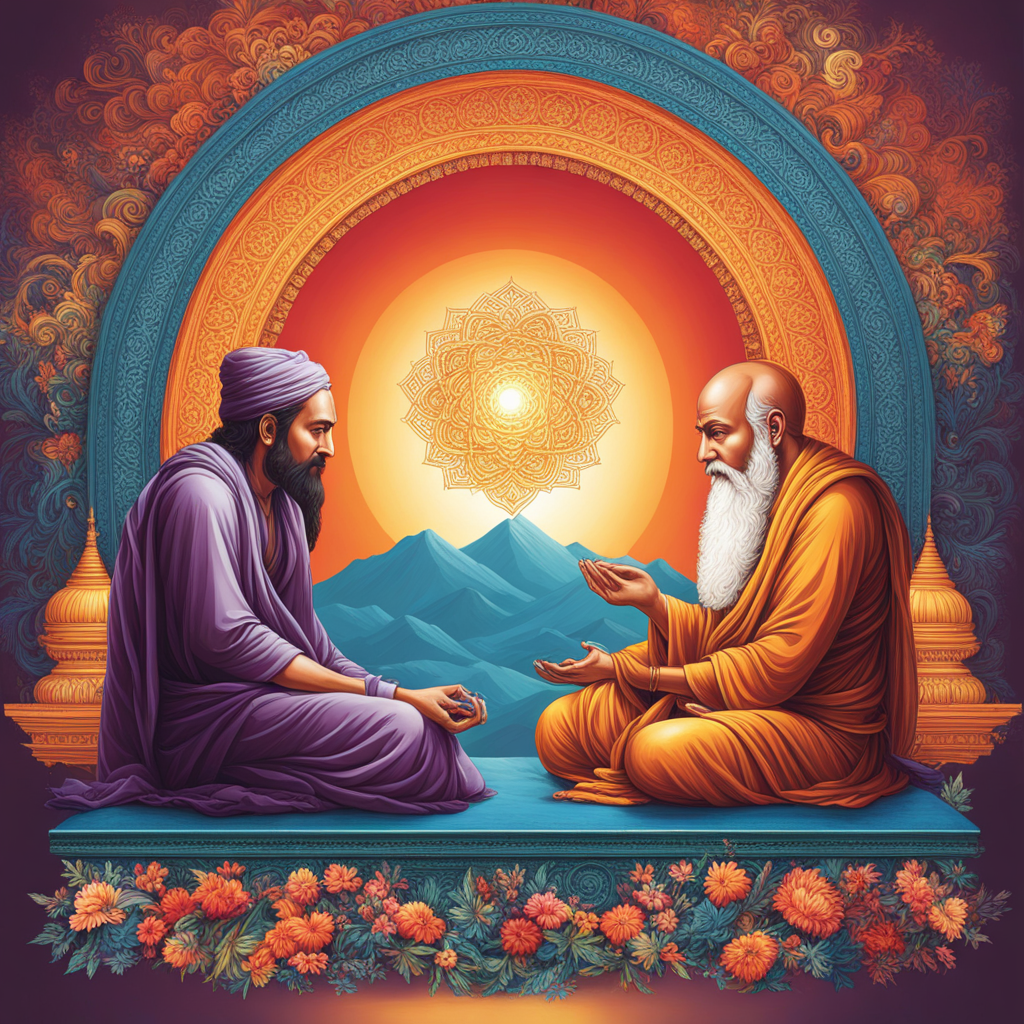
The vast universe, with its manifold entities and infinite complexities, often bewilders human minds. Philosophers and thinkers from time immemorial have grappled with questions about the nature of existence and the ultimate reality. One profound idea that surfaces recurrently is that of Absolute Monism: the belief that beneath the apparent multiplicity, there is but one undivided reality. Let’s take a deeper look into this captivating worldview.

### A Universe from One Thread


At the heart of Absolute Monism lies the assertion that all differences and diversities we perceive are mere illusions. This assertion may seem contradictory to our daily experiences. After all, isn’t the world teeming with diversity?

Yet, this is where Eastern and Western philosophies converge. Ancient Hindu scriptures speak of *Brahman* as the ultimate, undifferentiated reality. The Hindu philosophy of Advaita Vedanta encapsulates this belief by stating that the world’s multiplicity, driven by *Maya*, is an illusion. Meanwhile, in the West, the philosopher Spinoza proposed that God and Nature are two names for the same reality, implying a singular, infinite substance. These ideas, separated by continents, come together to champion a singular reality beneath the apparent diversity.

### Seeing Beyond the Illusion

The concept of illusion is integral to understanding monism. In life, appearances can often be deceiving. A mirage in the desert, a rainbow after the rain, and even our reflection in the water are all illusions. If such simple things can deceive our senses, might it be possible that our entire perception of diverse reality is similarly mistaken?

*Mysticism* has been one avenue through which individuals across cultures have described experiences consistent with Absolute Monism. The interconnectedness of all things, a theme found in the tapestry of monism, speaks to the heart, nudging us to see beyond divisions and differences.

### Implications for Modern Times

If Absolute Monism holds that all is one, then what does this mean for us in the present age, surrounded by divisive forces and fragmented views?

Firstly, on an ethical plane, it implies that harm inflicted upon one is harm to the entirety. This perspective could drastically alter how we approach interpersonal relationships, environmental concerns, and global crises. If we truly internalize this philosophy, then every act of kindness and harm has far-reaching consequences.

Secondly, it brings to the fore the importance of self-realization. In many monistic traditions, the realization of this singular truth is the end goal, bringing about an end to suffering.

Lastly, it sparks curiosity about the nature of our universe. With advancements in modern physics and cosmology, we find theories that echo monistic thoughts. The Big Bang, for instance, suggests that everything we see, touch, and experience emerges from a singular point.

### Embracing Diversity within Unity

Absolute Monism does not negate the value of diversity. Rather, it calls for a deeper understanding. Imagine a tapestry. Up close, one can see the myriad of colours, textures, and patterns. But from a distance, it’s one cohesive artwork. Similarly, monism asks us to appreciate the individual threads while recognizing the grand design.

In an age teeming with division, perhaps the idea of Absolute Monism can be the bridge that reminds us of our interconnectedness. As we stand at the cusp of profound global challenges, this ancient philosophy might just hold the key to a unified, harmonious future.


Embracing the ideas of Absolute Monism requires introspection and openness. Whether you fully resonate with its tenets or not, it undoubtedly serves as a beacon, guiding us toward unity, understanding, and profound interconnectedness.

Morgan O. Smith

Yinnergy Meditation & My Book, Bodhi in the Brain…Available Now!
https://linktr.ee/morganosmith

The Veils of Maya

Navigating Illusion in the Quest for Truth

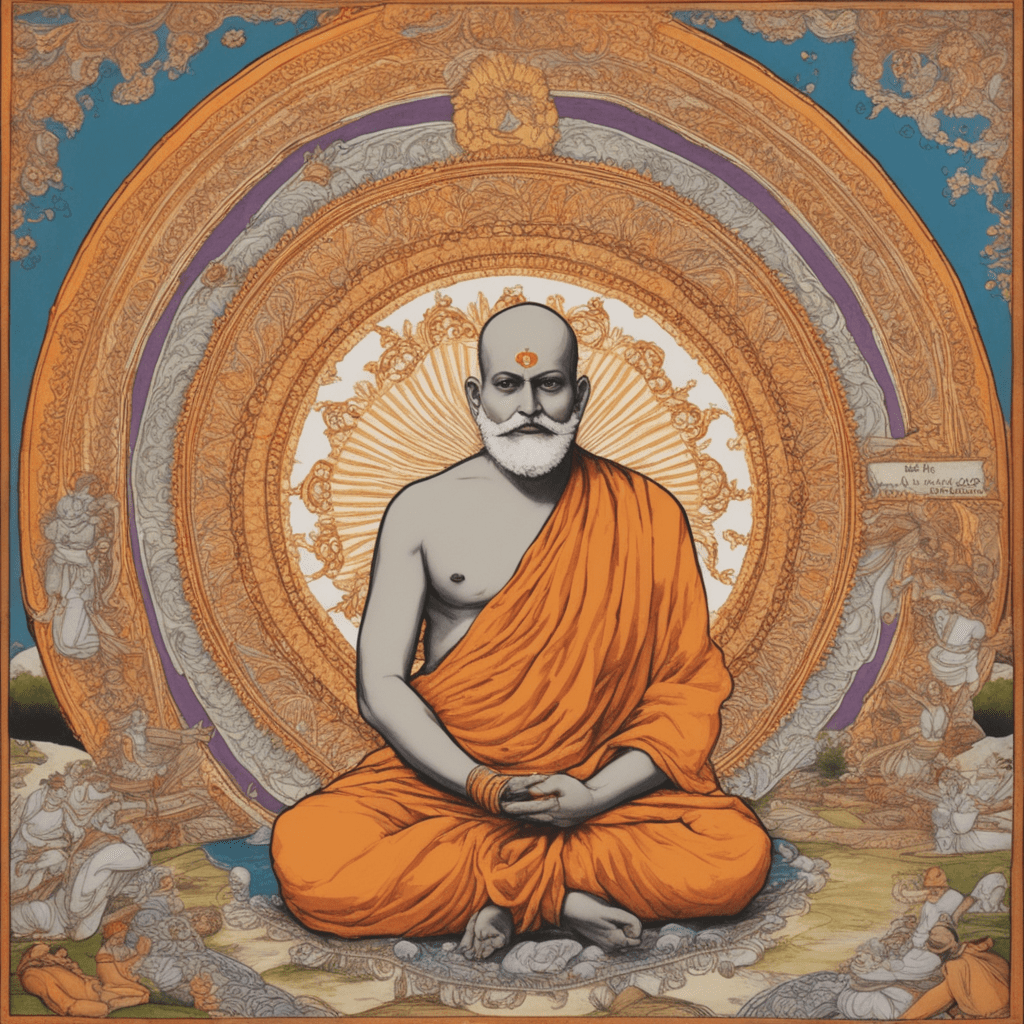
The labyrinthine nature of existence, adorned with its pleasures and pitfalls, has been a subject of deep contemplation for ages. At the heart of many philosophical inquiries in Hinduism lies the enigmatic concept of ‘Maya’. Far from being a mere illusion, Maya reveals layers of truth, each pointing towards an understanding of the universe and our place in it.

**The Cosmic Dance of Prakriti and the Three Gunas**


Imagine the universe as a grand stage, with Prakriti, the primal nature, as the backdrop. From this vast expanse springs forth everything we see, feel, and experience. Yet, what gives rhythm to this cosmic dance?

Enter the Three Gunas – Sattva, Rajas, and Tamas. These are not just passive qualities but dynamic forces shaping our experiences. The serenity of a tranquil lake embodies Sattva, the turbulence of a storm epitomizes Rajas, and the still darkness of the night echoes Tamas. Together, they create a spectrum of experiences in our lives.

**The Individual’s Tryst with Ignorance**


Closer to our personal experience is Avidya, the fog of ignorance clouding our perception. Under its influence, we misidentify with our transient selves, overlooking the eternal essence within. It’s like mistaking the waves for the vast ocean.

In this state, we are ensnared by Karma, the ever-entwining web of action and consequence. The Kleshas, those tormenting afflictions, further deepen our entanglement. Desires and aversions play tug-of-war, with the ego stoking the flames.

**The Divine Masquerade**

But is Maya merely a cosmic error or a deceptive trap? Not necessarily. Maya, when seen as the divine power or Shakti, becomes the grand choreographer of the universe’s dance. It’s a divine play, a Leela, where the One chooses to manifest as many, experiencing itself through myriad forms.

**Beyond Duality: The Advaita Perspective**


The school of Advaita Vedanta offers a profound insight. It suggests that beneath the multiplicity lies a singular truth, the Brahman. Maya, in this view, is the sublime artist crafting the many from the one, making the undivided appear divided.

**Conclusion: The Play and Beyond**

Maya, far from being a mere illusion to discard, becomes a lens to navigate our existence. It offers lessons, challenges, and experiences, pushing us to question, understand, and ultimately transcend.

In the dance of Maya, we are both the dancer and the audience. The key lies in recognizing the play, enjoying its beauty, and seeking the truth beyond the performance. In this quest, we don’t just find answers about the universe, but also about ourselves.

Morgan O. Smith

Yinnergy Meditation & My Book, Bodhi in the Brain…Available Now!
https://linktr.ee/morganosmith

Moksha

The Universe in Liberation

As we traverse the intricate corridors of Hindu philosophy, a term that emerges as a beacon of liberation is ‘Moksha’. This concept, commonly associated with individual salvation from the cycle of birth, death, and rebirth, presents a spiritual zenith. However, what if we zoom out from the individual perspective and consider Moksha at a cosmic level? What if the Universe itself were to attain Moksha?

The Big Bang marked the birth of the Universe, setting forth an infinite dance of creation, preservation, and destruction. Stars were born, galaxies sculpted, and planets formed, only to one day succumb to the grand design of entropy. This cyclical nature bears a striking resemblance to the cycle of Samsara in Hindu thought, where souls are continuously born and reborn in different forms until Moksha is achieved.

If the Universe could experience Moksha, it would transcend its cycle of cosmic Samsara – from the Big Bang to the eventual Big Crunch or Heat Death, depending on which theoretical physicist you ask. This liberation would mean breaking free from the constraints of time, space, and causality, reaching a state of infinite, timeless existence.

So, what would this feel like for the Universe?

When we ponder this question, we must acknowledge that the Universe’s experience, in this context, is beyond human comprehension. But let’s indulge in the thought experiment. We could imagine this state as one of perfect harmony and unity. There would be no ‘other’, no ‘alien’, and no ‘external’. The galaxies, stars, planets, and even the tiniest quantum particles would exist in a state of interconnection and oneness.

From the perspective of sentient beings, this would mean a profound sense of unity with everything else. Distinctions that currently cause division – species, races, cultures, even life and non-life – would become irrelevant. All of existence, inanimate and animate, would be seen as expressions of the same cosmic consciousness.

And yet, paradoxically, this unified existence would also mean the cessation of experience as we know it. Experience implies a subject and an object, an experiencer and the experienced. But in the absolute unity of cosmic Moksha, these dualities would dissolve. Therefore, in a sense, the Universe would be in a state of ‘experiencing without an experiencer’ or ‘knowing without a knower’.

In the grand scheme of cosmic liberation, human Moksha could be seen as a fractal microcosm – a ripple that mirrors the pattern of the whole. Each being achieving liberation contributes to the whole Universe moving towards its own Moksha, its release from the cosmic cycle of birth and death. This profound realization places our spiritual quests in a broader context and imbues them with a universal significance.

However, the implications of this concept are not just metaphysical, but deeply ethical. Recognizing our shared journey toward liberation fosters compassion, humility, and a sense of stewardship for all of existence. Our actions, in this view, can either facilitate or hinder the Universe’s journey toward Moksha.

In conclusion, contemplating Moksha at a universal scale stretches the boundaries of our imagination and empathy. It invites us to view ourselves not as isolated entities but as integral parts of a grand cosmic dance seeking the ultimate liberation.

Morgan O. Smith

Yinnergy Meditation & My Book, Bodhi in the Brain…Available Now!
https://linktr.ee/morganosmith

A Meeting of East and West

Advaita Vedanta and Ken Wilber’s Four Quadrants

As we navigate through life’s labyrinth, we encounter myriad philosophical viewpoints designed to offer us clarity about the nature of reality. Two such perspectives – one rooted in ancient Eastern spirituality, Advaita Vedanta, and the other a more contemporary Western theory, Ken Wilber’s Integral Theory – provide us with intriguing interpretive lenses. While appearing distinct, when juxtaposed, they unfold a captivating dialogue, revealing the interconnectedness of diverse paths of wisdom.

**Non-Duality: The Heart of Advaita Vedanta**

At the core of Advaita Vedanta lies the profound principle of non-duality. The term ‘Advaita’ translates to ‘not two’, pointing towards the notion of unity beneath apparent multiplicity. According to this philosophy, all phenomena – whether perceived as separate entities or diverse experiences – are manifestations of a singular absolute reality known as Brahman.

This philosophy posits that the perceived distinction between the individual self (Atman) and the ultimate reality (Brahman) is an illusion (Maya), born out of ignorance (Avidya). The journey of spiritual awakening in Advaita Vedanta is about transcending this illusion, recognizing the non-dual nature of existence, where the Atman and Brahman are not separate but one.

**Ken Wilber’s Four Quadrants: A Comprehensive Map of Reality**

Ken Wilber’s Integral Theory, particularly the Four Quadrants model, offers a different but complementary perspective. Wilber presents a holistic map of reality, dividing it into four quadrants: Individual Interior (consciousness), Individual Exterior (behaviour), Collective Interior (culture), and Collective Exterior (society). Each quadrant represents an integral part of our existence and must be considered to understand reality holistically.

**The Interplay: Advaita Vedanta and Four Quadrants**

Drawing parallels between Advaita Vedanta and the Four Quadrants can create a fascinating synthesis of Eastern and Western thought.

The Upper Left Quadrant (Individual-Interior) aligns with the individual’s subjective experience, mirroring the Advaita exploration of Atman. The Upper Right Quadrant (Individual-Exterior) encapsulates the physical manifestation of the individual, aligning with the Advaita concept that even our physical existence is a manifestation of Brahman.

The Lower Left Quadrant (Collective-Interior) represents shared beliefs and cultures, resonating with the Advaita perspective that cultural differences are superficial, and at a deeper level, unity prevails. The Lower Right Quadrant (Collective-Exterior) mirrors societal structures, all manifestations of the same non-dual reality.

From the Advaita viewpoint, the division of the four quadrants are themselves expressions of Maya, as they create apparent separations where none ultimately exist. They are valuable tools for understanding and navigating the world but do not represent the deepest truth of non-duality.

**Uniting Perspectives: A Path to Enlightenment**

Exploring the intersection of Advaita Vedanta and Ken Wilber’s Four Quadrants offers a richer understanding of reality, harmonizing subjective and objective, individual and collective, Eastern spirituality and Western theory. As we understand that the lines dividing these quadrants are more porous than they seem, we move closer to the non-dual truth of Advaita – that beneath apparent diversity, unity pervades.

At a time when division and fragmentation are rampant, this synthesis could offer a path toward the kind of transcendental insight that can bridge divides, fostering a deeper sense of interconnectedness and wholeness. After all, as Advaita Vedanta teaches us, beneath the surface of multiplicity, we are ‘not two’ but one. As we embrace the wisdom of the four quadrants, we might just find ourselves taking a step closer to that unity, opening ourselves to a richer, more holistic understanding of the world.

Morgan O. Smith

Yinnergy Meditation & My Book, Bodhi in the Brain…Available Now!

https://linktr.ee/morganosmith

Exploring Consciousness

Expanding Consciousness through Yoga & Meditation Practices

Yoga and meditation present an array of practices that facilitate the exploration of diverse states of consciousness, enhancing individuals’ mindfulness and self-awareness. This blog is dedicated to examining multiple practices associated with gross, subtle, causal, turiya, and turiyatita states of consciousness, illustrating the intertwined nature of these practices in guiding practitioners toward multiple states of awareness.

Gross Consciousness: Exploring the Physical Dimension

The gross state of consciousness, typically associated with waking life, is distinguished by physical and sensory experiences. Practices that emphasize the gross state involve:

Hatha Yoga: With a focus on physical postures (asanas), breath regulation (pranayama), and meditation, this practice supports overall physical and mental health.
Vinyasa Yoga: Offering a dynamic fusion of movement and breath, this style of yoga aids practitioners in maintaining mindfulness and presence.

Subtle Consciousness: Journeying into Dreams & Emotions

The dream state, characterized by emotional and mental experiences, reflects the subtle state of consciousness. Techniques concentrating on the subtle state include:

Yoga Nidra: This guided meditation facilitates a state of deep relaxation, mirroring the dream state, and fostering increased awareness.
Lucid Dreaming: This practice involves consciously recognizing that you’re dreaming, providing an opportunity to delve into the subconscious mind.

Causal Consciousness: Merging with the Universal Source

The deep sleep state, denoted by unity and an absence of individual identity, resonates with the causal state of consciousness. Techniques accessing the causal state include:

Advaita Vedanta: This non-dual philosophy promotes self-inquiry and contemplation, guiding toward the realization of the ultimate reality beyond individual identity.
Shambhavi Mudra: This meditative technique, focusing on the “third eye” or the space between the eyebrows, cultivates internal tranquillity and unlocks the causal state.

Turiya: The Realm of Pure Consciousness

Turiya, the fourth state, is marked by pure consciousness beyond the states of waking, dreaming, and deep sleep. Practices aiming for turiya encompass:

Transcendental Meditation (TM): Utilizing mantras, this meditation technique aims to transcend mental activities and experience pure consciousness.
Dzogchen/Mahamudra: These Tibetan Buddhist practices emphasize direct recognition of the mind’s nature, leading to a non-dual experience of reality.

Turiyatita: Surpassing Boundaries and Embracing Integration

Turiyatita, transcending the fourth state, symbolizes the amalgamation of all consciousness states. Techniques fostering turiyatita are:

Sahaja Yoga: Centered on the spontaneous awakening of Kundalini energy, this practice leads to a thoughtless awareness state surpassing all other states.
Jnana Yoga: The path of wisdom and self-inquiry dissolves the perceived separation between the individual self and ultimate reality, leading to the turiyatita experience.

Conclusion: Embarking on Your Unique Path

Every individual’s journey to elevated states of consciousness is distinctive. Discovering practices that align with your personal growth and self-exploration is crucial. As you delve into diverse yoga and meditation techniques, maintain an open mindset that your path may comprise various practices and experiences. Cherish the transformative journey and the profound power these age-old disciplines offer.

Morgan O. Smith

Yinnergy Meditation & My book, Bodhi in the Brain…Available Now!

https://linktr.ee/morganosmith