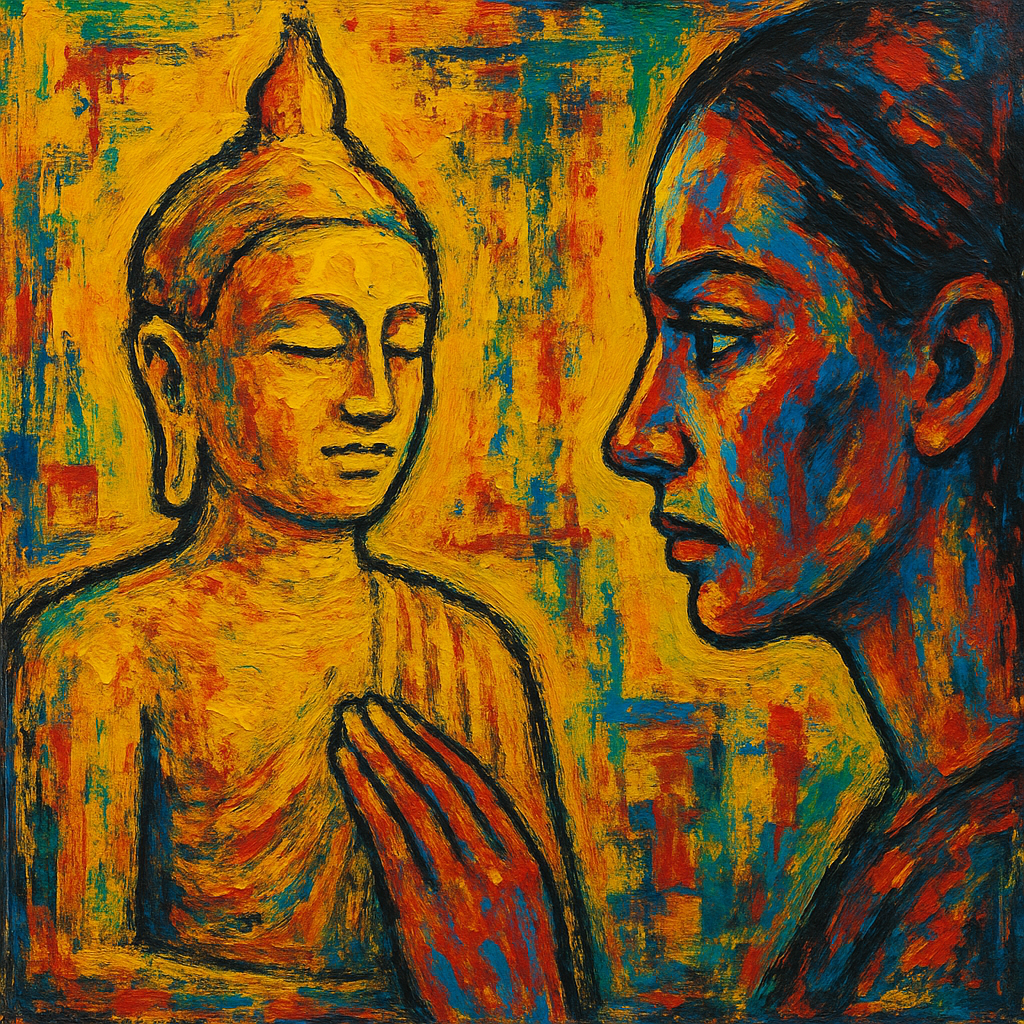
Worshipping Reflections of Ourselves
Longing for something greater, people shape deities from their deepest desires. Whether in objects, people, or ideals, devotion is placed upon symbols that mirror the unclaimed beauty within. The mind projects worth onto what seems external, never realizing that every idol is a reflection of an aspect of the self yet to be acknowledged.
Attachments form because something appears to be missing. A void is felt, and the world is searched for something to fill it. Objects become sacred, ideals turn into absolute truths, and figures of admiration rise to divine status. Not because they hold any inherent power, but because they embody what is believed to be absent in oneself.
A silent agreement is made: idols do not judge. Unlike the conflicted mind, they hold no contradictions, no inner turmoil, no weaknesses. Worship becomes an escape, a temporary relief from the weight of self-doubt. Celebrities, leaders, and public figures appear to stand beyond the chaos of thought, seemingly free from the struggles of ordinary existence. Until the illusion collapses, revealing that they too are bound by the same unseen chains.
Every idol, whether shaped in metal or memory, is nothing more than an echo of the forgotten self. The search for something to worship is the search for the parts of oneself that have been disowned. What is revered in another is what has not yet been embraced within.
The longing for something outside is merely the mind seeking its own wholeness. The moment this is realized, idols fall away, and what was once sought in another is found in the silence of one’s own being.
Morgan O. Smith
Get Your Free Copy of My Book, Bodhi in the Brain!


 Morgan O. Smith