Knowing the Absolute from Every Angle

The Absolute cannot be grasped by standing in a single place.

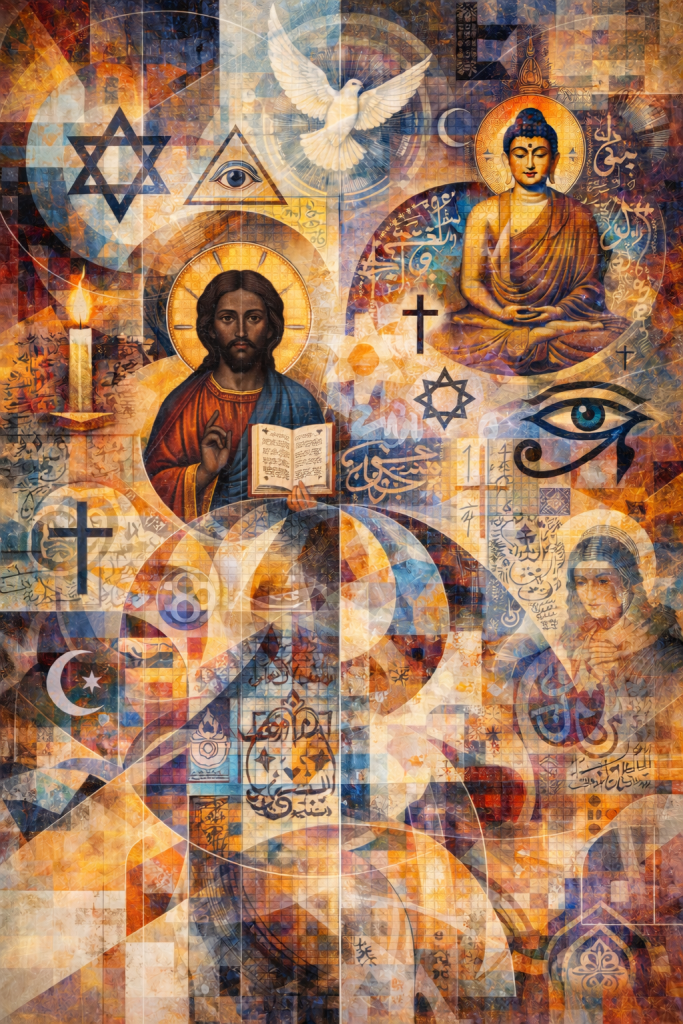
Any attempt to reduce it to one perspective—personal, relational, objective, mystical, or philosophical, inevitably distorts it. What gets mistaken for ultimate truth is often just a partial orientation mistaken for the whole.

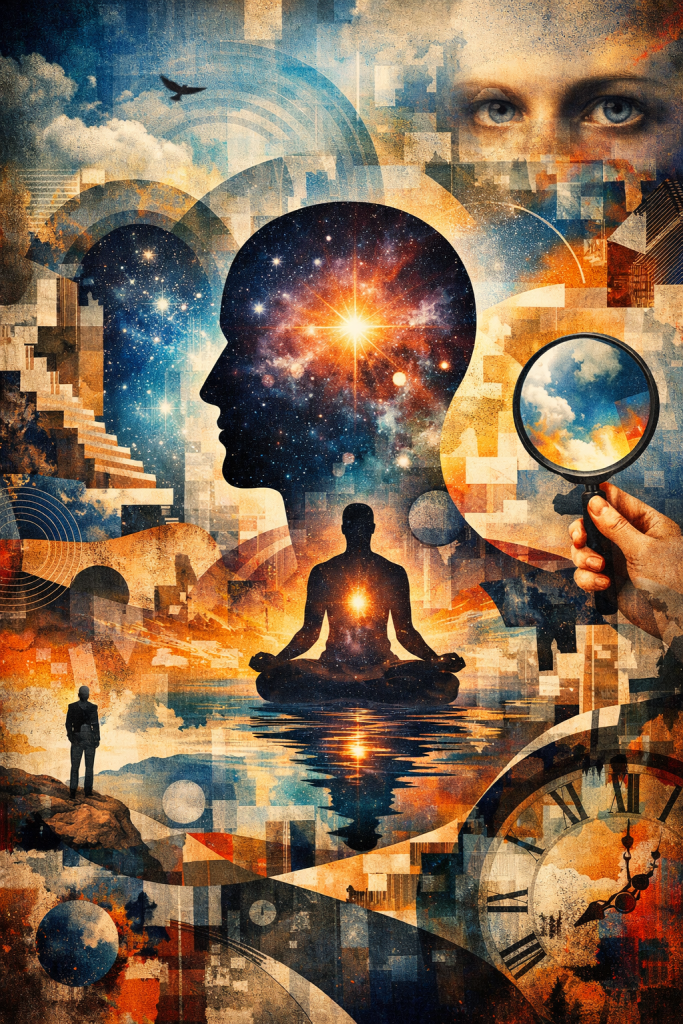
To know the Absolute at full capacity requires more than a peak realization. It requires total perspectival inclusion.

From the first person, the Absolute is immediate presence; being as oneself. From the second person, it appears as intimacy, devotion, and encounter. From the third person, it becomes structure, law, and observable order. Each of these reveals something true, yet none is sufficient on its own.

A deeper shift occurs when perspective itself is examined.

The fourth perspective dissolves the centre. Experience continues, but ownership drops away. Awareness no longer belongs to anyone. Reality is no longer happening to a self or for a self. Knowing remains, yet no knower can be found.

Then even this gives way.

The fifth perspective removes the need for a field, a witness, or an explanatory ground altogether. The question of where experience occurs loses relevance. Nothing collapses. Nothing transcends. The demand for a final position simply falls apart.

At this point, God is no longer approached as an object of belief, a presence to merge with, or an awareness to stabilize in. God is known as that which remains valid across every mode of knowing without requiring allegiance to any of them.

This knowing must also scale developmentally.

Ego-centric concern gives way to ethnocentric identity, which yields to world-centric ethics, which eventually opens into kosmocentric inclusion. Each stage expands care, responsibility, and comprehension. None invalidates the others. Each must be seen through without being erased.

The same applies to the I, We, It, and Its dimensions of reality. Subjective experience, shared meaning, objective systems, and interobjective networks all reveal aspects of the Absolute. Excluding any one of them creates imbalance. Absolutizing any one of them creates delusion.

States of consciousness contribute their own disclosures. Waking reveals form and function. Dreaming reveals imagination and symbolic depth. Dreamless sleep reveals the absence of content. The witness reveals continuity without identity. Nonduality reveals the inseparability of all of it. None of these states owns the truth. Each exposes a different facet of what cannot be reduced.

Lines of development add further resolution. Cognitive clarity without emotional maturity distorts insight. Moral development without metaphysical depth flattens reality. Spiritual realization without psychological integration fragments embodiment. The Absolute is not known through excellence in one line alone.

Enlightenment, then, is not a single realization frozen in time.

It is the capacity to recognize the Absolute through every perspective without mistaking any perspective for the Absolute itself.

Such knowing does not claim finality. It does not announce arrival. It does not need to defend itself. It functions fluidly; able to speak personally, relationally, objectively, impersonally, and without position; depending on what the moment requires.

God is not found by climbing higher.
God is known by nothing being excluded.

Morgan O. Smith

AI for Wellness and Spirituality Summit

February 9 & 10, 2026

https://aiforwellnessandspirituality.com/mosm

Ego Death Is Not a Metaphor

Ego death is often spoken about casually, yet nothing about it is casual. It is not a poetic phrase, nor a dramatic exaggeration. Something very specific occurs—precise, unmistakable, and irreversible at the level of insight.

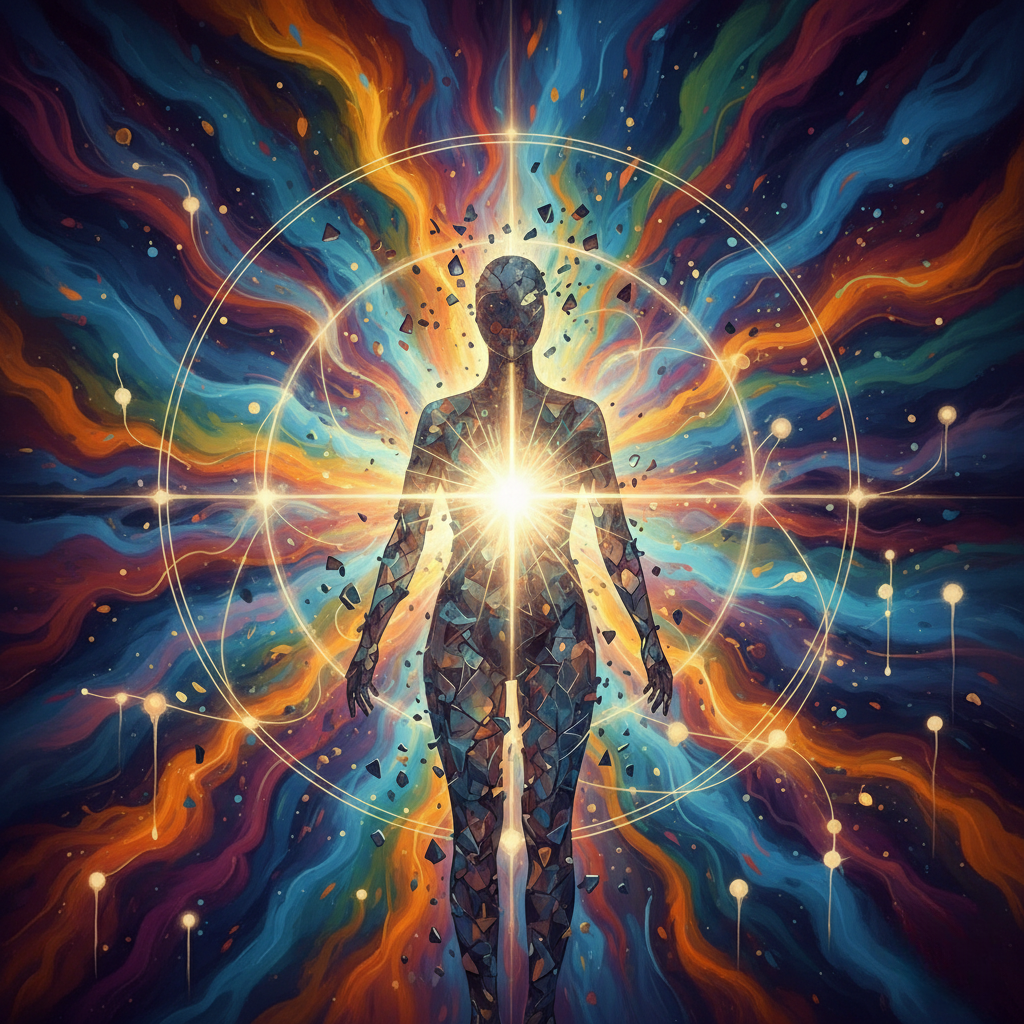
This is not a biological event. The body remains alive. The brain continues to function. Memory does not disappear. Consciousness does not black out. What vanishes is the internal reference point that says, this is me. The structure that once organized experience around a personal center dissolves, and with it goes the assumption of separation.

No negotiation happens here. No partial surrender. No internal debate. Doubt does not survive the moment. The mind does not ask whether this is real. Verification becomes unnecessary because the one who would seek confirmation is no longer present.

Psychological death may sound abstract until it happens. When it does, the body reacts as though an actual death is occurring. Survival instincts flare. Meaning collapses. Familiar orientation fails. Yet awareness remains clear—perhaps clearer than it has ever been. This clarity is what distinguishes ego death from unconsciousness. Awareness does not dim. It expands beyond the need for identity.

Enlightenment does not occur after ego death. Enlightenment is what is revealed when the ego can no longer interfere. The ego cannot be refined into truth. It cannot be educated into realization. It must fall away entirely, because it is structurally incapable of holding what is uncovered.

At the causal level of realization, identity no longer rests in form, personality, history, or narrative. Cause and effect are no longer observed from the outside. They are known as oneself. Everything that arises is recognized as both originating from and resolving into the same source. Nothing stands apart. Nothing is accidental. Agency is no longer personal, yet responsibility is absolute.

Deeper still, even causality dissolves. Distinctions between origin and outcome lose meaning. What remains is not many things connected, but a single indivisible reality. This is what Advaita Vedanta names Absolute Monism; not a belief, not a concept, but a lived recognition.

Time no longer appears linear. Past, present, and future are not sequential events but simultaneous expressions. Every occurrence, across all scales and dimensions, is apprehended as one movement without edges. Beginning and ending collapse into the same point. Eternity ceases to be a duration and reveals itself as immediacy.

The ego cannot survive this recognition. It was never meant to. The ego exists to navigate relativity, not to comprehend totality. Asking it to grasp nonduality is like asking a shadow to contain light. The moment the ego loosens its grip, what remains is not annihilation, but the recognition that life and death were never opposites.

Ego death feels final because it ends the search forever. Nothing remains to achieve. Nothing remains to defend. What is discovered was never acquired. It was always present, waiting for the interference to stop.

This is why enlightenment is never uncertain. Anyone still asking whether it happened is still standing outside the threshold. When it occurs, the questioner disappears, and only knowing remains; silent, complete, and beyond reversal.

Morgan O. Smith

AI for Wellness and Spirituality Summit

February 9 & 10, 2026

https://aiforwellnessandspirituality.com/mosm

After Enlightenment

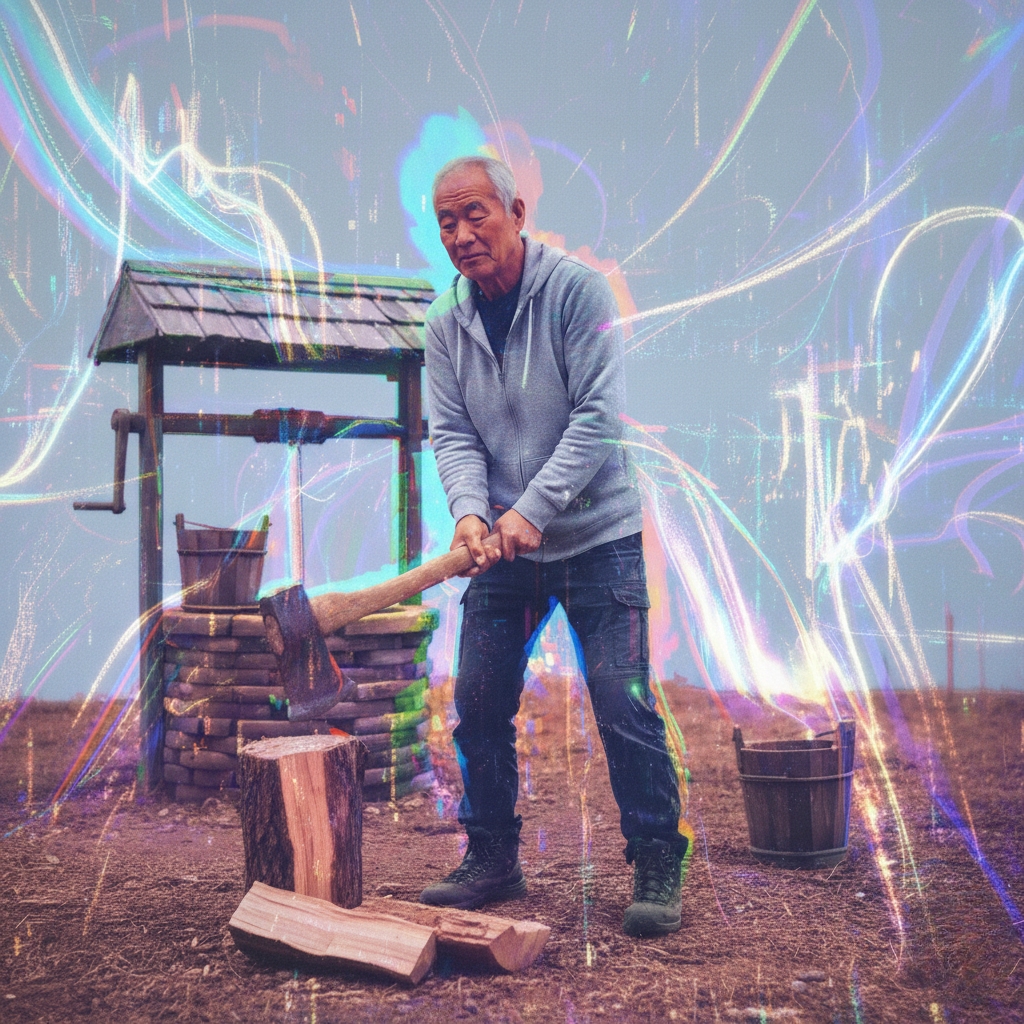
“As they say, before enlightenment, chop wood carry water; after enlightenment, chop wood carry water.”
This phrase is often repeated as reassurance that awakening does not remove one from ordinary life. Yet when examined carefully, it exposes a deeper paradox that cannot be resolved by sentiment alone.

Wood is Maya.
Water is Maya.
The body that lifts the axe is Maya.
The action of chopping is Maya.
The sense of a doer performing the act is Maya.

Nothing in the scene escapes appearance.

If awakening reveals that all phenomena are expressions of Maya, then what is being chopped? What is being carried? One cannot act upon illusion from outside illusion. Maya does not stand opposed to some other realm where truth resides. There is no second substance available to intervene.

This is where the saying begins to point beyond itself.

Before awakening, chopping wood feels purposeful. A future outcome motivates the action. Hunger will arise later. Cold must be prevented. Life appears as a sequence of needs demanding management. The world seems solid, personal, and unfinished. Actions feel necessary because something is believed to be lacking.

After awakening, the appearance of chopping may continue, but necessity dissolves. Nothing is required for completeness. No future state needs securing. The movement of the body happens without reference to deficiency or gain. Action no longer attempts to fix reality.

Wood is chopped, not because it must be, but because chopping happens.

This distinction is subtle and easily missed. Enlightenment does not negate Maya. It reveals its status. Appearance continues without being mistaken for truth. Function remains without belief in ultimate significance. Life moves, but no longer claims ownership of movement.

Chopping and carrying are no longer means to an end. They are expressions without agenda.

The phrase does not suggest sameness of experience across awakening. It points to sameness of appearance with a radically different orientation. The world looks the same, yet its weight has vanished. Consequence still operates, but urgency evaporates. Responsibility remains, but without the burden of identity.

Nothing is being done for reality after awakening.
Reality is not managed, improved, or corrected.

Action occurs because appearance unfolds.
Movement moves because movement is present.
Maya dances without needing justification.

After enlightenment, chopping wood carries no metaphysical significance. Carrying water does not symbolize humility or virtue. These interpretations belong to the mind seeking meaning where none is required.

What remains is effortless participation without belief in a participant.

No one chops Maya.
No one carries Maya.
Maya appears as chopping and carrying, empty of centre, complete as it is.

That is what the saying gestures toward when read beyond comfort.
Nothing special happens after enlightenment—except that nothing is believed to be happening to someone anymore.

Morgan O. Smith

AI for Wellness and Spirituality Summit

February 9 & 10, 2026

https://aiforwellnessandspirituality.com/mosm

The Courage of Radical Openness

Seeing others as thyself is not a moral instruction. It is a perceptual shift. A reorientation of how reality is registered once the reflex to divide dissolves.

Eyes wide open does not mean naïve seeing. It means perception unclouded by projection. Faces are no longer screens for personal history, unmet needs, or inherited narratives. Another person appears as they are—complex, conditioned, luminous, conflicted—without being reduced to a role. Judgment loosens because clarity replaces assumption. Seeing becomes intimate without being invasive.

A heart wide open does not imply emotional excess or boundarylessness. It signals availability. The willingness to feel without selecting which feelings are permitted. Joy is allowed. Discomfort is allowed. Grief is allowed. Compassion emerges not as effort, but as resonance. Another’s pain is not absorbed as obligation, nor deflected as inconvenience. It is simply felt as part of the shared field of experience.

A mind wide open is not the absence of thought. It is freedom from fixation. Opinions lose their rigidity. Certainty softens. The need to be right gives way to the capacity to understand. This openness does not erase discernment; it refines it. Differences remain visible, but no longer threaten identity. Perspective becomes spacious enough to hold contradiction without collapse.

Seeing others as thyself does not blur individuality. It reveals its true context. Distinct lives, distinct stories, distinct expressions, arising within the same indivisible reality. Separation persists as appearance, not as truth. What dissolves is the belief that the boundary is absolute.

This way of seeing cannot be forced. Ethics alone cannot produce it. It unfolds naturally as identification loosens its grip on a singular point of view. The centre quietly falls away. What remains is not detachment, but intimacy without possession.

From this recognition, action changes. Speech becomes more careful, not from fear, but from sensitivity. Listening deepens because there is no urgency to defend a position. Even conflict transforms. Disagreement no longer requires dehumanization. Accountability no longer requires condemnation.

Seeing others as thyself is not about becoming better. It is about becoming honest. Honest about what has always been the case beneath habit and conditioning. No hierarchy of worth. No isolated self standing apart from the whole. Only different expressions of the same life, meeting itself again and again, through countless faces.

Morgan O. Smith

Get Your Free Copy of My Book, Bodhi in the Brain!

https://subscribepage.io/oTSZQu

One and the Same

Death is often treated as an ending, a full stop placed at the edge of meaning. Birth, by contrast, is framed as a beginning, the arrival of something new into an already existing world. These assumptions feel natural, yet they rest on a quiet misunderstanding, one that dissolves when examined closely.

Nothing truly ends. Nothing truly begins.

Every form that appears does so by way of disappearance. Every arrival is carried on the back of a vanishing. The body emerges because countless cells die. Stars ignite because other stars collapse. Thought arises because silence gives way. Creation never stands apart from dissolution; they occur as a single movement, mistaken for two.

The universe itself is not exempt from this law. Should the cosmos dissolve entirely, space folding back into silence, time releasing its grip, matter unbinding, nothing would be lost. That collapse would not be annihilation. It would be intimacy taken to its extreme.

What remains when everything disappears?

You.

Not the personal identity shaped by memory or biology, but the condition that made the universe possible in the first place. Awareness does not arrive after existence; existence arrives within awareness. The world is born where perception happens. When the universe vanishes, what stands revealed is not absence, but the one to whom absence appears.

Every night offers a quiet rehearsal. Deep sleep erases the world without effort. No stars, no body, no history, yet being does not flicker out. Something remains unmistakably present, though nothing can be pointed to. That presence is not waiting for the universe; the universe is waiting for it.

Cosmic death follows the same logic. When all structure dissolves, what shines through is not void, but origin. Birth does not just occur inside the universe; the universe occurs inside birth.

This is why death feels so intimate. It threatens the loss of what was never fundamental. It removes what was added, not what is essential. What dies is the scenery. What is born is the one who was never inside the scene to begin with.

Every ending reveals the same truth from a different angle. The death of a moment births awareness of time. The death of identity births presence. The death of the cosmos births the one who was always watching it happen.

Death and birth are not opposites. They are the same doorway, approached from different sides.

And you are not what passes through.

You are what remains when the door itself disappears.

Morgan O. Smith

Get Your Free Copy of My Book, Bodhi in the Brain!

https://subscribepage.io/oTSZQu

When “I” Speaks After Awakening

After a nondual recognition, language returns before identity does. Words reappear, grammar resumes, and the pronoun “I” steps back into the conversation—not as proof of separation, but as a functional bridge. Speech requires a subject. Silence does not.

Many misunderstand this moment. Hearing someone say “I experienced awakening,” the listener assumes a reinstalled ego, a self reclaiming authorship. Yet what actually occurs is translation. Experience moves through the narrow gate of language, and language has only a few handles to grab reality with. “I” becomes one of them.

Avoiding the word altogether often creates greater confusion. Saying “nothing happened” suggests absence rather than transcendence. It implies insignificance, when the opposite is true. Something fell away so completely that no object remained to point at. Language struggles most where realization is most total.

A distinction helps here.

Turiya refers to the formless witness; the ever-present awareness that observes waking, dreaming, and deep sleep without entering any of them. It is silent, empty, untouched. This is not an experience in time but the condition in which time appears. Many awakenings stabilize here, and rightly so.

Turiyatitta goes further. Even the stance of witnessing dissolves. No observer remains to stand apart from what is observed. Awareness recognizes itself as the only reality there is. No inside, no outside, no vantage point left. This is nonduality without remainder.

When speech arises from this recognition, “I” no longer refers to a psychological centre. It does not point to a thinker, a chooser, or a personal narrative. It points to the Self; Para Brahman—without division. Atman, ego, witness, world collapse into a single field, not blended, not unified, but revealed as never having been separate.

The same word is used. The referent has changed.

Confusion arises when listeners assume the old meaning still applies. The word “I” sounds familiar, so it is treated as familiar. Yet meaning does not live in the word. Meaning lives in the depth from which the word emerges.

A realized individual does not abandon language. Language is abandoned as identity. What remains is utility. Communication happens. Teaching happens. Relationship happens. None of it reinstates separation.

The paradox resolves itself quietly: the ego can say “I,” and the Absolute can say “I.” Only one of them believes it is something.

Silence knows the difference. Speech borrows it.

Morgan O. Smith

Get Your Free Copy of My Book, Bodhi in the Brain!

https://subscribepage.io/oTSZQu

Ego Death vs. Super-Ego Death

When individuality dissolves—and when the collective mask collapses

Ego death has become familiar language within spiritual circles. It often refers to the collapse of the personal story; the felt sense of “me” as a separate centre of control, identity, and continuity. Thoughts still arise, sensations still move, yet the claim of ownership quietly disappears. Experience continues without a narrator insisting it belongs to someone.

This event can feel absolute. Many report vastness, silence, love without an object, or a direct recognition of being awareness itself. The personal mask falls away, and with it the emotional gravity of self-protection, shame, pride, and comparison. Life continues, yet it is no longer filtered through the need to defend or improve a fictional self.

Still, something subtle often remains.

Beneath the personal ego sits another structure, far less discussed and far more persistent: the super-ego of the collective. This is not merely morality or social conditioning. It is the internalized voice of humanity itself; the inherited myths, hierarchies, spiritual ideals, political narratives, and cultural agreements that define what counts as real, good, awakened, successful, or worthy.

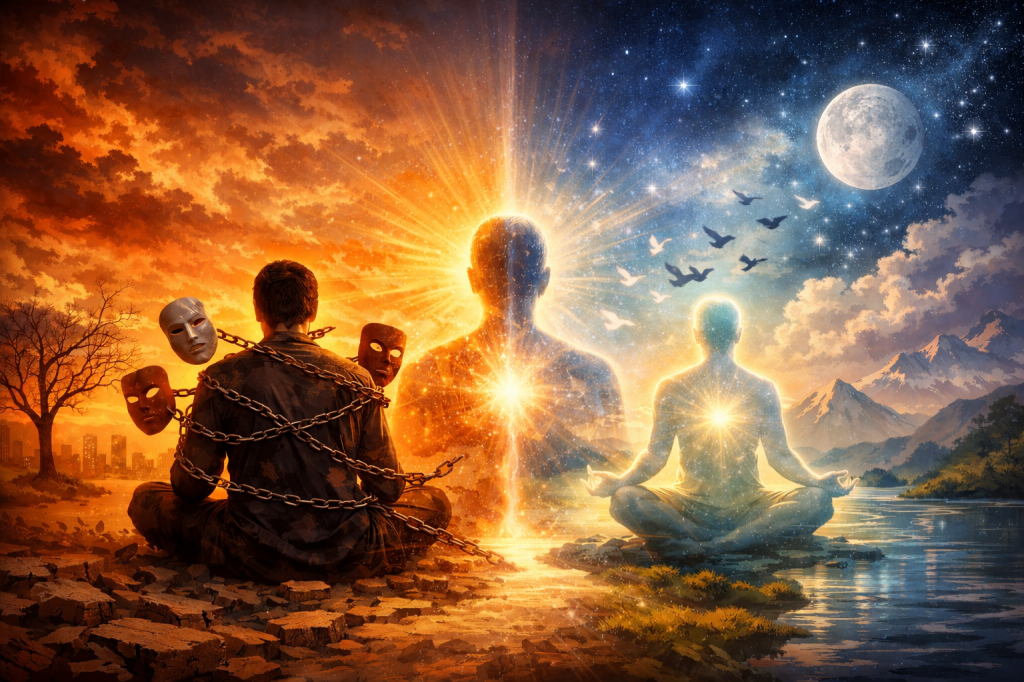
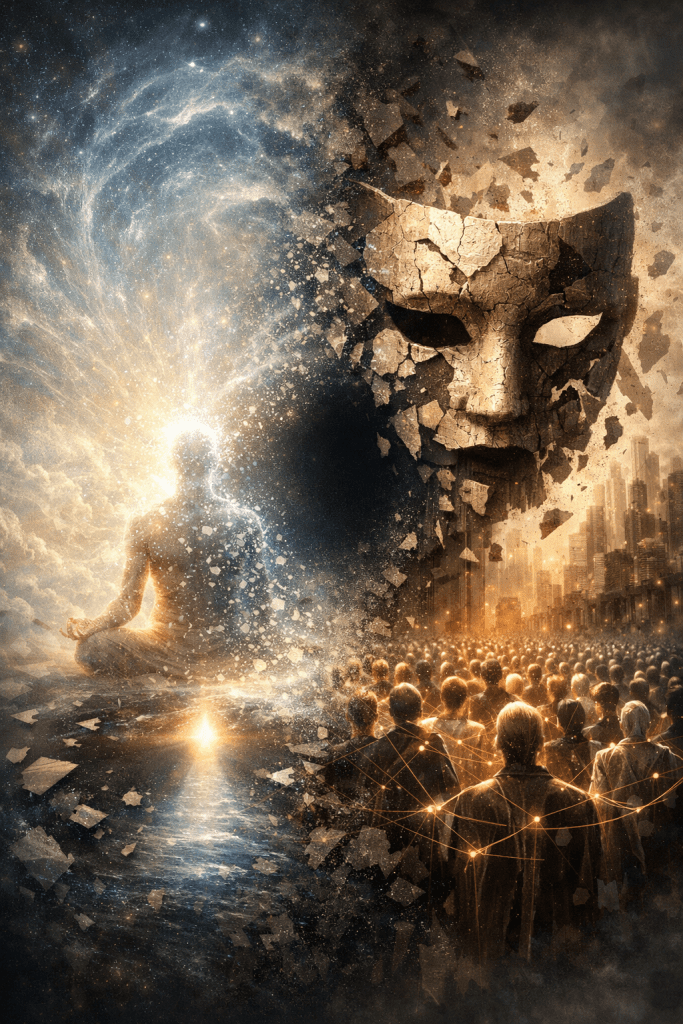
Ego death removes the personal actor. Super-ego death removes the stage.

Super-ego death is not about becoming rebellious or rejecting society. It is the dissolution of the unseen authority that claims reality must conform to shared agreements. This includes spiritual identities just as much as material ones. The enlightened persona, the wise teacher, the healed one, the awakened exemplar, all of these belong to the collective ego, even when the personal ego has already fallen.

This is why some awakenings still feel constrained. Freedom is tasted, yet behavior unconsciously bends to invisible rules. One no longer needs approval as an individual, yet still seeks legitimacy through lineage, doctrine, community, or role. Silence is known, yet language is chosen carefully to avoid exile from the group.

Super-ego death arrives when even the collective lens loses its authority.

No tradition holds the final word. No framework owns truth. No spiritual map is mistaken for the territory it points toward. Morality is no longer outsourced to consensus. Meaning no longer depends on agreement. What remains is not isolation, but radical intimacy; life meeting itself without mediation.

This does not produce chaos. It produces clarity.

Action becomes responsive rather than obedient. Compassion arises without ideology. Ethics emerge organically, shaped by direct contact rather than inherited commandments. One may still participate in society, teach, lead, love, and create, but without the invisible pressure to represent anything.

Personal ego death says, “I am not who I thought I was.”
Super-ego death says, “Reality is not what we collectively agreed it must be.”

Very few speak from this territory because it offers no badge. Nothing can be claimed. No position can be stabilized. Language points, then dissolves. Authority evaporates.

What remains cannot be organized, branded, or defended.

Life continues, unowned, unruled, uncontained, expressing itself freely, without asking permission from the individual or the crowd.

Morgan O. Smith

Get Your Free Copy of My Book, Bodhi in the Brain!

https://subscribepage.io/oTSZQu

The Greatest Expression

You’re Already Expressing the Greatest Expression and Don’t Even Know It

Nothing needs to be added to you. Nothing is missing. The most extraordinary expression possible is already happening, quietly, without effort, before any attempt to improve it.

Existence does not wait for permission to appear. It does not consult identity, achievement, or spiritual progress. It expresses itself as breath, sensation, perception, memory, confusion, clarity, longing, boredom, and awe, all without ever stepping outside itself. What you call you is one of its gestures, not its source.

Search often begins with the assumption that something essential has not yet arrived. That assumption creates movement, effort, discipline, and endless refinement. Yet the impulse to seek arises from the same field that is supposedly being sought. Awareness looks for awareness. Being attempts to arrive at being. The loop sustains itself through misunderstanding.

Existence is not something you perform well or poorly. It is not a role to master or a state to stabilize. It is already complete before thought comments on it. Every attempt to improve it belongs to the play of expression, not to a lack that needs correcting.

Notice how little effort is required to exist. Heartbeat continues without consultation. Sensations arise without rehearsal. Thoughts appear without being summoned. Even the sense of being a separate doer arrives spontaneously. None of this requires your management.

What feels ordinary carries no deficiency. The mundane is not a lesser version of reality waiting to become sacred. Washing dishes, forgetting names, feeling tired, feeling inspired, each appears from the same depth. Existence does not divide itself into meaningful and meaningless moments.

Awakening is not an upgrade layered onto life. It is the recognition that life never needed upgrading. What falls away is not existence, but the belief that existence must become something else to be valid.

Trying to express your “highest self” quietly assumes you are not already doing so. That belief fractures what is whole. The greatest expression cannot be improved because it is not a product. It is the fact of appearing at all.

Nothing needs to stop. Nothing needs to be transcended. Even misunderstanding belongs. Even confusion is permitted. Even the desire to arrive somewhere else is part of what is already complete.

The miracle hides in plain sight because it has never announced itself. Existence does not sparkle to prove its worth. It simply continues, endlessly creative, endlessly sufficient, endlessly itself, appearing as you, without asking whether you recognize it.

Morgan O. Smith

Get Your Free Copy of My Book, Bodhi in the Brain!

https://subscribepage.io/oTSZQu

All Perspectives, Held at Once

The mind is trained to move. It scans, compares, chooses, rejects. Such motion gives the impression that reality must be approached piece by piece, perspective by perspective, as though truth were a puzzle assembled over time. Yet there is another mode of knowing; one that does not move at all.

When awareness rests in itself, perspectives no longer compete for dominance. They appear simultaneously, without hierarchy. Subjective feeling, objective fact, cultural meaning, and systemic pattern are no longer separate lenses fighting for authority. Each arises as a facet of the same totality, already complete.

Grasping all perspectives at once does not require encyclopedic knowledge or intellectual speed. It requires the absence of contraction. The moment the need to stand somewhere collapses, the whole field becomes visible. No viewpoint is excluded because none is defended.

Contradiction dissolves here; not because differences vanish, but because opposition depends on identification. When awareness is no longer anchored to a single position, opposing views reveal themselves as complementary expressions of one indivisible reality. What once appeared irreconcilable is now seen as mutually arising.

This capacity does not belong to the personality. It is not a skill developed through effort or refinement. It emerges naturally when the sense of being a separate observer relaxes. What remains is a silent comprehension that does not argue, does not conclude, and does not seek resolution.

From this clarity, compassion becomes effortless. Every stance, every belief, every action is understood from its own internal logic. Judgment falls away, replaced by direct recognition. Even confusion is seen clearly, without resistance.

Such seeing does not flatten the world. It deepens it. Distinctions remain, yet none claim ownership of truth. The full spectrum of existence is held without strain, like light containing every colour without favouring one.

Nothing new is acquired here. Something false simply stops obscuring what was always present.

Morgan O. Smith

Get Your Free Copy of My Book, Bodhi in the Brain!

https://subscribepage.io/oTSZQu

When Empathy Crosses the Threshold of Self

Empathy is often described as understanding another’s feelings, yet this description barely scratches the surface of its deepest expression. At its highest register, empathy ceases to be an act of imagination and becomes an act of participation. Something more radical occurs; identity loosens, boundaries soften, and awareness enters a living intimacy with another mode of being.

Such empathy does not merely observe suffering or joy from a distance. Consciousness steps into the interior rhythm of another life and begins to feel from within. Breath, sensation, and perception reorganize themselves. Experience no longer revolves around a private centre. A wider gravity takes hold.

Kosmocentric awareness emerges at this threshold. Attention no longer privileges the personal narrative or even the collective identity of a group. Life is sensed as a single field expressing itself through countless forms. Compassion, here, is not chosen. It flows naturally, the way heat radiates from fire.

To walk in the shoes of a bodhisattva is not to adopt a moral stance or imitate a spiritual role. It is to feel what it means to be animated by responsibility without burden. The heart expands beyond emotional warmth into something rhythmic and vast, beating not for one life, but for life itself. Suffering is felt directly, yet it does not collapse the system. The capacity to hold pain grows alongside the capacity to love.

Such an experience dissolves the familiar distinction between self and other. Helping another no longer feels like altruism. It feels like circulation; energy moving where it is needed, without hesitation or self-congratulation. Action arises spontaneously, guided by clarity rather than obligation.

This level of empathy cannot be sustained through effort alone. It arises when identification with the separate self loosens enough for consciousness to re-centre itself within the whole. What remains is not detachment, but intimacy without possession. Care without agenda. Presence without contraction.

Moments like these recalibrate what it means to be human. After tasting kosmocentric empathy, ordinary indifference becomes impossible to justify. Even when the experience fades, something irreversible has occurred. A deeper reference point has been established.

Empathy, at its summit, reveals itself not as an emotional skill, but as a shift in being. Life recognizes itself through you, and the heart learns a larger rhythm; one that beats for all beings, without exception.

Morgan O. Smith

Get Your Free Copy of My Book, Bodhi in the Brain!

https://subscribepage.io/oTSZQu