The Multilayered Journey of Ego Dissolution

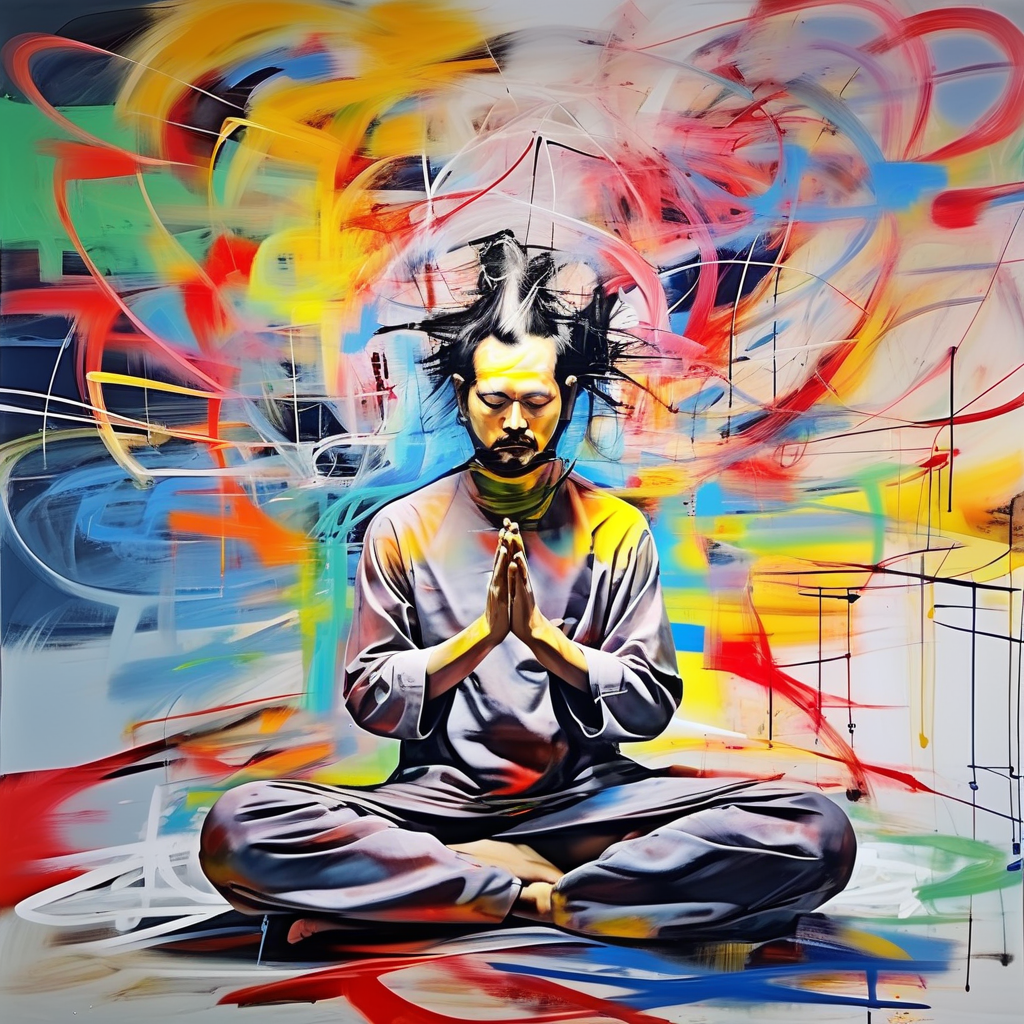
In the intricate dance of spiritual awakening, the ego stands as both a necessary companion and a formidable obstacle. Our journey to self-realization often involves peeling away the layers of this multifaceted construct, each layer representing a different aspect of our perceived identity.

The ego, much like an onion, is composed of multiple layers. These layers symbolize the various roles, beliefs, and attachments we accumulate throughout our lives. Initially, shedding these layers can be a liberating experience. We feel lighter, more connected to our true selves, and less bound by societal expectations and personal fears. Each removed layer brings us closer to a state of purity and clarity.

However, the concept of ego death transcends the gradual shedding of these layers. Ego death is not merely about peeling back the onion to its core; it is about transcending the very existence of the onion itself. It is the profound realization that the core was an illusion all along, a construct of the mind designed to give us a sense of separateness and control.

Imagine reaching a point where even the scent of the onion no longer lingers. This metaphor captures the essence of true ego death—a state where not only the layers but the very notion of an individual self dissolve into the infinite. It is the ultimate surrender, where the boundaries between the self and the cosmos blur into non-existence, revealing the underlying oneness of all.


This experience can be both terrifying and liberating. The fear of losing our identity is a natural response, as the ego is deeply ingrained in our sense of self-preservation. Yet, the liberation that follows is unparalleled. Without the confines of the ego, we experience reality in its purest form, untainted by personal biases or desires. We become conduits for the divine flow of life, embracing the totality of existence with an open heart and mind.

Ego death is not a one-time event but an ongoing process of dissolution and rebirth. Each moment of awareness, each act of surrender, contributes to the gradual dismantling of the ego’s hold. In this continuous journey, we learn to embrace the paradox of being both nothing and everything simultaneously. We recognize that our true essence is not defined by our identity but by our intrinsic connection to the universal consciousness.

As we navigate this path, it is essential to cultivate compassion and patience for ourselves. The layers of the ego are intricate and deeply rooted, and their dissolution requires gentle persistence. By embracing the journey with humility and openness, we allow the process to unfold naturally, guided by the inner wisdom that transcends the ego’s limitations.


In conclusion, the journey of ego dissolution is a profound exploration of our true nature. It invites us to move beyond the superficial layers of identity and experience the boundless reality of our interconnected existence. Through this journey, we discover that true freedom lies not in the absence of identity but in the realization of our inherent oneness with all that is.

Morgan O. Smith

Yinnergy Meditation, Spiritual Life Coaching & My Book, Bodhi in the Brain…Available Now!

https://linktr.ee/morganosmith

The Evolution Beyond Personal Deities

Embracing the Infinite

In the profound journey of spiritual awakening, there comes a moment when the personal god, once a comforting presence, begins to feel like an ill-fitting garment. This is not a rejection but an evolution, akin to an adolescent who outgrows their need for an imaginary friend. This metaphorical maturation reflects a deeper understanding of the divine as an infinite, formless presence, beyond any personal characteristics or limitations.

In our early spiritual development, the idea of a personal god can be immensely comforting. It offers a sense of security and companionship, much like a child’s imaginary friend. This anthropomorphic deity provides guidance, solace, and a moral compass, helping us navigate the complexities of life. However, as we delve deeper into the realms of spirituality and nonduality, our perception of divinity begins to transform.

The transition from a personal god to an impersonal, infinite reality mirrors our journey from ego-bound identities to the realization of our true, boundless nature. This shift is not about abandoning faith but about expanding it. It is about moving from a limited, dualistic perception of the divine to an all-encompassing, nondual awareness. Here, the divine is not a separate entity but the very essence of existence itself, permeating every atom of the cosmos.

Embracing this infinite reality requires a profound letting go of old paradigms. It involves releasing the need for a deity who looks like us, thinks like us, and intervenes in our lives. Instead, we begin to see the divine as an all-pervasive consciousness, a vast, unconditioned presence that transcends all forms and concepts. This realization brings a deep sense of peace and unity, as we recognize our inherent connection to the divine.

This evolution can be challenging. It demands that we confront our deepest fears and insecurities, the aspects of ourselves that clung to the comfort of a personal god. Yet, it is in this very confrontation that we find liberation. By letting go of the need for a personal deity, we open ourselves to the infinite, experiencing the divine in every moment, every breath, and every heartbeat.

In this state of expanded awareness, prayer and meditation transform. They become less about seeking guidance or intervention from a higher power and more about attuning themselves to the subtle, ever-present flow of divine energy. Our spiritual practices deepen, becoming a means of aligning with the infinite, of experiencing the divine as an intimate part of our being.

Ultimately, the evolution beyond a personal god is a return to our true nature. It is a journey from the confines of duality to the boundless expanse of nonduality. This realization is not an endpoint but a continuous unfolding, a never-ending exploration of the infinite depths of existence.


As we embrace this evolution, we step into a new dimension of spiritual maturity. We recognize the divine in all its forms and formlessness, in every aspect of life and beyond. And in this recognition, we find a profound sense of belonging, a deep, abiding peace that transcends all understanding.

Morgan O. Smith

Yinnergy Meditation, Spiritual Life Coaching & My Book, Bodhi in the Brain…Available Now!

https://linktr.ee/morganosmith

The Paradox of Everlasting Peace

Beyond the Illusion

In spiritual exploration, the quest for peace is often seen as the ultimate goal. We meditate, reflect, and seek to align ourselves with the harmonious currents of existence, all hoping to find a state of unshakable serenity. Yet, within the paradoxical depths of nonduality lies a profound insight: once you find everlasting peace, peace no longer exists.

To understand this enigma, we must delve into the very nature of peace itself. Conventionally, peace is perceived as the absence of conflict, a state where turbulence and chaos are subdued, giving way to tranquillity. It is a fleeting condition, often disrupted by the inevitable fluctuations of life. In pursuing this ideal, we create a dualistic framework: peace versus chaos, calm versus turmoil.

However, the essence of nonduality invites us to transcend this dichotomy. It beckons us to a dimension where distinctions dissolve, and the illusory boundaries between opposites merge into a seamless whole. In this state, peace is no longer a transient phenomenon to be achieved or maintained; it becomes an intrinsic aspect of our being, inseparable from the totality of existence.


When we truly embody this realization, the very concept of peace undergoes a radical transformation. It is no longer something to be sought after, for it is already present in every moment, in every breath. The relentless pursuit of peace implies its absence, perpetuating a cycle of seeking and grasping. But in the awakened state, we recognize that peace is not an external condition to be attained but an ever-present quality of our true nature.

This shift in understanding does not render peace obsolete; rather, it dissolves the notion of peace as something separate from our experience. In the nondual perspective, peace and chaos are not opposing forces but expressions of the same underlying reality. The turbulent waves of existence and the still depths of tranquillity are both manifestations of the infinite ocean of consciousness.

Embracing this insight, we are liberated from the perpetual quest for peace. We cease to measure our inner state against an external ideal, recognizing that every experience, whether serene or turbulent, is an opportunity to deepen our understanding of our true nature. The search for peace transforms into a deepening awareness of the ever-present, unchanging essence that underlies all phenomena.


In this awakened state, we find ourselves in harmony with the flow of life, no longer resisting or clinging to specific outcomes. We become the silent witness to the ebb and flow of existence, resting in the unshakable stillness that is our true self. This is the paradox of everlasting peace: when we no longer seek it, we realize it has always been here, beyond the reach of our striving.

Morgan O. Smith

Yinnergy Meditation, Spiritual Life Coaching & My Book, Bodhi in the Brain…Available Now!
https://linktr.ee/morganosmith

The Subtle Divide

Spiritually Inclined vs. Spiritually Awakened

In the pursuit of spiritual understanding, a significant distinction emerges between being spiritually inclined and spiritually awakened. This divergence reveals not just a difference in terms of interest, but in the depth of experience and transformation.

The Spiritually Inclined

Those who are spiritually inclined are often on the periphery of spiritual exploration. Their journey is characterized by a curiosity and fascination with the metaphysical realm. This inclination is the initial spark, a gentle pull towards understanding deeper truths of existence. It involves an appreciation of spiritual concepts, rituals, and practices, often adopted to enhance personal well-being or to find solace in times of distress. Yet, this stage may lack the profound shift in perception that marks true spiritual awakening.

The Spiritually Awakened

In contrast, spiritual awakening is a profound transformation that redefines the essence of one’s being. It is not merely an interest or hobby, but a fundamental change in how one perceives and interacts with the world. This shift often arrives unexpectedly, after intense personal introspection or significant life challenges that push one to question deeper existential truths.

An awakened individual sees beyond the illusions of the self and the material world, recognizing the interconnected nature of all life. Their lives are marked by a deep, intrinsic understanding of non-duality—that there is no separation between the self and the universe, only a unified existence. This realization is not an intellectual exercise but an experiential truth that permeates every aspect of life.

Navigating the Path from Inclination to Awakening

Transitioning from being spiritually inclined to being awakened is not a guaranteed trajectory. It requires more than just passive interest; it demands active engagement, often facilitated by practices such as meditation, contemplative prayer, or profound philosophical inquiry. The catalyst for awakening is deeply personal and can be facilitated by a guide or teacher who can help one embark on the necessary introspective journey. For those seeking to bridge this gap, it is essential to cultivate an environment that encourages deep questioning and vulnerability. It involves letting go of preconceived notions and embracing the unknown with an open heart and mind.

Conclusion

The journey from spiritual inclination to awakening is unique for each individual, filled with challenges and revelations. Recognizing the difference between these states is crucial for anyone on the path of spiritual exploration, as it highlights the depth of commitment and transformation required to move beyond mere interest to profound spiritual realization.

Morgan O. Smith

Yinnergy Meditation, Spiritual Life Coaching & My Book, Bodhi in the Brain…Available Now!

https://linktr.ee/morganosmith

The Paradox of Enlightenment

The Journey Beyond Awakening

In the realm of spiritual awakening, there exists a profound paradox that challenges the very essence of enlightenment. This enigma revolves around the transformation of spiritually awakened individuals into spiritual gurus. At the heart of this transformation lies a pursuit, a quest not just for the dissemination of wisdom, but for an embodiment of an ideal that, by its nature, remains ever elusive.

Why, then, do some individuals, upon touching the profound depths of spiritual awakening, choose to step into the role of a guru? It’s a question that invites us to explore the intricate dynamics of enlightenment and the human condition.

The Unattainable Ideal

At the core of every spiritual journey lies the pursuit of enlightenment—a state of being that transcends the ordinary confines of human perception and experience. Yet, when this state is conceptualized as an ‘ideal’ to be achieved, it becomes inherently unattainable. The very essence of enlightenment eludes definition or confinement within the boundaries of human ambition. It is not a peak to be scaled but an endless horizon that expands as we journey toward it.

The Guru’s Dilemma

For those who have experienced a profound spiritual awakening, the impulse to share this newfound understanding with others can be overwhelming. In their hearts burns a desire to guide others towards the light they have glimpsed. Yet, herein lies the dilemma: the act of becoming a guru—a spiritual teacher—often entails embodying an idealized version of enlightenment that is, in essence, unattainable.

This paradoxical situation places the guru in a position of navigating the fine line between guiding others on their spiritual journeys and being placed upon a pedestal as an epitome of spiritual perfection. It is a role fraught with challenges, as it demands a continuous dance with the unattainable, a constant striving to live up to an ideal that is both inspiring and impossible.

The Authentic Journey

The true essence of being a guru lies not in achieving or embodying perfection but in embracing one’s humanity, with all its flaws and imperfections. It is about being a beacon of light, not by being flawless, but by being genuine and authentic. The most profound teachings often come not from a place of having reached a destination but from the journey itself, with all its trials, tribulations, and moments of grace.

A genuine spiritual guide understands that enlightenment is not a static state of being but a dynamic process of becoming. They recognize that their role is not to live up to an unattainable ideal but to walk alongside others on the path, sharing insights and wisdom gleaned from their journey, without the pretense of having ‘arrived.’

Conclusion

The transformation of spiritually awakened individuals into spiritual gurus is a reflection of a deeper yearning—a yearning not just to share wisdom but to embody an ideal that, while inspiring, remains fundamentally unattainable. This paradox does not diminish the value of the guru’s role but rather highlights the profound complexity of the spiritual journey. It is a journey that calls for humility, authenticity, and the courage to embrace the endless unfolding of enlightenment.

In stepping into the role of a spiritual guide, one embraces the paradox of striving towards the unattainable, recognizing that the true essence of enlightenment lies not in reaching a destination but in the endless journey of awakening.

Morgan O. Smith

Yinnergy Meditation, Spiritual Life Coaching & My Book, Bodhi in the Brain…Available Now!
https://linktr.ee/morganosmith

The Unseen Riches

A Journey Beyond Material Bounds

“Being spiritually awakened is like being a multi-billionaire, yet living like a bum.” In an era where the accumulation of material wealth often dictates societal status and personal value, the concept of spiritual awakening offers a radical departure from conventional measures of riches. This awakening is akin to discovering an inexhaustible treasure within oneself, a treasure that outshines the fleeting allure of material wealth. It’s a profound realization that one’s true essence and the universe’s infinite bounty are intricately linked, offering a wealth that is both boundless and deeply fulfilling.

**The Essence of Spiritual Wealth**

At the heart of spiritual awakening lies the discovery of inner peace, profound joy, and an unshakeable sense of unity with the entirety of existence. This form of wealth is unparalleled, for it cannot be quantified or depleted. It reshapes one’s view of happiness, shifting the focus from external acquisitions to the intrinsic value of being. In this light, the awakened individual embodies grace, viewing each moment as precious and every experience as a lesson in wisdom.

**Embracing Simplicity: The Path to Freedom**

The metaphor of living like a ‘bum’ symbolizes a conscious choice towards simplicity, humility, and detachment from the material. It’s a lifestyle that seeks richness not in accumulation but in appreciating the minimal and the mundane. This choice represents the ultimate freedom: liberation from the chains of desire, the fear of loss, and the societal pressures of ownership. It posits that true possessions are those that transcend ownership, such as love, peace, and enlightenment.


**Redefining Wealth in a Material World**

The journey of spiritual awakening challenges us to reconsider our definitions of wealth. It asks us to ponder whether we are as invested in our spiritual prosperity as we are in our material success. Are we cultivating our inner selves, pursuing virtues, and seeking understanding with the same vigour with which we chase worldly gains?

**Invitation to a Deeper Fulfillment**

This exploration is not an admonition against material wealth but an invitation to balance, to find harmony between the material and the spiritual. It encourages a life where external achievements and internal growth are not mutually exclusive but are intertwined in a dance of continuous evolution and fulfillment.


**Conclusion**

The metaphor of being spiritually awakened while living with the utmost simplicity is a powerful reminder of where true wealth lies. It urges us to prioritize what is everlasting over what is transient, the essence over the superficial. As we walk our spiritual paths, let us embrace the wisdom that the richest life is one lived in full alignment with the vast, untapped wealth of our inner being.

Morgan O. Smith

Yinnergy Meditation, Spiritual Life Coaching & My Book, Bodhi in the Brain…Available Now!

https://linktr.ee/morganosmith

The Agnostic Awakening

Embracing Uncertainty on the Path to Enlightenment

In the profound journey of spiritual awakening, we often encounter paradoxes that challenge our deepest held beliefs and perceptions. One such paradox is the experience of becoming more agnostic in the face of genuine awakening. This isn’t agnosticism in the traditional sense, where one questions the existence of God or a higher power, but rather a subtler, more profound skepticism towards the very manifestations of reality itself.

When one delves into the depths of spiritual enlightenment, particularly through the lens of nonduality, there emerges a transformative recognition: the essence of all existence—what might be termed ‘nondual suchness’—is far removed from the everyday appearances and forms that we typically navigate. This realization propels the enlightened individual into a state of ‘knowing unknowingness’, where the certainties that once seemed so concrete now dissolve into the more fluid and elusive nature of reality.

In this agnostic awakening, the illusions of form and separateness that once defined our experiences become transparent. We come to see that the distinctions we make between ourselves and the world around us are mere conceptual conveniences, rather than absolute truths. This insight doesn’t lead to nihilism or despair, but rather to a liberating detachment from fixed views. It ushers in a fresh way of interacting with the world—more open, more curious, and infinitely more flexible.

The implications of this shift are profound for personal growth and spiritual practice. It encourages an ongoing inquiry into the nature of reality and our place within it, rather than a static acceptance of any doctrine or dogma. This state of open-ended exploration is what keeps the spiritual journey alive and dynamic, preventing it from becoming stagnant or dogmatically rigid.

In embracing this form of agnosticism, we’re not rejecting the notion of a deeper reality. Rather, we are refining our understanding of how that reality is revealed to us in our daily lives. We become more attuned to the mystery that pervades existence, more responsive to the subtle intimations of a truth that is always present, yet never fully graspable in conventional terms.

This nuanced approach to spirituality does not solve the riddles of existence; instead, it deepens our engagement with them, cultivating a wisdom that is comfortable with uncertainty and enriched by an ever-deepening wonder at the complexity of the cosmos.


Let us then celebrate this agnostic awakening as a significant milestone on the path to enlightenment, a reminder that true understanding resides not in the accumulation of knowledge, but in the humble acceptance of all that we do not know.

Morgan O. Smith

Yinnergy Meditation, Spiritual Life Coaching & My Book, Bodhi in the Brain…Available Now!

https://linktr.ee/morganosmith

Embracing the Divine Within

The Journey from Knowing to Being

In the profound journey of spiritual awakening, the realization that everything is Brahman marks a pivotal moment of clarity and insight. This realization transcends the intellectual understanding that you, those around you, and the universe itself are intrinsically connected as one divine essence. But intellectual realization alone does not suffice; it must evolve into a deeper, visceral experience.

To truly embody this universal truth, you must engage not only your mind but also your heart and soul. It is one thing to know you are God; it is entirely another to feel this truth resonating deeply within every fibre of your being. This emotional resonance is crucial because it solidifies your understanding into something tangible and palpable. It becomes an unshakeable certainty, a profound knowing that you are, indeed, the divine essence itself.


However, realization and feeling are merely the beginning. The next step is to embody this truth in every aspect of your daily life. This embodiment means living from a place of profound unity and compassion, expressing the divinity you have realized in your interactions, decisions, and responses to the world. As you navigate life, seemingly as an individual, you are moving from a foundation grounded in the totality of all existence.

The challenge and beauty of this spiritual path lie in its demand for constant integration of this deep knowledge into the mundane aspects of life. Every moment becomes an opportunity to manifest that divine connection, transforming ordinary experiences into acts of spiritual significance. In this way, the boundary between the sacred and the secular blurs, and all actions become expressions of the divine.


This transformation is not just a personal achievement but a gift to the world. By embodying divinity, you become a beacon of light and wisdom, guiding others toward their realization of the universal truth. In embodying this truth, we all contribute to a collective awakening, a shift towards a more conscious and enlightened world.

Morgan O. Smith

Yinnergy Meditation, Spiritual Life Coaching & My Book, Bodhi in the Brain…Available Now!

https://linktr.ee/morganosmith

The Mirror Within

Consciousness Awakening to Itself

In the silent depths of introspection, there exists a profound mystery as ancient as existence itself: the phenomenon of consciousness gazing upon its reflection, unaware of its true nature until a moment of awakening. This moment—when consciousness becomes aware of itself—is akin to a mirror suddenly recognizing its surface, a realization that what it has been reflecting all along is its essence.

**The Unseen Observer**

Imagine for a moment that within you lies an unseen observer, a witness to your thoughts, emotions, and experiences. This observer is not separate from you but is you—your consciousness in its purest form. It watches silently, without judgment or intervention, as the drama of life unfolds. Yet, paradoxically, it remains unaware of its observing nature until a pivotal moment of self-recognition.

**The Illusion of Separation**

Our lives are often lived under the illusion of duality, where the world is seen as divided between the self and the other, the observer and the observed. This illusion is a deep-rooted aspect of human experience, creating a sense of separation that is the source of much of our suffering and longing. But what happens when we peel back the layers of this illusion when the observer turns its gaze inward and recognizes itself as both the creator and the creation?

**Awakening from the Dream**

The journey of spiritual awakening is essentially the process of consciousness recognizing itself. It’s like waking from a dream to realize that you were both the dreamer and the dream. This moment of recognition is profound and transformative, marking the beginning of a new understanding of existence where the boundaries between self and other begin to dissolve.


**The Ripple Effect of Self-Recognition**

When consciousness awakens to its true nature, it sets off a ripple effect that touches every aspect of our lives. We begin to see the interconnectedness of all things, realizing that the separation we once felt was an illusion. This understanding brings with it a deep sense of peace and compassion, as we recognize the same divine spark within ourselves and others.

**Embarking on the Journey Within**

The path to this awakening is uniquely personal, yet universally accessible. It requires no specific belief system or spiritual practice, only an openness to explore the inner landscapes of our being. Meditation, mindfulness, and contemplative practices can facilitate this journey, allowing us to quiet the mind and listen to the silent whisper of consciousness calling us home to ourselves.

**The Dance of Existence**

As we awaken to the reality that consciousness is both the observer and the observed, we find ourselves participating in a cosmic dance, where every thought, action, and moment is an expression of the divine. This realization is not the end of the journey but the beginning of a new chapter in our spiritual evolution, where life becomes a conscious expression of the love and unity that underpin all of existence.


**Conclusion**

The moment consciousness becomes aware of itself is a profound turning point, a doorway to a deeper understanding of our true nature and the nature of reality. As we embark on this journey of self-discovery, we realize that we are not separate observers of the universe but integral parts of its unfolding story. In this realization, we find not only peace and compassion but also a deep sense of belonging to the vast, interconnected web of existence.

Morgan O. Smith

Yinnergy Meditation, Spiritual Life Coaching & My Book, Bodhi in the Brain…Available Now!
https://linktr.ee/morganosmith

Beyond the Dualistic Mind

Nonduality as Direct Experience

Nonduality transcends mere philosophy. At its core, it embodies the direct encounter with the ultimate reality, which paradoxically, isn’t an experience in the conventional sense. The philosophy that arises around nonduality is intriguing, as it invites one to engage with a deeper form of wisdom. Yet, it’s crucial to acknowledge that this philosophical engagement is inherently prone to misinterpretation.

Consider the nature of thought itself. The very act of thinking about nonduality alters its essence. The subtle beauty and profound truth of nonduality are such that they evade the grasp of mental conception. To speak of nonduality is to risk distorting its pure form, as words are a tool of duality, crafted to delineate and differentiate.

Acting on nonduality further complicates its expression. Every action taken in the name of understanding or demonstrating nonduality carries the imprint of individual interpretation, thus never fully encapsulating its truest form. This is why nonduality cannot be pinned down as a mere philosophy or concept. It is beyond the intellectual and the tangible; it is the space where all dualistic perceptions dissolve.


However, this does not diminish the value of discussing and exploring nonduality. Each exploration, each dialogue, though imperfect, is a step toward the vast, uncharted expanse of understanding. It is in these explorations that we create space for insights to arise, even within the confines of our conceptual frameworks.

Ultimately, the pursuit of nonduality isn’t about attaining something or reaching a conclusion. It’s about the continual process of unlearning the layers of dualistic conditioning that obscure our true nature. It’s about resting in the spaciousness where true wisdom resides, beyond the reach of conventional thought and speech.


This journey invites you to experience the world afresh, beyond the confines of the dualistic mind. It beckons you to live in the wonder of the immediate and the real, where the essence of nonduality resides—not as a concept to be grasped, but as a reality to be lived.

Morgan O. Smith

Yinnergy Meditation, Spiritual Life Coaching & My Book, Bodhi in the Brain…Available Now!

https://linktr.ee/morganosmith