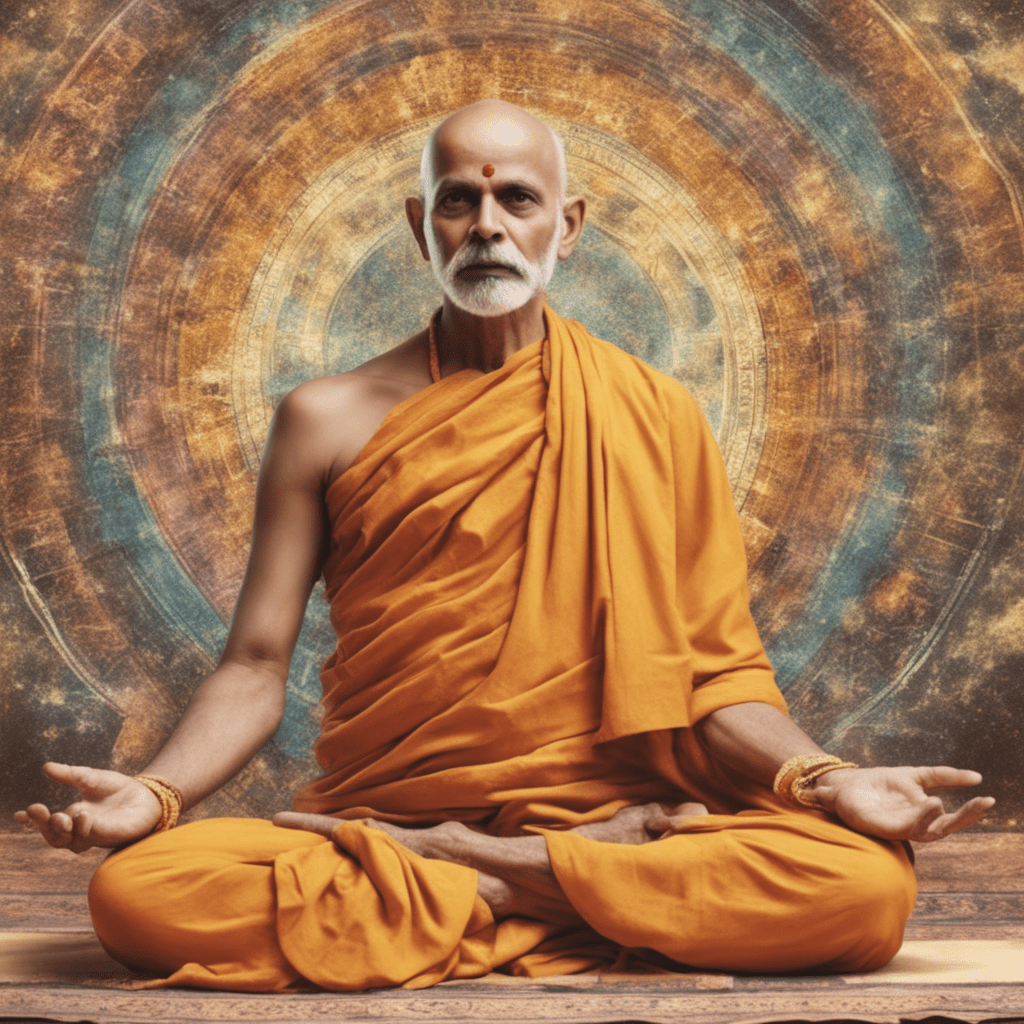
Beyond the Boundaries of Individual Identity
In the vast tapestry of human experience, one of the most profound and transformative realizations is the awakening to a sense of identity that stretches far beyond the individual self. This philosophical journey, explored by thinkers, mystics, and seekers throughout history, offers an exploration into the very essence of what it means to be human, and more profoundly, what it means to be a part of the cosmos.
### The Layers of Self
**1. The Individual Identity**: Our daily lives are governed by our personal experiences, histories, and beliefs. This individual self, encapsulated by our distinct personalities, desires, and aspirations, is like a drop in the vast ocean of existence.
**2. The Collective Identity**: There are moments, often inspired by shared experiences, when we resonate with a group, whether based on nationality, religion, or shared purpose. Here, the boundaries blur slightly, and the drop becomes a wave, united in its motion with other droplets.
**3. The Universal Self**: Delving deeper, we encounter a realm where the wave realizes it’s not just a part of the ocean, but the ocean itself. This vast sense of identity, encompassing all of life, the universe, and the myriad forms within it, is an experience of unity and oneness with all that exists.
### The Power of Oneness
With an expanded identity, empathy and compassion naturally flourish. The pain and joy of another are no longer abstract experiences; they become deeply personal as if they were our own. This profound interconnectedness also extends to nature, leading to an intrinsic desire to safeguard the environment and all its inhabitants.
Moreover, as one navigates this expanded identity, the grip of personal desires and ego-based needs loosens. Life begins to flow with an acceptance of its unfolding mystery, reducing resistance and enhancing serenity.
### Mystical Insights and Modern Science
Historically, mystics from various traditions spoke of experiences of union with the divine, the universe, or the underlying essence of reality. Today, intriguingly, modern science, especially in fields like quantum physics, hints at ideas of interconnectedness and non-locality. Such insights suggest that the ancient intuitions of interconnectedness may have parallels in our current understanding of the cosmos.
### Challenges of the Expansive Self
However, this journey is not without its pitfalls. As we embrace a broader sense of self, there’s the risk of “spiritual bypassing” – a tendency to use these expansive realizations to sidestep personal issues or challenging emotions. An expansive identity doesn’t negate personal responsibilities or the need for personal boundaries. It invites a deeper engagement with life in all its complexity.
### Conclusion
Our identity’s evolution, from a solitary droplet to the vast ocean, is a journey of consciousness and profound realization. It reminds us that beneath the multiplicity and diversity of existence lies an undercurrent of unity, urging us to rediscover and embrace our place in the cosmos.
As we ponder on the vastness of our identity, it serves as a beacon, guiding us toward a life of deeper meaning, connection, and purpose. In recognizing our expansive self, we find not only our place in the universe but also the universe within ourselves.
Morgan O. Smith
Yinnergy Meditation & My Book, Bodhi in the Brain…Available Now!

 Morgan O. Smith