The Pathless Arrival

No Path Leads to What Has No Distance

The moment a seeker sets out on the path, a paradox quietly begins to unfold. Every step forward seems to promise arrival, yet what one hopes to reach has never been absent. The illusion of a distance to cross is what fuels the journey, and still, that distance does not exist.

Awakening is not a reward at the end of a road; it is the recognition that the road itself was always part of the illusion. The mind measures, compares, calculates progress, but the truth it seeks cannot be measured, compared, or progressed toward. Presence has no edge, no centre, no circumference. Nothing stands apart from it, nothing can be added to it, and nothing can be taken away.

Those who search often feel both exhaustion and longing, as if running toward a horizon that continually retreats. Yet horizons retreat only because they were never there to begin with. What is sought is closer than breath, closer than thought; it is what makes breath and thought possible.

To realize this is not to abandon the journey, but to recognize its true nature. Every path walked, every practice undertaken, every longing felt, each is a movement within what has never moved. The path is not a bridge toward truth but a gesture of truth itself, echoing as experience.

When this becomes clear, striving gives way to simplicity. Effort yields to intimacy. What you are searching for does not arrive because it has never been absent. No path leads to what has no distance.

Morgan O. Smith

Get Your Free Copy of My Book, Bodhi in the Brain!
https://subscribepage.io/oTSZQu

When “You” Disappear

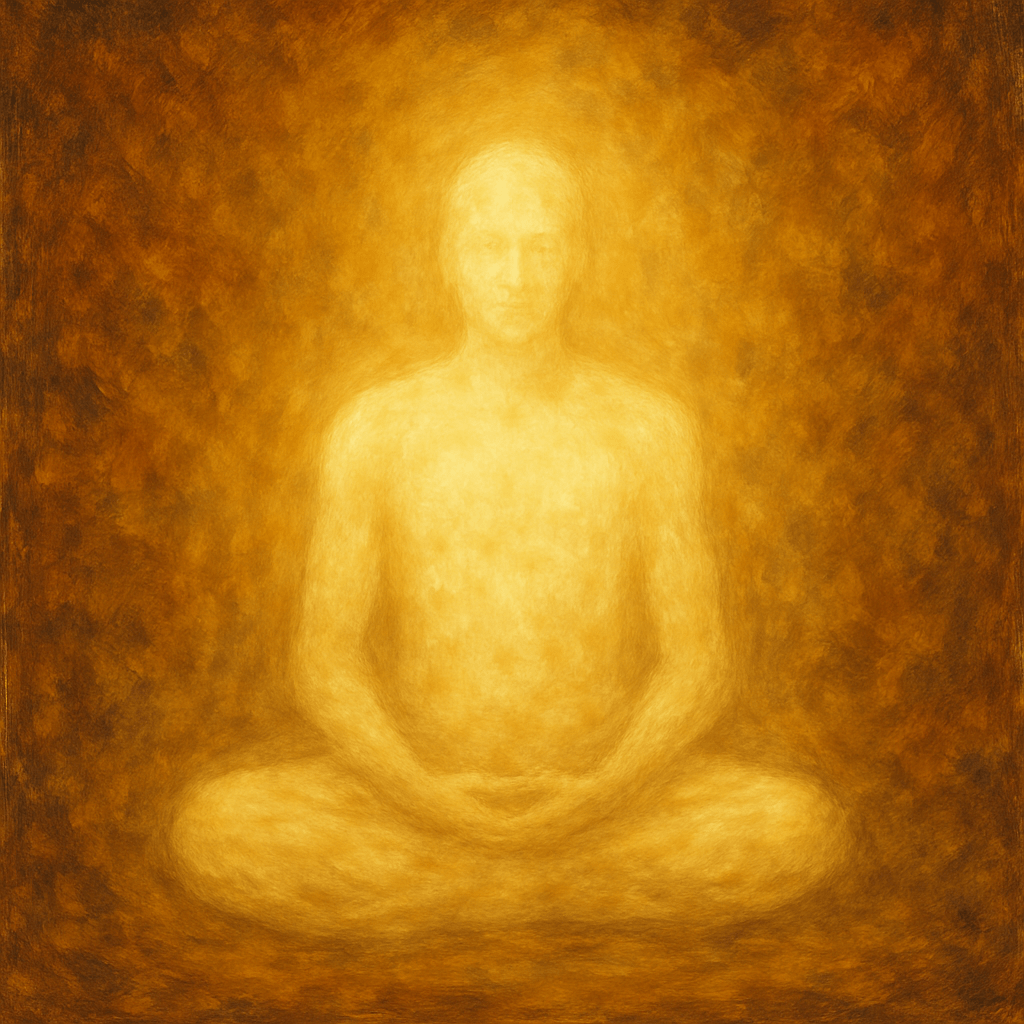
God is not found in the layers of personality, beliefs, or self-image. Those dissolve the moment you step out of the illusion of “me.” What remains when the scaffolding of identity crumbles is not absence, but presence, vast, unconditioned, indivisible.

The struggle for most seekers lies in clinging to the idea of a separate self. Every attachment to who you believe you are, your story, your role, your wounds, creates the illusion of separation from God. Yet God has never been apart from you. God is what has always been here, quietly holding even your attempt to define God.

When “you” disappear, nothing is lost. What is left is clarity so immediate that it cannot be explained, only lived. It is a recognition that existence itself has no centre and no boundary. Every breath, every sound, every sensation reveals itself as the movement of the One Reality, free of your commentary.

This realization is not a grand acquisition; it is the collapse of the idea that there was ever anyone to acquire it. The vanishing of the personal self exposes a truth so intimate that it cannot be possessed. It is not “your” truth, it is truth itself.

To awaken to this is to discover that God was never hidden. God is not the object of your search, but the space in which the search appears and disappears. The seeker dissolves, and what remains is the unbroken light of Being.

Morgan O. Smith

Get Your Free Copy of My Book, Bodhi in the Brain!

https://subscribepage.io/oTSZQu

Designed for Longing

The Gift of Dissatisfaction

Satisfaction often appears as a destination, something to be reached, secured, and held onto. Yet the moment one grasps it, a subtle hunger begins to stir again. The new job, the relationship, the recognition, the spiritual experience—all of it, no matter how profound or fulfilling, eventually reveals its transience.

What if this is not a flaw in human nature, but the very design of it? To never be fully satisfied is not a curse but a compass. It pushes us forward, beckoning us into deeper terrains of discovery, love, and creativity. The ache of incompletion is what keeps us alive to possibility. Without it, our spirit would stagnate.

Satisfaction is not the absence of desire but the willingness to engage with desire without being enslaved by it. To live in peace with dissatisfaction is to realize that fullness and emptiness coexist. The longing itself becomes a teacher, whispering that no object, achievement, or moment will ever be enough, because “enough” is not an endpoint, but an ongoing movement.

To accept this is to loosen the grip on perfection. You no longer demand that life provide a final fix, a permanent conclusion. Instead, you walk with the paradox: satisfaction arises from embracing dissatisfaction. The search for completion unveils the truth that nothing was missing in the first place.

The wisdom here is subtle. Contentment does not mean settling. It means seeing the beauty of being forever unfinished, of being shaped by desire but not consumed by it. Your very dissatisfaction becomes evidence that you are part of an unfolding reality, one that will never exhaust its depth.

Satisfaction lies not at the end of longing, but in the freedom to let longing remain.

Morgan O. Smith

Get Your Free Copy of My Book, Bodhi in the Brain!

https://subscribepage.io/oTSZQu

The Subtle Distinctions of Oneness, Nonduality, and the Sacred

To speak of oneness is to point to a direct perception where boundaries dissolve and all things merge into a singular whole. It is an overwhelming intimacy with existence itself—nothing stands apart, no subject or object remains. The experience carries a profound sense of union, yet it still acknowledges a felt “all” that has become “one.”

Nonduality, by contrast, is not the merging of things into one but the recognition that no separation ever truly existed to begin with. The very categories of “one” and “many” collapse. There is no subject perceiving unity, no object being unified—just the unbroken reality that precedes both. Here, the language of experience falters because even the notion of “an experience” implies duality between experiencer and what is experienced.

To call all things divine or sacred is yet another register. This perception imbues life with reverence, not only as one undivided whole but as shimmering expressions of the holy. Every moment, every being, every breath radiates significance. It is not merely that things are nondual, but that the nondual reality is inherently worthy of devotion. The sacred quality does not rest on belief; it is revealed when perception is refined enough to sense the luminous depth at the heart of being.

The distinctions are subtle, yet they matter. Oneness offers belonging. Nonduality uproots the illusion of separation. The sacred awakens awe and reverence for what is. Together, they sketch the contours of realization, each layer illuminating a different face of truth.

When all three—oneness, nonduality, and the sacred—merge seamlessly, a higher recognition dawns: absolute monism. Here, the whole of existence is seen as a single reality that is simultaneously one, beyond duality, and inherently divine. Nothing is outside of it, nothing is other than it, nothing is less than it. The boundaries of philosophy, devotion, and direct experience collapse into the same source. This is not a synthesis of perspectives but the revelation that they have always been expressions of the same truth. Absolute monism discloses the indivisible essence where belonging, emptiness, and holiness are not separate qualities but different ways of perceiving what is eternally and already the case.

Morgan O. Smith

Get Your Free Copy of My Book, Bodhi in the Brain!
https://subscribepage.io/oTSZQu

The Fiction of Randomness

If every effect has a cause, what room remains for the idea of “random”? Strip away the assumptions and peer into the structure of unfolding—what appears arbitrary may only be the limit of our perception, not the limit of reality.

What we call random is simply what we cannot trace. A roll of dice seems disorderly, but beneath it is a network of variables: velocity, angle, friction, momentum, density of the table, even micro-vibrations in the air. Were we to measure all these with precision, we would predict the outcome every time. The surprise we feel isn’t due to chaos, but to ignorance.

This is not about turning life into a mechanical calculation. Quite the opposite. It’s about bowing to a deeper intelligence that is so vast, so precise, it weaves galaxies from the quantum breath of atoms. When nothing is out of place, even disorder is part of a symmetry too subtle for the linear mind to grasp.

Events that seem unexplainable—miracles, tragedies, synchronicities—often get dumped into the “random” pile because they defy our narratives. Yet each thread is embedded in a continuum of unfolding, stretching far beyond memory, culture, or even lifetime.

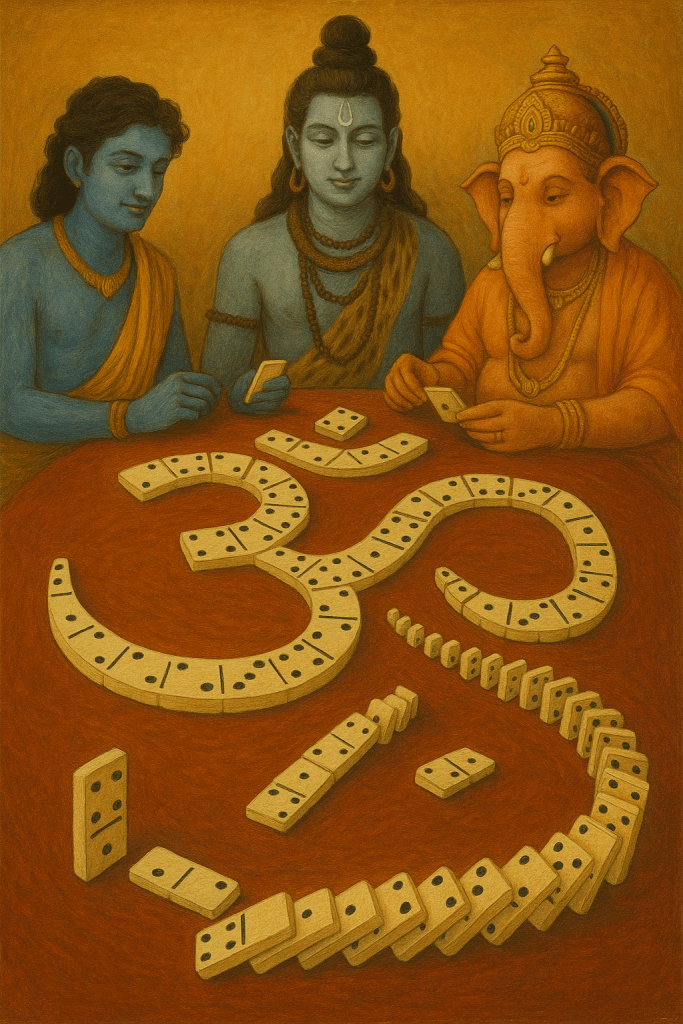
To say life is random is to deny the sacred choreography of emergence. Every moment is connected, not as dominoes collapsing mindlessly, but as a living mandala of causes so intricately interlaced they cannot be undone or simplified.

When one begins to see this—really see it—the need to explain, justify, or control begins to fall away. What replaces it is not fatalism, but participation. There is no randomness, only the undetected curvature of deeper causality. And when that is recognized, trust becomes more than a spiritual concept. It becomes a way of being.

Morgan O. Smith

Get Your Free Copy of My Book, Bodhi in the Brain!
https://subscribepage.io/oTSZQu

The Divide

Between the Remembered and the Realized

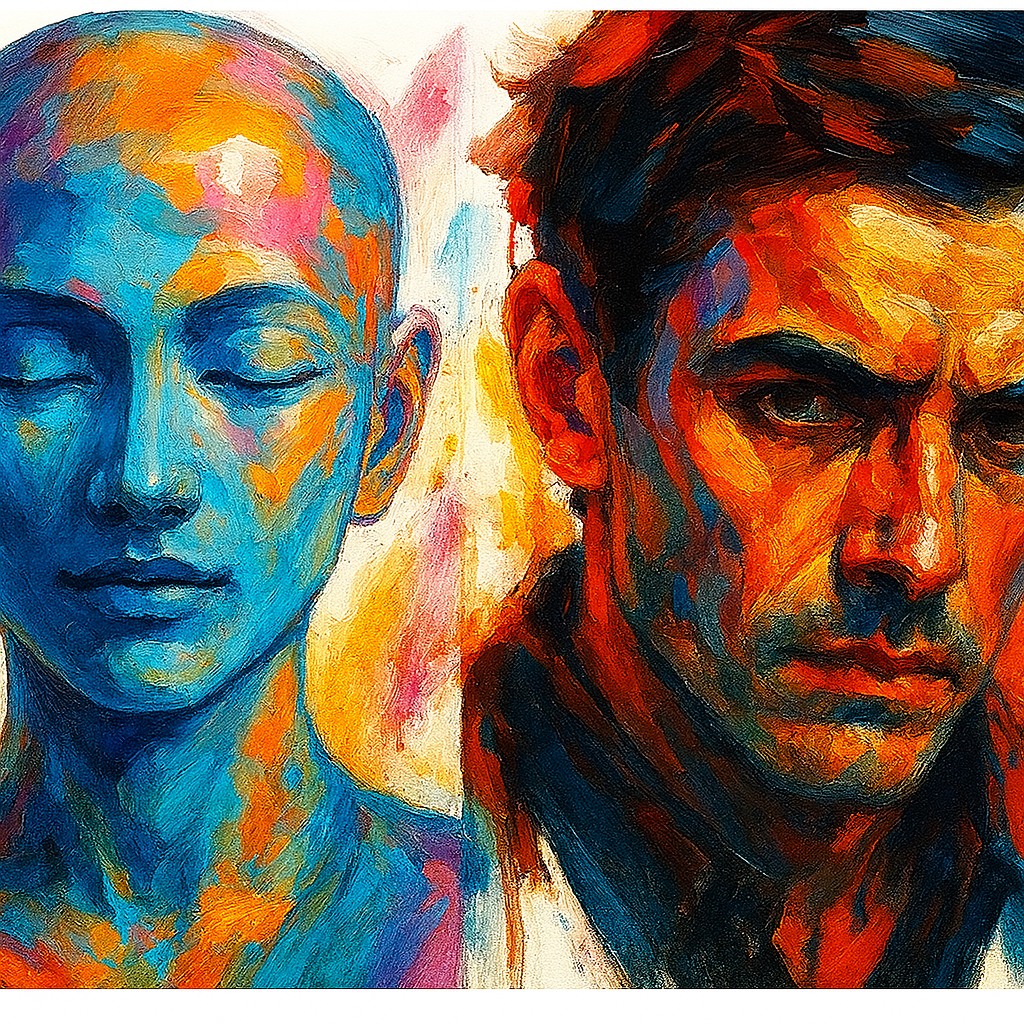
Enlightenment isn’t a collection of vivid memories. It isn’t a library of altered states or a gallery of peak experiences pinned to the walls of time. Enlightenment, in its truest sense, is what remains when all those moments pass. It is not recalled—it is present.

A spiritually enlightened being doesn’t describe what happened—they speak from what is. Their language may touch on form, but it arises from formlessness. It isn’t commentary on a past event; it is the echo of what is silently alive in that moment. Words are merely the condensation of what remains wordless within them.

Contrast this with the one who has had many spiritually enlightening experiences. There is often great sincerity, beauty, and wisdom in their sharing. But listen closely: their narrative carries timestamps. “This is what I saw… what I felt… what I realized…” There’s a distance, however subtle. A witness telling you what the moon looked like—rather than being the moon, shining right now, regardless of who’s watching.

This difference isn’t about hierarchy. One isn’t better, holier, or more awakened than the other. But there’s a distinct quality when realization is not merely visited, but abided in. When the identity that would lay claim to an experience has dissolved entirely.

Here’s the paradox: a being can be spiritually enlightened without ever having what we label as a “spiritual experience.” No blissful union, no white light, no serpents of energy climbing the spine. Their clarity is not the aftermath of an event—it is the absence of confusion. No fireworks. Just light.

They may speak little. Or not at all. There is no need to convince, convert, or collect followers. They are not on a path—they are the ground from which all paths appear.

On the other hand, a person with many enlightening experiences can describe with breathtaking poetry the landscapes of the soul. But unless those experiences have dissolved the one who experienced them, the self remains—refined perhaps, but still separate.

True awakening isn’t an experience you remember. It’s the end of the one who remembers.

This is why the most profound truths often arrive without announcement. A falling away, not an acquiring. A silent recognition that this—yes, this—is what always was. And suddenly, the need for experience evaporates. Presence alone becomes sufficient.

Morgan O. Smith

Get Your Free Copy of My Book, Bodhi in the Brain!
https://subscribepage.io/oTSZQu

Knowing vs. Believing

The Subtle Divide Between Truth and Interpretation

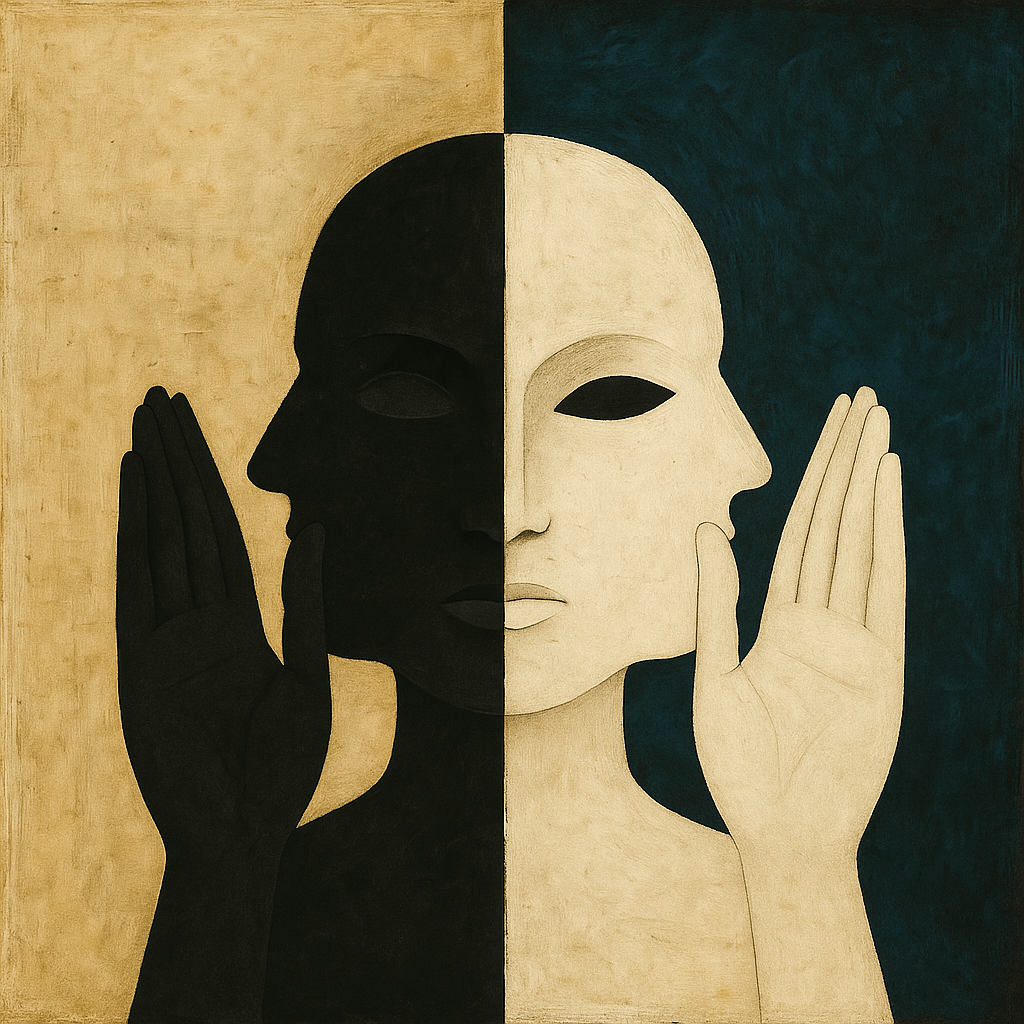
Knowing there’s a God is not a religious concept; believing in a God is.
One is a recognition—silent, direct, and intimate. The other is a construct—layered with doctrines, culture, and inherited symbols.

What is known requires no belief. It reveals itself without needing validation, much like light doesn’t require agreement to be seen. The moment belief arises, there is already a distance. A gap. A reaching toward what seems separate.

Belief is an echo of knowing, distorted by time, language, and fear.
It builds shrines to certainty where awe once stood unguarded. It memorizes truths that once moved freely through silence. And often, it turns the unknowable into a caricature—a God of preferences, sides, and punishments.

Knowing is not about having answers. It’s the crumbling of the question.
It doesn’t declare “There is a God.”
It dissolves the very boundary between the knower and what is known. There is no longer a subject seeking an object. Only the raw immediacy of Being aware of itself.

Those who know are rarely interested in convincing others.
Those who believe often are.

The danger isn’t belief itself—it’s mistaking belief for truth.
Truth, when known, renders belief obsolete.
It doesn’t divide, it doesn’t declare superiority—it simply is.

To know is to surrender the need for interpretation.
To believe is often to defend the interpretation, even at the cost of truth.

And yet, belief can serve as a bridge. A necessary illusion for those not yet ready to let go of the comfort of form. But let it be a bridge, not a home.

Morgan O. Smith

Get Your Free Copy of My Book, Bodhi in the Brain!

https://subscribepage.io/oTSZQu

The Knower and the Known

When Form Dreams of Itself

You are known by Being. Before identity could be sculpted by language, or selfhood dressed in names, something vast and wordless recognized you. Not as a separate object in the universe, but as the universe aware of itself through your eyes.

A being wished to be known. This desire was not born of lack, but of possibility—the silent joy of expressing wholeness through multiplicity. Thought stirred the stillness. From the quiet field of pure potential arose the illusion of distance between knower and known, seer and seen.

Form was the answer to a question never asked. Matter became a mirror for what could never be reflected. Consciousness, looping through itself, painted shapes on the canvas of time—not to find itself, but to taste itself.

But this story is recursive. The being that wished to be known by form was always Being itself, pretending to forget. It authored the forgetting so the rediscovery would be felt—so the dream of separation could end in the revelation of unity.

You are not a self trying to awaken. You are the awakening disguised as a self. Not a fragment, but the entirety momentarily folded into appearance. To be known by Being is to be undone by truth—not as something to gain, but as something to stop resisting.

So ask not who you are.

Ask who is asking.

And then allow the question to dissolve—until nothing remains but the Knowing itself, resting as what it has always been.

Morgan O. Smith

Get Your Free Copy of My Book, Bodhi in the Brain!

https://subscribepage.io/oTSZQu

The Wild That Waits Beneath the Surface

Between the cracks of a hardened exterior, something untamed begins to grow. What appears rigid, guarded, and impenetrable often hides the very pulse of life yearning to break through. Beneath the layers we construct to survive—defense mechanisms, cultivated personas, rehearsed identities—there exists a terrain untouched by conditioning. A wildness that remembers.

This is not the chaos of recklessness, but the primal intelligence of what is unfiltered and true. A force that doesn’t ask permission to bloom, yet waits patiently for silence, for softness, for the moment the surface begins to fracture. Then, without warning, the wild arrives.

Those fractures are not failures. They are doorways. Every heartbreak, every moment of doubt, every dismantling of certainty is a thinning of the veil—a soft opening. And what comes through is not ruin but rebirth.

What is wild has always been whole. The mind may resist it—accustomed to order, craving control—but the heart knows its rhythm. The body remembers its language. And once touched by it, you no longer strive to be “put together.” You begin to trust the spaces where things fall apart.

Growth doesn’t require perfection. It demands honesty. And the most fertile soil is often found not in polished appearances, but in the broken places where the untamed is allowed to root.

Let the wild speak. Let it stretch through the fractures of who you thought you had to be. That’s where life gets real. That’s where healing begins.

Morgan O. Smith

Get Your Free Copy of My Book, Bodhi in the Brain!
https://subscribepage.io/oTSZQu

The Illusion of Idols

Worshipping Reflections of Ourselves

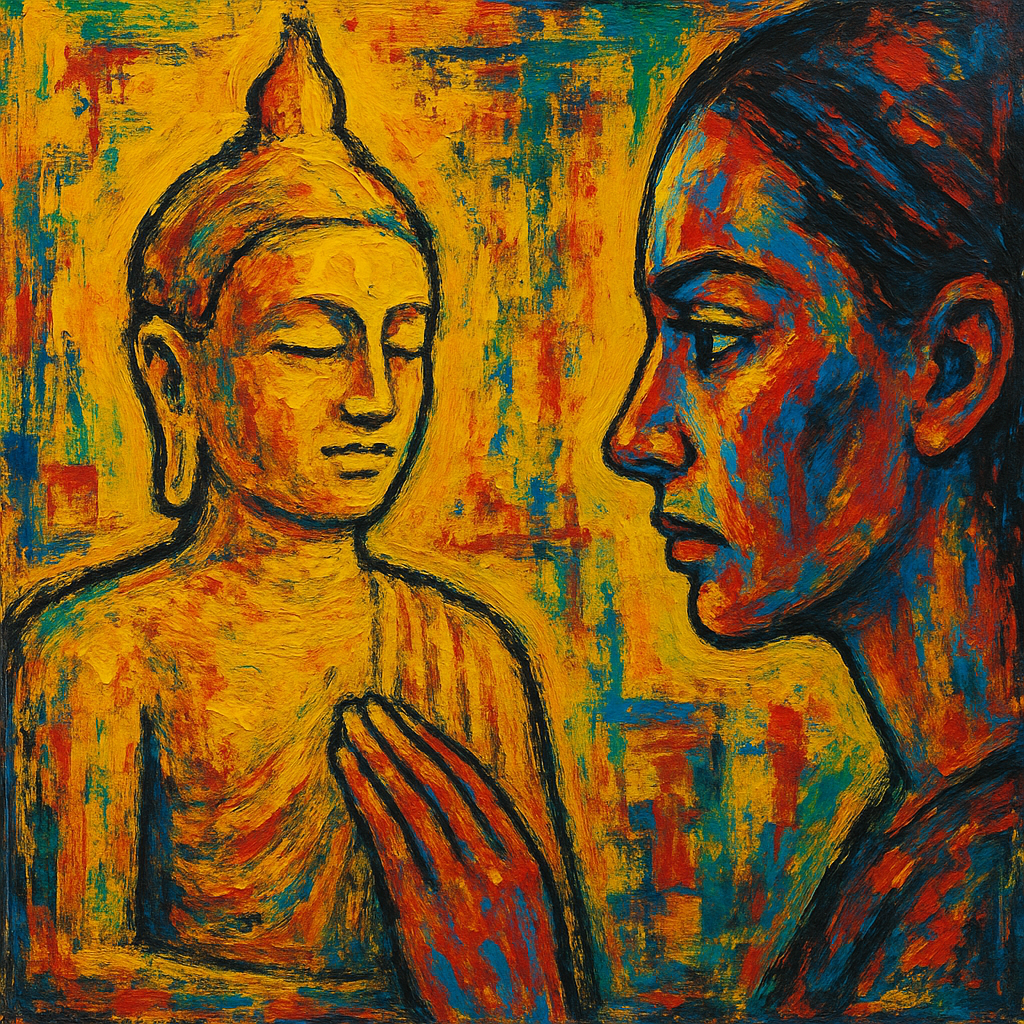
Longing for something greater, people shape deities from their deepest desires. Whether in objects, people, or ideals, devotion is placed upon symbols that mirror the unclaimed beauty within. The mind projects worth onto what seems external, never realizing that every idol is a reflection of an aspect of the self yet to be acknowledged.

Attachments form because something appears to be missing. A void is felt, and the world is searched for something to fill it. Objects become sacred, ideals turn into absolute truths, and figures of admiration rise to divine status. Not because they hold any inherent power, but because they embody what is believed to be absent in oneself.

A silent agreement is made: idols do not judge. Unlike the conflicted mind, they hold no contradictions, no inner turmoil, no weaknesses. Worship becomes an escape, a temporary relief from the weight of self-doubt. Celebrities, leaders, and public figures appear to stand beyond the chaos of thought, seemingly free from the struggles of ordinary existence. Until the illusion collapses, revealing that they too are bound by the same unseen chains.

Every idol, whether shaped in metal or memory, is nothing more than an echo of the forgotten self. The search for something to worship is the search for the parts of oneself that have been disowned. What is revered in another is what has not yet been embraced within.

The longing for something outside is merely the mind seeking its own wholeness. The moment this is realized, idols fall away, and what was once sought in another is found in the silence of one’s own being.

Morgan O. Smith

Get Your Free Copy of My Book, Bodhi in the Brain!

https://subscribepage.io/oTSZQu