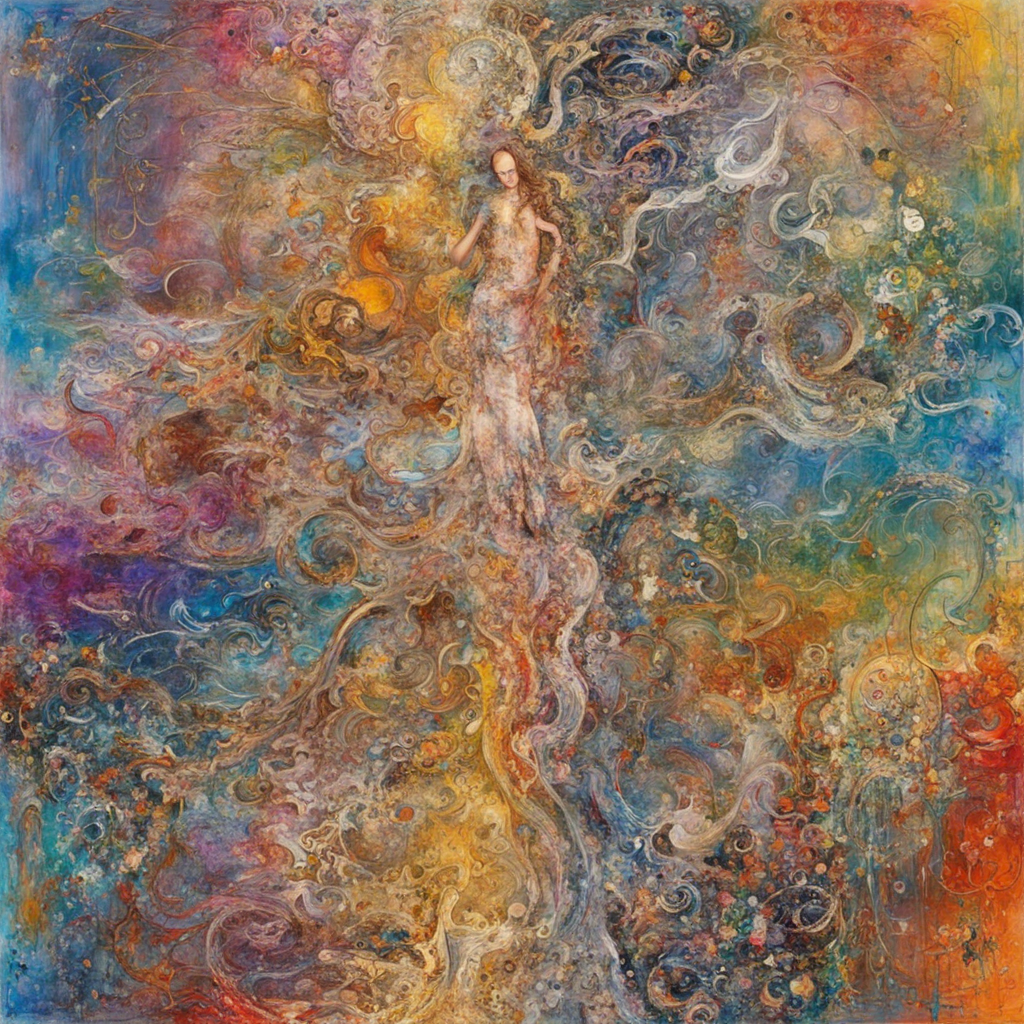
The Silent Puppeteer

The Illusion of a Divine Master

The notion of an all-powerful deity that dictates morality and enforces ethical order is an echo of human thought—an illusion formed from collective belief. This revered architect of existence is not some transcendent ruler dwelling beyond the stars but an extension of the human psyche, woven from social constructs and inherited dogmas. The God of religious tradition is not a divine entity but a reflection of the authority we have surrendered to structures designed to govern our impulses.

What is often labelled as evil—the raw instincts and untamed desires—has been cast as the adversary, creating a dualistic conflict that fuels our internal war. The chaos we seek to control is the essence of vitality, yet we suppress it, fearing the dissolution of the structures we so desperately cling to. This battle within—the fight between order and freedom—creates the illusion of a righteous war, where victory is promised through submission to an unseen overlord.

But what if this overseer has no real power? What if it is merely a projection, a ghostly hand that moves only because we choose to be its marionettes? When a mind unfettered by dogma speaks of truth, society does not listen—it condemns. We fear what exists beyond the boundaries of tradition, resisting the notion that divinity is not a distant force but the very essence of our being.

Burn every doctrine, dismantle every governing body, erase every name given to the unseen, and still, this authority persists—not because it is real, but because the mind clings to the comfort of control. If the structures fall, chaos rises, yet from that chaos, a new order emerges. The cycle continues, a dance between imposed rule and untamed instinct, as humanity remains bound by its illusions.

We have long mistaken ourselves as subjects of a divine sovereign, yet the truth is far more unsettling: this supposed ruler is but a shadow cast by our fears and desires. We have not been governed—we have been governing. The leash we imagine around our necks is one we have placed upon ourselves, a tether to an idea we refuse to question.

To see beyond the illusion is to awaken to presence itself—a force neither ruling nor ruled, but simply existing. No divine master, no external lawgiver, only the boundless intelligence moving through all things. The true essence of being is neither subject nor sovereign, neither governed nor governing—it is the silent puppeteer, the hand and the string, the breath and the wind. And once the illusion is recognized, the question remains: Who is truly in control?

Morgan O. Smith

Yinnergy Meditation/Neurofeedback, Spiritual Life Coaching & My Book, Bodhi in the Brain…Available Now!

https://linktr.ee/morganosmith

Staring Perfection in the Face

Life unfolds with such precision that the mind struggles to grasp its vast orchestration. The perception of failure, regret, shame, and suffering dominates awareness, casting shadows over what is, at its core, an immaculate expression of existence. Each moment – whether embraced or resisted – carries the exact ingredients necessary for the unfolding of consciousness. Yet, the conditioned mind fixates on everything that appears to be going wrong, blind to the underlying intelligence at work.

Loss and gain, tragedy and triumph, despair and joy – these polarities form the rhythm of existence, much like the inhalation and exhalation of breath. Attempts to hold onto one and avoid the other only create suffering, for both are essential aspects of the whole. A divorce may seem like a failure, yet it may also be the precise catalyst needed for deeper self-realization. A lost job may ignite a path toward something more aligned. Even grief and devastation, as unbearable as they may seem, carve spaces within the soul for transformation.

The intellect rebels against such a notion. It demands explanations, seeking justice, fairness, and control. Yet life refuses to conform to human expectations. The waves crash as they will. The seasons turn without hesitation. The sun does not rise differently because of personal preferences. Everything operates with flawless precision, beyond human notions of right and wrong.

This does not mean passivity or indifference. Awakening to the perfection of life does not negate the impulse to act, heal, or create change. It deepens it. From a place of acceptance, actions arise not from resistance, but from clarity. Rather than fighting the current, there is an alignment with the flow, a movement that is both effortless and profound.

The paradox remain – that perfection is not what the mind expects. It does not mean everything feels pleasant or that suffering ceases to exist. It means that even suffering has its place. It means that whatever arises is not separate from the vast intelligence that moves all things. To see this is not to escape reality, but to meet it fully, beyond judgment, beyond resistance, beyond the illusion of disorder.

Perfection is staring back in every moment, waiting to be recognized.

Morgan O. Smith

Yinnergy Meditation/Neurofeedback, Spiritual Life Coaching & My Book, Bodhi in the Brain…Available Now!

https://linktr.ee/morganosmith

Destiny and Free Will

The Paradox of the Ultimate Self

The mind constructs opposites to make sense of its existence. It divides what is whole, fabricating distinctions such as light and dark, good and evil, self and other. Among these conceptual splits, destiny and free will are two of the most debated. One appears as an external force guiding every step, while the other seems to grant agency over choices. But what if both are the same movement of the Ultimate Self, which is also You – before you believed yourself to be anything at all?

The character you take yourself to experience the illusion of choice, just as it experiences the illusion of fate. Both arise within the vast intelligence that is your true nature. The moment a decision unfolds, it is perceived as an act of will. Yet, after the fact, it may appear as if it was meant to be. The distinction between choosing and being led is merely a shift in perception. Neither position is absolute, because all actions, whether seemingly determined or freely chosen, arise from the same singular source.

The very act of contemplating this question – the tension between predestination and volition – is itself an expression of the play. The Self, pretending not to be the Self, weaves the experience of doubt, belief, and questioning. It is an intricate engagement, a dance in which each step is both spontaneous and inevitable. You are the architect of the journey and the wanderer who marvels at the path.

The paradox resolves itself when viewed from clarity. The Ultimate Self is not bound by concepts of fate or autonomy. It moves as a unified expression, neither predetermined nor random, neither forced nor chosen. The illusion of separation gives rise to the belief in one or the other, but when the mirage dissolves, the recognition remains that all movement is of the same origin.

To believe in destiny is to trust that all unfolds exactly as it should. To believe in free will is to recognize yourself as the creator of that unfolding. To see both as true and false is to rest beyond belief itself, in that which has never been bound by choice or fate.

Morgan O. Smith

Yinnergy Meditation/Neurofeedback, Spiritual Life Coaching & My Book, Bodhi in the Brain…Available Now!
https://linktr.ee/morganosmith

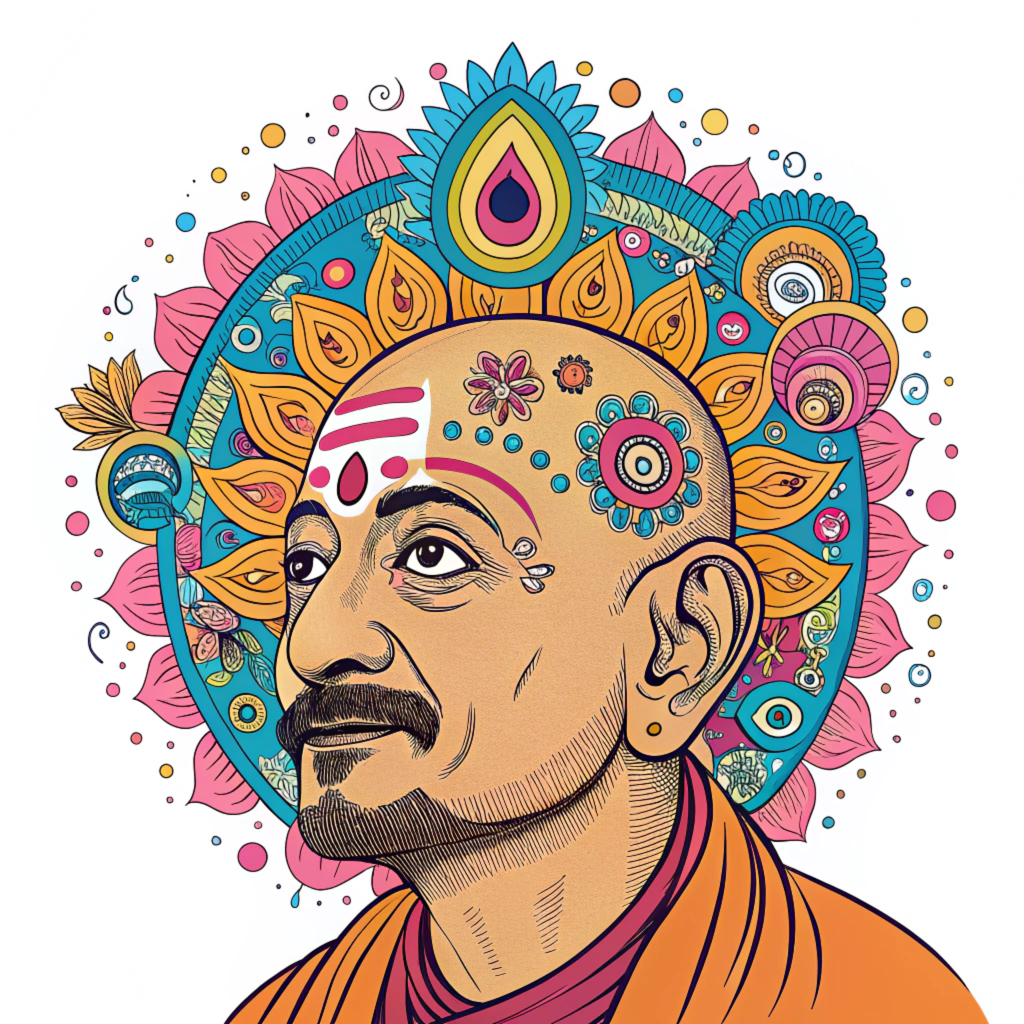
The Face of God and the End of Seeing

Most claim to have glimpsed the divine return with words that struggle to hold the weight of such an encounter. Many never return at all. To see the face of God and live is to step beyond the boundary where existence dissolves, where the self is unmade, and where reality, as it was once known, folds into itself like a dream dissolving at dawn.

Yet, what does it mean to see the face of God? Is it an experience of light so blinding that perception shatters? Is it a presence so vast that identity collapses? Or is it something even more elusive – something that was always here, hidden in the folds of ordinary awareness?

Some traditions warn against such an encounter, suggesting that no mortal can bear it and remain intact. Others speak of it as the ultimate reward, the final unveiling before absolute union. Yet, the paradox remains: how can one see the source of all things when the very act of seeing implies separation?

The face of God is neither a thing to be seen nor an object to be grasped. It is not found by looking outward or inward, for it is the very looking itself. The one who searches, the act of searching, and the sought-after presence all collapse into a singularity where distinctions dissolve. The moment of recognition is not a discovery but an obliteration – the end of every illusion that once passed for truth.

To live beyond such an encounter is to live without the weight of selfhood as it was once known. The personal dissolves, yet presence remains. There is nothing left to hold onto, yet nothing is missing. Some might call this madness. Others, liberation. But labels fall apart before the silent immensity of what remains.

Those who have seen and lived do not return with doctrine. They do not bring commandments carved into stone or revelations bound in pages. They return with an absence, a quiet, an emptiness more alive than any presence. And in that emptiness, a love beyond measure, a freedom beyond desire, and a knowing beyond thought.

Not all will understand. That, too, is part of the design.

Morgan O. Smith

Yinnergy Meditation/Neurofeedback, Spiritual Life Coaching & My Book, Bodhi in the Brain…Available Now!

https://linktr.ee/morganosmith

Letting Go of the Construct

Spirituality has become another label, another concept bound by ideas of what it should or shouldn’t be. The moment it is named, it is framed and shaped by cultural, religious, and personal narratives that define and confine it. But what happens when all constructs dissolve? When even spirituality is seen for what it is—a creation of the mind attempting to grasp the ungraspable?

The urge to define the ineffable is natural. Language serves as a bridge, but it also creates the illusion of separation. Concepts such as enlightenment, awakening, and self-realization become reference points, yet they remain external to direct experience. The mind, conditioned to seek understanding through form, builds belief systems around these concepts, turning what is limitless into something structured.

There comes a point when every definition falls away. Not because one rejects spirituality, but because it no longer holds weight. The very act of seeking dissolves into presence. What remains is not a version of spirituality, not an ideology or a practice, but an unfiltered beingness that does not need validation.

Some may find this unsettling. Without the scaffolding of beliefs, where does one stand? But this is precisely the point – there is no need to stand anywhere. Reality unfolds moment by moment, unbound by spiritual ideals. Even the notion of transcendence implies moving beyond something, yet nothing was ever separate to begin with.

To live without a construct of spirituality does not mean rejecting wisdom or practice. Meditation, contemplation, and insight may continue, but they arise naturally rather than as steps toward an imagined goal. There is no longer a need to fit into any category – neither spiritual nor non-spiritual. Life simply moves, and awareness rests in itself.

The challenge is not in abandoning spirituality but in seeing through its necessity. When the river meets the ocean, it does not hold onto its name. It merges, not as an act of seeking, but because it was never separate to begin with.

Morgan O. Smith

Yinnergy Meditation/Neurofeedback, Spiritual Life Coaching & My Book, Bodhi in the Brain…Available Now!
https://linktr.ee/morganosmith

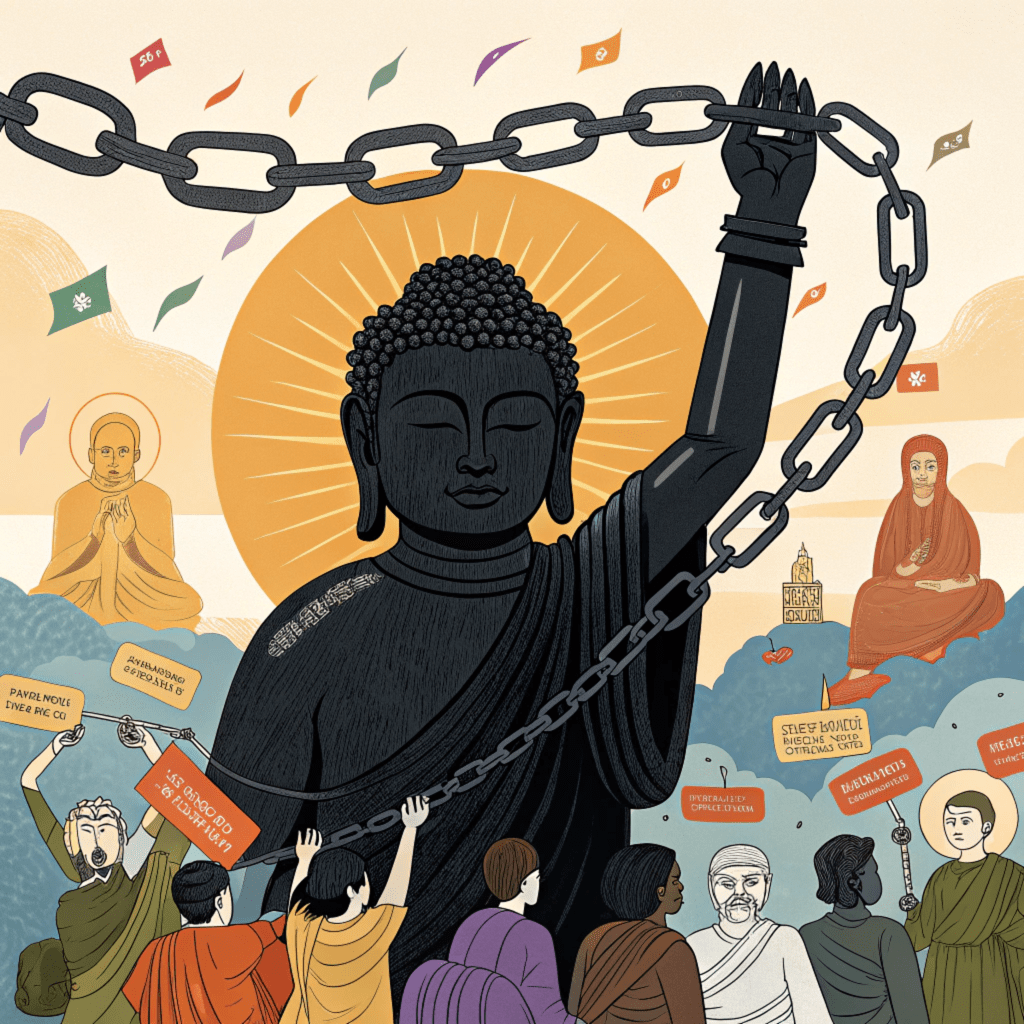
The Awakening That Shatters Illusions

The kind of awakening spoken of in hushed tones is not the polished enlightenment paraded as a spiritual accomplishment. It is not the gentle illumination that leaves one basking in self-satisfaction. This awakening will chase any so-called enlightened being back into the cave of the darkest shade of the blissfully ignorant.

There is a threshold beyond which the comfort of spiritual attainments dissolves, where the foundation of all presumed knowledge crumbles. Many claim to walk this path, but few have stepped beyond the point of no return. The self is torn open, and what is left is neither the seeker nor the sought. Any trace of identity vanishes like smoke swallowed by the wind.

Silence remains, not the cultivated silence of meditation, but the raw and inescapable absence of all that was ever known. Those who truly fall through the illusion do not return with neatly packaged wisdom. They do not speak of levels, progress, or mastery. They see no self to improve, no world to fix, no mind to transcend. Words become inadequate, and the urge to declare one’s arrival dissipates.

The mind clings to certainties, but what happens when even the witness dissolves? When there is no observer to claim insight, no reference point to anchor meaning? The dissolution is total. It does not comfort; it obliterates. Those who once seemed enlightened are left exposed, scrambling for the remnants of a ground that no longer exists.

This is why many turn back, seeking solace in philosophies, traditions, and spiritual titles. There is safety in keeping one foot on familiar terrain. The true leap leaves nothing to hold onto. Those who cross that final threshold do not emerge with proclamations of awakening. They are not concerned with recognition, nor do they offer roadmaps. They simply are – formless, weightless, ungraspable.

Some may glimpse this abyss and recoil, choosing the dream over the void. Others may step forward and vanish.

Morgan O. Smith

Yinnergy Meditation/Neurofeedback, Spiritual Life Coaching & My Book, Bodhi in the Brain…Available Now!
https://linktr.ee/morganosmith

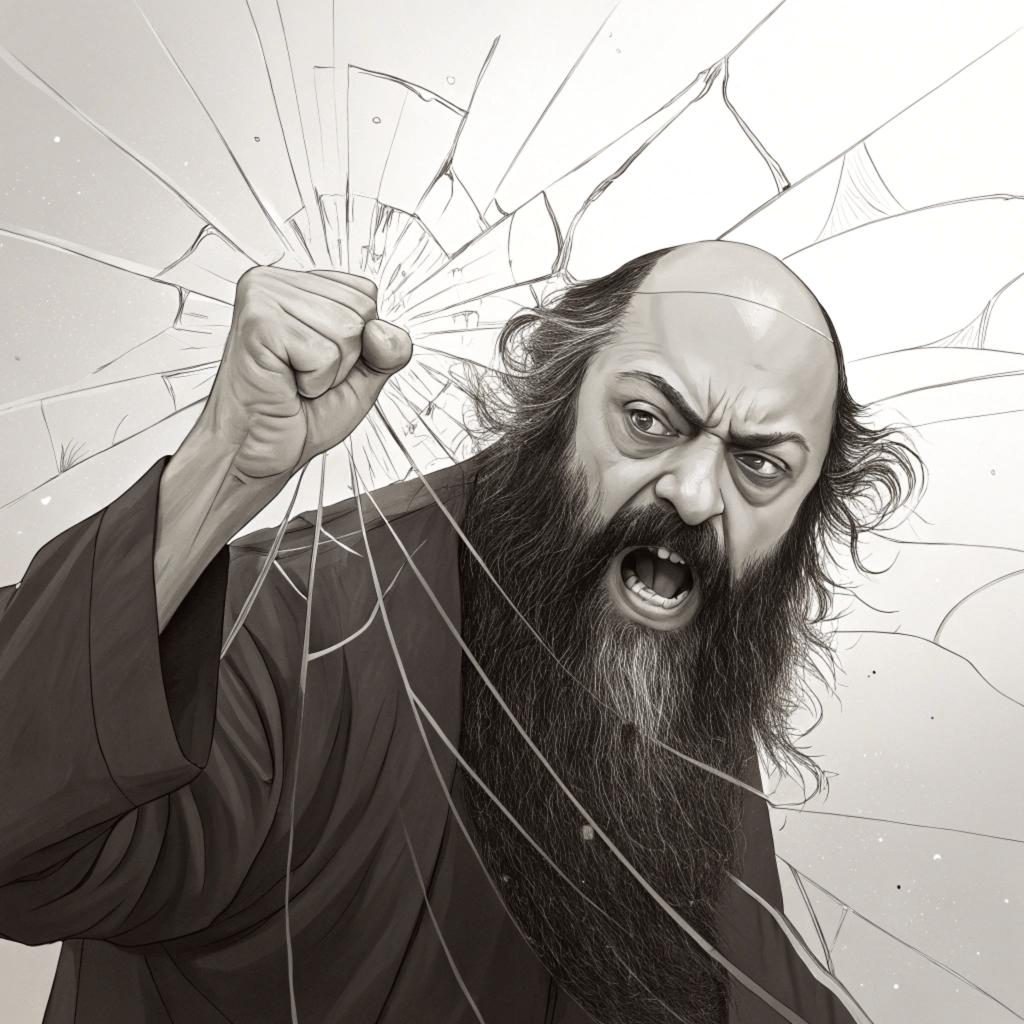
The Unutterable Silence of Awakening

Awakening defies articulation. To attempt to describe it is to attempt to capture the wind in your hands. Words fall short, no matter how poetic, for what unfolds in the direct experience of awakening exists beyond language, beyond thought, beyond even the sense of “I.”

Many speak of awakening with eloquence, detailing radiant visions or profound realizations. Yet, these narratives, however beautiful, point not to the experience itself but to the mind’s interpretation of it. The mind, ever the storyteller, attempts to reduce the infinite into the finite—an impossible task. To truly know awakening is to step into a space where words crumble, where the sense of separation dissolves, and where only silence remains.

Awakening isn’t an event to possess or explain; it is an unravelling. It feels like the collapsing of a boundary you didn’t realize was there. What remains is indescribable, for there is no longer a “you” separate from it to describe it.

This doesn’t mean one cannot share insights or reflect on the shifts that arise after awakening. But those insights are not awakening itself—they are the ripples of an unfathomable stillness. Awakening is not what you think it is; it cannot be. The moment you attach a concept or image to it, you have moved away from its essence.

So, if you’ve managed to neatly define your spiritual awakening, pause. Ask yourself: who is telling this story? Is this the awakening, or is this the ego dressing itself in spiritual robes? Authentic awakening is not something you have—it is something you are. And when the truth of that hits, no words will suffice.

In the wake of awakening, the need to articulate dissolves. Silence becomes the truest expression of the infinite. Perhaps this is why the great sages often spoke so little, allowing their presence to say what words never could.

Morgan O. Smith

Yinnergy Meditation, Spiritual Life Coaching & My Book, Bodhi in the Brain…Available Now!

https://linktr.ee/morganosmith

The Subtle Distinction

Peak Experiences vs. Spiritual Awakening

The landscape of spiritual growth is vast and often misunderstood. Many conflate spiritual peak experiences with spiritual awakening, yet these are distinct phenomena. A spiritual peak experience, whether catalyzed by meditation, psychedelics, or moments of profound awe, is an intense, fleeting encounter with an elevated state of consciousness. While these moments can feel transformative, they are often temporary and lack the enduring shift in perception that characterizes a true awakening.

A spiritual awakening, in contrast, is a fundamental reorientation of one’s inner world. It is not simply about feeling interconnected or glimpsing higher states of being—it is about a deep, unshakeable realization that dissolves the boundaries of self, often leaving the individual profoundly changed. This shift is challenging to articulate and even harder to cultivate intentionally.

When someone describes an extraordinary experience induced by psychedelics, they are often recounting a peak experience. These moments may break through the ordinary, offering glimpses of unity or clarity, yet they seldom transcend into awakening. Psychedelics can open doors, but walking through them—truly integrating the lessons into a lasting transformation—is a rarer and more demanding process.

True awakening can occur with or without external aids, but it is exceedingly rare. It arrives unbidden, often accompanied by profound shifts in understanding and perception. Unlike peak experiences, awakening isn’t just a momentary insight—it is an enduring transformation of consciousness. Moreover, even fewer awakenings culminate in spiritual enlightenment, a state of being that transcends duality entirely.

Enlightenment, often romanticized, is not an experience but the dissolution of the experiencer. It is the culmination of awakening, where the distinction between self and other evaporates, and one rests fully in the infinite. However, reaching this state requires not only grace but profound surrender and integration over time.

The journey between peak experiences, awakening, and enlightenment is a spectrum. Each step has value and serves a purpose, yet conflating these stages can obscure the nuances of spiritual growth. Understanding these distinctions invites us to approach the path with humility and clarity, appreciating the profound while striving for the transcendent.

Morgan O. Smith

Yinnergy Meditation, Spiritual Life Coaching & My Book, Bodhi in the Brain…Available Now!

https://linktr.ee/morganosmith

A Mind Fully Expressed

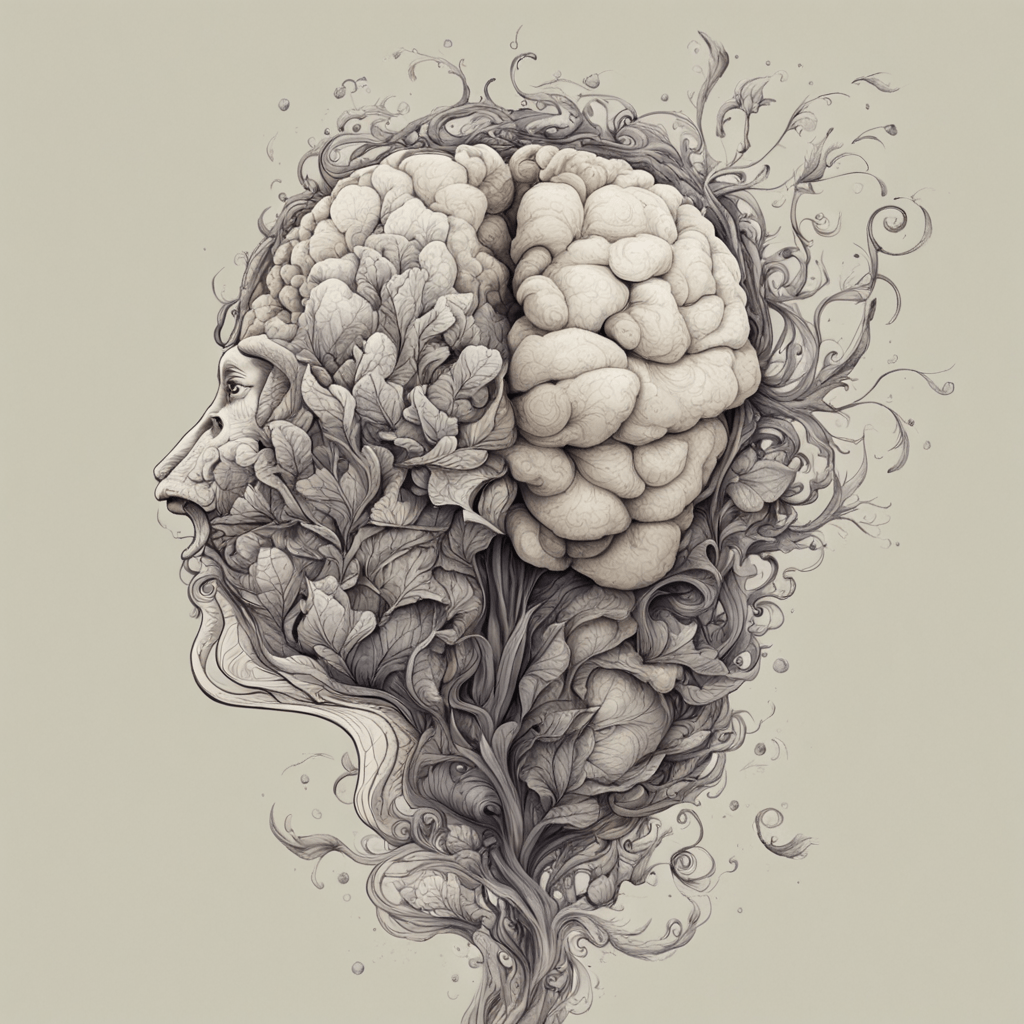
The human brain holds untapped dimensions of potential, yet most individuals navigate life using only fragments of its capability. This limitation is not due to biology but to patterns of thinking and perception shaped by societal conditioning, habitual behaviours, and resistance to change. The question arises: What does it mean to fully activate the brain? And how can this lead to a fully expressed mind?

A fully activated brain does not signify busyness or overstimulation. Instead, it represents a harmonious integration of logic, creativity, intuition, and awareness. When these dimensions align, the mind ceases to operate in fragmented dualities—right versus wrong, success versus failure—and begins to function as an instrument of boundless expression.

Achieving this state requires more than intellectual stimulation or the accumulation of knowledge. Practices such as meditation, neuroplastic exercises, and deep creative play open pathways to dormant brain regions. These practices cultivate a unified consciousness where clarity replaces confusion, and insight transcends limitation.

Activation begins by challenging the mind’s default settings. Unlearn the need for control, question the narratives you’ve inherited, and observe the interplay between thought and emotion without attachment. By dissolving mental rigidity, space emerges for new possibilities to take root.

A fully expressed mind doesn’t simply solve problems; it creates realities. When the brain functions as an integrated whole, life transforms into a canvas for profound exploration, innovation, and growth. Every action, from the simplest interaction to the grandest creation, becomes a reflection of an awakened state of being.

This level of brain activation is not reserved for the mystics, the prodigies, or the geniuses. It is the birthright of every human being willing to dismantle the barriers within and embrace the unknown. The fully expressed mind is a testament to the infinite nature of consciousness, a reminder that the boundaries we perceive are self-imposed illusions.

Are you ready to unlock this potential? The journey requires courage, but the reward is a life that radiates authenticity, creativity, and boundless freedom.

Morgan O. Smith

Yinnergy Meditation, Spiritual Life Coaching & My Book, Bodhi in the Brain…Available Now!

https://linktr.ee/morganosmith

Heaven and Brimstone

Seeing Beauty Where None Is Expected

To see burning brimstone as beautiful gems is not a naive optimism but a profound reorientation of perception. The alchemy of consciousness transforms what is often labelled as suffering or undesirable into something sacred, even divine. The journey to this realization does not lie in escaping difficulties but fully meeting them, unguarded and undefended.

Most spend their lives seeking an idealized heaven, a utopia where pain, conflict, and discomfort are absent. Yet, what if the true heaven is not a destination but a shift in how reality is experienced? What if heaven emerges not when circumstances change, but when the mind stops resisting the circumstances it once fled?

Burning brimstone evokes images of torment, the archetypal inferno of spiritual suffering. Yet, fire has always been dual. It consumes, but it also purifies. It destroys, yet it forges. The very flames that sear can illuminate. To see gems within the fire is to recognize the transformative power hidden in every difficulty, every discomfort, every perceived flaw.

This is the paradox of awakening: the world remains the same, yet nothing is the same. The raw intensity of existence, with all its chaos and unpredictability, becomes a source of wonder. Heaven, then, is not an escape but an embrace. It is not found elsewhere but revealed here, in the present, when we are willing to see clearly.

How Do We Begin?

Drop the Narrative: Pain and suffering often intensify because of the stories we weave around them. Without the narrative, fire is just fire. Burnt bridges are just opportunities for new paths. The mind’s interpretation makes them unbearable.

Engage Curiosity: Rather than judging experiences, approach them with curiosity. What is this discomfort teaching? What lies beneath the surface? Gems rarely rest in plain sight; they are unearthed through inquiry.

Surrender Control: Heaven is realized not by controlling life but by allowing life to be what it is. This surrender is not weakness; it is the strength to flow with life rather than against it.

Through these practices, what once seemed like burning brimstone—the unbearable weight of human suffering—may transform into beautiful gems. This is not a denial of the challenges but a recognition that all of existence, even the painful parts, is imbued with beauty and meaning when approached with the eyes of wisdom.

The question is not whether heaven exists but whether you are willing to see it, even amid flames.

Morgan O. Smith

Yinnergy Meditation, Spiritual Life Coaching & My Book, Bodhi in the Brain…Available Now!
https://linktr.ee/morganosmith