God Without Belief

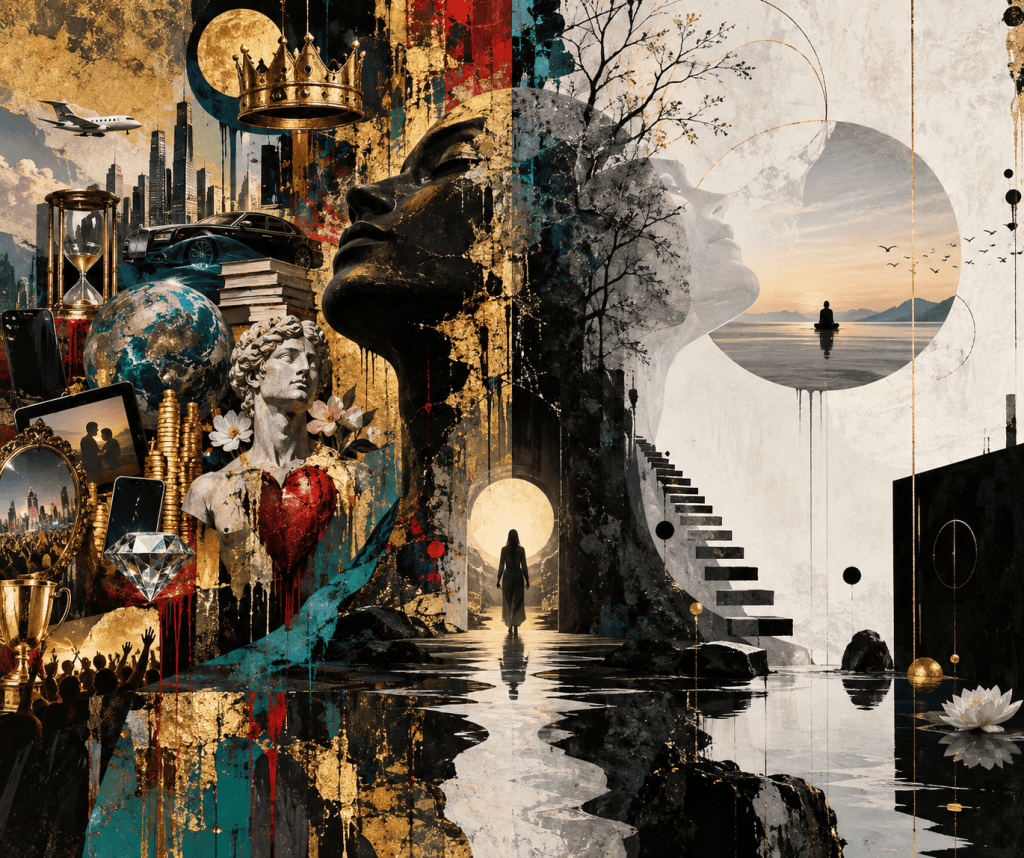
A curious statement arises: God is an atheist. Not as denial, but as a revelation of what cannot be confined to belief. Belief requires distance; someone who believes, and something believed in. That distance dissolves at the level of the Absolute.

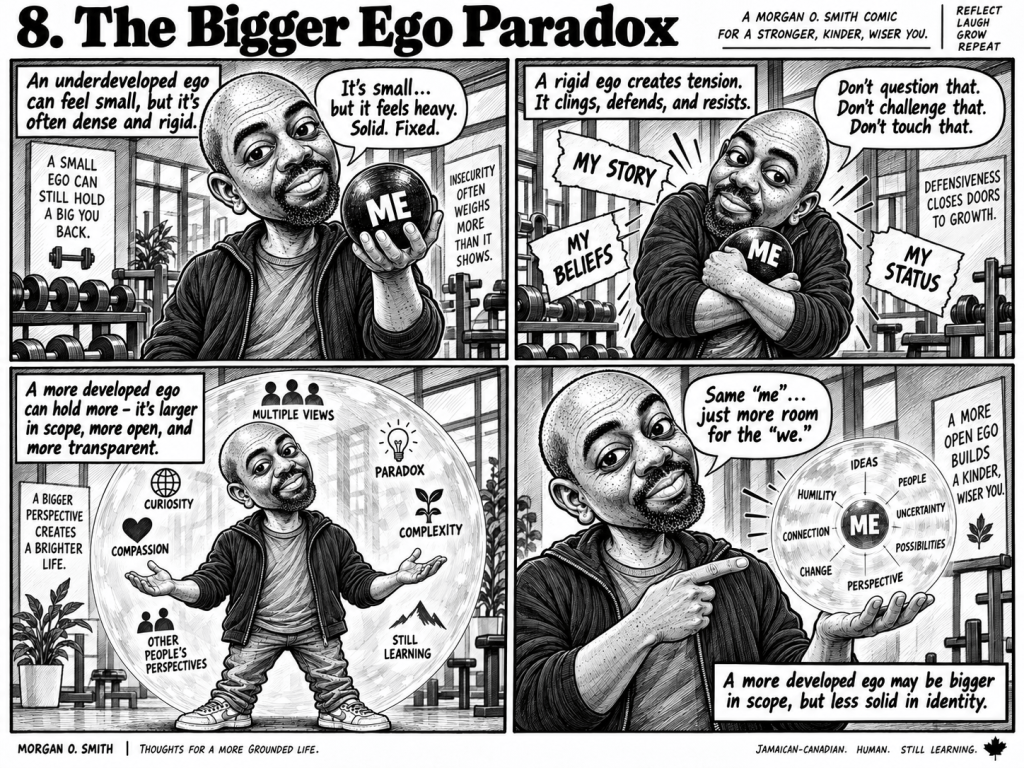
God, understood as the ground of all being, does not stand apart from existence. No position can be taken outside of what already is. Theism proclaims devotion toward a divine presence. Pantheism recognizes divinity within all forms. Panentheism holds both transcendence and immanence. Agnosticism suspends certainty. Atheism rejects the claim altogether. Each appears to oppose the other, yet all emerge from the same source.

A wave arguing with another wave about the existence of the ocean misses the quiet truth beneath the motion. The ocean never needs to assert itself. No defense is required. No belief is necessary. Presence alone is sufficient.

God, in this sense, cannot be a theist, because there is nothing separate to believe in. God cannot be an atheist either, in the conventional sense, because nothing exists outside of that totality to deny. Yet from the human vantage point, the Absolute appears as both belief and disbelief, devotion and rejection, clarity and doubt.

Atheism becomes one expression of the divine refusing to objectify itself. The refusal to project an external deity is not always a rejection of truth; sometimes it is an unconscious recognition that truth cannot be turned into an object at all. What is rejected is often a concept, not the living reality prior to concepts.

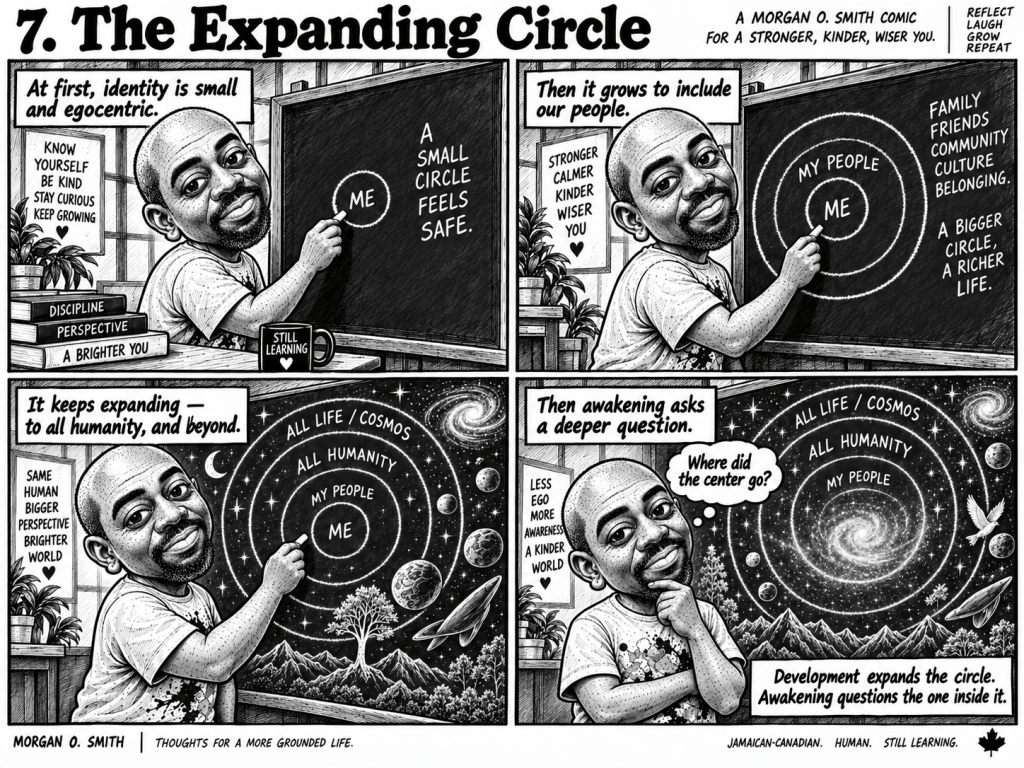
The ground of being remains untouched by every conclusion formed about it. Arguments unfold within it, philosophies rise and fall within it, identities shape themselves and dissolve within it. Nothing stands outside to validate or invalidate what already includes everything.

Silence reveals more than assertion here. That silence does not belong to any religion or ideology. It is the same stillness present before belief forms and after it fades.

What, then, is left?

A direct knowing without position. A presence without identity. A reality that does not require agreement to be what it is.

God, as the Absolute, holds space for the believer kneeling in prayer and the skeptic dismantling every claim. Both movements are gestures within the same indivisible whole. Neither completes it. Neither threatens it.

Seeing this does not demand adopting a new belief. It invites the collapse of the need to hold one at all.

And what remains cannot be called belief or disbelief; only what is, prior to both.

Morgan O. Smith

Everything Is Ultimate Truth

Everything Is Ultimate Truth Appearing as Truth and Falsehood

A paradox sits quietly at the heart of perception. What is taken to be true, what is dismissed as false, both arise within the same indivisible field. Judgments feel solid, yet their certainty depends on shifting frames of reference. Change the angle, and what once seemed unquestionable dissolves into ambiguity.

Truth, as commonly held, leans on agreement, evidence, coherence. Falsehood stands as its opposite, rejected, corrected, or exposed. Yet both require awareness to be known. Without awareness, neither truth nor falsehood can appear. That simple recognition begins to unravel the hierarchy placed between them.

Consider how a dream operates. While immersed, every image carries a sense of reality. Only upon waking does the distinction emerge. The dream was not meaningless; it expressed something real, yet not in the way it first appeared. Daily life mirrors this pattern more than most are willing to admit. Convictions harden, identities form, narratives repeat, all while resting upon an unexamined ground.

Ultimate Truth does not compete with relative truths. It does not correct them, nor does it validate them. It allows them. Every belief, every illusion, every clarity, every confusion unfolds within it without preference. That which is mistaken is not outside of truth; it is truth misperceived, truth wearing a mask, truth folding in on itself to create contrast.

Falsehood gains its power from partial seeing. Something is noticed, something else is ignored, and a conclusion is drawn. The conclusion may serve a purpose, yet it remains incomplete. What is called false often reveals itself as a fragment of a larger whole, misunderstood due to limitation rather than absence.

This shifts the inquiry. Instead of asking what is true or false, attention turns toward the nature of the one who makes that distinction. Who or what is aware of both? What remains unchanged whether the mind lands on certainty or doubt?

A deeper stability begins to emerge. Truth is no longer a position to defend. Falsehood is no longer an enemy to eliminate. Both are movements within a boundless presence that does not fracture under contradiction. Clarity does not come from choosing one side, but from seeing the space in which both arise.

Conflict softens when this is seen. Arguments lose their edge, not because differences disappear, but because their foundation is understood. Each perspective becomes a temporary expression, shaped by conditions, history, perception. None stand alone, none define the whole.

Ultimate Truth remains untouched by the play of appearances. Yet it expresses itself through that very play. Every mistake, every insight, every contradiction becomes part of its unfolding. Nothing falls outside of it, not even the denial of it.

Recognition does not require abandoning discernment. Practical distinctions still function. Fire burns, water cools, words carry consequences. Life continues to operate within relative frameworks. What changes is the weight assigned to them. Certainty loosens. Flexibility deepens. Openness expands.

What was once divided begins to reveal its unity. Truth and falsehood no longer stand as opposing forces, but as complementary expressions arising from a single source. That source cannot be captured by either, yet both depend on it entirely.

Silence often communicates this more clearly than thought. Not the absence of sound, but the absence of fixation. A resting that allows everything to be as it is, without the need to resolve the paradox.

Everything is Ultimate Truth, not because everything is correct, but because everything appears within what cannot be divided. Even the illusion of separation is included. Even the belief in falsehood is held within what never ceases to be whole.

Morgan O. Smith

Ceasing to Exist Is Existence

What feels like disappearance is often the unveiling of what never arrived and never left.

Identity clings to continuity. It insists on narrative, on form, on something stable enough to say, “this is me.” Yet every sincere glimpse beneath that surface reveals something unsettling; there is no fixed centre holding it all together. Thoughts pass. Sensations dissolve. Emotions rise and vanish without permission. Even the sense of being a “someone” flickers in and out of awareness.

So what exactly is ceasing?

What we call existence is usually filtered through attachment to form. Body, memory, personality, history; these become the reference points for being. When any of these begin to loosen, a quiet panic can emerge. It feels like loss. It feels like the edge of annihilation. Something in us resists, because it interprets the fading of form as the fading of existence itself.

But that interpretation is flawed.

Ceasing does not touch existence. It only dismantles the illusion of containment.

Consider the moment between two thoughts. There is no identity there, no story, no personal reference point. Yet something undeniable remains. Awareness does not collapse in that gap. It stands unobstructed, without needing to announce itself. That silent interval is not absence; it is presence without definition.

The fear of ceasing arises from confusion between what appears and what is. Appearances come and go. They are meant to. Existence, however, does not operate within that cycle. It is not born when a form emerges, nor does it die when a form dissolves. It simply is, untouched by the movement it allows.

Letting go, then, is not an act of surrendering existence. It is the recognition that existence was never dependent on what you thought you were.

This is why deep realization can feel like a kind of death. The structures that once provided orientation fall away. The familiar reference points dissolve. Even the sense of being the experiencer can collapse. Yet what remains is not void in the way the mind imagines. It is fullness without boundary. Presence without identity. Being without ownership.

Ceasing reveals that nothing real was ever at risk.

Every moment already contains this truth. Each ending—of a breath, a thought, a sensation, is a quiet demonstration. Something ends, yet nothing essential is diminished. Life continues, but not as a personal possession. It unfolds as an expression of something indivisible.

Existence does not belong to you.

You belong to existence only as an appearance within it.

When this becomes clear, the resistance softens. The need to preserve a fixed self begins to lose its urgency. Ceasing is no longer feared. It is understood as a return; not to something new, but to what has always been prior to every assumption of “I am this.”

Existence does not require you to remain.

It reveals itself most clearly when you don’t.

Morgan O. Smith

Crucified Between Division

Awareness, Ego Death, and the Union of Mind and Emotion

A statement spoken in the midst of suffering reveals more than compassion; it unveils a profound diagnosis of human consciousness. “Father forgive them, for they don’t know what they do” points not toward moral failure, but toward a blindness so complete that action unfolds without true seeing.

Lack of awareness is not merely ignorance of facts; it is a fragmentation of perception. Thought moves in one direction, emotion in another, and the deeper currents of being remain unrecognized. Life becomes mechanical, reactive, conditioned. From that state, harm arises; not out of intention alone, but from disconnection within oneself.

Meditation introduces a different possibility. Rather than adding knowledge, it begins to dissolve the divisions that create confusion. The mind quiets, the emotional field settles, and something more integrated begins to emerge. What was previously split starts to communicate.

Viewed through a tantric lens, this integration takes on symbolic depth. The left hemisphere reflects structured thought, analysis, the architecture of concepts. The right hemisphere reflects intuition, feeling, the subtle currents that cannot be reduced to language. Most people live tilted; identified more with one than the other, rarely aware of the imbalance.

When these two aspects come into harmony, perception shifts. Thought no longer suppresses feeling, and feeling no longer clouds thought. A unified intelligence begins to function—clear, direct, and undivided. This is not intellectual brilliance or emotional intensity alone, but a deeper coherence of being.

The imagery of crucifixion can be read beyond history and theology. Suspended between two thieves, a central figure undergoes total surrender. The thieves, in this interpretation, can be seen as the divided faculties; mind and emotion, each incomplete on its own. The centre represents the point where both are witnessed, transcended, and ultimately brought into alignment.

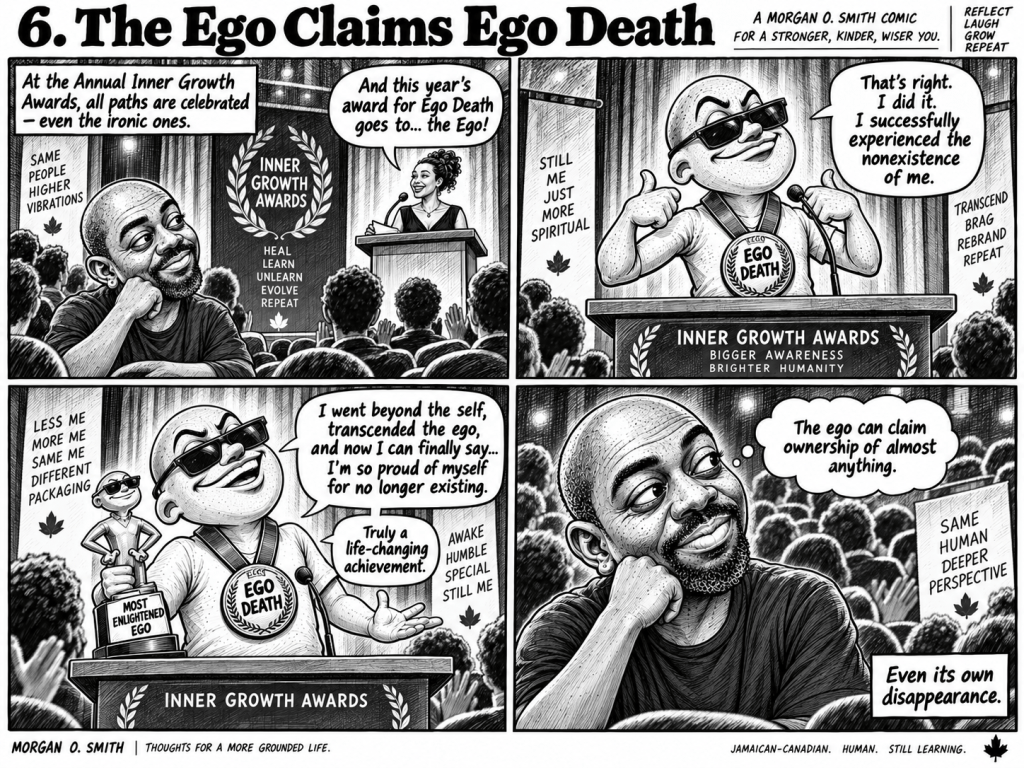
Ego, in this sense, is not destroyed violently but revealed as insufficient. Its grip loosens when awareness expands beyond the fragments it tries to control. What remains is not emptiness in the negative sense, but a clarity that no longer depends on division.

Forgiveness then becomes natural, not forced. When one truly sees that actions arise from unconscious fragmentation, blame loses its foundation. Compassion emerges, not as a virtue to practice, but as the inevitable response of a mind that is no longer divided against itself.

Awareness is not something added to the individual; it is what remains when fragmentation dissolves. When both hemispheres function in coherence, perception is no longer split between thinker and feeler, observer and participant. There is simply knowing, without distortion.

Perhaps the deeper message is not about what was done, but about what was not seen. And through that recognition, a different way of being becomes possible; one where action arises from wholeness rather than division.

Morgan O. Smith

The Paradox That Refuses to Break

For something to exist, it must appear somewhere. It must occupy a location, unfold across duration, relate to other things. Existence, as we commonly understand it, implies coordinates. A chair exists because it sits in space. A thought exists because it arises in time. Remove both, and what remains?

Many insist that the Divine transcends time and space. Yet transcendence poses a riddle. If something is truly beyond time and space, can it be said to exist at all? Existence, in every familiar sense, depends upon dimension, sequence, and relation. To be entirely outside those would seem to cancel the very idea of being.

Then comes the reversal.

If we claim the Absolute does not exist because it is beyond all coordinates, we still must ask: does nonexistence exist? The mind hesitates here. Nonexistence cannot be located, yet we speak of it. We conceive of absence. We reference nothingness. Somehow, even nothing appears within awareness.

Awareness does not vanish when an object disappears. When a sound fades, silence remains. When a thought dissolves, presence does not dissolve with it. Even the concept of “nothing” shows up as something known.

So what is happening?

Perhaps the difficulty arises from assuming that existence and nonexistence are opposites. That assumption belongs to a world of contrast—light and dark, birth and death, form and formlessness. But what if both poles arise within a deeper continuity?

Consider this possibility: the Divine exists as time and space. Every galaxy, every heartbeat, every passing second is not a creation separate from its source but an expression of it. The ticking clock is not evidence of distance from God; it is God measuring itself through movement. The extension of space is not apart from the Infinite; it is the Infinite stretching.

Yet the same reality is not confined to its expressions. Time unfolds within it, but it is not bound by succession. Space extends within it, but it is not limited by boundary. That which appears as the flow of moments is also the stillness in which moments arise.

From this vantage point, saying “God exists” is true. Saying “God does not exist” is equally true, if by existence we mean a definable object among other objects. The Absolute cannot be reduced to a thing inside the universe. Nor can it be excluded from the universe.

Existence and nonexistence collapse into a single indivisible fact: there is what is.

When the mind tries to categorize this, it fractures the whole into manageable concepts. It invents a creator separate from creation. It imagines a being located somewhere, ruling from a distance. Or it swings to the opposite extreme and denies any sacred dimension at all.

Both moves miss the intimacy of the matter.

The search for a name is the movement of the Infinite through a finite lens. Every label—God, Brahman, Source, Reality, Void—is a gesture. The gesture matters, but it never contains what it points toward.

You are not separate from this paradox. The very awareness reading these words is evidence of it. Thoughts move across your inner sky, yet something remains unmoving. Identity shifts across years, yet something does not age. The body occupies space and time, yet the sense of being here precedes every clock.

Perhaps what we call “God” is existence recognizing itself as both the field and the forms within it. Both the silence and the symphony. Both the presence of things and the apparent absence of them.

Existence does not need to choose between being and non-being. That choice belongs to the intellect.

What remains when even that choice dissolves?

Only this—undivided, immediate, self-knowing.

Call it what you will.

It is already what you are.

Morgan O. Smith

The One That Evolves as All Things

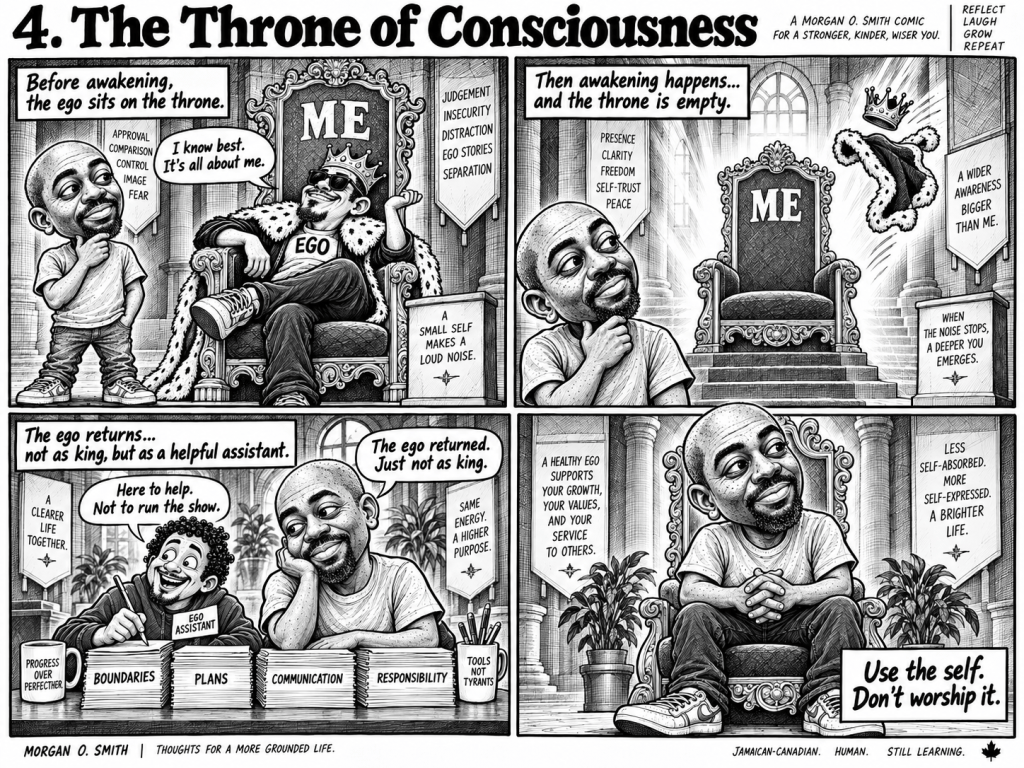
Evolution is not a mechanism operating on the sidelines of existence. It is existence unfolding itself.

What we call species, stars, civilizations, identities—these are gestures within a single, restless current. The river does not evolve because of what flows within it. The river is the flowing. Likewise, evolution is not something life does. It is what life is.

Birth, death, and rebirth appear as events in time, yet they are movements within a larger continuity that never begins and never concludes. A body forms. A body dissolves. Patterns reorganize. Consciousness shifts perspective. The wheel turns, not because something is trapped, but because turning is the expression of its nature.

This turning is named samsara.

Samsara is often framed as bondage, a cycle to escape. Yet who is bound? The forms are bound to change. The identities are bound to dissolve. The narratives are bound to fracture. But the underlying vitality—the raw fact of being—remains untouched by the rise and fall of its own expressions.

Here lies the paradox: the same movement that appears as entanglement is also freedom.

Moksha is not found outside the cycle. It is not a reward waiting at the end of repetition. Liberation is present as the very openness in which repetition occurs. The wave may crash, reform, and crash again, but water is never confined by the shape it temporarily assumes.

Evolution births forms and dissolves them. It experiments through biology, culture, thought, and self-awareness. It creates the seeker and the path. It invents philosophies about progress and enlightenment. Then it outgrows them. Then it reinvents them.

Every collapse is also a refinement.

Every ending is also a clarification.

The living whole is not striving toward perfection. It is exploring possibility. What appears as suffering is often the friction of transformation. Structures resist their own impermanence. Systems cling to stability. Identities defend continuity. Yet change is not violence; it is revelation.

Look closely and another layer becomes visible: evolution itself is not separate from what it evolves. The sculptor and the sculpture are the same movement. The cosmos is not building something other than itself. It is discovering its own depth through contrast.

Freedom and bondage coexist because the dance requires both tension and release.

A human life embodies this paradox intimately. You are shaped by memory, conditioning, language, and biology. You are also the spacious awareness within which those forces arise. Bound as a personality. Free as presence. Caught in stories. Unmoved as the field in which stories appear.

Samsara is the play of differentiation.

Moksha is the recognition that nothing has ever been outside the whole.

Evolution, then, is not merely survival or adaptation. It is the continuous unveiling of what was never absent. It moves from matter to mind, from instinct to reflection, from fragmentation to integration—not to escape itself, but to experience itself more fully.

Birth and death are punctuation marks in an unbroken sentence.

Rebirth is not only literal or metaphysical. Every shift in understanding is a rebirth. Every relinquished identity is a small death. Every expansion of compassion is an evolutionary leap that leaves no fossil record, yet alters the interior landscape of the world.

This living totality is not trapped in its cycles. It is expressing through them.

The wheel turns. The centre remains still.

Both are true at once.

Morgan O. Smith

Nothing but Now

The here and now is not a slice of time.
It is the field in which time pretends to move.

Past does not trail behind. Future does not wait ahead. Both appear as thoughts, sensations, anticipations, and memories, arising where they can only arise: here. The idea of sequence is constructed after the fact. Experience itself never leaves immediacy.

What is called “the present” is often mistaken for a fleeting moment squeezed between before and after. That assumption quietly fractures reality. What is actually happening has no edges. The now does not pass. What passes are the images that claim it did.

Presence does not arrive. It does not deepen. It does not evolve into something higher. Presence is what allows the language of arrival, depth, and evolution to appear at all. Searching for it only reinforces the illusion that it could be absent.

Awareness is not standing inside time watching it flow. Time appears within awareness, as a pattern of reference, not as a container. Memory points backward. Anticipation points forward. Both gestures occur in the same openness, uninterrupted.

The sense of being a someone located here, experiencing a world out there, is another event happening now. It does not stand apart from presence. It is presence, temporarily shaped as a viewpoint.

Nothing needs to be held onto. Nothing needs to be returned to. The insistence on staying present assumes the possibility of leaving it. That possibility has never been demonstrated.

What remains when the effort to be here dissolves is not a special state. It is ordinary beyond description. Breathing happens. Thought happens. Meaning happens. All of it without a manager.

Presence has no memory of itself. It does not need continuity to exist. Forever is not a duration stretching forward; it is the absence of any point where presence could fail to be.

This is not an insight to keep.
It is what is already doing the keeping.

Morgan O. Smith

Nothing Stands Outside What Already Is

Nothing stands outside what already is.
That includes the observer, the question, the doubt, and the need for resolution.

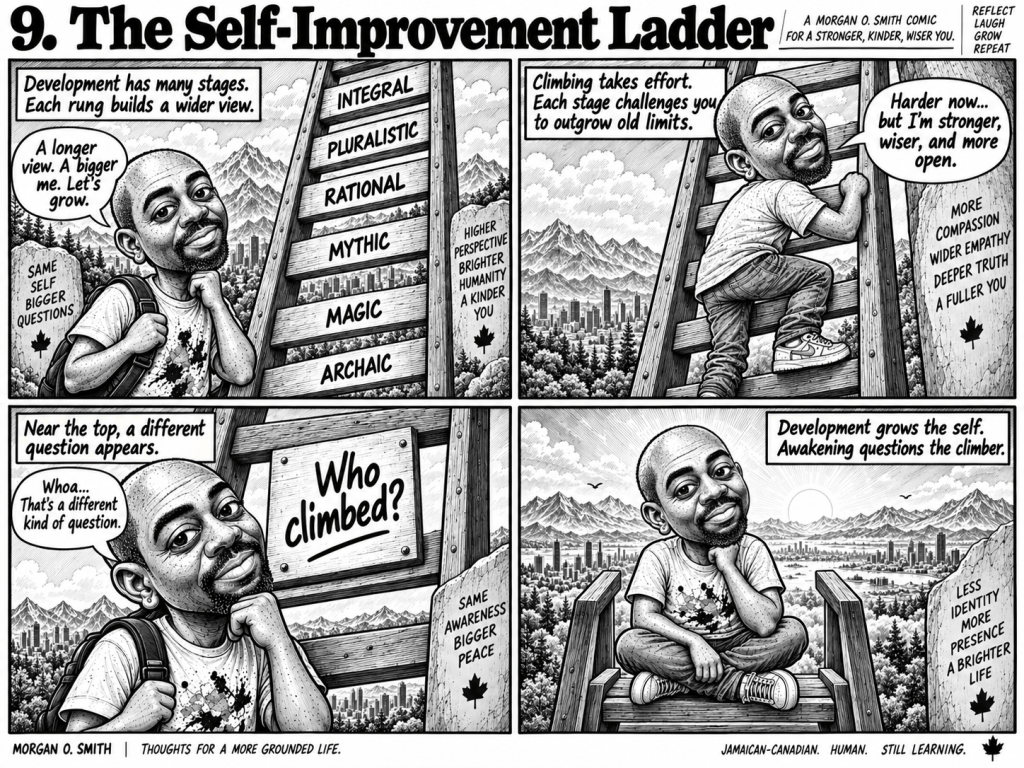
The search for an outside position is subtle. It hides beneath inquiry, improvement, and even awakening. A sense lingers that something must be reached, clarified, or corrected from a vantage point just beyond experience. Yet no such position exists. There is nowhere to stand apart from what is happening.

Experience does not unfold within a container called reality. Experience is reality expressing itself as appearance, interpretation, and response. The idea of separation arises as one of those appearances, not as evidence of an actual boundary.

Thought suggests distance. It imagines a thinker facing a world, awareness looking at objects, a self navigating conditions. This suggestion feels convincing because it repeats. Repetition gives the impression of structure. Structure gives the illusion of independence.

Nothing has ever been observed from outside what already is. Even the claim “I am separate” appears within the same field it attempts to deny. Opposition does not escape wholeness; it demonstrates it.

The urge to step beyond arises from discomfort with immediacy. Presence offers no leverage, no control panel, no hierarchy. Everything shows up equally entitled to exist; clarity and confusion alike. The mind prefers a higher ground. Reality does not provide one.

This does not collapse meaning. It releases the demand that meaning point somewhere else. Significance no longer depends on transcendence. What matters does so because it appears, not because it leads elsewhere.

Nothing needs to be included, because nothing was excluded. Nothing needs to be unified, because division was conceptual. Difference remains, but it no longer implies fracture. Distinctions function without claiming independence.

Every perspective contributes without completing the whole. No single angle owns truth. No framework escapes limitation. Each reveals something precisely because it cannot reveal everything.

There is no final position to arrive at. No outside reference point to secure certainty. What remains is simple and unremarkable: this, exactly as it is, without appeal or resistance.

Nothing stands outside what already is—
and nothing needs to.

Morgan O. Smith

Get Your Free Copy of My Book, Bodhi in the Brain!

https://subscribepage.io/oTSZQu

You Are the Void

You are the void surrounded by your own self as substance, brought forth by its own thinking, shaped by its own thoughts.
Not as symbolism. Not as spiritual ornamentation. Simply as a description of what is already occurring before interpretation.

Substance feels dense because thought lingers. Thinking slows openness into shape, then convinces itself the shape possesses independence. Solidity is an effect of attention held too tightly. The void does not interfere. Allowance is enough for appearance to unfold.

Creation does not originate with matter. A quieter shift precedes it—the faint suggestion of separation. Something entertains the idea of being something rather than everything. That subtle narrowing gives rise to form, continuity, memory, and the felt position of a self observing from somewhere.

The void is not just empty. Emptiness would imply absence. What exists here is freedom from insistence. No preference. No correction. When thought moves, substance organizes. When thought loosens, substance reveals its temporary nature.

Identity feels heavy because repetition gives it mass. Familiar thoughts replayed long enough acquire gravity. The mind labels this accumulation “me.” The void registers movement, nothing more.

Nothing requires removal. Nothing asks to be fixed. Recognition alone softens what once appeared solid. Structure relaxes into responsiveness. Boundaries become functional rather than absolute.

Silence does not depend on quiet. Silence appears when thought releases its claim to authorship. Experience continues, but no longer points back to a controller or witness standing apart.

The void never hides behind form. Form arises within it and borrows its apparent stability from sustained attention. When attention eases, what remains cannot be framed as presence or absence. Language fails because nothing is missing and nothing needs to appear.

No final claim can be made. No definition holds without collapsing into another. What happens does so without explanation. What appears does not require justification. Everything stands exactly as it is.

Nothing here can be stated as what it is or what it is not. Nothing explains how this occurs. Perspectives arise according to position, history, and capacity, each contributing its angle without canceling another. No single view completes the picture. Together, they form what cannot be reduced to parts.

Truth does not belong to one standpoint. Wholeness expresses itself through difference, not despite it.

Morgan O. Smith

Get Your Free Copy of My Book, Bodhi in the Brain!

https://subscribepage.io/oTSZQu

When Metaphysics Falls Silent

Metaphysics promises a final explanation.
A last framework.
A language vast enough to contain reality itself.

Yet even metaphysics appears within experience.
Thought observes it.
Consciousness hosts it.
Awareness remains prior to it.

Metaphysics refines questions about being, causation, time, self, and origin.
Each refinement sharpens conceptual clarity, yet clarity still belongs to the realm of concepts.
No matter how subtle the idea, it remains an appearance.

Absolute truth does not require explanation.
Explanation arises only when something seems absent or incomplete.
Reality, when directly encountered, carries no demand for justification.

Metaphysics attempts to map the territory beyond appearances.
Maps, however elegant, never become the terrain.
The most intricate metaphysical system still rests on distinction—between subject and object, knower and known, framework and what it seeks to frame.

Nonduality reveals a quiet rupture.
Nothing stands outside awareness to be explained.
Nothing stands inside awareness that needs interpretation.

Metaphysics dissolves not because it is false, but because it is unnecessary.
Truth does not depend on coherence.
Existence does not depend on intelligibility.

What remains after metaphysics collapses is not ignorance.
What remains is immediacy without commentary.
Presence without architecture.
Knowing without a structure that claims ownership of it.

The mind seeks altitude.
Awareness requires no elevation.
Being does not stand above itself.

Metaphysics is a beautiful scaffolding.
Scaffolding eventually comes down.
What stands was never built.

No ultimate explanation arrives.
No final philosophy survives.
Only what has always been—prior to meaning, prior to understanding, prior to the urge to explain—remains unmistakably present.

Morgan O. Smith

AI for Wellness and Spirituality Summit

February 9 & 10, 2026

https://aiforwellnessandspirituality.com/mosm