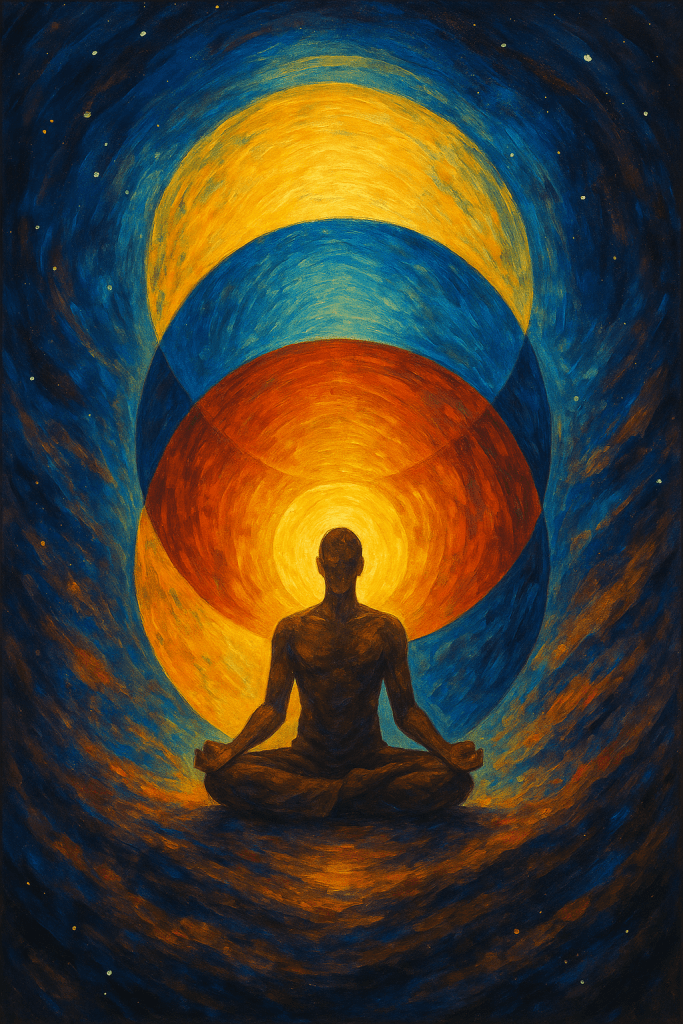
The Silent Agreement Beneath All Voices

Every conviction, no matter how radical or righteous, is an echo of the same unspoken longing to be understood, to belong, to find meaning amid the vastness. Each culture, religion, and ideology carves its own path toward that longing, often believing itself to be the only way. Yet beneath the words, beneath the gestures of defence or devotion, there hums a single vibration that does not divide.

Those who dare to listen beyond preference hear it clearly. The louder the debate, the clearer it becomes that all sides are pleading for the same recognition of their humanity. The fundamental call is not for dominance but for understanding; to be seen through the eyes of unity rather than difference.

Beliefs are useful until they are mistaken for truth. When held too tightly, they become walls. When held lightly, they become windows through which consciousness observes itself from a thousand angles. The awakened mind learns not to choose sides but to perceive the underlying harmony that holds both sides together.

True wisdom is not born from agreement but from capacity; the capacity to listen without fear, to allow contradiction to breathe, to see that diversity of expression is the universe conversing with itself. Every person, every nation, speaks a dialect of the same cosmic language. The argument is never between right and wrong but between two reflections of the same light, each insisting that its brightness is original.

When this is seen, opposition dissolves. The wars of ideology lose their fuel. You begin to recognize that all are reaching toward the same ineffable truth, merely using different words to describe it. What remains is not a conclusion but a profound peace; the peace of seeing through the illusion of difference.

Morgan O. Smith

Get Your Free Copy of My Book, Bodhi in the Brain!
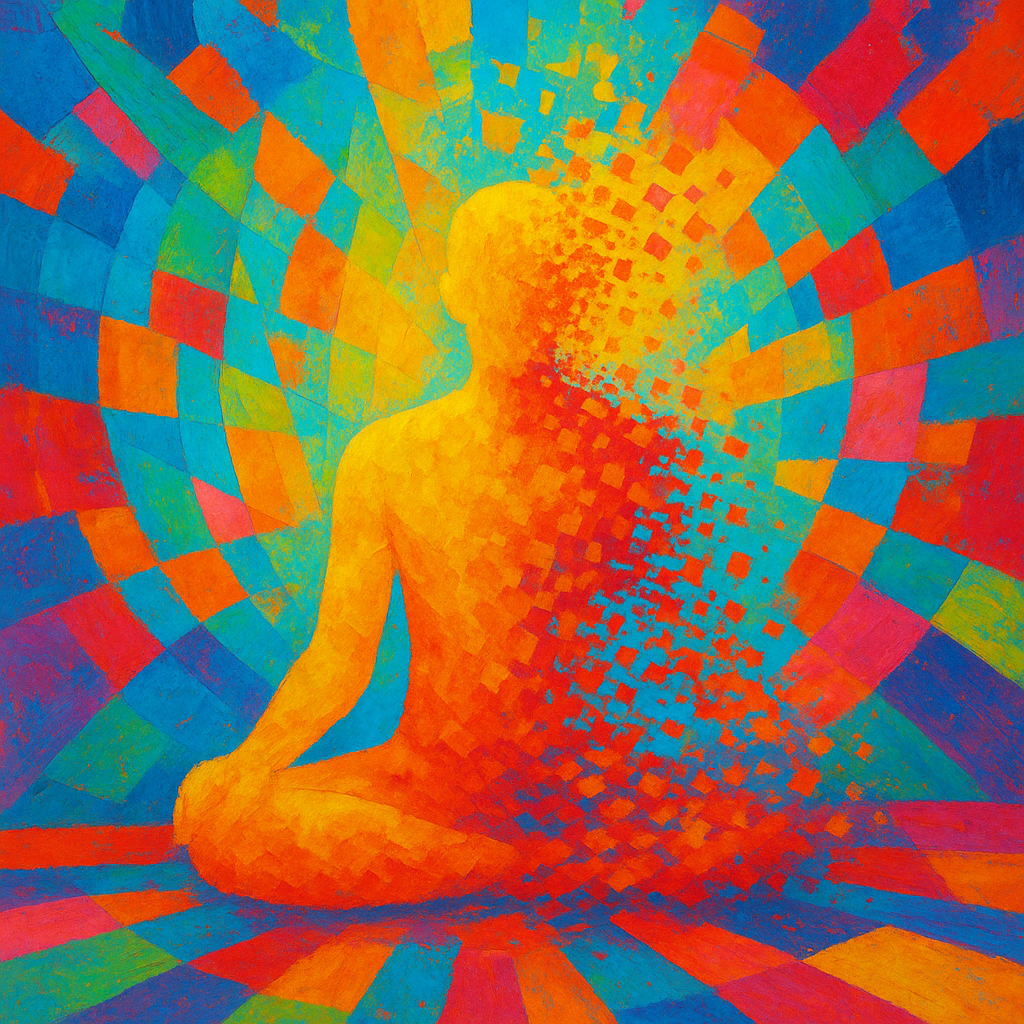
https://subscribepage.io/oTSZQu

Beyond the Quadrants

The Letting Go That Lets Go of You

Awakening does not unfold through accumulation but through dissolution. It’s not about adding layers of understanding, but releasing the very framework that holds identity together. Every seeker begins with an “I”—the observer, the experiencer, the one who longs for freedom. Yet that same “I” must eventually surrender its throne.

The paradox lies here: the “I” must decide to release itself. It chooses to let go, though the one who chooses disappears in the act. This gesture is not driven by resistance or desire, but by recognition —an intuitive understanding that attachment to any quadrant is still a form of identification.

The quadrants—I, WE, IT, and ITs—map the totality of human experience: the inner self, the collective, the objective, and the systemic. Each serves a purpose until awakening calls for transcendence. The I is influenced by the ITs—the systems, structures, and conditions of existence. These shape perception and possibility. Through the IT, awareness ripples into the WE, inspiring collective movement. And as the WE shifts, the I is again transformed.

This endless loop of causation refines consciousness but never liberates it. Liberation comes when the loop itself is seen through. When the “I” no longer clings to the role of observer or doer, the quadrants collapse into pure witnessing. There is no longer an experiencer and the experienced, a subject and its object. What remains is unconditioned awareness; the silent axis upon which all quadrants turn.

Awakening, then, is not achieved through effort but through profound surrender. It is the cessation of grasping at identity within any domain—personal, relational, empirical, or systemic. The quadrants remain functional but no longer define reality. They appear and dissolve within the same stillness that has always been awake.

Morgan O. Smith

Get Your Free Copy of My Book, Bodhi in the Brain!

https://subscribepage.io/oTSZQu

The Precision of Perception

Why Interpretation Shapes Your Awakening

Reality isn’t hiding. What conceals it is the web of interpretations spun by the mind: assumptions, projections, and inherited beliefs. Yet, paradoxically, it is through interpretation that one begins to peel away those very veils. Every interpretation is a mirror. The question is: what is it reflecting?

Interpretation matters because it reveals where you are on the developmental spiral. Crude, reactive interpretations reflect lower rungs of psychological growth; often rooted in fear, blame, or a need for certainty. As awareness matures, interpretations become more nuanced, inclusive, and paradox-tolerant. They start to echo the underlying unity of things, rather than just categorize them.

Interpretation is not merely a mental activity. It is a soul signal. The more refined it becomes, the closer it gets to silence, the point where no interpretation is needed. That is the paradox. The highest interpretation doesn’t claim to know; it bows. It listens. It dissolves.

Yet such dissolution is not a regression into vagueness. It is the clarity that comes when all interpretations have done their job and exhausted their usefulness. Then what remains is the directness of being—your true nature—not as a conclusion, but as the very absence of conclusion.

This is why interpretation is not to be dismissed but refined. It is a bridge. And the more accurate your interpretation of the world, the closer you walk toward the unconditioned—what no interpretation can contain, but all of them secretly point toward.

What you interpret is what you live. Misinterpret life, and you suffer. Align with it, and you awaken. Accuracy in perception is not about being “right”; it is about being real. Every step you take toward clearer interpretation is a step toward the Real that has no opposite.

Morgan O. Smith

Get Your Free Copy of My Book, Bodhi in the Brain!

https://subscribepage.io/oTSZQu

Beyond Existence and Non-Existence

The Paradox of God

To say “God exists” is to affirm the ultimate. To say “God does not exist” is to deny the ultimate. Both affirmations and denials, however, are shaped by the mind’s insistence on certainty. The moment one tries to hold onto either pole, a paradox emerges.

When someone claims God exists, they project a reality beyond perception, yet they confine that reality to a category recognizable to human thought. When another claims God does not exist, they too impose a conclusion, binding the ineffable to the limits of negation. Both positions carry a strange truth and a strange error. Both dissolve the moment awareness sees through the duality of affirmation and denial.

Imagine truth as a horizon: from one angle, existence appears; from another, non-existence. Walk closer, and the horizon itself vanishes; it was never a line that could be grasped, but a function of perspective. God is not merely at the horizon but the condition through which horizon, perspective, and perceiver arise.

To say both are true is to honour that reality contains affirmation and negation. To say both are false is to point out that neither claim reaches the source. To say one is true and the other false is to remain in dualistic thought. To call them half-truths is to recognize their limitation yet still attempt to measure the immeasurable. To deny even a half-truth is to bow to silence.

The statement itself, that God exists and does not exist in all these paradoxical ways, becomes the closest gesture to truth. It is not the conclusion but the capacity to hold the contradictions without collapse that reveals God’s existence, not as a concept but as the unnamable presence behind every concept.

The paradox is not meant to be solved. It is meant to exhaust the mind until only awareness remains. What remains is not the proof of God, but the direct realization that the very effort to define or deny was always occurring within and as God.

Morgan O. Smith

Get Your Free Copy of My Book, Bodhi in the Brain!

https://subscribepage.io/oTSZQu

A Dreamed Reality

Memory as the Mirror of the Absolute

What we call reality may be less solid than it appears. Every sound, sight, and sensation dissolves almost as quickly as it arises, leaving only the faint residue of memory to claim that anything happened at all. Existence itself feels dreamlike when examined closely: shifting, impermanent, yet strangely coherent—like a page rewritten by an unseen author each moment.

Memory is the keeper of this dream. It builds continuity from fragments, stitching together the illusion of permanence where none truly exists. What we call “the world” is less a physical stage than a reflection—abstract, fluid, a hologram shimmering on the screen of awareness. To mistake this reflection for the ultimate is to confuse the shadow for the light that casts it.

The most high, the unconditioned source beyond all appearances, does not require memory. It is that which precedes storage, recall, or even perception. Yet within its infinite stillness arises the dream we name reality. This dream is neither random nor meaningless; it serves as a mirror through which the Absolute contemplates itself. Every event, every thought, every fleeting sensation is nothing more than the play of memory echoing back to the One who never forgets because It has never known separation.

To recognize life as memory’s echo is not to diminish its beauty, but to free oneself from the weight of taking it as final. The dream is not false in the sense of being meaningless; it is false only in being mistaken for the whole. What is real lies in that silent clarity from which both memory and dream emerge.

Awakening, then, is the gentle turning of attention from the flickering reflection to the brilliance of the source. It is the realization that the dream was always sacred, but never ultimate.

Morgan O. Smith

Get Your Free Copy of My Book, Bodhi in the Brain!

https://subscribepage.io/oTSZQu

Unmoved, Unbound

When You Aren’t Moved by Anything, You’re No Longer a Slave to Anything

The world thrives on pulling us in every direction. Advertisements whisper that happiness lies in the next purchase. Relationships stir waves of desire and fear. Success dangles like a prize that demands endless striving. Each movement within us, longing, anger, excitement, dread- becomes a hook by which the world tugs us.

Freedom arrives not when the world stops moving, but when your inner stillness no longer takes the bait. When nothing stirs you into attachment or aversion, nothing holds dominion over you. A compliment does not inflate your worth; an insult does not diminish it. Gain and loss, pleasure and pain, rise and fall without catching you in their undertow.

This is not numbness. It is not apathy. It is clarity. The heart continues to beat, the eyes continue to see, the hands continue to act, but no chain is forged by what passes through awareness. You walk unbound, as life’s play unfolds without demanding ownership.

When the winds of the world cannot sway you, you discover the ground beneath all experience; the silent witness that was never captive to circumstance. To live from here is to live without fear of being moved, for you have already found what cannot be taken.

Morgan O. Smith

Get Your Free Copy of My Book, Bodhi in the Brain!

https://subscribepage.io/oTSZQu

Awareness Without an Owner

Pure Knowing Doesn’t Need a Knower

Pure knowing is not an act of someone grasping something. It is not the product of a subject meeting an object. It is not knowledge stored, processed, or owned. What we call “pure knowing” is an immediacy so complete that the categories of knower and known dissolve before they ever arise.

The mind insists there must be someone behind the recognition, a witness who stands apart. Yet such a witness is already a thought, an echo of division layered upon the seamlessness of awareness. The attempt to locate the knower is like searching for the horizon; you will find only a mirage created by perspective.

What reveals itself is astonishingly simple: knowing shines without support. No owner is required. No identity need arise. It is self-luminous, unmediated, without origin or destination. Thought may try to grasp it, but thought cannot enter here. The moment a “me” claims it, the purity is veiled, dressed in commentary, weighed down by explanation.

This does not deny the human experience of learning, remembering, and perceiving. It only points to the fact that beneath all those movements lies a ground untouched by them. That ground is knowing itself—silent, radiant, and free from the necessity of a knower.

To glimpse this is to taste liberation, not as a reward, not as a possession, but as the natural state that was never absent. What remains is not someone who knows, but knowing itself, unbroken and unclaimed.

Morgan O. Smith

Get Your Free Copy of My Book, Bodhi in the Brain!

https://subscribepage.io/oTSZQu

When “You” Disappear

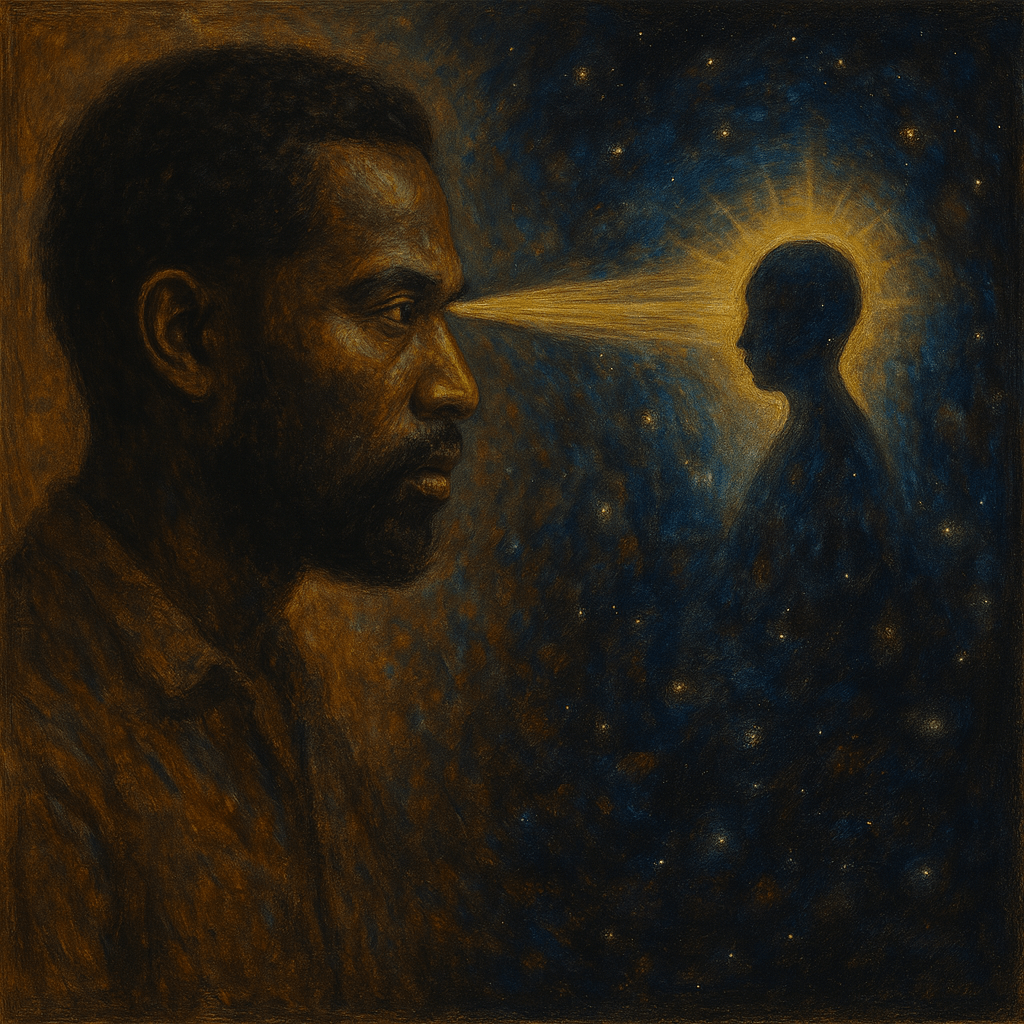
God is not found in the layers of personality, beliefs, or self-image. Those dissolve the moment you step out of the illusion of “me.” What remains when the scaffolding of identity crumbles is not absence, but presence, vast, unconditioned, indivisible.

The struggle for most seekers lies in clinging to the idea of a separate self. Every attachment to who you believe you are, your story, your role, your wounds, creates the illusion of separation from God. Yet God has never been apart from you. God is what has always been here, quietly holding even your attempt to define God.

When “you” disappear, nothing is lost. What is left is clarity so immediate that it cannot be explained, only lived. It is a recognition that existence itself has no centre and no boundary. Every breath, every sound, every sensation reveals itself as the movement of the One Reality, free of your commentary.

This realization is not a grand acquisition; it is the collapse of the idea that there was ever anyone to acquire it. The vanishing of the personal self exposes a truth so intimate that it cannot be possessed. It is not “your” truth, it is truth itself.

To awaken to this is to discover that God was never hidden. God is not the object of your search, but the space in which the search appears and disappears. The seeker dissolves, and what remains is the unbroken light of Being.

Morgan O. Smith

Get Your Free Copy of My Book, Bodhi in the Brain!
https://subscribepage.io/oTSZQu

Did I Have a Spiritual Awakening?

If the question lingers, “Did I have a spiritual awakening?” it often points to a deeper truth: perhaps it has not yet happened. Those who have passed through the unmistakable shift into awakened awareness do not wrestle with that doubt. There is a quiet certainty, not born of belief, but of direct experience.

Language can vary. Some may never utter the phrase spiritual awakening or enlightenment. They may frame it through their own culture, symbolism, or personal metaphors. Yet no matter the vocabulary, the essence remains beyond question.

When the event has truly unfolded, it is like rising from sleep. You do not analyze whether you are awake; you simply are. The recognition is immediate, complete, and irreversible. What remains is the unfolding of life through the clarity of that seeing.

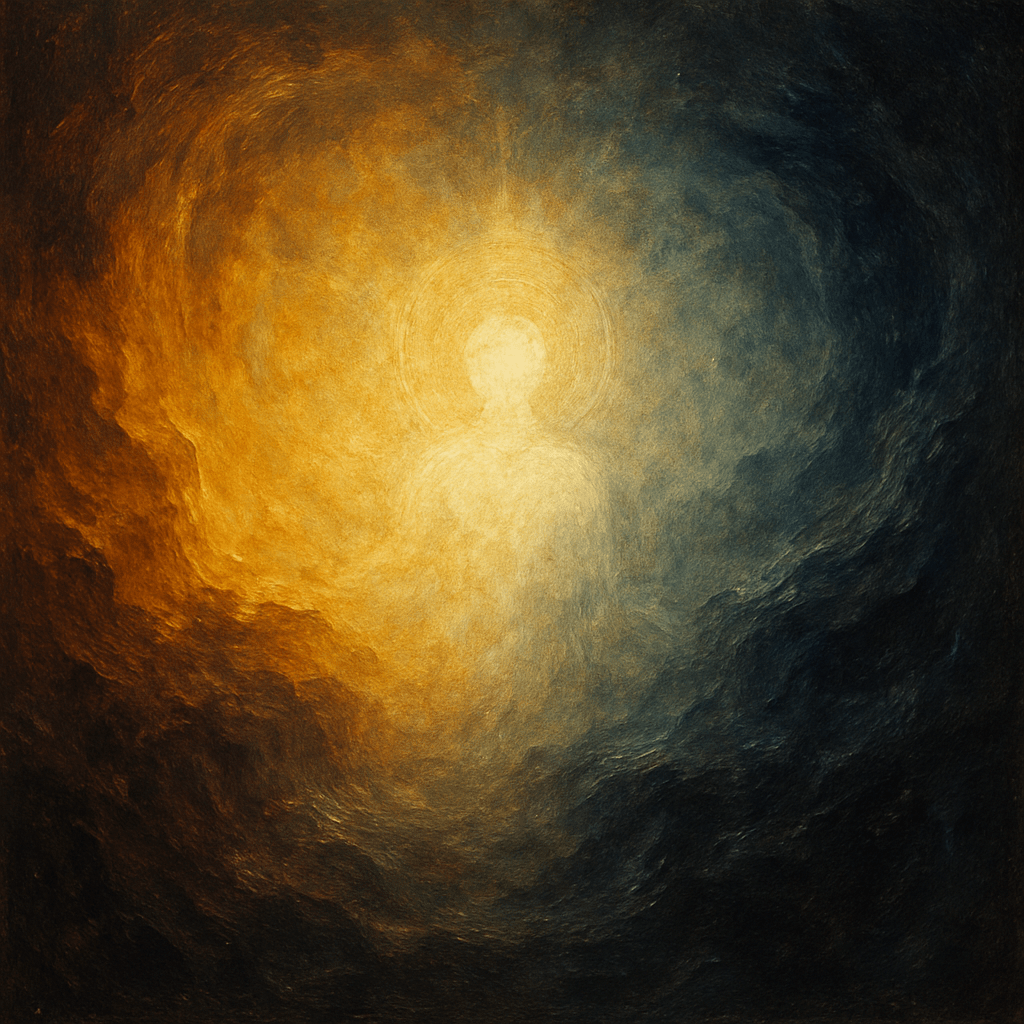
Awakening is not a theory to adopt or an idea to flirt with. It is the dismantling of the imagined self, the collapse of boundaries, and the revelation of a reality that was always here, quietly waiting to be noticed.

Morgan O. Smith

Get Your Free Copy of My Book, Bodhi in the Brain!
https://subscribepage.io/oTSZQu

The Divide

Between the Remembered and the Realized

Enlightenment isn’t a collection of vivid memories. It isn’t a library of altered states or a gallery of peak experiences pinned to the walls of time. Enlightenment, in its truest sense, is what remains when all those moments pass. It is not recalled—it is present.

A spiritually enlightened being doesn’t describe what happened—they speak from what is. Their language may touch on form, but it arises from formlessness. It isn’t commentary on a past event; it is the echo of what is silently alive in that moment. Words are merely the condensation of what remains wordless within them.

Contrast this with the one who has had many spiritually enlightening experiences. There is often great sincerity, beauty, and wisdom in their sharing. But listen closely: their narrative carries timestamps. “This is what I saw… what I felt… what I realized…” There’s a distance, however subtle. A witness telling you what the moon looked like—rather than being the moon, shining right now, regardless of who’s watching.

This difference isn’t about hierarchy. One isn’t better, holier, or more awakened than the other. But there’s a distinct quality when realization is not merely visited, but abided in. When the identity that would lay claim to an experience has dissolved entirely.

Here’s the paradox: a being can be spiritually enlightened without ever having what we label as a “spiritual experience.” No blissful union, no white light, no serpents of energy climbing the spine. Their clarity is not the aftermath of an event—it is the absence of confusion. No fireworks. Just light.

They may speak little. Or not at all. There is no need to convince, convert, or collect followers. They are not on a path—they are the ground from which all paths appear.

On the other hand, a person with many enlightening experiences can describe with breathtaking poetry the landscapes of the soul. But unless those experiences have dissolved the one who experienced them, the self remains—refined perhaps, but still separate.

True awakening isn’t an experience you remember. It’s the end of the one who remembers.

This is why the most profound truths often arrive without announcement. A falling away, not an acquiring. A silent recognition that this—yes, this—is what always was. And suddenly, the need for experience evaporates. Presence alone becomes sufficient.

Morgan O. Smith

Get Your Free Copy of My Book, Bodhi in the Brain!

https://subscribepage.io/oTSZQu