Turiya

The Witness That Is Everything

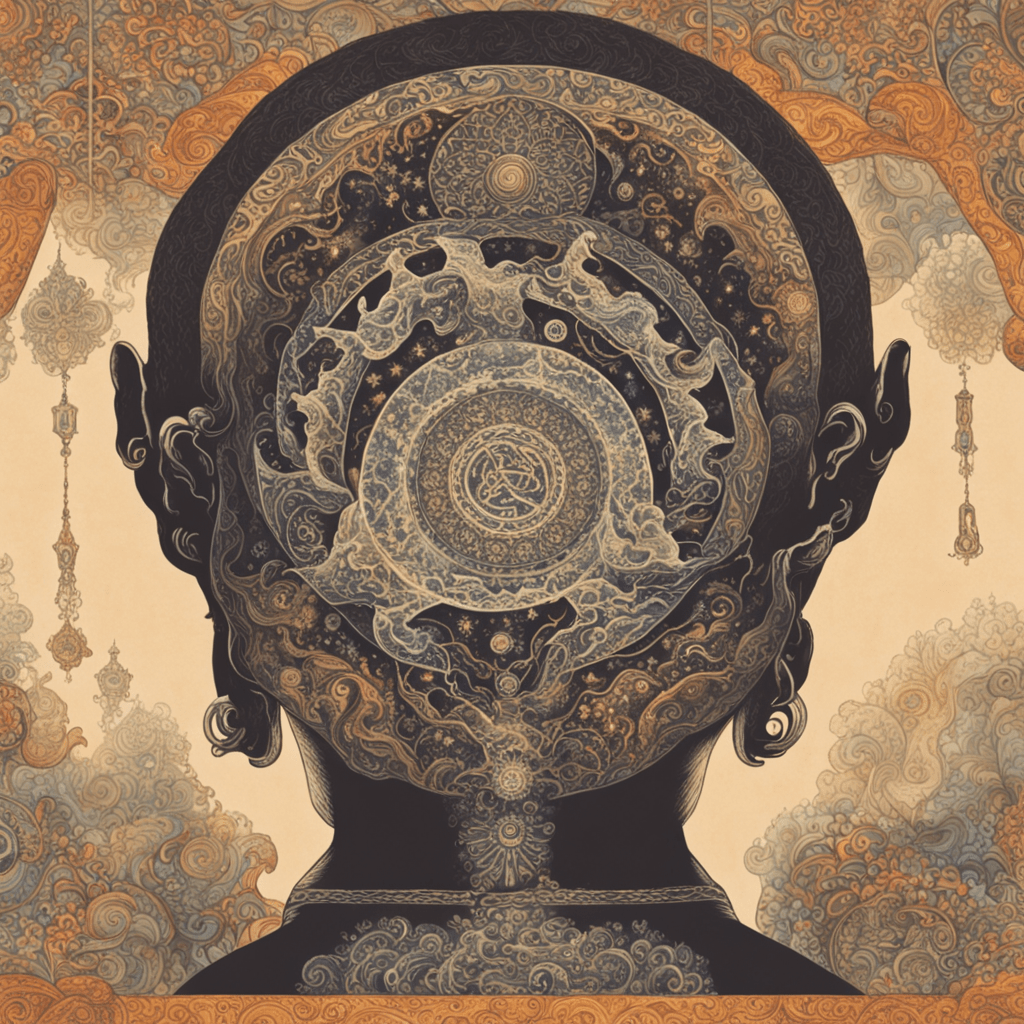
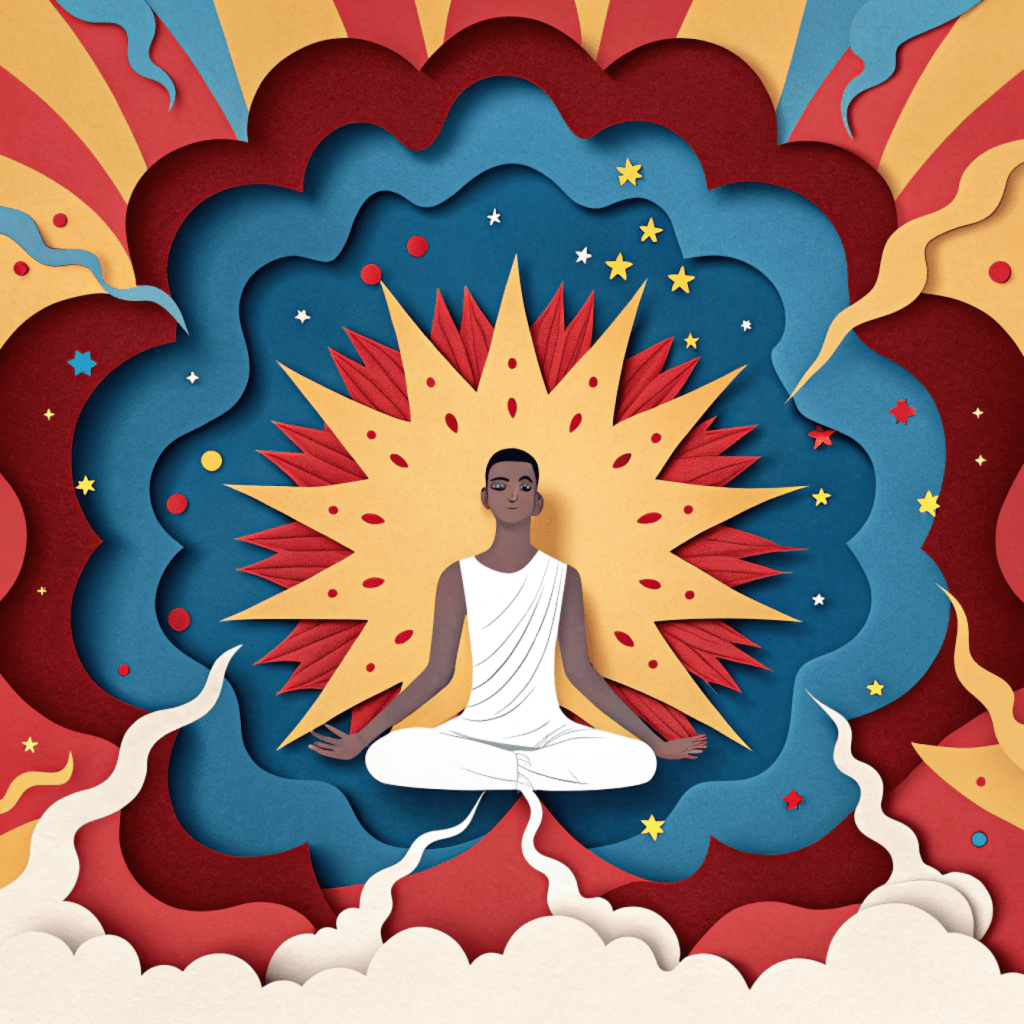
Most understand Turiya as the silent witness beyond waking, dreaming, and deep sleep. It is often considered the empty observer, untouched by the movements of mind, body, and experience. This perspective, though true, is not the full picture. The notion of an “empty witness” can still carry a subtle duality—a sense of something separate, detached, and standing apart from what it observes. Yet, Turiya is not merely a state one enters or a refuge from illusion; it is the foundation of all states and, ultimately, the realization that there was never an “other” to witness.

The empty witness is not just within the individual who reaches the fourth state of consciousness. That would suggest an inside and an outside, a seer and a seen. Turiya dissolves that illusion. It is not simply the background of experience but the existence of experience itself, witnessing its unfolding as everything.

To say that Turiya is merely an untouched observer is to misunderstand its nature. This assumption can lead to a false dichotomy, where one believes that ultimate truth lies in detachment alone. However, this view neglects the profound insight that the so-called witness is not separate from the world it observes. There is no distance between observer and observed, no boundary where witnessing begins or ends. It is all Turiya.

This recognition dismantles the very scaffolding of selfhood. The one who thought they were the observer disappears into the realization that the witnessing presence is not housed within them—it is existence itself, seeing, knowing, and being all things simultaneously.

What changes when this is seen? The sense of a separate self dissolves, revealing that awareness is not confined to a particular point of view. The wind moving through the trees, the laughter of a child, the pulse of the universe—all of it is the same knowing, the same presence. There is no need to “enter” Turiya because nothing has ever been outside of it.

This is not an experience to be gained, not a state to be reached. It is what has always been. The seeker who longed to discover it was never apart from it. The effort to grasp it was the very movement of Turiya exploring itself. There is only this, endlessly revealing itself to itself, never absent, never other than what is.

Morgan O. Smith

Yinnergy Meditation/Neurofeedback, Spiritual Life Coaching & My Book, Bodhi in the Brain…Available Now!

https://linktr.ee/morganosmith

The Silent Witness of Truth

Two voices rise in heated exchange—one anchored in faith, the other in skepticism. They stand opposed, each convinced of their certainty, each attempting to dismantle the other’s foundation. Their words carry weight, their arguments sharpened by conviction, yet beneath the clashing ideologies, an unseen presence listens, unmoved.

Observing this, a realization dawns. Neither combatant holds the full measure of truth, yet together they sustain a delicate balance—two halves of an equation that unknowingly uphold the whole. One defends belief, the other champions reason, yet both are bound to the same unseen essence that animates their very thoughts. The paradox they refuse to entertain is the paradox they embody: truth exists beyond assertion, beyond belief and disbelief alike.

What remains when both voices fall silent? What exists beneath every question, beyond every answer? A presence, neither confined by doctrine nor diminished by doubt. It is not a belief to defend nor a theory to deconstruct. It is the stillness that remains when all concepts dissolve, the background against which all ideas emerge and fade.

This presence requires no validation, no allegiance, no name. It neither arises nor perishes, for it is not bound by time. It is the ever-present foundation upon which all things rest—the unseen essence that gives rise to both theist and the atheist, both the question and the answer.

And yet, words will always fall short. Language can point, but it cannot contain. Thought can probe, but it cannot grasp. Those who have peered into the mystery have only ever gestured toward it—whether in sacred texts or silent awe. To recognize it is not to name it, but to surrender the need for certainty.

Look around. Not with the eyes of belief or disbelief, but with the eyes that see before thought intrudes. Feel its presence—not as an idea, but as the undeniable is-ness of this moment. And when you do, offer it a quiet smile. It has always been smiling back.

Morgan O. Smith

Yinnergy Meditation/Neurofeedback, Spiritual Life Coaching & My Book, Bodhi in the Brain…Available Now!
https://linktr.ee/morganosmith

Hidden in Plain Sight

The great paradox of existence is that divinity is neither distant nor separate. It does not hover above, removed from the world, or confined to scriptures, temples, or philosophical discourse. The divine reveals itself through the very eyes reading these words, the body’s breath moving in and out, and the awareness that witnesses it all.

Yet, the greatest cosmic joke is how effectively this truth hides itself. Conditioned perception buries it beneath layers of identity, belief, and attachment to form. The mind, trained to seek, overlooks what has never been absent. Seeking assumes distance, and distance creates the illusion of separation.

What would happen if the search for God ceased? If the assumption that something must be found was abandoned? Recognition would unfold – not as a discovery, but as a remembrance. What has been longed for has always been here, moving as every thought, sensation, and experience. The wave does not need to become the ocean; it has never been anything else.

The world appears as a veil obscuring the truth, yet that veil is woven from the very substance it seems to conceal. Divinity does not reside elsewhere. It is not waiting to be reached. It animates the hand that turns a page, the laughter that erupts unexpectedly, the silence between words. The cosmic game is not about finding, but realizing that nothing was ever lost.

God hidden in plain sight is not a metaphor. It is the unshakable reality ignored by the conditioned mind yet known by the silent awareness watching from within. It does not require belief, only direct seeing. The invitation is not to seek, but to recognize.

The great unveiling is already underway. The question is – will it be seen?

Morgan O. Smith

Yinnergy Meditation/Neurofeedback, Spiritual Life Coaching & My Book, Bodhi in the Brain…Available Now!

https://linktr.ee/morganosmith

The Love That Sees No Other

Love often carries conditions. It bends and shifts based on who stands before us, what they have done, and how they fit within our narratives. But what happens when love is no longer filtered through preference, judgment, or familiarity? What happens when love is not reserved for a select few but moves through everything, as everything?

The idea of loving everyone and everything as you love yourself is not about adopting a passive, all-accepting sentimentality. It is a radical act that dissolves the illusion of separateness. To love in this way is to recognize no fundamental difference between self and other, between what is cherished and what is feared, between what is understood and what is unknown.

Many believe they love themselves, but beneath the surface, self-love is often conditional. It thrives when things go well but falters in moments of doubt and suffering. If love for oneself is inconsistent, how can it extend unconditionally to others? This is where the real work begins – not in forcing affection but in dissolving the barriers that obscure the truth.

Love does not seek control. It does not require agreement. It is not contingent upon behaviour, belief, or shared experience. Love, in its purest form, simply is. To embody this means relinquishing the mind’s tendency to divide reality into worthy and unworthy, friend and foe, sacred and mundane.

Walking through life with this kind of love does not mean tolerating harm or ignoring injustice. It means meeting everything with the clarity that nothing stands apart from you. Love can take the shape of tenderness, but it can also be fierce, clear, and unwavering. To love everyone and everything as yourself is not to abandon discernment – it is to see beyond distortion, beyond fear, beyond the illusion that anything is truly separate from anything else.

This is not an instruction to be followed. It is an inquiry to be lived. How does love move through you when nothing is excluded? When no one is outside its reach? When the self dissolves into the vastness of Being, what remains but love itself?

Morgan O. Smith

Yinnergy Meditation/Neurofeedback, Spiritual Life Coaching & My Book, Bodhi in the Brain…Available Now!
https://linktr.ee/morganosmith

One Shared Journey

A Grateful Reflection

Every connection begins with a spark. Each visitor, reader, and seeker who has engaged with these writings have shaped this growing conversation. Across 132 nations, 10,507 curiosity, contemplation, and resonance moments have unfolded. This is more than numbers—it is a living testament to the interconnected spirit that binds us all.

Today holds special significance beyond gratitude alone—it is my birthday. I celebrate 53 years of life, reflection, and continuous exploration alongside this global community of seekers. There is no better way to mark this day than to extend heartfelt appreciation to each of you who has journeyed alongside me in thought and awareness.

A heart filled with gratitude reaches toward my homeland, Canada, the United States, Australia, India, and the United Kingdom—nations that have provided thousands of glimpses into this shared exploration. Vietnam, the Philippines, Germany, my place of birth, Jamaica, my place of ancestry,  Nigeria, Mexico, Indonesia, Ireland, South Africa, Pakistan, and the Netherlands—each one adding its own voice, its own energy, its own questions to the unfolding dialogue.

Thailand, Sweden, Italy, France, Japan, Malaysia, Romania, Spain, Austria, Brazil, Kenya, Poland, Jordan, Ghana, and China—there is no border to wisdom, no limitation to the reach of understanding. Every reader who paused to reflect, who allowed these words to stir something within, has contributed to a silent but powerful movement toward deeper awareness.

New Zealand, Singapore, South Korea, Greece, Israel, Russia, Hungary, Tanzania, Norway, Türkiye, Laos, Bangladesh, Saudi Arabia, Trinidad & Tobago, Belgium, Switzerland, Portugal, Uganda, Colombia, Ukraine, Taiwan, and Finland—each visit is a ripple of shared thought, proving that the human longing for meaning transcends language and culture.

Bosnia & Herzegovina, Cayman Islands, Hong Kong, Denmark, Slovenia, Bahamas, Kosovo, Egypt, U.S. Virgin Islands, Somalia, Argentina, Fiji, Latvia, Benin, Sri Lanka, Cameroon, Zimbabwe, Serbia, Slovakia, Armenia, Puerto Rico, Senegal, Tunisia, Chile, Dominican Republic, Kuwait, Morocco, Nepal, Gambia, Venezuela, Côte d’Ivoire, Peru, Bolivia, Guam, Myanmar (Burma), Qatar, Ecuador, Bulgaria, United Arab Emirates, Georgia, Mauritius, Czechia, Albania, Liberia, Belarus, Papua New Guinea, Guyana, Bahrain, Zambia, Namibia, North Macedonia, Syria, Kyrgyzstan, Lithuania, Kazakhstan, Oman, Croatia, Réunion, Cuba, Nicaragua, Paraguay, Mongolia, Malta, Guatemala, Seychelles, Sierra Leone, Niger, Ethiopia, Dominica, Congo – Kinshasa, St. Kitts & Nevis, Barbados, Costa Rica, Mozambique, Cambodia, Martinique, El Salvador, Lesotho, Botswana—your presence in this shared space carries meaning beyond what words can express.

Gratitude is more than an acknowledgment—it is a recognition of the unseen, the vast web of connection linking every individual to something greater. The search for understanding does not belong to one culture, one belief system, or one mind. It moves through all of us, revealing the essence of being beyond any division.

To every reader, to every soul that has journeyed through these thoughts—thank you. The exchange is sacred, and the dialogue continues.

Morgan O. Smith

Yinnergy Meditation, Spiritual Life Coaching & My Book, Bodhi in the Brain…Available Now!

https://linktr.ee/morganosmith

The Great I AM

The Great I AM Cannot Be Uttered by the Chattering Tongue

The essence of “I AM” defies articulation. Language, though beautiful, often becomes a noisy river of concepts, attempting to capture something that simply cannot be grasped. The chattering tongue thrives on duality, building walls between subject and object, speaker and listener, self and other. Yet, the Great I AM stands outside this dualistic framework, unbounded, whole, and utterly silent.

“I AM” is not a statement. It is the root of being itself, preceding thought, identity, and all constructs of the mind. To utter it is to already veil its truth. Words can point to the presence of the I AM, but they are shadows trying to explain the light. The moment you speak, it slips through the cracks of description, retreating into the stillness from which it arises.

Why, then, does the tongue chatter? It chatters because it fears the void—the stillness where the mind dissolves, and the self is no more. The ego’s survival depends on noise, distraction, and the endless creation of stories. In silence, it falters, confronted by the stark and undeniable simplicity of being.

To encounter the Great I AM is not to think about it but to dissolve into it. It is to rest in the awareness that observes the thoughts, the feelings, the words, and even the idea of “I.” This awareness has no form, no beginning or end. It is neither here nor there, neither this nor that. It is simply what is—timeless, spaceless, and unchanging.

When the tongue is still, the mind quiets, and the veil of separation thins. There, in that profound stillness, lies the Great I AM. It cannot be possessed, named, or claimed. It is the ground of all existence and yet entirely untouched by it. It is not yours or mine, yet it is undeniably the essence of what we are.

To live in the awareness of the Great I AM is to recognize that all the noise, all the chatter, is simply a dance of form arising within the formless. It is to see that even the ego, with all its stories, is just a fleeting ripple in the infinite ocean of being.

Silence does not mean the absence of sound; it means the absence of resistance. It is the acceptance of all that is, without judgment or clinging. In this silence, the Great I AM reveals itself—not as a word, a concept, or a thought, but as the ever-present reality of existence itself.

The chattering tongue will never grasp this truth, but the silent heart already knows.

Morgan O. Smith

Yinnergy Meditation, Spiritual Life Coaching & My Book, Bodhi in the Brain…Available Now!

https://linktr.ee/morganosmith

The Soul’s Infinite Expression

We tend to anchor our identity in the physical body, perceiving it as the centre of our existence. From birth, the body is celebrated, measured, and scrutinized, reinforcing the illusion that it defines who we are. This fixation on the body as the ultimate reality obscures a deeper truth: the physical form is merely one facet of an expansive, multidimensional soul.

Your soul expresses itself across layers of existence, many of which are beyond ordinary perception. The body serves as a temporary vessel, a focal point through which the infinite interacts with the finite. While it appears solid and tangible, the body is a fleeting projection of the soul’s boundless energy, a transient ripple in the vast ocean of your being.

The Illusion of Exclusivity

Viewing the body as the entirety of selfhood limits understanding of existence. The physical realm, with its sensory experiences, feels undeniably real. Yet, when closely examined, the body is revealed to be impermanent, constantly changing, and inseparable from the environment around it. The cells within it are born and die in a perpetual cycle, mirroring the patterns of nature. Nothing about the body is fixed—except the awareness of witnessing its fluctuations.

This awareness belongs not to the body but to the soul. The soul uses the physical form to engage with this dimension of reality, much like light passing through a prism creates a spectrum of colours. The body is one colour, but the spectrum of the soul contains infinite hues.

The Multidimensional Self

Beyond the physical, there are layers of existence where your soul expresses itself. Subtle energy fields, emotional resonances, and realms of thought and intention all flow from the same source. These facets interact with the body, shaping experiences in ways often unnoticed. A sudden intuition, a deep emotional release, or a spontaneous surge of creativity are glimpses of the soul’s reach beyond the material.

The soul is not confined by linear time or space. The body moves through time, aging and decaying, while the soul exists in a timeless state, simultaneously influencing and being influenced by multiple dimensions of reality. To recognize this is to understand that your physical form is not the limit of your being, but a doorway into the infinite.

Why the Physical Body Matters

Acknowledging the body as one facet of the soul does not diminish its importance. The physical form is the ground where spiritual experiences take shape, where the formless soul engages directly with the tangible world. Every breath, movement, and sensation is an opportunity to express the soul’s essence in a way no other dimension allows.

Honouring the body as an extension of the soul transforms the way you relate to it. Instead of obsessing over appearances or fearing its eventual decline, you begin to see the body as sacred—a fleeting but essential aspect of your journey. Caring for it becomes an act of devotion, not out of attachment, but a way to honour the soul’s choice to experience this dimension.

Living Beyond the Body’s Facade

Recognizing that the physical body is only one aspect of the self brings profound liberation. Fear of death diminishes because the soul’s existence does not hinge on the body’s survival. Identity expands beyond the physical, allowing you to live with a sense of wholeness and interconnection.

When you stop identifying solely with the body, relationships transform. You no longer see others as separate entities defined by their forms. Instead, you recognize the shared essence flowing through every individual, a unified soul expressing itself in infinite ways. This awareness fosters deep compassion and an intuitive understanding of the interconnectedness of all life.

Your physical body is not a prison or limitation; it is a reflection of your soul’s creative power. To live fully means to embrace this perspective, allowing the soul to shine through every aspect of your existence, both seen and unseen.

 Morgan O. Smith

Yinnergy Meditation, Spiritual Life Coaching & My Book, Bodhi in the Brain…Available Now!

https://linktr.ee/morganosmith

Nothing Exists

The Witness Alone Remains

Every belief we hold about reality begins with a fundamental assumption: that something exists. Objects, thoughts, emotions, and even the concept of the self are taken as undeniable truths. But when we look closer, reality reveals itself to be far less solid. Strip away perceptions, dismantle the narratives, and what remains? Nothing. Not the nothing of absence, but a profound, living nothingness that holds the potential for everything.

The paradox lies here: if nothing truly exists, then what is aware of this nothing? What observes the rise and fall of sensations, thoughts, and forms? The answer is the witness—pure awareness, untouched by the shifting currents of existence. It is not an object that can be grasped, but the context in which all objects appear.

What Is the Witness?

The witness is not the thinking mind or the personality you’ve constructed through years of conditioning. It is that which observes even the mind itself. The witness is silent, still, and ever-present. It is not bound by time, nor does it possess a location. While the body and thoughts belong to the world of form, the witness transcends it entirely.

When you recognize the witness, the illusion of existence begins to unravel. The objects of your awareness—whether external events or internal thoughts—are revealed to be fleeting, momentary phenomena. They appear, they shift, and they dissolve, leaving no trace of permanence. The witness alone remains unchanged, untouched by the dance of creation and destruction.

Nothingness as Freedom

The recognition that nothing exists liberates you from attachment. If everything is transient, then clinging to any experience, belief, or identity is an exercise in futility. This does not mean rejecting the world but meeting it with openness, seeing it for what it is: a play of appearances arising within the vastness of nothingness.

This nothingness is not cold or lifeless. It is the fertile void from which all existence springs, a source of infinite creativity and potential. The witness watches the unfolding of this creative process, yet remains uninvolved, free from entanglement.

Who Experiences Existence?

The ultimate question arises: if nothing exists, how can existence be experienced at all? The witness is both the perceiver and the essence of existence itself. It is through the act of witnessing that “existence” takes on meaning. Without the witness, there is no one to perceive existence. The world, as we know it, cannot exist independently of the awareness observing it.

This insight has profound implications. The separation between the experiencer and the experienced dissolves. Reality is no longer something “out there” to be analyzed or controlled; it is a dynamic flow that arises within you, as you. The witness is not apart from existence—it is existence, recognizing itself through the illusion of separation.

Living as the Witness

To live as the witness does not mean rejecting the world or detaching from life. It means fully engaging with reality while knowing its true nature. You move through life with clarity, seeing that every thought, every sensation, and every moment arises from nothing and returns to nothing. The recognition of this emptiness brings freedom—not a withdrawal from life, but a deeper immersion in its sacredness.

When the witness becomes your anchor, suffering loses its grip. Challenges and emotions no longer define you; they are simply waves in the ocean of awareness. Relationships deepen, as you no longer seek validation or fulfillment from others. The peace of the witness is enough.

This realization is not a conclusion but an ongoing experience. Every moment offers an opportunity to rest in the witness, to see through the illusions of existence, and to marvel at the profound simplicity of being.

Morgan O. Smith

Yinnergy Meditation, Spiritual Life Coaching & My Book, Bodhi in the Brain…Available Now!

https://linktr.ee/morganosmith

The Neutrality of Being

Beyond Preference and Bias

Human experience revolves around preferences—good versus bad, desirable versus undesirable. From a young age, we are conditioned to label moments, objects, and relationships based on our likes or dislikes, shaping a world of duality. Yet, something remarkable may begin to unfold for those who experience a profound spiritual awakening. The intensity of preferences softens, and the once-compelling narratives around right and wrong, beautiful and ugly, start to lose their grip.

This shift isn’t forced or rehearsed; it arises organically as consciousness deepens. It’s not about suppressing preferences or pretending they don’t exist. Rather, it’s about witnessing them without attachment. You might still notice that one meal tastes better than another, or that one kind of weather feels more comfortable, but the emotional charge—the bias for or against—diminishes.

This state of neutrality doesn’t negate the ability to express feelings about situations or objects. Joy, sadness, appreciation, or aversion may still arise naturally. However, the inner dialogue changes. An object once deemed essential for happiness may now appear as just an object. A situation that would have previously elicited anger or frustration may no longer hold the same power.

Neutrality is not numbness or indifference; it is the ultimate expression of freedom. When bias fades, life’s experiences are not judged as lacking or sufficient—they simply are. This perspective offers a profound sense of peace. When preferences no longer dominate the mind, the heart is free to engage with reality exactly as it unfolds.

This state isn’t something that needs to be chased or consciously cultivated. It arises as a natural byproduct of deep inner awakening. The realization that all phenomena are transient allows one to meet life with equanimity. Dualities are not eradicated but are seen for what they are—part of the play of existence, neither to be clung to nor rejected.

If you’re on the path of spiritual exploration, allow yourself to relax into the flow of awareness. Don’t try to force neutrality; simply observe the moments when it arises. Over time, you may notice that this spacious, bias-free perspective becomes less of an exception and more of your default state of being.

Morgan O. Smith

Yinnergy Meditation, Spiritual Life Coaching & My Book, Bodhi in the Brain…Available Now!

https://linktr.ee/morganosmith

The Mind is Samsara

Liberation Through Freedom From Thought

(Inspired by Delson Armstrong)

To grasp the nature of samsara, one must look no further than the ever-turning wheel of the mind. Thoughts arise and dissolve ceaselessly—ideas, beliefs, fears, and anticipations weaving an endless narrative. Each moment feels distinct, yet they are all threads of the same cyclical pattern. This mental turbulence is the very fabric of samsara, the cycle of birth, death, and rebirth experienced not only across lifetimes but also within the subtle rhythms of the mind.

Samsara is not a place. It is the identification with thought itself. Every belief we cling to, every concept we hold sacred, every doubt that gnaws at our certainty—these perpetuate the illusion of separateness. The mind clings to forms, seeking permanence in the impermanent, building castles on clouds. Yet each construction inevitably crumbles, and the cycle begins anew.

Nirvana, often misinterpreted as a distant goal, is not found outside this moment. It is recognizing what remains when all that is transient falls away. Freedom arises not through force or suppression but by witnessing the mind’s movements without becoming entangled. The arising and dissolving of thoughts are no longer resisted; they are observed as passing clouds in the vast sky of awareness.

This realization does not destroy the mind but recontextualizes it. Thoughts may continue to arise, but they no longer hold the power to bind. The very root of suffering—attachment to the mind’s constructs—is severed. What remains is pure Being, an effortless silence that neither clings to birth nor fears death.

To step off the wheel of samsara is to recognize that you were never bound. The liberation of nirvana is not an escape but a profound shift in perspective: to see thoughts for what they are—fleeting phenomena—and rest in the unchanging awareness that witnesses them.

The mind is samsara. Freedom lies not in battling it, but in transcending it through direct experience of your timeless nature.

Morgan O. Smith

Yinnergy Meditation, Spiritual Life Coaching & My Book, Bodhi in the Brain…Available Now!
https://linktr.ee/morganosmith