The Cosmic Dance of Giving and Receiving

Unveiling Our Universal Identity

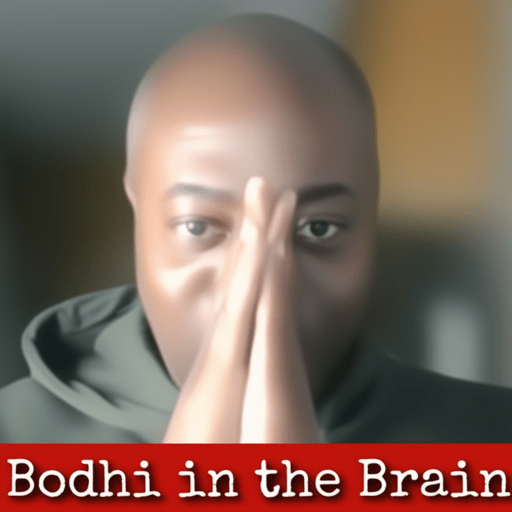
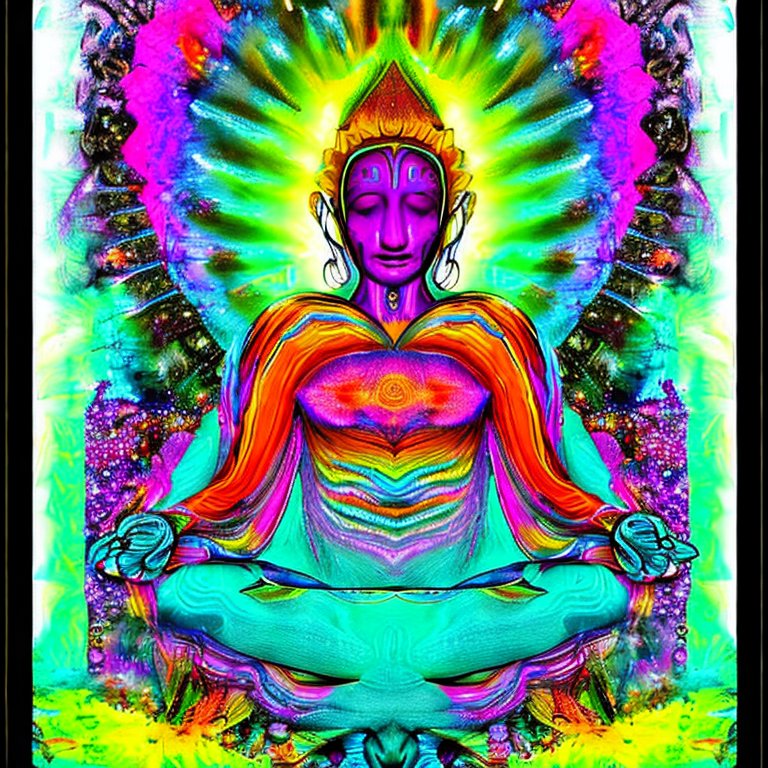
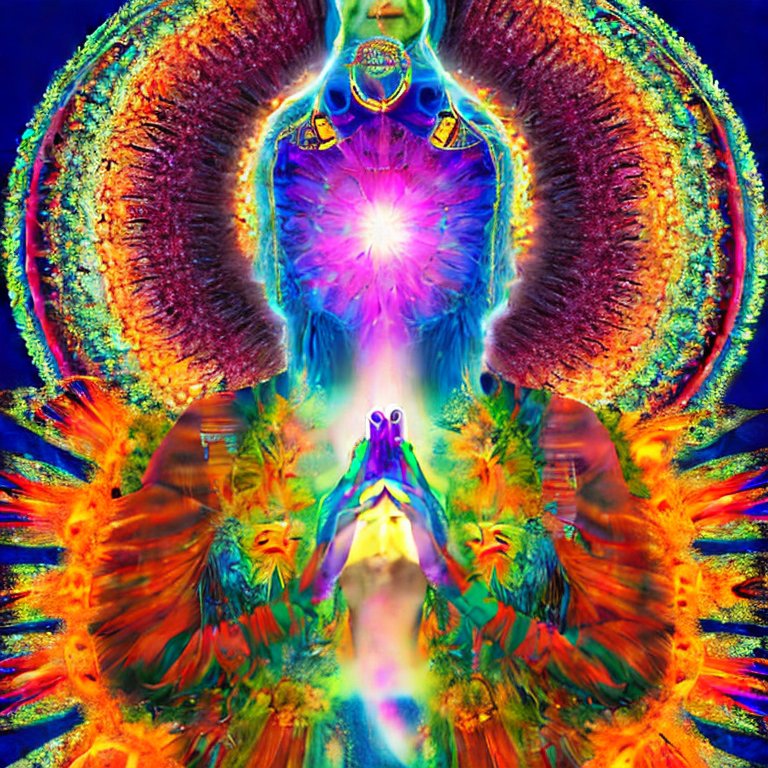
In our conversation on the Guru Viking podcast, hosted by Steve James, the essence of giving and receiving was explored in a way that transcends the mundane understanding of these acts. Our discussion, titled “Bodhi in the Brain,” delved into the philosophical underpinnings of our existence and our intrinsic connection to the universe. The narrative unfolded a perspective that not only are we a part of the universe, but we are the universe itself, engaging in a perpetual dance of giving and receiving.

The act of giving and receiving is not merely a transaction, but a reflection of a deeper, cosmic reality. When we give, we are not parting with something; rather, we are circulating the essence of existence. Similarly, when we receive, we are not merely acquiring; we are resonating with the universal rhythm. This perspective elevates the act of giving and receiving from a mere transaction to a transcendental experience, a harmonious exchange between the self and the cosmos.

The breath serves as a poignant metaphor for this eternal exchange. With every inhalation, we receive the life force, and with every exhalation, we give back to the existence that cradles us. This rhythmic exchange is a reminder of our unbreakable bond with the universe. It’s a dance of energy, a flow of consciousness, a cycle that sustains life and fosters the continuum of existence.

The notion that “it’s better to give than to receive” is not just a moral stance, but a reflection of a higher truth. When we give selflessly, we align with the universal law of abundance. We acknowledge that we are not separate entities operating in isolation, but integral parts of a grand cosmic orchestra. Our acts of giving and receiving are not just interactions with the external world; they are a dialogue with the universe, a testament to our universal identity.

Furthermore, the idea that “the universe is always yours” is a profound reminder of our limitless potential and inherent unity with the cosmos. We are not mere spectators in this grand theatre of existence; we are the playwrights, the actors, and the audience. The universe is not an external entity; it is a reflection of our innermost being, a mirror of our infinite essence.

This dialogue on the Guru Viking podcast invites you to transcend the superficial understanding of giving and receiving, urging us to embrace our universal identity. It’s a call to engage in the cosmic dance with awareness, grace, and a sense of sacredness. As we give and receive, we do not just interact with the world; we commune with the universe, we resonate with the essence of existence, and we unveil the profound truth that we are the universe experiencing itself in a myriad of forms.

This perspective is not merely philosophical musing; it’s a pathway to a deeper understanding, a higher consciousness, and a more meaningful existence. As we navigate the journey of life with this awareness, every act of giving and receiving becomes a sacred exchange, a step closer to the ultimate realization of our oneness with the cosmos.

Morgan O.  Smith

See Bodhi in the Brain and previous episodes below:

Ep 220: Bodhi in the Brain

Welcome to Episode 220 of our enlightening series, where today we delve into a profound narrative titled “Bodhi in the Brain.” In this episode, we are joined by a spiritual seeker who shares his riveting journey towards higher consciousness. Through a blend of ancient wisdom and modern neuroscience, we explore the realms of mind and spirit, unveiling a path that bridges the tangible with the transcendental. Tune in as we navigate the intricate dance of existence, and uncover the serene space where the mind meets the infinite.

Ep 176: The Awakening of Mista Mo
Embark on a captivating expedition in Episode 176, “The Awakening of Mista Mo.” Today, we unravel the transformative journey of Mista Mo, a soul who found enlightenment in the most unexpected corners of life. His tale is one of resilience, discovery, and awakening to a higher calling amidst the cacophony of worldly chaos. As we traverse through his life’s chapters, we uncover pearls of wisdom that beckon a deeper understanding of self and the universe. Join us in this stirring narrative that echoes the eternal quest for inner peace and enlightenment.
Ep 195: Enlightened Comedian
Laughter is often said to be a divine gift, but can it also be a gateway to a deeper understanding of our existence? In Episode 195, titled “Enlightened Comedian,” we explore the whimsical yet profound journey of a comedian whose quest for laughter led him to the shores of enlightenment. Through a tapestry of humour, insight, and spiritual awakening, we delve into the heart of a narrative that celebrates the confluence of comedy and consciousness. Tune in to this heartwarming episode as we unravel the laughter-laden path to self-realization and the profound wisdom that accompanies it.

🔗 For those yearning for a transformative meditative experience, the gateway awaits https://linktr.ee/morganosmith A friendly reminder for seekers everywhere: Guru Viking continues to unfurl wisdom every Friday on YouTube. Enrich your spiritual palette on Apple, SoundCloud, and Spotify as well. https://www.guruviking.com/

Yinnergy Meditation & My Book, Bodhi in the Brain…Available Now!

https://linktr.ee/morganosmith

The Dance of Consciousness

How Traits and States Influence Each Other

Introduction:
In the realm of philosophy and neuroscience, the nature of consciousness has long been a subject of intense scrutiny. As we delve into the complex interplay between traits of consciousness and states of consciousness, we embark on a thought-provoking journey that explores how these facets of our mind shape and are shaped by each other.

Part I: The Essence of Traits of Consciousness
Traits of consciousness refer to the enduring qualities and patterns that define an individual’s cognitive, emotional, and behavioural makeup. These traits form the bedrock of one’s personality, shaping how they perceive the world, process information, and interact with others. From introversion to openness, resilience to empathy, traits of consciousness provide a unique lens through which individuals experience their existence.

Part II: Unraveling States of Consciousness
States of consciousness, on the other hand, are transient and ever-changing mental conditions. These states can range from heightened awareness during moments of meditation or creative inspiration to altered states induced by substances or intense emotional experiences. States of consciousness are like ripples on the surface of a vast ocean, reflecting our immediate perceptions and inner states.

Part III: The Bidirectional Influence

At first glance, it might appear that traits and states of consciousness operate independently. However, upon closer examination, we discover the profound bidirectional influence they exert on each other.

1. Traits Shaping States:

Our enduring traits of consciousness lay the foundation for how we perceive and react to various states. For instance, a highly empathetic individual might experience deeper connections with others during states of heightened compassion or love. Similarly, a person with a predisposition to anxiety may be more prone to states of distress during challenging situations.

2. States Shaping Traits:

The fluidity of consciousness states can leave lasting imprints on our traits. Profound transformative experiences, such as spiritual awakenings or near-death encounters, can lead to significant shifts in an individual’s personality and worldview. Moreover, states like mindfulness and meditation can foster positive traits like patience and self-awareness.

Part IV: The Dance of Consciousness
As the dance unfolds, we realize that consciousness is not static but rather a dynamic process, constantly in flux. Traits and states intertwine, shaping and reshaping one another in an intricate and evolving dance.

Conclusion:
The relationship between traits and states of consciousness is a fascinating exploration of the human mind’s complexity. Acknowledging this interconnectedness can empower us to cultivate positive traits while embracing the ebb and flow of transient states. As we embrace the intricacies of our consciousness, we embark on a journey of self-discovery, leading us to a deeper understanding of ourselves and the world around us. Remember, we are not merely passive observers of our consciousness; we are active participants in its unfolding story.

Morgan O. Smith

Yinnergy Meditation & My Book, Bodhi in the Brain…Available Now!

https://linktr.ee/morganosmith

Meditative Practices and the Illusory Nature of the False Self

A Journey Towards Self-Realization

Introduction:
Meditative practices have long been revered as transformative tools in the realm of self-discovery and spiritual growth. They offer a profound pathway for individuals to explore the depths of their consciousness, seeking truth, peace, and liberation. However, beneath the surface lies a fascinating paradox—the false self, which appears as the practitioner, ultimately leads to the revelation of the Ultimate Self, the Ground of All Being.

The Illusion of the False Self:
Within the tapestry of various spiritual traditions, the notion of the false self arises—a deceptive construct born out of our attachments to external roles, labels, and conditioned beliefs. This illusory identity emerges from our tendency to assign significance to transient aspects of our existence, such as social standing, material possessions, and superficial identities. Meditative practices, in their diverse forms, serve as illuminating mirrors, enabling us to perceive the transient nature of the false self and transcend its illusory grasp.

Meditation as a Mirror:
Meditation acts as a reflective surface, offering a clear reflection of the illusory nature of the false self. By turning inward and observing our thoughts, emotions, and sensations without judgment or attachment, we gain a heightened awareness of the ever-changing nature of our experiences. Regular practice nurtures a profound realization—an understanding that our thoughts come and go, emotions rise and subside, and identities shift fluidly. This awakening brings us closer to recognizing that the false self is not a fixed entity but a construct that can be deconstructed through the power of self-inquiry.

The Ultimate Self:
While meditative practices may originate from the false self, they hold within them the potential to reveal the Ultimate Self—the very essence of our being, the Ground of All Being. As we delve deeper into our meditative journey, we begin to touch upon an interconnectedness and unity with the vast cosmos. The boundaries that once separated our individual selves from the external world begin to dissolve, and we catch glimpses of the inherent oneness that permeates all existence. In this expanded state of awareness, the false self loses its grip, and we realize that our essential nature transcends the limitations of individual identity.

Integration and Transformation:
The true essence of meditative practices lies in the interplay between the false self and the Ultimate Self. The false self, while illusory, acts as a vehicle for the exploration and transformation of consciousness. Engaging with meditative practices allows us to intimately observe the patterns and tendencies of the false self, ultimately leading us to transcend its limitations. By embracing the false self as a catalyst for growth, we integrate its lessons and move closer to the realization of our true nature—the Ultimate Self.

Conclusion:
In the realm of meditative practices, the interconnection between the false self and the Ultimate Self invites profound contemplation. While the false self may present itself as real and compelling, it is merely a construct that can be unravelled through the transformative power of meditation. Engaging in these practices propels us on a journey of self-realization, unveiling the essence of our being—the Ground of All Being. Meditative practices serve as bridges, guiding us from the illusion of the false self to the profound truth of our interconnected existence. Embrace these practices, embrace the false self, and embark on the path toward ultimate liberation and self-realization.

Morgan O. Smith

Yinnergy Meditation & My Book, Bodhi in the Brain…Available Now!

https://linktr.ee/morganosmith

The Eternal Now

Enlightenment as the Ever-Present Journey

Introduction:
Time is a mysterious and often bewildering dimension of our existence. Like the fleeting shadow of tomorrow, enlightenment is often thought to be something that is always just out of reach. However, what if the key to enlightenment was not in endlessly chasing it, but in realizing that it is already here?

The Illusion of Tomorrow:
Many of us tend to postpone our happiness or goals for the future. “I will be happy when…” or “I will do that tomorrow,” are phrases we frequently tell ourselves. Yet, as time moves forward, tomorrow remains as elusive as ever. It’s always today. This is a poignant reminder that the present moment is all we have.

Parallel to the Illusion of Enlightenment:
Enlightenment is often perceived as the pinnacle of spiritual accomplishment, a state to be attained in the distant future. However, much like tomorrow, the notion of enlightenment as a destination may be an illusion. If enlightenment is truly understanding and being at peace with oneself and the universe, then it must exist in the here and now.

The Eternal Present:
The Buddhist concept of “Satori” embodies a sudden awakening or flash of insight. It illustrates that enlightenment is not a far-off goal but an ever-present possibility. When we begin to see that the essence of life and self-realization is embedded in the present, the journey toward enlightenment takes on a different texture. It becomes a continuous, unfolding process rather than a destination.

Cultivating Awareness:
The path to recognizing that enlightenment is in the present involves cultivating awareness and mindfulness. By fully engaging with the present moment and releasing our attachments to the past and future, we can find clarity and wisdom.

The Role of Experience:
Our experiences, no matter how mundane, are integral to our understanding. Every moment provides an opportunity for growth and learning. Through mindfulness, we can recognize the sacredness in the ordinary, and see that enlightenment isn’t something distant, but an ever-present reality.

Conclusion:
“Enlightenment is always here” is not just a statement, but an invitation to break the chains of time and enter the eternal now. It’s an invitation to stop searching and start living. Like the enigmatic nature of tomorrow, enlightenment is not something that can be grasped or attained in the future. It is a journey that is happening right now. Every moment is an opportunity for awakening. May we have the courage to embrace the present and recognize the enlightenment that is always here.

Morgan O. Smith

Yinnergy Meditation & My Book, Bodhi in the Brain…Available Now!

https://linktr.ee/morganosmith

The Illusive Dawn

Spiritual Enlightenment and the Story We Live

Introduction:

Each day, as the earth rotates, the sun appears to rise over the horizon, casting its golden rays upon the world. Just like the sun, spiritual enlightenment is an ever-present force in our lives, though it is often perceived as something to be attained. This misconception, draped in the language of our stories, masks the true nature of spiritual enlightenment.

The Mirage of Attainment:
One of the intriguing elements of human nature is the relentless pursuit of something more. In the context of spiritual enlightenment, the journey is often portrayed as a path leading to a destination. However, by framing enlightenment as an end goal, we may be missing its inherent presence in our lives. Like the sun that’s always shining even when it’s out of our sight, enlightenment is not something we acquire but rather realize and tune into.

The Stories We Weave:

Our narratives shape our perceptions and, often unknowingly, our realities. Through stories, ancient wisdom has been passed down, guiding us toward spiritual growth. Yet, these stories can be double-edged swords. As they often depict characters attaining enlightenment, they inadvertently suggest that it is a finite state, achievable through certain actions or thoughts.

Unravelling The Eternal Now:
What if spiritual enlightenment is not something we reach at the end of a strenuous journey but rather an inherent quality of our being that we simply need to recognize? This recognition can be thought of as tuning into a frequency that has always been there. By peeling away the layers of ego, desires, and social constructs, we become more receptive to the eternal now – the ever-present light of consciousness that never wanes.

Practical Steps Towards Recognition:
1. Mindfulness: Engage in practices such as meditation or mindful breathing to bring awareness to the present moment.
2. Detachment: Learn to detach from material desires and social expectations that cloud the true essence of our being.
3. Compassion: Embrace a compassionate lifestyle, recognizing the interconnectedness of all life.
4. Continuous Learning: Engage with philosophical and spiritual texts that challenge and expand your understanding.

Conclusion:
Much like the illusory sunrise, the concept of attaining spiritual enlightenment may be a misinterpretation through the lens of our narratives. Rather than seeking to attain, let us recognize and embody the ever-present light within. By focusing on the present moment, detaching from the material world, and embracing compassion, we can tune into the unceasing glow of our inner sun.

Morgan O. Smith

Yinnergy Meditation & My Book, Bodhi in the Brain…Available Now!

https://linktr.ee/morganosmith