Beyond Labels

A Journey Through the Essence of Nonduality

In a world quick to cast judgment and affix labels, my exploration of nonduality has often been met with skepticism and disdain. Accusations of being “crazy,” “insane,” and “delusional” are hurled at me through social media, texts, and even face-to-face encounters. Yet, such reactions prompt me to question the very foundation of belief and perception in our society.

Consider for a moment the myriad of beliefs that have shaped human history and consciousness. How many individuals hold steadfast to the notion that the earth was crafted in seven days? Or that Eve emerged from Adam’s rib? Legends of Moses parting the Red Sea, Elijah ascending to heaven in a chariot of fire, Jonah’s survival within a whale, and the virgin birth and resurrection of Jesus Christ are not merely stories but are cornerstones of faith for countless people. These narratives, alongside the belief in entities like Satan or the practice of praying to an unseen force, might seem irrational or imaginary to some, yet they are deeply ingrained in the spiritual fabric of many cultures.
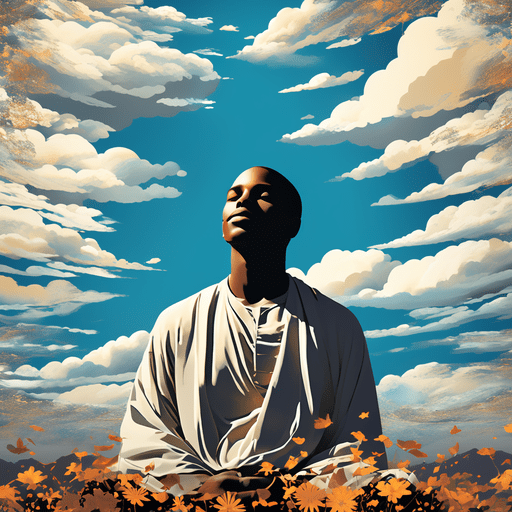

The juxtaposition of such beliefs against the skepticism faced by nonduality advocates raises a compelling question: Who, indeed, is the “crazy” one? This is not to disparage or belittle any set of beliefs but to highlight the subjective nature of sanity and rationality in the context of spiritual understanding. Nonduality, at its core, transcends the dichotomies of belief and disbelief, inviting a profound engagement with the essence of existence beyond the confines of conventional narratives.

Nonduality does not seek to undermine or replace traditional religious beliefs; instead, it offers a lens through which we might perceive unity in apparent diversity, seeing the interconnectedness of all things beyond the superficial separations imposed by language, culture, and individual perspective. It beckons us to explore the depth of our being, to recognize the intrinsic nature that we share with the universe itself.


The resistance faced by nondual perspectives is not a sign of their invalidity but a testament to their power to challenge and expand our understanding of reality. It is an invitation to dialogue, to introspection, and ultimately, to a more inclusive comprehension of the spiritual journey that encompasses all of humanity.

In embracing nonduality, we are not discarding the richness of diverse spiritual traditions but are deepening our engagement with the mystery that lies at the heart of existence. We are invited to witness the unfolding of life with an openness that transcends labels and judgments, recognizing that the true essence of spirituality cannot be confined to words or concepts.

So, as we navigate the waters of belief and skepticism, let us do so with a sense of curiosity and wonder, acknowledging that the quest for understanding is a path shared by all, regardless of the labels we may encounter along the way.

Morgan O. Smith

Yinnergy Meditation, Spiritual Life Coaching & My Book, Bodhi in the Brain…Available Now!

https://linktr.ee/morganosmith

The Paradox of Enlightenment

The Trap Within Belief

The quest for enlightenment is as old as human consciousness itself. Philosophers, mystics, and seekers from all walks of life have grappled with the concept, attempting to pin it down, describe it, and ultimately attain it. However, the journey toward enlightenment presents an inherent paradox: the more we try to define and understand it using fixed terms, the further we may be pushing ourselves away from its true essence.

Imagine a bird in flight. If we try to describe its movement using a series of static images, we will inevitably fail to capture the fluidity and grace of its motion. Similarly, when we attempt to describe enlightenment using fixed terms and concepts, we risk reducing it to a mere idea, devoid of its living, breathing essence.

Many spiritual traditions caution against becoming overly attached to words and concepts. This is because language, while a powerful tool for communication, is inherently limiting. Words can only describe what we already know, and they are often inadequate when it comes to capturing the depth and breadth of profound spiritual experiences.

In our desire to understand enlightenment, we may fall into the trap of believing too strongly in the terms we use. Once we form a fixed idea of what enlightenment is or should be, we inadvertently place a barrier between ourselves and the experience. Instead of being open to the infinite possibilities of spiritual growth, we become confined within the walls of our own beliefs.

It’s essential to remember that the true nature of enlightenment cannot be grasped by the intellect alone. It is something that must be experienced directly, beyond the limitations of language and thought. While words can point us in the right direction, they can never fully encapsulate the experience itself.

So, the next time you find yourself pondering the nature of enlightenment, consider letting go of your preconceived notions and beliefs. Embrace the unknown, and allow yourself to dive into the deep waters of direct experience. For it is only when we move beyond the confines of language that we can truly begin to touch the infinite.

Morgan O.  Smith

Yinnergy Meditation & My Book, Bodhi in the Brain…Available Now!

https://linktr.ee/morganosmith

Knowing vs. Believing:

A Personal Perspective on Divinity

Throughout my life, many Christians and many individuals from different religious backgrounds have approached me with a question that seems to be etched into our collective spiritual psyche: “Do you believe in God?”

My response is always a bit unexpected: I don’t believe in God. I *know* God. There’s a profound difference between the two, and this distinction shapes my entire spiritual paradigm.

### The Nature of Belief

Belief is an interesting concept. It stems from uncertainty and acts as a bridge between the known and the unknown. When we believe in something, it signifies that we hold it to be true without concrete evidence or direct experience. It’s a leap of faith. It’s the trust we put into things unseen or unverified.

But with knowledge, the dynamics change. Knowledge is grounded in experience, indisputable facts, or personal revelations. When we know something, it is deeply entrenched within us, forming a part of our identity. It’s not just a thought, but a lived experience.

### The Unshakable Foundation of Knowing

To say that I know God is to say that my relationship with the divine is not based on stories, scriptures, or what someone else has told me. It is based on a deep, intrinsic realization. An unwavering certainty that God, or the essence of all there is, permeates every molecule, every thought, every fleeting moment of our existence.

When we come to such profound realizations, words often fail to capture the depth of our experience. To know God is not about conforming to religious doctrines or performing rituals, although those can be paths leading toward this understanding. It is about an inner awakening, a cosmic “aha” moment where everything clicks into place.

### Why Does This Distinction Matter?

In our journey through life, both belief and knowledge have their roles. Belief can be a starting point, a motivator to seek deeper truths, to question, to explore. But belief can also be limiting if it keeps us tethered to dogmas without encouraging personal experience or exploration.

Knowledge, on the other hand, propels us forward. It gives us confidence, clarity, and a sense of purpose. When it comes to the divine, knowledge transforms our perception of the world, ourselves, and our place in the vast expanse of existence.

In conclusion, the journey from belief to knowledge is deeply personal, profound, and transformative. It is about breaking free from external validations and finding the truth within.

Morgan O. Smith

Yinnergy Meditation & My Book, Bodhi in the Brain…Available Now!

https://linktr.ee/morganosmith