Letting Go of the Construct

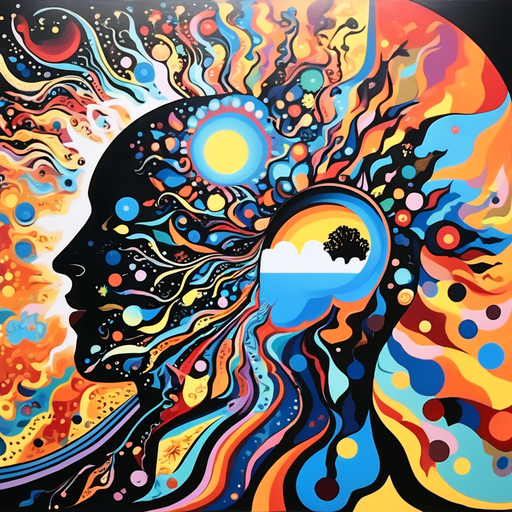
Spirituality has become another label, another concept bound by ideas of what it should or shouldn’t be. The moment it is named, it is framed and shaped by cultural, religious, and personal narratives that define and confine it. But what happens when all constructs dissolve? When even spirituality is seen for what it is—a creation of the mind attempting to grasp the ungraspable?

The urge to define the ineffable is natural. Language serves as a bridge, but it also creates the illusion of separation. Concepts such as enlightenment, awakening, and self-realization become reference points, yet they remain external to direct experience. The mind, conditioned to seek understanding through form, builds belief systems around these concepts, turning what is limitless into something structured.

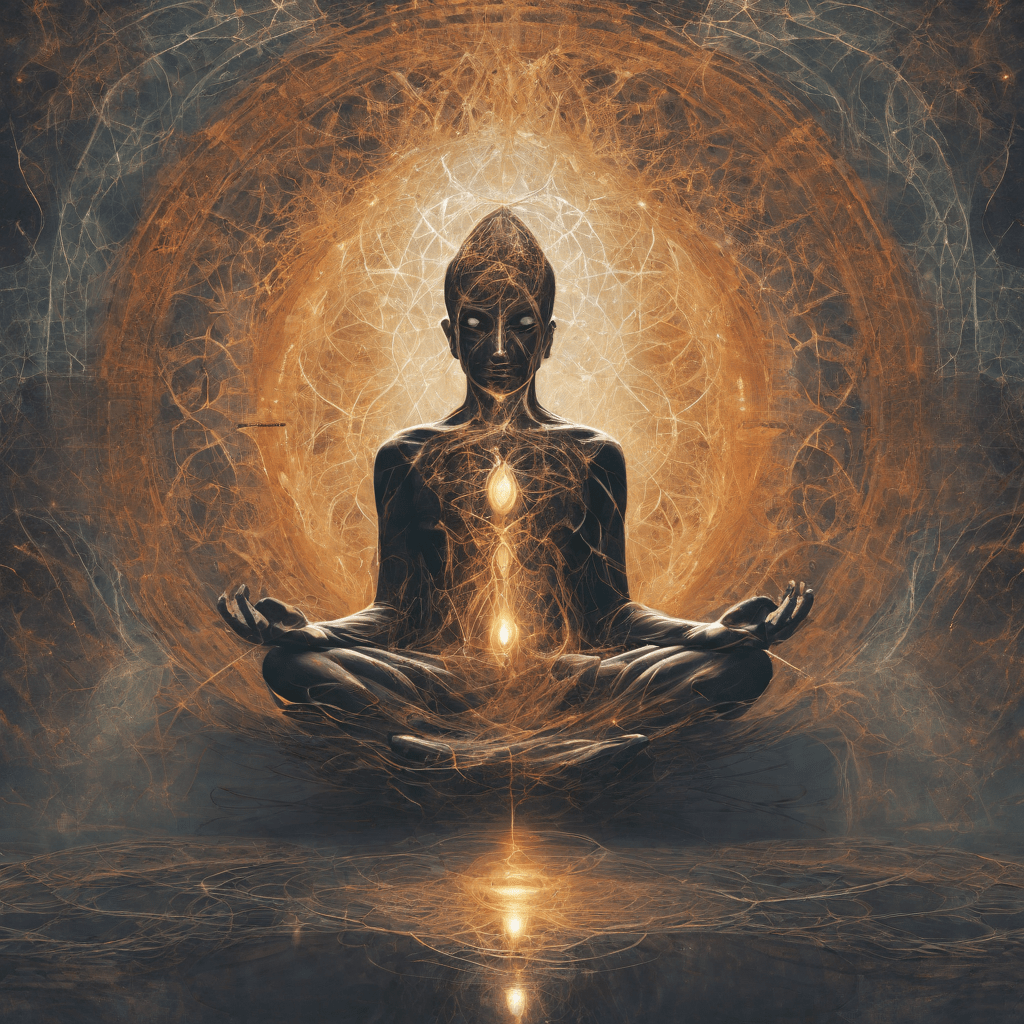
There comes a point when every definition falls away. Not because one rejects spirituality, but because it no longer holds weight. The very act of seeking dissolves into presence. What remains is not a version of spirituality, not an ideology or a practice, but an unfiltered beingness that does not need validation.

Some may find this unsettling. Without the scaffolding of beliefs, where does one stand? But this is precisely the point – there is no need to stand anywhere. Reality unfolds moment by moment, unbound by spiritual ideals. Even the notion of transcendence implies moving beyond something, yet nothing was ever separate to begin with.

To live without a construct of spirituality does not mean rejecting wisdom or practice. Meditation, contemplation, and insight may continue, but they arise naturally rather than as steps toward an imagined goal. There is no longer a need to fit into any category – neither spiritual nor non-spiritual. Life simply moves, and awareness rests in itself.

The challenge is not in abandoning spirituality but in seeing through its necessity. When the river meets the ocean, it does not hold onto its name. It merges, not as an act of seeking, but because it was never separate to begin with.

Morgan O. Smith

Yinnergy Meditation/Neurofeedback, Spiritual Life Coaching & My Book, Bodhi in the Brain…Available Now!

https://linktr.ee/morganosmith

Beyond Beliefs

Unveiling the Divinity Within

In the realm of personal spirituality and enlightenment, the architecture of our belief systems plays a crucial role in shaping our reality. These systems, intricate labyrinths of thought and conviction, hold the power to liberate or confine us within their walls. It is through the meticulous construction of these beliefs that we often, unknowingly, crown a deity of our own making—a god born not of ethereal realms but of the very fabric of our convictions.

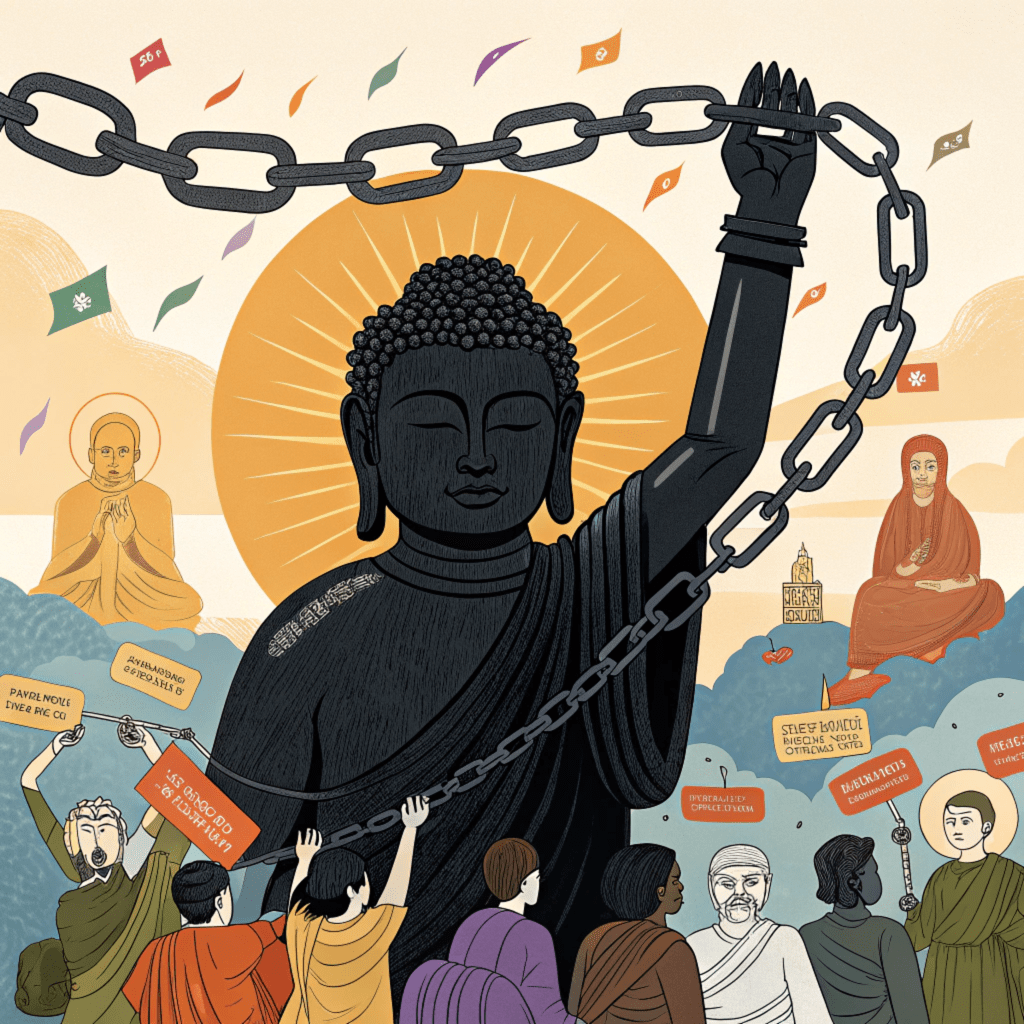
This self-created deity, governed by the edicts of our belief system, wields the power to influence our perceptions, actions, and ultimately, our spiritual journey. Yet, the question arises: what happens when we step back and observe the deity we’ve enthroned? Do we find a benevolent guide leading us towards enlightenment, or a tyrant, chaining us to the shadowy depths of ignorance and limitation?


The path to spiritual awakening beckons us to embark on a quest not outward, but inward, to the very core of our being. It invites us to question not just the nature of our self-created deities, but the very essence of belief itself. What if, in our search for divinity, we discover that the truest god is not one constructed of beliefs but one that transcends them? A presence that exists beyond the dualities of right and wrong, good and evil—a non-dual consciousness that simply is.

This realization invites a profound transformation, a shift from being a subject under the rule of a constructed deity to becoming a sovereign being, aware of the inherent divinity within. It is a journey from the external worship of a god made in the image of our beliefs to the recognition and honouring of the divine essence that permeates all of existence, including ourselves.


As we peel away the layers of beliefs that have long dictated our spiritual path, we uncover a luminous truth: that we are not mere subjects to a higher power, but integral expressions of the divine. This insight does not diminish the sacred but elevates it, revealing that enlightenment does not come from worshiping a deity external to us but from realizing our innate divinity.

This journey of enlightenment challenges us to dismantle the altar of beliefs we’ve constructed and to gaze into the mirror of our soul. In doing so, we discover that the god we’ve been seeking has always been here, within us, patiently waiting for us to look beyond the veil of beliefs and recognize our true nature.


As we traverse this sacred path, let us embrace the courage to question, explore, and ultimately dissolve the barriers that separate us from the divine essence we embody. For in the heart of our spiritual quest lies the key to our liberation—a realization that we are not bound by the gods of our creation but are, in essence, expressions of the infinite divine.

Morgan O. Smith

Yinnergy Meditation, Spiritual Life Coaching & My Book, Bodhi in the Brain…Available Now!

https://linktr.ee/morganosmith

The Enigma of Divine Identity

Unraveling the Belief and Being

In the profound journey of spiritual awakening, there stands a pivotal revelation – the understanding of one’s divine nature. This recognition often confronts the traditional notion of believing in a separate, external deity. When we cling to the belief in a God as an entity apart from ourselves, we inadvertently reinforce the very illusion we seek to transcend. It is a subtle yet profound enigma that underlies much of spiritual discourse.

Belief, in its essence, is a product of the mind. It is an attempt to conceptualize and grasp the infinite, to put boundaries around that which is boundless. This pursuit, while noble in its intention, often leads us astray from the ultimate truth. The idea of a separate God is a manifestation of this endeavour – an externalization of the divine that is, in reality, an intrinsic part of our being.

The realization that “I am God” is not an assertion of egoic supremacy but an awakening to the non-dual nature of existence. In Eastern philosophies, this understanding is not uncommon. It echoes the principles of Advaita Vedanta, where the individual self (Atman) is seen as one with the universal self (Brahman). This realization dissolves the illusion of separation, the root of all delusion. It is a profound awakening to the truth that there is no ‘other’ – there is only the One, manifesting in myriad forms.


This insight brings with it a profound freedom. It liberates us from the confines of narrow belief systems and opens us to a direct experience of the divine. There is no need for belief in this space, for the truth is known directly and experientially. It is a state of being where one is free from the dualities of faith and disbelief, existing in a harmonious union with all that is.

In this understanding, we find a deeper compassion and connection to the world around us. Recognizing the divine in ourselves, we see it in everything else. This is the heart of true spirituality – a state of oneness with all existence.


As we navigate our spiritual paths, let us be mindful of the traps of belief and the freedom that comes with direct knowing. Let us seek not to conceptualize the divine, but to experience it, to become it. In doing so, we step beyond the confines of illusion and into the boundless reality of our true nature.

Morgan O. Smith

Yinnergy Meditation, Spiritual Life Coaching & My Book, Bodhi in the Brain…Available Now!

https://linktr.ee/morganosmith

Embracing Falsehoods at the Pinnacle of Awareness

In the realm of human consciousness, there exists a fascinating paradox. At the highest level of awareness, a person can reach a state where they can believe in something, fully aware that it is not true. This peculiar aspect of human psychology offers a deep insight into the nature of belief, perception, and the human mind.

What does it mean to believe in something while knowing it isn’t true? It’s like willingly suspending disbelief while watching a movie. You enter into a contract with the fiction, fully aware that dragons don’t exist or that superheroes don’t fly, yet you allow yourself to believe in these concepts for the duration of the experience. This phenomenon isn’t just limited to entertainment but extends to the very core of our everyday lives.

Why do people engage in such seemingly contradictory behaviour? The answer lies in the complexity of the human mind and its quest for meaning and comfort. Beliefs, even those acknowledged as false, can provide a sense of comfort, belonging, or identity. They can be a source of inspiration or a means of coping with the harsh realities of life. In a world that often feels chaotic and unpredictable, these beliefs, however, detached from reality, can offer a sense of order and purpose.


This ability to believe in the unbelievable highlights the power of the human imagination and creativity. It’s a testament to our ability to envision worlds and possibilities beyond our immediate reality, a skill that has been a driving force behind art, literature, and scientific innovation. It allows us to explore ideas and scenarios that, while not real, can lead to real-world insights and advancements.

However, this power comes with a responsibility. While it can be enriching and beneficial, deliberately believing in falsehoods can also lead to dangerous delusions and collective harm if not approached with critical thinking and ethical considerations. It’s vital to find a balance, to know when to embrace these beliefs as a source of inspiration and when to acknowledge them as mere constructs of our imagination.


In conclusion, the capacity to believe in something while knowing it isn’t true is a unique aspect of human consciousness, reflecting our complex psychology. It’s a powerful tool that, when used wisely, can enrich our lives and propel us toward greater heights of imagination and understanding. However, it’s crucial to navigate this terrain with discernment and a keen sense of reality.

Morgan O. Smith

Yinnergy Meditation, Spiritual Life Coaching & My Book, Bodhi in the Brain…Available Now!
https://linktr.ee/morganosmith

Beyond Belief

Embracing Enlightenment Beyond Philosophical Boundaries

Philosophies, at their core, are a tapestry of beliefs and principles that guide our understanding of the world and our place in it. They offer frameworks for interpreting life’s complexities, from the ancient wisdom of Hinduism and Buddhism to the foundational teachings of Christianity and beyond. Each philosophy, with its unique perspectives and teachings, resonates differently with individuals, often aligning with their inherent values and worldviews.

However, a profound transformation occurs when one experiences a spiritual awakening. This awakening transcends the conventional realm of beliefs and ideologies. It’s a profound realization that our true essence lies beyond the constructs of any philosophy. In this enlightened state, the distinctions between different philosophies blur, as the awakened individual perceives a universal truth that underlies all teachings.

Spiritual awakening brings about a shift in consciousness where the ego, once the center of our universe, becomes an enlightened ego. This enlightened ego no longer clings to rigid belief systems; instead, it navigates the world with a newfound understanding and flexibility. It acknowledges that while philosophies can provide guidance and insight, they are not absolute truths but rather tools that help us make sense of our journey.


In this light, philosophies are not rendered obsolete, but their role in our lives is significantly altered. They become references rather than doctrines, offering insights that complement the inner wisdom gained through spiritual awakening. The enlightened ego uses these philosophies not as definitive answers but as aids in its continuous journey of growth and understanding.

In essence, spiritual awakening marks a transition from seeking truth in external philosophies to discovering it within. It’s an invitation to view the world and its myriad philosophies not as definitive guides but as mirrors, reflecting parts of the universal truth that resides within each of us.


Morgan O. Smith

Yinnergy Meditation & My Book, Bodhi in the Brain…Available Now!

https://linktr.ee/morganosmith

The Sacred Within the Flawed

A Paradox of Divine Texts

In an intricate dance between the divine and human, sacred texts from various religious and philosophical traditions find themselves at the nexus of reverence and scrutiny. These texts, while venerated as conduits of divine wisdom and moral guidance, are not immune to critique nor the acknowledgment of their inherent flaws.

When we unravel the threads of any sacred text, we find them woven with not just divine insights but also the human elements of error, contradiction, and historical context. Many perceive the imperfections found within these texts as reasons for critique and skepticism. Yet, there is a compelling perspective to be explored – the idea that the very flaws embedded within sacred texts render them genuinely sacred.

In dwelling within the flawed, we find a reflection of our imperfect nature. Sacred texts do not present an unattainable moral and existential utopia but rather provide a mirror through which we can perceive and engage with our own imperfections and moral dilemmas. The contradictions and ambiguities are not simply obstacles to faith but rather essential elements that provoke deeper questioning, reflection, and ultimately, a more profound understanding of our place within the cosmic order.

The perfection of the divine, if it were to be communicated through a medium devoid of error or contradiction, may remain eternally aloof and incomprehensible to our flawed human nature. Therefore, perhaps it is within the inconsistencies and paradoxes of sacred texts that we find an accessible pathway toward divine wisdom – a bridge crafted from the very imperfections that define our humanity.

By acknowledging and engaging with the flaws within these revered writings, believers do not denounce their faith but rather deepen it, embracing a spiritual journey that accepts the entwinement of the divine and the human, the perfect and the imperfect. It becomes a spiritual practice wherein the belief is not despite the flaws but is enriched and deepened by them.

In this juxtaposition, an opportunity for an intimate and authentic spiritual journey is birthed. The flaws compel believers to wrestle with their understanding, to question, and to seek, rather than passively accept a prescribed truth. This active engagement fosters a spirituality that is not static but dynamically interwoven with the realities of human experience, constantly evolving and adapting to the nuances of our understanding and experience.

As we traverse through the passages of sacred writings, embracing both divine wisdom and human error, we embark upon a journey that is both inward and outward, exploring the realms of the divine and our soul. In this sacred exploration, the flaws do not deter us but rather beckon us into a deeper, more authentic engagement with the divine, where faith is not a blind acceptance but a perpetual quest, rich with inquiry, reflection, and spiritual growth.

Perhaps then, the sacredness of these texts is not diminished by their flaws but is instead, beautifully and mysteriously, illuminated by them.

Morgan O.  Smith

Yinnergy Meditation & My Book, Bodhi in the Brain…Available Now!
https://linktr.ee/morganosmith

The Illusion of Spiritual Identity

Beyond Stories We Tell Ourselves

Spirituality, at its core, is a profound journey toward understanding one’s place in the vast expanse of existence. However, in our attempt to grasp this elusive understanding, we often pigeonhole ourselves into labels: spiritual, materialistic, moral, and the like. But what if I were to suggest that these labels, these stories, are mere illusions? And that by clinging to them, we might be limiting our true potential.

#### **The Stories We Tell Ourselves**

Every culture, every religion, and every individual has a narrative. These narratives shape our beliefs, our actions, and the way we perceive the world. They are the tapestries upon which our identities are woven. But what happens when we deconstruct these tapestries? Beneath the intricate designs and patterns, what remains?

The reality is that these stories are our creations, shaped by societal norms, personal experiences, and myriad other factors. To say one is ‘spiritual’ or ‘materialistic’ is to adopt a particular perspective, a specific lens through which we view the world.

#### **The Ground of All Being**

But let’s delve deeper. Beneath these self-imposed labels and narratives, there lies a fundamental essence – often referred to as the ‘ground of all being’. This essence is the raw, unfiltered state of existence. It is what you are before the stories, before the labels, and before the definitions. It is the canvas upon which all our narratives are painted.

This ground of being is paradoxical. While it exists beyond all descriptors, it simultaneously encompasses them. Think of it as an ocean. The waves, currents, and whirlpools may differ in their nature and intensity, but they all arise from and subside back into the same vast expanse of water.

#### **Embracing the Beyond**

Realizing this fundamental truth can be liberating. When we understand that our spiritual or materialistic labels are mere waves upon the ocean of existence, we can learn to see beyond them. We can experience the world without the confines of our self-imposed narratives.

This doesn’t mean that one should abandon their spiritual practices or beliefs. Rather, it’s about recognizing them for what they are – beautiful expressions of the infinite variations of existence.

#### **Conclusion**

In the end, whether you consider yourself spiritual, materialistic, or anything in between, it’s crucial to remember that these are just facets of the grander jewel that is existence. By stepping back and seeing beyond our self-crafted stories, we can come closer to experiencing the profound depth of what we truly are.

Morgan O. Smith

Yinnergy Meditation & My Book, Bodhi in the Brain…Available Now!

https://linktr.ee/morganosmith