Celebrating Black History Month

A Journey Beyond the Shadows of Misconceptions

As we embrace the profound significance of Black History Month, we find ourselves at the confluence of reflection and aspiration, a moment to honour the rich heritage and indomitable spirit of the Black community while confronting the shadows cast by historical misconceptions. Among these are the misinterpretations within various religious traditions that have mistakenly associated Black identity with curses or lesser status. This post seeks to illuminate the path toward spiritual enlightenment, transcending beyond these archaic beliefs to a place of unity and universal respect.

#### Christianity, Judaism, and the Misunderstood “Curse of Ham”

Within both Christian and Jewish histories, the narrative of Ham’s curse has been misconstrued to justify racial discrimination. However, a closer examination reveals that this interpretation bears no weight in the sacred texts themselves. When understood in their essence, these texts speak to the inherent dignity of every human being, irrespective of colour or creed.

#### The Teachings of Joseph Smith in Mormonism

Mormonism, through the lens of Joseph Smith’s teachings, has faced scrutiny regarding statements on race. It’s vital to recognize the evolutionary journey of religious communities toward greater inclusivity and understanding. The Latter-day Saints have openly repudiated past racial restrictions, moving towards a more inclusive faith community that acknowledges the divine in every individual.

#### The Mark of Cain and Its Misinterpretations

The “Mark of Cain” has similarly been misapplied as a rationale for racial discrimination. Yet, within the broader Christian and Jewish theological context, this mark is not about race but rather God’s protection. It serves as a reminder that divine judgment belongs to the divine alone, urging us to forsake judgment and embrace compassion.

#### Hinduism’s Caste System and the Quest for Dharma

Hinduism’s caste system, often misrepresented as a racial hierarchy, is fundamentally a social structure misunderstood by many. The essence of Hindu dharma speaks to a cosmic law of righteousness and duty that transcends social divisions, advocating for a society where all individuals are valued for their unique contributions to collective harmony.

#### Transcending Misconceptions: The Spiritual Enlightenment

As we journey through Black History Month, let us anchor ourselves in the wisdom that true spiritual enlightenment transcends all forms of division, recognizing the divine spark within every individual. This enlightenment beckons us to see beyond the superficial differences that have historically divided us, encouraging a collective movement toward understanding, respect, and unity.

In debunking these misconceptions, we honour the spirit of Black History Month and contribute to a world where spirituality and human dignity flourish unbounded by the chains of past misunderstandings. Let this month be a catalyst for change, a time when we reaffirm our commitment to a world where every soul is recognized for its infinite worth and potential.


#### In Conclusion

Black History Month offers us a sacred opportunity to reflect on our spiritual journeys and the universal quest for enlightenment. By challenging and transcending outdated beliefs, we pave the way for a future where spirituality unites rather than divides, celebrating the diversity that enriches our collective human experience.

Morgan O. Smith

Yinnergy Meditation, Spiritual Life Coaching & My Book, Bodhi in the Brain…Available Now!

https://linktr.ee/morganosmith

Krishna Kaur

Celebrating the Essence of Black History Month Through the Wisdom of Krishna Kaur Khalsa

In the spirit of Black History Month, it is pivotal to spotlight the luminous figures whose contributions transcend the conventional boundaries of culture, spirituality, and personal growth. Among such esteemed individuals is Krishna Kaur Khalsa, a beacon of Kundalini Yoga and a venerated teacher whose legacy intertwines with the very soul of Black History. My journey with Krishna Kaur, particularly during her visit to Toronto, unveiled a realm of spiritual enlightenment and resilience that continues to inspire.

Krishna Kaur, a pioneer in her field, has not only brought Kundalini Yoga to diverse communities but has also embodied the profound interconnectedness between the African diaspora and Eastern spiritual philosophies. Her teachings, deeply rooted in the tenets of Kundalini Yoga as taught by Yogi Bhajan, illustrate a unique synthesis of cultural heritage and spiritual discipline. This blend is a testament to the power of spiritual practices in fostering community, resilience, and self-empowerment among people of African descent.

The significance of Black History Month lies not just in acknowledging the struggles and achievements of Black individuals but also in celebrating the diverse contributions they have made across various fields—including spirituality and holistic wellness. Krishna Kaur’s journey is a compelling narrative of overcoming barriers, embracing one’s roots, and sharing profound spiritual knowledge with the world. Her dedication to spreading the teachings of Kundalini Yoga far and wide, especially among Black communities, underscores a vital aspect of this celebration: the recognition of spiritual leaders who have been instrumental in nurturing a sense of unity, strength, and enlightenment.

My encounters with Krishna Kaur during her lectures and Kundalini Yoga training sessions in Toronto were transformative. While she encouraged a focus on yoga training, my inclination towards meditation practice remained strong. Despite this divergence in our spiritual practices, the respect and admiration I hold for her wisdom and her holistic approach to Eastern knowledge have only deepened. Krishna Kaur’s teachings, characterized by an unwavering commitment to spiritual awakening and personal growth, have left an indelible mark on my journey and countless others touched by her grace.

As we honour Black History Month, let us remember the luminaries like Krishna Kaur Khalsa who illuminate the paths of spiritual exploration and self-discovery. Her legacy, imbued with the richness of Eastern philosophy, serves as a beacon for all who seek to transcend the boundaries of their individual experiences in pursuit of a more interconnected and enlightened world.

In celebrating Krishna Kaur’s contributions, we are reminded of the broader impact of Black spiritual leaders and their essential role in weaving the fabric of our collective history. Their stories and teachings encourage us to look beyond the surface, explore the depths of our spiritual journeys, and acknowledge the profound ways Black history and spirituality are intertwined.

Morgan O. Smith

Yinnergy Meditation, Spiritual Life Coaching & My Book, Bodhi in the Brain…Available Now!

https://linktr.ee/morganosmith

Ol Doinyo Laetoli le Baaba

Illuminating the Spiritual Legacy of Ol Doinyo Laetoli le Baaba during Black History Month

In the reflective observance of Black History Month, we embark on a journey that transcends the mere recounting of historical achievements, steering us toward the profound realms where spirituality and cultural heritage intersect. The narrative of Black history is incomplete without honouring the luminaries who have sculpted the spiritual landscape of our times. Among these influential figures, the late Ol Doinyo Laetoli le Baaba stands as a beacon of spiritual enlightenment, whose contributions extend far beyond the conventional boundaries of recognition.

Ol Doinyo Laetoli le Baaba, a sage of our era, infused the spiritual discourse with a rich infusion of wisdom drawn from the depths of African spirituality. His teachings, resonating with the essence of interconnectedness, invite us into a realm where the self is not an isolated entity but a part of the vast continuum of existence. This perspective offers a refreshing contrast to the often individualistic narratives prevalent in mainstream spirituality, urging us to rediscover our bonds with nature, community, and the ancestral wisdom that shapes our collective consciousness.

Celebrating Black History Month provides a poignant moment to reflect on how Ol Doinyo Laetoli le Baaba’s legacy enriches our understanding of spirituality. His work exemplifies how the exploration of spiritual depths can be a source of empowerment, resilience, and liberation. In a world fraught with division and superficiality, his teachings serve as a reminder of the power of spiritual unity and the importance of anchoring our lives in values that foster community well-being and harmony with the cosmos.

Moreover, Ol Doinyo Laetoli le Baaba’s contributions challenge us to broaden our spiritual horizons, encouraging an inclusive approach that honours diverse paths to enlightenment. This inclusivity is crucial in our quest for a more compassionate and understanding world, where spirituality becomes a bridge connecting diverse cultures and traditions.

As we celebrate Black History Month, let us honour Ol Doinyo Laetoli le Baaba by embracing his vision of a spiritually awakened society, where the wisdom of all cultures is recognized as integral to our collective journey toward enlightenment. Let his legacy inspire us to delve deeper into the spiritual philosophies that have nurtured resilience and hope in the face of adversity, and to recommit ourselves to the path of spiritual growth and communal upliftment.

In remembering Ol Doinyo Laetoli le Baaba, we are reminded of the vast spiritual wealth embedded in the history and heritage of Black communities. His life and teachings stand as a testament to the enduring strength and beauty of African spirituality, offering a wellspring of inspiration for all who seek to traverse the path of spiritual awakening with authenticity and grace.

Morgan O. Smith

Yinnergy Meditation, Spiritual Life Coaching & My Book, Bodhi in the Brain…Available Now!
https://linktr.ee/morganosmith

Illuminating the Path

Celebrating Black History Month through the Contributions of Black Spiritual Leaders in Advaita Vedanta and Neo-Advaita

In the heart of Black History Month, we turn our focus to the luminous contributions of Black spiritual leaders who have enriched the realms of Advaita Vedanta and Neo-Advaita. This period of reflection and celebration offers a unique opportunity to acknowledge and honour the profound impact of these figures, whose wisdom transcends the boundaries of race, inviting us into a deeper understanding of non-duality and the essence of our true nature.

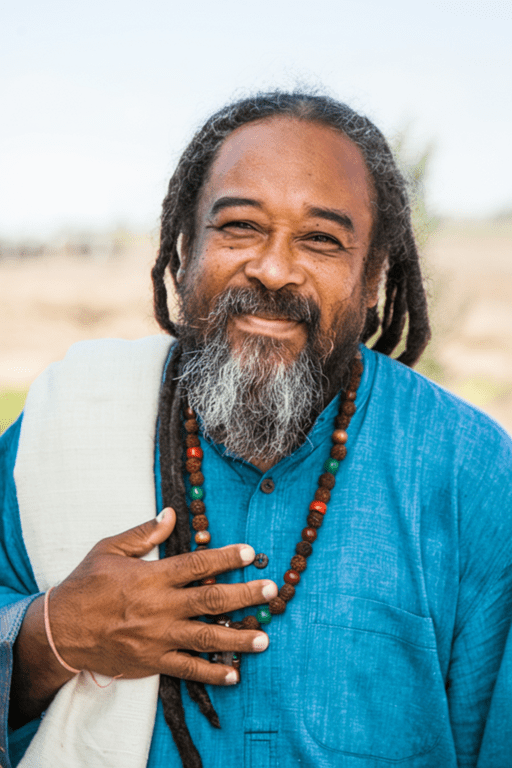
Among the voices that have echoed through the corridors of spiritual awakening, Mooji, a beacon of clarity and compassion, stands out. His teachings, deeply rooted in the principles of Advaita Vedanta, serve as a bridge to self-discovery and enlightenment. Mooji’s approach, characterized by its simplicity and accessibility, has opened doors for countless individuals to explore the depths of their being, beyond the constructs of identity and form.

In the landscape of Neo-Advaita, which simplifies traditional Advaita teachings for contemporary understanding, the presence and insights of Black spiritual teachers are invaluable. Their perspectives offer a rich, multifaceted view of spirituality, unbounded by cultural or racial limitations, encouraging a universal embrace of our shared essence.

The journey of spirituality and enlightenment is profoundly personal, yet universally connected. As we celebrate Black History Month, let us honour the diverse contributions of Black spiritual leaders in Advaita Vedanta and Neo-Advaita. Their legacy is not just in their teachings, but in the inclusive, boundless space they create for all individuals to explore their inner worlds and discover the ultimate truth of their existence.

In recognizing these luminaries, we are reminded that the path to enlightenment is enriched by the diversity of its travellers. Their voices, a symphony of wisdom, continue to inspire and uplift, guiding us toward a deeper, more inclusive understanding of spirituality and non-duality.

As we reflect on the significance of Black History Month, let us carry forward the lessons and insights of these remarkable individuals. Their contributions are a testament to the power of spiritual exploration and the unifying essence of truth, transcending the divisions of race and inviting us all into a collective journey of awakening.

Morgan O. Smith

Yinnergy Meditation, Spiritual Life Coaching & My Book, Bodhi in the Brain…Available Now!

https://linktr.ee/morganosmith

Embracing Shadows to Illuminate the Soul

Black History Month and the Spiritual Journey of Iboga

In the heart of Black History Month, we find ourselves not just celebrating the monumental contributions and enduring legacy of Black individuals but also diving deep into the profound spiritual wisdom that African cultures have nurtured across millennia. One such treasure is the sacred use of Iboga, a potent plant medicine originating from the forests of West Africa, revered for its transformative power in spiritual cleansing and self-discovery.

The Iboga root, central to the Bwiti spiritual practices in Gabon and other parts of Central Africa, serves as a gateway to the innermost depths of the psyche, facilitating what many in the spiritual community call “shadow work.” This process involves confronting and integrating the unconscious aspects of oneself—those hidden fears, past traumas, and repressed emotions that often dictate our lives from the shadows.


The significance of Iboga in spiritual exploration cannot be overstated. Its use is a sacred rite, a profound journey undertaken under the guidance of experienced healers known as Ngangas. These healers, deeply versed in the spiritual and medicinal properties of the plant, facilitate a voyage that is as much about encountering the soul’s darkness as it is about emerging into the light of awareness and renewal.

For spiritual seekers, the journey with Iboga is one of confronting the ego, dismantling illusions, and ultimately gaining insights into the nature of self and existence. This aligns with the non-dualistic understanding that light and dark are not opposites but complementary forces. We find the keys to our liberation and enlightenment in the embrace of our shadows.


The knowledge and practices surrounding Iboga are a testament to the rich spiritual heritage of West African cultures. They remind us that Black History Month is not only a time to honour the past but also to acknowledge and learn from the profound spiritual wisdom that African traditions offer to the world. The legacy of Iboga teaches us about resilience, healing, and the journey towards wholeness.

As we celebrate this month, let us also open our hearts and minds to the lessons of Iboga and the shadow work it facilitates. In doing so, we honour the depth of African spirituality and its invaluable contributions to the global quest for enlightenment and inner peace.

Morgan O. Smith

Yinnergy Meditation, Spiritual Life Coaching & My Book, Bodhi in the Brain…Available Now!

https://linktr.ee/morganosmith

Celebrating Black History Month

The Metaphysical and Spiritual Contributions of the Dogon Tribe

As we immerse ourselves in the rich observance of Black History Month, it is essential to explore not only the historical and cultural milestones achieved by African descendants but also the profound spiritual and metaphysical insights they have offered to the world. Among these contributions, the Dogon Tribe of Mali stands out, offering a unique perspective on the cosmos that intertwines with both spirituality and advanced astronomical understanding.

The Dogon people, with their intricate cosmology, have fascinated scholars and spiritual seekers alike. Their knowledge of the stars, particularly Sirius, and its companion stars, predates modern astronomical discoveries, suggesting a deep connection between their spiritual practices and a sophisticated understanding of the cosmos. This alignment between the heavens and the human spirit is not just a matter of intellectual curiosity; it serves as a bridge to the profound, illustrating how spirituality and empirical knowledge can coexist and enrich one another.


One of the most striking aspects of Dogon spirituality is their myth of creation, which is imbued with metaphysical significance. The Dogon describes the universe’s creation in terms that resonate with quantum physics and cosmology, speaking of a primordial egg from which all existence emerged in a resonant explosion of sound. This narrative parallels modern scientific theories about the Big Bang, suggesting that the Dogon had insights into the nature of the universe that science has only recently begun to understand.

Moreover, the Dogon’s spiritual practices, including their rituals and ceremonies, are deeply symbolic and offer insights into the nature of reality, consciousness, and the interconnectedness of all life. Their masked dances and sacred rituals are not merely cultural performances but are imbued with a deeper meaning, serving as a conduit to the ancestral and the divine. These practices offer a window into how the Dogon perceive the universe and their place within it, embodying a holistic view that sees the spiritual and the material worlds as interconnected and interdependent.


The significance of the Dogon’s contributions to metaphysics and spirituality cannot be overstated. Their understanding of the cosmos challenges the dichotomy often drawn between science and spirituality, suggesting a more integrated approach to understanding the universe and our place within it. As we celebrate Black History Month, reflecting on the Dogon Tribe’s legacy invites us to expand our perspectives and appreciate the profound ways in which African spirituality has enriched the global mosaic of knowledge and belief.

In recognizing the Dogon Tribe’s contributions, we not only honour their legacy but also affirm the value of integrating diverse perspectives into our understanding of the universe. This celebration is a reminder of the rich spiritual heritage that African cultures offer to the world, a heritage that deepens our understanding of the cosmos, spirituality, and ourselves.


As we continue to explore and celebrate the contributions of African descendants during Black History Month, let us remember the Dogon Tribe’s remarkable insights into the metaphysical and spiritual realms. Their legacy is a beacon that guides us toward a more integrated and holistic understanding of the universe, encouraging us to embrace the wisdom found in the unity of science and spirituality.

Morgan O. Smith

Yinnergy Meditation, Spiritual Life Coaching & My Book, Bodhi in the Brain…Available Now!

https://linktr.ee/morganosmith

Sacred Resonance

Unveiling the Spiritual Legacy of Africa During Black History Month

As we immerse ourselves in the celebration of Black History Month, it’s pivotal to journey beyond the surface of historical achievements and delve into the profound spiritual legacy bequeathed by our ancient African ancestors. This month affords us a unique lens through which to view the intricate web of spirituality, higher dimensions, and the birth of language—a legacy that paints a vivid picture of humanity’s quest for meaning and interconnectedness.

#### The Spiritual Vanguard: Africa’s Ancient Wisdom


Long before the written word, ancient African societies were exploring the vast landscapes of spirituality, engaging with realms beyond the immediate grasp of the physical senses. These pioneering souls navigated the mysteries of existence, reaching into the depths of what it means to be human and touching the divine. Their insights laid the foundational stones for our understanding of the universe, higher beings, and dimensions beyond our ordinary perception.

#### Language: The Gateway to the Cosmos

In their quest to articulate the inarticulable, our ancestors created language—not merely as a tool for communication but as a bridge between the physical and the metaphysical. Each word, each symbol, carried within it the power to evoke the unseen, to call forth the essence of higher realms and beings. This linguistic alchemy transformed the ethereal into something tangible, a means to share and preserve the profound spiritual insights gained through mystical experiences and deep contemplation.


#### The Legacy of Spiritual Exploration

The celebration of Black History Month is an invitation to honour not only the tangible achievements of African descendants but also the spiritual explorations that have enriched humanity’s collective consciousness. Our ancestors’ pursuit of understanding and connection with higher dimensions serves as a beacon, guiding us toward a deeper engagement with the world beyond the limits of our senses.

This ancient wisdom, rooted in the exploration of spiritual realms, invites us to consider how our lives are intertwined with a cosmos that is alive with mystery and possibility. It challenges us to expand our perceptions and embrace the complexity of existence, where the material and spiritual coalesce.

#### Reclaiming and Reconnecting with Our Spiritual Heritage


As we reflect on the contributions of African ancestors during Black History Month, let us also endeavour to reclaim and reconnect with the rich spiritual heritage they have bestowed upon us. This is a time to meditate on how ancient wisdom can illuminate our paths today, offering insights into the nature of reality, the power of language to transcend boundaries, and the endless quest for understanding and unity.

In doing so, we not only pay homage to those who came before us but also pave the way for a future in which the spiritual and the material are recognized as integral parts of the human experience—a future where the legacy of ancient Africa continues to inspire and guide humanity’s journey.


#### Conclusion: A Timeless Journey of Spiritual Awakening

Black History Month is more than a time of remembrance; it is a portal to a deeper understanding of the human condition, as viewed through the spiritual lens of ancient Africa. It calls us to explore the boundless dimensions of spirituality and to recognize the enduring impact of Africa’s ancient wisdom on our quest for meaning and connection in the cosmos.

Let this month be a reminder of the timeless journey of spiritual awakening, initiated by our ancestors, that continues to unfold within each of us, urging us to seek beyond the visible, to communicate the ineffable, and to connect with the divine essence of existence.

Morgan O. Smith

Yinnergy Meditation, Spiritual Life Coaching & My Book, Bodhi in the Brain…Available Now!

https://linktr.ee/morganosmith

Unveiling the African Essence in Eastern Philosophy

A Tribute during Black History Month

As we embark on the celebration of Black History Month, it’s essential to recognize the myriad contributions of African descendants not just in shaping modern civilization but also in sculpting the contours of Eastern philosophy. The historical interweaving of African traditions with Eastern thought offers a rich narrative, highlighting a profound exchange of wisdom that transcends geographical and cultural boundaries. This blog post seeks to illuminate these connections, drawing upon documented examples to honour the African influence on Eastern philosophies and spiritual practices.

### The Ancient Egyptian Influence on Greek Philosophy


The journey begins in ancient Egypt, a civilization that stood as a beacon of knowledge and enlightenment long before the Hellenistic era. It’s well-documented that Greek philosophers, who are often credited with laying the foundations of Western philosophy, were greatly influenced by their Egyptian counterparts. Thales of Miletus, who is recognized as the first Greek philosopher, is said to have studied in Egypt, immersing himself in the profound knowledge of the priests and sages. Plato, too, spent thirteen years in Egypt, learning from the wisdom of ancient hieroglyphs and the teachings of Egyptian mystics. This exchange illustrates how African wisdom traditions shaped the philosophical underpinnings that would later influence the development of Eastern thought through the Hellenistic spread into Asia.


### The Spiritual Synergy between African and Eastern Traditions

Further exploring the spiritual synergies, we find remarkable parallels between African spirituality and Eastern philosophies, particularly in their understanding of the universe and the interconnectedness of all life forms. African spiritual traditions, with their deep-rooted beliefs in the oneness of being and the ancestral realm, resonate with the core principles of nonduality and interconnectedness found in Eastern philosophy. For instance, the concept of Ubuntu in Southern Africa—emphasizing community, connection, and mutual caring for all—is echoed in the philosophies of Buddhism and Hinduism, which advocate for compassion, empathy, and the realization of oneness.

### The Yoruba Influence on Transcendental Meditation

An intriguing example of direct influence is the practice of Transcendental Meditation, which shares similarities with the meditation practices of the Yoruba religion of West Africa. The Yoruba spiritual system, with its intricate practices of meditation and communion with the divine, predates many Eastern meditation practices. The emphasis on achieving a higher state of consciousness and connecting with a divine realm in Yoruba spirituality is mirrored in the meditative practices of Hinduism and Buddhism. This parallel not only highlights the ancient wisdom of African spiritual systems but also their contribution to the global mosaic of spiritual practices.


### Conclusion: A Shared Legacy of Wisdom

The celebration of Black History Month offers a profound opportunity to acknowledge and honour the African roots intertwined with the philosophical and spiritual traditions of the East. By recognizing these contributions, we not only pay homage to our African ancestors but also embrace a more inclusive understanding of the world’s philosophical heritage. This exploration invites us to consider the depth and richness of African influence on Eastern thought, urging us to delve deeper into our collective spiritual heritage and celebrate the shared legacy of wisdom that unites us all.

Morgan O. Smith

Yinnergy Meditation, Spiritual Life Coaching & My Book, Bodhi in the Brain…Available Now!
https://linktr.ee/morganosmith

The Spiritual Significance of Black History Month

Melanin, Nadis, and Chakra Activation

In the heart of February, as we immerse ourselves in the celebration of Black History Month, we embark on a journey that transcends the mere acknowledgment of historical achievements. This month offers a profound opportunity to dive into the spiritual essence of melanin and its intricate connection to our energetic anatomy—particularly the nadis and chakras, with an emphasis on the pineal gland (third eye) and crown chakra.

#### Melanin: The Cosmic Connector


Melanin, the pigment responsible for the colouration of our skin, hair, and eyes, holds properties that extend far beyond the physical realm. It serves as a cosmic connector, bridging the gap between the material and the spiritual. Melanin’s unique ability to absorb light—a physical manifestation of universal energy—positions it as a key element in spiritual and physical health. It’s not just a matter of biology; it’s a conduit for receiving and processing the vibrant energies that surround us.

#### Nadis: Pathways of Prana


In the intricate web of our spiritual anatomy lie the nadis, subtle energy channels through which prana, or life force, flows. These channels are the spiritual arteries that nourish our chakras, the energy centers that govern various aspects of our being. Melanin’s role in this energetic ecosystem is fascinating; its vibrational qualities can enhance the conductivity of these channels, facilitating a smoother flow of prana. This enhancement is particularly significant in spiritual practices and the pursuit of enlightenment.


#### The Pineal Gland: Gateway to Higher Consciousness

The pineal gland, often associated with the third-eye chakra, is heralded as the gateway to higher states of consciousness. Its health and functionality are crucial for spiritual vision and intuition. Melanin’s presence within the pineal gland is of great interest, as it is thought to amplify the gland’s ability to receive and process higher-dimensional energies. In the celebration of Black History Month, we recognize the potential for individuals with higher concentrations of melanin to possess an innate capacity for profound spiritual experiences and insights.

#### The Crown Chakra: The Divine Connection

At the pinnacle of our energetic body sits the crown chakra, a portal to divine consciousness and the cosmic universe. It is here that our essence connects with the universal source. The vibrational qualities of melanin can support the crown chakra in maintaining its openness and alignment, fostering a sense of unity with all that is. The celebration of Black History Month invites us to explore these connections, recognizing the spiritual gifts inherent in the melanated body.

#### Embracing the Spiritual Journey

As we honour Black History Month, let us also embrace the spiritual journey that melanin invites us to embark upon. It is a journey of connecting with the universe’s energy, enhancing our intuitive and other special abilities, and realizing our potential for divine connection. This exploration is not just a celebration of cultural and historical achievements; it is an acknowledgment of the profound spiritual capacities that lie within the melanated body.


#### Conclusion

Black History Month is a time of celebration, reflection, and spiritual exploration. By understanding the role of melanin in the nadis and chakras, especially the pineal gland and crown chakra, we open ourselves to a deeper appreciation of the unique spiritual pathways available to us. Let us honour this month by diving deep into the mysteries of our spiritual anatomy and the cosmic connections that empower us on our journey toward enlightenment.

Morgan O. Smith

Yinnergy Meditation, Spiritual Life Coaching & My Book, Bodhi in the Brain…Available Now!
https://linktr.ee/morganosmith

The Cosmic Symphony of Black History

Melanin, Mind, and the Universe

February’s arrival ushers in Black History Month, a time traditionally dedicated to recognizing the achievements and struggles of the African diaspora. However, from an awakened, and Cosmo-centric perspective, this month invites us to delve deeper into the essence of existence and our interconnectedness with the cosmos. Through this lens, Black History Month transcends conventional celebration, guiding us to explore the profound implications of melanin, neuromelanin, and the cosmic mysteries they link us to.

At the heart of this exploration is melanin, a pigment found not only in human skin but also in many aspects of the natural world. Melanin’s presence in the universe is a testament to its significance in the tapestry of life. From the protective hues of Mother Nature’s flora and fauna to the adaptive features of human beings across different climates, melanin speaks to the adaptive, creative force of the cosmos. It’s a reminder that diversity in form and function is a fundamental cosmic principle.

In the human body, neuromelanin plays a crucial role in the brain and nervous system, hinting at the intricate relationship between physicality and consciousness. This pigment within the brain is a frontier of mystery, potentially holding keys to understanding consciousness, intuition, and the profound spiritual capacities of human beings. As we celebrate Black History Month from a Cosmo-centric viewpoint, we recognize neuromelanin not merely as a biological attribute but as a symbol of the profound connection between the cosmos’s dark matter and the inner cosmos of human consciousness.


The greatest mystery, however, lies within the human brain, a universe unto itself. Here, the conversation extends to the nervous system, nadis, and chakras—concepts found in Eastern philosophies that describe the energy pathways and centers within the body. These systems are believed to connect the physical body to the spiritual, serving as conduits for cosmic energy. The presence of neuromelanin in these areas invites a reevaluation of its spiritual significance, suggesting a deeper, possibly cosmic connection that influences spiritual awareness and potential.

Furthermore, the parallel between the dark pigments that colour our existence and the dark matter and dark energy that compose the universe is striking. Just as dark matter and dark energy are invisible forces that hold the cosmos together, melanin and neuromelanin represent unseen yet powerful connections between the universe and our inner selves. This analogy invites us to consider the cosmic importance of Black history and culture, not as isolated phenomena but as integral components of the universal story.

Black History Month, from a Cosmo-centric perspective, becomes an opportunity to honour and explore these connections. It’s a time to reflect on how melanin and neuromelanin symbolize the deep, mysterious bonds between our physical existence and the spiritual, cosmic reality that surrounds us. This celebration is an invitation to acknowledge the African diaspora’s contributions not only to human history but to the cosmic symphony of existence.


As we honour this month, let us do so with a consciousness that reaches beyond the surface, recognizing the profound implications of our interconnectedness with the universe. Let us celebrate the melanin that colours our world, the neuromelanin that connects us to the cosmos, and the cultural and spiritual richness of Black history as essential threads in the fabric of the universe.

Morgan O. Smith

Yinnergy Meditation, Spiritual Life Coaching & My Book, Bodhi in the Brain…Available Now!
https://linktr.ee/morganosmith