Burn Bodhi Tree Burn

Dispelling Illusions in the Quest for Enlightenment

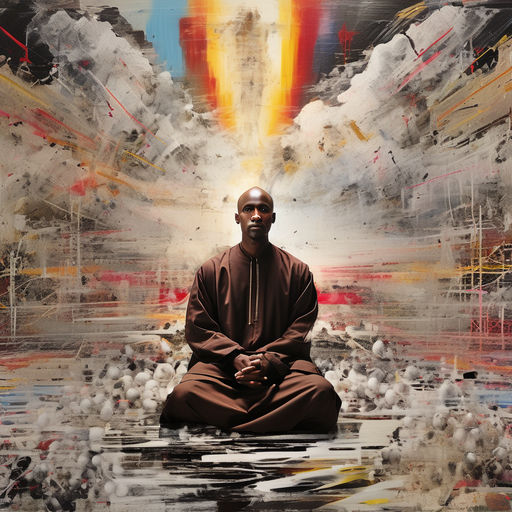
In a provocative turn of thought, the recent symbolic burning of the Bodhi tree, a revered figure in Buddhist lore as the tree under which Buddha attained enlightenment, stirs a profound metaphysical debate. This act, far from being a mere iconoclastic gesture, serves as a powerful metaphor for a deeper philosophical introspection into the nature of enlightenment and reality.

The Bodhi tree, in this context, is not just a physical entity but a symbol of the very concept of enlightenment. Its burning signifies the rejection of material and conceptual attachments, even those as sacred as the Bodhi tree and the Buddha himself. This metaphorical act challenges the adherents of Buddhism and spiritual seekers to question the very foundation of their beliefs.


The argument posits that both the Bodhi tree and the Buddha are manifestations within ‘Maya’, the illusory world as described in various Eastern philosophies. According to this view, the physical and the conceptual are mere distractions from the true nature of reality. The burning of the Bodhi tree symbolizes the destruction of these illusions, urging individuals to look beyond physical symbols and established doctrines in their spiritual journey.

The concept of enlightenment, as traditionally understood, is also questioned. This perspective argues that any preconceived notion of enlightenment is not enlightenment itself. True enlightenment, as per this radical view, is beyond concepts and intellectual constructs. It is a state of being that transcends the conventional understanding of spiritual attainment.


Thus, the metaphor of burning the Bodhi tree and the figure beneath it calls for a complete relinquishment of all notions and concepts related to enlightenment. In doing so, it suggests that a state of ‘true enlightenment’ can be realized. This state is described as the only reality, achievable only when one abandons all preconceived ideas and embarks on a journey devoid of attachment to any symbol or doctrine.

The provocative nature of this idea lies in its challenge to established beliefs and practices. It invites a reevaluation of what constitutes the path to enlightenment, urging a detachment from even the most sacred of symbols and figures. This perspective is not a call to physical action but a metaphorical invitation to burn down the internal ‘Bodhi trees’ – the deeply ingrained beliefs and concepts that might hinder the realization of true enlightenment.

Morgan O. Smith

Yinnergy Meditation, Spiritual Life Coaching & My Book, Bodhi in the Brain…Available Now!

https://linktr.ee/morganosmith


Nonduality

The Unspoken Reality

In the realm of spirituality and philosophy, few concepts are as intriguing and paradoxical as nonduality. Nonduality, often associated with Eastern philosophies like Vedanta and Buddhism, refers to the idea that the dualistic distinctions we make between self and other, subject and object, mind and matter, are ultimately illusory or not fundamentally real.

The profound irony of nonduality is that any attempt to discuss or conceptualize it inherently contradicts its very essence. Speaking or thinking about nonduality is, by its nature, a dualistic activity. This is because language and thought are tools that rely on differentiation and distinction. They are the media through which we carve out the ‘self’ from the ‘other’, the ‘this’ from the ‘that’. In doing so, they perpetuate the illusion of duality – the very illusion that nonduality seeks to transcend.


This paradox highlights a fundamental challenge in human cognition: our reliance on dualistic frameworks to make sense of the world. From the moment we are born, our minds are trained to categorize and differentiate. This cognitive structuring is crucial for our survival and functioning in the world, yet it also confines us within the boundaries of dualistic thinking.

Nonduality suggests a state of consciousness where these dualistic distinctions dissolve. It points to an experiential understanding where the division between subject and object, observer and observed, ceases to exist. In this state, the egoic self expands into a boundless, undifferentiated whole.

Yet, the path to realizing nonduality is not through intellectual understanding. Since it is beyond the grasp of dualistic thought and language, nonduality is often approached through practices that transcend rational thinking, such as meditation, mindfulness, or other forms of spiritual contemplation. These practices aim to quiet the mind and dissolve the ego, allowing for a direct, non-conceptual experience of reality, unfiltered by the distorting lens of dualistic thought.


In conclusion, nonduality remains an enigmatic yet profoundly significant concept. It challenges us to look beyond the apparent separateness and fragmentation of our experiences and to question the very foundations of our understanding of reality. While it may never be fully captured in words or thoughts, it stands as a powerful reminder of the limitations of our dualistic perspectives and invites us to explore the depths of our consciousness.

Morgan O. Smith

Yinnergy Meditation, Spiritual Life Coaching & My Book, Bodhi in the Brain…Available Now!

https://linktr.ee/morganosmith

Beyond Belief

Embracing Enlightenment Beyond Philosophical Boundaries

Philosophies, at their core, are a tapestry of beliefs and principles that guide our understanding of the world and our place in it. They offer frameworks for interpreting life’s complexities, from the ancient wisdom of Hinduism and Buddhism to the foundational teachings of Christianity and beyond. Each philosophy, with its unique perspectives and teachings, resonates differently with individuals, often aligning with their inherent values and worldviews.

However, a profound transformation occurs when one experiences a spiritual awakening. This awakening transcends the conventional realm of beliefs and ideologies. It’s a profound realization that our true essence lies beyond the constructs of any philosophy. In this enlightened state, the distinctions between different philosophies blur, as the awakened individual perceives a universal truth that underlies all teachings.

Spiritual awakening brings about a shift in consciousness where the ego, once the center of our universe, becomes an enlightened ego. This enlightened ego no longer clings to rigid belief systems; instead, it navigates the world with a newfound understanding and flexibility. It acknowledges that while philosophies can provide guidance and insight, they are not absolute truths but rather tools that help us make sense of our journey.


In this light, philosophies are not rendered obsolete, but their role in our lives is significantly altered. They become references rather than doctrines, offering insights that complement the inner wisdom gained through spiritual awakening. The enlightened ego uses these philosophies not as definitive answers but as aids in its continuous journey of growth and understanding.

In essence, spiritual awakening marks a transition from seeking truth in external philosophies to discovering it within. It’s an invitation to view the world and its myriad philosophies not as definitive guides but as mirrors, reflecting parts of the universal truth that resides within each of us.


Morgan O. Smith

Yinnergy Meditation & My Book, Bodhi in the Brain…Available Now!

https://linktr.ee/morganosmith

Illumination of the Soul

Spiritual Enlightenment and Moksha

As seekers on the path of inner wisdom, we often encounter the concepts of spiritual enlightenment and moksha. Both are beacons that promise to guide us out of the darkness of ignorance, yet they are not the same.

Spiritual Enlightenment is a term that has found its roots in the West, heavily influenced by the philosophies and meditative practices of the East. It implies an awakening to a reality that transcends our ordinary experience of self and the universe. The enlightened being sees the interconnectivity of all life, perceives the illusion of the ego, and often experiences profound peace and understanding of the present moment. It’s an expansive realization of consciousness, often accompanied by a deep compassion for all beings.

Moksha, on the other hand, is a Sanskrit word that originates from ancient Indian philosophy and is integral to spiritual traditions like Hinduism, Buddhism, and Jainism. Moksha goes beyond the realization of interconnectedness; it represents the ultimate release from the cycle of birth, death, and rebirth — the wheel of samsara. It is not merely an enlightenment of the mind but a liberation of the soul from the karmic ties that bind it to the physical plane.

The distinction lies in their ultimate goals and the pathways to reach them. Spiritual enlightenment is often seen as a milestone, a significant spiritual awakening that may happen time and again, deepening one’s insight and wisdom. Moksha, however, is the final destination — a state of eternal bliss and cessation of all suffering.

To consider enlightenment and moksha is to dance with the profound mysteries of existence. Are they two different peaks or simply different paths up the same mountain? Perhaps the journey is less about the distinctions and more about the profound transformation each individual undergoes in their quest for the ultimate truth.

In our modern age, where the material often overshadows the spiritual, revisiting these ancient concepts might offer a lens to reevaluate our lives purpose. Whether we seek enlightenment or moksha, the essence of our search is a testament to the human spirit’s unyielding quest for the absolute.

And so, we continue to explore, meditate, and live virtuously, with the hope that whether through enlightenment or moksha, we may all find our way to that which we most deeply yearn for — peace, understanding, and liberation.

Morgan O.  Smith

Yinnergy Meditation & My Book, Bodhi in the Brain…Available Now!

https://linktr.ee/morganosmith

The Pursuit of Absolute Nothingness

A Journey Towards Enlightened Emptiness

Introduction: In the dynamic, incessant stream of thoughts, preferences, and subjective biases that characterize the human experience, the concept of attaining a state of Absolute Nothingness captivates imaginations. Is it possible to achieve a mental and emotional vacuum where thoughts, biases, judgments, and self cease to exist?

Understanding Absolute Nothingness:

  • Absolute Nothingness isn’t simply the absence of thought, but a profound emptiness that transcends understanding and defies our typical notions of existence and selfhood.
    • Exploring philosophical and theological contexts (Buddhism’s Sunyata or Zen’s Mu) can unveil varied interpretations and methods to approach nothingness.
  • The Paradox of Pursuing Nothingness:
  • Engaging in a quest towards absolute emptiness ironically imposes a desire and a goal, an antithesis to the state of desirelessness intrinsic to nothingness.
    • Considering the Daoist perspective, acting without intention (Wu Wei) might provide insights on pursuing without pursuing, and attaining without seeking.
  • Dismantling the Self:
  • Dissolving the self involves peeling away layers of personal identity, biases, and preconceptions, effectively blurring the lines between self and non-self.
    • This dismantlement raises questions about existence, consciousness, and whether one can truly function without the scaffold of selfhood in a society constructed upon individual identity.
  • Navigating Through Socio-Cultural Paradigms:
  • The endeavour to transcend preferences, judgments, and selfhood might be perceived as antithetical to societal norms that emphasize individuality, accomplishment, and progress.
    • Achieving absolute nothingness within the structural and cultural boundaries of our world presents a paradox between isolation and immersion in societal dynamics.
  • Ethical and Moral Dimensions:
  • The state of having no judgments, preferences, or perspectives raises questions regarding moral and ethical obligations. Does transcending biases and perspectives dissolve moral compasses?
    • Exploring the ethical implications of an unbiased existence may unravel whether absolute neutrality coexists with moral responsibility.
  • Psychological and Neuroscientific Perspectives:
  • The psychological viability of achieving a state devoid of thought and self-perception opens an intriguing discourse. Can one’s mental health be preserved, or even enhanced, in a state of nothingness?
    • Neuroscientific inquiries might delve into the processes and consequences of perpetually inhibiting cognitive and emotional functionalities to sustain a blank slate of consciousness.
  • Relinquishing Time and Anticipation:
  • With no anticipation, worries, or references to the past or future, time dissolves into an irrelevant concept, creating a perpetual ‘now’ with neither history nor destiny.
    • Contemplating a timeless existence fosters a reflection on how human experiences, relationships, and endeavours are intimately entwined with temporal perception.

Conclusion: Absolute Nothingness, both as a philosophical concept and a spiritual aspiration, navigates through paradoxes, ethical conundrums, and existential inquiries, offering a mesmerizing void that invites and perplexes. The possibility and implications of achieving a state devoid of self-thought, and time present not only a spiritual journey but also a philosophical and scientific exploration into the profound depths of consciousness and existence.

Morgan O.  Smith

Yinnergy Meditation & My Book, Bodhi in the Brain…Available Now!

https://linktr.ee/morganosmith

Melding Into The Absolute

A Glimpse Into The Ephemeral Veil of Enlightenment

The pursuit of enlightenment, often perceived as a lofty goal, transcends the entanglement of the mundane and the superficial. It is a venture beyond the confinements of ego, a journey into the vast expanse of what is real and eternal. But what happens when one treads on the path leading toward enlightenment? Is there a profound experience awaiting or is it an indescribable state of being? This contemplation draws insights from two profound philosophies – Vedanta and Buddhism, exploring their stance and convergence at the pinnacle of enlightenment.

During the moment of enlightenment, there is no ‘ego’ to witness this majestic unfolding. If one perceives a void yet remains distinct from it, the essence of enlightenment remains elusive. However, such an experience is a beacon of progress, a sign of being on the righteous path. When enlightenment graces, there’s an inherent knowing, a certainty that obliterates doubts. It’s a paradoxical realm where everything and nothing transpires, leaving behind only the essence of what one truly is—Absolute.

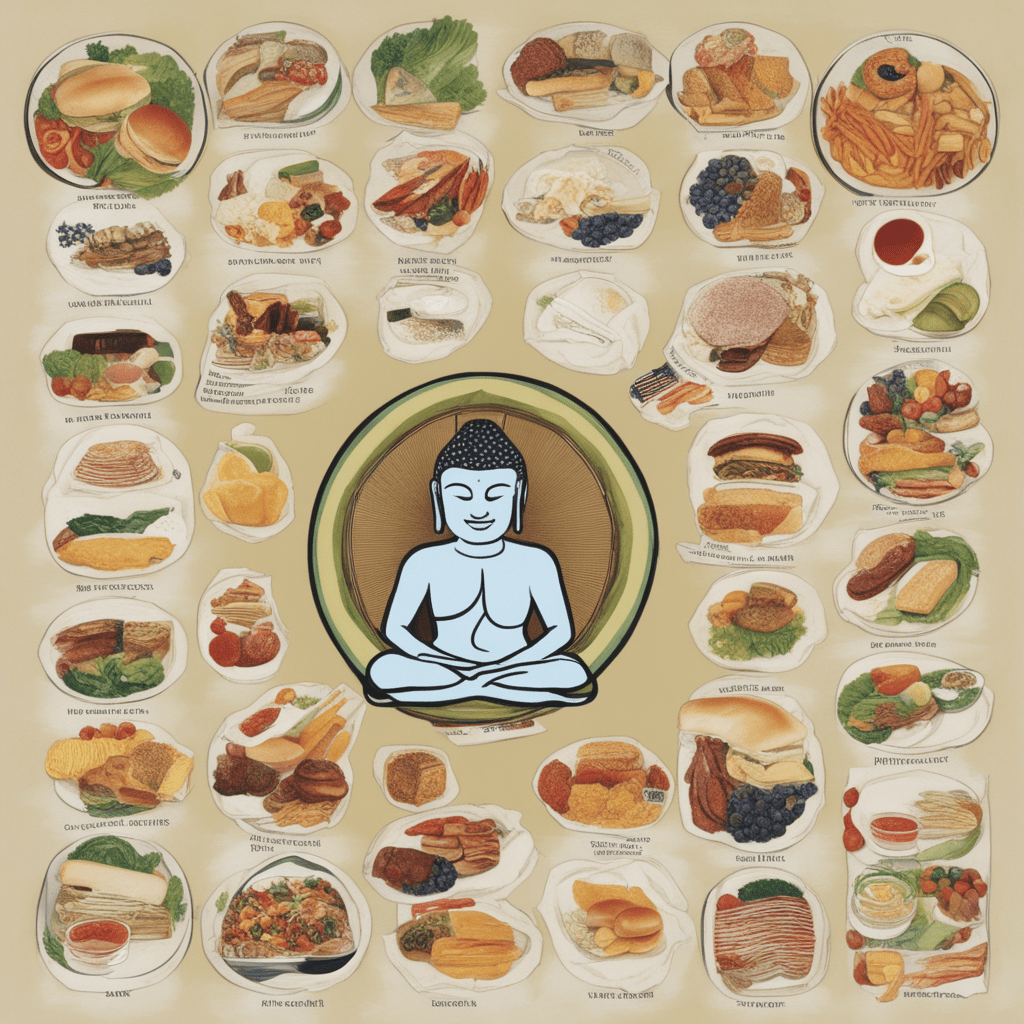
The Vedantic and Buddhist interpretations, though seemingly diverse, converge at the apex of enlightenment. Vedanta extols the oneness of existence, the monistic reality, while Buddhism explores the transient nature of reality, leading to a similar dissolution of ego and a recognition of an underlying unity. It’s akin to the myriad flavours of ice cream. Despite their distinct tastes and colours, the essence remains the same – the foundational element of ice. The epitome of enlightenment, or absolute monism, can be metaphorically depicted as a blend of every conceivable flavour of ice cream and beyond, encapsulating all foods, their variations, their origins, and their surroundings.

The metaphor extends further, proposing a confluence of all experiences, a melding into the Absolute. The journey might commence from disparate standpoints, traversing through diverse experiences, yet it culminates at a singular point— the realization of the Absolute. The magnificence of enlightenment doesn’t lie merely in reaching this pinnacle but in the unravelling of profound simplicity, an unveiling of what has always been there.

Upon such a realization, the dichotomies merge, the veils of ignorance are lifted, and what remains is an unadulterated consciousness, a pristine awareness devoid of fragmentation. It’s a return to the original state of being, a melding into the boundless, an embrace of the Absolute.

Morgan O.  Smith

Yinnergy Meditation & My Book, Bodhi in the Brain…Available Now!
https://linktr.ee/morganosmith

You Are What You Eat, and Also What You Don’t

The Eastern Philosophy of Consumption and Abstention

In the intricate dance of life, we often hear the adage, “You are what you eat.” Rooted in the wisdom of many cultures, this phrase suggests that our physical and mental well-being is profoundly influenced by the food we consume. But just as importantly, the choices we make about what we refrain from eating also define us. In the vast expanse of Eastern philosophy, whether feasting or fasting, you are that.

The concept of ‘Ahara’ in Ayurveda, the ancient Indian science of life, teaches that everything we consume, be it food, thoughts, or experiences, becomes a part of our inner and outer constitution. It’s not merely about the nutrients we obtain, but the energy, the ‘prana’, that comes with it. A meal cooked with love nourishes the soul, just as a dish prepared in haste or anger might leave us feeling unsettled.

Conversely, the act of abstention or fasting, common in Eastern practices like Buddhism, Jainism, and Taoism, is not merely a physical exercise. Fasting is as much a mental and spiritual activity as it is a physical one. By abstaining, we aren’t merely depriving ourselves; we’re creating space. Space for reflection, for inner growth, and for reconnecting with the self.

In the Zen Buddhist tradition, the act of eating mindfully, paying attention to every morsel, and being grateful for the nourishment is a form of meditation. On the other hand, moments of abstention teach us about the impermanence of desires. As Lao Tzu stated in the Tao Te Ching, “To attain knowledge, add things every day. To attain wisdom, subtract things every day.”

In the end, the balance between consumption and abstention is a personal journey, an inner dialogue. It’s about recognizing that every choice we make, whether to indulge or to refrain, is a reflection of our inner state, our philosophies, and our connection to the world around us.

As we navigate through the rhythms of life, let us remember: that we are not just shaped by what we consume but also by what we choose to let go. And in that delicate balance lies the true essence of existence.

Morgan O. Smith

Yinnergy Meditation & My Book, Bodhi in the Brain…Available Now!

https://linktr.ee/morganosmith

Embracing Anatta and Sunyata

A Buddhist Exploration of Spiritual Enlightenment

In the rich and intricate fabric of Buddhist philosophy, two profound concepts stand out: anatta, or the principle of no-self, and sunyata, or the notion of emptiness. These ideas challenge our conventional understanding of self and reality, offering a transformative path to spiritual enlightenment.

This blog post delves into the fascinating journey of embracing anatta and sunyata and what changes might occur in a person as a result.

Anatta: The Principle of No-Self

Anatta challenges the notion of a fixed and permanent self, a radical idea that has profound implications on how we perceive ourselves and the world. Upon realizing anatta, an individual may undergo the following transformations:

– **Loss of Attachment to Self-Identity**: Labels, roles, and personal narratives lose their grip, allowing for a more fluid and adaptable understanding of self.
– **Decrease in Ego-Driven Desires**: The pursuit of personal gain or recognition may fade, replaced by selfless compassion and loving-kindness.
– **Deepened Interconnectedness with Others**: Seeing beyond the illusion of separate selves fosters a profound connection with all beings.

Sunyata: Embracing the Emptiness

Sunyata refers to the empty nature of all phenomena, a state where things are devoid of inherent existence. The realization of sunyata leads to:

– **Transcending Dualities**: Ordinary distinctions such as good and bad, self and other, become irrelevant, replaced by an all-encompassing view of reality.
– **Detachment from Material Pursuits**: Recognizing the empty nature of material things may lead to a detachment from worldly desires and a more mindful way of living.
– **Harmony with the Present Moment**: Seeing things as they are, empty of inherent existence, nurtures a profound connection with the present moment.

The Journey Toward Enlightenment


Understanding anatta and sunyata is not an intellectual exercise but a profound experiential realization. The individual may engage in various practices such as meditation, mindfulness, and ethical living to cultivate this understanding.

The Impact on Relationships and Society

Embracing these principles fosters compassion, empathy, and altruism, reshaping relationships and offering a model of social harmony. It moves us towards a society rooted in wisdom and compassion, rather than division and selfishness.

Conclusion

The realization of anatta and sunyata is a transformative and enlightening experience that shifts our perception of self and reality. It dissolves the barriers that separate us and leads to a more compassionate and interconnected way of living.

In a world filled with complexity and conflict, these age-old Buddhist principles offer timeless wisdom and a path to inner peace. They invite us to let go of rigid self-identities and material pursuits, to see beyond the surface, and to embrace a more profound and holistic view of existence.

May the teachings of Anatta and Sunyata guide us towards a more awakened and compassionate life, where we recognize the interconnectedness of all beings and live in harmony with ourselves and the world.

Morgan O. Smith

Yinnergy Meditation & My Book, Bodhi in the Brain…Available Now!

https://linktr.ee/morganosmith

The Trikaya and the Trinity

Parallel Philosophies Across Cultures

Introduction:

In the realms of spirituality, the Buddhist concept of Trikaya and the Christian doctrine of the Trinity share an intriguing resemblance. Trikaya, which translates to ‘Three Bodies’, refers to the Dharmakāya, the Saṃbhogakāya, and the Nirmāṇakāya, while the Trinity consists of the Father, the Son, and the Holy Ghost. This blog delves into the philosophical parallels between these central tenets in Buddhism and Christianity.

Trikaya in Buddhism:

The Dharmakāya or “Truth Body” represents the unmanifested aspect of Buddha, embodying the ultimate nature of reality and enlightenment. The Saṃbhogakāya or “Enjoyment Body” refers to the celestial Buddha who brings teachings to enlightened beings. The Nirmāṇakāya or “Emanation Body” represents the historical and physical form of the Buddha, which is accessible and relatable to ordinary beings.

The Trinity in Christianity:
The Trinity comprises the Father, the Son, and the Holy Ghost. The Father signifies the unmanifest aspect of God, the ultimate creator. The Son, Jesus Christ, symbolizes the physical embodiment of God’s will. The Holy Ghost represents the guiding spiritual force, which brings wisdom and understanding to believers.

Philosophical Parallels:

1. Unmanifest and Eternal:
In Buddhism, the Dharmakāya is akin to the Christian concept of the Father. Both represent the unmanifest, eternal aspects of the divine. While the Dharmakāya embodies the ultimate truth and wisdom, the Father signifies the ultimate creative force.

2. Physical Embodiment:
The Nirmāṇakāya in Buddhism and the Son in Christianity are manifestations of the divine in human form. They are relatable and accessible to ordinary beings. Through their physical forms, they guide and lead by example. The Nirmāṇakāya (Buddha) through enlightenment and the Son (Jesus) through sacrifice and resurrection.

3. Guiding Force:

The Saṃbhogakāya and the Holy Ghost serve as the connecting link between the divine and the earthly realms. The Saṃbhogakāya, through celestial teachings, guides enlightened beings, while the Holy Ghost acts as a messenger of God, bringing wisdom and understanding to the faithful.

Conclusion:
The Trikaya and the Trinity represent complex theological concepts that offer deep insights into the nature of divinity. The parallel elements in these concepts hint at a universal human yearning to understand the divine and to connect with it. While they emerge from different cultural and religious traditions, their striking similarities foster an appreciation of the rich tapestry of spiritual thought across the world. Through the exploration of such parallels, we can find common ground in our quest for spiritual understanding and fulfillment.

Morgan O. Smith

Yinnergy Meditation & My Book, Bodhi in the Brain…Available Now!

https://linktr.ee/morganosmith


The Enigmatic G.O.D.

A Tapestry of Multifaceted Interpretations through Turiyatita

Introduction:
In the endless quest to fathom the profound entity known as God, Eastern and Western philosophies converge and diverge in a myriad of ways. This cosmic journey leads us to Turiyatita, a transcendent state beyond the fourth state of consciousness, where the true essence of God can be wholly embraced. Let us delve into the kaleidoscopic interpretations of the acronym G.O.D. through the lens of both Eastern and Western spirituality.

Giver Of Dreams:
In Western concepts, God is often seen as the Giver Of Dreams, inspiring aspirations. Contrarily, Eastern philosophies like Hinduism consider God as the Atman, reflecting the highest potential within oneself.

Guardian Of Divinity:
The Western Abrahamic faiths often portray God as a protector of purity, a Guardian Of Divinity. In Taoism, the Tao is considered the source of all divinity, without actively guarding it.

Guide Of Destiny:
In the Western context, God often plays a direct role in guiding destinies. The Eastern concept of Dharma reflects an innate order and righteousness, where individuals are their own guides through Karma.

Generator Of Diversity:
In the West, God’s creative aspect is exemplified in Genesis. In Hinduism, Lord Brahma symbolizes the Generator Of Diversity, being responsible for creation within the eternal cycle of Samsara.

Gatherer Of Devotion:
In the West, devotion is often gathered in the form of prayer. In Bhakti Yoga, an Eastern practice, devotion is an all-encompassing love and surrender to the divine.

Grand Orchestrator of Dynamics:

While Western deism believes in God as the Grand Orchestrator who set the universe in motion, Daoism sees the Dao as an impersonal force, guiding the natural order.

Garden Of Delight:
In Christianity, Eden represents the Garden Of Delight. In contrast, Buddhism’s Sukhavati is a pure land, representing an enlightened state of bliss and contentment.

Galaxy’s Omnipotent Designer:
In the West, Intelligent Design Theory posits God as the designer. Hinduism’s Vishwakarma is revered as the divine architect of the universe, reflecting a similar sentiment.

Guardian Of Deeds:
In Western theology, the idea of a judgmental God who serves as Guardian Of Deeds is prominent. The Eastern concept of Karma conveys a self-regulating system of moral retribution.

Gracious Overseer of Deliverance:
Both Eastern and Western traditions portray God as a liberator. In Christianity, salvation is through Jesus Christ; in Hinduism, Moksha or liberation from the cycle of rebirth.

Realization through Turiyatita:
To truly integrate these interpretations, one must transcend to Turiyatita, a state beyond the waking, dreaming, deep sleep, and Turiya (pure consciousness). In this pinnacle of spiritual awakening, the boundaries dissolve, and one can embody the limitless interpretations of G.O.D., embracing a harmonious coexistence of Eastern and Western spiritual thought.

Conclusion:
The myriad interpretations of G.O.D. weave a rich tapestry of philosophical thought. Turiyatita offers a transcendent vantage point where the essence of these interpretations is revealed in its full glory, harmonizing the wisdom of the East and West.

Morgan O. Smith

Yinnergy Meditation & My Book, Bodhi in the Brain…Available Now!
https://linktr.ee/morganosmith