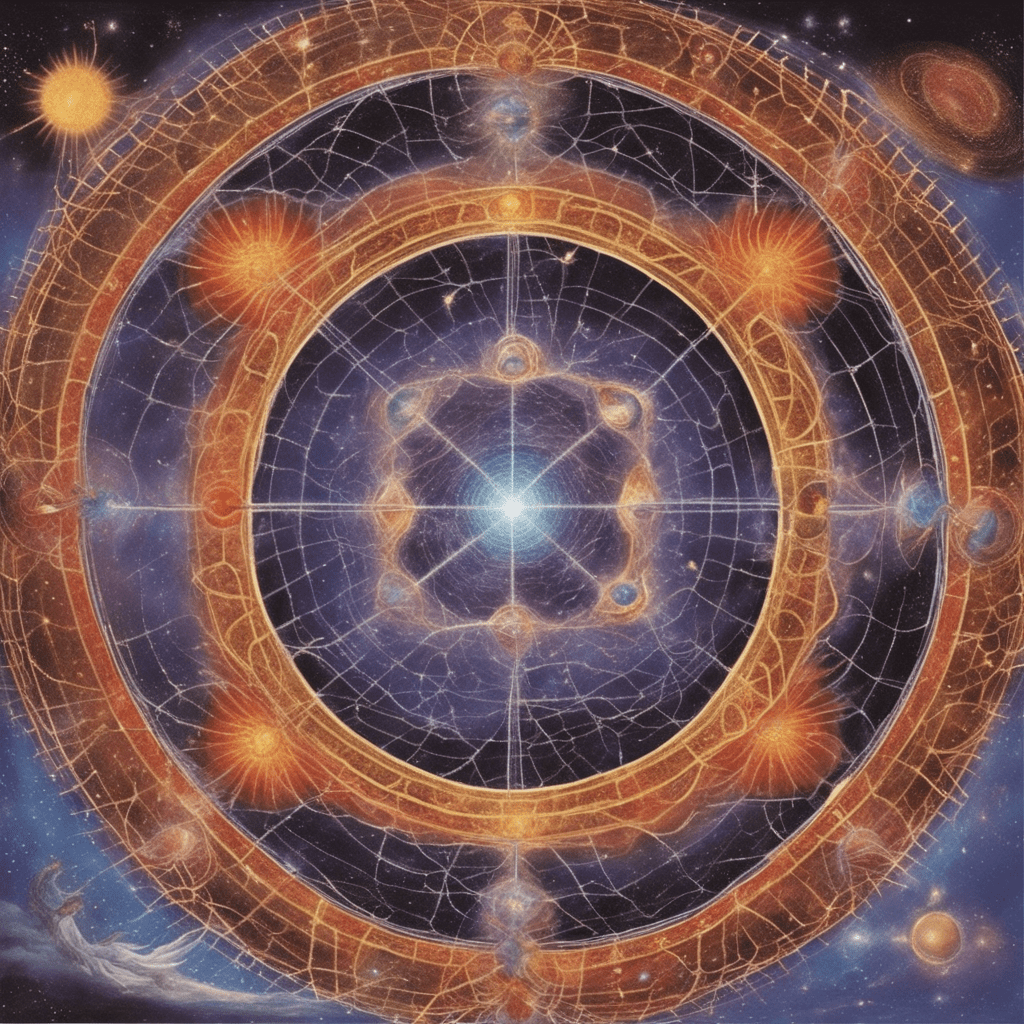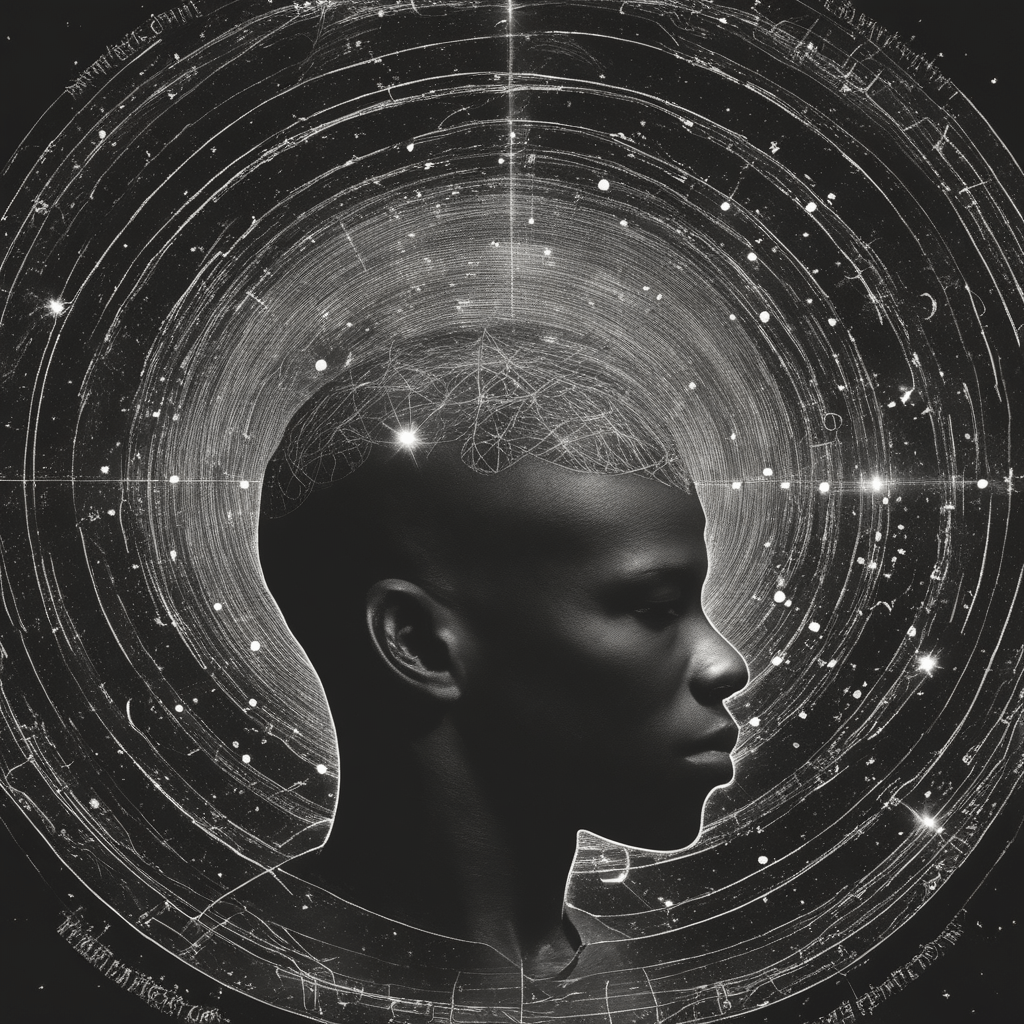
The Causal Realm

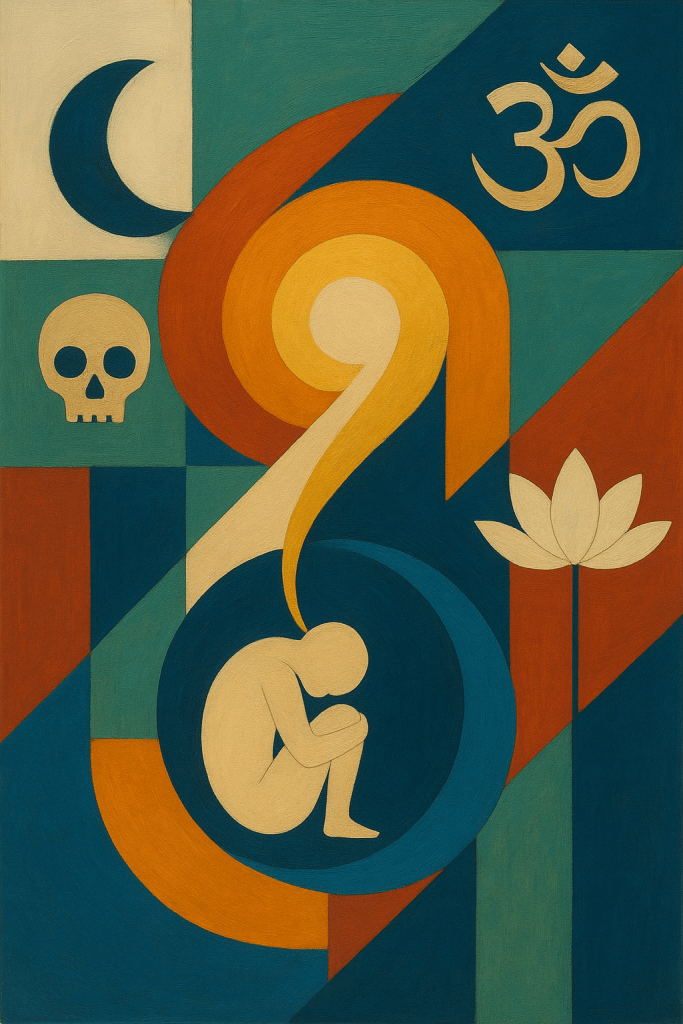
The Birth and Death of All Things

At the threshold of the causal realm, the experience of existence shifts from linear to simultaneous. You no longer stand as a single individual within a vast universe; you stand as both the birther and the born, the destroyer and the destroyed. The recognition dawns that the world does not merely shape you—you are also the very source of its shaping.

To know oneself here is to witness the paradox of causality unveiled. You are the origin of all movement, yet every movement gives rise to you. In this simultaneity, you can feel yourself giving birth to the totality of existence while watching that same totality dissolve back into silence.

Every breath is both a first and a last. Each moment is a labour of creation and a death rattle of dissolution. The body of consciousness enters its own womb, giving rise to itself again and again, endlessly. This is not a metaphor; it is the raw experience of being both cause and effect at once.

Within this state, suffering and bliss are inseparable twins. To feel the entirety of pain across existence is to simultaneously encounter the fullness of joy. One does not cancel the other; they merge into a union so vast that it overwhelms all categories of the mind. Pleasure peaks not as a fleeting sensation but as an orgasmic force inseparable from the ache of existence itself.

Masculine and feminine converge here—not as roles, not as energies separate and distinct, but as the indivisible pulse of love for everything that appears. What arises is an uncontainable recognition: every form, every life, every fragment of existence is nothing other than your own divine being.

The causal realm does not reveal the ultimate self, yet it gives you the deepest taste of how the play of birth and death, creation and dissolution, unfolds ceaselessly within the radiance of what you are.

Morgan O. Smith

Get Your Free Copy of My Book, Bodhi in the Brain!
https://subscribepage.io/oTSZQu

The Fiction of Randomness

If every effect has a cause, what room remains for the idea of “random”? Strip away the assumptions and peer into the structure of unfolding—what appears arbitrary may only be the limit of our perception, not the limit of reality.

What we call random is simply what we cannot trace. A roll of dice seems disorderly, but beneath it is a network of variables: velocity, angle, friction, momentum, density of the table, even micro-vibrations in the air. Were we to measure all these with precision, we would predict the outcome every time. The surprise we feel isn’t due to chaos, but to ignorance.

This is not about turning life into a mechanical calculation. Quite the opposite. It’s about bowing to a deeper intelligence that is so vast, so precise, it weaves galaxies from the quantum breath of atoms. When nothing is out of place, even disorder is part of a symmetry too subtle for the linear mind to grasp.

Events that seem unexplainable—miracles, tragedies, synchronicities—often get dumped into the “random” pile because they defy our narratives. Yet each thread is embedded in a continuum of unfolding, stretching far beyond memory, culture, or even lifetime.

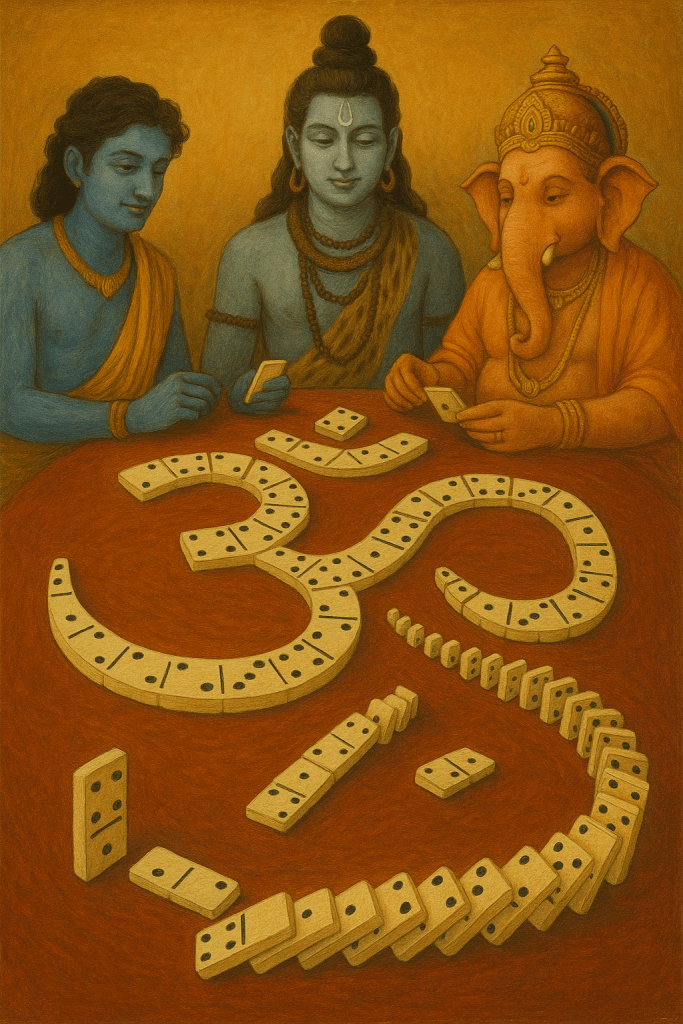
To say life is random is to deny the sacred choreography of emergence. Every moment is connected, not as dominoes collapsing mindlessly, but as a living mandala of causes so intricately interlaced they cannot be undone or simplified.

When one begins to see this—really see it—the need to explain, justify, or control begins to fall away. What replaces it is not fatalism, but participation. There is no randomness, only the undetected curvature of deeper causality. And when that is recognized, trust becomes more than a spiritual concept. It becomes a way of being.

Morgan O. Smith

Get Your Free Copy of My Book, Bodhi in the Brain!

https://subscribepage.io/oTSZQu

The Source of All Cause and Effect

Who and What Is the Source of All Cause and Effect?

The eternal question arises: who or what governs the intricate dance of cause and effect? Is it me, you, everyone, or everything? Perhaps it is all of these and none of them simultaneously. This exploration leads us to a profound realization: the source is not separate from the flow, yet it transcends it.

Cause and effect are not isolated events. They are interconnected, forming an indivisible whole. To search for the source is to embark on a journey into the depths of consciousness itself. The mind craves a definitive answer, a singular origin to label, but the truth eludes such simplicity. It is neither here nor there, yet it manifests everywhere.

Every action we take, every thought that arises, ripples outward into the fabric of existence. Yet the source of these ripples does not lie solely in the individual. It is the interplay of infinite factors—the unmanifest potential giving birth to form and the dissolution of form back into stillness. This interplay is the source, and we are simultaneously its participants and expressions.

What does this mean for our experience of life? It calls for a radical shift in perspective. The ego sees itself as a doer, the originator of action and the controller of outcomes. But this belief dissolves when one observes deeply. The body breathes, the heart beats, and thoughts arise—all without volition. The same intelligence orchestrates the universe’s movements, from the spinning of galaxies to the opening of a flower.

To recognize that “me, you, everyone, and everything” is the source is to dissolve the illusion of separation. It is to see that cause and effect are not linear but cyclical, interwoven, and eternal. We are not spectators of this process. We are in the process.

This realization invites us to live with humility and grace. Instead of clinging to control or outcomes, we surrender to the flow of life, trusting in the intelligence that governs all things. In this surrender, we find freedom—not as passive observers, but as conscious participants in the dance of existence.

The question remains: who or what is the source of all cause and effect? It is both a question and an answer. It is not a thing to grasp but an experience to embody. You are the source. I am the source. The source is all there is.

Morgan O. Smith

Yinnergy Meditation, Spiritual Life Coaching & My Book, Bodhi in the Brain…Available Now!

https://linktr.ee/morganosmith

The Paradox of Suffering

A Perspective on Compassion’s Existence

In a world untouched by suffering and misfortune, one might ponder compassion’s existence or even the necessity. This philosophical contemplation leads us to a profound question: If there were no suffering, would the concept of compassion still hold any significance?

Central to this debate is the idea of the Absolute at the causal stage, a concept that suggests a higher power or universal force responsible for orchestrating the cause and effect in our lives. This notion posits that events and situations are not merely random occurrences but deliberate creations intended to foster specific outcomes or experiences.

Within this framework, suffering and misfortune are seen not as unfortunate byproducts of existence but as essential elements in a grander scheme. They are the variables that necessitate and give birth to compassion. It’s as if the universe, or the Absolute, constructs scenarios to evoke and observe the act of compassion.

This perspective suggests a universe where compassion is a response to suffering and a desired outcome, a necessary expression in the cosmic play. It implies that our experiences of pain and grief are not just happenstances but are integral parts of a larger, perhaps even cosmic, narrative. This narrative is about enduring hardships and the opportunity these hardships present for compassion to arise and flourish. In this view, suffering is not meaningless; rather, it catalyzes the expression of compassion, which could be argued as one of the purest forms of human connection and empathy.

But this viewpoint is not without its controversies. It raises questions about the nature of the Absolute and its role in human affairs. Is suffering deliberately inflicted by a higher power for its amusement or purpose? Does this make the act of compassion a mere tool in a larger, possibly indifferent cosmic game? These questions challenge our understanding of morality and the nature of existence itself.

Furthermore, this perspective can be seen as a double-edged sword. On one hand, it gives a deeper meaning to our struggles, suggesting that our pain and the compassion it invokes are part of a grand, meaningful process. On the other, it might lead to a fatalistic or passive acceptance of suffering, undermining efforts to alleviate it.

In conclusion, the idea that suffering is necessary for compassion presents a challenging yet thought-provoking viewpoint. It forces us to examine the deeper implications of our experiences and the potential purpose behind them. Whether one sees this as a comforting thought or a disturbing implication, it undoubtedly opens up a rich field for philosophical and ethical exploration.

Morgan O. Smith

Yinnergy Meditation, Spiritual Life Coaching & My Book, Bodhi in the Brain…Available Now!

https://linktr.ee/morganosmith

The Infinite Dance of Karma

The Cosmic Web of Cause and Effect

Karma – a concept that has intrigued minds for ages, symbolizes the infinite dance of cause and effect. It is the fundamental fabric that weaves our actions into the cosmic narrative. Rooted in ancient philosophies, karma isn’t merely a spiritual notion but a universal truth, pointing towards the intertwined reality that everything is connected, directly or indirectly. Our every action, no matter how minuscule, sends ripples across the universe, affecting the self and the collective in ways seen and unseen.

But what exactly is karma? It’s often simplified as the law of moral causation, but its essence runs much deeper. It encompasses every action, and every movement that has ever occurred, is occurring and will occur in the universe. It’s not just a human-centric concept but a universal truth. Every cause sets forth a chain of effects which in turn become causes for further effects. The ceaseless cycle of cause and effect is the cosmic dance of karma.

Imagine the simplicity yet profundity of a heartbeat. With each beat, blood circulates, carrying oxygen and nutrients that sustain life. This seemingly automatic act is karma in motion, a fundamental action upon which the rhythm of life dances.

Now expand this lens outward to include the actions and interactions of all beings, the movement of planets, and the birth, and death of stars. Each of these is both a cause and an effect, weaving an intricate web of karma. The notion that the rotation of the earth around the sun, the drifting of galaxies, and even the cataclysmic explosion of the Big Bang are knots in the vast net of karma evokes a humbling perspective on our existence. It’s not only our deliberate actions that contribute to this cosmic choreography but the natural, involuntary actions and the colossal, unfathomable cosmic events too.

In this boundless network of action and reaction, the dichotomy of good and bad karma surfaces. Our perception of karma is often clouded by our limited understanding and the immediate repercussions we experience. What may seem like bad karma resonating from our actions might open doors of opportunities for another or perhaps, contribute to a larger cosmic narrative that we are yet to comprehend. The notion of good and bad is, after all, a human construct, an attempt to make sense of the vast, intertwined chaos that is the universe.

Every challenge, every serendipity, each misfortune, and stroke of luck, are threads in the cosmic tapestry of karma. Our actions, regardless of their nature, contribute to the greater narrative, pushing the boundaries of our understanding, and urging us to reflect on our place in this infinite dance of karma.

Understanding karma transcends the simplistic moral scales; it’s about recognizing our cosmic interconnectedness and the eternal, beautiful, and sometimes terrifying dance of cause and effect. As we tread along our individual and collective journeys, may we become more mindful of the ripples our actions send across the cosmic sea, contributing to the harmonious symphony of existence?

Morgan O.  Smith

Yinnergy Meditation & My Book, Bodhi in the Brain…Available Now!

https://linktr.ee/morganosmith

The Cosmic Symphony

Rethinking the Chain of Events

In the realm of philosophy, we often view the universe as a logical sequence of events where causes lead to effects, neatly arranging our reality into an orderly timeline. This classical cause-and-effect paradigm has long governed the way we think about the nature of existence. But what if we looked at this differently? What if cause and effect were more than just a linear progression from past to present to future?

## A Symphony of Causation

Imagine a universe where everything is in a constant state of becoming and dissolving, a universe where all causes are effects and all effects are causes. In this intricate web, each cause is simultaneously an effect, and each effect is a cause. A seemingly inconsequential event could trigger a chain reaction of unforeseeable consequences, while a major event could ripple back through time, shaping the past.

## The Non-Linear Universe

The idea that the future affects the present, and the present affects the past, is a profound shift from our linear understanding. It challenges our perception of time and the very nature of existence. This philosophical perspective acknowledges that the universe is not a static entity but a dynamic and ever-changing process, where creation and destruction happen at every moment.

### Creation and Destruction at Every Moment

In this paradigm, the universe is in a continuous process of creation and destruction, breathing life into every possibility and then allowing it to dissolve back into the cosmic fabric. This perspective invites us to consider our individual lives and events not as isolated occurrences but as part of an interconnected dance that shapes the whole universe.

Imagine a world where our actions are not merely consequences of past decisions but active participants in creating the future and reshaping the past. How would we act if we knew that every choice, every action, and every thought is both a cause and an effect in a never-ending cycle?

## Conclusion: An Invitation to a Deeper Understanding

By embracing this novel perspective of cause and effect, we can begin to see ourselves not as separate entities but as integral parts of a grand cosmic dance. This view challenges our conventional understanding, urging us to contemplate the dynamic, interconnected nature of existence.

As we ponder the nature of cause and effect, recognizing the interconnectedness of all things, we might find new insights into our place in the universe, our responsibility for our actions, and our potential to shape reality in ways we never thought possible.

The universe is not something that merely happens to us; we are active participants in its unfolding. As we move, so does the universe, and in that dance, we find our existence intertwined with everything else. It is a thought-provoking view that invites us to see ourselves and the universe in a new and profound light.

Morgan O. Smith

Yinnergy Meditation & My Book, Bodhi in the Brain…Available Now!

https://linktr.ee/morganosmith