The Architecture of the Ideal

Why the Myth Matters More Than the Man

Whether Jesus walked the earth or not is irrelevant to me. I am less concerned with the historicity of a man than I am with the utility of what he represents. Jesus is a technology. So is the Buddha. So is Krishna. These aren’t merely personalities from the past; they are structured mechanisms—living blueprints—for the cultivation of inner transformation and the evolution of civilization.

They function like algorithms for awakening, coded into the myths and memories of culture, waiting to be activated. Each offers a symbol-set, a behavioral protocol, an ethical framework, and a psychological mirror. Whether or not they existed, they exist. Their presence in the collective psyche is undeniable, and their effect, observable.

Civilizations have risen around these templates. Wars have been fought in their names, yes—but so have peace movements been born, arts been inspired, and lives reoriented toward compassion, surrender, and truth. These are not minor outcomes. These are pivotal shifts in the trajectory of human consciousness.

When a society lacks mythic technologies, it spirals. When the sacred is reduced to opinion or dismissed entirely, a vacuum forms. And into that vacuum pours the lesser gods of the day—greed, algorithmic manipulation, ego-as-brand. The sacred figures stand not because they are flawless historical beings, but because they point beyond history. They are fingers, pointing not to the past, but to what is possible—personally, collectively, cosmically.

To see Jesus as a technology is to acknowledge the architecture of possibility. To understand the Buddha as a psychological operating system is to awaken to what it means to be truly sane. Whether temporary or permanent, these peak states—compassion without condition, awareness without center, love without lack—are doorways we are meant to pass through, again and again, until their impermanence no longer discourages us, but refines us.

Maybe they were fictionalized. Maybe they were real. Doesn’t matter. They were necessary. They remain necessary. Because without the fiction of perfection, how would we recognize the direction of our ascent?

Morgan O. Smith

Get Your Free Copy of My Book, Bodhi in the Brain!
https://subscribepage.io/oTSZQu

Drugs, Mystical Experience, and the Value of Service

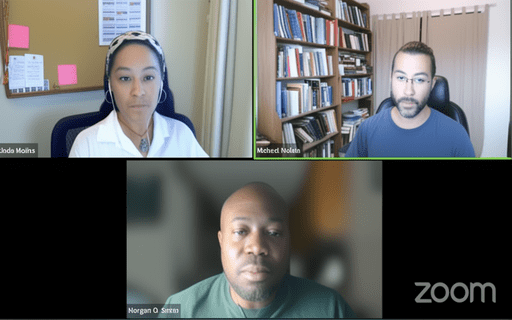
A Conversation with Linda & Michael Molina

First and foremost, I would like to extend my heartfelt gratitude to Linda and Michael Molina for inviting me to share my insights and experiences on their esteemed platform. Our engaging conversation traversed through the realms of spirituality, the use of entheogens, and the profound journey toward self-realization. Here are some of the key points I discussed during our enlightening conversation:

Oneness and Surrender:

One of the pivotal aspects of spiritual growth I emphasized is the practice of surrender and the dissolution of the ego to attain a state of “Oneness” or non-dual awareness. This state transcends the dichotomy of self and other, immersing one into a boundless existence that is the true nature of reality. I posited that the various paths and narratives leading to Oneness are but creations of higher consciousness, serving as a script that guides us through the unfolding drama of self-discovery. The crux of the journey lies in surrendering and opening one’s heart to the myriad experiences that life presents, allowing the essence of Oneness to permeate our being.

Embracing Negative Experiences:

The path toward spiritual enlightenment is not always bathed in light. It often takes us through the dark alleys of our psyche, urging us to confront and embrace our shadows. I shared the importance of welcoming negative experiences or the “dark sides” as integral parts of the spiritual journey. These challenging phases, when navigated with awareness and acceptance, can catalyze profound growth and a deeper understanding of our true nature.

Advice for Spiritual Seekers:

The spiritual expedition is an endless voyage towards the heart of existence. I advised fellow seekers to persevere, even when they stumble upon beautiful or profound experiences. There’s always a deeper level of realization awaiting beyond the apparent zenith. Each step taken on this sacred path unveils a new horizon of understanding, urging us to delve deeper into the mystery of existence.

Philosophical Insight:

Reflecting on the nature of reality, I likened the stories and paths leading to spiritual realization to scripts in a movie, orchestrated by a higher consciousness. These scripts, while seemingly real and consequential, are mere narratives that help make sense of our journey towards Oneness. The ultimate truth lies beyond these scripts, in the boundless realm of pure consciousness where the illusion of separation dissolves, revealing the unadulterated essence of Oneness.

Our conversation was a deep dive into the essence of spirituality, the transformative potential of brainwave entrainment, entheogens, and the boundless journey toward self-realization. I am immensely grateful to Linda and Michael Molina for providing a platform to explore and share these profound truths. Through such enlightening exchanges, we inch closer to unravelling the mystic tapestry of existence and fostering a collective awakening to the inherent unity of all life.

Morgan O.  Smith

Yinnergy Meditation & My Book, Bodhi in the Brain…Available Now!

https://linktr.ee/morganosmith

Watch the episode “Drugs, Mystical Experience, and the Value of Service” below. For more on ESF, check out their channel at https://www.youtube.com/@EmergingSciences

Agape

Embracing Universal Love for All of Creation

Introduction

In a world rife with division, turmoil, and individualism, the concept of Agape, or universal love, emerges as a beacon of hope and harmony. Rooted in various philosophical, spiritual, and religious traditions, Agape transcends borders, biases, and barriers, inviting us to embrace a love that binds all of creation. This blog post delves into the profound essence of Agape, its significance, and how it calls us toward a greater realization of our interconnectedness.

What is Agape?

Agape, often translated as “universal love” or “divine love,” represents a love that goes beyond the personal, emotional, or conditional. It’s a selfless love, free from judgment, that recognizes the inherent value and interconnectedness of all beings.

The Roots of Agape

The concept of Agape can be traced back to various traditions:

– **Christianity**: In Christian theology, Agape is the highest form of love, mirroring God’s unconditional love for humanity.
– **Buddhism**: Concepts like Metta (loving-kindness) reflect universal compassion and love for all sentient beings.
– **Hinduism**: Bhakti, the devotional love for the Divine, can be seen as a form of Agape that transcends worldly distinctions.

Agape in Everyday Life

The beauty of Agape is that it’s not confined to mystical experiences; it applies to our daily interactions. How can we embody Agape in our lives?

– **Seeing Beyond Differences**: Agape challenges us to recognize the common humanity in each other, regardless of race, religion, or nationality.
– **Cultivating Compassion**: Agape invites us to feel empathy for others’ suffering and respond with kindness and understanding.
– **Living Selflessly**: Embracing Agape means letting go of ego, self-interest, and judgment, allowing love to flow freely.

Agape and the Environment

Agape is not limited to human relationships. It extends to our relationship with nature and the environment. Recognizing the sacredness in all forms of life fosters respect and stewardship for the Earth.

Conclusion: The Transformative Power of Agape


Agape is more than a philosophical concept or mystical state; it’s a way of being. It calls us to expand our hearts, to love without conditions, to see the Divine in all, and to recognize our profound interconnectedness.

The journey toward Agape is not just a personal transformation; it’s a collective awakening. It heals, unites, and elevates our existence, turning love from a mere emotion into a universal principle that guides our lives.

In a world that often feels fragmented, the embrace of Agape offers a path toward wholeness and harmony. It’s not just a love for one another; it’s a love for all of creation.

As we contemplate Agape, we are invited to ponder: What would our world look like if we all lived with such love? How would it transform our relationships, our communities, and our very essence?

The answers to these questions may lie in the very heart of Agape, waiting for us to discover, embrace, and embody this universal love.

Morgan O. Smith

Yinnergy Meditation & My Book, Bodhi in the Brain…Available Now!

https://linktr.ee/morganosmith