Author, Philosopher, Spiritual Teacher, A Lead Facilitator at Sacred Media's Integral Mastery Academy, Founder of Yinnergy Meditation/Neurofeedback, Bodhi Mental Care & Wellness, Co-founder of KeMor Centre for Innovative Development
The human experience is a delicate dance between the tangible and the ethereal, between the ground we walk upon and the vast expanse of the skies. Each of us carves our path based on experiences, dreams, and our unique worldview. The quest to understand others while seeking enlightenment is our shared journey’s essence.
To walk in another’s shoes is not merely an act of empathy; it is an act of profound courage. This simple metaphor, often used to encourage understanding and compassion, requires us to momentarily abandon our deeply entrenched perspectives to wholly embrace another’s. Such a leap challenges the core of our identity and nudges us closer to universal truths.
On the other hand, having our heads in the clouds doesn’t just allude to daydreaming or being out of touch with reality. Instead, it signifies our innate yearning for transcendence and enlightenment. In the clouds, we find inspiration, creativity, and even the answers to life’s most perplexing questions.
Merging these two ideas, we are asked to ground ourselves in the realities of others while also seeking a higher truth. This beautiful interplay ensures that while we strive for ideals and wisdom, we never lose touch with the human stories unfolding around us.
In our endeavour to walk in another’s shoes, we may realize that the ground beneath our feet, though different in texture and terrain, feels strikingly similar in emotion and experience. And as we reach skyward, we understand that the same clouds of aspiration, doubt, joy, and sorrow float above us all.
So, the next time you find yourself firmly rooted in your beliefs and perspectives, remember to look up and dream but also to look across and truly see the person next to you. For in the balance between grounded reality and lofty dreams lies the essence of a life richly lived.
Morgan O. Smith
Yinnergy Meditation & My Book, Bodhi in the Brain…Available Now!
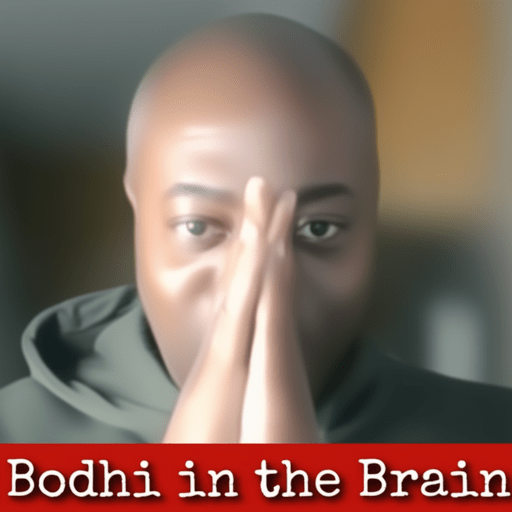
In a world often driven by divisions and distinctions, the essence of seeing others through a lens of love is a profound step towards transcending the superficial boundaries that separate us. This insightful dialogue between host Steve James and me in this episode “Bodhi in the Brain” on Guru Viking, unveils a perspective that challenges the conventional paradigms of self and other.
The narrative unfolds a journey towards seeing others not as separate entities, but as reflections of our being. It’s a call to embrace a higher perspective, where love becomes the lens through which we perceive the world around us. This perspective is not about blurring the lines but about seeing the inherent unity that binds us all.
As this dialogue delves deeper, the notion of seeing others as we see our children emerges as a metaphor for boundless compassion and unconditional love. It’s about nurturing the seeds of empathy and understanding, allowing us to transcend the habitual tendencies of judgment and separation. This is not merely a philosophical idea, but a transformative practice that has the potential to reshape our interactions and relationships.
The profound statement, “Love thy neighbour as thyself,” is revisited with a fresh understanding. It’s not just a moral injunction but a pointer towards a state of consciousness where self and other are recognized as manifestations of the same divine essence. It’s about realizing that the same life force that animates our being also flows through every other individual, thus creating a bridge of compassion and understanding that transcends the apparent differences.
The journey towards seeing others as we see ourselves is a voyage into the heart of compassion. It’s about dismantling the walls of ego that keep us entrapped in a cycle of separation and conflict. It’s about cultivating a heart that sees not with the eyes of judgment, but with the eyes of love and understanding.
This perspective invites us to reflect on the quality of our interactions and the lens through which we perceive others. It’s a call to step into a space of openness, where love becomes the guiding light illuminating the path towards a more harmonious and compassionate world.
This conversation in “Bodhi in the Brain” is a dialogue with humanity, urging us to awaken to the boundless potential of love and compassion that resides within us. It’s a reminder that in the mirror of compassion, we see not just the reflection of others, but the reflection of our true self, united in the dance of existence.
As we embark on this journey of seeing others through a lens of love, we are not just transforming our perception; we are contributing to a collective shift towards a more compassionate and unified world.
Morgan O. Smith
Watch Bodhi in the Brain, and previous episodes below:
Ep 220: Bodhi in the Brain
Welcome to Episode 220 of our enlightening series, where today we delve into a profound narrative titled “Bodhi in the Brain.” In this episode, we are joined by a spiritual seeker who shares his riveting journey towards higher consciousness. Through a blend of ancient wisdom and modern neuroscience, we explore the realms of mind and spirit, unveiling a path that bridges the tangible with the transcendental. Tune in as we navigate the intricate dance of existence, and uncover the serene space where the mind meets the infinite.
Ep 176: The Awakening of Mista Mo
Embark on a captivating expedition in Episode 176, “The Awakening of Mista Mo.” Today, we unravel the transformative journey of Mista Mo, a soul who found enlightenment in the most unexpected corners of life. His tale is one of resilience, discovery, and awakening to a higher calling amidst the cacophony of worldly chaos. As we traverse through his life’s chapters, we uncover pearls of wisdom that beckon a deeper understanding of self and the universe. Join us in this stirring narrative that echoes the eternal quest for inner peace and enlightenment.
Ep 195: Enlightened Comedian
Laughter is often said to be a divine gift, but can it also be a gateway to a deeper understanding of our existence? In Episode 195, titled “Enlightened Comedian,” we explore the whimsical yet profound journey of a comedian whose quest for laughter led him to the shores of enlightenment. Through a tapestry of humour, insight, and spiritual awakening, we delve into the heart of a narrative that celebrates the confluence of comedy and consciousness. Tune in to this heartwarming episode as we unravel the laughter-laden path to self-realization and the profound wisdom that accompanies it.
🔗 For those yearning for a transformative meditative experience or eager to delve into the philosophical depth of “Bodhi in the Brain”, the gateway awaits https://linktr.ee/morganosmith A friendly reminder for seekers everywhere: Guru Viking continues to unfurl wisdom every Friday on YouTube. Enrich your spiritual palette on Apple, SoundCloud, and Spotify as well. https://www.guruviking.com/
Yinnergy Meditation & My Book, Bodhi in the Brain…Available Now!
The Transformation of Negative Traits Through Spiritual Enlightenment
In the journey of spiritual growth, negative traits often serve as impediments, obscuring the path toward enlightenment. Interestingly, these very traits—anger, envy, impatience, and so forth—harbour within them the seeds of their opposites. It’s through the understanding and maturation of these seeds that we can transcend our internal limitations and witness a splendid reversal: the blossoming of negative into positive.
Consider anger, often erupting unbidden and wielding the potential to unleash chaos within interpersonal relationships. Underneath this fiery emotion may lie suppressed pain or unmet needs. As one treads upon the spiritual path, understanding, and embracing this underlying pain is crucial. The eventual enlightenment brings forth patience and compassion, the antithesis of unrestrained ire, nurturing an environment where harmonious relationships can thrive.
Similarly, envy, a profound discomfort at another’s fortune, can be seen as a distorted reflection of admiration and a hidden desire for growth. Through the mirror of spiritual enlightenment, envy transmutes into inspiration, where another’s success becomes a beacon of possibility and motivation, devoid of malice and bitterness.
This remarkable transition from negative to positive is not automatic but rather a potential waiting to be unlocked through deliberate spiritual practice and mindful self-reflection. The moment of spiritual enlightenment does not merely extinguish negative traits but transforms them, allowing an individual to experience their opposites in their fullest expression.
In the deepest troughs of our negative traits lie hidden the peaks of their opposites, waiting to be scaled and unveiled through spiritual maturation. Enlightenment allows us to perceive and navigate this transformation with wisdom, enabling the innate potential of these traits to fully blossom into their most constructive and uplifting expressions.
Morgan O. Smith
Yinnergy Meditation & My Book, Bodhi in the Brain…Available Now!
In the vast expanse of our human journey, there are moments of profound weight, where one feels as if they are carrying the burdens of the entire world upon fragile shoulders. This weight, often elusive and ineffable, is the manifestation of our ego, the culmination of our personal experiences intertwined with the collective unconscious of humanity.
Such weight can be overwhelming, sometimes akin to bearing witness to all of the human pain, suffering, and dark episodes of our shared history. Yet, it is said that we are never burdened with more than we can bear. This assertion, though challenging to grasp especially in our moments of despair, points towards a greater purpose – the evolution of the soul.
Those who endure and navigate through this weight, emerging on the other side of its crushing force, often find themselves transformed. The ego, once the dominating force, begins to dissolve, making way for a purer, more profound connection with the universe. This metamorphosis leads to humility, replacing pride and arrogance with an understanding that we are but a tiny fragment of the vast cosmos.
With this newfound humility comes a more receptive heart. Love, compassion, and empathy flow effortlessly, as the barriers that once separated us from others crumble. We begin to truly understand the adage, “Walk a mile in another man’s shoes.” This isn’t just about human-to-human connections; it extends to all life forms. We start recognizing the soul in every being, every flutter of a leaf, every chirp of a bird.
The ultimate realization, perhaps, is the true meaning of the age-old teaching, “Love thy neighbour as thyself.” It is not merely a call for kindness but a revelation that at the core, beyond the layers of ego and societal constructs, we are all one. There is no other; there is only us, interconnected and interdependent.
In conclusion, while the weight of the world can seem unbearable at times, it might just be the universe’s way of preparing us for a deeper connection, for a spiritual awakening that allows us to see beyond the superficial and truly embrace all that is.
Morgan O. Smith
Yinnergy Meditation & My Book, Bodhi in the Brain…Available Now!
In the spiritual journey towards understanding and living in universal love, or agape, two enlightened beings emerge on parallel paths. They both embrace agape, yet their personalities and the way they manifest this profound love are strikingly different.
The Introverted Universal Love
The first enlightened being, whom we shall call Seraphina, channels agape through introverted universal love. This means her love is directed inward, nurturing the self and radiating outwards in subtle, non-obtrusive ways.
Impact on Others
Seraphina’s love affects others through quiet acts of kindness and a gentle presence. She may not actively seek to spread love, but those who come into contact with her feel a calm, loving energy that often leads to inner transformation. Her love is a tranquil pond, reflecting the beauty of the world without rippling its surface.
The Extroverted Universal Love
On the other hand, we have Gabriel, who embodies extroverted universal love. His love is outward-facing, actively engaging with the world, and seeking to connect with others.
Impact on Others
Gabriel’s love is a dynamic force, touching lives through acts of charity, teachings, and open-hearted connections. His love is a roaring river, sweeping people along in its powerful current and leaving change in its wake.
A Harmonious Dichotomy
While their approaches differ, both Seraphina and Gabriel contribute to the universal energy of love. They show us that love is not a one-size-fits-all concept. It’s a multifaceted gem that can shine through various personalities.
The Introverted Love: A Deep Well
Seraphina teaches us that love does not always have to be loud or grand. It can be a silent force, a deep well that nourishes the soul. Her love invites contemplation and self-reflection, allowing for a profound connection with oneself and the universe.
The Extroverted Love: A Brilliant Flame
Gabriel, on the other hand, shows us that love can be a brilliant flame that illuminates the world. It’s about embracing others, taking action, and spreading joy. His love is a call to action, urging us to engage with the world and make a difference.
Conclusion
The paths of introverted and extroverted universal love, though different, are equally valuable. They teach us that love can be manifested in diverse ways, tailored to our unique personalities and life paths.
In a world torn by division and conflict, the lessons from Seraphina and Gabriel remind us that agape is within everyone’s reach. It’s a love that transcends boundaries and unites us all. Whether you’re drawn to the tranquil pond or the roaring river, the journey toward universal love is an expedition worth embarking on.
Morgan O. Smith
Yinnergy Meditation & My Book, Bodhi in the Brain…Available Now!
In a world rife with division, turmoil, and individualism, the concept of Agape, or universal love, emerges as a beacon of hope and harmony. Rooted in various philosophical, spiritual, and religious traditions, Agape transcends borders, biases, and barriers, inviting us to embrace a love that binds all of creation. This blog post delves into the profound essence of Agape, its significance, and how it calls us toward a greater realization of our interconnectedness.
What is Agape?
Agape, often translated as “universal love” or “divine love,” represents a love that goes beyond the personal, emotional, or conditional. It’s a selfless love, free from judgment, that recognizes the inherent value and interconnectedness of all beings.
The Roots of Agape
The concept of Agape can be traced back to various traditions:
– **Christianity**: In Christian theology, Agape is the highest form of love, mirroring God’s unconditional love for humanity. – **Buddhism**: Concepts like Metta (loving-kindness) reflect universal compassion and love for all sentient beings. – **Hinduism**: Bhakti, the devotional love for the Divine, can be seen as a form of Agape that transcends worldly distinctions.
Agape in Everyday Life
The beauty of Agape is that it’s not confined to mystical experiences; it applies to our daily interactions. How can we embody Agape in our lives?
– **Seeing Beyond Differences**: Agape challenges us to recognize the common humanity in each other, regardless of race, religion, or nationality. – **Cultivating Compassion**: Agape invites us to feel empathy for others’ suffering and respond with kindness and understanding. – **Living Selflessly**: Embracing Agape means letting go of ego, self-interest, and judgment, allowing love to flow freely.
Agape and the Environment
Agape is not limited to human relationships. It extends to our relationship with nature and the environment. Recognizing the sacredness in all forms of life fosters respect and stewardship for the Earth. Conclusion: The Transformative Power of Agape
Agape is more than a philosophical concept or mystical state; it’s a way of being. It calls us to expand our hearts, to love without conditions, to see the Divine in all, and to recognize our profound interconnectedness.
The journey toward Agape is not just a personal transformation; it’s a collective awakening. It heals, unites, and elevates our existence, turning love from a mere emotion into a universal principle that guides our lives.
In a world that often feels fragmented, the embrace of Agape offers a path toward wholeness and harmony. It’s not just a love for one another; it’s a love for all of creation.
As we contemplate Agape, we are invited to ponder: What would our world look like if we all lived with such love? How would it transform our relationships, our communities, and our very essence?
The answers to these questions may lie in the very heart of Agape, waiting for us to discover, embrace, and embody this universal love.
Morgan O. Smith
Yinnergy Meditation & My Book, Bodhi in the Brain…Available Now!
In the rich and intricate fabric of Buddhist philosophy, two profound concepts stand out: anatta, or the principle of no-self, and sunyata, or the notion of emptiness. These ideas challenge our conventional understanding of self and reality, offering a transformative path to spiritual enlightenment.
This blog post delves into the fascinating journey of embracing anatta and sunyata and what changes might occur in a person as a result.
Anatta: The Principle of No-Self
Anatta challenges the notion of a fixed and permanent self, a radical idea that has profound implications on how we perceive ourselves and the world. Upon realizing anatta, an individual may undergo the following transformations:
– **Loss of Attachment to Self-Identity**: Labels, roles, and personal narratives lose their grip, allowing for a more fluid and adaptable understanding of self. – **Decrease in Ego-Driven Desires**: The pursuit of personal gain or recognition may fade, replaced by selfless compassion and loving-kindness. – **Deepened Interconnectedness with Others**: Seeing beyond the illusion of separate selves fosters a profound connection with all beings.
Sunyata: Embracing the Emptiness
Sunyata refers to the empty nature of all phenomena, a state where things are devoid of inherent existence. The realization of sunyata leads to:
– **Transcending Dualities**: Ordinary distinctions such as good and bad, self and other, become irrelevant, replaced by an all-encompassing view of reality. – **Detachment from Material Pursuits**: Recognizing the empty nature of material things may lead to a detachment from worldly desires and a more mindful way of living. – **Harmony with the Present Moment**: Seeing things as they are, empty of inherent existence, nurtures a profound connection with the present moment. The Journey Toward Enlightenment
Understanding anatta and sunyata is not an intellectual exercise but a profound experiential realization. The individual may engage in various practices such as meditation, mindfulness, and ethical living to cultivate this understanding.
The Impact on Relationships and Society
Embracing these principles fosters compassion, empathy, and altruism, reshaping relationships and offering a model of social harmony. It moves us towards a society rooted in wisdom and compassion, rather than division and selfishness.
Conclusion
The realization of anatta and sunyata is a transformative and enlightening experience that shifts our perception of self and reality. It dissolves the barriers that separate us and leads to a more compassionate and interconnected way of living.
In a world filled with complexity and conflict, these age-old Buddhist principles offer timeless wisdom and a path to inner peace. They invite us to let go of rigid self-identities and material pursuits, to see beyond the surface, and to embrace a more profound and holistic view of existence.
May the teachings of Anatta and Sunyata guide us towards a more awakened and compassionate life, where we recognize the interconnectedness of all beings and live in harmony with ourselves and the world.
Morgan O. Smith
Yinnergy Meditation & My Book, Bodhi in the Brain…Available Now!
In the boundless tapestry of human existence, few ideas are as profound and transformative as the realization of oneself as Brahman. A central concept in Hindu philosophy, Brahman refers to the ultimate reality or cosmic spirit, a principle that transcends the individual self and unites all living beings.
This blog post explores the many changes an individual might experience upon this realization, a journey that transcends mundane existence and awakens a new consciousness.
### The Loss of Ego and the Embrace of Unity
Perhaps the most radical shift in consciousness comes from losing the individual ego. Recognizing oneself as part of the universal oneness leads to a dissolution of the self, allowing the individual to see beyond the superficial distinctions that often characterize human perception. This leads to a profound sense of unity, empathy, and compassion, transcending barriers like race, nationality, and religion.
### A Shift in Values and Desire
The realization of Brahman changes the very fabric of desire and ambition. Material possessions, social status, and even relationships may lose their significance, replaced by spiritual growth and a deepened understanding of the cosmic order. The individual might pursue selfless service, finding fulfillment in contributing to the well-being of all.
### The Embrace of Paradox and the Transcendent Nature of Existence
This profound awakening allows for a comfortable acceptance of paradoxes and contradictions. Time becomes more fluid, creativity blossoms, and the person might develop an ability to recognize synchronicities, meaningful coincidences that reveal the interconnected web of existence. ### Living in Harmony and Transcending Social Constructs
Living in harmony with nature, respecting all life, and transcending conventional gender roles and social constructs, the enlightened individual moves through life with grace, mindfulness, and effortless action. Their actions are unforced, carried out with a sense of reverence and alignment with universal ethics.
### The Physical and Emotional Manifestations
The journey to realizing oneself as Brahman does not merely affect the mind but also resonates through the body and emotions. The individual may find improved physical well-being, experience deeper states of meditation, and become almost entirely devoid of internal and external conflict.
### The Inspiration to Others
Through this transformation, the individual becomes a living example of peace, love, and wisdom, inspiring others simply through their presence and way of being. They embody a philosophy that sees beyond the limitations of material existence and offers a path to spiritual awakening.
### Conclusion
The realization of oneself as Brahman is a profound spiritual concept that encompasses every aspect of being—mental, physical, emotional, and spiritual. It offers a glimpse into a state of consciousness that transcends the mundane and awakens a new way of perceiving reality.
In a world often driven by material pursuits and divisive ideologies, the teachings surrounding Brahman provide a timeless wisdom that calls for unity, compassion, and a life centred on spiritual truth. Whether viewed as a philosophical concept, a religious belief, or a spiritual experience, the realization of Brahman invites us to look beyond the self and embrace a vision of existence that is all-encompassing, transcendent, and profoundly transformational.
As we navigate the complexities of modern life, may we find inspiration in the ancient wisdom that teaches us to see ourselves not as isolated beings but as part of a grand, interconnected cosmos, guided by a principle that is at once beyond us and within us. It is a journey of discovery, a path to enlightenment, and a call to a deeper, more meaningful existence.
Morgan O. Smith
Yinnergy Meditation & My Book, Bodhi in the Brain…Available Now!
In the vast annals of human history, few images stand as starkly haunting as that of Thích Quảng Đức, a Vietnamese monk who, in a profound act of protest, set himself ablaze on a Saigon street in 1963. While the flames consumed his physical form, Quảng Đức remained motionless, embodying the epitome of tranquillity and peace. As if this act was not profound enough, an even more astonishing testament to his spirit was the heart that remained unburned, not only in the initial act but even upon re-cremation.
**The Unyielding Heart**
What does it mean to have a heart that does not burn? In the literal sense, it defies the expectations of nature and science. But on a more profound level, the heart of Thích Quảng Đức symbolizes the ultimate emblem of pure, unyielding compassion. In a world often ruled by tumultuous fires of hate, prejudice, and indifference, Quảng Đức’s heart serves as a poignant reminder that true compassion is unassailable. It can neither be burned nor extinguished.
**Compassion Amidst Chaos**
The metaphorical imagery of a heart that remains intact, even amidst the raging fires, is a testament to the enduring nature of compassion. The flames that consumed Quảng Đức were not merely physical; they represented the societal and political upheavals of his time. Yet, his heart, like his spirit, stood resolute, undeterred, and most importantly, compassionate.
In the face of adversity, many of us allow our hearts to be overtaken by the metaphorical fires of anger, resentment, or apathy. Yet, Thích Quảng Đức’s heart is a beacon, calling upon us to rise above the flames of malice and to foster a heart that, metaphorically speaking, can never burn.
**A Legacy Beyond the Flames**
Today, housed in a glass chalice at Xá Lợi Pagoda, Thích Quảng Đức’s heart serves as a perpetual reminder of his teachings and spirit. To the Vietnamese Buddhists and many others across the globe, he is revered as Bồ Tát Thích Quảng Đức, a bodhisattva. A being filled with such boundless compassion that he chose to remain in the cycle of samsara to help others attain enlightenment.
This unburned heart serves as a testament not just to the man, but to the idea that compassion, when deeply rooted in one’s being, can transcend even the most harrowing circumstances. It challenges each of us to reflect on the state of our hearts. Do we nurture a heart that is impenetrable to the flames of hatred, bitterness, and indifference? **In Conclusion**
The legacy of Thích Quảng Đức is not simply about the act of self-immolation. It’s about a heart—a pure, compassionate heart that remained untouched despite the circumstances. As we traverse through our trials and tribulations, may we strive to cultivate such a heart, a heart that remains compassionate, resilient, and most of all, unburned.
Morgan O. Smith
Yinnergy Meditation & My Book, Bodhi in the Brain…Available Now!
Introduction: In the grand theatre of existence, our hearts play a central role in the symphony of human experience. To navigate the depths of life’s mysteries, we must learn the art of keeping our hearts open. A profound approach to achieving this lies in the act of wholeheartedly accepting and embracing everything we encounter – the sights, sounds, scents, flavours, and textures – as intrinsic aspects of ourselves. This philosophical journey explores the transformative power of openness, inviting us to delve into the essence of existence and cultivate a profound connection with the world around us.
Embracing the Multitude of Perspectives: To keep the heart open, we must acknowledge the multitude of perspectives that shape our reality. Each experience we encounter is coloured by our unique perceptions, and no two individuals experience the world in exactly the same way. By embracing the diversity of viewpoints, we unlock the potential for genuine empathy and understanding, fostering an inclusive and compassionate society.
Surrendering to the Flow of Life: Life’s tapestry weaves an intricate pattern of joy and sorrow, triumph and defeat. Embracing an open heart requires us to surrender to the natural ebb and flow of existence without resistance. When we stop trying to control or manipulate life’s course, we find solace in the understanding that every experience is a teacher, guiding us towards growth and self-discovery.
Liberating the Self from Ego: The ego often entangles our hearts in a web of desires, fears, and judgments. To truly embrace life as an extension of ourselves, we must transcend the ego’s limitations and recognize the interconnection between all living beings. Letting go of the attachment to the “self” allows us to dissolve the illusion of separateness and discover a profound sense of unity with the universe.
Cultivating Radical Acceptance: Radical acceptance is the key to unlocking the transformative power of an open heart. By embracing everything we encounter – the pleasant and the challenging, the familiar and the unfamiliar – as essential aspects of our journey, we learn to dance gracefully with life’s ever-changing rhythms. Embracing all facets of existence deepens our capacity for resilience and enriches our human experience.
Living with Gratitude: Gratitude is a sacred gateway that opens our hearts to the splendour of life. Embracing a sense of profound gratitude for each moment, we begin to see life’s wonders with fresh eyes and a receptive heart. Gratitude is the beacon that leads us to treasure even the seemingly mundane, unveiling the beauty hidden within the folds of everyday life.
Conclusion: Keeping the heart open is an ethereal quest that unravels the essence of our existence. By accepting and embracing every encounter, we transcend the boundaries of self and connect with the universal tapestry of life. Embracing diverse perspectives, surrendering to life’s flow, and liberating ourselves from the ego’s grasp elevate us to a higher plane of consciousness. Through radical acceptance and gratitude, we find profound meaning in the ordinary and glimpse the extraordinary in the ordinary. Let us embark on this philosophical journey, keeping our hearts open to the wonders that life has to offer, and savouring the grand symphony of existence in all its magnificence.
Morgan O. Smith
Yinnergy Meditation & My Book, Bodhi in the Brain…Available Now!






 Morgan O. Smith