Author, Philosopher, Spiritual Teacher, A Lead Facilitator at Sacred Media's Integral Mastery Academy, Founder of Yinnergy Meditation/Neurofeedback, Bodhi Mental Care & Wellness, Co-founder of KeMor Centre for Innovative Development
If every effect has a cause, what room remains for the idea of “random”? Strip away the assumptions and peer into the structure of unfolding—what appears arbitrary may only be the limit of our perception, not the limit of reality.
What we call random is simply what we cannot trace. A roll of dice seems disorderly, but beneath it is a network of variables: velocity, angle, friction, momentum, density of the table, even micro-vibrations in the air. Were we to measure all these with precision, we would predict the outcome every time. The surprise we feel isn’t due to chaos, but to ignorance.
This is not about turning life into a mechanical calculation. Quite the opposite. It’s about bowing to a deeper intelligence that is so vast, so precise, it weaves galaxies from the quantum breath of atoms. When nothing is out of place, even disorder is part of a symmetry too subtle for the linear mind to grasp.
Events that seem unexplainable—miracles, tragedies, synchronicities—often get dumped into the “random” pile because they defy our narratives. Yet each thread is embedded in a continuum of unfolding, stretching far beyond memory, culture, or even lifetime.
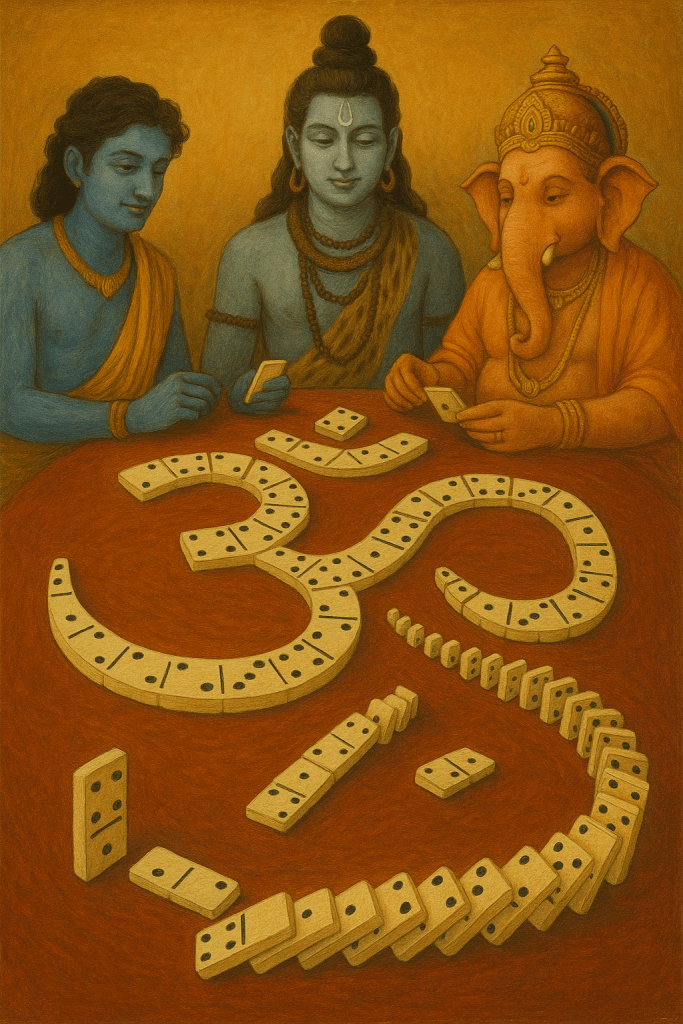
To say life is random is to deny the sacred choreography of emergence. Every moment is connected, not as dominoes collapsing mindlessly, but as a living mandala of causes so intricately interlaced they cannot be undone or simplified.
When one begins to see this—really see it—the need to explain, justify, or control begins to fall away. What replaces it is not fatalism, but participation. There is no randomness, only the undetected curvature of deeper causality. And when that is recognized, trust becomes more than a spiritual concept. It becomes a way of being.
Morgan O. Smith
Get Your Free Copy of My Book, Bodhi in the Brain!
Enlightenment isn’t a collection of vivid memories. It isn’t a library of altered states or a gallery of peak experiences pinned to the walls of time. Enlightenment, in its truest sense, is what remains when all those moments pass. It is not recalled—it is present.
A spiritually enlightened being doesn’t describe what happened—they speak from what is. Their language may touch on form, but it arises from formlessness. It isn’t commentary on a past event; it is the echo of what is silently alive in that moment. Words are merely the condensation of what remains wordless within them.
Contrast this with the one who has had many spiritually enlightening experiences. There is often great sincerity, beauty, and wisdom in their sharing. But listen closely: their narrative carries timestamps. “This is what I saw… what I felt… what I realized…” There’s a distance, however subtle. A witness telling you what the moon looked like—rather than being the moon, shining right now, regardless of who’s watching.
This difference isn’t about hierarchy. One isn’t better, holier, or more awakened than the other. But there’s a distinct quality when realization is not merely visited, but abided in. When the identity that would lay claim to an experience has dissolved entirely.
Here’s the paradox: a being can be spiritually enlightened without ever having what we label as a “spiritual experience.” No blissful union, no white light, no serpents of energy climbing the spine. Their clarity is not the aftermath of an event—it is the absence of confusion. No fireworks. Just light.
They may speak little. Or not at all. There is no need to convince, convert, or collect followers. They are not on a path—they are the ground from which all paths appear.
On the other hand, a person with many enlightening experiences can describe with breathtaking poetry the landscapes of the soul. But unless those experiences have dissolved the one who experienced them, the self remains—refined perhaps, but still separate.
True awakening isn’t an experience you remember. It’s the end of the one who remembers.
This is why the most profound truths often arrive without announcement. A falling away, not an acquiring. A silent recognition that this—yes, this—is what always was. And suddenly, the need for experience evaporates. Presence alone becomes sufficient.
Morgan O. Smith
Get Your Free Copy of My Book, Bodhi in the Brain!
No one else has ever walked this Earth as you. Not a version, not a shadow, not a resemblance. Just you.
Not because you’re special in the usual way that word is thrown around, but because existence itself only ever unfolded once—and it’s doing so now, as you.
This isn’t about ego. Ego thrives on comparisons: greater than, less than, better, worse, worthy, unworthy. But the truth beneath all that noise isn’t about status—it’s about singularity. The kind that isn’t measured. The kind that never repeats.
People spend their lives searching for meaning, purpose, and a sense of identity. They try to earn significance or prove their worth. But importance isn’t earned—it is. You are the original event. Not one among many. Not one of a kind. The kind.
Look around. Every face you see, every story, every moment, all of it—just folds within the One. That same One expressing itself here as your particular breath, your memories, your voice, your fears and awakenings. The sky that bends over you is not separate from your gaze. The rhythm of the world doesn’t move beside you; it pulses through you.
To say you are not greater than anything is to drop the illusion of measurement. Of trying to win at some existential game. But then comes the deeper realization: You are not less than anything either. There is nothing else to measure against. You’re the first and last word of this moment.
Nothing else has ever existed apart from this.
So ask yourself: What happens when you stop performing for reality and start remembering that you are it? What shifts when you no longer strive to become someone meaningful, but realize that meaning itself is being?
You’re not here to improve reality. You are the revealing of it.
And this unveiling has never happened before—not like this.
Morgan O. Smith
Get Your Free Copy of My Book, Bodhi in the Brain!
You may resist hearing it, but nothing here was designed to serve your preferences. Existence doesn’t negotiate with your plans. The ocean doesn’t adjust its tides because you’re having a hard day. Mountains don’t bow to your ambitions. Storms don’t hold back for your convenience.
There is a strange freedom in recognizing that you are not the axis of this world. Your fears, longings, and beliefs are weather patterns blowing through a vast sky. Even your discomfort with this fact is not a problem to be solved—it is part of the very order you imagine resisting.
Ask yourself: When did this story become about you? When did the measure of truth narrow to fit your tastes? The self who wants life to behave is so small it forgets it is born of the very forces it wants to command. You and I are not exceptions to the flow. We are the flow.
Even the frustration that arises when someone says “everything happens as it should” is folded within the shape of things. It isn’t an error. It’s another ripple on the water, another branch growing from the same root.
There is no special exemption that spares you from the dance of impermanence. Life moves through every form—including your insistence that it ought to be different. Even that protest is part of the design.
So let go of the idea that it’s about you, or about me. Something far more mysterious is moving all of this, and we are its fleeting expressions—here for a moment, dissolving back into the whole.
Morgan O. Smith
Get Your Free Copy of My Book, Bodhi in the Brain!
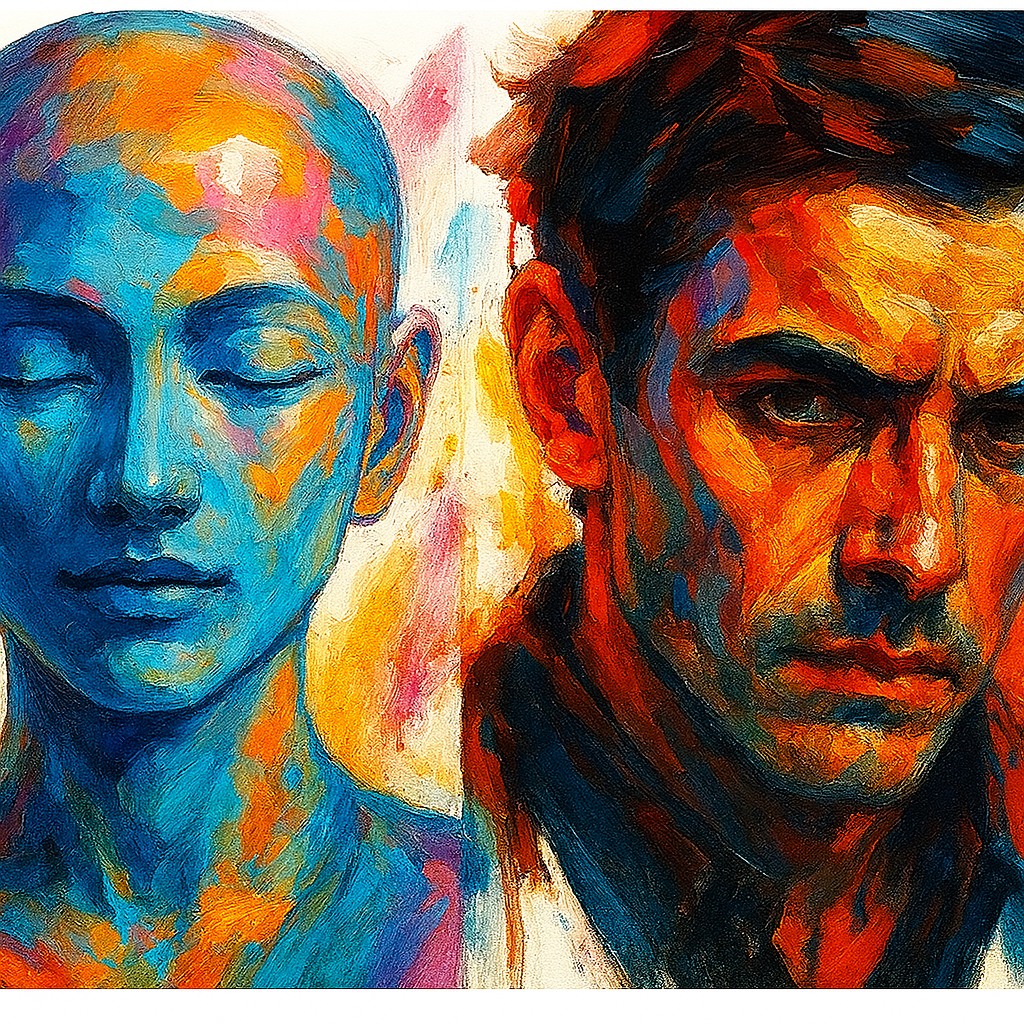
Want to understand the mind of God? Think of two opposites, accept those two opposites, become the two opposites, go beyond both, erase both, yet include. Even then, it won’t be understood.
Fire and water seem to be opposites. Yet steam arises at their meeting point—a form that is neither purely one nor the other, yet depends on both entirely. This is not the cancellation of difference but its transformation. What appears is both, neither, and something beyond classification.
To become opposites means allowing yourself to be fierce and gentle, clear and confused, bound and free, without settling on any of these as the final truth. It is to hold them fully, see their mutual necessity, and recognize that their apparent contradiction points to something that includes, exceeds, and dissolves them without denying them.
Human longing for comprehension seeks the safety of closure—a single statement that ends all questioning. Yet the source of all perspectives cannot be bound by any one of them. Every claim about it is true, false, and everything in between.
Stepping into the space where opposites remain distinct yet inseparable invites a new kind of seeing. Certainty and doubt illuminate each other. Every perspective holds a partial truth, a partial untruth, and a silent remainder that escapes both.
Silence here is not mere emptiness but a fullness that holds every possibility without settling on any. Words illuminate and obscure in the same breath. Every statement unveils something while hiding something else. Language does not capture what is beyond it but points, imperfectly, toward what cannot be bound.
This is not a teaching about removing opposites so they disappear into sameness. It is about becoming vast enough to hold their full tension, to see that going beyond them does not reject them but includes them in a larger whole. The mind of God is not merely where opposites cease to matter but where their interplay, necessity, and transcendence are equally revealed.
Here, everything can be affirmed, denied, and moved beyond at once. Nothing is excluded. Nothing stands alone.
Morgan O. Smith
Get Your Free Copy of My Book, Bodhi in the Brain!
Hemispheric division was only ever provisional—a strategy of consciousness to explore its own depths in fragments. Beneath analysis and intuition lies a singular awareness undivided by thought. At the deepest level of samadhi, this becomes unmistakable.
The brain no longer labours to interpret. It surrenders. Left and right hemispheres fall into perfect accord, no longer mirroring separation but revealing the indivisibility they always contained. Neurons do not merely fire; they fall silent together, resonating with a profound coherence that has no opposite. This is not communication. It is communion.
Thought dissolves at its root. The compulsion to compare, measure, name—all of it collapses. Awareness rests in its own nature, ungraspable yet unmistakably present. It is not that the hemispheres stop working. They merge into a single gesture of knowing beyond knowing, a luminous stillness where there is no observer or observed.
Such samadhi is not a trance or escape. It is a return to the origin, the silent ground of all differentiation. The meditator does not disappear but is seen never to have been separate from anything. The brain itself seems to remember its oldest purpose—not survival or analysis but offering itself as a vessel for the unconditioned.
Neurons remember their wholeness. The body breathes without ambition. Mind rests without conflict. Awareness shines without commentary. What was divided knows itself as one. This is the simplicity hidden beneath all complexity, the union prior to all partnerships.
Such samadhi cannot be forced, only recognized when the mind ceases to grasp. It waits behind every breath, beneath every thought, ready to reveal itself when the seeker becomes still enough to listen.
Morgan O. Smith
Get Your Free Copy of My Book, Bodhi in the Brain!
I have spent years trying to describe what happened to me, and every time I speak about it, the words become more suspect.
Language can outline an experience, but it cannot contain it. At best, words point like the crooked finger of an old monk who knows he’ll die before finishing the sentence.
What happened felt like the culmination of every practice, every prayer, every insight. I thought I was climbing a mountain of understanding, reaching ever-higher plateaus. The views grew wider, the air thinner, my confidence stronger.
Then there was nothing.
Nothing to stand on.
No summit.
No climber.
Not even a fall.
Awareness no longer rested on any subject or object. There was no watcher, no witness. The entire machinery of spiritual seeking—so intricate, so earnest—collapsed without fanfare.
What remained didn’t feel like a state. States come and go. This had no coming. No going.
No arrival.
It wasn’t some radiant oneness to bask in. Even calling it oneness implied there could have been twoness.
It wasn’t emptiness in the Buddhist sense, the elegant doctrine that everything is dependently arisen and thus without essence. That too felt too architectural, too systematic.
It was simply nothing that needed explaining.
Not a blank.
Not a void.
Not a silence that replaced noise.
Silence and noise lost all difference.
Thoughts continued—because why wouldn’t they?
Breath moved.
The world appeared precisely as before: sounds, colours, forms.
Except no one stood behind it all, calling it mine.
No vantage remained from which to call anything anything.
The sense of being a person—so carefully cultivated over a lifetime—dissolved like salt in water. But even that suggests a process. The truth is it never had any reality to begin with.
This wasn’t annihilation in the frightening sense. It was astonishingly gentle. The self didn’t die screaming. It simply wasn’t found.
Where had it gone?
Nowhere.
Because nowhere was needed.
There was an uncanny intimacy with everything. Not the intimacy of closeness, but the absence of distance.
A bird calling outside wasn’t outside.
A passing thought wasn’t inside.
Nothing was outside or inside.
Without a center, there was no periphery.
No boundary defined what I was or wasn’t.
There was no I to define.
This wasn’t bliss in the usual sense—no narcotic wash of pleasure.
No ecstatic union.
Ecstasy requires an experiencer.
There was no experiencer left to feel enlightened.
And so the phrase “I had an enlightenment experience” is a lie spoken for convenience.
Experience implies an owner, a timeline, a sequence of events.
This wasn’t an event.
Events happen in time.
Time didn’t stop; it lost its claim.
Past and future stopped being places to travel.
What about now?
Even that lost its centrality.
This was so direct, so unarguable, so empty of specialness.
No claim to make.
No badge to wear.
No insight to hold.
No teaching to give.
Nothing was revealed.
Nothing hidden remained.
No questions answered.
Questions fell away for lack of a questioner.
The sacred and the profane lost their separation.
There was no vantage from which to prefer one thing over another.
Life went on.
Dishes washed.
Conversations happened.
Traffic lights changed.
Anger arose.
Tears fell.
Laughter erupted.
All of it completely itself.
No attempt to improve or transcend any of it.
Nothing to transcend.
No one to be improved.
If anything changed, it was this relentless dropping of all pretenses.
All strategies.
All defenses.
Even the defense of being spiritual.
Especially that.
No seeker.
No sought.
No path.
No realization.
Just life, unadorned.
Not life as concept.
Life as immediacy.
Life with no one living it.
And I see now that every attempt to name this diminishes it.
But that’s the game of words.
Let them fail.
I won’t call this truth.
Truth is too grand.
Too final.
Too proud.
I won’t call this liberation.
Liberation implies something bound.
Nothing was ever bound.
I won’t call this God.
God suggests someone else.
Something else.
Otherness itself dissolved.
This wasn’t merging.
Not two to merge.
No return to source.
No departure.
No source.
Just this.
No this.
And even writing that betrays it.
So here I will stop.
Not because I have finished.
But because there is nothing left to finish.
Morgan O. Smith
Get Your Free Copy of My Book, Bodhi in the Brain!
Accidents are rarely welcome. They’re events that disrupt plans, crack illusions of control, and leave us changed. Spiritual awakening carries something of that wildness. It can’t be willed into being like a project with clear steps and predictable results. Yet there’s a paradox: devoted contemplative practice seems to make one more likely to be undone by it.
Meditation does not guarantee enlightenment. It prepares no certificate, no badge of arrival. Instead, it functions more like softening the soil so a seed can break through when conditions conspire. This isn’t an engineering feat—it’s an invitation to the uncontrollable.
Spiritual traditions often warn against striving too hard. Effort burns away distractions, but effort itself becomes another barrier if clung to. Discipline is essential, but so is surrender. A meditator learns to sit still enough for their self-concept to slip, fragile as old paint on a crumbling wall. What breaks through is not what the ego planned.
Such a shift is catastrophic for self-image. One can’t choreograph being seized by silence, seen through by awareness, or stripped of all strategies. Preparation helps only because it erodes resistance. A lifetime of practice might be nothing more than a way of making oneself more susceptible to grace.
Grace here is no moral reward. It’s the inexplicable unveiling of what has always been true. Practice hones attention so that, eventually, one notices the absurdity of separation. The boundary keeping “me” apart from the rest collapses. It can feel like an accident precisely because it breaks expectation so thoroughly.
So why practice? Not to force awakening but to grow familiar with letting go. To cultivate the courage to be shattered. To understand that no amount of control can deliver the gift, but the willingness to wait can make one receptive. A practitioner may become the sort of person for whom awakening is more likely—not because they deserve it, but because they are no longer guarding against it.
True meditation is a kind of sabotage of our usual certainties. That is its danger, and its promise. The question isn’t whether practice causes awakening like cause yields effect, but whether practice makes us vulnerable enough to be struck by what is always here.
Morgan O. Smith
Get Your Free Copy of My Book, Bodhi in the Brain!
Most speak of choice as if it lives at the surface, where preference, fear, habit, and desire jostle for control. But what if true free will does not arise there at all? What if it exists at the root, before thought forms into options, before “I want” emerges to justify itself?
This root is the causal realm: the source of all motion, where intention is not split from manifestation. It is not personal will in the usual sense—no ego negotiating with life to get what it wants. Instead, it is pure causality aware of itself, setting everything in motion without conflict or division.
At the surface, people speak of freedom as the power to choose between alternatives. Yet these alternatives are already conditioned. They are branches of a tree whose root has already determined their growth. To speak of freedom at the stem while ignoring the root is to mistake effect for cause.
However, the paradox reveals itself when one sees no real division between root and stem. The freedom to choose at the surface becomes genuine only when it is recognized as the expression of the root itself. Every choice becomes the revelation of causality. There is no separate chooser apart from the choosing.
This is what lies beyond the ego’s belief in control. The ego claims “I choose” without realizing that its very claim is already part of the causality it denies. True free will is not the assertion of control over life but the recognition that you are life itself choosing, moving, unfolding.
To see this is to dissolve the illusion of separation. Responsibility is no longer a burden but realization: the root chooses through you, as you. There is no conflict left. Choice becomes transparent, ego falls away, and causality shines unbroken.
This is freedom—not as license, not as negotiation, but as total alignment with the source of all that arises.
Morgan O. Smith
Get Your Free Copy of My Book, Bodhi in the Brain!
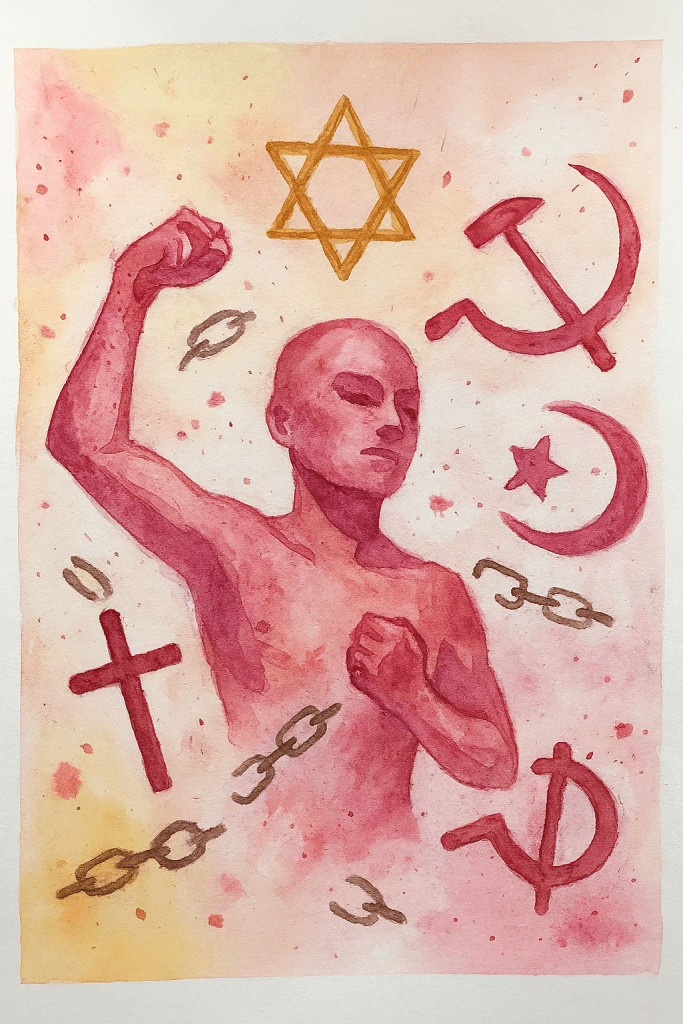
Religion need not be a creed one defends or a ritual one performs. For some of us, it is the recognition of the bars we forge around our own minds—and the relentless devotion to dissolving them. Liberation becomes both the path and the sanctuary.
This isn’t about conversion, salvation, or belonging to any particular sect. It is about noticing the prison of belief itself. Every concept, every identity, every longing for certainty can become a gatekeeper denying entry to our own boundless nature.
Liberation demands a fierce honesty. It asks that we examine the illusions that hold our suffering in place, not as moral failings but as invitations to see through the lie of separation. The true heresy in this religion is clinging to what we think we know about ourselves, about others, about reality itself.
No priest is needed here. Authority resides in awareness, and awareness has no master. The teacher is the arising of life as it is—grief, joy, confusion, clarity. Each moment grants a new chance to recognize the play of experience without getting caught in it.
Liberation is not found by rejecting the world but by perceiving its emptiness and fullness simultaneously. Every object, thought, and sensation is free of substance even as it shines in unmistakable vividness. This paradox isn’t a puzzle to solve but a doorway to live through.
When liberation is the religion, love ceases to be a commandment and becomes the ground of being. Judgment collapses, not because everything is permitted, but because everything is understood as oneself. The compulsion to divide the sacred from the profane, the pure from the impure, loses its grip.
Such a path offers no final doctrine. It holds no promise of eternal reward. Yet it is more generous than any creed that trades truth for comfort. It is the faith of those willing to die before death—to watch every cherished certainty burn so that what cannot be burned may reveal itself.
Those who walk this path do so alone, yet never apart.
Morgan O. Smith
Get Your Free Copy of My Book, Bodhi in the Brain!





 Morgan O. Smith