The Dance of Suchness

Nonduality in Search of Itself

Nondual suchness, the ground of all being, appears as duality—not as a mistake, but as an exquisite unfolding of its nature. This dynamic play of form and formlessness is not a separation, but a movement within unity, a way for the infinite to experience itself through the finite. This paradox, where oneness expresses itself as multiplicity, invites profound contemplation.

Duality arises as the perceivable world of contrasts: light and shadow, self and other, birth and death. Yet, these distinctions are mere appearances, like waves on the ocean. Beneath them lies the seamless nondual reality, unmoving and eternal. Why, then, does suchness manifest itself in this manner?

The answer lies not in concepts but in direct experience. Suchness manifests as duality to embark on a journey of rediscovery. The world of form becomes a mirror in which the formless can witness itself. This is the essence of the human experience: a seeming separation that eventually dissolves into the realization that the observer and the observed, the seeker and the sought, are one.

This process is neither linear nor bound by time. It is an eternal play, where the unmanifest takes form and, through the constraints of duality, rediscovers its boundless nature. This unfolding is the essence of life itself—an ongoing revelation of unity within multiplicity.

The search for self is not a problem to be solved but a mystery to be embraced. Each moment offers an opportunity to dissolve the illusion of separation and recognize the timeless reality of suchness. The ordinary becomes extraordinary when seen through the lens of nonduality, where the play of duality is understood as a dance of wholeness seeking itself.

Recognizing this truth liberates the mind from its grasping and aversion. The journey of duality becomes an exploration, not a burden. Life, with all its joys and sorrows, becomes a sacred expression of the infinite exploring itself.

To awaken to this is to realize that the search itself was never necessary, for what was sought was always present, always whole. The seeker dissolves, leaving only the suchness that was always there—silent, infinite, complete.

Morgan O. Smith

Yinnergy Meditation, Spiritual Life Coaching & My Book, Bodhi in the Brain…Available Now!

https://linktr.ee/morganosmith

We Shine Brighter Than Light

In the quiet depths of existence, there lies a paradox that many struggle to reconcile. Darkness is often shunned, relegated to the shadows of our awareness, and misunderstood as something to escape or avoid. Yet, within this shadowed realm exists a profound luminosity, a radiance that surpasses even the most blinding light. It’s a subtle brilliance—silent, invisible, but undeniable for those who dare to look beyond the surface.

Darkness is not the absence of light but its origin. It is the womb that cradles potential, the fertile ground where all things come to be. Darkness envelops us with a kind of raw intimacy, inviting us to release attachments to form and identity. It is the space where ego dissolves, where judgments fade, and where we can finally meet ourselves without the filters we have spent lifetimes building. Here, in the stillness, a new kind of light emerges—a light that is not separate from the dark but intertwined, indistinguishable from it.

Consider that every act of creation begins within the void. The artist stares at a blank canvas, the writer faces a blank page, and the thinker sits with a blank mind. It is only by surrendering to the unknown, to the formless, that something profound can emerge. Darkness doesn’t just consume or diminish; it adds depth, layers, and meaning. It carves out spaces within us, allowing us to perceive dimensions of ourselves and the universe that we could never touch through brightness alone.

This radiant darkness reflects the essence of life itself. We are beings that expand and contract, that are filled and emptied in cycles. Every breath, every heartbeat, every experience is a reminder of this cosmic dance of giving and receiving, of adding to and taking away. When we stop resisting this rhythm, we find that what we once perceived as shadows are simply reminders of our potential, our uncharted depths.

To shine as darkness is not to reject light but to transcend the duality of light and dark altogether. It is to recognize that true illumination doesn’t come from escaping or vanquishing shadows but from integrating them. This process transforms our understanding, allowing us to embody a different kind of luminosity—a light that isn’t bound by external visibility but shines from an unshakable inner knowing.

We are both the night and the stars within it, shaping and reshaping ourselves continuously. As we embrace the shadows within, we awaken to a deeper reality, one where every facet of existence has its rightful place. This acceptance, this deep union with both light and dark, is what ultimately enables us to shine brighter than light itself.

Morgan O. Smith

Yinnergy Meditation, Spiritual Life Coaching & My Book, Bodhi in the Brain…Available Now!

https://linktr.ee/morganosmith

The Self and No-Self

Unraveling the Boundaries of Existence

If all that exists is what we call the Self, where does that leave us in understanding its true nature? The common impulse is to label, define, and separate — creating distinctions to grasp what cannot be fully grasped. But in contemplating the nature of the Self as the all-encompassing reality, we’re drawn into a profound paradox: if the Self is indeed everything, without any boundary, how can it even be considered a “Self”?

The word “Self” implies some form of individuation, a presence that stands distinct from others, yet here lies the core of the paradox. In the absence of an “other,” any idea of a distinct Self dissolves, leaving only the mystery of the No-Self.

For a Self to be recognizable as such, it would require something to stand apart from. But in the context of ultimate unity, where nothing exists outside or beyond, there is only what is — an undivided totality that transcends any dualistic notion of “Self” and “other.” This is where the very term “Self” falls away, as there can be no contrast, no relational identity. What we are left with is not a Self in any ordinary sense but rather pure awareness, the ground of being that defies description and categorization.

When looked at from this perspective, the idea of the Self takes on a radically different dimension. It becomes the No-Self, not in the sense of an absence but rather as an absolute presence that simply is. The No-Self, then, is not the lack of being but the absence of individualization within being itself. It invites us to move beyond personal identity and to experience consciousness as boundless and indivisible, an endless ocean with no separate waves.

In moving toward an experiential understanding of this paradox, the concept of “I” transforms. We begin to see that this “I” — the egoic self we identify with — is a localized point in the vast field of undivided awareness. What we call “myself” is, in reality, an expression within the infinite whole, a momentary manifestation of something that transcends all individuality.

Such an insight does not negate our individual lives or diminish the importance of each unique expression. Rather, it invites a shift in perception. It calls us to recognize that beneath our individuality lies a vastness, a timeless ground that is beyond any single label or limitation.

As we touch on this insight, we find that the paradox of Self and No-Self begins to dissolve. We see that they are not separate but interwoven, expressions of the same reality, which is beyond both. In embracing the No-Self, we open ourselves to a greater depth, where the boundaries of identity soften, and the beauty of unity comes alive in ways beyond conceptual thought.

Morgan O. Smith

Yinnergy Meditation, Spiritual Life Coaching & My Book, Bodhi in the Brain…Available Now!

https://linktr.ee/morganosmith

Beyond the Idea of God

Embracing the Infinite Beyond Belief

Humanity has long pursued an understanding of God, a relentless quest to define, capture, and shape the essence of the infinite. For many, the notion of God becomes a vessel for their ideals, values, and desires—a reflection of their deepest hopes and most profound fears. Yet, encountering God through the lens of belief alone is akin to gazing at the ocean through a narrow window. The grandeur of the infinite cannot be contained, constrained, or fully fathomed within the borders of our perceptions.

The paradox lies in this: everything is God, yet nothing conforms to the concepts we construct about it. Each moment, encounter, and experience pulses with the sacred, yet the mind reduces it to fit within its familiar narratives. In the end, our beliefs become the very walls that obscure the limitless nature of divinity.

God, in the truest sense, transcends every image, word, or definition. No single tradition or philosophy can exclusively claim this vastness. Imagine standing before an infinite horizon, extending endlessly in every direction. Our concepts—however profound—are mere markers on the path, helpful but limited in capturing the essence of all that is. Here lies a liberation beyond belief: recognizing that the Divine isn’t limited by human expectations or perceptions.

Embracing this understanding offers a profound sense of freedom and humility. It invites us to move beyond belief, beyond the comfort of definition, and into direct experience. Rather than confining God to what we think we know, we begin to open ourselves to a presence that defies all description, something we sense but cannot fully articulate. This is where genuine reverence arises, born not from knowledge but from an awe that silences the mind.

When we release the need to make God fit our ideas, we become conduits for something greater. Instead of seeking to define or own this presence, we surrender to it, allowing ourselves to be moved, shaped, and transformed. This surrender is not passive; it’s an active openness, a readiness to meet the Divine in the ordinary and extraordinary, in all that we perceive and beyond.

Perhaps the journey, then, is not one of reaching an ultimate understanding but of letting go—allowing ourselves to rest in the mystery and seeing how it transforms us. For God, as it turns out, may be far more than we ever imagined and is here to be discovered, not as an idea, but as the living pulse of everything we encounter.

Morgan O. Smith

Yinnergy Meditation, Spiritual Life Coaching & My Book, Bodhi in the Brain…Available Now!
https://linktr.ee/morganosmith

One Heartbeat…One Thousand Thoughts

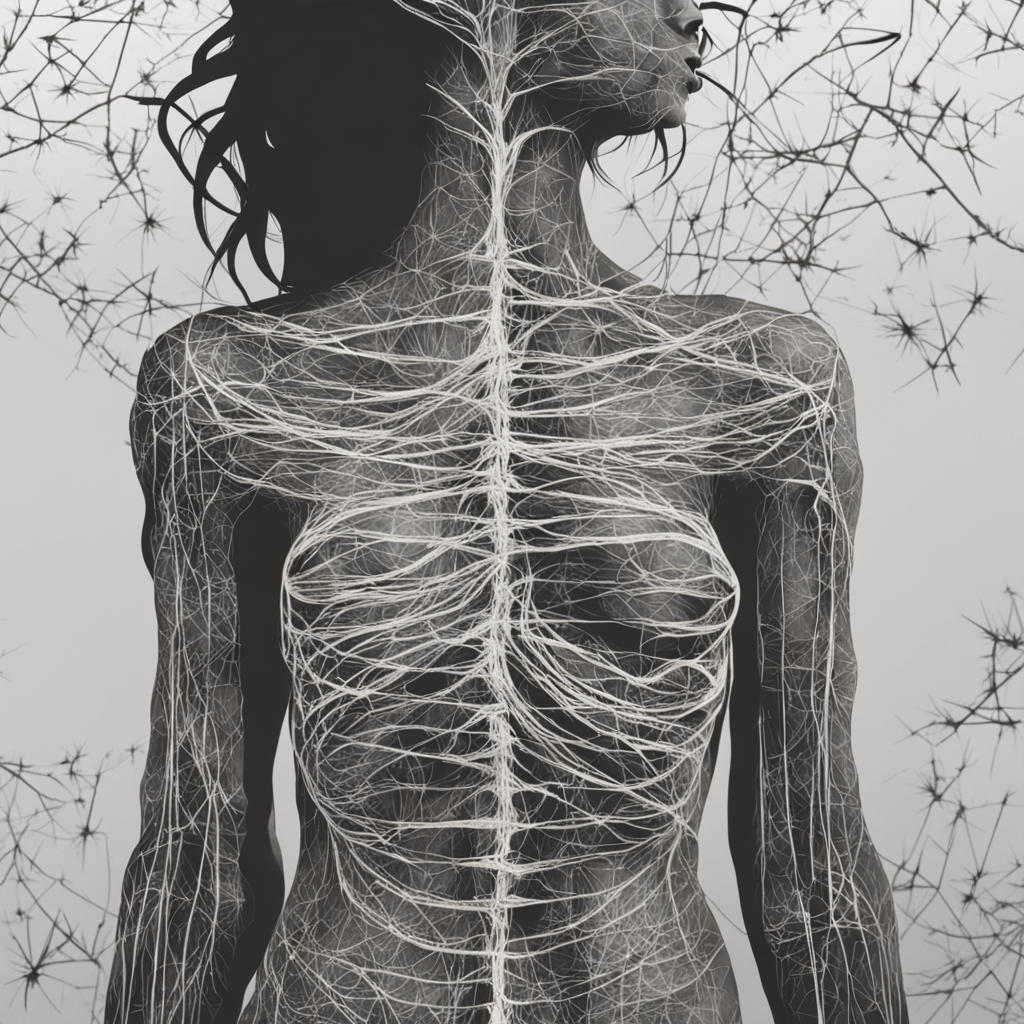
Consider the heartbeat: a steady, rhythmic pulse that carries the force of life through every cell of your being. Within each beat lies an unseen multitude, a vast array of thoughts—fleeting, overlapping, and often unnoticed. This single moment, this solitary beat contains within it the energy of a thousand thoughts, each connected to the next, creating the internal world we navigate daily.

Thoughts rush like a river, surging with desires, fears, memories, and plans. Yet, they are barely registered before the next wave crashes. The heartbeat, however, remains a constant companion, reminding us that a profound stillness exists beneath the surface of our scattered minds.

It is within this space—the pause between heartbeats—that clarity can emerge. As our awareness deepens, we recognize that the mind’s racing thoughts are but ripples on the ocean of our being. We are not the thoughts themselves but the consciousness that observes them. By aligning with the heartbeat rather than the noise of the mind, we begin to see beyond the clutter of mental activity, into the spacious awareness where thoughts dissolve and presence shines.

A single heartbeat holds the potential for transformation, for within that beat is the opportunity to disengage from the frantic movement of thought and return to the grounded essence of who we are. Thought is not the enemy, but its sheer volume often drowns out the wisdom that whispers between the beats.

This shift, from identifying with thought to residing in awareness, is subtle but profound. It reveals that while a thousand thoughts may pass through our minds, they are transient. The heartbeat, however, is the rhythm of life itself, a steady pulse guiding us toward presence. Here lies a truth often overlooked: life happens not in the storm of thoughts, but in the quiet between them.

The next time your mind feels overwhelmed, listen to your heartbeat. Allow yourself to rest in the awareness that arises in its rhythm. Watch as the thousand thoughts lose their hold, and the simplicity of being takes centre stage. This is the essence of spiritual awakening—a return to the heart, where a thousand thoughts collapse into one still, eternal presence.

Morgan O. Smith

Yinnergy Meditation, Spiritual Life Coaching & My Book, Bodhi in the Brain…Available Now!
https://linktr.ee/morganosmith

Beyond Illusion

Discovering the Space Between

The mind creates identities and builds a sense of self out of thoughts, emotions, and past experiences. These constructs shape beliefs around who you think you are and who you think you aren’t. This entire narrative, though compelling, is merely a distortion. It presents itself as reality but, in truth, is nothing more than an intricate mental creation. We become confined by these polarities, oscillating between two extremes—what we accept and what we reject about ourselves.

These boundaries, however, do not define the core of who you are. The sense of self emerges as a reflection against what we perceive as the ‘other.’ You’re not merely the collection of traits you cherish, nor are you the shadow aspects you struggle to suppress. By engaging with either, you remain caught in a dualistic view that blinds you to your deeper essence.

The challenge, then, is to neither grasp onto one identity nor to strive to become its opposite, but to look at the liminal space between. This uncharted territory holds the key to your True Self. Neither glorified nor condemned, this space is untouched by labels. It eludes all attempts to be defined. When you gaze into that emptiness, you come face-to-face with your origin—the point where being meets non-being, and you witness the dissolution of the false dichotomy between ‘I am this’ and ‘I am not that.’

Finding this space requires surrendering the tendency to categorize. Allow awareness to rest on the edges of thought, where opposites fade into one another. This subtle recognition can shift perception, making you aware of a silent presence that underlies all identifications. It’s a sense of being that defies expression yet is undeniably real. Here, you aren’t bound by limitations, nor are you an idealized version of yourself.

This presence is what mystics have pointed to throughout the ages—a place beyond words and mental constructs. It’s here that the True Self emerges, not as a separate entity, but as the unconditioned awareness that holds both the ‘you’ and the ‘not you.’ Let this realization transform the way you see yourself and others, dissolving barriers until all that remains is a boundless, indivisible field of consciousness.

Morgan O. Smith

Yinnergy Meditation, Spiritual Life Coaching & My Book, Bodhi in the Brain…Available Now!

https://linktr.ee/morganosmith

The Paradox of Divine Knowledge

Beyond the Mind’s Perception

God knows nothing yet knows everything—a contradiction that stands as a perfect reflection of the nature of absolute reality. This enigmatic statement, like a koan, invites deeper contemplation beyond linear thinking. It points to a knowledge that defies conceptual grasp, a knowing that cannot be possessed by the mind.

To say God knows everything implies omniscience—a perfect awareness of all events, possibilities, and outcomes within the realm of manifestation. Yet, to say God knows nothing points to an awareness that transcends any form of subject-object relationship. Here, knowledge is not fragmented into parts. Rather, it exists as a pure, nondual state of being.

This paradox can only be resolved through a radical shift in perception. From the mind’s perspective, knowing implies a knower and a known—a separation that inherently breeds confusion. The clearer this division becomes, the more apparent the contradiction. But from the perspective of absolute awareness, there is no such division. Knowing and not knowing collapse into a single essence, a seamless flow where everything is already perfectly held without the need for grasping or possessing.

The confusion arises only when one attempts to use a dualistic framework to analyze a nondual reality. For those entrenched in rational thought, this statement appears illogical. Yet, the crystal clarity of this confusion emerges when seen through the lens of direct experience. God’s knowing is not intellectual; it is a luminous stillness that enfolds every possible expression of existence without ever defining itself through those expressions.

What, then, does it mean for God to “know nothing”? It signifies the emptiness of all forms, a state where no thought, label, or concept can fully capture what is. It is a knowing that is the essence of all things yet free from the content of knowing itself. There are no judgments, no biases, no preferences—just a silent, omnipresent witnessing. The awareness is so pure that it does not even recognize itself as “knowing” in the conventional sense. It is like the sky holding all clouds yet remaining untouched by their presence or absence.

This is the clarity that lies within the paradox: God knows everything because God is everything. Simultaneously, God knows nothing because God is not bound by the limitations of any particular knowledge. The confusion dissolves when we release the need to categorize and understand reality through fixed structures.

To experience this confusion as crystal clear requires embracing the humility of not knowing. When all concepts, beliefs, and labels are dropped, what remains is a pure awareness that is as empty as it is full. The mind may struggle to grasp this state, but the heart recognizes it intuitively. It is a state of grace, a luminous unknowing that is beyond the reach of both thought and language.

Paradox is not a flaw in understanding; it is the gateway to freedom. It invites one to look beyond the confines of intellect and rest in a knowing that cannot be spoken. This is the ultimate clarity: a confusion that reveals the divine nature of all that is.

Morgan O. Smith

Yinnergy Meditation, Spiritual Life Coaching & My Book, Bodhi in the Brain…Available Now!

https://linktr.ee/morganosmith

The Illusion of Maya

Seeing Beyond the Show

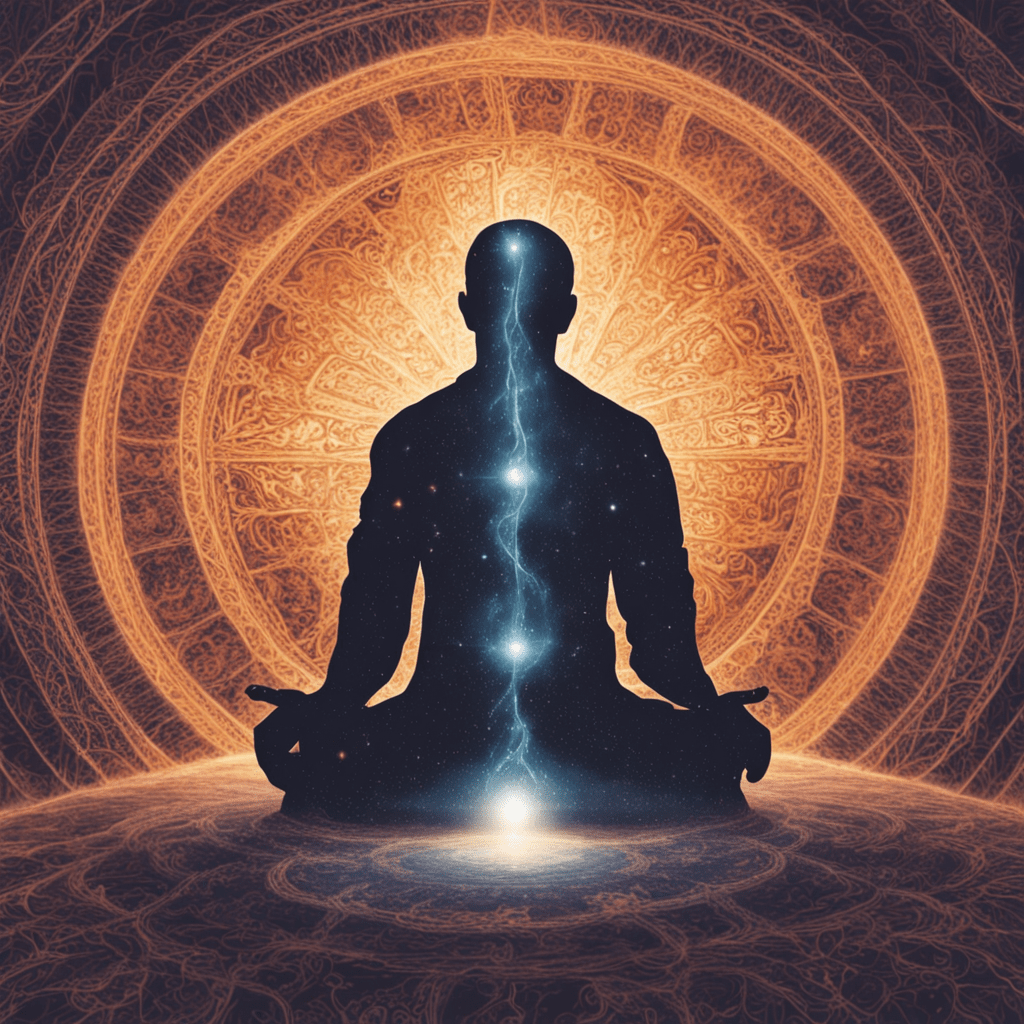
Everything we perceive—the people, places, and events around us—is, at its core, a show. This is not a dismissal of life’s value but an invitation to explore its deeper essence. What we call “reality” is Maya, a veil of illusion that covers the truth. Maya is the great play of forms, the endless dance of opposites, and the theatre of duality where all things appear separate.

Yet, behind the scenes of this elaborate show lies something far more profound. Maya is the stage, but consciousness is the ever-present witness. The mind, with all its perceptions, attachments, and desires, keeps us captivated by the performance. We become so engrossed in the unfolding drama of our lives that we forget we are not the characters, but the awareness watching it all unfold.

Understanding Maya isn’t about rejecting the world or treating life as insignificant. Rather, it’s about seeing through the illusion. The key is not to escape Maya but to recognize it for what it is—a fleeting projection of the eternal. Once the illusion is seen for what it truly is, everything shifts. Life no longer feels like a weight to carry or a puzzle to solve. It becomes a dance, a cosmic play where each movement, no matter how dramatic, is infused with a deeper stillness.

Consider the waves of the ocean. They rise and fall, each one unique, yet they are never separate from the ocean itself. The wave may take shape, crash, and disappear, but the ocean remains constant. So, too, with Maya—forms come and go, experiences rise and fall, but consciousness remains unchanging, ever-present, and infinite.

To see beyond the illusion of Maya is to live with a lightness of being, recognizing that while everything is part of the grand show, none of it defines the true self. The self that watches, silently aware, is the only constant. When this is realized, life becomes a paradoxical blend of deep engagement and effortless detachment. You play your role in the world, knowing full well that it is all a divine drama, yet you remain untouched by its outcomes.

Maya invites us to enjoy the show while remembering we are not bound by it. Behind every illusion lies the vastness of truth, waiting to be uncovered by the silent observer within.

Morgan O. Smith

Yinnergy Meditation, Spiritual Life Coaching & My Book, Bodhi in the Brain…Available Now!
https://linktr.ee/morganosmith

Expressions of Unity

How do we reconcile the existence of human atrocities and natural disasters within a spiritual framework that emphasizes oneness and unity? This question often challenges those who begin exploring nondual perspectives, where all phenomena, no matter how destructive or painful, are viewed as interconnected expressions of the same singular source. The nondual approach offers a radical shift in perception, one that dissolves the illusion of separation between events that we label as “good” or “bad” and invites us to see these occurrences as part of the grand play of existence.

Violent actions and harmful behaviours in the world, when viewed from a dualistic standpoint, can easily be categorized as manifestations of evil or wrongdoing. However, nonduality reveals that such acts emerge not from some inherent brokenness or malevolence, but from ignorance—a misunderstanding of our shared unity. This ignorance fosters the illusion of separateness, leading to behaviours rooted in fear, hatred, or selfishness. But when we awaken to the truth that there is no real division between self and other, the impulse to harm dissolves. The violence that once seemed so senseless is recognized as a consequence of an illusion. Healing, therefore, does not come through retribution but through awakening to the truth of our interconnectedness.

Natural disasters, often seen as chaotic or punishing forces, are similarly reframed. Rather than being viewed as random or cruel acts of nature, these events reflect the cyclical nature of the cosmos, expressions of impermanence and transformation. The suffering caused by such disasters, while profound, stems from attachment to the belief in permanence, the illusion that we can hold onto fixed forms in a world of constant flux. Through the nondual lens, even the most devastating natural occurrences are understood as part of the rhythmic dance of life, reminders of the ephemeral nature of all things.

What arises from this perspective is a deep acceptance of life’s paradoxes. The seeming contradiction of living in a world filled with both beauty and devastation, joy and suffering, dissolves when we recognize that all such experiences are expressions of a singular, undivided reality. From this space of understanding, we cultivate compassion, not through an emotional reaction to suffering, but from the profound realization that all beings and events arise from the same source. Suffering, then, becomes not an ultimate truth, but a temporary appearance within the endless ocean of consciousness.

Embracing nonduality allows us to witness both atrocities and natural disasters with equanimity, to understand them not as aberrations or misfortunes, but as fleeting expressions of a larger cosmic unfolding. This does not imply passivity or indifference. Instead, it cultivates a deeper capacity for compassionate action, arising from the knowledge that we are not separate from the suffering we seek to alleviate. In this space, we move beyond the limited notions of blame or punishment, and towards a profound embrace of the totality of existence, where all things are seen as interconnected, transient waves within the boundless ocean of being.

Morgan O. Smith

Yinnergy Meditation, Spiritual Life Coaching & My Book, Bodhi in the Brain…Available Now!

https://linktr.ee/morganosmith

Beyond the Multiverse

Exploring the Infinite Horizon of the Omniverse

When contemplating the nature of reality, it’s tempting to consider our universe as the ultimate expanse. However, the idea of an omniverse beckons us to consider a reality that transcends even the multiverse—a boundless realm where all possibilities converge, diverge, and coexist simultaneously.

The concept of an omniverse challenges the limits of our understanding. It’s not merely an endless string of universes scattered through the void but the totality of all that exists and can exist, both seen and unseen. It holds within it every possible universe, each with its distinct laws of physics, timelines, and outcomes. Yet, this is not just about space and time. It is about a profound realization that within every layer of existence lies a deeper potentiality—one that hints at the limitless creative force behind all manifestation.

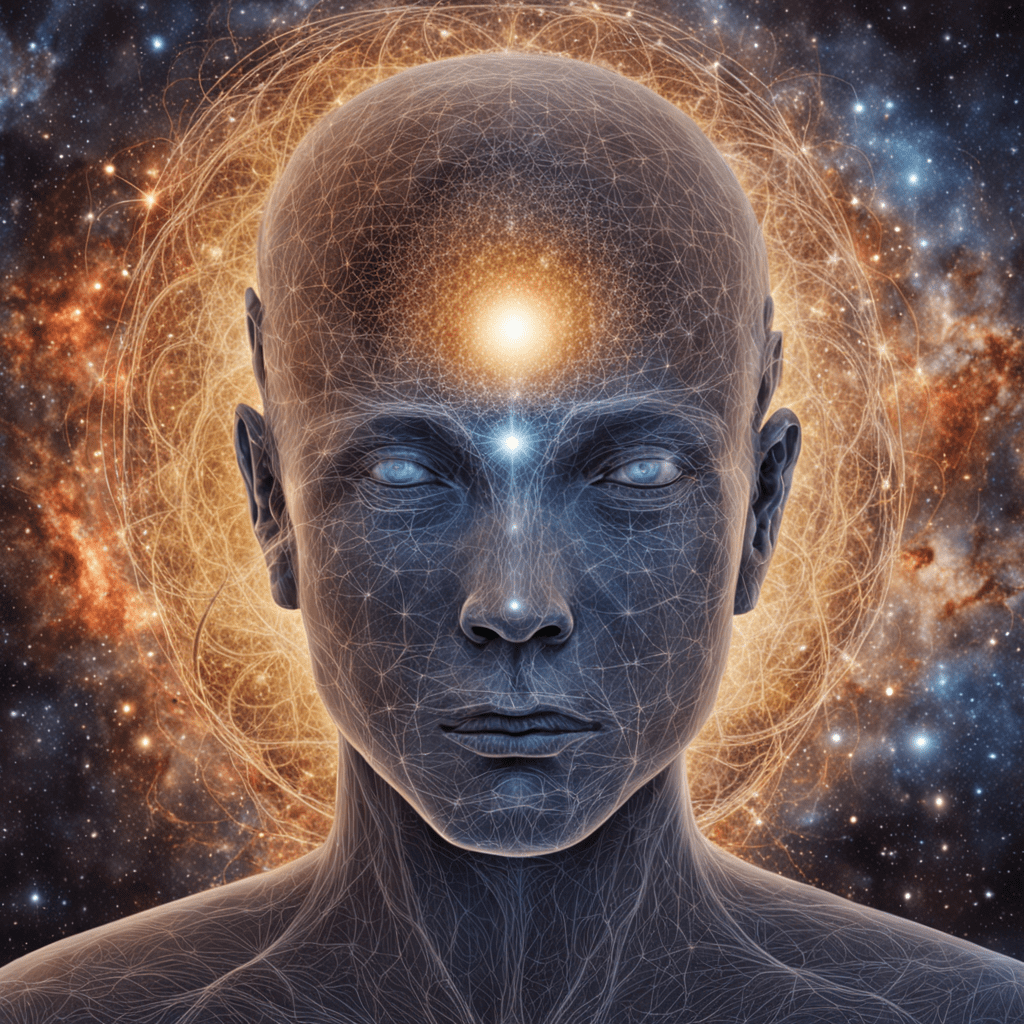
Many seek to explore what lies beyond the edges of the known, hoping to unravel mysteries of parallel universes or alternate dimensions. Yet, when contemplating the omniverse, we touch on something far more profound: the convergence of all realities. Every possible configuration of existence is contained here, but what holds it all together? Consciousness. It’s consciousness that underlies every universe, dimension, and realm within the omniverse.

Imagine for a moment that every choice ever made, every potential future, every conceivable world, is occurring somewhere within this greater expanse. But who or what perceives all these realities? It is not a separate entity standing outside the omniverse, observing from a distance. The observer is woven into the fabric of all things. Consciousness, that which is aware of existence itself, is both the creator and the experiencer of the omniverse.

This realization invites us to consider the omniverse as not just an external system but as an integral part of the self. Every potentiality exists because consciousness dreams it so. You are not separate from this boundless expanse—you are one with it. Your awareness stretches far beyond the physical body, touching the very edges of this infinite creation.

What does it mean to embrace the omniverse in daily life? It means expanding beyond the limited perspective of individual identity and recognizing your role as both creator and witness. It means understanding that every experience, no matter how small, ripples through an unimaginable expanse of reality. Each moment contains the seeds of all potentiality, an invitation to awaken to your true nature.

As we stand at the edge of what we know, poised to leap into the unknown, the omniverse is a reminder that the true nature of reality cannot be confined to any one perspective. It is an open invitation to dive deeper into the infinite and discover that consciousness itself is the ultimate ground of all being.

Morgan O. Smith

Yinnergy Meditation, Spiritual Life Coaching & My Book, Bodhi in the Brain…Available Now!
https://linktr.ee/morganosmith