The Uncharted Horizons Beyond Enlightenment

In the profound silence that follows the cacophony of seeking, what remains when the concept of spiritual enlightenment dissipates like mist at the rise of the sun? We often perceive enlightenment as the ultimate destination, a summit where the flag of our deepest self-inquiry plants its roots. But perhaps this pinnacle is not an end but a gateway, an opening to a landscape more expansive than the binary of enlightened or unenlightened.

Beyond enlightenment, the journey does not cease; it transforms. The seeker, who once scaled the mountain of self, now realizes that the mountain itself is but a wave in an ocean of consciousness. Here, in the boundless vista beyond enlightenment, the distinction between the seeker and the sought blurs and vanishes. The notion of spiritual progress, which implies time and measurement, becomes irrelevant in the face of a timeless being.

This post-enlightenment terrain is not about acquiring more spiritual knowledge or experiencing more profound states of meditation. It is a surrender to the simplicity of presence, where each moment is complete in itself, untethered from the ambition of reaching another. It’s an unlearning of the spiritual concepts that once seemed indispensable.

What awaits is a life lived in the fullness of emptiness, a paradoxical state where the wisdom of uncertainty is embraced. This is the wisdom that knows itself beyond forms and practices, identities and histories. In this realm, the very questions that once fueled our inner quests lose their grip: “Who am I?” becomes an echo without a source, a playful dance of consciousness without a questioner or an answer.

Here, the individual soul’s melody harmonizes with the universal symphony, and action arises from stillness, not strategy. The duality of self and other, spirit and matter, sacred and mundane, no longer confines. Everything is seen as an expression of the divine, and the divine is seen in everything.

The concept of “beyond enlightenment” invites us to explore a state where life is lived with an openness that requires no label, no status, and no fixed point of reference. It is a call to live deeply rooted in the mystery, to become the living expression of the question mark rather than the period at the end of a sentence.

In this sacred space beyond maps, we are each on an uncharted journey, a unique expression of life that never was before and never will be again. It is in this boundless realm that the enlightened mind, now free from the pursuit of enlightenment, can truly engage with the full spectrum of existence.

This is not a territory of more or better, but of true freedom—a freedom that comes not from reaching a destination, but from the realization that there was never anywhere to reach in the first place.

Morgan O.  Smith

Yinnergy Meditation & My Book, Bodhi in the Brain…Available Now!

https://linktr.ee/morganosmith

Beyond Enlightenment

Navigating the Infinite Landscape of Wisdom

In the perennial quest for spiritual enlightenment, seekers envision it as the ultimate destination — a summit of understanding where peace and clarity reign supreme. Yet, what truly unfolds after this profound awakening is seldom addressed. Enlightenment, rather than being a finality, marks the commencement of a deeper journey into the essence of existence.

When one crosses the threshold of enlightenment, the transformation is both silent and explosive. There’s a dismantling of the ego’s grand fortress, allowing the individual to merge with the boundlessness of the universe. This fusion doesn’t eradicate the self but rather expands it to encompass all that is. Here, in this expanse, the enlightened mind finds not a static state of bliss, but a dynamic canvas where the play of life continues.

Post-enlightenment existence is characterized by a paradoxical awareness: the enlightened being sees the dance of creation with all its suffering and joy, yet remains untouched by it. They are the serene center of the storm, the silent witness who understands that all forms are transient expressions of the formless. Compassion becomes their natural state, not as a cultivated virtue but as an innate response to the interconnectedness of all life.

Moreover, this heightened state does not absolve one of responsibility or action. Instead, it calls for a more profound engagement with the world. The enlightened beings act, but their actions are no longer driven by personal desire. They become instruments through which the universe acts, their every move aligned with the greater harmony of existence. This embodies true freedom—action without the chains of attachment or aversion.

As the enlightened navigate their existence, they also grapple with the paradox of conveying the inexpressible. They stand as beacons, sharing wisdom not through dogma but through the silent power of their presence and the grace of their actions. Their words, when spoken, carry the weight of lived truth, offering signposts for those on the path.

Yet, the challenge remains for society to integrate the insights of these awakened souls. The true test of post-enlightenment is not in the transcendence of the individual but in the transformation of the collective. Can the clarity and peace of the enlightened consciousness ripple through the fabric of society, infusing our institutions, relationships, and daily lives with its essence?

In conclusion, spiritual enlightenment is not the end, but a rebirth, an invitation to embrace the infinite dance of existence with eyes wide open. It is here, beyond the illusory summit, that the real journey unfolds — a journey without distance, taking place in the eternal now, where each moment holds the potential for boundless wisdom and an ever-deepening love for all that is.

Morgan O.  Smith

Yinnergy Meditation & My Book, Bodhi in the Brain…Available Now!

https://linktr.ee/morganosmith

The Unfathomable Brahman

Exploring the Indivisible Reality from Multiple Perspectives

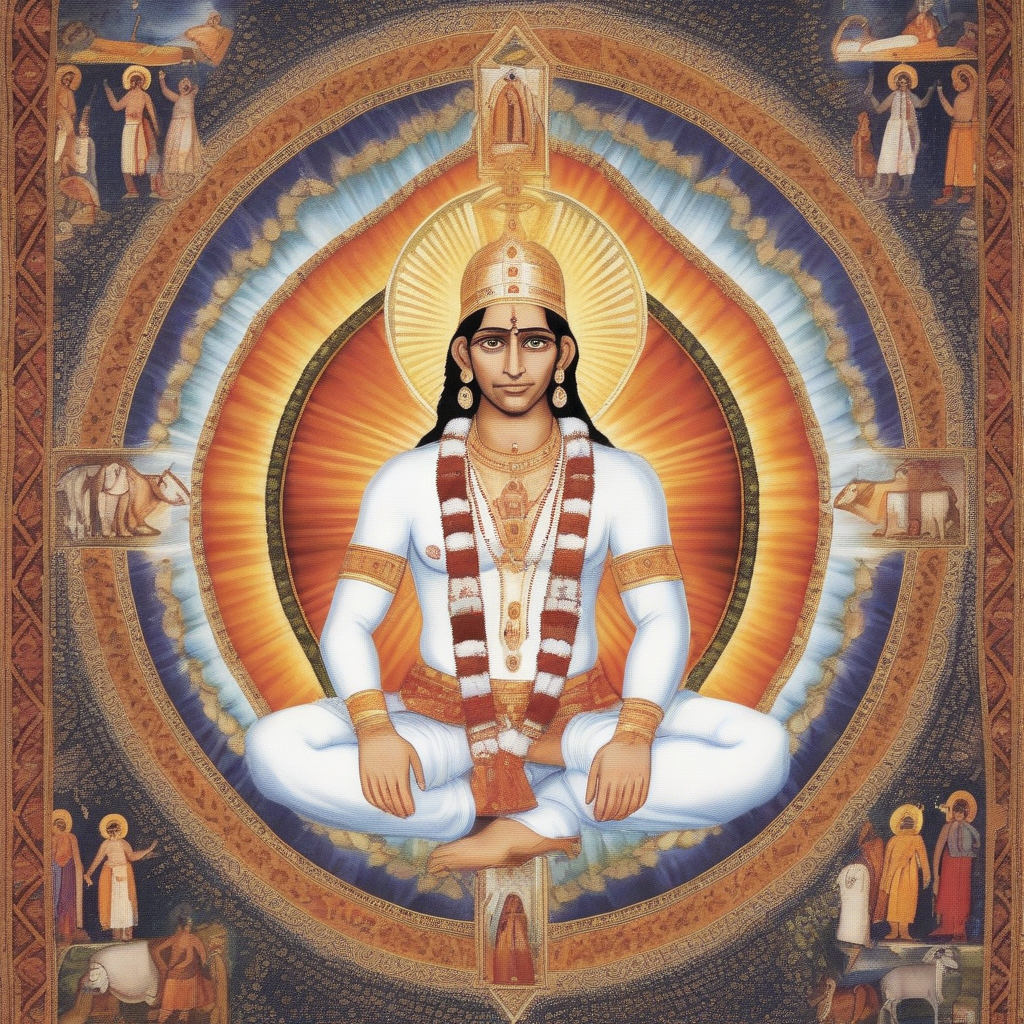
The quest to understand Brahman is a journey into the heart of existence itself, a pursuit that has intrigued philosophers, sages, and seekers for millennia. In the vast expanse of Hindu philosophy, Brahman is the ultimate reality, the fabric of all that exists and beyond. It is both immanent and transcendent, the core of our being and the cosmos. This exploration of Brahman from various perspectives—gross, subtle, causal, and nondual—invites us to expand our minds beyond the limits of ordinary perception.

**From the Gross Perspective: Brahman as the World**


When we look at Brahman from the gross perspective, we see the universe in all its material splendour. Here, Brahman is not an abstract concept but the physical universe that we interact with through our senses. It is the mountains, rivers, stars, and galaxies; the dance of creation and destruction visible to the naked eye. This manifestation is known as Saguna Brahman, the form with qualities, where the Divine is seen with attributes and forms, engaged in the act of creation.

**From the Subtle Perspective: Brahman as Consciousness**


Venture deeper, and we encounter the subtle perspective. Here, Brahman is the essence of consciousness that animates life. This is not the consciousness that fluctuates with our thoughts and feelings, but the pure awareness that observes, untouched and unchanging. This subtle Brahman also referred to as Nirguna Brahman, is without qualities, where God is not limited by any attributes. It is the silent witness to the play of the universe, the inner light that illuminates our experiences.

**From the Causal Perspective: Brahman as the Source**

Moving into the causal perspective, we touch on the very source of existence. Brahman here is the unseen cause behind everything—the seed from which the tree of the universe grows. This aspect of Brahman is deeply mysterious, for it is the origin of time, space, and causality itself. It is Avidya, ignorance, not in the sense of lack of knowledge, but as the primal forgetfulness that makes us perceive duality in the nondual.

**From the Nondual Perspective: Brahman as the One without a Second**


Finally, from the nondual perspective, Brahman is realized as the one without a second—Advaita. It is not a deity, not an entity, not even a ‘thing’ that can be comprehended by the intellect. It is the underlying oneness that pervades all dualities, where the seeker and the sought merge. In this view, the individual self (Atman) and the universal self (Brahman) are the same. All distinctions between creator and creation dissolve, revealing that there is nothing but Brahman—pure existence, consciousness, and bliss (Sat-Chit-Ananda).

This journey through the perspectives of Brahman reflects the layered depths of our existence. From the tangible reality of our day-to-day lives to the deepest spiritual realization, Brahman remains the unchanging truth. Each perspective is a step closer to the ultimate truth, leading us from the outward expressions of divinity to the profound inner revelation that we are, in essence, the infinite Brahman.

To understand Brahman is to expand our awareness across the spectrum of existence. The gross perspective roots us in our environment, the subtle unfolds the inner cosmos, the causal leads us to the primal source, and the nondual reveals our true infinite nature. In contemplating these perspectives, we may find that the journey to understand Brahman is not a journey outward but a profound voyage within, to the very core of who we are.

Morgan O.  Smith

Yinnergy Meditation & My Book, Bodhi in the Brain…Available Now!
https://linktr.ee/morganosmith

Brahman Through a Christian Lens

Exploring the Divine Tapestry

In the lush gardens of spiritual thought, there exist concepts that, at first glance, may appear to belong to entirely different landscapes. Yet, upon closer examination, one finds threads that weave them together into a grand tapestry of the divine. Such is the case when one seeks to understand the Hindu concept of Brahman from a Christian perspective.

At the heart of Hindu philosophy lies Brahman, the ultimate reality, the absolute existence, knowledge, and bliss. Brahman is not merely a god among many but the ineffable ground of all being, beyond form, beyond limits, the essence of everything that was, is or will be. It is an ocean of consciousness, infinite and eternal, from which the universe springs forth like waves from a boundless sea.

How, then, can a Christian approach this concept? Christianity speaks of God in terms of a personal deity, a Trinity of Father, Son, and Holy Spirit, yet also affirms that God is beyond all comprehension, omnipresent, and the source of all that exists. The Christian mystical tradition, with its contemplative gaze, has long sought union with the divine, echoing the Hindu pursuit of realizing one’s oneness with Brahman.

In the Christian mystical experience, one might glimpse parallels to the understanding of Brahman. The Apostle Paul, in his letter to the Colossians, speaks of Christ as the one “in whom all things hold together.” This echoes the sense of Brahman as the underlying reality that upholds the universe. Theologians like St. Augustine have described God as being closer to us than we are to ourselves, resonating with the Hindu notion of Atman, the innermost self, ultimately one with Brahman.

Furthermore, the Christian concept of agape, or self-giving love, can be seen as a reflection of the blissful aspect of Brahman. In creation, God pours out love, which might be understood as a movement from the fullness of divine bliss. The Incarnation, the event of God becoming human in the person of Jesus, is a profound expression of this divine self-outpouring, analogous to the way Brahman manifests as the universe.

Yet, there are also profound differences. Christianity insists on a personal relationship with God, while the realization of Brahman is often described in impersonal terms. The Christian God enters into history and suffers with humanity, whereas Brahman is often seen as beyond all duality and unaffected by the play of cosmic forces.

In exploring Brahman from a Christian standpoint, we tread a path of mystery and paradox, where words falter and concepts blur. It is a journey that calls for humility, for what we encounter is the divine mystery, which, whether named Brahman or God, ultimately eludes all attempts at definition.

As we reflect on Brahman through a Christian lens, we are invited not to a debate but to a dance of understanding, where diverse beliefs can enrich each other. It is a reminder that our grasp of the Infinite is always incomplete and that perhaps, in the silent spaces between our words and concepts, there might be more that unites than divides.

Morgan O.  Smith

Yinnergy Meditation & My Book, Bodhi in the Brain…Available Now!

https://linktr.ee/morganosmith

Mirrors of the Self

Seeing the Divine in All

In the vast expanse of existence, each entity and every moment is a reflective surface, giving us a glimpse of our deepest selves. When we peer into the world, what we encounter is not just matter arranged in space but a mosaic of mirrors, each offering a unique reflection of who we are. The idea that everything we perceive is a reflection of our face is not just a poetic sentiment but a profound philosophical proposition that invites introspection about the nature of self and the universe.

The reflections we see are not literal but abstract, distilling our essence in the myriad forms and phenomena around us. This abstraction is where the beauty of perception lies; it is a canvas where the mind can project its inner workings—its hopes, fears, and dreams. The world outside becomes a screen for the drama of the self to unfold, the grand play of consciousness where every actor wears a mask that resembles something within us.

In this grand reflection, if we are to see the face of God, then it must be understood that this divine visage is not an entity separate from us but interwoven into our being. The divine reflection is the totality of the cosmos itself, a unity where every face is indeed an aspect of a greater countenance. If we are made in the image of the divine, as many traditions suggest, then it follows that the divine is also made in the countless images reflected to us.

Every interaction, every glance at nature, every piece of art, and every human invention is a facet of this divine reflection. We are constantly in dialogue with the divine through the medium of our experiences. In recognizing this, we might come to treat each moment with reverence, understanding that in the act of observation, we are participating in a sacred exchange.

As we walk through the world, let us consider that the beauty, the ugliness, the sublime, and the mundane are all part of the same tapestry, woven with threads of the divine. It is not just in the extraordinary that we can glimpse the face of God, but in the ordinary, the overlooked, and the understated. By recognizing the divine reflections in all that we encounter, we open ourselves to a more profound sense of connection and purpose.

In the end, the philosophy that everything is a reflection of our face does not isolate us in solipsism but connects us to a greater whole. It offers a vision of unity, where the self is not an isolated entity but a vibrant echo of the universe, a reflection of the divine face in the mirror of existence.

Morgan O.  Smith

Yinnergy Meditation & My Book, Bodhi in the Brain…Available Now!

https://linktr.ee/morganosmith

The Infinite Self

Time Travel and the Nondualistic Journey Within

In the silence that stretches between thoughts, in the space that houses the cosmos, there exists a philosophy that stretches the bounds of conventional understanding—nondualism. It’s an ancient perspective that posits a simple, yet profound truth: all of existence, the myriad forms and vacuous voids, the dance of particles and the march of time, are expressions of a singular, unified reality. You are not a mere participant in the universe; you are the universe itself, experiencing itself endlessly.

Consider the concept of time travel, a staple of science fiction and a tantalizing possibility for the human imagination. Time, from a nondual standpoint, is not a river that flows from past to future, nor a serpent that eats its tail in an eternal loop. It is a dimension of existence that is inseparable from you. You are time, as much as you are matter, energy, thought, and consciousness. If you could traverse the temporal plane, to cavort in the gardens of Babylon or witness the birth of a star eons from now, would you be visiting foreign lands or would you be exploring the contours of your boundless self?

By recognizing time as an aspect of the self, the idea of time travel takes on a new dimension. It becomes a metaphor for self-exploration and self-understanding. Each journey back to the past can be viewed as an introspective dive into our collective memory, our shared history, and the unconscious mind. Moving forward, then, is an imaginative leap into potential futures, the realm of dreams, hopes, and the unmanifested aspects of the self.

This perspective invites a radical shift in consciousness. The anxieties of the past and the uncertainties of the future are not separate from the present moment; they are all-encompassing and present within the now that is perpetually experienced. Every moment is an act of creation, a reconfiguration of the universe, a reinterpretation of the self. Through the lens of nondualism, time travel becomes a poetic expression of the human desire to know the self fully, to experience all facets of being, and to embrace the ultimate unity of existence.

If we can see ourselves in the stars and the stones, in the ebbs and flows of civilizations and the silent growth of a seedling, then perhaps the ultimate journey does not require us to break the physical bonds of time but to transcend the psychological barriers that prevent us from seeing the unity of all things. In doing so, we might find that every step we take, every choice we make, and every path we walk or leave untrodden, is an exploration of the infinite self.

As you ponder this unity, this grand tapestry of existence where you are both the weaver and the thread, the observer and the observed, consider what destinations you might seek within the boundless realms of your being. What would you discover in the recesses of millennia past, and what futures could you paint with the brush of your current intentions and actions? The voyage of time is but a journey within, and every moment is a destination waiting to be understood.

Morgan O.  Smith

Yinnergy Meditation & My Book, Bodhi in the Brain…Available Now!

https://linktr.ee/morganosmith

To Reach Beyond the Luminous

A Contemplation on Enlightenment and Distractions Along the Path

In our intrinsic pursuit of enlightenment, myriad entities, experiences, and spiritual phenomena often unveil themselves, presenting a paradoxical tapestry where understanding and distraction intertwine. When such entities or guides emerge along our path, they necessitate neither fixation nor rejection. For if they come, let them come, and if they decide to part, let them go. They are merely visitors, not permanent dwellers in our spiritual quest.

The venerable aphorism, “If you meet the Buddha on the road, kill him,” underscores the necessity of liberating ourselves from attachments and anticipated experiences in our spiritual pursuit. For, anything that becomes an object, a tangible or conceptual entity in our path, is not the ultimate truth. Therein, even the luminous light, an experience that many consider synonymous with spiritual ascension, is merely an objective reality, one that still exists within the domain of duality and separation.

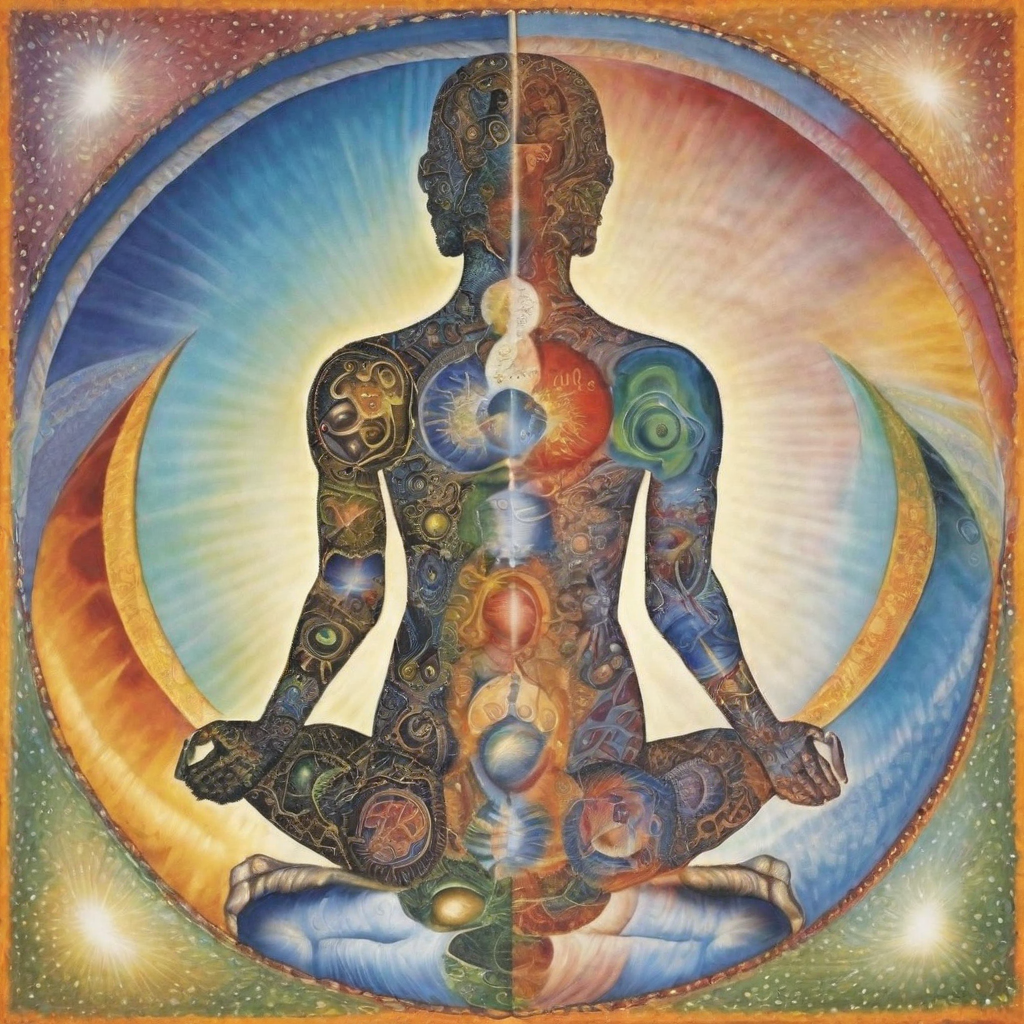
The spiritual path unfurls itself as a journey where psychic powers, or Siddhis, may develop. If they do, they are not to be clung to. Enlightenment is neither a culmination nor an accumulation of powers or experiences, but a transcendence that paradoxically both surpasses yet includes all phenomena. It is an unceasing journey toward non-duality, where there is no seer, no seen, and no seeing – only a unified, unblemished consciousness that permeates all.

Phenomena, be they seemingly mundane or extraordinarily mystical, are to be acknowledged, witnessed, and permitted to drift away without attachment or aversion. They are waves on the surface of the ocean of consciousness, significant in their momentary existence, yet ultimately rejoining the vast, undulating expanse from whence they came.

Our ego becomes the most subtle, pervasive, and potentially pernicious impediment in this spiritual journey. It distorts, distracts, and sometimes destructs, coaxing us into traps that appear as enlightening experiences. The seductive allure of these experiences has ensnared many seekers, captivating them in a web that is woven from the threads of spiritual materialism.

The aspiration is not to annihilate the senses but to transcend and include them, to experience them in their fullest, most vibrant expressions, and yet remain unbound by them. It is to dive deep into the very essence of existence until all dichotomies, dualities, and senses converge into a singular, unified experience where distinctions cease, and all that remains is the unbounded, immeasurable expanse of Being.

Hence, the spiritual path might be perceived not as an endeavour of attaining or achieving, but as a continuous unfolding of letting go, a perpetual surrender. For in this surrender, we do not become devoid or nihilistic, but rather, we open ourselves to the entirety of existence, unshielded and unbounded.

All is a dream within the mind of God, and you, the dreamer, are no distinct from the dream you conjure, for at the ultimate level of who and what you are, is even beyond the luminous, beyond objectivity. To witness without becoming witnessed, to experience without becoming experienced – this is the path to enlightenment, where letting go is the ultimate embrace.

Morgan O.  Smith

Yinnergy Meditation & My Book, Bodhi in the Brain…Available Now!
https://linktr.ee/morganosmith

The Unity of Being

When Heads, Shoulders, Knees, and Toes Merge into Oneness

The ancient wisdom embedded in children’s songs and games can sometimes surface in the most unexpected of philosophical realms. Take, for instance, the playful melody “Heads, Shoulders, Knees, and Toes.” When investigated through the lens of Nondual philosophy, it becomes a metaphor for a journey toward universal oneness and interconnectedness.

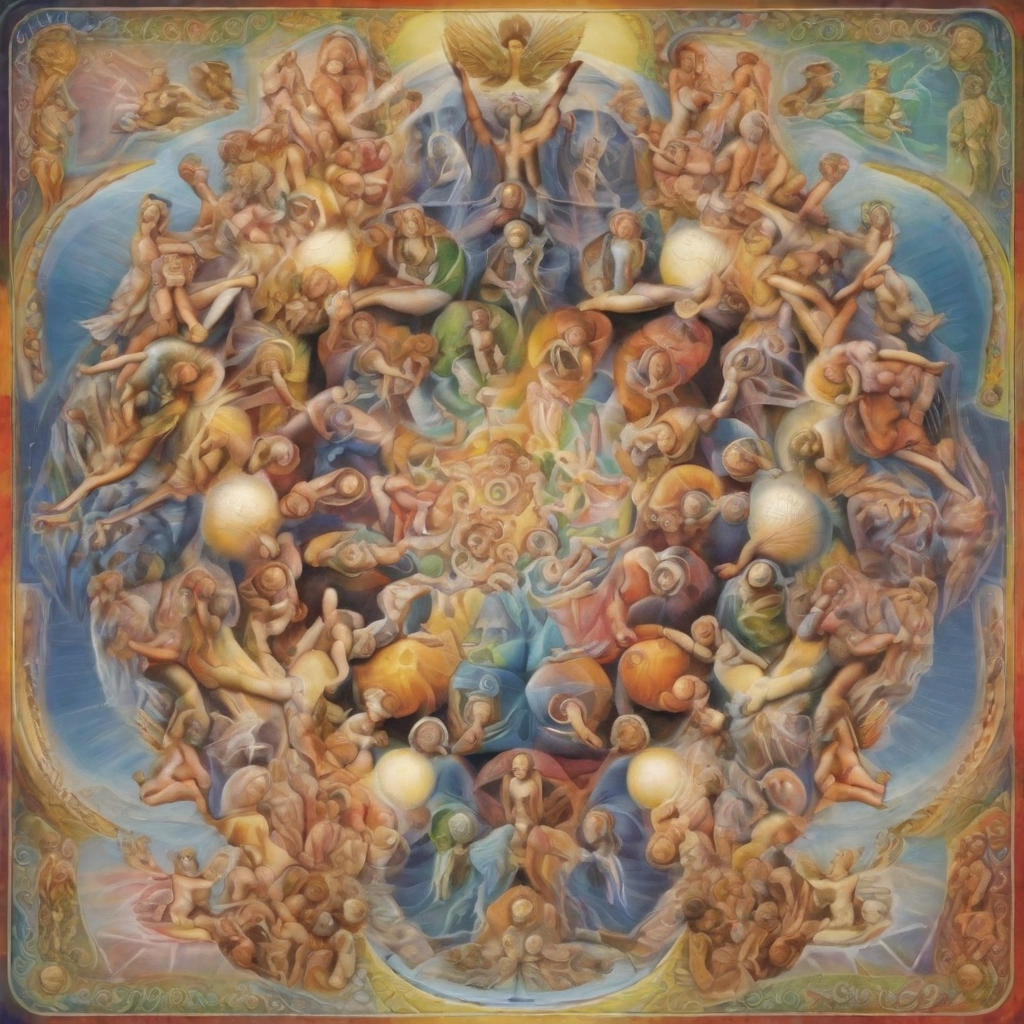
In Nondualism, the self and the universe are not two separate entities, but rather manifestations of a single, unifying reality. The concept of separateness – the idea that heads, shoulders, knees, and toes are distinct parts – is seen as a mere illusion, a construct of our perceptive capabilities. When we immerse ourselves in the quintessential essence that underlies all beings and things, we begin to perceive that beneath the superficial distinctiveness and multiplicity, there is a fundamental oneness.

Just as the child, in the innocence of play, connects each body part in a joyful, seamless movement without pondering the philosophical depth intertwined, perhaps we too, in our adult complexity, can rediscover that inherent interconnectedness. Our heads, representing our thoughts and intellect; our shoulders, symbolizing our burdens and responsibilities; our knees, embodying our flexibility and humility; and our toes, reflecting our foundation and stability, though seemingly separate, all derive from and exist within the same unified source.

In this unity, the dissimilarities and boundaries that appear to separate us from others, from the world, and the divine, dissolve into a boundless ocean of oneness. Our heads, shoulders, knees, and toes, then, become not isolated components, but rather expressions of the singular reality, dancing together in a harmonious rhythm of existence.

The reconciliation of our physical and non-physical aspects, the visible and the invisible, and the manifold and the one, invites us to explore the possibility that we are not merely beings traversing through the world, but the world itself. As we navigate through the multifaceted reality of life, can we embrace the Nondual perspective, perceiving not separateness, but unity in the myriad forms and experiences?

So, we may joyously sing, not just with nostalgia but with profound insight into our existence: “Heads, shoulders, knees, and toes.” In the simplicity of these words, let’s find a reminder that beneath the diversity and complexity of our being, we are all interconnected, interwoven parts of the same undivided reality.

The depth of such unity nudges us to perceive ourselves and the world around us with eyes that see beyond the physical and the apparent, inviting us into a holistic existence where every head, shoulder, knee, and toe sings in unison with our oneness.

Morgan O.  Smith

Yinnergy Meditation & My Book, Bodhi in the Brain…Available Now!
https://linktr.ee/morganosmith

The Pursuit of Absolute Nothingness

A Journey Towards Enlightened Emptiness

Introduction: In the dynamic, incessant stream of thoughts, preferences, and subjective biases that characterize the human experience, the concept of attaining a state of Absolute Nothingness captivates imaginations. Is it possible to achieve a mental and emotional vacuum where thoughts, biases, judgments, and self cease to exist?

Understanding Absolute Nothingness:

  • Absolute Nothingness isn’t simply the absence of thought, but a profound emptiness that transcends understanding and defies our typical notions of existence and selfhood.
    • Exploring philosophical and theological contexts (Buddhism’s Sunyata or Zen’s Mu) can unveil varied interpretations and methods to approach nothingness.
  • The Paradox of Pursuing Nothingness:
  • Engaging in a quest towards absolute emptiness ironically imposes a desire and a goal, an antithesis to the state of desirelessness intrinsic to nothingness.
    • Considering the Daoist perspective, acting without intention (Wu Wei) might provide insights on pursuing without pursuing, and attaining without seeking.
  • Dismantling the Self:
  • Dissolving the self involves peeling away layers of personal identity, biases, and preconceptions, effectively blurring the lines between self and non-self.
    • This dismantlement raises questions about existence, consciousness, and whether one can truly function without the scaffold of selfhood in a society constructed upon individual identity.
  • Navigating Through Socio-Cultural Paradigms:
  • The endeavour to transcend preferences, judgments, and selfhood might be perceived as antithetical to societal norms that emphasize individuality, accomplishment, and progress.
    • Achieving absolute nothingness within the structural and cultural boundaries of our world presents a paradox between isolation and immersion in societal dynamics.
  • Ethical and Moral Dimensions:
  • The state of having no judgments, preferences, or perspectives raises questions regarding moral and ethical obligations. Does transcending biases and perspectives dissolve moral compasses?
    • Exploring the ethical implications of an unbiased existence may unravel whether absolute neutrality coexists with moral responsibility.
  • Psychological and Neuroscientific Perspectives:
  • The psychological viability of achieving a state devoid of thought and self-perception opens an intriguing discourse. Can one’s mental health be preserved, or even enhanced, in a state of nothingness?
    • Neuroscientific inquiries might delve into the processes and consequences of perpetually inhibiting cognitive and emotional functionalities to sustain a blank slate of consciousness.
  • Relinquishing Time and Anticipation:
  • With no anticipation, worries, or references to the past or future, time dissolves into an irrelevant concept, creating a perpetual ‘now’ with neither history nor destiny.
    • Contemplating a timeless existence fosters a reflection on how human experiences, relationships, and endeavours are intimately entwined with temporal perception.

Conclusion: Absolute Nothingness, both as a philosophical concept and a spiritual aspiration, navigates through paradoxes, ethical conundrums, and existential inquiries, offering a mesmerizing void that invites and perplexes. The possibility and implications of achieving a state devoid of self-thought, and time present not only a spiritual journey but also a philosophical and scientific exploration into the profound depths of consciousness and existence.

Morgan O.  Smith

Yinnergy Meditation & My Book, Bodhi in the Brain…Available Now!

https://linktr.ee/morganosmith

Embracing the Abyss

An Exploration into the Ground of All Being

In the silence of our hearts, amidst the ceaseless chatter of our fears and desires, lies a profound mystery waiting to be discovered. This mystery, dear reader, is not something alien or external, but a journey inward to meet our most authentic selves. It is about unearthing the Ground of All Being, the core from which our existence emanates and upon which it rests. In the course of human history, many have named it differently—God, The Absolute, Consciousness, and so forth. However, this Ground of All Being is not a distant reality; it’s what we truly are. As articulated succinctly, our deepest fear is not of the unknown, but the known transcending into the realm of the unknown, a realm where words fall short and only experience speaks.

Your deepest fear is yourself. This statement, piercing in its simplicity, unveils the core of our existential dread. We fear what we might discover when all pretenses are shed, and we are left with the raw, unadulterated reality of our being. The question is, are we willing to face that fear, to delve into the abyss and allow it to unravel the boundless potential within?

Why do we shy away from understanding our true nature? It’s a paradox that the unknown we fear is already known, buried within the labyrinth of our being. It’s like a familiar tune, the lyrics of which we have forgotten, yet the melody stirs something deep within. It beckons us to listen, to be still, and in that stillness, the melody unfolds, freeing us from the shackles of ignorance and liberating the profound truths hidden within. This knowledge is not an accumulation but a realization, a moving from the periphery to the core, a journey from the ephemeral to the eternal.

We often seek solace in the external, hoping that objects, relationships, or achievements will fill the void within. However, true liberation and fulfillment lie in the exploration and understanding of our essential nature, the Ground of All Being. It’s about confronting fears, transcending superficial identities, and dissolving into the boundless, formless reality that we are.

It’s a venture into the heart of existence, an invitation to be fearlessly authentic. To step into this journey is to embrace the unknown, which is already known, and to unearth the beauty and magnificence of our true nature. So, pause and listen to that innermost call, for in the heart of fear lies the key to liberation.

Morgan O.  Smith

Yinnergy Meditation & My Book, Bodhi in the Brain…Available Now!

https://linktr.ee/morganosmith