The Expansive Self

Beyond the Boundaries of Individual Identity

In the vast tapestry of human experience, one of the most profound and transformative realizations is the awakening to a sense of identity that stretches far beyond the individual self. This philosophical journey, explored by thinkers, mystics, and seekers throughout history, offers an exploration into the very essence of what it means to be human, and more profoundly, what it means to be a part of the cosmos.

### The Layers of Self

**1. The Individual Identity**: Our daily lives are governed by our personal experiences, histories, and beliefs. This individual self, encapsulated by our distinct personalities, desires, and aspirations, is like a drop in the vast ocean of existence.

**2. The Collective Identity**: There are moments, often inspired by shared experiences, when we resonate with a group, whether based on nationality, religion, or shared purpose. Here, the boundaries blur slightly, and the drop becomes a wave, united in its motion with other droplets.

**3. The Universal Self**: Delving deeper, we encounter a realm where the wave realizes it’s not just a part of the ocean, but the ocean itself. This vast sense of identity, encompassing all of life, the universe, and the myriad forms within it, is an experience of unity and oneness with all that exists.

### The Power of Oneness


With an expanded identity, empathy and compassion naturally flourish. The pain and joy of another are no longer abstract experiences; they become deeply personal as if they were our own. This profound interconnectedness also extends to nature, leading to an intrinsic desire to safeguard the environment and all its inhabitants.

Moreover, as one navigates this expanded identity, the grip of personal desires and ego-based needs loosens. Life begins to flow with an acceptance of its unfolding mystery, reducing resistance and enhancing serenity.

### Mystical Insights and Modern Science

Historically, mystics from various traditions spoke of experiences of union with the divine, the universe, or the underlying essence of reality. Today, intriguingly, modern science, especially in fields like quantum physics, hints at ideas of interconnectedness and non-locality. Such insights suggest that the ancient intuitions of interconnectedness may have parallels in our current understanding of the cosmos.

### Challenges of the Expansive Self


However, this journey is not without its pitfalls. As we embrace a broader sense of self, there’s the risk of “spiritual bypassing” – a tendency to use these expansive realizations to sidestep personal issues or challenging emotions. An expansive identity doesn’t negate personal responsibilities or the need for personal boundaries. It invites a deeper engagement with life in all its complexity.

### Conclusion

Our identity’s evolution, from a solitary droplet to the vast ocean, is a journey of consciousness and profound realization. It reminds us that beneath the multiplicity and diversity of existence lies an undercurrent of unity, urging us to rediscover and embrace our place in the cosmos.

As we ponder on the vastness of our identity, it serves as a beacon, guiding us toward a life of deeper meaning, connection, and purpose. In recognizing our expansive self, we find not only our place in the universe but also the universe within ourselves.

Morgan O. Smith

Yinnergy Meditation & My Book, Bodhi in the Brain…Available Now!
https://linktr.ee/morganosmith

You are God Divided

The Infinite Dichotomy of Existence

Every atom, every particle, and every conscious entity in the universe has a story to tell. It’s the story of division, multiplication, and infinite expansion. At the heart of existence lies a profound mystery, one that has perplexed philosophers, scientists, and theologians for millennia. Could it be that we are all fragments of a single entity that chose to divide and diversify, just to experience itself in infinite ways?

Imagine the Absolute Singularity, a singular point of pure potentiality and absolute unity. A point where all is one, and one is all. But, for reasons beyond our comprehension, this singularity chose to divide. First, into two, then four, and so on, in a cascading process of division and multiplication. Each division produced a unique variation, a unique perspective, and a unique experience.

Why would the singularity choose to divide? Perhaps it’s an inherent desire to experience, to know, to feel. Each division brings about a new facet, a new lens through which the universe can observe itself. As we delve deeper into this concept, the notion emerges that we, as conscious beings, are those very lenses. Each of us is a unique perspective, a unique manifestation of that original singularity, trying to make sense of its existence.

The beauty of this perspective is that it places an inherent value on every individual, every creature, and every entity in existence. We are all part of the grand mosaic of life, each playing our part in the unfolding narrative of the universe. As we interact, love, fight, and explore, we contribute to the ever-expanding tapestry of existence.

It’s both humbling and empowering to think of ourselves in this light. If we are all fragments of the same original entity, then there’s an intrinsic connection that binds us all. A cosmic kinship that transcends race, gender, nationality, and even species. It’s a call for unity, compassion, and understanding. For if we harm another, we’re essentially harming a part of ourselves.

As you navigate through life, remember this perspective. See the divine in yourself and others. Understand that your experiences, emotions, and aspirations are all part of a grander narrative. You are both the storyteller and the story, the observer and the observed.

In embracing this duality, we can foster a world where understanding, love, and unity become the norm rather than the exception. It’s a journey worth embarking on, for in understanding our origins, we might just find our destiny.

Morgan O. Smith

Yinnergy Meditation & My Book, Bodhi in the Brain…Available Now!

https://linktr.ee/morganosmith

Nonduality

Delving into the First Ten Meanings

**Introduction:**   
The term ‘nonduality’ has ancient roots, spanning across spiritual, philosophical, and scientific landscapes. Its depth is immense, often challenging the linguistic boundaries we’ve set. In this first of a three-part series, we’ll explore the initial ten meanings of nonduality.

**1. The Interconnectedness of All Things:** 
 
Everything in existence is interwoven, suggesting a universe that functions as one organism. This hints at a cosmic web where every action ripples across the vast expanse of existence.

**2. The Unbroken Wholeness of Existence:**   
No part of the universe is truly separate. We’re all fragments of an unbroken wholeness, seamlessly flowing into one another.

**3. Beyond the Concepts of Subject and Object:** 
 
In true realization, the perceived barrier between the observer and the observed fades, inviting a unified experience.

**4. Absence of Separation Between Self and Other:**   

The ego-driven distinction between “me” and “you” is an illusion. At our core, we arise from the same source.

**5. Reality Undivided by Conceptual Distinctions:**   

Our minds love categorizing, but reality, in its pure form, remains undisturbed by these conceptual labels.

**6. The Ground of Being Where Opposites Merge:**   

Contradictions and polarities find their reconciliation in this primordial ground, pointing towards a harmonious existence.

**7. A State Where Observer and Observed are One:** 
 
Pure awareness doesn’t differentiate. In moments of profound insight, the duality of perceiver and perceived collapses.

**8. The Essence That Remains When Duality Dissolves:**   
When the mind’s dualistic tendencies dissolve, what remains is pure, undifferentiated essence.

**9. The Primordial Nature of Consciousness:** 
 
Consciousness is the foundational fabric from which all dualities emerge and into which they dissolve.

**10. A Unified Field Transcending Dualistic Notions:**   
Beyond the quantum and cosmic scales, there might exist a unified field that transcends our dualistic understanding of reality.

**Conclusion:**   
These initial ten meanings provide a gateway into the vast landscape of nonduality. They beckon us to question our perceptions, beliefs, and understandings of the universe and our place in it.

Morgan O. Smith

Yinnergy Meditation & My Book, Bodhi in the Brain…Available Now!
https://linktr.ee/morganosmith

The Illusion of Spiritual Identity

Beyond Stories We Tell Ourselves

Spirituality, at its core, is a profound journey toward understanding one’s place in the vast expanse of existence. However, in our attempt to grasp this elusive understanding, we often pigeonhole ourselves into labels: spiritual, materialistic, moral, and the like. But what if I were to suggest that these labels, these stories, are mere illusions? And that by clinging to them, we might be limiting our true potential.

#### **The Stories We Tell Ourselves**

Every culture, every religion, and every individual has a narrative. These narratives shape our beliefs, our actions, and the way we perceive the world. They are the tapestries upon which our identities are woven. But what happens when we deconstruct these tapestries? Beneath the intricate designs and patterns, what remains?

The reality is that these stories are our creations, shaped by societal norms, personal experiences, and myriad other factors. To say one is ‘spiritual’ or ‘materialistic’ is to adopt a particular perspective, a specific lens through which we view the world.

#### **The Ground of All Being**

But let’s delve deeper. Beneath these self-imposed labels and narratives, there lies a fundamental essence – often referred to as the ‘ground of all being’. This essence is the raw, unfiltered state of existence. It is what you are before the stories, before the labels, and before the definitions. It is the canvas upon which all our narratives are painted.

This ground of being is paradoxical. While it exists beyond all descriptors, it simultaneously encompasses them. Think of it as an ocean. The waves, currents, and whirlpools may differ in their nature and intensity, but they all arise from and subside back into the same vast expanse of water.

#### **Embracing the Beyond**

Realizing this fundamental truth can be liberating. When we understand that our spiritual or materialistic labels are mere waves upon the ocean of existence, we can learn to see beyond them. We can experience the world without the confines of our self-imposed narratives.

This doesn’t mean that one should abandon their spiritual practices or beliefs. Rather, it’s about recognizing them for what they are – beautiful expressions of the infinite variations of existence.

#### **Conclusion**

In the end, whether you consider yourself spiritual, materialistic, or anything in between, it’s crucial to remember that these are just facets of the grander jewel that is existence. By stepping back and seeing beyond our self-crafted stories, we can come closer to experiencing the profound depth of what we truly are.

Morgan O. Smith

Yinnergy Meditation & My Book, Bodhi in the Brain…Available Now!

https://linktr.ee/morganosmith

The Ego

Many Faces of the “I”

In our quest to understand ourselves, few concepts are as debated, dissected, and deliberated as the ego. Spanning from ancient spiritual scriptures to the modern therapist’s couch, the ego stands as a reflection of our sense of self and our relation to the world. Yet, its definitions vary, painting a multifaceted picture of this central aspect of human existence.

### **1. Ego in Psychoanalysis: The Mediator**

Freud’s tripartite model of the psyche introduced us to the ego as the balancing force between the primal urges of the id and the moral compass of the superego. Here, the ego isn’t an adversary but a necessary mediator, guiding our actions in a world of societal norms. It poses the question: Is our ego the voice of reason amidst internal chaos?

### **2. Ego in General Psychology: The Self’s Mirror**

When we talk about self-esteem or self-worth, we’re often referring to the ego. This definition paints the ego as a mirror reflecting our perceived value and place in the world. Yet, this raises a thought-provoking inquiry: If our ego is a mirror, who or what determines its reflection?

### **3. Ego in Philosophy: The Conscious Observer**
Descartes’ famous dictum “Cogito, ergo sum” (I think, therefore I am) encapsulates the philosophical perspective of the ego as the conscious thinking subject. If our ego is the conscious observer of our experiences, it invites us to ponder: Without this observer, do experiences lose their significance?

### **4. Ego in Spirituality: The Illusory Self**
Many spiritual traditions view the ego as a barrier to enlightenment. It’s the illusory sense of separateness that binds us to suffering. The spiritual perspective urges us to ask: If the ego is an illusion, then who indeed are we beneath this veneer?

### **5. Ego in Pop Culture: The Mask of Pride**
Everyday parlance often equates a “big ego” with arrogance. It’s seen as a mask, sometimes shielding insecurities, other times amplifying genuine pride. This usage compels us to consider: Is the ego merely a façade, and what lies behind it?

### **6. Ego in Eastern Philosophies: The Creator of “I-ness”**

Hindu philosophy introduces Ahamkara, the aspect of us that births the sense of “I.” This ego is neither good nor bad but a natural facet of being human. Reflecting on this, we might wonder: Is the ego, not an enemy but an inevitable companion on our human journey?

**In Conclusion: The Infinite Layers of “I”**

The ego, regardless of its definition, remains at the core of human introspection. Its multifaceted interpretations offer not just explanations but a myriad of questions. As we navigate our understanding of the ego, we’re not just uncovering the layers of this concept but also the layers of our very existence.

In exploring the ego, we’re invited to embark on a profound journey inward, to question, understand, and perhaps even transcend the confines of the “I.” For as varied as its definitions might be, the ego’s ultimate gift is the invitation to self-reflection.

Morgan O. Smith

Yinnergy Meditation & My Book, Bodhi in the Brain…Available Now!

https://linktr.ee/morganosmith

Disciplined Stoners (Episode 155) – Bodhi in the Brain

My Journey with Meditation, Consciousness, and Awakening

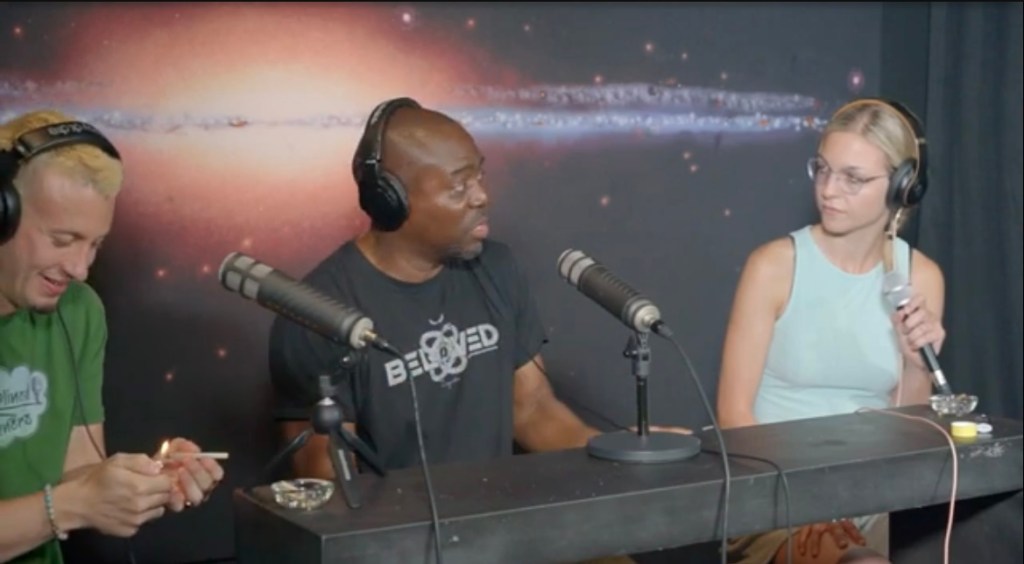
Exploring the intricate facets of consciousness and the enigma of meditation has been a lifelong quest for me. This week, I had the privilege to join Ellevan & Winny Clarke on the “Disciplined Stoners” podcast, sharing my insights, experiences, and discoveries.

I’m not just here as a meditation enthusiast; I introduced them to my creation, Yinnergy, a program born from my years of exploring and understanding the depths of inner peace and mental clarity. We also delved into the themes of my latest book, “Bodhi in the Brain,” embarking on a thrilling discourse on states of consciousness, spiritual awakenings, and the fascinating world of psychological development.

It was a transformative conversation, touching upon the delicate line between mere understanding and direct experience – a distinction that’s been pivotal in my personal and spiritual journey.

For those of you intrigued to dive deeper into my Yinnergy meditation or to navigate the pages of “Bodhi in the Brain,” you can explore them here at https://linktr.ee/morganosmith

Join us in this episode, where we venture beyond mere conversation, stepping into a realm of true transformation!


Exploring the Emotional Spectrum

A Journey Through Plutchik’s Wheel and the Hindu Subtle Body

Introduction

The exploration of human emotion transcends disciplines, cultures, and time. From psychological models such as Plutchik’s Wheel of Emotions to the spiritual teachings within Hinduism concerning the subtle body, the pursuit to understand our emotional selves is as complex as it is enriching. This blog post takes a deep dive into these seemingly disparate concepts, examining the intersection of emotion, spirituality, and subtle awakening.

Plutchik’s Wheel of Emotions

Plutchik’s model identifies eight basic emotions:

1. **Joy** – A sense of happiness and fulfillment.
2. **Trust** – Confidence in something or someone.
3. **Fear** – A response to perceived danger or threat.
4. **Surprise** – A reaction to the unexpected.
5. **Sadness** – A feeling of loss or despair.
6. **Disgust** – A strong aversion or repulsion.
7. **Anger** – A reaction to perceived wrong or injustice.
8. **Anticipation** – Expectation or excitement for what’s to come.

These primary emotions combine to form complex emotions and are mapped in a way that each emotion has an opposite.

The Emotional Subtle Body in Hinduism

Hindu philosophy introduces the concept of the subtle body, an intricate and vital part of our spiritual being, separate from the physical body. Comprised of the mind (Manas), intellect (Buddhi), ego (Ahamkara), and conditioned consciousness (Chitta), the subtle body is responsible for our thoughts, emotions, and consciousness.

Connecting the Dots: Emotions and the Subtle Body

The profound connection between Plutchik’s emotional spectrum and the emotional subtle body within Hinduism lies in the universality of emotions and the depth of human experience. Here’s a breakdown:

– **Joy & Trust**: These positive emotions align with spiritual awakening and the cultivation of inner peace and compassion, reflecting a higher level of consciousness.

– **Fear & Anger**: These emotions can be linked to spiritual blocks or ignorance (Avidya) within Hinduism, which hampers spiritual growth.

– **Surprise & Anticipation**: These emotions speak to our deep connection with the universe and the ever-changing nature of life, echoing the Hindu belief in the transient nature of our physical existence.

– **Sadness & Disgust**: Often seen as negative emotions, they can be channels for growth and understanding of the self, mirroring the Hindu concept of Dharma or righteous living.

Conclusion: Emotions as Pathways to Spiritual Awakening


The emotional spectrum is not merely a psychological construct but a spiritual pathway. By understanding emotions through the lens of both Plutchik’s model and Hindu philosophy, we can embark on a journey toward subtle spiritual awakening.

The nuances of emotions, their combinations, and their reflections within the emotional subtle body offer us tools to navigate our spiritual paths. The profound connection between these concepts suggests that our emotions are not transient or superficial but deeply entwined with our very essence.

This exploration encourages us to recognize emotions as more than reactions to the world around us. They are signposts guiding us toward self-realization and a deeper connection with the divine within.

Morgan O. Smith

Yinnergy Meditation & My Book, Bodhi in the Brain…Available Now!

https://linktr.ee/morganosmith

Bridging Quantum Realms and Turiyatita

The Web of Interconnection

In the intricate and mystifying world of quantum mechanics, one phenomenon stands out as particularly thought-provoking: quantum entanglement. It’s a concept that defies our everyday logic, connecting particles across vast distances in such a way that the state of one instantly influences the state of the other. This interconnectedness, existing beyond space and time, might find an unlikely companion in an ancient spiritual concept: turiyatita, the attainment of spiritual enlightenment.

The Interconnected Universe

Quantum entanglement illustrates how, at the fundamental level, all things in the universe are interconnected. This idea resonates with spiritual teachings across cultures that speak of the oneness of existence and the interconnectedness of all life. In Indian philosophy, turiyatita represents a state of consciousness that transcends the conventional realms of waking, dreaming, deep sleep, and even the transcendental state known as turiya. It’s a state of realization that everything is part of a singular divine essence.

Could these two concepts, one rooted in the cutting-edge science of quantum physics and the other in ancient spiritual wisdom, have something to say to each other?

A Metaphor for Enlightenment


Quantum entanglement could be seen as a metaphor for the experience of spiritual enlightenment. The entangled particles, seemingly separate but inherently connected, might symbolize how everything in existence is part of the same cosmic dance. Likewise, the experience of turiyatita transcends the illusion of separateness, revealing an underlying unity.

In this metaphorical sense, the realization of enlightenment could be likened to experiencing the world in its entangled state, where divisions melt away and a profound interconnectedness is revealed.

A Dance of Mystery

Yet, the relationship between quantum entanglement and turiyatita is more than a simple analogy. Both concepts challenge our conventional understanding of reality. They both hint at a world far more complex and interconnected than our ordinary senses can perceive.

Is it possible that these two ideas, one from the realm of science and the other from the domain of spirituality, are glimpses of the same underlying truth? Is there a hidden dance of connection that plays out both in the microscopic world of quantum particles and the expansive world of human consciousness?

Conclusion

The connection between quantum entanglement and turiyatita may be speculative and metaphorical, but it invites us to ponder the profound mysteries of existence. It’s a reminder that the world is far more complex and beautiful than we often realize and that science and spirituality, seemingly disparate, might have something profound to say to each other.

This dance of connection between the physical and the metaphysical invites us to explore, wonder, and perhaps even transcend our conventional understanding of reality. It’s a poetic reminder that we are all interconnected, in ways that both science and spirituality continue to explore and celebrate.

Morgan O. Smith

Yinnergy Meditation & My Book, Bodhi in the Brain…Available Now!
https://linktr.ee/morganosmith

The Profound Transformation of Realizing Oneself as Brahman

A Journey Beyond the Self

In the boundless tapestry of human existence, few ideas are as profound and transformative as the realization of oneself as Brahman. A central concept in Hindu philosophy, Brahman refers to the ultimate reality or cosmic spirit, a principle that transcends the individual self and unites all living beings.

This blog post explores the many changes an individual might experience upon this realization, a journey that transcends mundane existence and awakens a new consciousness.

### The Loss of Ego and the Embrace of Unity

Perhaps the most radical shift in consciousness comes from losing the individual ego. Recognizing oneself as part of the universal oneness leads to a dissolution of the self, allowing the individual to see beyond the superficial distinctions that often characterize human perception. This leads to a profound sense of unity, empathy, and compassion, transcending barriers like race, nationality, and religion.

### A Shift in Values and Desire

The realization of Brahman changes the very fabric of desire and ambition. Material possessions, social status, and even relationships may lose their significance, replaced by spiritual growth and a deepened understanding of the cosmic order. The individual might pursue selfless service, finding fulfillment in contributing to the well-being of all.

### The Embrace of Paradox and the Transcendent Nature of Existence

This profound awakening allows for a comfortable acceptance of paradoxes and contradictions. Time becomes more fluid, creativity blossoms, and the person might develop an ability to recognize synchronicities, meaningful coincidences that reveal the interconnected web of existence.

### Living in Harmony and Transcending Social Constructs


Living in harmony with nature, respecting all life, and transcending conventional gender roles and social constructs, the enlightened individual moves through life with grace, mindfulness, and effortless action. Their actions are unforced, carried out with a sense of reverence and alignment with universal ethics.

### The Physical and Emotional Manifestations

The journey to realizing oneself as Brahman does not merely affect the mind but also resonates through the body and emotions. The individual may find improved physical well-being, experience deeper states of meditation, and become almost entirely devoid of internal and external conflict.

### The Inspiration to Others

Through this transformation, the individual becomes a living example of peace, love, and wisdom, inspiring others simply through their presence and way of being. They embody a philosophy that sees beyond the limitations of material existence and offers a path to spiritual awakening.

### Conclusion

The realization of oneself as Brahman is a profound spiritual concept that encompasses every aspect of being—mental, physical, emotional, and spiritual. It offers a glimpse into a state of consciousness that transcends the mundane and awakens a new way of perceiving reality.

In a world often driven by material pursuits and divisive ideologies, the teachings surrounding Brahman provide a timeless wisdom that calls for unity, compassion, and a life centred on spiritual truth. Whether viewed as a philosophical concept, a religious belief, or a spiritual experience, the realization of Brahman invites us to look beyond the self and embrace a vision of existence that is all-encompassing, transcendent, and profoundly transformational.

As we navigate the complexities of modern life, may we find inspiration in the ancient wisdom that teaches us to see ourselves not as isolated beings but as part of a grand, interconnected cosmos, guided by a principle that is at once beyond us and within us. It is a journey of discovery, a path to enlightenment, and a call to a deeper, more meaningful existence.

Morgan O. Smith

Yinnergy Meditation & My Book, Bodhi in the Brain…Available Now!
https://linktr.ee/morganosmith

The Circular Journey of Reincarnation

A Dance of Spirit, Self, and Transcendence

Sculpted by ancient wisdom and breathed into existence by mystic philosophies, the idea of reincarnation challenges our perception of reality, questioning the depth of life, death, and the realms that extend beyond our comprehension. It’s an intriguing path leading to a fascinating panorama of eternal becoming, a ceaseless cycle of birth, death, and rebirth that we often term ‘Samsara’. Delving deeper into this concept, a theory emerges, where the omnipresent Spirit, or the Ground of all Being, embarks on a journey to experience life from an individual standpoint.

The Spirit, in its omnipotent and omniscient state, voluntarily decides to fragment its infiniteness into a finite form, breathing life into an individual self. But why does this transition occur? Could it be that the Spirit seeks to experience, understand, and embrace the existential dynamics from the individual lens? To dive into the chaotic beauty of life, to suffer, to joy, to yearn, and to discover? We can only speculate.

The interaction between the Spirit and its earthly existence forms an intricate dance, a dance that eventually leads to the enrichment of the Spirit. Each incarnation, each dance, is an opportunity for the Spirit to learn, grow, and evolve. If Nirvana or Moksha, the state of absolute liberation, isn’t attained in a single lifetime, the Spirit continues its journey through subsequent lifetimes, circling the samsara wheel.

In this theory, one might imagine each cycle of Samsara to be equivalent to a full rotation of 360 degrees. Each degree of rotation represents the lived experiences, the struggles and victories, the heartaches and joys, and the insights and awakenings that shape the individual soul’s evolution. Upon completing this 360-degree cycle, the Spirit transitions to a new plane of existence, a higher level of consciousness, armed with the wisdom and enlightenment accumulated from its previous journey.

This continuum is profound. It’s a cosmic design that instills a sense of awe and wonder, presenting the possibility of existence in planes beyond our material world. It grants our life a transcendent purpose, a grandeur that transcends the limitations of a single life span.

Reincarnation, as visualized in this theory, leads us to reconsider the significance of our lives. It encourages us to perceive every event, every interaction, as an opportunity for the Spirit to learn and evolve. Furthermore, it nudges us to view ourselves not merely as transient beings but as vessels for the Spirit’s journey toward the absolute.

In conclusion, the philosophical discourse on reincarnation paints a vivid picture of the Spirit’s quest. It traverses from the individual standpoint to the Ground of all Being, from the mortal realm to the absolute. In each cycle, in each dance, in each 360-degree turn, we find the Spirit growing, understanding, and inching closer to its final destination: a state of total enlightenment and liberation. As seekers on this journey, may we live mindfully, learn incessantly, and evolve steadily. After all, aren’t we the Spirit’s manifestation seeking its way back home?

Morgan O. Smith

Yinnergy Meditation & My Book, Bodhi in the Brain…Available Now!
https://linktr.ee/morganosmith