The Subtle Divide

Spiritually Inclined vs. Spiritually Awakened

In the pursuit of spiritual understanding, a significant distinction emerges between being spiritually inclined and spiritually awakened. This divergence reveals not just a difference in terms of interest, but in the depth of experience and transformation.

The Spiritually Inclined

Those who are spiritually inclined are often on the periphery of spiritual exploration. Their journey is characterized by a curiosity and fascination with the metaphysical realm. This inclination is the initial spark, a gentle pull towards understanding deeper truths of existence. It involves an appreciation of spiritual concepts, rituals, and practices, often adopted to enhance personal well-being or to find solace in times of distress. Yet, this stage may lack the profound shift in perception that marks true spiritual awakening.

The Spiritually Awakened

In contrast, spiritual awakening is a profound transformation that redefines the essence of one’s being. It is not merely an interest or hobby, but a fundamental change in how one perceives and interacts with the world. This shift often arrives unexpectedly, after intense personal introspection or significant life challenges that push one to question deeper existential truths.

An awakened individual sees beyond the illusions of the self and the material world, recognizing the interconnected nature of all life. Their lives are marked by a deep, intrinsic understanding of non-duality—that there is no separation between the self and the universe, only a unified existence. This realization is not an intellectual exercise but an experiential truth that permeates every aspect of life.

Navigating the Path from Inclination to Awakening

Transitioning from being spiritually inclined to being awakened is not a guaranteed trajectory. It requires more than just passive interest; it demands active engagement, often facilitated by practices such as meditation, contemplative prayer, or profound philosophical inquiry. The catalyst for awakening is deeply personal and can be facilitated by a guide or teacher who can help one embark on the necessary introspective journey. For those seeking to bridge this gap, it is essential to cultivate an environment that encourages deep questioning and vulnerability. It involves letting go of preconceived notions and embracing the unknown with an open heart and mind.

Conclusion

The journey from spiritual inclination to awakening is unique for each individual, filled with challenges and revelations. Recognizing the difference between these states is crucial for anyone on the path of spiritual exploration, as it highlights the depth of commitment and transformation required to move beyond mere interest to profound spiritual realization.

Morgan O. Smith

Yinnergy Meditation, Spiritual Life Coaching & My Book, Bodhi in the Brain…Available Now!

https://linktr.ee/morganosmith

Embracing the Paradox

The Divine Symphony of Pain and Pleasure

In the intricate dance of existence, where the lines between the divine and the mundane blur, we encounter a profound paradox that challenges our understanding of life, suffering, and bliss. This paradox lies in the realization that the essence of divinity, or what we might call ‘God’, permeates every aspect of our reality. God is not merely a distant observer or a creator apart from creation but is intimately woven into the fabric of everything that exists. In this realization, we find that God embodies every nuance of existence—every thought, every feeling, every interaction. This divine presence is both the creator and the creation, the experiencer and the experience, and the observer and the observed.

The notion that God experiences pain, and is continually afflicted by it, yet remains unaffected, presents a compelling exploration into the nature of divinity and existence. It suggests that within the divine consciousness, there exists a capacity to encompass all dualities—pain and pleasure, creation and destruction, life and death—without being limited by them. This capacity is not a contradiction but a testament to the boundless nature of the divine. It is within this boundless nature that we find the freedom to experience the full spectrum of existence without attachment, recognizing that pain and pleasure are not opposites but expressions of the same fundamental reality.


The idea that realizing one’s identity as God brings about a deeper experience of pain, yet also a profound experience of pleasure, illuminates the path of spiritual awakening as one of embracing all facets of existence. This awakening is not a transcendence that denies pain or seeks only bliss but an acceptance of the inherent duality of life as expressions of the divine. In this acceptance, we find that pain and pleasure, sorrow and joy, do not merely experience to be endured or sought after but are avenues through which the divine essence reveals itself.

The narrative that God manifests everything into existence to experience the opposite of itself, which always was The Self, invites us into a contemplation of the purpose of creation. It suggests that the unfolding of the universe is a divine play, a cosmic exploration of self-discovery, where every moment of existence is a death and rebirth of the Self. This continual cycle of creation and dissolution, of experiencing all facets of existence, is not a journey towards an end but an eternal expression of the divine nature.


At the heart of this exploration is the understanding that harm, pain, and suffering are integral to the wholeness of existence. To remove them would be to deny the completeness of the divine experience. Yet, in the ultimate realization, we find that the divine essence, the core of our being, transcends the concepts of life and death, pain and pleasure. This essence cannot perish, for it is beyond all dualities, yet it chooses to engage with these dualities as expressions of its infinite potential.

This profound paradox challenges us to look beyond the surface of our experiences and recognize the divine essence within all aspects of existence. It invites us to embrace the complexity of life, to find beauty in the pain, and to see the divine play in every moment. In doing so, we open ourselves to a deeper understanding of our nature and the nature of reality, where pain and pleasure are not merely experiences to be judged but are sacred expressions of the divine dance of existence.

Morgan O. Smith

Yinnergy Meditation, Spiritual Life Coaching & My Book, Bodhi in the Brain…Available Now!

https://linktr.ee/morganosmith

The Convergence of Quadrants

A Journey from Relative to Ultimate Reality

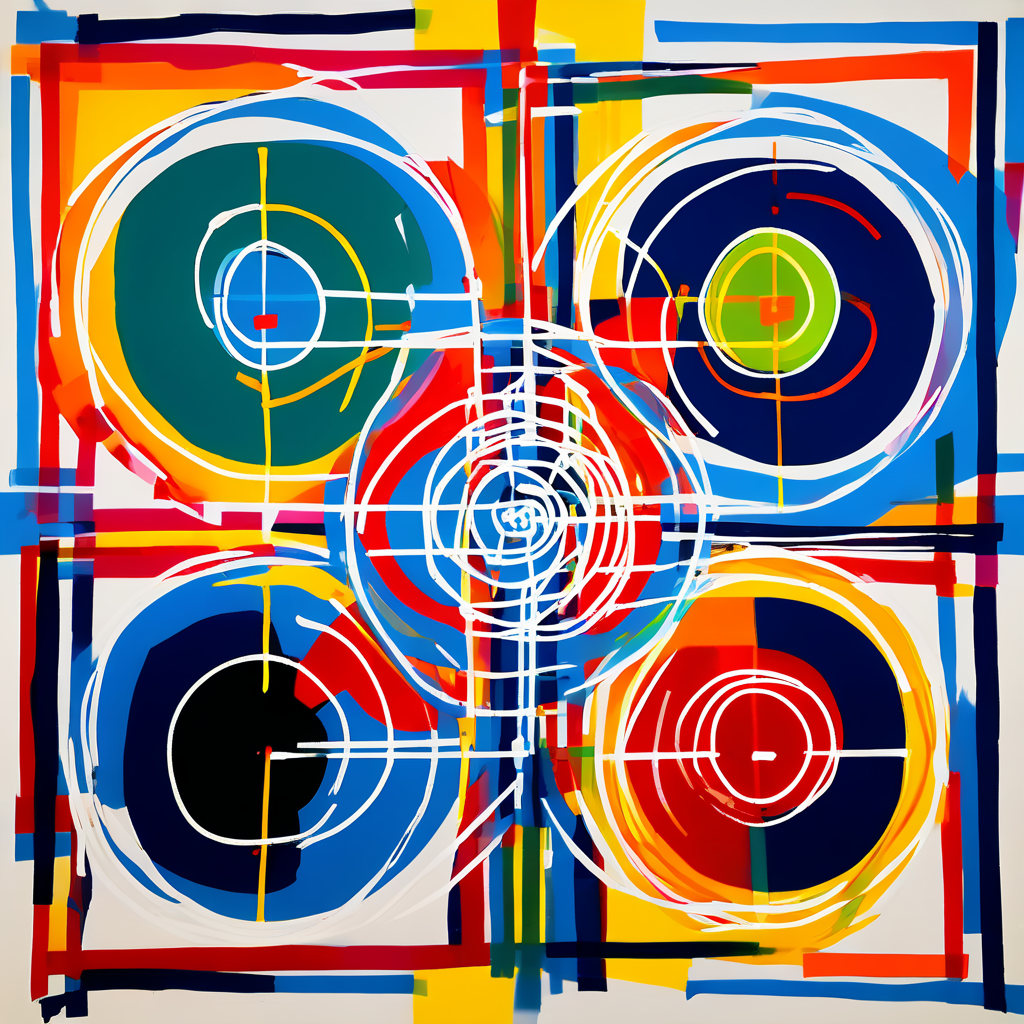
In the realms of Integral Theory, our perception of reality is intricately divided into four primary dimensions or perspectives: the subjective (‘I’), the intersubjective (‘We’), the objective (‘It’), and the interobjective (‘Its’). These perspectives serve as the foundational pillars through which we navigate our relative existence, framing our experiences, relationships, and understanding of the world around us. These quadrants, when represented graphically, are not just abstract concepts but are reflective of the comprehensive ways in which we engage with reality.

However, the journey toward spiritual awakening introduces a profound transformation in this perception. As one advance towards the state of Turiyatitta, a term deeply rooted in Eastern philosophy signifying a state beyond the waking, dreaming, and deep sleep states, a remarkable unification occurs. In Turiyatitta, the boundaries that once separated the ‘I’ from ‘We’, the ‘We’ from ‘It’, and the ‘It’ from ‘Its’, dissolve into a seamless oneness. This state transcends the distinctions between the subjective and the objective, the individual and the collective, and the observer and the observed.


The exploration of Turiyatitta challenges the compartmentalized view of reality presented by Integral Theory. It invites us into a realm where the delineations between the upper-left (I), lower-left (We), upper-right (It), and lower-right (Its) quadrants blur, suggesting that these divisions are merely constructs of a relative reality. In the ultimate reality experienced through Turiyatitta, these quadrants converge, revealing that at the most profound level, there is no distinction between ‘I’ and ‘We’, ‘We’ and ‘It’, ‘It’ and ‘Its’—everything becomes interconnected, a unified whole.

This revelation has significant implications for our spiritual and philosophical journeys. It suggests that the ultimate truth lies not in the separation and analysis of reality into distinct quadrants but in the recognition of the inherent oneness that underlies all existence. The experience of Turiyatitta offers a direct encounter with this oneness, an experiential understanding that transcends intellectual comprehension and invites us into a direct, immediate experience of unity.


Engaging with this perspective does not invalidate the usefulness of the four quadrants in navigating our relative reality. Instead, it enriches our understanding by adding depth to our perception, allowing us to see beyond the surface distinctions and appreciate the underlying unity that connects all aspects of existence. This holistic view fosters a deeper sense of empathy, interconnectedness, and a profound appreciation for the mystery that is life itself.

As we navigate our spiritual path, the exploration of Turiyatitta and the convergence of the four quadrants invite us to reconsider our understanding of reality. It encourages us to look beyond the apparent separations and to embrace the unity that encompasses all aspects of our existence. In doing so, we open ourselves to a more profound, interconnected, and unified experience of reality, one that transcends the limitations of our conventional perspectives and guides us toward a deeper realization of the ultimate truth.

Morgan O. Smith

Yinnergy Meditation, Spiritual Life Coaching & My Book, Bodhi in the Brain…Available Now!
https://linktr.ee/morganosmith

The Symphony of Existence

How Your Thoughts Contribute to the Universe

In the grand orchestra of the cosmos, every note, every silence, and every crescendo plays a pivotal role in the composition of existence. It’s a symphony where not just the celestial bodies and the forces of nature perform, but also where your thoughts—those subtle, often overlooked whispers of your inner being—contribute to the universal melody. This concept may seem abstract, yet it underpins the profound interconnectedness of all things, a cornerstone of Eastern philosophical wisdom and nondual understanding.

The Ripple Effect of Thought

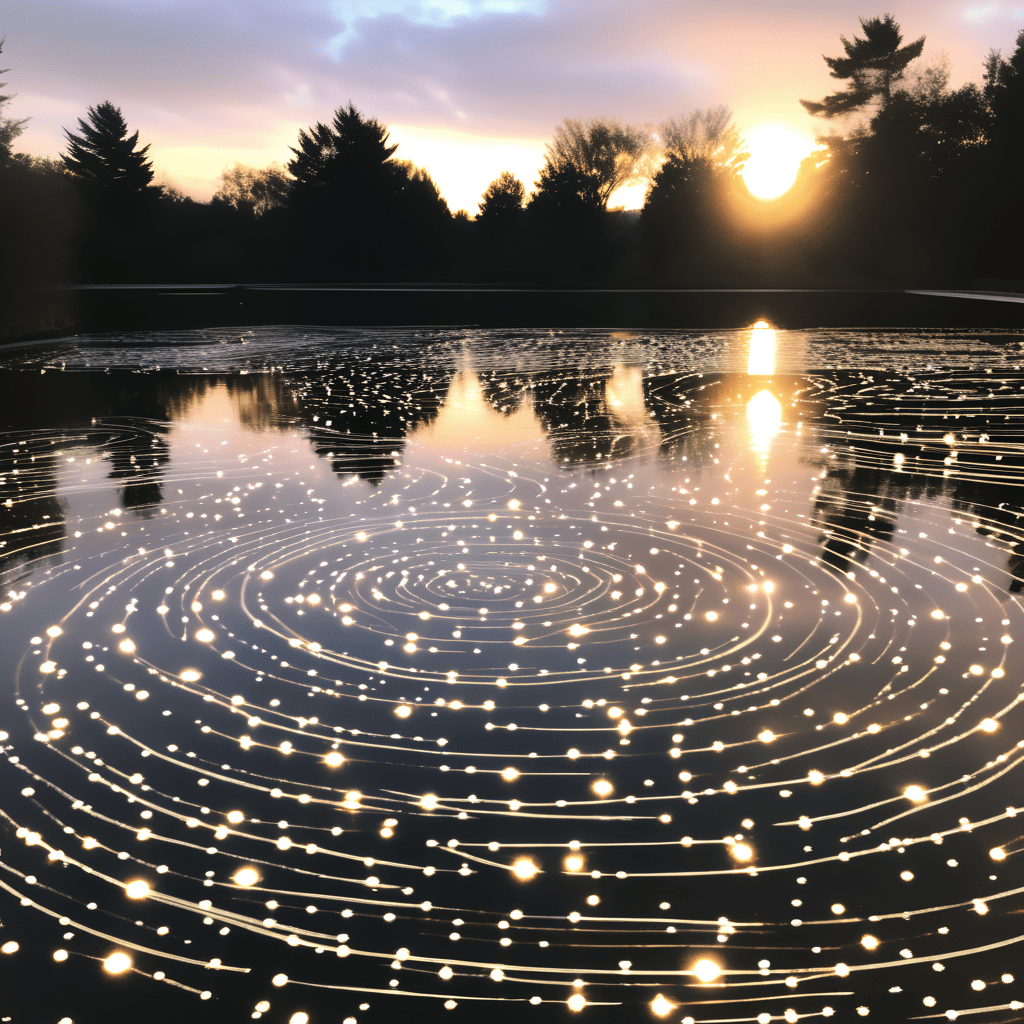
Imagine a tranquil pond, its surface smooth as glass. Each thought you harbour is akin to a pebble tossed into this pond, generating ripples that extend far beyond the initial point of impact. These ripples represent the influence of your thoughts on the universe’s continuous becoming. They are not isolated; rather, they interact with the ripples created by the thoughts of others, weaving an intricate dance of cause and effect, action and reaction.

The Creative Power of Consciousness

Your consciousness is not a passive observer but a dynamic creator. The thoughts you nurture and the focus you hold act as brushes and colours in the painting of your reality. This isn’t about manifesting in the materialistic sense often touted by pop-culture spirituality but about the subtle yet profound impact your inner world has on the external. Through mindfulness and intention, you can shift from unconscious creation, where thoughts are automatic and unexamined, to conscious creation, where awareness guides your mental processes.

Nonduality and the Illusion of Separateness

At the heart of this understanding is nonduality—the recognition that separation is an illusion. In the nondual view, there is no distinction between the observer and the observed, the creator and the creation. Your thoughts, then, are not merely yours but are part of the universal consciousness experiencing itself. This realization brings with it a profound sense of responsibility and empowerment. By aligning your thoughts with compassion, love, and unity, you contribute to universal harmony.

Practical Implications for Daily Life

What does this mean for your daily life? It means living with intention and choosing thoughts that nurture growth, harmony, and understanding. It means being mindful of the mental energies you cultivate and project into the world. This mindfulness transforms not only your personal experience but also contributes to the collective energy that shapes our shared reality.

It encourages a shift from ego-centric thinking to a more holistic, interconnected perspective. This shift fosters a deep sense of peace and fulfillment, arising from the understanding that you are an integral part of the cosmos, actively participating in its unfolding narrative.

Conclusion

The notion that your thoughts contribute to the manifestation of the universe invites a reevaluation of the inner dialogues we entertain and the mental attitudes we embody. In recognizing the power and responsibility inherent in our thoughts, we open the door to a more conscious and intentional existence. This journey of awareness is not just about personal enlightenment but about contributing to the universal harmony that orchestrates the symphony of existence.

Morgan O. Smith

Yinnergy Meditation, Spiritual Life Coaching & My Book, Bodhi in the Brain…Available Now!
https://linktr.ee/morganosmith

The Paradox of Separateness and Oneness

In the vast expanse of spiritual exploration, two concepts often emerge as seemingly opposing forces: separateness and oneness. Yet, upon deeper contemplation, we uncover that both are not just interconnected but also encapsulate a profound paradox that challenges the very foundation of our understanding of reality.

The Illusion of Separateness

From a conventional standpoint, separateness is the bedrock of our physical existence. It’s the principle that delineates you from me, the tree from the soil, the ocean from the sky. This distinction is crucial for navigating the physical world, allowing us to make sense of our environment through categorization and identification. However, this perception of separateness is, at its core, an illusion—a construct of the mind that confines us within the boundaries of our individual experiences.

The spiritual journey often begins with the recognition of this illusion. As we delve into the depths of our inner world, we start to perceive the threads of connection that weave through the fabric of existence. These connections blur the lines of separation, revealing a more intricate and interdependent reality. Yet, acknowledging this interconnectedness is only the first step toward a more profound realization.

The Illusion of Oneness

Oneness, often heralded as the ultimate spiritual truth, suggests that all forms of existence are intrinsically connected, emanating from the same source of divine energy. This perspective invites us into a state of unity with the cosmos, where the illusion of separateness dissolves into the universal whole.

However, labelling oneness as the ultimate truth also presents a paradox. By defining our experience within the confines of oneness, we inadvertently create a new duality between the concepts of oneness and separateness. This duality suggests that while oneness seeks to unify, it simultaneously perpetuates the cycle of illusion by opposing separateness.

Navigating the Illusions


The recognition that both separateness and oneness are illusions invites us into a space beyond dualistic thinking. It beckons us to explore a realm where these concepts are not opposing forces but rather different aspects of the same reality. This realm, free from the constraints of conventional categorization, allows for a fluidity of experience and understanding.

In this space, we find freedom from the need to label or define our experiences as either separate or unified. We open ourselves to a state of being that embraces the full spectrum of existence, acknowledging its inherent complexity without the need to simplify it into comprehensible constructs. This state of being is not about finding a middle ground between separateness and oneness but about transcending the very need for such distinctions.

Conclusion

The journey through the paradox of separateness and oneness is not about choosing one illusion over the other but about transcending the limitations they impose on our understanding of reality. It invites us into a deeper exploration of existence, where the boundaries between self and other, between individual and universe, become permeable and fluid.

By navigating these illusions with an open heart and a curious mind, we can move closer to a state of spiritual freedom—a state where the intricate dance of separateness and oneness plays out within us, not as conflicting forces, but as harmonious expressions of the infinite complexity of being.

Morgan O. Smith

Yinnergy Meditation, Spiritual Life Coaching & My Book, Bodhi in the Brain…Available Now!

https://linktr.ee/morganosmith

The Intricate Weave of the Cosmic Design

Understanding the Perfection of the Causal Level

In the depths of the cosmic fabric, there exists a precision so intricate, that it defies the bounds of human comprehension. At the causal level, a realm beyond the tangible, every thought, action, situation, and event is not merely a happenstance but a fragment of a grander scheme, meticulously orchestrated. This notion invites us to ponder the unfathomable precision with which the universe operates, suggesting that everything occurring – past, present, and future – aligns with an impeccable calculation.

This perspective challenges us to view our lives and the universe not as a series of random occurrences but as parts of a vast, interconnected system, operating with purpose and precision. It beckons us to consider the implications of such a view on our understanding of fate, free will, and the essence of our existence. If every aspect of the cosmos is perfectly calculated, where does that leave the concept of individual agency?

Exploring this realm requires us to delve into the philosophical and spiritual implications of a preordained universe. It raises questions about the nature of reality itself. Is the universe a deterministic machine, its gears turning with absolute precision, or is there room for spontaneity and unpredictability? How do we reconcile the apparent paradoxes of predestination and free will?


Moreover, this understanding invites us to reflect on the role of consciousness in cosmic design. If everything is perfectly calculated, is consciousness merely a spectator, or does it play a more active role in the unfolding of the universe? This inquiry leads us to the heart of nonduality, suggesting that the separation between the observer and the observed is an illusion and that at a fundamental level, we are intimately woven into the very fabric of the universe we seek to understand.

The realization that everything is happening perfectly, as it is supposed to happen, offers a profound sense of peace and acceptance. It encourages us to view our challenges and struggles not as obstacles but as necessary steps in our evolutionary journey, perfectly placed on our path for growth and realization. This perspective fosters a deep sense of trust in the flow of life, guiding us to live in harmony with the cosmic order.


As we navigate our lives, let us contemplate the perfection of the causal level, recognizing our role in the grand scheme of the universe. May this understanding inspire us to live with intention, embracing each moment as a vital thread in the intricate weave of the cosmic design.

Morgan O. Smith

Yinnergy Meditation, Spiritual Life Coaching & My Book, Bodhi in the Brain…Available Now!
https://linktr.ee/morganosmith

Exploring the Infinite

Beyond Religion’s Scope of God

In the vast expanse of human understanding and belief, the concept of God often finds itself neatly packaged within the confines of religious doctrine. Yet, to equate God solely with religion is to overlook the boundless essence that the idea of a supreme being or ultimate reality embodies. This exploration ventures beyond the traditional religious frameworks to understand God as an encompassing presence that transcends our conventional beliefs.

#### Unveiling the Divine Beyond Temples and Texts

Religion, with its rituals, scriptures, and edifices, serves as a vessel for many in their quest to connect with the divine. However, it represents merely one avenue through which the essence of what we term ‘God’ can be experienced. The divine, or the ultimate reality, is an omnipresent force that permeates all aspects of existence, not limited to or by any institution or set of beliefs.

#### The Universal Fabric: A Confluence of Consciousness

At the heart of numerous Eastern philosophies is the notion of nonduality—the understanding that there is no fundamental distinction between the individual and the universe, the self and the divine. This perspective invites us to view God not as an external entity presiding over the cosmos but as the very fabric of existence itself. Here, God is seen in the interconnectedness of all things, in the energy that flows through the cosmos, and in the consciousness that animates the universe.


#### Personal Revelation: A Journey Within

The journey to understanding and experiencing the divine beyond the confines of religion is deeply personal and introspective. It requires us to transcend the external trappings of spirituality and seek connection with the divine essence that resides within and around us. Meditation, mindfulness, and contemplative practices serve as gateways to experiencing this profound unity, allowing individuals to tap into the infinite potential and wisdom that lies beyond the superficial layers of reality.

#### The Divine Dance: Interplay of the Immanent and Transcendent

To conceptualize God merely in religious terms is to overlook the dynamic interplay between the immanent and the transcendent aspects of the divine. The immanent suggests that God is present within the world, accessible and experienced through the beauty of nature, the depth of human emotion, and the complexity of the mind. Conversely, the transcendent aspect of God invites us to look beyond the material world to the vast, unknowable mystery that lies beyond our immediate perception.


#### Conclusion: Embracing the Infinite

The quest to understand and relate to God beyond the realm of religion is a testament to the human spirit’s unending search for meaning and connection. It challenges us to look beyond prescribed doctrines and explore the depths of our consciousness and the universe. In doing so, we embrace a more holistic and expansive view of the divine, one that encompasses the myriad ways in which the essence of the ultimate reality manifests in our lives and the world at large.

This exploration serves not only to broaden our conceptual horizons but to invite each individual to embark on a personal voyage of discovery, where the understanding of God is as vast and varied as the seekers themselves.

Morgan O. Smith

Yinnergy Meditation, Spiritual Life Coaching & My Book, Bodhi in the Brain…Available Now!

https://linktr.ee/morganosmith


The Mirror Within

Consciousness Awakening to Itself

In the silent depths of introspection, there exists a profound mystery as ancient as existence itself: the phenomenon of consciousness gazing upon its reflection, unaware of its true nature until a moment of awakening. This moment—when consciousness becomes aware of itself—is akin to a mirror suddenly recognizing its surface, a realization that what it has been reflecting all along is its essence.

**The Unseen Observer**

Imagine for a moment that within you lies an unseen observer, a witness to your thoughts, emotions, and experiences. This observer is not separate from you but is you—your consciousness in its purest form. It watches silently, without judgment or intervention, as the drama of life unfolds. Yet, paradoxically, it remains unaware of its observing nature until a pivotal moment of self-recognition.

**The Illusion of Separation**

Our lives are often lived under the illusion of duality, where the world is seen as divided between the self and the other, the observer and the observed. This illusion is a deep-rooted aspect of human experience, creating a sense of separation that is the source of much of our suffering and longing. But what happens when we peel back the layers of this illusion when the observer turns its gaze inward and recognizes itself as both the creator and the creation?

**Awakening from the Dream**

The journey of spiritual awakening is essentially the process of consciousness recognizing itself. It’s like waking from a dream to realize that you were both the dreamer and the dream. This moment of recognition is profound and transformative, marking the beginning of a new understanding of existence where the boundaries between self and other begin to dissolve.


**The Ripple Effect of Self-Recognition**

When consciousness awakens to its true nature, it sets off a ripple effect that touches every aspect of our lives. We begin to see the interconnectedness of all things, realizing that the separation we once felt was an illusion. This understanding brings with it a deep sense of peace and compassion, as we recognize the same divine spark within ourselves and others.

**Embarking on the Journey Within**

The path to this awakening is uniquely personal, yet universally accessible. It requires no specific belief system or spiritual practice, only an openness to explore the inner landscapes of our being. Meditation, mindfulness, and contemplative practices can facilitate this journey, allowing us to quiet the mind and listen to the silent whisper of consciousness calling us home to ourselves.

**The Dance of Existence**

As we awaken to the reality that consciousness is both the observer and the observed, we find ourselves participating in a cosmic dance, where every thought, action, and moment is an expression of the divine. This realization is not the end of the journey but the beginning of a new chapter in our spiritual evolution, where life becomes a conscious expression of the love and unity that underpin all of existence.


**Conclusion**

The moment consciousness becomes aware of itself is a profound turning point, a doorway to a deeper understanding of our true nature and the nature of reality. As we embark on this journey of self-discovery, we realize that we are not separate observers of the universe but integral parts of its unfolding story. In this realization, we find not only peace and compassion but also a deep sense of belonging to the vast, interconnected web of existence.

Morgan O. Smith

Yinnergy Meditation, Spiritual Life Coaching & My Book, Bodhi in the Brain…Available Now!

https://linktr.ee/morganosmith

Beyond Distinctions

Exploring Turiyatita and Absolute Monism in Advaita Vedanta

In the spiritual landscape of Advaita Vedanta, the concept of nonduality transcends the mere absence of distinctions—it ushers us into the realm of Absolute Monism, or Turiyatita—the state of “the one without a second.” This profound philosophical framework challenges our everyday perceptions, urging us to look beyond the apparent separateness of the world.

Nonduality in this context does not imply a simplistic erasure of distinctions, but a deeper recognition that all forms and phenomena arise from the same underlying reality. This reality is not one of many, but a singular existence that pervades all, without an other or a second to stand beside it.


The journey to understanding Turiyatita involves peeling back the layers of illusion that fabricate duality within our experiences. Common perceptions of separation between self and other, observer and observed, are seen as just that—perceptions. These are not absolute truths but conditioned responses to the world. The realization of Turiyatita invites a shift from these conditioned views towards a holistic awareness, where dualities merge into a singular, expansive consciousness.

This path to enlightenment challenges the seeker to transcend the intellectual and embrace a lived experience of oneness. It is not about negating diversity but understanding the underlying unity that makes diversity possible. By recognizing the unity underlying all diversity, one does not lose the uniqueness of individual expressions; rather, one gains an appreciation of how these expressions emerge from the same source.


The implications of this understanding are vast and transformative. Embracing Turiyatita can lead to profound peace, as conflicts often stem from perceptions of separation. When one sees all beings and things as extensions of the same infinite reality, compassion and empathy flow naturally.

Advaita Vedanta’s discourse on nonduality and Turiyatita thus offers not just a philosophical stance, but a practical guide to living more harmoniously within the apparent complexities of the world. It beckons us to experience life from a place where the oneness of existence becomes not only a concept but a living reality.

Morgan O. Smith

Yinnergy Meditation, Spiritual Life Coaching & My Book, Bodhi in the Brain…Available Now!
https://linktr.ee/morganosmith

Beyond the Mirage

The Ego’s Role in the Quest for Enlightenment

In the labyrinth of human experience, the ego emerges as both the architect and inhabitant of its intricate corridors. It shapes our perceptions, drives our actions, and colours our interpretations of the world around us. The journey toward enlightenment, often seen as the pinnacle of spiritual achievement, is not exempt from the ego’s pervasive influence. This exploration delves into the nuanced relationship between the ego and the spiritual quest, challenging the seeker to look beyond surface motivations to the true essence of enlightenment.

The ego, in its essence, is a construct of identity, a compilation of beliefs, experiences, and perceptions that define the “I” or “self.” It is the narrator of our life story, constantly weaving narratives that reinforce its centrality in our existence. In the context of spirituality, the ego can manifest as the driving force behind our pursuit of enlightenment. It convinces us that attainment of this exalted state will elevate our worth, grant us peace, or confirm our superiority. Yet, this pursuit, when ego-driven, is akin to chasing a mirage—the closer we believe we are to grasping it, the more elusive it becomes.


The paradox lies like enlightenment itself. True enlightenment transcends the ego, a state of being that exists beyond the dualities of superiority and inferiority, attainment and loss. It is the realization that the self, as constructed by the ego, is but a fleeting shadow on the vast canvas of existence. The irony is profound: the very entity that seeks enlightenment—the ego—is the barrier that must be dissolved to experience it.

This realization invites a deeper inquiry: If the ego is the motivation behind our actions, including the quest for enlightenment, how can one transcend it? The answer lies not in the renunciation of the ego but in the understanding and integration of its role in our spiritual journey. It is about observing the ego without identification, recognizing its patterns, and gently guiding it from a place of seeking to one of presence. In presence, the distinction between seeker and enlightenment dissolves, revealing that the essence of what we seek is inherent within us, obscured only by the veils of the ego.

Transcending the ego does not mean its obliteration but understanding its illusory nature and no longer allowing it to dictate our spiritual journey. It means moving from ego-driven motivation to a state of being where actions flow from a place of awareness, compassion, and interconnectedness. This shift is subtle yet profound, marked not by dramatic enlightenment experiences but by the quiet realization of the oneness that pervades all existence.


In conclusion, the path to enlightenment is intricately linked with the understanding of the ego. It is a journey from identification with the ego to realizing the self as part of a larger, interconnected whole. This exploration challenges us to look beyond the ego’s motivations, question our perceptions of enlightenment, and discover the profound simplicity of being that lies beyond the ego’s grasp.

Morgan O. Smith

Yinnergy Meditation, Spiritual Life Coaching & My Book, Bodhi in the Brain…Available Now!

https://linktr.ee/morganosmith