Bend the Mind, Twist the Mind, Stretch the Mind, Crunch the Mind

In the labyrinth of our thoughts, we often find ourselves entangled in a web of complexities and perplexities. The mind, a powerful tool, yet an enigma, needs to be bent, twisted, stretched, and sometimes crunched to unlock its true potential. But what happens when we let it remain still?

The Power of Stillness

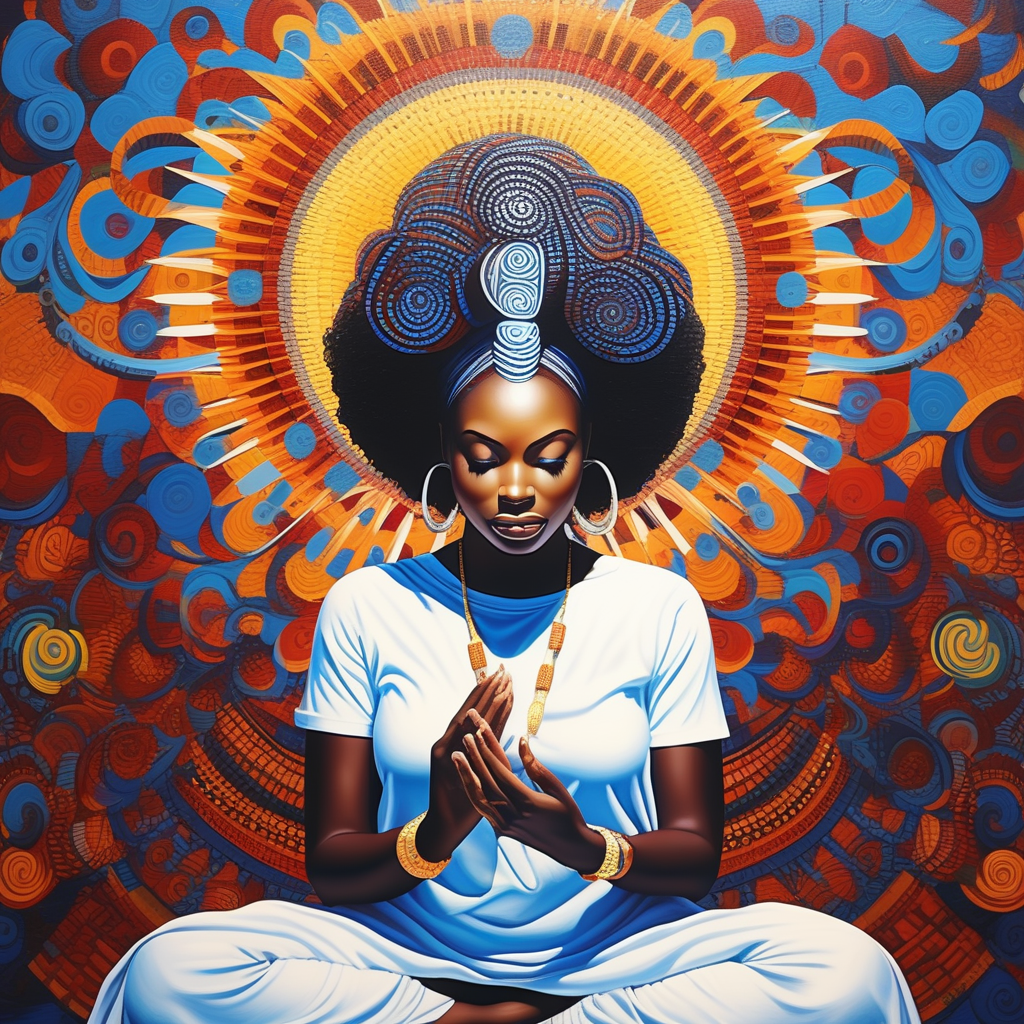
In stillness, there is a profound awakening. When the relentless chatter of the mind ceases, we step into a realm of pure awareness. It’s akin to the calm after a storm, where clarity emerges from the chaos. In this tranquil state, the mind becomes a mirror, reflecting the movements of the universe in its truest form.

Universal Movements and the Mind


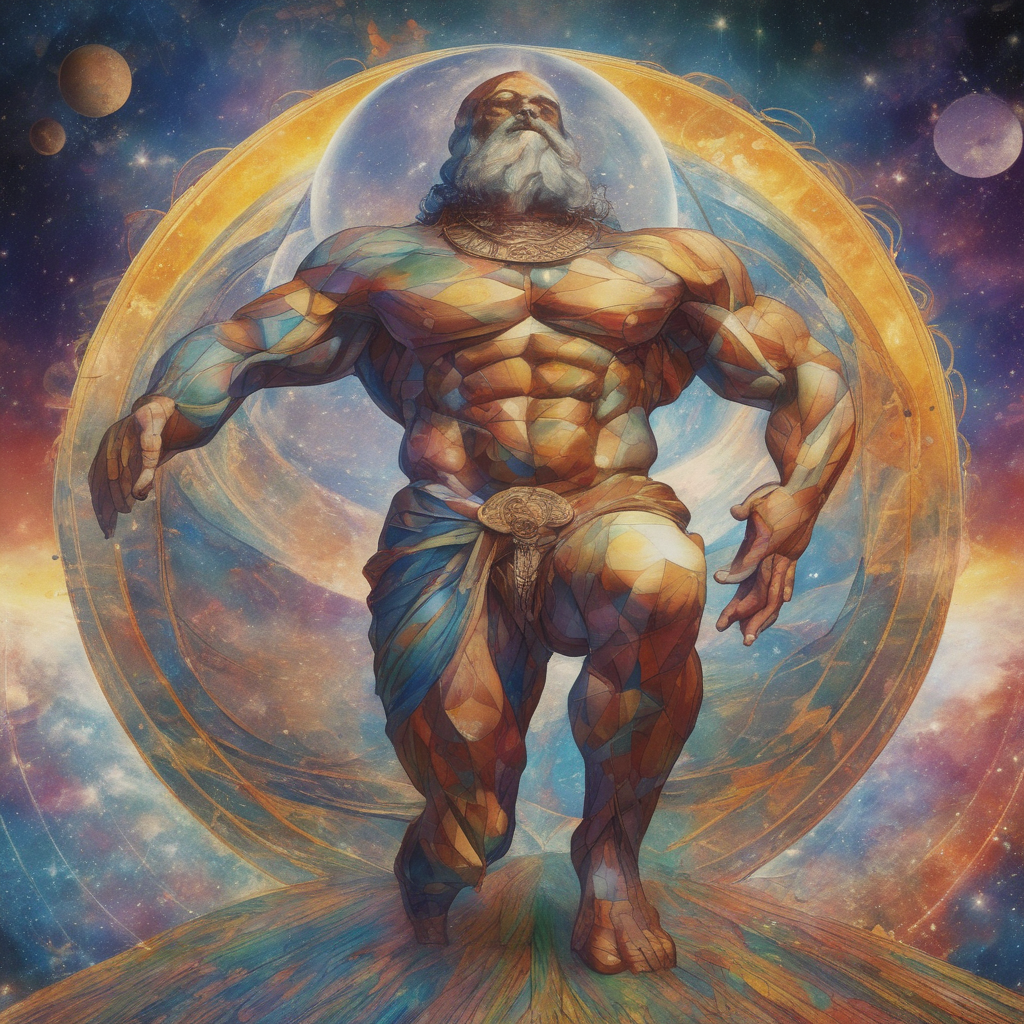
The universe is in constant motion – stars burn, galaxies spin, and life evolves. In our usual state of mental noise, we are detached from this cosmic dance. However, as our mind quiets, we begin to synchronize with these universal rhythms. This synchronization is not just observation; it is a profound connection, an understanding that we are part of this grand symphony.

The Mind’s Journey

Bending, twisting, stretching, and crunching the mind are not just metaphorical. These are processes of challenging our thoughts, questioning our beliefs, and stretching our understanding. It’s a journey from the known to the unknown, from certainty to curiosity, from noise to silence.


Conclusion

The still mind is not a void; it is full of awareness. It’s a state where we realize that we are not separate from the universe but integral to it. It’s a realization that every thought, every action is a ripple in the cosmic ocean. This understanding doesn’t come from the constant churning of thoughts but from the serene stillness where we hear the universe speak.

Morgan O. Smith

Yinnergy Meditation, Spiritual Life Coaching & My Book, Bodhi in the Brain…Available Now!
https://linktr.ee/morganosmith

The Weight of the World and the Path to Spiritual Awakening

In the vast expanse of our human journey, there are moments of profound weight, where one feels as if they are carrying the burdens of the entire world upon fragile shoulders. This weight, often elusive and ineffable, is the manifestation of our ego, the culmination of our personal experiences intertwined with the collective unconscious of humanity.

Such weight can be overwhelming, sometimes akin to bearing witness to all of the human pain, suffering, and dark episodes of our shared history. Yet, it is said that we are never burdened with more than we can bear. This assertion, though challenging to grasp especially in our moments of despair, points towards a greater purpose – the evolution of the soul.

Those who endure and navigate through this weight, emerging on the other side of its crushing force, often find themselves transformed. The ego, once the dominating force, begins to dissolve, making way for a purer, more profound connection with the universe. This metamorphosis leads to humility, replacing pride and arrogance with an understanding that we are but a tiny fragment of the vast cosmos.

With this newfound humility comes a more receptive heart. Love, compassion, and empathy flow effortlessly, as the barriers that once separated us from others crumble. We begin to truly understand the adage, “Walk a mile in another man’s shoes.” This isn’t just about human-to-human connections; it extends to all life forms. We start recognizing the soul in every being, every flutter of a leaf, every chirp of a bird.

The ultimate realization, perhaps, is the true meaning of the age-old teaching, “Love thy neighbour as thyself.” It is not merely a call for kindness but a revelation that at the core, beyond the layers of ego and societal constructs, we are all one. There is no other; there is only us, interconnected and interdependent.

In conclusion, while the weight of the world can seem unbearable at times, it might just be the universe’s way of preparing us for a deeper connection, for a spiritual awakening that allows us to see beyond the superficial and truly embrace all that is.

Morgan O. Smith

Yinnergy Meditation & My Book, Bodhi in the Brain…Available Now!

https://linktr.ee/morganosmith

The Quest for Ultimate Love

Embracing All of Existence

In the whirlwind of our modern lives, we often find ourselves in search of meaning, connection, and purpose. Among the most profound and enduring of human desires is the quest for love. But what if we were to redefine what love means to us? What if we were to aspire for the highest form of love – one that encompasses all sentient and non-sentient beings?

**Sentient Beings: A Conscious Connection**

When we think of love, our minds often gravitate towards the sentient – our family, friends, pets, and even strangers. These are beings with consciousness, feelings, and experiences. To love them means to understand them, to empathize with their pain, joy, and struggles. It means to extend compassion even when it’s challenging, to forgive even when hurt, and to be there even in silence. Loving sentient beings is to recognize the spark of life that we share, the thread of existence that connects us.

**Non-Sentient Beings: Beyond The Obvious**

On the other hand, loving non-sentient beings may seem a tad more abstract. How do we love a rock, a gust of wind, or a droplet of water? It’s about cherishing the interwoven tapestry of life. Every element, no matter how inanimate it might seem, plays an essential role in our existence. By loving non-sentient entities, we are acknowledging the importance of everything around us. We are recognizing that even the seemingly insignificant has its place in the cosmos.

**The Interconnectedness of All Things**

Loving both sentient and non-sentient beings brings to light an essential truth about existence – everything is interconnected. Nothing exists in isolation. The air we breathe, the water we drink, the ground we walk upon – all of it sustains us. Similarly, our actions, thoughts, and feelings reverberate through the vast web of life. By directing love towards every facet of existence, we are nourishing this web, strengthening our bond with the universe.

**Why Ultimate Love Should Be Our Life’s Goal**

Embracing ultimate love isn’t just about affection. It’s a conscious choice to see the world in its entirety, to appreciate the grandeur of existence, and to foster a deep sense of gratitude. This expansive perspective shifts our priorities, deepens our connections, and fills our lives with purpose.

As we journey through life, aiming for this boundless love ensures that we leave no stone unturned, and no heart untouched. The pursuit of ultimate love becomes a path to enlightenment, a journey toward understanding the true nature of existence.

In conclusion, to love all sentient and non-sentient beings with all our hearts is to experience the universe in its totality. It’s a clarion call to recognize the divine in the mundane and to elevate our human experience to a cosmic dance of love and connection. This, indeed, should be the goal of life. For in this love, we find not just the meaning of existence, but also its ultimate celebration.

Morgan O. Smith

Yinnergy Meditation & My Book, Bodhi in the Brain…Available Now!

https://linktr.ee/morganosmith

Reincarnation Unfolding

The Mystical Dance of Life at the Subatomic Scale

Reincarnation is often conceived as a cycle of birth, death, and rebirth. This process, however, is not confined merely to the level of an individual’s life journey, but also at a minute, an invisible scale that continuously unfolds within us.

The human body is composed of about 37 trillion cells, with each one possessing its lifecycle. Old cells die and new ones are born in a ceaseless symphony of life. Every second, millions of cells in your body reincarnate, dying and then being reborn anew. This minute cycle mirrors the grandeur of the reincarnation concept, challenging us to rethink what it means at the fundamental level.

To delve deeper, each cell consists of molecules, atoms, and subatomic particles, each undergoing their cycles of transformation. These minuscule particles don’t die or are born in the traditional sense, but rather transform, changing their states, swapping places, decaying, and then being reincarnated into different particles. From this viewpoint, reincarnation becomes a ubiquitous process that is playing out at every moment.

In light of this perspective, where does the soul reside? Is it just in the whole or also in the parts? If we consider the soul as the essence of life and consciousness, then every cell, every molecule, and even every atom has a part of this essence. This soulful essence, then, is constantly dying and being reborn, experiencing its cycle of reincarnation at a cellular, molecular, and atomic level.

Then arises the concept of karma, a law of moral causation. Can it apply at a subatomic level? At first glance, it might seem improbable. After all, karma is about action and consequence, and cells or atoms don’t have agency in the same way humans do.

However, if we think of karma less as moral action and more as causality, things start to take shape. Each cell’s fate—its health, its functioning, its lifespan—is determined by previous actions, or karmas, at the molecular and atomic levels. These actions could be genetic expressions, protein formations, or even quantum fluctuations.

Molecular karma plays out in the creation of proteins, cellular karma in the orchestration of life processes, and atomic karma in fundamental interactions. The sum of all these karma of parts can even influence the karma of the whole, impacting our health, our mind, and our life.

Through this lens, the concept of reincarnation and karma expands beyond a spiritual or religious doctrine and becomes a fundamental principle of life, from the grand scale of human existence to the tiny dance of atoms.

Thus, the journey of life and death is not a one-time event; it is a constant process. Every moment, we are dying and being reborn, at various levels of our existence. Our karma, too, is being created, fulfilled, and carried forward at these multiple levels. Such a realization can provide us with a profound perspective on life, death, reincarnation, and karma, reminding us of our intricate connection with the cosmos.

This understanding, although awe-inspiring, is only the tip of the iceberg. The philosophical implications are profound, leaving us to ponder the mysterious dance of life and death that is taking place within us, every moment, at every level.

Morgan O. Smith

Yinnergy Meditation & My Book, Bodhi in the Brain…Available Now!
https://linktr.ee/morganosmith

Tracing the Divine Contours

Metaphorical Exploration of the Three Faces of God

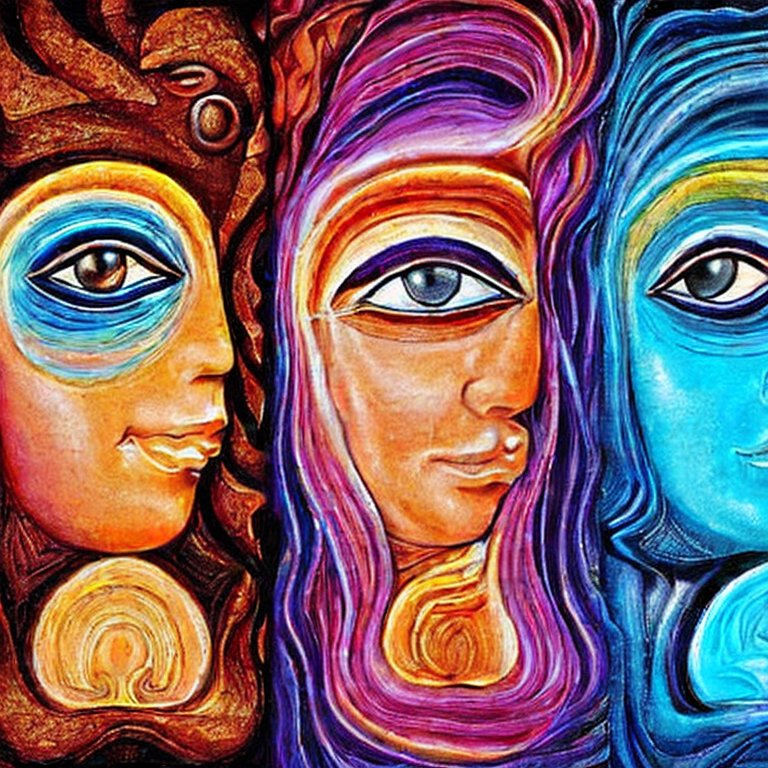
As we endeavour to understand the divine, let’s imagine sketching three different portraits of God, each revealing a unique aspect of the divine. These are the “Three Faces of God,” metaphorically spoken of as “I am That,” “Thou art,” and “It, the Ground of All Being.” Each face provides a different set of facial features, offering a new perspective and experience of the divine.

1. The First Portrait: “I am That”

Envision drawing the first portrait, where you sketch not with your hand, but with your consciousness. This portrait, entitled “I am That,” represents the divine as the reflection of our inner selves. The eyes in this portrait mirror our own, sparkling with the wisdom of unity and oneness. These eyes are windows into the soul, witnessing the divine within us and in everything around us.

The lips are sealed, symbolizing the silence that encapsulates the profound realization of this facet of divinity. It is a silence not born of absence but of completeness, tranquillity that resonates with the essence of existence. The serene countenance of this portrait is a silent affirmation of our inherent divinity.

2. The Second Portrait: “Thou Art”

Now, we turn to the second portrait, “Thou Art.” Here, the divine is perceived as the other, an entity separate from ourselves. In this image, the eyes are compassionate, gazing at us with empathy and understanding, reflecting a personal deity who knows us intimately, one who listens, guides, and protects.

The lips are gently curved into a comforting smile, a symbol of the divine’s eternal love and benevolence. This portrait embodies a divine entity that exists independently of us, yet is deeply connected in a loving and caring relationship.

3. The Third Portrait: “It, the Ground of All Being”

The third portrait, “It, the Ground of All Being,” is an abstract masterpiece. Instead of conventional facial features, it is an evolving canvas of colours, shapes, and patterns, capturing the unfathomable depths and dimensions of the divine as the fundamental essence of existence.

This image lacks eyes and lips because it symbolizes the impersonal aspect of the divine. It is the primordial backdrop from which all forms arise and into which they merge. This face does not interact or engage in the usual sense but is simply there, perpetually present, the immutable reality underlying all of existence.

Wrapping Up

This metaphorical exploration of the “Three Faces of God” is like an artful journey into divinity’s vast and varied landscapes. It encourages us to recognize the divine in our reflections, in a comforting gaze, and in the ever-changing canvas of existence.

Each of these faces, with its unique set of features, invites us to a different experience and understanding of God, enabling us to connect with the divine on multiple levels. It’s a contemplative journey that opens up possibilities for self-discovery and spiritual growth, enhancing our cosmic connection. In these divine portraits, we don’t just see different faces of God; we see reflections of our own quest for spiritual understanding and existential meaning.

Morgan O. Smith

Yinnergy Meditation & My Book, Bodhi in the Brain…Available Now!

https://linktr.ee/morganosmith

Three Perspectives on Divinity

A Journey of Self-Discovery and Cosmic Connection

Every human being, at some point, grapples with the concept of divinity. How we perceive the divine greatly influences how we understand ourselves and our place in the cosmos. While there are many ways to envision divinity, let us ponder the “Three Faces of God” – “I am That,” “Thou art,” and “It, the Ground of All Being.” Each provides a distinct lens through which we may view and experience the divine.

1. Divine Within: The Face of “I am That”

“I am That” is a call to recognize the divine within us. It is not just a statement; it’s an acknowledgment of our inherent divinity. This perspective dissolves the illusion of separateness, helping us realize that we’re not merely fleeting existences in an indifferent universe, but integral fragments of a divine whole.

This face asks us to engage in deep introspection, to see beyond the veil of our mundane identities, and to understand that our true essence is not our transient ego, but the eternal spirit. Could it be that we’re more divine than we’ve ever imagined? This face prompts us to explore that possibility.

2. Divine As Other: The Face of “Thou Art”

The face of “Thou Art” offers a contrasting perspective. Here, the divine is seen as the ‘Other,’ an entity outside ourselves with whom we can establish a personal connection. This relationship with the divine, filled with reverence and love, is akin to the bond between a devotee and their deity.

In this model, God is the figure we pray to, seek comfort from, and surrender our troubles to. It’s a perspective that creates a powerful, intimate bond with the divine, letting us experience the divinity not as a part of us, but as a separate, caring, and guiding entity.

3. Divine As All: The Face of “It, the Ground of All Being”

The third face, “It, the Ground of All Being,” portrays God as an impersonal essence, the primal energy that permeates the cosmos. This face of divinity does not personify the divine but sees it as the raw material of existence. It is the unchanging reality amidst the ceaseless flux of the universe.

This view urges us to go beyond the traditional understandings of God and probe deeper into the mysteries of existence. Could it be that the divine is not just a deity or a spirit within, but also the very fabric of reality?

Wrapping Up

The Three Faces of God offer a multidimensional understanding of the divine, guiding us on our spiritual and philosophical quest. They propose different ways to connect with the divine, based on our personal inclinations and spiritual needs. More than a simple triad, they represent a spectrum of possibilities on our spiritual journey.

In acknowledging these perspectives, we can foster a richer understanding and experience of God, allowing us to discover the divine within ourselves, in an intimate relationship, and as the underlying reality of existence. Such an exploration can become a catalyst for personal growth and spiritual evolution, leading us to new levels of self-discovery and cosmic connection. After all, isn’t that what the quest for understanding divinity is all about?

Morgan O. Smith

Yinnergy Meditation & My Book, Bodhi in the Brain…Available Now!

https://linktr.ee/morganosmith

The Singular Thought

Unravelling The Fabric Of Existence

Introduction:
Deep within the cosmos, lies an interconnected web of creation. Many spiritual traditions and contemporary philosophies propose the notion of Nonduality – the idea that everything in the universe is woven from a single thread. This post delves into an intriguing proposition: that every single thing in the entire universe was, is, and will be created with just one thought.

The Essence of Thought:
Thought, in its purest form, is an emanation of consciousness. The ancient sages believed that the universe itself is a manifestation of cosmic consciousness. This single, all-encompassing thought is the seed from which the boundless universe springs forth.

The Nature of Nonduality:
Nonduality implies that there is no separation between the observer and the observed, between subject and object. This interconnectedness suggests that the whole of creation is intrinsically linked to our own consciousness. The singular thought that manifests the universe is also the foundation of our individual thoughts and perceptions.

The Scientific Angle:
In modern times, the field of quantum physics has begun to echo the ancient wisdom of Nonduality. Particles can be in multiple places at once and are deeply interconnected. Some physicists even posit that consciousness itself may be a fundamental aspect of the universe, interweaving thought with the fabric of reality.

The Ripple Effect:
Considering the idea that creation stems from a single thought, our own thoughts take on new significance. Each thought could be seen as a ripple in the cosmic ocean, interacting with and shaping the universe in ways beyond our comprehension. Our thoughts, emotions, and actions might have a more profound impact on the fabric of existence than we realize.

Practical Implications:
If we accept the notion of a singular thought behind creation, how does this affect our daily lives? It could be a call to mindfulness; to recognize the power and potential in our own thoughts. By aligning ourselves with the constructive, compassionate aspects of thought, we can contribute to the positive unfolding of the universe.

Conclusion:
The idea that everything is born of a single thought is a profound and enchanting concept that bridges ancient wisdom with contemporary science. As we navigate the waves of existence, let us be mindful of the ripples we create. The universe, in all its complexity, might just be the echo of one resounding thought.

Morgan O. Smith

Yinnergy Meditation & My Book, Bodhi in the Brain…Available Now!

https://linktr.ee/morganosmith