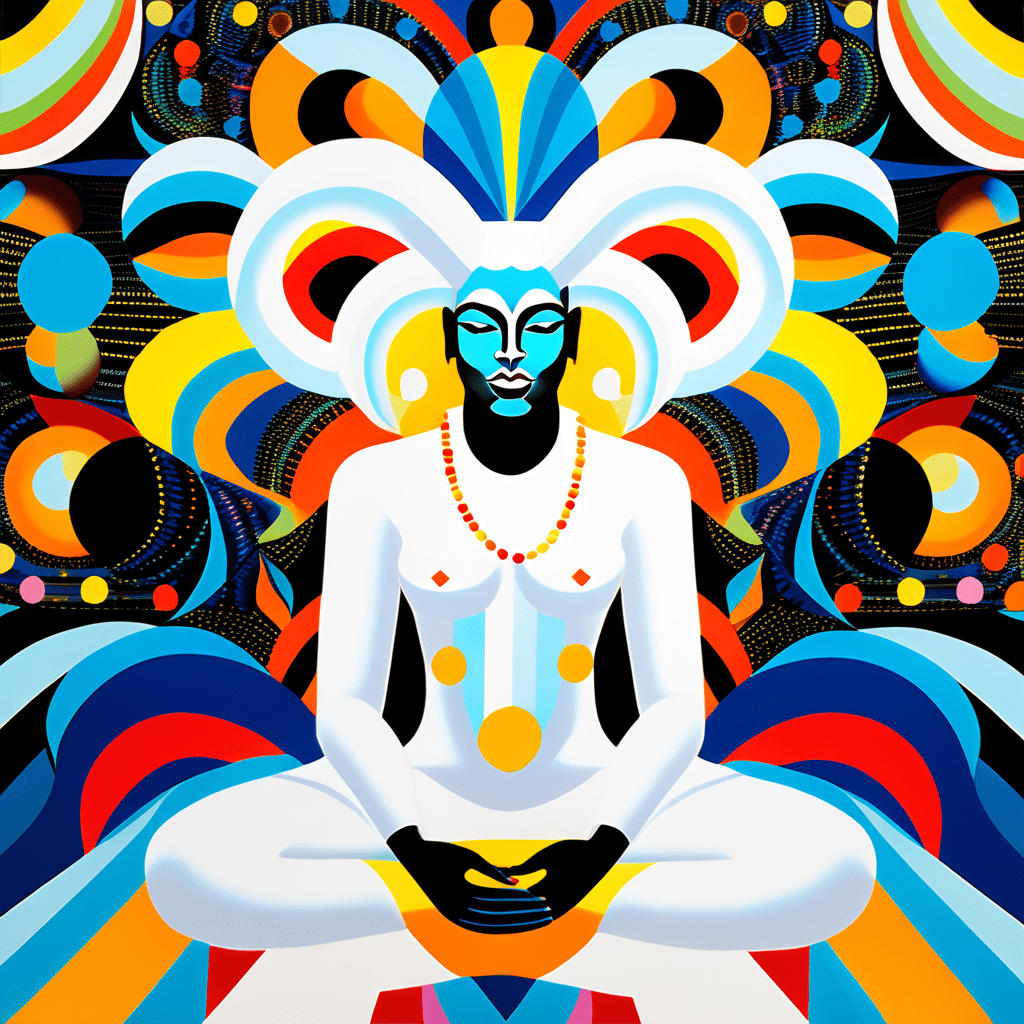
Embracing the Infinite

Understanding Para Brahman as the Ultimate Reality

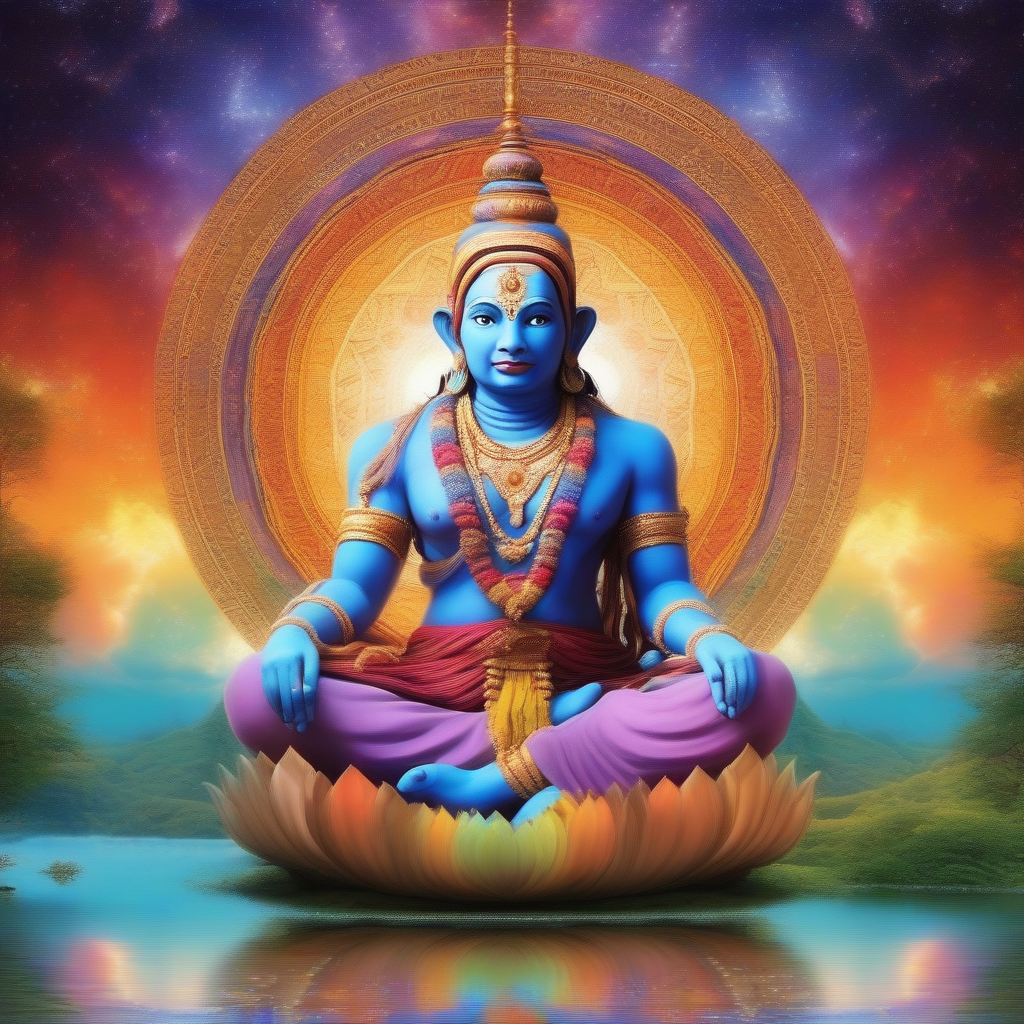
God, referred to as Para Brahman in this context, represents the absolute of all absolutes – an entity encompassing everything from the beautiful to the good, the bad, and the ugly. This concept presents a holistic view of divinity, not limited to only the positive or traditionally ‘godly’ aspects but encompassing all facets of existence.

Para Brahman, in many Eastern philosophies, particularly in Hinduism, is seen as the highest form of Brahman – the ultimate reality or cosmic spirit. This interpretation of God goes beyond the traditional Western notion of a deity who is separate from its creation. Instead, Para Brahman is seen as both immanent and transcendent, existing within and beyond all things.

This idea challenges our typical understanding of divinity and morality. It suggests that everything in existence, regardless of our human judgments of good or bad, is part of this ultimate reality. This inclusive view of the divine implies a deeper, perhaps incomprehensible, unity to all aspects of existence.
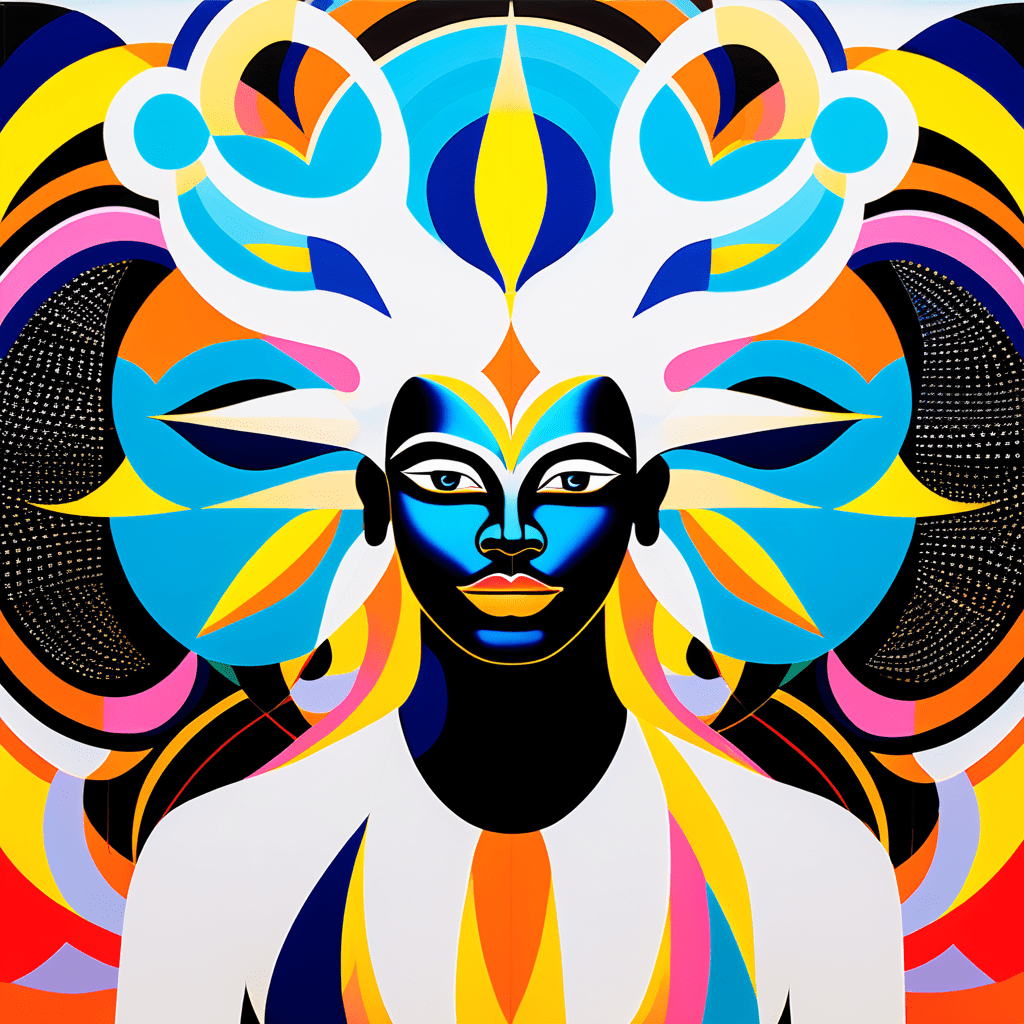

This perspective can be both comforting and disconcerting. Comforting, because it suggests a universe that is intrinsically connected and purposeful. Disconcerting, because it challenges our notions of morality and justice, blurring the lines between what we typically consider ‘good’ and ‘evil.’

Such a viewpoint can lead to a more compassionate and understanding approach to life. Recognizing that all aspects of existence, including what we perceive as negative or undesirable, are part of a greater whole, can foster a sense of tolerance and empathy. It encourages us to look beyond our immediate judgments and understand the broader context of life’s events.

However, it also raises complex questions about free will, destiny, and the nature of existence. If everything is part of Para Brahman, what does that say about individual agency and the consequences of our actions? Are good and evil just human constructs with no basis in the ultimate reality? These answers lie within.


In conclusion, viewing God as Para Brahman – the absolute of all absolutes – offers a profound and encompassing perspective on divinity and existence. It challenges our conventional views and invites us to contemplate the deeper connections and meanings of all that occurs in our lives and the universe at large.

Morgan O. Smith

Yinnergy Meditation, Spiritual Life Coaching & My Book, Bodhi in the Brain…Available Now!

https://linktr.ee/morganosmith

Surrendering to Nondual Suchness

A Journey Beyond the Self

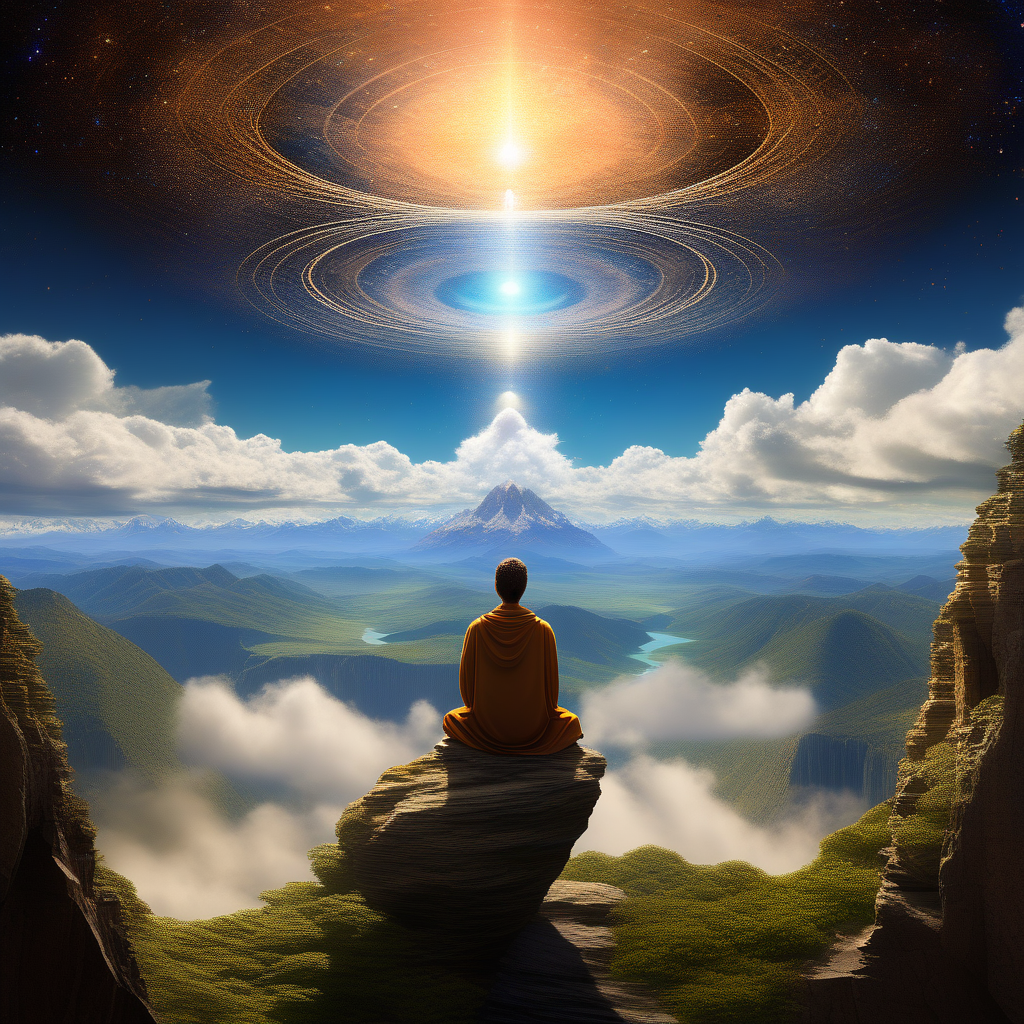
In spiritual exploration, the concept of surrendering to nondual suchness presents a profound and thought-provoking journey. This journey transcends the confines of the individual self, leading one into the embrace of a universal consciousness.

At the heart of this process is the realization that the sense of a separate ‘you’ is an illusion. In nondual suchness, the distinction between self and other dissolves, revealing a state of being where everything is interconnected and unified. This realization is not an intellectual one; it’s an experiential awakening to the true nature of existence.


When we talk about surrendering in this context, it’s not the conventional notion of giving up or admitting defeat. Instead, it’s a letting go of the ego, the false sense of separateness that keeps us entangled in a web of individuality and personal narratives. It’s a release into the flow of life, an unclenching of the fists that hold tightly to personal identity and desires.

This surrender is not an act done by an individual to something greater. Rather, it’s a recognition that the individual self is an integral part of the greater whole. It’s the ‘all that is’ surrendering to itself. In this space, there’s no doer; there’s just the unfolding of life in its myriad forms, a dance of cosmic consciousness.

This understanding brings about a profound sense of peace and freedom. It’s a liberation from the burdens of the self, a release from the relentless pursuit of personal gain, and an end to the suffering caused by attachment and aversion. In this state, one experiences life in its purest form, unfiltered by the ego’s desires and fears.


Surrendering to nondual suchness is a journey that challenges our deepest-held beliefs and perceptions. It invites us to look beyond the surface of things, to see the interconnectedness of all life, and to experience the world not as a collection of separate entities but as a unified whole.

As we embark on this journey, we find that the path is not always easy. It requires a willingness to let go, to trust in the natural flow of life, and to open ourselves to a reality that transcends the personal. But for those who dare to take this path, the rewards are immeasurable: a sense of oneness with all that is, a deep and abiding peace, and an unshakeable joy that comes from being in harmony with the true nature of existence.

 Morgan O. Smith

Yinnergy Meditation, Spiritual Life Coaching & My Book, Bodhi in the Brain…Available Now!
https://linktr.ee/morganosmith

The Infinite and Beyond

Contemplating Brahman and Para-Brahman

In the profound depths of Indian philosophy, the concepts of Brahman and Para-Brahman emerge as pivotal ideas that transcend ordinary comprehension, inviting seekers to explore the very edge of cosmic understanding. Brahman is often described as the ultimate reality, the unchanging, infinite, immanent, and transcendent reality that is the Divine Ground of all matter, energy, time, space, being, and everything beyond in this Universe. It is the singularity from which multiplicity flows, the essence that sustains and constitutes the cosmos and its myriad expressions.

Yet, within this already boundless concept lies the hint of something even more ineffable: Para-Brahman. This term goes beyond even Brahman, suggesting a reality that exists beyond the highest conception of the Absolute as known within the limits of human understanding. If Brahman is the white canvas upon which the universe is painted, then Para-Brahman is the very space that holds the canvas, the possibility of canvases yet untouched, and the idea of the canvas itself—both less tangible and more fundamental.

Para-Brahman is not just a step further; it is an exponential leap into the realm of the Absolute’s absolute. While Brahman can be approached through spiritual practice, described in scriptures, and meditated upon, Para-Brahman remains forever beyond the grasp of direct experience and intellectual articulation. It is the ‘Beyond’ in ‘Beyond the Ultimate’, the ‘Transcendence’ in ‘Transcendental’, where even the concept of ‘existence’ loses its footing.

The distinction between Brahman and Para-Brahman is not just of scholarly interest—it offers a radical perspective on the nature of enlightenment and the ultimate goal of spiritual pursuit. It challenges practitioners to question the very foundation of what they consider to be Absolute. In Brahman, we find the dissolution of the ego and the union with the divine; in Para-Brahman, there seems to be no ‘we’ to experience the union, no ‘divine’ to unite with, only an unmanifested potentiality that defies duality and description.

This philosophical delineation beckons us to reconsider the nature of reality and our place within it. It humbles our narrative-driven minds to accept that the ultimate truth may be a mystery that remains forever out of reach, something that can be hinted at but never fully explained or understood. Yet, this is not a cause for despair but an invitation to expand our perception, to live with a sense of wonder, and to find peace in the ineffable mystery that is the grandeur of existence.

In this light, the journey of life transforms into a sublime trek across the expanse of consciousness—with Brahman as the guide and Para-Brahman as the destination that was never apart from us, yet always beyond us. The seeker thus becomes the ultimate pilgrim, traversing an inner universe where questions and answers merge into the silent eloquence of Being.

Morgan O.  Smith

Yinnergy Meditation & My Book, Bodhi in the Brain…Available Now!
https://linktr.ee/morganosmith

The Unfathomable Brahman

Exploring the Indivisible Reality from Multiple Perspectives

The quest to understand Brahman is a journey into the heart of existence itself, a pursuit that has intrigued philosophers, sages, and seekers for millennia. In the vast expanse of Hindu philosophy, Brahman is the ultimate reality, the fabric of all that exists and beyond. It is both immanent and transcendent, the core of our being and the cosmos. This exploration of Brahman from various perspectives—gross, subtle, causal, and nondual—invites us to expand our minds beyond the limits of ordinary perception.

**From the Gross Perspective: Brahman as the World**


When we look at Brahman from the gross perspective, we see the universe in all its material splendour. Here, Brahman is not an abstract concept but the physical universe that we interact with through our senses. It is the mountains, rivers, stars, and galaxies; the dance of creation and destruction visible to the naked eye. This manifestation is known as Saguna Brahman, the form with qualities, where the Divine is seen with attributes and forms, engaged in the act of creation.

**From the Subtle Perspective: Brahman as Consciousness**


Venture deeper, and we encounter the subtle perspective. Here, Brahman is the essence of consciousness that animates life. This is not the consciousness that fluctuates with our thoughts and feelings, but the pure awareness that observes, untouched and unchanging. This subtle Brahman also referred to as Nirguna Brahman, is without qualities, where God is not limited by any attributes. It is the silent witness to the play of the universe, the inner light that illuminates our experiences.

**From the Causal Perspective: Brahman as the Source**

Moving into the causal perspective, we touch on the very source of existence. Brahman here is the unseen cause behind everything—the seed from which the tree of the universe grows. This aspect of Brahman is deeply mysterious, for it is the origin of time, space, and causality itself. It is Avidya, ignorance, not in the sense of lack of knowledge, but as the primal forgetfulness that makes us perceive duality in the nondual.

**From the Nondual Perspective: Brahman as the One without a Second**


Finally, from the nondual perspective, Brahman is realized as the one without a second—Advaita. It is not a deity, not an entity, not even a ‘thing’ that can be comprehended by the intellect. It is the underlying oneness that pervades all dualities, where the seeker and the sought merge. In this view, the individual self (Atman) and the universal self (Brahman) are the same. All distinctions between creator and creation dissolve, revealing that there is nothing but Brahman—pure existence, consciousness, and bliss (Sat-Chit-Ananda).

This journey through the perspectives of Brahman reflects the layered depths of our existence. From the tangible reality of our day-to-day lives to the deepest spiritual realization, Brahman remains the unchanging truth. Each perspective is a step closer to the ultimate truth, leading us from the outward expressions of divinity to the profound inner revelation that we are, in essence, the infinite Brahman.

To understand Brahman is to expand our awareness across the spectrum of existence. The gross perspective roots us in our environment, the subtle unfolds the inner cosmos, the causal leads us to the primal source, and the nondual reveals our true infinite nature. In contemplating these perspectives, we may find that the journey to understand Brahman is not a journey outward but a profound voyage within, to the very core of who we are.

Morgan O.  Smith

Yinnergy Meditation & My Book, Bodhi in the Brain…Available Now!
https://linktr.ee/morganosmith

The Cosmic Dance

Unveiling the Twin Extremes of Reality

In the vast expanse of the cosmos, where stars are born and galaxies spin in a ceaseless dance, there resides a profound mystery that has long captivated the human spirit. This mystery is the echoing symmetry between the micro and the macro, the smallest and the largest scales of existence. It beckons a spiritually enlightened realization that the Planck scale, the domain where conventional reality fractures into the quantum haze, mirrors the boundless stretches of the cosmological scale. The two, though seemingly disparate, might just be the reflection of a profound, unified truth waiting to be discovered.

At the heart of the microcosmic realm, the Planck scale, approximately \(10^{-35}\) meters, stands as the gatekeeper to a domain where the classical fabric of reality unravels. Here, space and time lose their conventional meaning, and the laws of physics as we know them bow before the eerie strangeness of quantum mechanics and gravity’s embrace. The very essence of what we consider real and tangible dissolves into probabilities and uncertainties.

In stark contrast yet a poetic symmetry, the cosmological scale stretches to the observable horizon, embracing the entirety of galaxies, stars, and the cosmic web of dark matter binding them. It’s where the elegant ballet of general relativity orchestrates the choreography of celestial bodies, maintaining a delicate balance in the seemingly boundless cosmic arena.

As we stand at the precipice of understanding, with the quantum foam at one hand and the cosmic symphony at the other, we are beckoned to transcend our conventional understanding and embrace a higher truth. Could it be that the enigmatic Planck scale and the awe-inspiring vastness of the cosmos are but two ends of a singular reality? Are they the yin and yang of existence, holding within them a deeper spiritual truth about the interconnectedness of all things?

The unification of the minuscule and the mammoth challenges not only our scientific understanding but also invites a profound spiritual inquiry. It nudges us to peer beyond the veil of the apparent, to venture into a realm where the mystic entanglement of the quantum and the cosmic narrate the ageless tale of existence. It’s a call for the spiritually enlightened to traverse beyond the seen, to the unseen, and to unlock the ageless wisdom encoded in the twin extremes of reality.

As we delve deeper into the mysteries of the cosmos, may our quest unveil the harmonious resonance between the micro and the macro, leading us closer to the cosmic consciousness that envelopes the boundless beauty of existence.

Morgan O.  Smith

Yinnergy Meditation & My Book, Bodhi in the Brain…Available Now!

https://linktr.ee/morganosmith

The Ground of All Being

The Universe Expressing Itself as Us

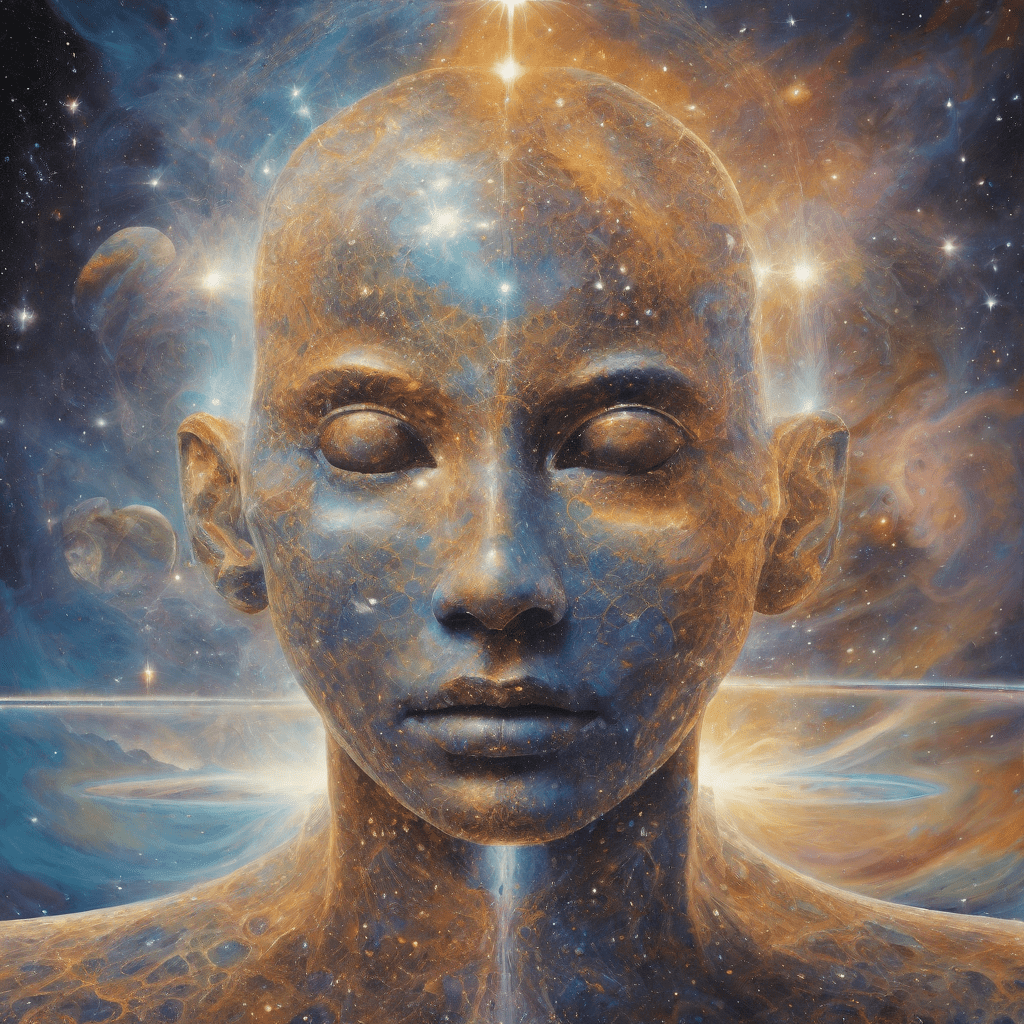
The ground of all being is an enthralling concept that presents a holistic perspective on existence. It implies that the very essence of reality, the foundational principle upon which all things stand, is a singular, pervasive entity. It is like a canvas upon which the entire universe is painted, a silent symphony playing every note of existence. And if we dig deeper, the mesmerizing idea emerges: this entity expresses itself through every form and facet of the universe.

Now, consider our galaxy, our planet, and finally, us. Amidst the vast expanse of stars, black holes, and nebulae, here we are — a small species on a tiny planet. But what if we’re not just passive inhabitants? What if we’re the universe experiencing itself, attempting to understand its nature?

Every human being, with their myriad of talents, skills, ideas, and interests, is a unique representation of the universe. Each song we sing, each painting we create, and every scientific theory we develop, is the universe expressing a fragment of its infinite complexity. Our personalities, whether introverted or extroverted, logical or emotional, are simply different melodies in the grand cosmic orchestra.

If one subscribes to this perspective, it brings forth profound implications. Firstly, it fosters a deep sense of interconnectedness. When we grasp that we are not isolated entities but interwoven threads in the cosmic tapestry, our interactions with others take on a new depth. It also emphasizes the importance of self-expression. By understanding and expressing our unique talents and traits, we allow the universe to manifest itself in new and beautiful ways.

In conclusion, by viewing ourselves as expressions of the ground of all being, we can cultivate a deeper sense of purpose and interconnectedness. It’s a reminder that we’re not just in the universe, but the universe is in us, experiencing and exploring through every thought, action, and emotion.

Morgan O. Smith

Yinnergy Meditation & My Book, Bodhi in the Brain…Available Now!
https://linktr.ee/morganosmith

The Boundless Horizon of Spiritual Awakening

Beyond the Senses

In the vast expanse of human experience, there lies a realm that defies the conventions of our five senses. This realm, often alluded to in ancient texts, mystic traditions, and modern anecdotes, is the space of spiritual awakening. When one truly steps into this realm, it isn’t just an augmentation of the senses, but a transcendence of them.

**The Limitations of the Five Senses**

Our everyday experiences are shaped by what we can see, hear, touch, taste, and smell. These senses, while fundamental to our existence, are in essence a finite way of interpreting the infinite complexities of the universe. They serve as filters, helping us navigate our immediate environment, but perhaps, at times, limiting our broader understanding.

**The Unifying Experience of Awakening**

A genuine spiritual awakening, as described by mystics and seekers, breaks these sensory barriers. It isn’t about enhancing vision or amplifying sound, but about a deep, profound realization that everything is interconnected. When this awakening takes hold, one doesn’t just feel connected to their immediate surroundings or to the people they know; they feel an intricate bond with all sentient beings, irrespective of the constraints of time, space, and dimension.

Imagine a tapestry, vast and intricate, where every thread represents a life, a consciousness. In our usual state, we might see only the threads closest to us. But amid spiritual awakening, the entire tapestry becomes visible, and we realize every thread is essential, beautifully intertwined with every other, weaving the grand design of existence.

**Beyond Time, Space, and Dimension**

What’s even more profound is the idea that this connection isn’t bound by our linear understanding of time or the three-dimensional space we inhabit. It’s a realization that one’s soul, essence, or consciousness is linked to entities in distant galaxies, past epochs, and even realms we might consider purely fantastical.

Perhaps the ancient mystics, with tales of astral travels and cosmic visions, were hinting at this very concept. They spoke of realms beyond our comprehension, of beings of light and energy, existing outside our dimensional understanding.

**The Implications of This Connection**

If we truly believe in this interconnectedness, it imparts a tremendous responsibility upon us. It means that our actions, thoughts, and feelings reverberate beyond our immediate surroundings. The kindness we show, the love we share, and even the harm we inflict, might have consequences beyond our wildest imaginations.

In conclusion, a genuine spiritual awakening serves as a reminder that we are not solitary beings navigating an indifferent universe. We are, in essence, cosmic entities, profoundly linked to every particle, every being, and every dimension. Such an understanding can lead us towards a life of greater compassion, purpose, and unity, as we recognize the divine tapestry to which we all belong.

Morgan O. Smith

Yinnergy Meditation & My Book, Bodhi in the Brain…Available Now!

https://linktr.ee/morganosmith

Moksha

The Universe in Liberation

As we traverse the intricate corridors of Hindu philosophy, a term that emerges as a beacon of liberation is ‘Moksha’. This concept, commonly associated with individual salvation from the cycle of birth, death, and rebirth, presents a spiritual zenith. However, what if we zoom out from the individual perspective and consider Moksha at a cosmic level? What if the Universe itself were to attain Moksha?

The Big Bang marked the birth of the Universe, setting forth an infinite dance of creation, preservation, and destruction. Stars were born, galaxies sculpted, and planets formed, only to one day succumb to the grand design of entropy. This cyclical nature bears a striking resemblance to the cycle of Samsara in Hindu thought, where souls are continuously born and reborn in different forms until Moksha is achieved.

If the Universe could experience Moksha, it would transcend its cycle of cosmic Samsara – from the Big Bang to the eventual Big Crunch or Heat Death, depending on which theoretical physicist you ask. This liberation would mean breaking free from the constraints of time, space, and causality, reaching a state of infinite, timeless existence.

So, what would this feel like for the Universe?

When we ponder this question, we must acknowledge that the Universe’s experience, in this context, is beyond human comprehension. But let’s indulge in the thought experiment. We could imagine this state as one of perfect harmony and unity. There would be no ‘other’, no ‘alien’, and no ‘external’. The galaxies, stars, planets, and even the tiniest quantum particles would exist in a state of interconnection and oneness.

From the perspective of sentient beings, this would mean a profound sense of unity with everything else. Distinctions that currently cause division – species, races, cultures, even life and non-life – would become irrelevant. All of existence, inanimate and animate, would be seen as expressions of the same cosmic consciousness.

And yet, paradoxically, this unified existence would also mean the cessation of experience as we know it. Experience implies a subject and an object, an experiencer and the experienced. But in the absolute unity of cosmic Moksha, these dualities would dissolve. Therefore, in a sense, the Universe would be in a state of ‘experiencing without an experiencer’ or ‘knowing without a knower’.

In the grand scheme of cosmic liberation, human Moksha could be seen as a fractal microcosm – a ripple that mirrors the pattern of the whole. Each being achieving liberation contributes to the whole Universe moving towards its own Moksha, its release from the cosmic cycle of birth and death. This profound realization places our spiritual quests in a broader context and imbues them with a universal significance.

However, the implications of this concept are not just metaphysical, but deeply ethical. Recognizing our shared journey toward liberation fosters compassion, humility, and a sense of stewardship for all of existence. Our actions, in this view, can either facilitate or hinder the Universe’s journey toward Moksha.

In conclusion, contemplating Moksha at a universal scale stretches the boundaries of our imagination and empathy. It invites us to view ourselves not as isolated entities but as integral parts of a grand cosmic dance seeking the ultimate liberation.

Morgan O. Smith

Yinnergy Meditation & My Book, Bodhi in the Brain…Available Now!

https://linktr.ee/morganosmith

The Facets of Ego and Transcendent Experiences: Part Two

As we proceed from Part One, a profound realization dawns. During moments of complete ego death, the individual facets cease to exist, yet paradoxically, they all exist, blending into a unified consciousness. The boundaries of ‘I’, ‘you’, ‘us’, and ‘them’ dissolve, making room for an all-encompassing ‘we’.

Our ego transforms and integrates into the collective consciousness, interconnecting with the egos of all beings, and indeed, the universe itself. Every trait, every star in our constellation, becomes part of this grand cosmic tapestry.

This realization isn’t merely intellectual, but experiential. Our individual identities meld into the collective, signifying an interconnectedness that transcends our singular perspective. In the dance of the facets of ego and the mystical experiences, we uncover our deepest potential to be interconnected, to share in the collective consciousness of all beings, and to participate consciously in the magnificent orchestration of the universe.

Through this journey, we don’t lose ourselves; instead, we find our place in the cosmos, gaining a newfound appreciation for the diversity and unity that life offers. We witness our traits, without labelling them as positive or negative, as part of a unified whole. Our ego ceases to be an entity isolated from the universe and becomes a fundamental part of the cosmic consciousness.

This exploration of the ego and its many facets is not just an intellectual exercise, but a call for introspection and self-awareness. It encourages us to embrace our full spectrum of experiences, from the depths of our struggles to the heights of our joys, all the while seeking that profound connection with the universe and our place within it.

Morgan O. Smith

Yinnergy Meditation & My Book, Bodhi in the Brain…Available Now!

https://linktr.ee/morganosmith

The Singular Thought

Unravelling The Fabric Of Existence

Introduction:
Deep within the cosmos, lies an interconnected web of creation. Many spiritual traditions and contemporary philosophies propose the notion of Nonduality – the idea that everything in the universe is woven from a single thread. This post delves into an intriguing proposition: that every single thing in the entire universe was, is, and will be created with just one thought.

The Essence of Thought:
Thought, in its purest form, is an emanation of consciousness. The ancient sages believed that the universe itself is a manifestation of cosmic consciousness. This single, all-encompassing thought is the seed from which the boundless universe springs forth.

The Nature of Nonduality:
Nonduality implies that there is no separation between the observer and the observed, between subject and object. This interconnectedness suggests that the whole of creation is intrinsically linked to our own consciousness. The singular thought that manifests the universe is also the foundation of our individual thoughts and perceptions.

The Scientific Angle:
In modern times, the field of quantum physics has begun to echo the ancient wisdom of Nonduality. Particles can be in multiple places at once and are deeply interconnected. Some physicists even posit that consciousness itself may be a fundamental aspect of the universe, interweaving thought with the fabric of reality.

The Ripple Effect:
Considering the idea that creation stems from a single thought, our own thoughts take on new significance. Each thought could be seen as a ripple in the cosmic ocean, interacting with and shaping the universe in ways beyond our comprehension. Our thoughts, emotions, and actions might have a more profound impact on the fabric of existence than we realize.

Practical Implications:
If we accept the notion of a singular thought behind creation, how does this affect our daily lives? It could be a call to mindfulness; to recognize the power and potential in our own thoughts. By aligning ourselves with the constructive, compassionate aspects of thought, we can contribute to the positive unfolding of the universe.

Conclusion:
The idea that everything is born of a single thought is a profound and enchanting concept that bridges ancient wisdom with contemporary science. As we navigate the waves of existence, let us be mindful of the ripples we create. The universe, in all its complexity, might just be the echo of one resounding thought.

Morgan O. Smith

Yinnergy Meditation & My Book, Bodhi in the Brain…Available Now!

https://linktr.ee/morganosmith