Breaking the Chains of Samsara

Liberation for All

In the vast expanse of existence, the concept of Samsara transcends the mere cyclical experience of birth, death, and rebirth of individuals. It embodies the universal rhythm of creation and dissolution that ensnares not only sentient beings but the cosmos itself. This cosmic dance is not limited to a linear path of suffering and elation but is an intricate interplay of continuous emergence and entropy.

Samsara paints a picture of the universe persistently rejuvenating itself, where every end is a prelude to a new beginning. This cycle, often perceived as a relentless march towards rebirth, is punctuated by moments of joy and despair, mirroring the dualities that define our very existence.


Yet, the pursuit of liberation—attaining Moksha or Nirvana—reveals a profound universal truth. When one achieves liberation, the impact resonates beyond the individual. It is a monumental release that extends to all forms of life and even to the inanimate aspects of our universe. Liberation is not an isolated event but a shared release from the chains that bind us to perpetual reincarnation.

This realization places a monumental responsibility on the path of each seeker. To liberate oneself is to contribute to the emancipation of the entire universe from the Samsara cycle. The journey towards enlightenment, therefore, is not solely for personal salvation but an act of universal significance.
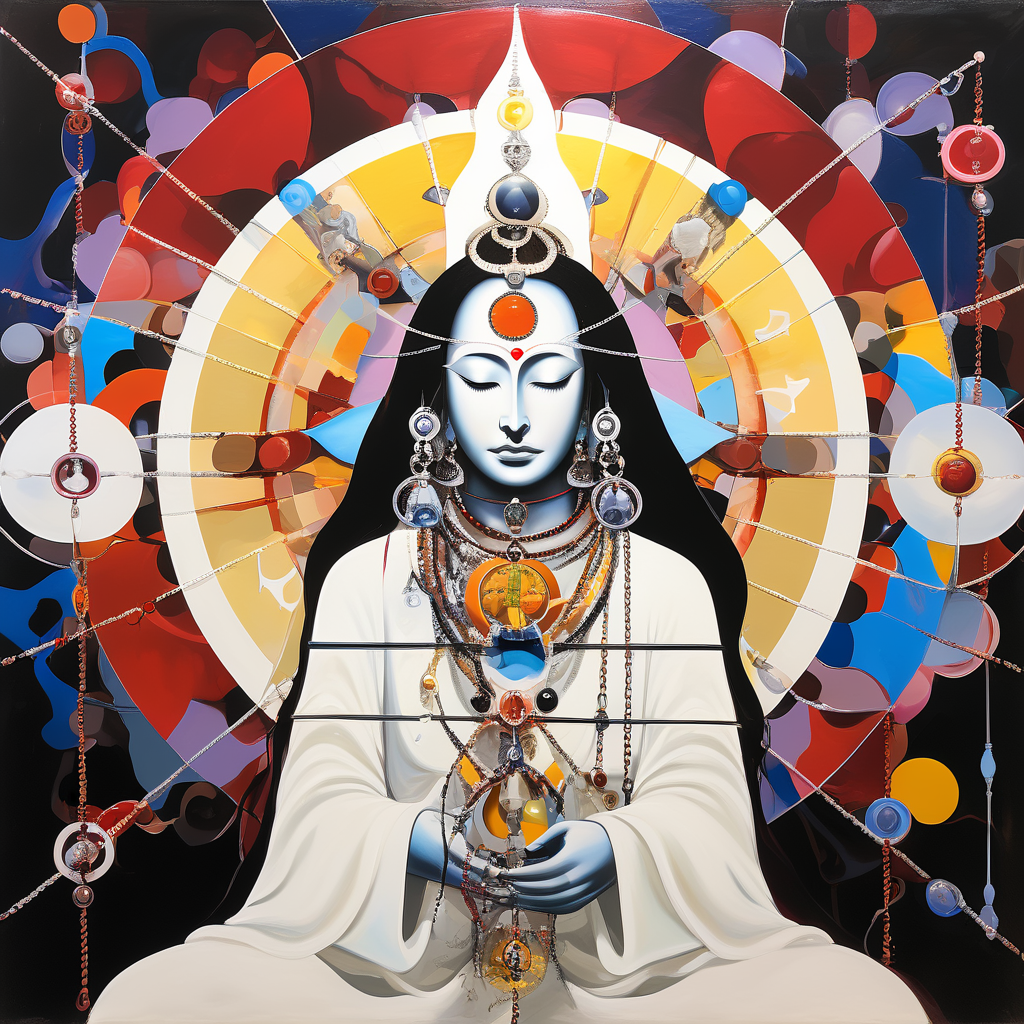

Every step taken towards enlightenment does not just alleviate one’s suffering; it diminishes the collective suffering. It is a beacon that lights up the path not only for oneself but for all beings, signalling a way out of the darkness of ignorance and into the light of awareness. This shared journey towards liberation fosters a profound connection with all existence, weaving a narrative of unity and collective transcendence.

In understanding the magnitude of Moksha or Nirvana, we see not just an escape from personal suffering but an offering of freedom to the universe. It’s a pivotal realization that the path to enlightenment is paved with compassion, altruism, and the ultimate realization that we are all interconnected in the cosmic fabric of life.

Morgan O. Smith

Yinnergy Meditation, Spiritual Life Coaching & My Book, Bodhi in the Brain…Available Now!

https://linktr.ee/morganosmith
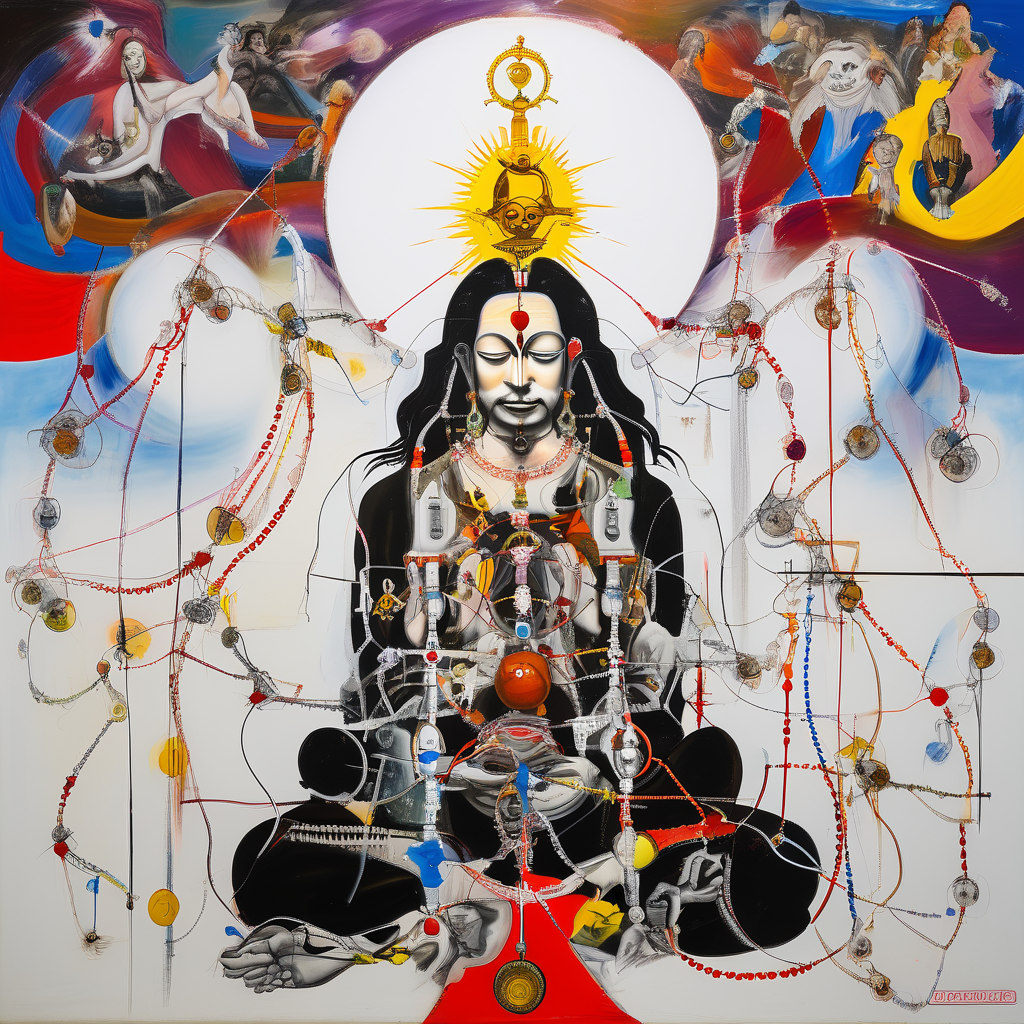
Moksha

The Universe in Liberation

As we traverse the intricate corridors of Hindu philosophy, a term that emerges as a beacon of liberation is ‘Moksha’. This concept, commonly associated with individual salvation from the cycle of birth, death, and rebirth, presents a spiritual zenith. However, what if we zoom out from the individual perspective and consider Moksha at a cosmic level? What if the Universe itself were to attain Moksha?

The Big Bang marked the birth of the Universe, setting forth an infinite dance of creation, preservation, and destruction. Stars were born, galaxies sculpted, and planets formed, only to one day succumb to the grand design of entropy. This cyclical nature bears a striking resemblance to the cycle of Samsara in Hindu thought, where souls are continuously born and reborn in different forms until Moksha is achieved.

If the Universe could experience Moksha, it would transcend its cycle of cosmic Samsara – from the Big Bang to the eventual Big Crunch or Heat Death, depending on which theoretical physicist you ask. This liberation would mean breaking free from the constraints of time, space, and causality, reaching a state of infinite, timeless existence.

So, what would this feel like for the Universe?

When we ponder this question, we must acknowledge that the Universe’s experience, in this context, is beyond human comprehension. But let’s indulge in the thought experiment. We could imagine this state as one of perfect harmony and unity. There would be no ‘other’, no ‘alien’, and no ‘external’. The galaxies, stars, planets, and even the tiniest quantum particles would exist in a state of interconnection and oneness.

From the perspective of sentient beings, this would mean a profound sense of unity with everything else. Distinctions that currently cause division – species, races, cultures, even life and non-life – would become irrelevant. All of existence, inanimate and animate, would be seen as expressions of the same cosmic consciousness.

And yet, paradoxically, this unified existence would also mean the cessation of experience as we know it. Experience implies a subject and an object, an experiencer and the experienced. But in the absolute unity of cosmic Moksha, these dualities would dissolve. Therefore, in a sense, the Universe would be in a state of ‘experiencing without an experiencer’ or ‘knowing without a knower’.

In the grand scheme of cosmic liberation, human Moksha could be seen as a fractal microcosm – a ripple that mirrors the pattern of the whole. Each being achieving liberation contributes to the whole Universe moving towards its own Moksha, its release from the cosmic cycle of birth and death. This profound realization places our spiritual quests in a broader context and imbues them with a universal significance.

However, the implications of this concept are not just metaphysical, but deeply ethical. Recognizing our shared journey toward liberation fosters compassion, humility, and a sense of stewardship for all of existence. Our actions, in this view, can either facilitate or hinder the Universe’s journey toward Moksha.

In conclusion, contemplating Moksha at a universal scale stretches the boundaries of our imagination and empathy. It invites us to view ourselves not as isolated entities but as integral parts of a grand cosmic dance seeking the ultimate liberation.

Morgan O. Smith

Yinnergy Meditation & My Book, Bodhi in the Brain…Available Now!

https://linktr.ee/morganosmith