Author, Philosopher, Spiritual Teacher, A Lead Facilitator at Sacred Media's Integral Mastery Academy, Founder of Yinnergy Meditation/Neurofeedback, Bodhi Mental Care & Wellness, Co-founder of KeMor Centre for Innovative Development
My Journey with Meditation, Consciousness, and Awakening
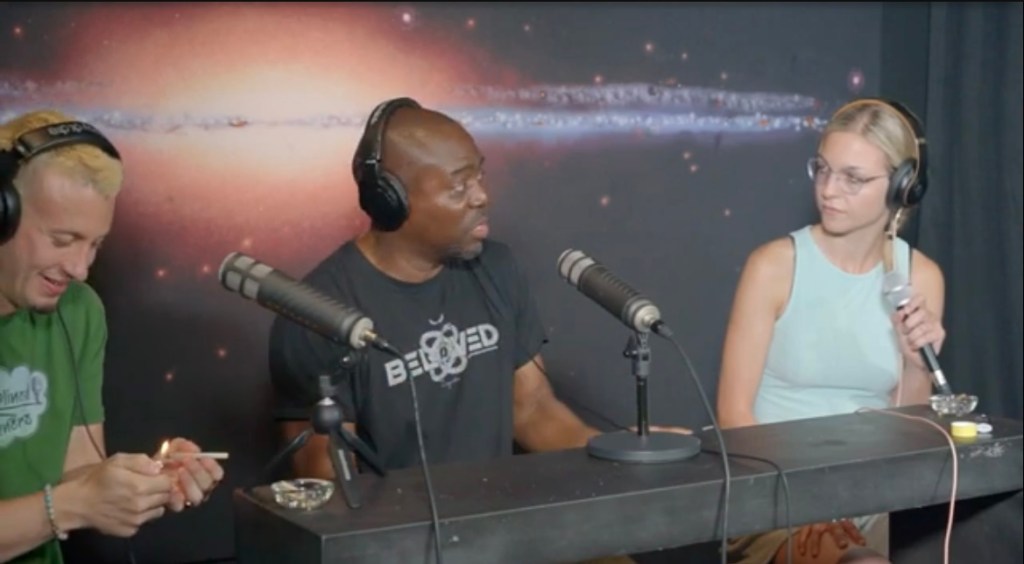
Exploring the intricate facets of consciousness and the enigma of meditation has been a lifelong quest for me. This week, I had the privilege to join Ellevan & Winny Clarke on the “Disciplined Stoners” podcast, sharing my insights, experiences, and discoveries.
I’m not just here as a meditation enthusiast; I introduced them to my creation, Yinnergy, a program born from my years of exploring and understanding the depths of inner peace and mental clarity. We also delved into the themes of my latest book, “Bodhi in the Brain,” embarking on a thrilling discourse on states of consciousness, spiritual awakenings, and the fascinating world of psychological development.
It was a transformative conversation, touching upon the delicate line between mere understanding and direct experience – a distinction that’s been pivotal in my personal and spiritual journey.
For those of you intrigued to dive deeper into my Yinnergy meditation or to navigate the pages of “Bodhi in the Brain,” you can explore them here at https://linktr.ee/morganosmith
Join us in this episode, where we venture beyond mere conversation, stepping into a realm of true transformation!
Introduction: In the realm of philosophy and spirituality, two captivating concepts often spark profound contemplation and open doors to expanded understanding: paradox and nonduality. Both concepts challenge our conventional modes of thinking and invite us to explore the nature of reality and consciousness. In this thought-provoking blog, we will delve into the differences and similarities between paradox and nonduality, and delve into their roles in the context of spiritual awakening.
Paradox: Illuminating the Mystery Within Paradoxes are enigmatic statements or situations that defy our logical expectations and challenge our understanding of reality. They present us with apparent contradictions, forcing us to question our assumptions and explore deeper layers of truth. Paradoxes are often the gateways to expanded consciousness, as they push the boundaries of our thinking and invite us to embrace the complexities and mysteries of existence. They are the mind’s playground, a fertile ground for philosophical inquiry and intellectual growth. Nonduality: Beyond Duality, Towards Unity Nonduality, on the other hand, transcends the realm of paradox by recognizing the illusory nature of dualistic distinctions altogether. It is a profound philosophical and spiritual concept that asserts the fundamental unity of all things, beyond conventional boundaries. Nonduality suggests that the apparent separation between self and other, subject and object, is an illusion that obscures the deeper truth of interconnectedness. It invites us to explore the essence of oneness that lies at the heart of existence, beyond the limitations of dualistic thinking.
Differences and Similarities: While paradox and nonduality are distinct in their approaches, they share some intriguing similarities. Both concepts challenge our preconceived notions and invite us to embrace uncertainty. Paradoxes expose the limitations of linear thinking and expand our intellectual horizons, while nonduality goes beyond the realm of paradox by embracing a holistic view of reality. They both foster an open-mindedness that allows for new perspectives and insights to emerge.
In the realm of spiritual awakening, both paradox and nonduality play crucial roles. Paradoxes serve as catalysts, shaking us out of our complacency and inviting us to question our deeply held beliefs. They disrupt our habitual patterns of thinking and awaken us to the inherent mystery and wonder of existence. Nonduality, on the other hand, offers a framework for understanding the ultimate truth of interconnectedness. It guides us towards a direct experience of unity and helps dissolve the illusory boundaries that separate us from the world and others.
Conclusion: Paradox and nonduality are two fascinating concepts that contribute to our philosophical and spiritual growth. Paradoxes challenge our intellect and expand our understanding, while nonduality transcends dualistic thinking and reveals the profound interconnectedness of all things. By embracing both paradox and nonduality, we can embark on a transformative journey of self-discovery and spiritual awakening. They invite us to explore the depths of our consciousness and contemplate the profound mysteries of existence. Let us embrace the paradoxes that confront us and open our hearts to the boundless unity that nonduality reveals. In this harmonious dance, we find the keys to unlocking the doors of awakening and embracing the vastness of our being.
Morgan O. Smith
Yinnergy Meditation & My Book, Bodhi in the Brain…Available Now!
Introduction: In the timeless debate surrounding free will versus determinism, philosophical inquiries have often sought to reconcile these seemingly opposing concepts. However, from a nondual standpoint, rooted in direct experience, the boundaries between free will and determinism begin to blur. In this blog, we explore the profound idea that every choice we make is our decision and the decision of the universe itself. We delve into the unity of free will and determinism, highlighting how this perspective challenges conventional notions and opens up new avenues for contemplation. The Illusion of Separation: From a nondual perspective, the fundamental illusion is the perception of separation between ourselves and the universe. When we examine our direct experience, we realize that we are intimately interconnected with the fabric of existence. Our choices and actions are not isolated events but intricately interwoven with the tapestry of the cosmos. Thus, the dichotomy of free will and determinism fades away, revealing a deeper unity.
The Illusion of Individual Agency: Conventionally, free will is often associated with individual agency, the belief that we possess an independent power to make choices. However, upon closer inspection, we find that our notion of individual agency is built upon a complex web of influences. Our thoughts, desires, and motivations arise from a multitude of factors: genetics, upbringing, culture, and countless other variables. In this sense, determinism seems to assert its presence, implying that our choices are shaped by external forces. Reframing Choice as Cosmic Manifestation: While determinism challenges the idea of individual agency, nondual perspectives offer an intriguing alternative. Instead of perceiving ourselves as separate entities with independent choices, we can reframe choice as a cosmic manifestation. Every decision we make can be seen as a ripple in the interconnected web of existence, an expression of the universe itself. In this way, free will and determinism merge into a harmonious whole, transcending the limitations of duality.
Unfolding in the Eternal Now: In the nondual understanding, the concept of time takes on a different dimension. Past, present, and future merge into an eternal now, where every choice and outcome coexist in a timeless dance. From this vantage point, the notion of causality loses its strict linear framework. Our choices are not predetermined events unfolding in a predetermined sequence; rather, they arise in the timeless realm of possibility, where the universe expresses itself through our individual consciousness.
Embracing Paradox: The reconciliation of free will and determinism requires embracing paradox. It calls upon us to transcend the limitations of dualistic thinking and expand our awareness to encompass the vastness of existence. In this paradoxical dance, we find liberation. We become both the orchestrators and the orchestrated, the chooser and the chosen, as we recognize the profound interdependence that pervades all aspects of reality.
Conclusion: From the nondual standpoint, the interplay between free will and determinism reveals a profound unity. By exploring our direct experience and recognizing the illusory nature of separation, we discover that every choice we make is intricately connected with the choices made by the universe. As we embrace this understanding, we transcend the limitations of duality and embark on a journey of profound self-realization, where the dance of free will and determinism becomes an expression of the cosmic symphony of life.
Morgan O. Smith
Yinnergy Meditation & My Book, Bodhi in the Brain…Available Now!




 Morgan O. Smith