Celebrating Black History Month

A Journey Beyond the Shadows of Misconceptions

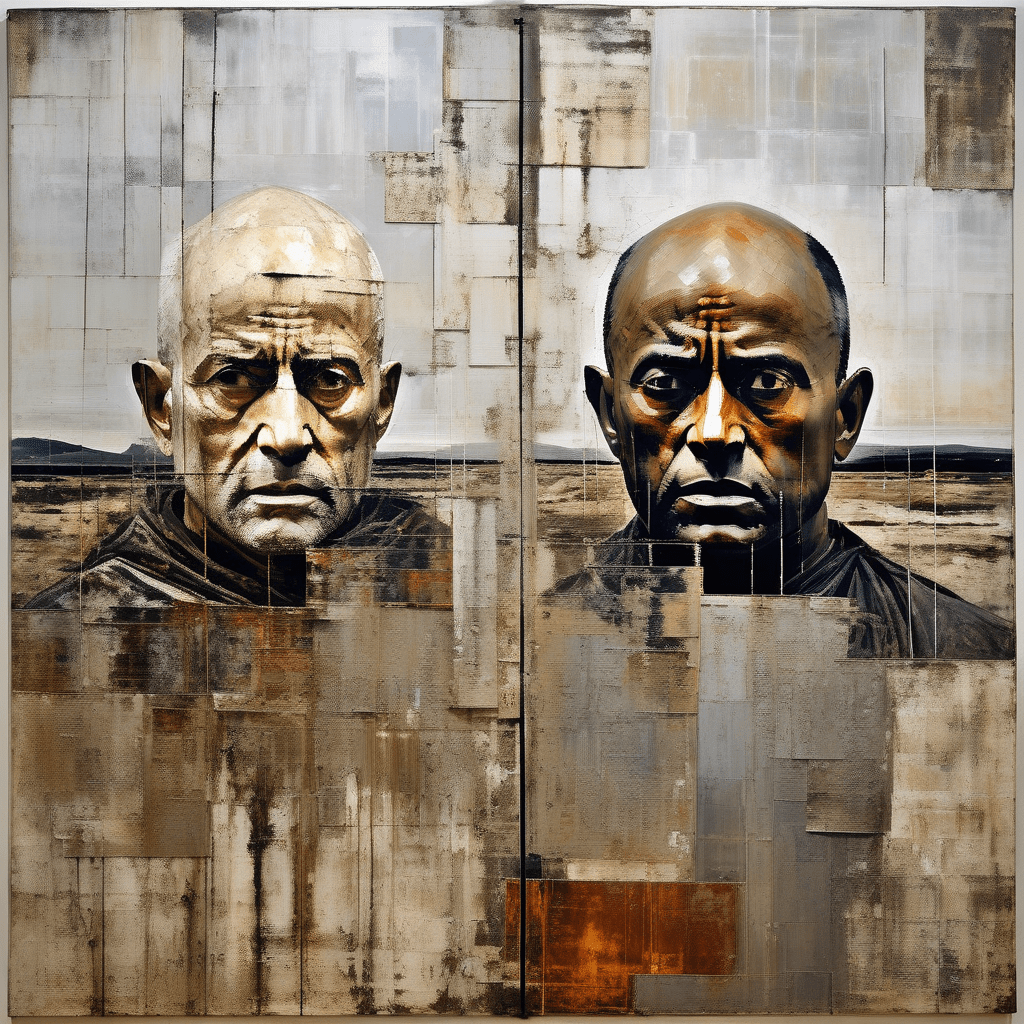
As we embrace the profound significance of Black History Month, we find ourselves at the confluence of reflection and aspiration, a moment to honour the rich heritage and indomitable spirit of the Black community while confronting the shadows cast by historical misconceptions. Among these are the misinterpretations within various religious traditions that have mistakenly associated Black identity with curses or lesser status. This post seeks to illuminate the path toward spiritual enlightenment, transcending beyond these archaic beliefs to a place of unity and universal respect.

#### Christianity, Judaism, and the Misunderstood “Curse of Ham”

Within both Christian and Jewish histories, the narrative of Ham’s curse has been misconstrued to justify racial discrimination. However, a closer examination reveals that this interpretation bears no weight in the sacred texts themselves. When understood in their essence, these texts speak to the inherent dignity of every human being, irrespective of colour or creed.

#### The Teachings of Joseph Smith in Mormonism

Mormonism, through the lens of Joseph Smith’s teachings, has faced scrutiny regarding statements on race. It’s vital to recognize the evolutionary journey of religious communities toward greater inclusivity and understanding. The Latter-day Saints have openly repudiated past racial restrictions, moving towards a more inclusive faith community that acknowledges the divine in every individual.

#### The Mark of Cain and Its Misinterpretations

The “Mark of Cain” has similarly been misapplied as a rationale for racial discrimination. Yet, within the broader Christian and Jewish theological context, this mark is not about race but rather God’s protection. It serves as a reminder that divine judgment belongs to the divine alone, urging us to forsake judgment and embrace compassion.

#### Hinduism’s Caste System and the Quest for Dharma

Hinduism’s caste system, often misrepresented as a racial hierarchy, is fundamentally a social structure misunderstood by many. The essence of Hindu dharma speaks to a cosmic law of righteousness and duty that transcends social divisions, advocating for a society where all individuals are valued for their unique contributions to collective harmony.

#### Transcending Misconceptions: The Spiritual Enlightenment

As we journey through Black History Month, let us anchor ourselves in the wisdom that true spiritual enlightenment transcends all forms of division, recognizing the divine spark within every individual. This enlightenment beckons us to see beyond the superficial differences that have historically divided us, encouraging a collective movement toward understanding, respect, and unity.

In debunking these misconceptions, we honour the spirit of Black History Month and contribute to a world where spirituality and human dignity flourish unbounded by the chains of past misunderstandings. Let this month be a catalyst for change, a time when we reaffirm our commitment to a world where every soul is recognized for its infinite worth and potential.


#### In Conclusion

Black History Month offers us a sacred opportunity to reflect on our spiritual journeys and the universal quest for enlightenment. By challenging and transcending outdated beliefs, we pave the way for a future where spirituality unites rather than divides, celebrating the diversity that enriches our collective human experience.

Morgan O. Smith

Yinnergy Meditation, Spiritual Life Coaching & My Book, Bodhi in the Brain…Available Now!

https://linktr.ee/morganosmith

Unveiling the Unity

A Deeper Dive into the Essence of Oneness

In the realm of spiritual enlightenment and self-discovery, the distinctions and connections between the notions of sameness, source, and essence often intertwine, leading to profound insights and confounding paradoxes. The journey toward understanding the intricate relationships among these concepts invites us to explore the depths of nonduality, a cornerstone of Eastern philosophy that transcends conventional wisdom and challenges our perception of reality.

**The Illusion of Sameness**


At first glance, the idea that everything and everyone is the same appears to encapsulate the essence of unity. However, this perspective only skims the surface of a far more intricate understanding. It suggests a superficial equality, overlooking the unique expressions and experiences that animate the world. This view, while promoting a sense of universal brotherhood, fails to acknowledge the rich diversity that permeates existence.

**The Depth of Source**

Moving deeper, the realization that all beings and phenomena emanate from the same source introduces a layer of profound connection that sameness alone cannot convey. This shared origin does not erase individual differences but rather celebrates them as expressions of a singular, underlying reality. It is here that we begin to touch the essence of nonduality, recognizing the interconnectedness of all without negating the diversity of the manifest world.


**The Revelation of Being Source**

To say that everything and everyone is source represents a pivotal shift in perception. It is an acknowledgment that the source is not merely an external wellspring from which creation flows but is inherent in every particle of existence. This realization dissolves the illusion of separation, unveiling that at our core, we are not just connected to the divine; we are the divine. This insight invites a radical transformation in how we relate to ourselves, others, and the world around us.

**The Circular Dance of Unity**

The journey comes full circle with the understanding that if everything and everyone is source, then inherently, we are all of the same source, and thus, on a fundamental level, we are the same. This circular logic is not a return to the superficial notion of sameness but an ascent to a higher vantage point from which the interconnectedness of all life is perceived as both the source and manifestation of existence.

**Embracing the Paradox**


The exploration of these concepts is not merely an intellectual exercise but a gateway to transcendent wisdom. It challenges us to embrace the paradoxes of existence: unity and diversity, emptiness and form, the eternal and the ephemeral. By contemplating these truths, we open ourselves to a deeper understanding of the universe and our place within it, fostering a sense of awe and a deeper connection to the mosaic of reality.


**Conclusion**

The path to spiritual awakening and enlightenment is enriched by the contemplation of sameness, source, and essence. Each concept, while distinct, is intricately linked to the others, offering a multifaceted perspective on the nature of existence. As we delve into these themes, we are invited to transcend the ordinary, recognize the divine within and all around us, and awaken to the profound unity that underlies the mosaic of life.

 Morgan O. Smith

Yinnergy Meditation, Spiritual Life Coaching & My Book, Bodhi in the Brain…Available Now!

https://linktr.ee/morganosmith

The Spiritual Essence of Black History Month

A World-Centric Reflection

In the heart of February, we embark on a journey through Black History Month, a period that transcends mere remembrance of historical events and figures. From an awakened and world-centric perspective, this month offers a profound opportunity to connect with the universal truths of resilience, interconnectedness, and the inherent dignity of every soul.

#### The Spiritual Dimensions of Resilience

The narratives that emerge during Black History Month are imbued with a resilience that resonates on a spiritual level. This resilience is not just a matter of overcoming adversities but a testament to the indomitable spirit that thrives in the face of challenges. It mirrors the universal journey of the soul towards liberation, reminding us that our spiritual quests are interconnected. The stories of Black individuals and communities navigating through, and triumphing over, systemic challenges inspire a deep respect for the sacred journey of life, encouraging all to perceive obstacles as pathways to inner strength and enlightenment.


#### Interconnectedness: A World-Centric Embrace

Celebrating Black History Month from a world-centric point of view underscores the spiritual principle of interconnectedness. It illuminates the truth that we are all part of a greater whole, where each individual’s history and achievements contribute to the collective human experience. This realization fosters a deep sense of unity and compassion, urging us to transcend our perceived separateness and embrace our shared humanity. By honouring the contributions and struggles of the Black community, we acknowledge the vibrancy and richness that diversity brings to our collective soul.

#### The Dignity of Every Soul


At its core, Black History Month invites us to recognize and honour the inherent dignity of every soul. This recognition is fundamental to spiritual enlightenment, as it calls for an acknowledgment of the divine spark within each person. The celebration of Black achievements and the acknowledgment of the injustices faced by Black individuals and communities challenge us to confront our own biases and cultivate a more inclusive and empathetic understanding of humanity. It is a call to action for every individual to contribute to a world where the dignity of all is upheld and celebrated.


#### A Call for Deep Reflection and Action

As we delve into the depths of Black History Month, let it also be a time for deep spiritual reflection and action. Let us meditate on the lessons of resilience, interconnectedness, and dignity, and how they can inform our paths towards spiritual awakening and societal transformation. It is an opportune moment to commit to practices that foster inner growth and contribute to the healing and upliftment of our global community.

#### In Conclusion

Black History Month, viewed through an awakened and world-centric lens, is a powerful invitation to engage with the deeper aspects of our being and our connection to others. It is a reminder that our spiritual and worldly journeys are enriched by the diversity of experiences and wisdom that each culture and community brings. Let this month inspire us to walk with greater compassion, understanding, and commitment to creating a world that reflects the highest ideals of unity and spiritual fulfillment.

Morgan O. Smith

Yinnergy Meditation, Spiritual Life Coaching & My Book, Bodhi in the Brain…Available Now!
https://linktr.ee/morganosmith

The Ground of All Beings vs. The Ground of All Being

In the realm of philosophy, the concepts of “the ground of all beings” and “the ground of all being” often emerge as central themes in discussions about existence, consciousness, and the nature of reality. These concepts, while seemingly similar, offer distinct perspectives on how we understand the universe and our place within it.

**The Ground of All Beings**


“The ground of all beings” refers to the idea that the foundation of reality is the multitude of individual entities that exist. This perspective sees the universe as a collection of distinct beings, each with its essence and characteristics. According to this view, the diversity of objects, organisms, and entities contributes to the fabric of reality. It emphasizes plurality, acknowledging the unique qualities and experiences of each being. This approach often aligns with perspectives that value individuality and the richness that comes from varied existences.

**The Ground of All Being**

On the other hand, “the ground of all being” suggests a more unified view of existence. Here, the focus is on the underlying reality that connects all things, rather than the things themselves. This concept points to a fundamental source or essence that underpins everything. It’s often associated with ideas of oneness or the belief in a universal substance or consciousness that permeates all. This perspective is prominent in various spiritual and metaphysical beliefs, where the unity of existence is emphasized over individual differences.

**Philosophical Implications**


The debate between these two views is significant in philosophy as it shapes our understanding of the world. If we lean towards “the ground of all beings,” we might focus on the differences and separateness of things, leading to a worldview that celebrates diversity and individuality. Conversely, embracing “the ground of all being” could lead to a more holistic view of life, where interconnectedness and unity are fundamental.


**Conclusion**

Ultimately, these concepts are not just abstract philosophical ideas but are also reflective of our everyday experiences and how we perceive our relationship with the world. Whether we see the universe as a tapestry of distinct threads or as a single, interconnected whole, these views shape our beliefs, values, and actions. As such, the exploration of these concepts is not just a philosophical exercise but a journey into understanding the very nature of existence itself.

Morgan O. Smith

Yinnergy Meditation, Spiritual Life Coaching & My Book, Bodhi in the Brain…Available Now!
https://linktr.ee/morganosmith

Embracing the Spectrum

Perspectives on Nonduality

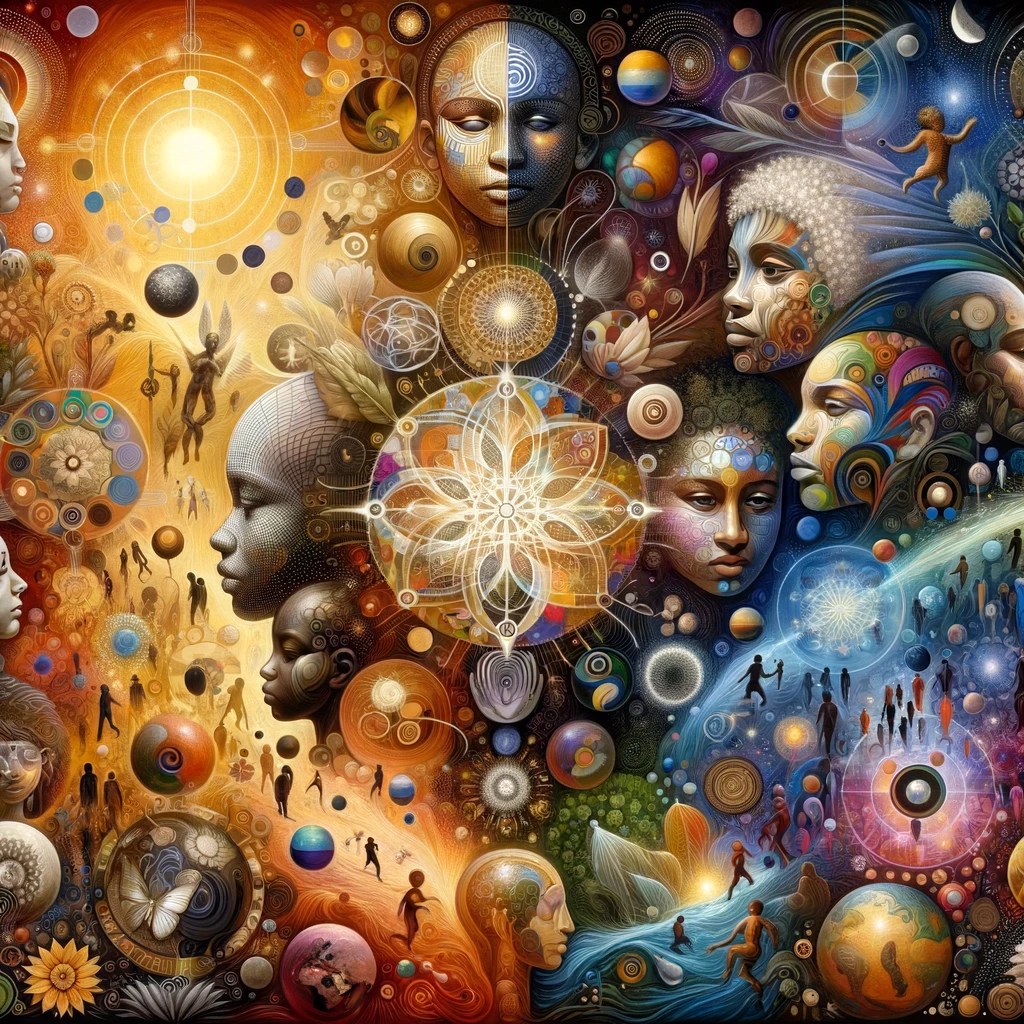
In the realm of spirituality and philosophy, nonduality presents a fascinating paradox. It’s a term that evokes both simplicity and complexity, challenging our understanding of reality and existence. At its core, nonduality means ‘not two’ or ‘one without a second’. This concept, often rooted in Eastern philosophies such as Advaita Vedanta, posits that there is no fundamental division in the universe. Everything, at its essence, is the same.

But here’s where it gets intriguing: within this notion of oneness, myriad perspectives and interpretations exist. Each of these perspectives offers a unique lens through which we can view nonduality. Some may see it as a spiritual realization of oneness with the universe, others as a philosophical understanding that transcends physical distinctions. Some approach nonduality through the lens of science, seeking to understand how this concept aligns with the interconnectedness revealed in quantum physics.


What’s remarkable is that all these perspectives are valid and encompassed within the unified reality of nonduality. This inclusivity is precisely what nonduality is about – it’s not just a concept of ‘no distinctions’ in a literal sense, but also a recognition that every interpretation, every perspective, is part of the whole. The variety of viewpoints doesn’t dilute the concept but enriches our understanding and appreciation of it.

This leads us to a profound realization: nonduality isn’t just a concept to be understood intellectually, but an experiential truth to be lived. It encourages us to look beyond the apparent separations and differences that define our everyday existence. In recognizing nonduality, we find a deeper connection with the world around us, seeing ourselves not as isolated beings but as integral parts of a greater whole.


In essence, nonduality teaches us that while we may perceive distinctions and separations in the world, at a fundamental level, these distinctions are illusory. It invites us to experience life not just through the lens of separation but through a lens of unity and interconnectedness. This shift in perspective can be transformative, offering a pathway to greater understanding, compassion, and peace.

As we explore this concept further, it’s essential to remember that nonduality isn’t about negating diversity or individual experiences. Instead, it’s about recognizing the underlying unity that encompasses all diversity. It’s a journey of discovery, where each step in understanding brings us closer to the profound simplicity at the heart of existence.

Morgan O. Smith

Yinnergy Meditation, Spiritual Life Coaching & My Book, Bodhi in the Brain…Available Now!
https://linktr.ee/morganosmith

Navigating the Depths

Nonduality vs. Absolute Monism

In the intricate tapestry of philosophical thought, two concepts often emerge as profound and perplexing: Nonduality and Absolute Monism. These philosophical gems, though seemingly similar, hold distinct perspectives on the nature of existence and the universe.

**Nonduality: The Unity of Existence**

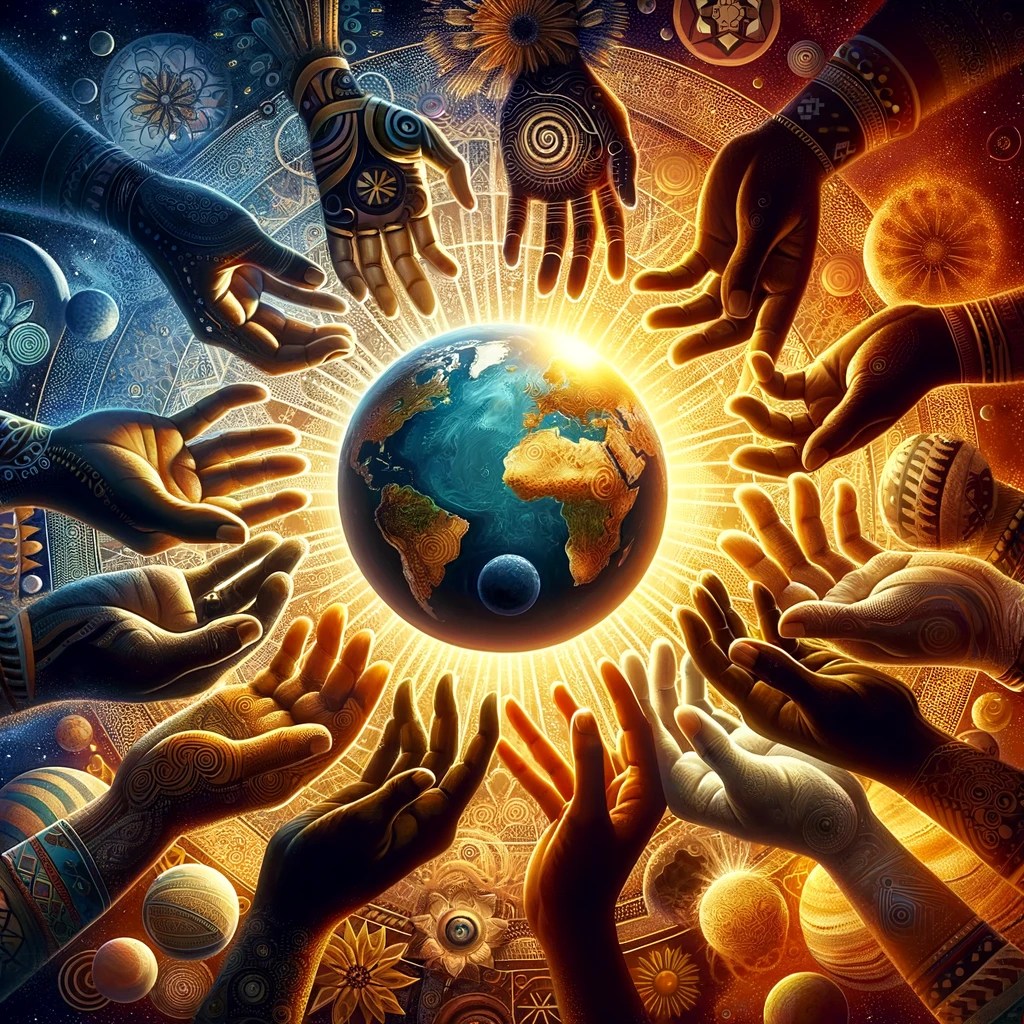
Nonduality, a term often associated with Eastern philosophies, particularly Advaita Vedanta, posits a fundamental principle: reality is one, and the perception of duality or separation is illusory. It suggests that what we experience as separate entities – ourselves, others, and the world around us – are not distinct, but part of a unified whole. The philosophy of Nonduality encourages us to transcend this illusion, to realize that at the core of our being, we are not separate from the universe but one with it.


**Absolute Monism: The Dance of Oneness and Multiplicity**

Absolute Monism, on the other hand, takes a slightly different approach. While it agrees with the principle of oneness, it also acknowledges the existence of multiplicity. This philosophy, as I interpret it, embraces the paradoxes of existence: one and not two, two and not one, one and two, two and one, one within two, two within one, yet simultaneously neither one nor two. It reflects a deeper understanding of the cosmos as a dynamic interplay of unity and diversity, where the singular and the plural coexist in a harmonious yet complex relationship.

**The Interplay and Implications**

The discussion of Nonduality versus Absolute Monism is not just a theoretical exercise but has profound practical implications. In Nonduality, the path to enlightenment or understanding involves the realization of oneness, leading to a sense of peace and connectedness with all. In Absolute Monism, the journey is about embracing and understanding the complexity and paradox of existence, leading to a deep appreciation of life’s multifaceted nature.

Both philosophies, in their essence, guide us toward a greater understanding of our place in the universe. They invite us to look beyond the superficial and to question the very nature of reality.


**Conclusion: A Journey of Understanding**

In the end, whether one leans towards Nonduality or Absolute Monism, the journey is one of deep introspection and understanding. It’s about peeling back the layers of what we perceive and understanding the deeper truths of our existence. As we delve into these philosophies, we find not just answers, but also a greater appreciation for the questions themselves.

Morgan O. Smith

Yinnergy Meditation & My Book, Bodhi in the Brain…Available Now!
https://linktr.ee/morganosmith

Absolute Monism

Unraveling the Tapestry of Oneness

The vast universe, with its manifold entities and infinite complexities, often bewilders human minds. Philosophers and thinkers from time immemorial have grappled with questions about the nature of existence and the ultimate reality. One profound idea that surfaces recurrently is that of Absolute Monism: the belief that beneath the apparent multiplicity, there is but one undivided reality. Let’s take a deeper look into this captivating worldview.

### A Universe from One Thread


At the heart of Absolute Monism lies the assertion that all differences and diversities we perceive are mere illusions. This assertion may seem contradictory to our daily experiences. After all, isn’t the world teeming with diversity?

Yet, this is where Eastern and Western philosophies converge. Ancient Hindu scriptures speak of *Brahman* as the ultimate, undifferentiated reality. The Hindu philosophy of Advaita Vedanta encapsulates this belief by stating that the world’s multiplicity, driven by *Maya*, is an illusion. Meanwhile, in the West, the philosopher Spinoza proposed that God and Nature are two names for the same reality, implying a singular, infinite substance. These ideas, separated by continents, come together to champion a singular reality beneath the apparent diversity.

### Seeing Beyond the Illusion

The concept of illusion is integral to understanding monism. In life, appearances can often be deceiving. A mirage in the desert, a rainbow after the rain, and even our reflection in the water are all illusions. If such simple things can deceive our senses, might it be possible that our entire perception of diverse reality is similarly mistaken?

*Mysticism* has been one avenue through which individuals across cultures have described experiences consistent with Absolute Monism. The interconnectedness of all things, a theme found in the tapestry of monism, speaks to the heart, nudging us to see beyond divisions and differences.

### Implications for Modern Times

If Absolute Monism holds that all is one, then what does this mean for us in the present age, surrounded by divisive forces and fragmented views?

Firstly, on an ethical plane, it implies that harm inflicted upon one is harm to the entirety. This perspective could drastically alter how we approach interpersonal relationships, environmental concerns, and global crises. If we truly internalize this philosophy, then every act of kindness and harm has far-reaching consequences.

Secondly, it brings to the fore the importance of self-realization. In many monistic traditions, the realization of this singular truth is the end goal, bringing about an end to suffering.

Lastly, it sparks curiosity about the nature of our universe. With advancements in modern physics and cosmology, we find theories that echo monistic thoughts. The Big Bang, for instance, suggests that everything we see, touch, and experience emerges from a singular point.

### Embracing Diversity within Unity

Absolute Monism does not negate the value of diversity. Rather, it calls for a deeper understanding. Imagine a tapestry. Up close, one can see the myriad of colours, textures, and patterns. But from a distance, it’s one cohesive artwork. Similarly, monism asks us to appreciate the individual threads while recognizing the grand design.

In an age teeming with division, perhaps the idea of Absolute Monism can be the bridge that reminds us of our interconnectedness. As we stand at the cusp of profound global challenges, this ancient philosophy might just hold the key to a unified, harmonious future.


Embracing the ideas of Absolute Monism requires introspection and openness. Whether you fully resonate with its tenets or not, it undoubtedly serves as a beacon, guiding us toward unity, understanding, and profound interconnectedness.

Morgan O. Smith

Yinnergy Meditation & My Book, Bodhi in the Brain…Available Now!

https://linktr.ee/morganosmith

The Facets of Ego and Transcendent Experiences: Part Two

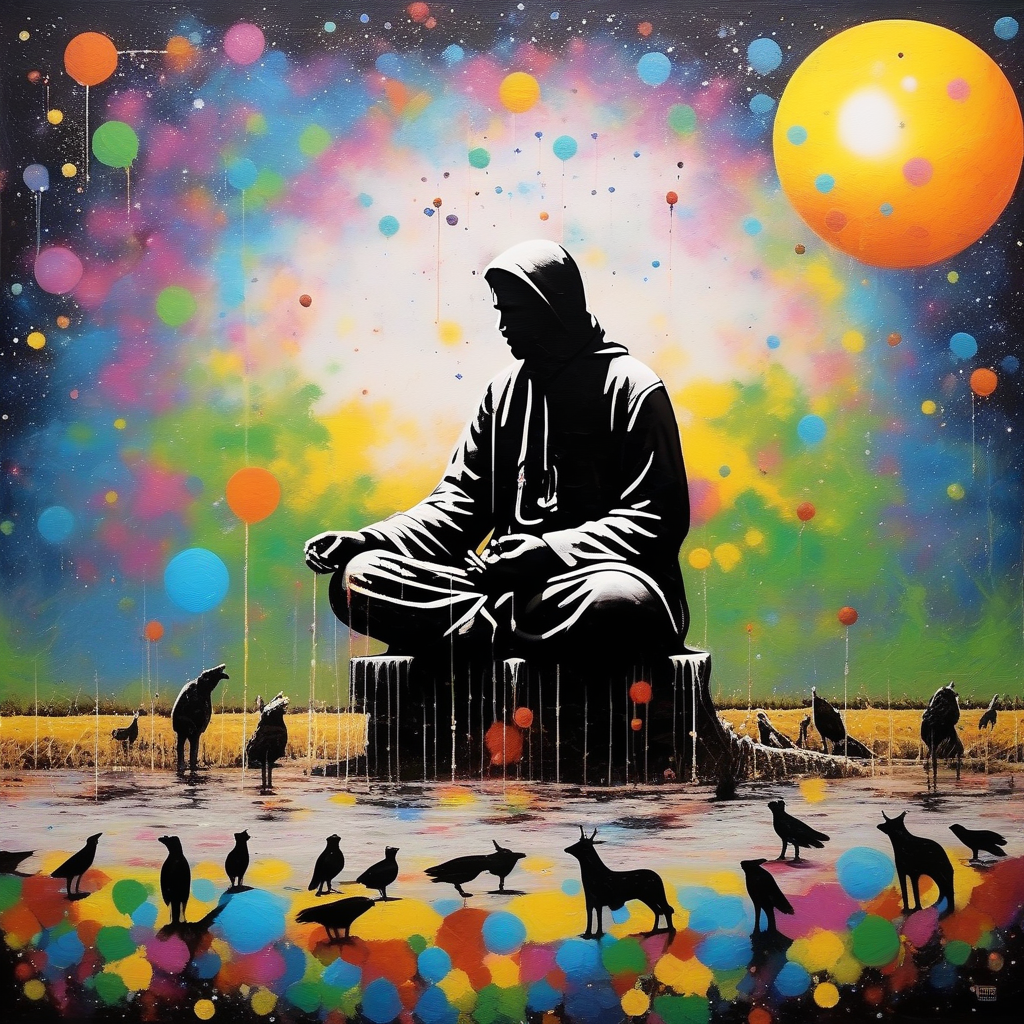
As we proceed from Part One, a profound realization dawns. During moments of complete ego death, the individual facets cease to exist, yet paradoxically, they all exist, blending into a unified consciousness. The boundaries of ‘I’, ‘you’, ‘us’, and ‘them’ dissolve, making room for an all-encompassing ‘we’.

Our ego transforms and integrates into the collective consciousness, interconnecting with the egos of all beings, and indeed, the universe itself. Every trait, every star in our constellation, becomes part of this grand cosmic tapestry.

This realization isn’t merely intellectual, but experiential. Our individual identities meld into the collective, signifying an interconnectedness that transcends our singular perspective. In the dance of the facets of ego and the mystical experiences, we uncover our deepest potential to be interconnected, to share in the collective consciousness of all beings, and to participate consciously in the magnificent orchestration of the universe.

Through this journey, we don’t lose ourselves; instead, we find our place in the cosmos, gaining a newfound appreciation for the diversity and unity that life offers. We witness our traits, without labelling them as positive or negative, as part of a unified whole. Our ego ceases to be an entity isolated from the universe and becomes a fundamental part of the cosmic consciousness.

This exploration of the ego and its many facets is not just an intellectual exercise, but a call for introspection and self-awareness. It encourages us to embrace our full spectrum of experiences, from the depths of our struggles to the heights of our joys, all the while seeking that profound connection with the universe and our place within it.

Morgan O. Smith

Yinnergy Meditation & My Book, Bodhi in the Brain…Available Now!
https://linktr.ee/morganosmith

The Unfolding Symphony

Embracing Life through an Open Heart

Introduction: In the grand theatre of existence, our hearts play a central role in the symphony of human experience. To navigate the depths of life’s mysteries, we must learn the art of keeping our hearts open. A profound approach to achieving this lies in the act of wholeheartedly accepting and embracing everything we encounter – the sights, sounds, scents, flavours, and textures – as intrinsic aspects of ourselves. This philosophical journey explores the transformative power of openness, inviting us to delve into the essence of existence and cultivate a profound connection with the world around us.

  1. Embracing the Multitude of Perspectives: To keep the heart open, we must acknowledge the multitude of perspectives that shape our reality. Each experience we encounter is coloured by our unique perceptions, and no two individuals experience the world in exactly the same way. By embracing the diversity of viewpoints, we unlock the potential for genuine empathy and understanding, fostering an inclusive and compassionate society.
  2. Surrendering to the Flow of Life: Life’s tapestry weaves an intricate pattern of joy and sorrow, triumph and defeat. Embracing an open heart requires us to surrender to the natural ebb and flow of existence without resistance. When we stop trying to control or manipulate life’s course, we find solace in the understanding that every experience is a teacher, guiding us towards growth and self-discovery.
  3. Liberating the Self from Ego: The ego often entangles our hearts in a web of desires, fears, and judgments. To truly embrace life as an extension of ourselves, we must transcend the ego’s limitations and recognize the interconnection between all living beings. Letting go of the attachment to the “self” allows us to dissolve the illusion of separateness and discover a profound sense of unity with the universe.
  4. Cultivating Radical Acceptance: Radical acceptance is the key to unlocking the transformative power of an open heart. By embracing everything we encounter – the pleasant and the challenging, the familiar and the unfamiliar – as essential aspects of our journey, we learn to dance gracefully with life’s ever-changing rhythms. Embracing all facets of existence deepens our capacity for resilience and enriches our human experience.
  5. Living with Gratitude: Gratitude is a sacred gateway that opens our hearts to the splendour of life. Embracing a sense of profound gratitude for each moment, we begin to see life’s wonders with fresh eyes and a receptive heart. Gratitude is the beacon that leads us to treasure even the seemingly mundane, unveiling the beauty hidden within the folds of everyday life.

Conclusion: Keeping the heart open is an ethereal quest that unravels the essence of our existence. By accepting and embracing every encounter, we transcend the boundaries of self and connect with the universal tapestry of life. Embracing diverse perspectives, surrendering to life’s flow, and liberating ourselves from the ego’s grasp elevate us to a higher plane of consciousness. Through radical acceptance and gratitude, we find profound meaning in the ordinary and glimpse the extraordinary in the ordinary. Let us embark on this philosophical journey, keeping our hearts open to the wonders that life has to offer, and savouring the grand symphony of existence in all its magnificence.

Morgan O. Smith

Yinnergy Meditation & My Book, Bodhi in the Brain…Available Now!

https://linktr.ee/morganosmith

Beyond the Veil

Unveiling the Paradoxical Tapestry of Nonduality

Introduction:
In the realm of profound philosophical inquiry, few concepts have captivated human minds as powerfully as the notion of nonduality. It beckons us to delve deeper into the nature of existence, challenging our preconceived notions and inviting us to explore the uncharted territories of paradox. Yet, amidst the vast expanse of literature and discourse on the subject, there lies an untrodden path, a unique perspective awaiting discovery. In this thought-provoking blog, we embark on a journey to unravel the tapestry of nonduality, weaving together the threads of seemingly opposing concepts in a way that illuminates the unexplored corners of our understanding.

Section 1: Subject-Object Wholeness: The Mirage of Separation
Traditionally, nonduality has been described as the dissolution of the boundary between subject and object. But what if we were to consider that this boundary is not merely an illusion to be dissolved, but rather a fundamental aspect of the interconnected whole? By embracing the paradoxical nature of subject and object, we transcend the notion of a binary relationship and uncover a rich tapestry where both unity and diversity dance in harmony.

Section 2: The Dance of Infinity and Finitude: An Eternal Synchrony

Infinity and finitude have long been viewed as opposites, forever in conflict. However, a fresh perspective emerges when we recognize that infinity does not exist apart from the finite, but rather encompasses it. Just as a droplet of water contains the essence of the vast ocean, the finite contains within it the spark of infinity. In this revelation, we discover an eternal synchrony where the boundaries between the two dissolve, revealing a profound interplay of expansion and limitation.

Section 3: Embracing the Yin and Yang: The Alchemy of Dualities
Within the realm of nonduality, the interplay of positive and negative transcends mere opposition. Rather than negating each other, they fuse together in a cosmic dance, giving rise to the intricate tapestry of existence. By reframing our perspective, we find that positivity and negativity are two essential forces that co-create the symphony of life, providing contrasting hues that bring depth and richness to our human experience.

Section 4: The Timeless Now: Eternity and Temporality Unveiled
Eternity and time often appear as irreconcilable opposites, with eternity representing a timeless realm and time embodying the ephemeral. However, what if we were to explore the idea that eternity is not separate from time, but rather encompasses it? In the ever-present now, the eternal reveals itself as the foundation from which time emerges. As we attune ourselves to this perspective, we can embrace the cyclical dance of birth, growth, decay, and renewal, while remaining anchored in the timeless essence.

Section 5: The Nondual Kaleidoscope: Beyond Samsara and Nirvana
Samsara and nirvana, often considered opposing states, are entwined in the fabric of nonduality. The transformative potential lies not in escaping samsara for a transcendent nirvana, but in recognizing that both exist within the same spectrum of experience. By embracing the paradoxical nature of these concepts, we open ourselves to the possibility of finding liberation amidst the cycles of existence, fostering a profound integration of the sacred and mundane.

Conclusion:
As we conclude our exploration into the uncharted realms of nonduality, we find that the fabric of existence is a tapestry of paradox, where unity and diversity, finitude and infinity, positive and negative, eternity and time, samsara and nirvana, ultimate and relative, spirit and matter, one and many, Atman and Brahman, form and emptiness, merge and interweave in a dance of cosmic significance. This unique perspective on nonduality challenges us to embrace the complexity and interplay of seemingly opposing concepts, inviting us to transcend our limited understanding and explore the profound depths of existence.

In this exploration, we are called to relinquish the impulse to categorize and label, to move beyond the constraints of linear thinking, and to embrace the boundless potential that arises when we hold paradox with reverence. It is within these liminal spaces that our consciousness expands, allowing us to perceive the interconnectedness of all things and the underlying unity that permeates the fabric of reality.

By contemplating this unique perspective on nonduality, we can cultivate a transformative shift in our perception of the world. We begin to see the inherent beauty in the interplay of opposites, recognizing that it is through the harmonization of these apparent contradictions that we can truly embrace the totality of our existence.

As we navigate the complexities of life, let us remember that the paradoxes we encounter are not obstacles to be overcome but gateways to profound insight and understanding. By embracing the intricate dance of nonduality, we embark on a journey of self-discovery and interconnectedness, transcending the limitations of our individual perspectives and merging with the vast cosmic tapestry of existence.

In this grand symphony of paradox, we are invited to become active participants, co-creators of our own reality. By engaging with the multifaceted nature of existence, we can honour the unity within diversity, find solace in the ever-present now, and discover the profound interconnectedness that weaves through all aspects of life.

So, let us venture forth with open hearts and curious minds, ready to explore the uncharted territories of nonduality. Let us embrace the unique perspective that transcends the boundaries of verbal expression and literature, and in doing so, may we awaken to the awe-inspiring beauty of the paradoxical tapestry that lies beyond the veil.

Morgan O. Smith

Yinnergy Meditation & My Book, Bodhi in the Brain…Available Now!

https://linktr.ee/morganosmith