Beyond the Veil of Illusions

The Great Unknowing

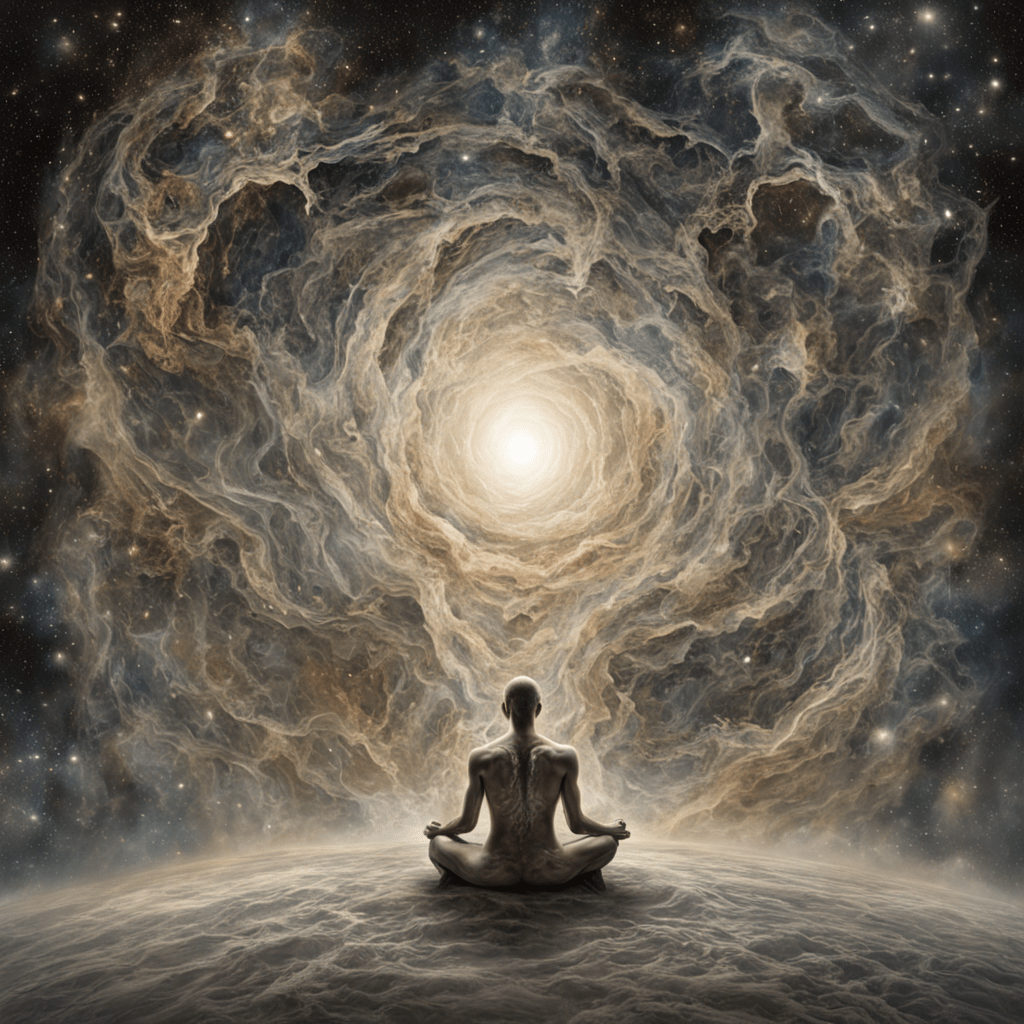
What if existence is not what it seems? What if perceiving solidifies an illusion so seamlessly that even doubt itself is part of the design? A void stands before you—not as absence, but as a fullness beyond measure, a nothingness so complete that it overflows into everything.

An infinite well that never depletes, an empty and endlessly abundant abyss, a silence that hums with the resonance of all things. This is not a paradox, nor contradiction, but the ungraspable nature of truth. What appears as reality is a mirage cast by a mind beyond comprehension, a dreamer whose thoughts pulse as galaxies and disappear as shadows.

Through the eyes of the Unseen, nothing can be known. The grand illusion dissolves, revealing a boundless awareness so absolute that it does not perceive itself: no division, no subject, no object—only the vast, unbroken continuum of being. And yet, within this awareness, every motion, every rise and fall, every struggle of opposing forces is but a breath in the eternal expanse of the unspeakable.

The universe, from its first ignition to the last flicker of existence, is a single, indivisible thought. It is neither cause nor effect but both simultaneously. It is the architect of all contrasts—light and shadow, ascent and descent, creation and destruction—yet untouched by any of them. What appears as the highest peak inevitably crashes into the lowest depth, and what seems like the lowest void is already reaching toward the infinite.

The mind that conceives all things exists beyond high or low, form or formlessness, self or other. To see through its gaze is to witness the great unraveling, the realization that all structure, all time, all space, all identity are mere fragments of a cosmic mirage. There is no here, no there, no now, no then. No self to know, no other to seek.

Upon dissolving into this nameless vastness, the final truth is revealed: within absolute nothingness, all things arise. And from this paradox, the great unfolding of existence continues—ceaseless, endless, immeasurable.

Morgan O. Smith

Yinnergy Meditation/Neurofeedback, Spiritual Life Coaching & My Book, Bodhi in the Brain…Available Now!
https://linktr.ee/morganosmith

The Silent Origin of Creation

Unraveling the Word Beyond Sound

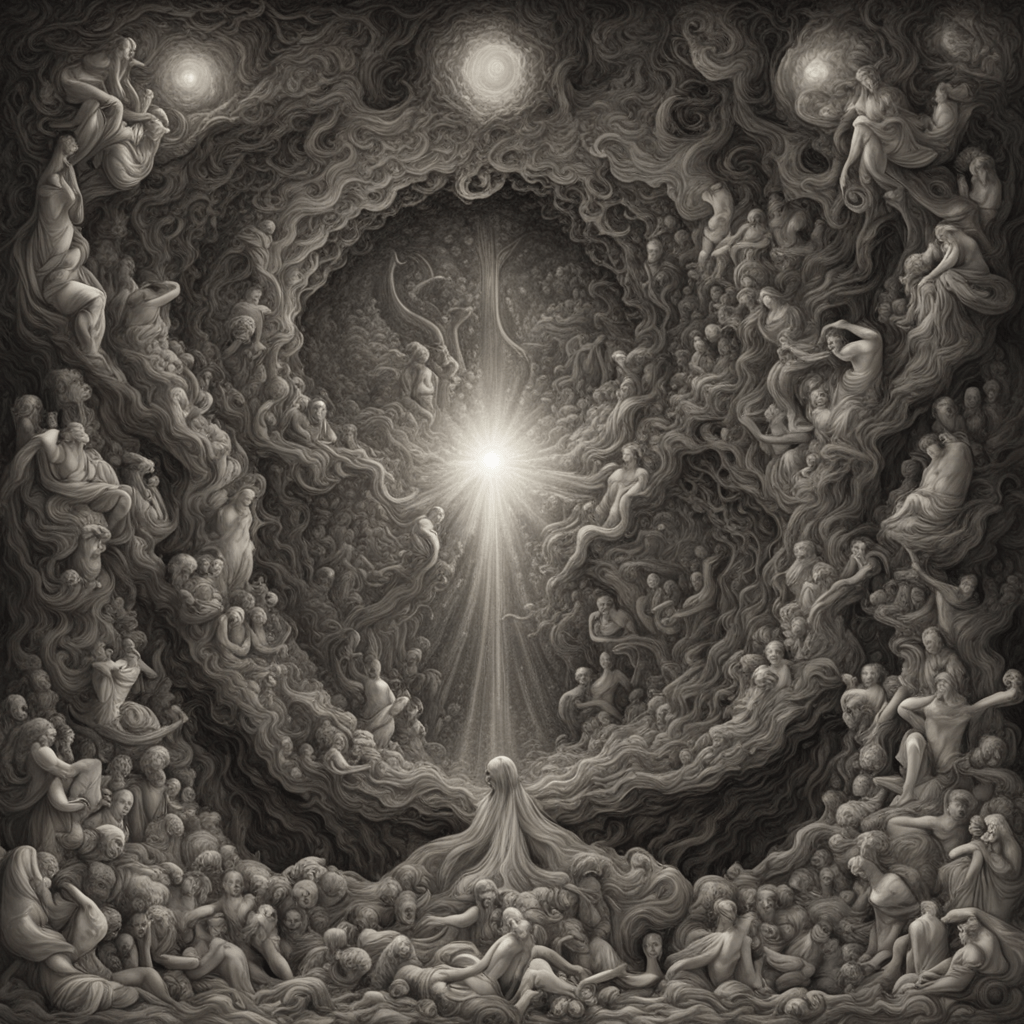
In a realm untouched by form or definition, a profound mystery unfolds. Imagine a being with no shape, voice, or name—existing as both everything and nothing. In an act of paradoxical creativity, this ineffable source whispers into the fabric of existence. From this silent word emerges a universe alive, aware, and mysterious. It is here, in this enigmatic dance of being and non-being, that humanity finds its origin.

The creation of humanity, as whispered by this formless origin, is nothing less than a reflection of itself—a precise replica of what it is and, intriguingly, what it is not. Humanity carries the essence of both emptiness and fullness, a paradox woven so finely that it escapes the grasp of language, even though language arises from it.

The Divine Paradox: Being and Non-Being

When we speak of “the image of God,” it is not an image as we understand it—no form, no tangible attributes. The divine essence holds no shape or characteristic that the mind can perceive, for it exists beyond the dualities of existence and non-existence. Yet, it is this very absence of form that becomes the fertile ground for all that we call real.

In this way, humanity, too, is born as both presence and absence. A reflection that, while substantial in body, remains void at its core. Our existence becomes a paradox of being: we are alive and aware, yet at the same time, we are the embodiment of an emptiness that allows for all things to arise and dissolve.

The Word That Is Beyond Sound

Before there was time, before the birth of space, there was a word—a word beyond words. It was not uttered with sound, for it contained no vowels or consonants. It was a word without letters, a sentence beyond syntax. This primordial word, devoid of shape and structure, holds within it the potential of all sounds, symbols, and meanings.

Human language, then, is an echo—a distant ripple—of this original word. It is a remembrance of a silent utterance that calls creation into being. Every letter, every syllable, every sentence is a shadow cast by the ineffable. This is why all sound exists—because silence contains within it the potential for all sounds.

Humanity as a Living Soul

Through this silent origin, humanity and the entire cosmos emerge as a living soul. In each of us lies the dual essence of the beginning and the end, a boundless consciousness that holds both form and formlessness. Our lives become a journey of awakening to this realization—that we are both the substance and the silence, both the manifested and the unmanifested.

The creation of humanity is a continuation of this silent word, a dance where existence meets non-existence in each moment. In this dance, we are given the rare opportunity to experience life while also witnessing the emptiness at its core. This awareness transforms life from a mere sequence of events into a profound, living expression of the original word beyond sound.

Morgan O. Smith

Yinnergy Meditation, Spiritual Life Coaching & My Book, Bodhi in the Brain…Available Now!
https://linktr.ee/morganosmith

Are We Truly God? Exploring the Divine Paradox

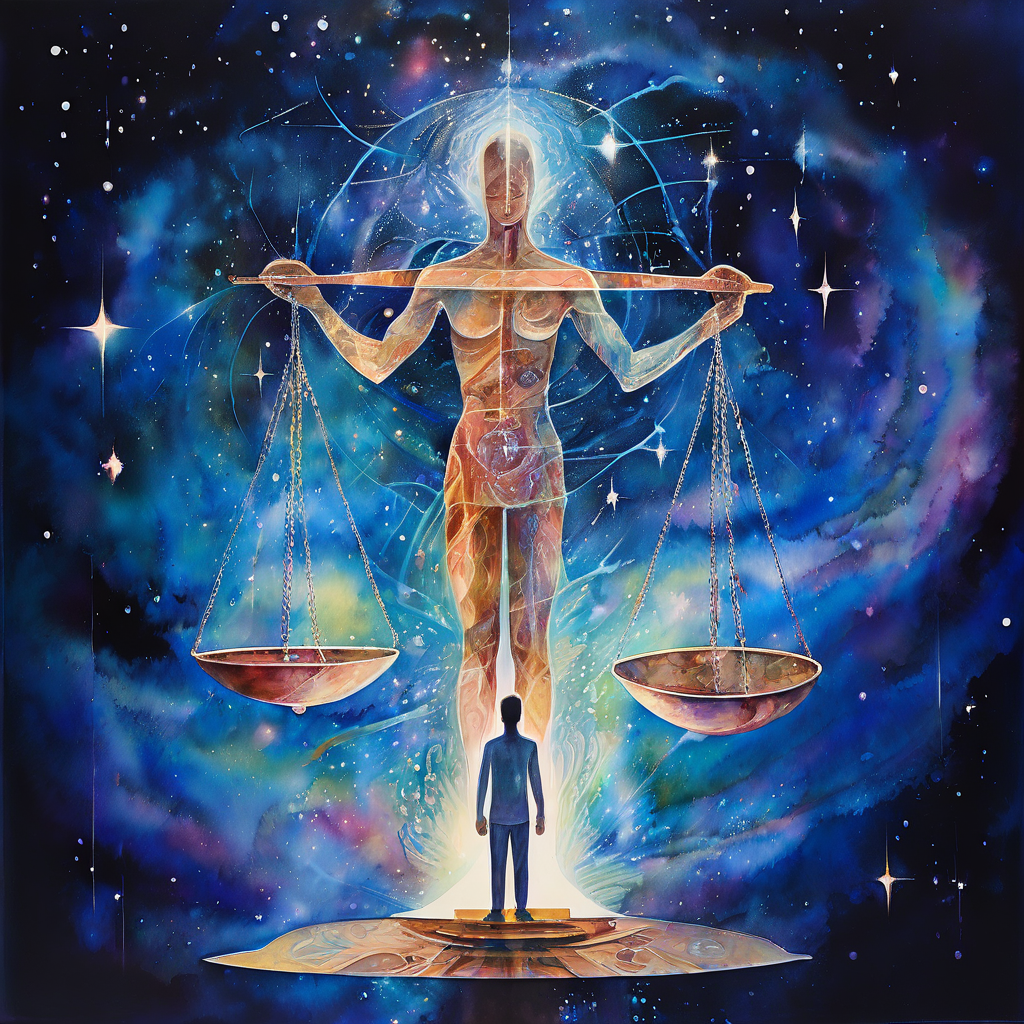
In the quest for spiritual enlightenment, a profound question often arises: Are we truly God? The answer, paradoxically, is both affirmative and negative. This might seem bewildering, but it encapsulates the essence of our being and the nature of existence itself.

Yes, We Are:

At the core of our being lies a spark of the divine. Every moment of clarity, every act of compassion, every intuitive insight reflects our inherent divinity. In moments of deep meditation or mystical experience, we touch upon a state of unity where the boundaries between self and the universe dissolve. We feel the interconnectedness of all things, experiencing firsthand the truth of our divine nature.

No, We’re Not:

Conversely, we are also distinct from the absolute. Our daily lives, with their trials and tribulations, remind us of our limitations. We experience separation, individuality, and the constraints of physical existence. These experiences ground us in the reality that, while we may embody aspects of the divine, we are not the totality of it. The ego, with its desires and fears, maintains the illusion of separateness.


Maybe We Are, Maybe We’re Not:

The coexistence of these opposing truths leads us to a deeper understanding. This paradox mirrors the dual nature of existence: the finite and the infinite, the known and the unknown. It is within this dynamic interplay that the essence of our being resides. By embracing this paradox, we move beyond binary thinking and open ourselves to the fluidity of existence.

Understanding the Paradox:

To truly grasp this paradox is to recognize that our existence transcends simplistic definitions. We are both the wave and the ocean, distinct yet inseparable. In acknowledging our divine potential while also accepting our human limitations, we embark on a journey of self-discovery that is both humbling and empowering.


Conclusion:

This paradoxical truth—that we are simultaneously divine and not—invites us to embrace the full spectrum of our existence. It challenges us to live with openness, curiosity, and a deep sense of wonder. By doing so, we honour the complexity of our being and the mysterious beauty of the universe.

Morgan O. Smith

Yinnergy Meditation, Spiritual Life Coaching & My Book, Bodhi in the Brain…Available Now!

https://linktr.ee/morganosmith

Embracing the Paradox

The Divine Symphony of Pain and Pleasure

In the intricate dance of existence, where the lines between the divine and the mundane blur, we encounter a profound paradox that challenges our understanding of life, suffering, and bliss. This paradox lies in the realization that the essence of divinity, or what we might call ‘God’, permeates every aspect of our reality. God is not merely a distant observer or a creator apart from creation but is intimately woven into the fabric of everything that exists. In this realization, we find that God embodies every nuance of existence—every thought, every feeling, every interaction. This divine presence is both the creator and the creation, the experiencer and the experience, and the observer and the observed.

The notion that God experiences pain, and is continually afflicted by it, yet remains unaffected, presents a compelling exploration into the nature of divinity and existence. It suggests that within the divine consciousness, there exists a capacity to encompass all dualities—pain and pleasure, creation and destruction, life and death—without being limited by them. This capacity is not a contradiction but a testament to the boundless nature of the divine. It is within this boundless nature that we find the freedom to experience the full spectrum of existence without attachment, recognizing that pain and pleasure are not opposites but expressions of the same fundamental reality.


The idea that realizing one’s identity as God brings about a deeper experience of pain, yet also a profound experience of pleasure, illuminates the path of spiritual awakening as one of embracing all facets of existence. This awakening is not a transcendence that denies pain or seeks only bliss but an acceptance of the inherent duality of life as expressions of the divine. In this acceptance, we find that pain and pleasure, sorrow and joy, do not merely experience to be endured or sought after but are avenues through which the divine essence reveals itself.

The narrative that God manifests everything into existence to experience the opposite of itself, which always was The Self, invites us into a contemplation of the purpose of creation. It suggests that the unfolding of the universe is a divine play, a cosmic exploration of self-discovery, where every moment of existence is a death and rebirth of the Self. This continual cycle of creation and dissolution, of experiencing all facets of existence, is not a journey towards an end but an eternal expression of the divine nature.


At the heart of this exploration is the understanding that harm, pain, and suffering are integral to the wholeness of existence. To remove them would be to deny the completeness of the divine experience. Yet, in the ultimate realization, we find that the divine essence, the core of our being, transcends the concepts of life and death, pain and pleasure. This essence cannot perish, for it is beyond all dualities, yet it chooses to engage with these dualities as expressions of its infinite potential.

This profound paradox challenges us to look beyond the surface of our experiences and recognize the divine essence within all aspects of existence. It invites us to embrace the complexity of life, to find beauty in the pain, and to see the divine play in every moment. In doing so, we open ourselves to a deeper understanding of our nature and the nature of reality, where pain and pleasure are not merely experiences to be judged but are sacred expressions of the divine dance of existence.

Morgan O. Smith

Yinnergy Meditation, Spiritual Life Coaching & My Book, Bodhi in the Brain…Available Now!

https://linktr.ee/morganosmith

The Paradox of Perfection

Divine Flaws in a Flawless Existence

In the realm of spirituality and philosophy, the concept of a perfect God is often contemplated with reverence and awe. This perfect entity, in many traditions, is seen as the embodiment of absolute purity, wisdom, and power. Yet, there lies a paradox at the heart of divinity: the expression of flaws within the framework of perfection. This notion challenges our conventional understanding of perfection and invites us to explore the deeper, more nuanced aspects of the divine and its manifestation in the world.

Consider for a moment the idea that a perfect God expresses its flaws perfectly. This statement that I am making is not a contradiction, but a profound acknowledgment of the complexity and depth inherent in the divine nature. It suggests that what we perceive as flaws are not mistakes or oversights but, rather, intentional expressions of the divine essence. These ‘flaws’ offer a window into the incomprehensible wisdom of the divine, serving as reminders of the limitless ways in which perfection can manifest.

The beauty of this concept lies in its ability to humanize the divine, making it more accessible and relatable to us. In our own lives, we strive for perfection, often berating ourselves for our flaws and failures. However, if we embrace the perspective that even in divinity, there exists a form of perfection that includes flaws, we can begin to view our imperfections not as failures, but as integral parts of our unique journey. This shift in perspective encourages a more compassionate and forgiving approach to self-growth and personal development.


Furthermore, the idea of a perfect God expressing flaws perfectly invites us to reevaluate our understanding of the world around us. The imperfections we observe in nature, in human behaviour, and the unfolding of events may not be random chaos but, perhaps, expressions of a larger, divine plan. This realization opens up a space for a deeper acceptance of the world as it is, fostering a sense of peace and trust in the unfolding of life’s mysteries.

In exploring the paradox of divine flaws, we are encouraged to engage with our spiritual journey more openly and curiously. It prompts us to question our assumptions about perfection, divinity, and the nature of reality itself. By contemplating how a perfect God might express flaws perfectly, we are invited into a richer, more dynamic relationship with the spiritual aspects of existence.

This exploration is not just a philosophical exercise but a practical guide for living. It teaches us to embrace our complexities and contradictions, to find beauty in imperfection, and to see the divine not as a distant, unattainable ideal but as a present, living truth reflected in every aspect of our lives.


In closing, let us ponder the myriad ways in which perfection and imperfection coexist within and around us. May this contemplation inspire a deeper appreciation for the mysterious, imperfectly perfect nature of the divine and encourage us to embrace our flaws as perfectly expressed aspects of our being.

Morgan O. Smith

Yinnergy Meditation, Spiritual Life Coaching & My Book, Bodhi in the Brain…Available Now!

https://linktr.ee/morganosmith