The Soul’s Paradox

A Dance of Definites and Possibilities

As one treads the expansive corridors of philosophy, few subjects engender as much fascination as the soul – that elusive, ethereal concept often seen as the essence of who we are. A common question on this voyage of introspection is: where does the soul reside?

The simplest answer might be: within the physical body. After all, we experience life, feel emotions, think thoughts, and dream dreams all within this organic structure we call a body. Yet, to confine the soul strictly within the physical body is a reduction that strips the soul of its sublime complexity.

In truth, the soul is non-local. Like a scent carried on the wind, it isn’t confined to a single spot but diffuses through the spaces and structures we inhabit. It permeates the cosmos yet is intimately tied to our bodies. The physical body may be viewed as its vessel – a corporeal nexus in the unfathomable cosmic network.

Yet, the body is not just a vessel. It is also a localized expression of the soul – a physical manifestation reflecting the soul’s ongoing journey. Our bodies transform from conception to birth, from childhood to adolescence, adulthood, and eventually to old age. This journey is a mirror, echoing the multi-cycle, or trans-cycle, of the soul – an individual expression of the all-encompassing Spirit, or Ground of All Being.

To this understanding, the soul both resides in and outside the body. Yet simultaneously, it neither exists inside nor outside nor does it exist at all in a conventional sense. This seeming paradox is at the heart of the soul’s mystery. It exists within the realm of definite and indefinite, possible and impossible, probable and improbable.

To elucidate, imagine the soul as a song. The notes (definite, possible, probable) resonate within our physical form, the singer. Yet, the melody (indefinite, impossible, improbable) drifts beyond, filling the room, seeping through walls, and touching those within its reach. Even when the song ends, the echo lingers – it remains within and beyond us, simultaneously nowhere and everywhere.

This enigmatic duality of the soul invites us to question our preconceived notions about reality and selfhood. It prompts us to view ourselves not merely as static, defined entities, but as dynamic participants in the cosmic dance of existence. We are both the dancer and the dance, the singer and the song, the vessel and the soul, embodying a myriad of possibilities, probabilities, and beautiful impossibilities.

To journey towards understanding the soul is not about seeking a destination, but engaging in an ongoing dance of discovery, where questions are as crucial as answers. It’s a dance that challenges us to embrace both the physical and metaphysical aspects of our being, and to live in the mystery that we are far more than just our physical bodies. We are the enigmatic soul – definite and indefinite, possible and impossible, probable and improbable, and beautifully, profoundly, paradoxically both everything and nothing.

Morgan O. Smith

Yinnergy Meditation & My Book, Bodhi in the Brain…Available Now!
https://linktr.ee/morganosmith

Walking the Tightrope

A Meditation on Life, Breath, and Existence

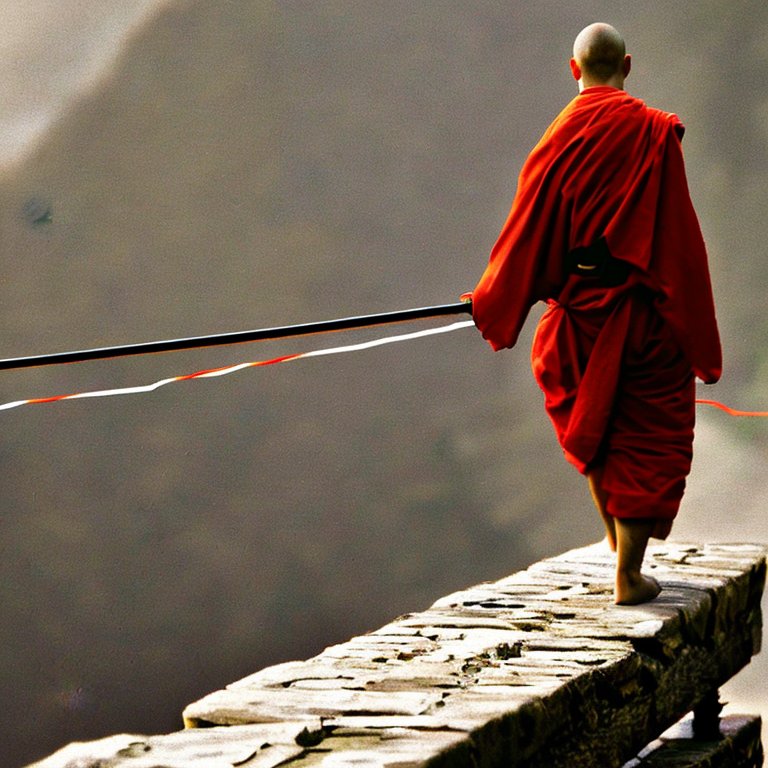
In our vast and infinite universe, there’s a remarkable dance that each living being performs, the perpetual tango between life and death. Every day, we navigate this tightrope, threading the narrow path that distinguishes the vibrant hues of existence from the void of non-existence. This intriguing equilibrium that defines our existence, balancing on the precipice of mortality, is an intricate choreography that brings to light the profundity of being alive.

Our breath, the subtle rhythm that underpins our existence, exemplifies this precarious balance. This rhythm – this continuous cycle of inhalation and exhalation – serves as the metronome of life itself. Each breath we take teeters on the edge of this existential tightrope, acting as the anchoring point in our ephemeral dance with life and death.

Delving deeper into this concept, one realizes that within every inhale and exhale, within the heart of that rhythmic balance, lies the essence of life. Every breath, an intimate connection between our body and the universe, is an affirmation of our existence, a silent declaration of life. The breath is an intimate dialogue with life, a personal narrative of our existence that is shared with the cosmos in a language as old as time.

But like any equilibrium, the delicate balance that our breath maintains requires moderation. If we linger too long on an inhale, or we dally on an exhale, we stray from the path of life. We break the cadence that ties us to life itself. We teeter, we falter, and eventually, we fall. To exist is to balance impeccably on this precipice, maintaining an impeccable rhythm in our breath that keeps us firmly planted within the domain of the living.

This concept, although simple in its description, bears profound implications. It calls us to be ever present, to appreciate the now, to be conscious of our place in the larger fabric of existence. It urges us to seek balance, to stay centered in the midst of our worldly experiences. Just as the rhythm of breath oscillates between inhale and exhale, so too should we find our balance amidst the highs and lows of life. For to be alive is not merely to exist, but to persist in this delicate dance on the existential tightrope.

In every breath, in every moment of our existence, we are called to embrace this profound balance. This realisation should provoke us to appreciate the transience of life, to value every breath as the gift it truly is. The rhythmic dance of breath is not just a biological necessity but an existential miracle that affirms our place in the grand tapestry of the universe.

Life and death. Inhale and exhale. Beginnings and endings. These dualities define the human condition. We walk the tightrope between these two extremes every day, maintaining a balance that is as delicate as it is essential. And in understanding this, we uncover a deeper appreciation of life itself, a more profound sense of our place within the cosmos, and a newfound reverence for the delicate balance that defines our existence.

Morgan O. Smith

Yinnergy Meditation & My Book, Bodhi in the Brain…Available Now!
https://linktr.ee/morganosmith

The Dance of Divine Ignorance

Brahman’s Playful Journey to Self-Realization

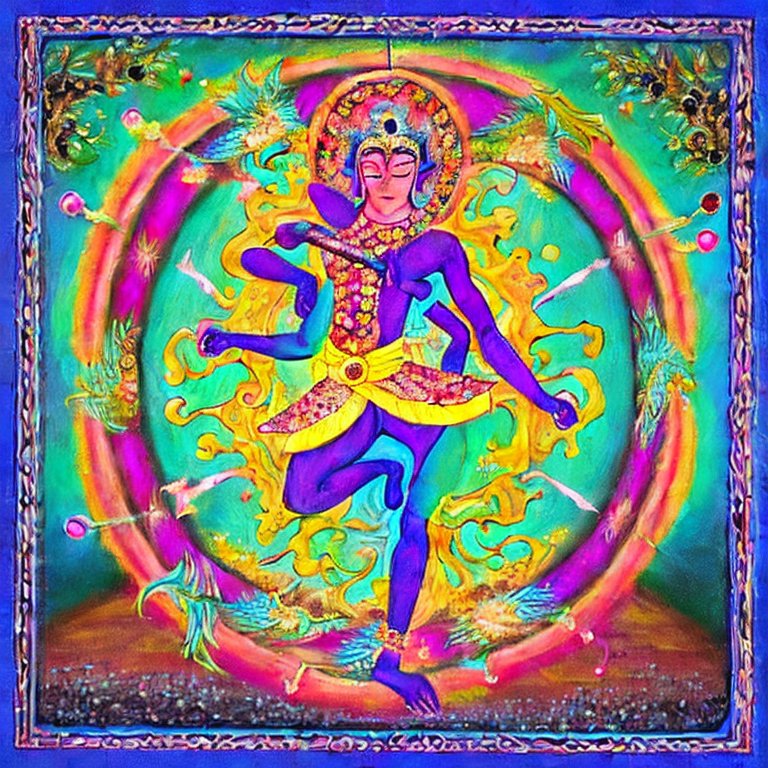
From the mysterious depths of Hindu philosophy arises a compelling concept, the notion of divine ignorance. Within this notion, we find an intriguing paradox: Brahman, the supreme reality or absolute truth, embarks on a deliberate voyage of self-forgetfulness, only to rediscover itself anew.

The journey begins with Brahman, the substratum of all existence. As an eternal, infinite entity beyond time, space, and causality, it is all-knowing and all-encompassing. Yet, it willingly dons the cloak of divine ignorance, becoming unaware of its true nature. Why? It’s an act of divine playfulness or ‘lila.’ It is a purposeful exercise to experience life’s duality, diversity, and the contrasts it can offer.

In this state of divine ignorance, Brahman may assume any form, animate or inanimate, and traverse a myriad of experiences, each unique and valuable. As humans, animals, or even as the elements themselves, Brahman willingly dives into the sea of forgetfulness, plunging into the game of life and death, joy and sorrow, love and hatred. Brahman is there in every moment, in every experience, playing hide-and-seek with itself.

Each incarnation in this state is a chapter of the cosmic narrative, leading to an eventual grand finale – the rediscovery of the self as Brahman. This moment of awakening is not a simple return to the start but a profound realization heightened by the accumulated experiences. It is a conscious awareness of oneness, a dissolution of the illusory divide between the self and the universe.

However, this journey isn’t a linear path. It’s a dance, a rhythm of existence where each beat is a cycle of divine ignorance and self-realization. Each turn of the dance spirals upwards, towards an ever-deepening understanding and experience of the truth.

The concept of divine ignorance challenges us to see life not as a series of random events but as a purposeful, meaningful journey toward self-realization. It teaches us that ignorance isn’t a flaw to be eradicated, but an essential part of the cosmic play. It is a transformative cocoon that emerges as the butterfly of awareness.

Divine ignorance invites us to embrace our vulnerabilities, our doubts, and our seeming ‘ignorance,’ and use them as catalysts for growth. It gently reminds us that the path to self-realization isn’t a desperate escape from ignorance but a joyful dance through it.

In conclusion, the dance of divine ignorance is not just Brahman’s journey but ours. We are not separate from Brahman, we are Brahman; playing the role of being a part of it, participating in this cosmic dance. Divine ignorance is not an obstacle but a bridge to our ultimate truth. It’s a profound truth worth reflecting upon, and perhaps, just perhaps, it’s time for us to embrace the dance and rediscover ourselves anew.

Morgan O. Smith

Yinnergy Meditation & My Book, Bodhi in the Brain…Available Now!

https://linktr.ee/morganosmith

Embracing Paradox and Nonduality

Exploring the Paths to Spiritual Awakening

Introduction:
In the realm of philosophy and spirituality, two captivating concepts often spark profound contemplation and open doors to expanded understanding: paradox and nonduality. Both concepts challenge our conventional modes of thinking and invite us to explore the nature of reality and consciousness. In this thought-provoking blog, we will delve into the differences and similarities between paradox and nonduality, and delve into their roles in the context of spiritual awakening.

Paradox: Illuminating the Mystery Within
Paradoxes are enigmatic statements or situations that defy our logical expectations and challenge our understanding of reality. They present us with apparent contradictions, forcing us to question our assumptions and explore deeper layers of truth. Paradoxes are often the gateways to expanded consciousness, as they push the boundaries of our thinking and invite us to embrace the complexities and mysteries of existence. They are the mind’s playground, a fertile ground for philosophical inquiry and intellectual growth.

Nonduality: Beyond Duality, Towards Unity

Nonduality, on the other hand, transcends the realm of paradox by recognizing the illusory nature of dualistic distinctions altogether. It is a profound philosophical and spiritual concept that asserts the fundamental unity of all things, beyond conventional boundaries. Nonduality suggests that the apparent separation between self and other, subject and object, is an illusion that obscures the deeper truth of interconnectedness. It invites us to explore the essence of oneness that lies at the heart of existence, beyond the limitations of dualistic thinking.

Differences and Similarities:
While paradox and nonduality are distinct in their approaches, they share some intriguing similarities. Both concepts challenge our preconceived notions and invite us to embrace uncertainty. Paradoxes expose the limitations of linear thinking and expand our intellectual horizons, while nonduality goes beyond the realm of paradox by embracing a holistic view of reality. They both foster an open-mindedness that allows for new perspectives and insights to emerge.

In the realm of spiritual awakening, both paradox and nonduality play crucial roles. Paradoxes serve as catalysts, shaking us out of our complacency and inviting us to question our deeply held beliefs. They disrupt our habitual patterns of thinking and awaken us to the inherent mystery and wonder of existence. Nonduality, on the other hand, offers a framework for understanding the ultimate truth of interconnectedness. It guides us towards a direct experience of unity and helps dissolve the illusory boundaries that separate us from the world and others.

Conclusion:
Paradox and nonduality are two fascinating concepts that contribute to our philosophical and spiritual growth. Paradoxes challenge our intellect and expand our understanding, while nonduality transcends dualistic thinking and reveals the profound interconnectedness of all things. By embracing both paradox and nonduality, we can embark on a transformative journey of self-discovery and spiritual awakening. They invite us to explore the depths of our consciousness and contemplate the profound mysteries of existence. Let us embrace the paradoxes that confront us and open our hearts to the boundless unity that nonduality reveals. In this harmonious dance, we find the keys to unlocking the doors of awakening and embracing the vastness of our being.

Morgan O. Smith

Yinnergy Meditation & My Book, Bodhi in the Brain…Available Now!
https://linktr.ee/morganosmith

Embracing the Unity of Free Will and Determinism

Nondual Perspectives

Introduction:
In the timeless debate surrounding free will versus determinism, philosophical inquiries have often sought to reconcile these seemingly opposing concepts. However, from a nondual standpoint, rooted in direct experience, the boundaries between free will and determinism begin to blur. In this blog, we explore the profound idea that every choice we make is our decision and the decision of the universe itself. We delve into the unity of free will and determinism, highlighting how this perspective challenges conventional notions and opens up new avenues for contemplation.

The Illusion of Separation:

From a nondual perspective, the fundamental illusion is the perception of separation between ourselves and the universe. When we examine our direct experience, we realize that we are intimately interconnected with the fabric of existence. Our choices and actions are not isolated events but intricately interwoven with the tapestry of the cosmos. Thus, the dichotomy of free will and determinism fades away, revealing a deeper unity.

The Illusion of Individual Agency:
Conventionally, free will is often associated with individual agency, the belief that we possess an independent power to make choices. However, upon closer inspection, we find that our notion of individual agency is built upon a complex web of influences. Our thoughts, desires, and motivations arise from a multitude of factors: genetics, upbringing, culture, and countless other variables. In this sense, determinism seems to assert its presence, implying that our choices are shaped by external forces.

Reframing Choice as Cosmic Manifestation:
While determinism challenges the idea of individual agency, nondual perspectives offer an intriguing alternative. Instead of perceiving ourselves as separate entities with independent choices, we can reframe choice as a cosmic manifestation. Every decision we make can be seen as a ripple in the interconnected web of existence, an expression of the universe itself. In this way, free will and determinism merge into a harmonious whole, transcending the limitations of duality.

Unfolding in the Eternal Now:
In the nondual understanding, the concept of time takes on a different dimension. Past, present, and future merge into an eternal now, where every choice and outcome coexist in a timeless dance. From this vantage point, the notion of causality loses its strict linear framework. Our choices are not predetermined events unfolding in a predetermined sequence; rather, they arise in the timeless realm of possibility, where the universe expresses itself through our individual consciousness.

Embracing Paradox:
The reconciliation of free will and determinism requires embracing paradox. It calls upon us to transcend the limitations of dualistic thinking and expand our awareness to encompass the vastness of existence. In this paradoxical dance, we find liberation. We become both the orchestrators and the orchestrated, the chooser and the chosen, as we recognize the profound interdependence that pervades all aspects of reality.

Conclusion:
From the nondual standpoint, the interplay between free will and determinism reveals a profound unity. By exploring our direct experience and recognizing the illusory nature of separation, we discover that every choice we make is intricately connected with the choices made by the universe. As we embrace this understanding, we transcend the limitations of duality and embark on a journey of profound self-realization, where the dance of free will and determinism becomes an expression of the cosmic symphony of life.

Morgan O. Smith

Yinnergy Meditation & My Book, Bodhi in the Brain…Available Now!
https://linktr.ee/morganosmith