Author, Philosopher, Spiritual Teacher, A Lead Facilitator at Sacred Media's Integral Mastery Academy, Founder of Yinnergy Meditation/Neurofeedback, Bodhi Mental Care & Wellness, Co-founder of KeMor Centre for Innovative Development
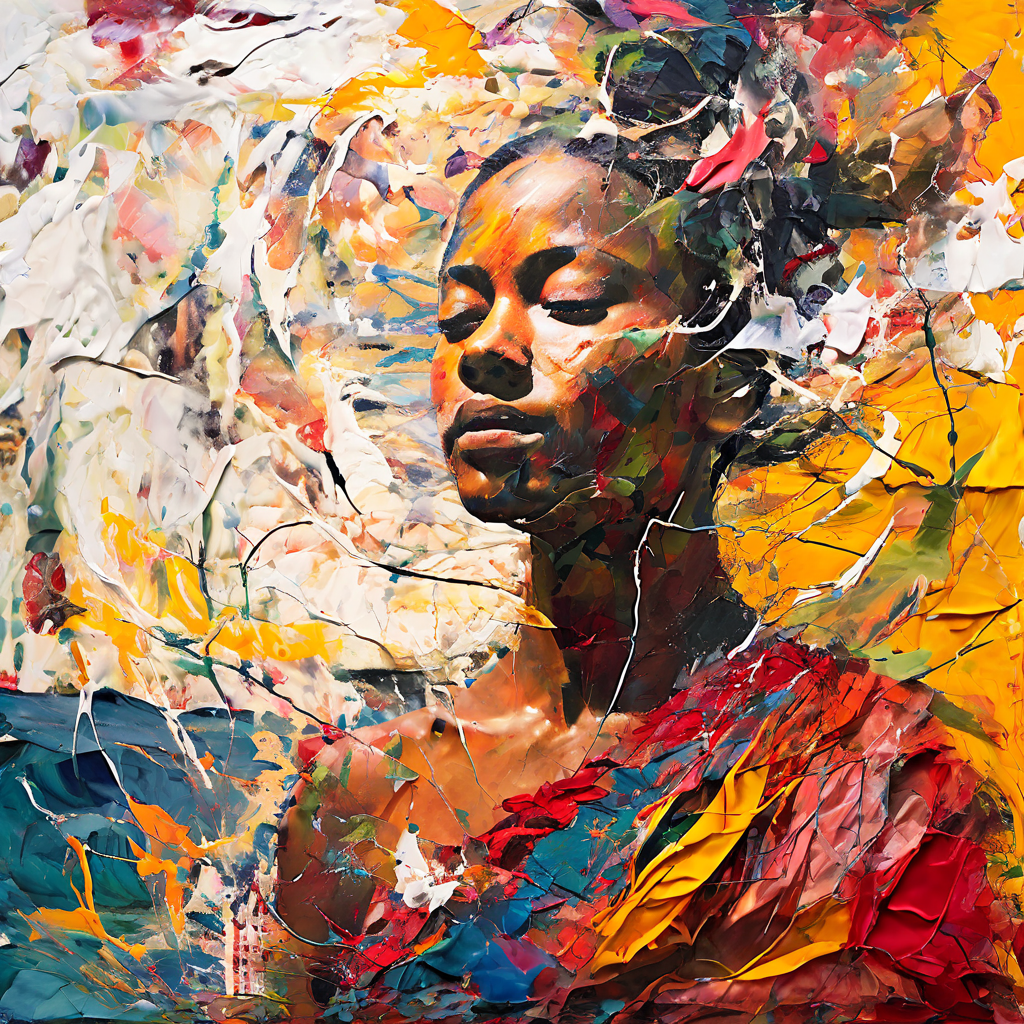
To move through the world with an open heart requires no spiritual strain when one sees each face as the Divine appearing in another form. The gaze shifts from judgment or preference to recognition, an acknowledgment that the Infinite hides behind every mask, smiling through the eyes of the stranger, the friend, the adversary, and the beloved.
When perception shifts in this way, reverence arises without being willed. Bowing of the heart happens effortlessly, because the heart no longer measures worth or assigns categories; it simply bends before the presence of the sacred in its countless costumes.
Consider how different daily interactions would be if seen through this lens. The hurried cashier at the grocery store is not a nuisance but the Divine pressed into the role of service. The difficult colleague, the one who sparks irritation, becomes a stern disguise of God, reminding you of hidden patience. Even those who wound us, in their own fragmented ways, become reflections through which compassion can deepen.
To live this way is not to deny the roughness of human behaviour but to recognize that the Source never abandons its disguises. Each face is both particular and universal, flawed yet flawless, passing yet eternal. The mind resists, but the heart knows; it bows without calculation when it sees through the mask to the boundless presence it conceals.
Morgan O. Smith
Get Your Free Copy of My Book, Bodhi in the Brain!
Pure knowing is not an act of someone grasping something. It is not the product of a subject meeting an object. It is not knowledge stored, processed, or owned. What we call “pure knowing” is an immediacy so complete that the categories of knower and known dissolve before they ever arise.
The mind insists there must be someone behind the recognition, a witness who stands apart. Yet such a witness is already a thought, an echo of division layered upon the seamlessness of awareness. The attempt to locate the knower is like searching for the horizon; you will find only a mirage created by perspective.
What reveals itself is astonishingly simple: knowing shines without support. No owner is required. No identity need arise. It is self-luminous, unmediated, without origin or destination. Thought may try to grasp it, but thought cannot enter here. The moment a “me” claims it, the purity is veiled, dressed in commentary, weighed down by explanation.
This does not deny the human experience of learning, remembering, and perceiving. It only points to the fact that beneath all those movements lies a ground untouched by them. That ground is knowing itself—silent, radiant, and free from the necessity of a knower.
To glimpse this is to taste liberation, not as a reward, not as a possession, but as the natural state that was never absent. What remains is not someone who knows, but knowing itself, unbroken and unclaimed.
Morgan O. Smith
Get Your Free Copy of My Book, Bodhi in the Brain!
Admiring Her Beauty Without the Need to Possess It
She stood before you—radiant, complete, untouched by your desire. You saw her beauty not as something to claim but something to witness. No attempt to preserve it. No hunger to prolong the moment. Just presence.
This is the essence of non-attachment. The ability to recognize the luminous without needing to make it yours. To love deeply without ownership. To appreciate fully without clinging. To admire, and then walk away—not because you don’t care, but because you’ve seen clearly.
Desire often masquerades as appreciation. It sneaks in, subtle at first, until the gaze becomes gripping. The mind begins to script stories: how it could be, how it should be, how it must be. But true seeing requires no continuation. It is complete in its own silence.
Beauty invites reverence, not possession. When you see her—whatever or whatever she is—truly see her. Let that moment be enough. Let the gaze be unpolluted by longing. Let the love be real because it is free.
To walk away isn’t abandonment. It is freedom for both the viewer and the viewed. There is no trace left behind. No emotional residue. Just the echo of a sacred glimpse, unbroken by need.
And isn’t that the deepest form of intimacy? To allow something or someone to remain what they are, without the distortion of your grasp?
Non-attachment does not dim the light of love; it refines it. It teaches the heart how to hold everything while clinging to nothing. It teaches the soul how to dance with impermanence, and still call it sacred.
Sometimes the most awakened gesture isn’t to stay, or to reach, or to take—but simply to witness beauty… and bow.
Morgan O. Smith
Get Your Free Copy of My Book, Bodhi in the Brain!
No one else has ever walked this Earth as you. Not a version, not a shadow, not a resemblance. Just you.
Not because you’re special in the usual way that word is thrown around, but because existence itself only ever unfolded once—and it’s doing so now, as you.
This isn’t about ego. Ego thrives on comparisons: greater than, less than, better, worse, worthy, unworthy. But the truth beneath all that noise isn’t about status—it’s about singularity. The kind that isn’t measured. The kind that never repeats.
People spend their lives searching for meaning, purpose, and a sense of identity. They try to earn significance or prove their worth. But importance isn’t earned—it is. You are the original event. Not one among many. Not one of a kind. The kind.
Look around. Every face you see, every story, every moment, all of it—just folds within the One. That same One expressing itself here as your particular breath, your memories, your voice, your fears and awakenings. The sky that bends over you is not separate from your gaze. The rhythm of the world doesn’t move beside you; it pulses through you.
To say you are not greater than anything is to drop the illusion of measurement. Of trying to win at some existential game. But then comes the deeper realization: You are not less than anything either. There is nothing else to measure against. You’re the first and last word of this moment.
Nothing else has ever existed apart from this.
So ask yourself: What happens when you stop performing for reality and start remembering that you are it? What shifts when you no longer strive to become someone meaningful, but realize that meaning itself is being?
You’re not here to improve reality. You are the revealing of it.
And this unveiling has never happened before—not like this.
Morgan O. Smith
Get Your Free Copy of My Book, Bodhi in the Brain!
Most spiritual seekers chase after enlightenment like it’s a distant prize withheld by the universe. The irony is that the essence being sought is precisely what animates the search. Enlightenment is not something to acquire; it is the underlying fact of being itself. The real dilemma lies not in discovering it but in maintaining the performance of ignorance.
Ask yourself: what does it take to pretend you are unenlightened? Notice the strain involved in sustaining identification with fear, ambition, conflict, desire for control. There is an ongoing maintenance of separation. One must continually rehearse the drama of being a self apart from life, a fragment cut from the whole.
This play of forgetting is not accidental. It has its own intelligence. It permits a dance of contrast so that awareness can better know itself. Yet the tragedy for many is forgetting that it is just a dance. They get lost in the mask they designed. The seeker clings to questions of how, when, and why—missing the silent answer that has always been here.
Enlightenment is not an achievement, but a recognition. It is the falling away of the need to be other than what you are. Once seen, it’s impossible to unsee, though one can still pretend, out of habit or fear. The invitation is to drop the effort, even to be enlightened.
No authority can grant it, no ritual can guarantee it, and no teaching can deliver it because it has never been absent. The teacher points. The student imagines the distance. The truth remains.
To realize this is to see that nothing needs fixing. Even the belief that you are not yet free is simply another expression of freedom. This is the cosmic joke: you are already what you are seeking. The only cost of knowing is the willingness to stop pretending otherwise.
Morgan O. Smith
Get Your Free Copy of My Book, Bodhi in the Brain!
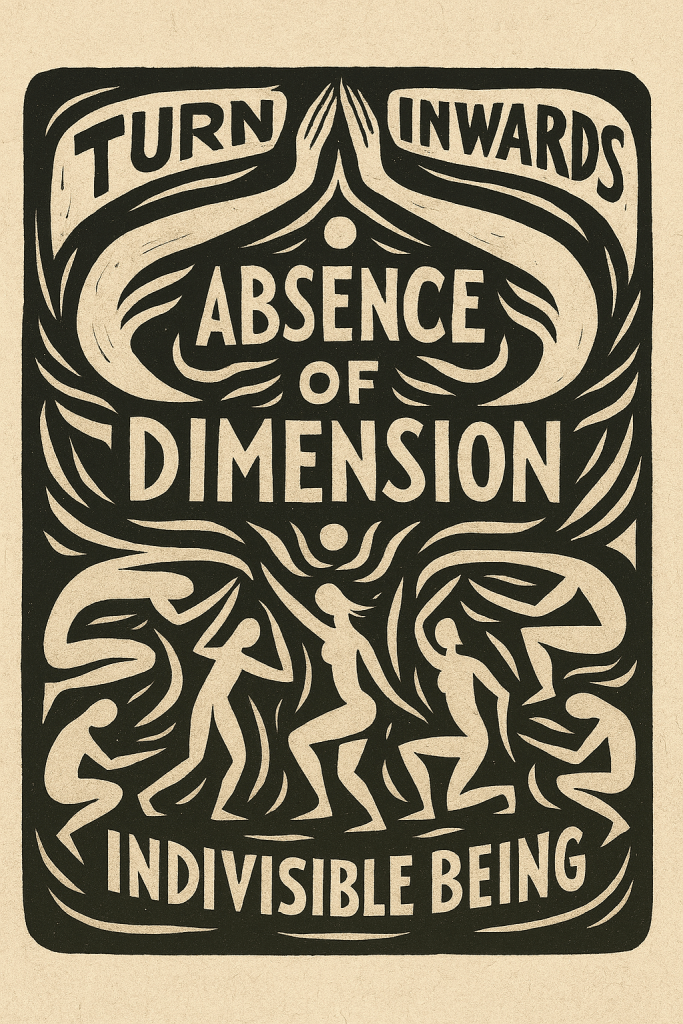
What dimension is the experience of absolute monism?
That very question quietly collapses under its own weight.
To ask “how many” is to divide the indivisible. To quantify is to measure a mystery that can only be met in its own silence. Within the direct realization of Turiyatita—that which lies beyond even Turiya—there is no vantage point from which to count, compare, or classify. The moment dimensionality is assigned, we have already slipped back into the architecture of mind, where form assumes primacy over essence.
Still, the mind hungers for some orientation. So let’s turn the prism slowly, exploring this from a few distinct angles—not as answers, but as offerings.
1. Relative Lens: The Architecture of Experience
Certain esoteric traditions offer a gradient of consciousness: from the dense contours of the material (3D), to subtle inner time-space (4D), toward integrative fields of unity (5D and above). These serve as helpful metaphors, allowing seekers to understand how consciousness may expand or refine. Yet even the loftiest of these is still part of the dream—within the cosmic play of form.
From this lens, the direct encounter with nonduality might appear multi-dimensional, even interdimensional, because it defies the logic of linearity. It feels vast, borderless, paradoxical. But it is still being interpreted by a relative mind, even if only for a moment.
2. Transcendental Lens: The Priorness of the Real
Absolute monism is not located anywhere because it is not a location.
Dimensionality implies structure. It assumes contrast. But the Absolute is prior to all arising. It is not 1D, 5D, or 12D—it is the generative zero-point. The stillness that allows all movement. The background that isn’t separate from the foreground but holds all images without ever becoming one.
It is not empty like a void; it is empty like ungraspable fullness. The kind of emptiness that births stars and dissolves gods. Not confined to being or non-being, but transcending both.
3. Direct Realization: The Collapse of All Coordinates
No map leads here.
Direct realization is immediate and unmediated. Not because you reached a peak, but because the climber vanished. There is no experiencer—only experiencing. No mind reflecting on awareness—only awareness aware of itself.
Here, space has not been born. Time has not begun ticking. Even the concept of unity dissolves, for there is nothing to be unified. What remains is suchness—pure presence prior to presence. A silent explosion of is-ness so complete it leaves no trace.
Not a Dimension. Not Even a State.
So what do we call it?
Nothing.
And everything.
To speak of “the dimension of absolute monism” is to subtly betray it. Better to say: it is the absence of dimension in which all dimensions arise and dissolve. Not a high place, but the place before place. Not a peak, but the disappearance of altitude itself.
A Final Whisper
Absolute monism is not the highest dimension. It is the absence of dimension, where even “one” dissolves. Here, all becomes what it has always been— indivisible, unbounded, unspoken.
Morgan O. Smith
Get Your Free Copy of My Book, Bodhi in the Brain!
The Subtle Divide Between Truth and Interpretation
Knowing there’s a God is not a religious concept; believing in a God is. One is a recognition—silent, direct, and intimate. The other is a construct—layered with doctrines, culture, and inherited symbols.
What is known requires no belief. It reveals itself without needing validation, much like light doesn’t require agreement to be seen. The moment belief arises, there is already a distance. A gap. A reaching toward what seems separate.
Belief is an echo of knowing, distorted by time, language, and fear. It builds shrines to certainty where awe once stood unguarded. It memorizes truths that once moved freely through silence. And often, it turns the unknowable into a caricature—a God of preferences, sides, and punishments.
Knowing is not about having answers. It’s the crumbling of the question. It doesn’t declare “There is a God.” It dissolves the very boundary between the knower and what is known. There is no longer a subject seeking an object. Only the raw immediacy of Being aware of itself.
Those who know are rarely interested in convincing others. Those who believe often are.
The danger isn’t belief itself—it’s mistaking belief for truth. Truth, when known, renders belief obsolete. It doesn’t divide, it doesn’t declare superiority—it simply is.
To know is to surrender the need for interpretation. To believe is often to defend the interpretation, even at the cost of truth.
And yet, belief can serve as a bridge. A necessary illusion for those not yet ready to let go of the comfort of form. But let it be a bridge, not a home.
Morgan O. Smith
Get Your Free Copy of My Book, Bodhi in the Brain!
From the stillness at the heart of all existence, one perceives that seemingly diverse paths, doctrines, and revelations emerge from a single source. What appears as multiplicity through the lens of human perception rests upon an unchanging, all-pervasive essence. This perspective reveals that every philosophy—grounded in ancient texts, ritual devotion, logical analysis, or direct contemplative experience—arises as one facet of a greater whole.
A Unified Whole
All schools of thought, whether they speak of oneness or duality, share a luminous core. For centuries, Vedanta has investigated this enduring mystery through varied teachings that, on the surface, may seem contradictory. Their deeper aim is to illuminate the infinite Self beyond the limits of language. Some emphasize devotion and a personal relationship with the Divine. Others announce an unqualified unity free of distinctions. Still, others highlight how the One appears as many. Examined in isolation, each approach might feel incomplete. Viewed through the lens of total realization, they function as distinct yet harmonious strands of a single radiant truth.
The Singular Essence of All Religions and Philosophies
Those who probe deeply into the world’s traditions uncover a universal wisdom that echoes across time and culture. The Absolute remains boundless and intimately present, unconstrained by any notion of limitation yet expressing itself as every form and phenomenon. Scriptures, rituals, and teachings are portals opening onto the same unfathomable reality. Symbols and narratives differ, yet their highest objective converges on awakening to the unity underlying all appearances.
Integral Vedanta and the Seamless Field of Reality
All who embrace the synthesis called Integral Vedanta notice that everything finds its place within an indivisible realm that includes both the ineffable void and the manifest universe perceived around us. On the most subtle level, existence reveals neither discrete objects nor separate identities; instead, it unfolds as a continuous interplay of forces within an unbroken expanse. This vision suggests a self-consistent cosmic intelligence that discovers itself in every aspect of creation.
Resolving Paradox Through the Unifying Vision
Where friction appears—between transcendent unity and personal devotion, the formless and myriad forms—Integral Vedanta highlights a reconciling principle. Direct description of this principle often exceeds the scope of conceptual thought. Yet the paradox dissolves seamlessly in the heart of one who perceives no division. Much like how white light refracts into many colors through a prism, the Absolute manifests as countless expressions while remaining undivided at its source.
Living the Integral Understanding
A realized individual effortlessly embodies the insight that all distinctions—spiritual, philosophical, or otherwise—are provisional signposts guiding seekers toward ultimate reality. Compassion and clarity flow abundantly, for there is no perception of otherness. Daily existence reflects this through unwavering openness, spontaneous respect for every path, and gentle acknowledgment of each approach as an essential part of the whole.
The Unspoken Mystery
Words gesture toward oneness but never fully capture its depth. Even so, philosophical analysis and discussion retain their value, as every expression can hint at the ineffable ground of being. Integral Vedanta thereby affirms any sincere method or tradition that directs consciousness toward the underlying truth, regardless of the language or rituals involved.
Conclusion
From the vantage of integral realization, contradictions between different philosophies and faiths reveal themselves as complementary viewpoints rather than obstacles. Religious and philosophical systems serve as windows onto the same vast landscape, each offering a unique perspective on the infinite. The invitation of Integral Vedanta is to recognize and celebrate these perspectives, allowing their synthesis to unveil our shared essence. All modes of exploration—devotional, analytical, experiential, or otherwise—unfold into one luminous understanding of reality’s ultimate nature.
Morgan O. Smith
Yinnergy Meditation, Spiritual Life Coaching & My Book, Bodhi in the Brain…Available Now!
The quest for enlightenment, that profound state of ultimate understanding and unity, is often compared to trying to hold onto the wind. This metaphor captures the essence of the journey—a pursuit that defies conventional grasping, one that requires an openness to the intangible and an embrace of the elusive.
The Elusiveness of Enlightenment
In many Eastern philosophies, Enlightenment is not a destination but a state of being. It is a realization that transcends the confines of our dualistic thinking. Much like the wind, it is everywhere and yet nowhere specific. To chase it with a rigid, goal-oriented mindset is to miss its essence.
Enlightenment involves the dissolution of the self and the shedding of layers upon layers of conditioned beliefs and identities. This shedding process can feel like an endless peeling away of illusions, akin to trying to contain the uncontainable wind in your hands. The moment you think you have a firm grasp, it slips through your fingers, revealing the futility of such an endeavour.
The Paradox of Effort and Effortlessness
One of the most challenging aspects of the spiritual path is balancing effort and effortlessness. The seeker must engage in practices, disciplines, and teachings that guide the way, yet true enlightenment often dawns in moments of complete surrender and stillness. It is in these moments that the boundaries of the self dissolve, and one experiences the boundless nature of existence.
This paradox can be frustrating. We are conditioned to believe that hard work and determination yield results. However, in the spiritual realm, striving too hard can create resistance. It is the quieting of the mind, the letting go of effort, that often brings the profound insights we seek.
Embracing the Unknowable
In accepting the elusiveness of enlightenment, we learn to appreciate the journey itself. Every moment of insight, every experience of stillness, is a part of the unfolding realization. The wind may be impossible to grasp, but it can be felt, experienced, and known in its presence.
To truly understand enlightenment, one must embrace the unknowable. It requires a heart open to the mysteries of existence and a mind willing to let go of the need for certainty. This openness allows us to experience glimpses of the infinite, moments where the separation between self and universe disappears, revealing the profound interconnectedness of all things.
Conclusion
Attaining enlightenment is indeed as difficult as grabbing hold of the wind. Yet, in this difficulty lies the beauty of the spiritual journey. It teaches us to let go, to be present, and to embrace the mystery of existence. In the end, the pursuit of enlightenment is not about reaching a final goal but about experiencing the boundless nature of our true selves, flowing effortlessly like the wind.
Morgan O. Smith
Yinnergy Meditation, Spiritual Life Coaching & My Book, Bodhi in the Brain…Available Now!
“See God in all faces, places, and empty spaces” is an invitation to recognize the divine presence in every aspect of existence. This perspective encourages a profound shift in how we perceive the world, inviting us to see beyond the superficial and appreciate the sacredness that permeates all things.
Faces Seeing God in all faces means acknowledging the inherent divinity within every person we encounter. It is a call to look beyond differences in appearance, culture, or belief, and to recognize the shared essence that connects us all. This recognition fosters empathy, compassion, and a deeper sense of unity, as we see each individual as an expression of the divine.
Places When we see God in all places, we cultivate a sense of reverence for our surroundings. Whether in nature, urban environments, or our homes, this perspective encourages us to find beauty and sacredness everywhere. It prompts us to treat our environment with respect and gratitude, understanding that every place is a manifestation of the divine presence.
Empty Spaces Seeing God in empty spaces invites us to appreciate the silence, stillness, and potential that exist in the gaps and voids of our lives. These spaces are not merely absences but are pregnant with possibility and the unmanifest potential from which all creation arises. By embracing these empty spaces, we learn to find peace in stillness and to trust in the unfolding of life’s inherent wisdom.
Integrating This Perspective To truly embody this perspective, one must cultivate mindfulness and an open heart. Practicing presence in each moment, we can begin to see the interconnectedness and the divine thread that weaves through all of existence. This practice transforms our perception, allowing us to live with greater joy, peace, and a deep sense of belonging.
By seeing God in all faces, places, and empty spaces, we align ourselves with a higher understanding of unity and divine presence. This shift not only enriches our spiritual journey but also enhances our interactions with the world, inspiring us to live with compassion, respect, and a profound appreciation for the sacredness of life.
Morgan O. Smith
Yinnergy Meditation, Spiritual Life Coaching & My Book, Bodhi in the Brain…Available Now!









 Morgan O. Smith