You Exist Because Nothing Does

In the profound stillness of existence, there lies a paradox that both mystifies and enlightens: the realization that you exist because Nothing does. This concept, which dances on the edge of comprehension, invites us to explore the depths of nonduality and the nature of our very being.

At the heart of this exploration is the understanding that nothingness is not a void but a fertile ground from which all things arise. This nothingness is the unmanifest potential, the silent source that gives birth to the multiplicity of forms and phenomena we perceive. It is the canvas upon which the universe paints its intricate patterns, each stroke an expression of the infinite potential that lies dormant within the void.

When we delve into the essence of nothingness, we begin to see that it is inseparable from existence. In the words of Eastern philosophy, form and emptiness are two sides of the same coin. The form is the manifest world we experience through our senses, while emptiness is the unmanifest potential that underlies and pervades all existence. This realization dissolves the apparent duality between being and non-being, revealing the inherent unity of all things.


To truly grasp this concept, one must move beyond intellectual understanding and into the realm of direct experience. This journey requires a willingness to let go of preconceived notions and to embrace the unknown with an open heart. As we surrender to the mystery of existence, we may find ourselves awakening to a deeper truth: that our very being is an expression of the infinite potential that lies within the void.

This understanding can have profound implications for how we live our lives. When we recognize that our existence is rooted in nothingness, we can begin to see the transient nature of all things. This realization can free us from the attachments and aversions that bind us, allowing us to navigate the world with a sense of ease and equanimity. We come to understand that, just as waves arise and dissolve in the ocean, our experiences are fleeting expressions of the boundless potential that lies within us.

Furthermore, this insight can inspire a sense of wonder and awe at the miracle of existence. Each moment becomes a precious opportunity to witness the unfolding of the infinite potential that lies at the heart of all things. We come to appreciate the beauty and mystery of life, recognizing that even the most mundane aspects of our experience are imbued with the sacred.


In embracing the paradox that we exist because nothing does, we open ourselves to a deeper understanding of the nature of reality. We come to see that our true essence is not limited to the forms we inhabit but is rooted in the boundless potential that underlies all existence. This realization can transform our perception of ourselves and the world, inviting us to live with greater compassion, wisdom, and grace.

Morgan O. Smith

Yinnergy Meditation, Spiritual Life Coaching & My Book, Bodhi in the Brain…Available Now!

https://linktr.ee/morganosmith

The Divine Soil of Atman

Understanding the Unity of Existence

Atman is identical to Brahman, fundamentally the same. While Atman is often viewed as the individualized aspect of Brahman, it retains its essence as Brahman. Brahman is the ground of all being, and Atman is but a speck of this divine soil. This soil, sharing the same substance as the ground, emphasizes their intrinsic unity.

Atman itself has no location, shape, or form, yet the physical body—the gross body—does. This physical body is also Atman but has shape and form, making it localized and subject to polarity. The physical body, dense and tangible, includes everything that constitutes it: vibrating strings, subatomic particles, atoms, molecules, and cells. Each of these elements, in their individual form, is Atman.


All the subtle bodies are also Atman, spanning from the most subtle to the gross physical body. When the physical body dies, the soul doesn’t leave the body because it is non-local. The soul, as Atman, remains ever-present. Atman offers a more sophisticated explanation of the soul. Remember, Atman doesn’t leave the body because there’s nothing there to leave. This nothing or nothingness is Atman, the empty witness.

The opposite of all shapes and form is indeed all shape and form. Nothingness is non-local, omnipresent, and ubiquitous. In its absolute state, nothingness manifests as everything. This empty witness manifests its individual reality. Every event that occurs from its individual perspective is Atman. Everything that happens, from all perspectives, is Brahman. Atman and Brahman are the same, transcending the ego and the sense of self.


Transcending the ego is an act, part of the cosmic play that Atman/Brahman engages in. The same Atman/Brahman that doesn’t exist yet does. Everything and nothing are the same, merely imagined from two different perspectives.

Morgan O. Smith

Yinnergy Meditation, Spiritual Life Coaching & My Book, Bodhi in the Brain…Available Now!
https://linktr.ee/morganosmith

The Convergence of Quadrants

A Journey from Relative to Ultimate Reality

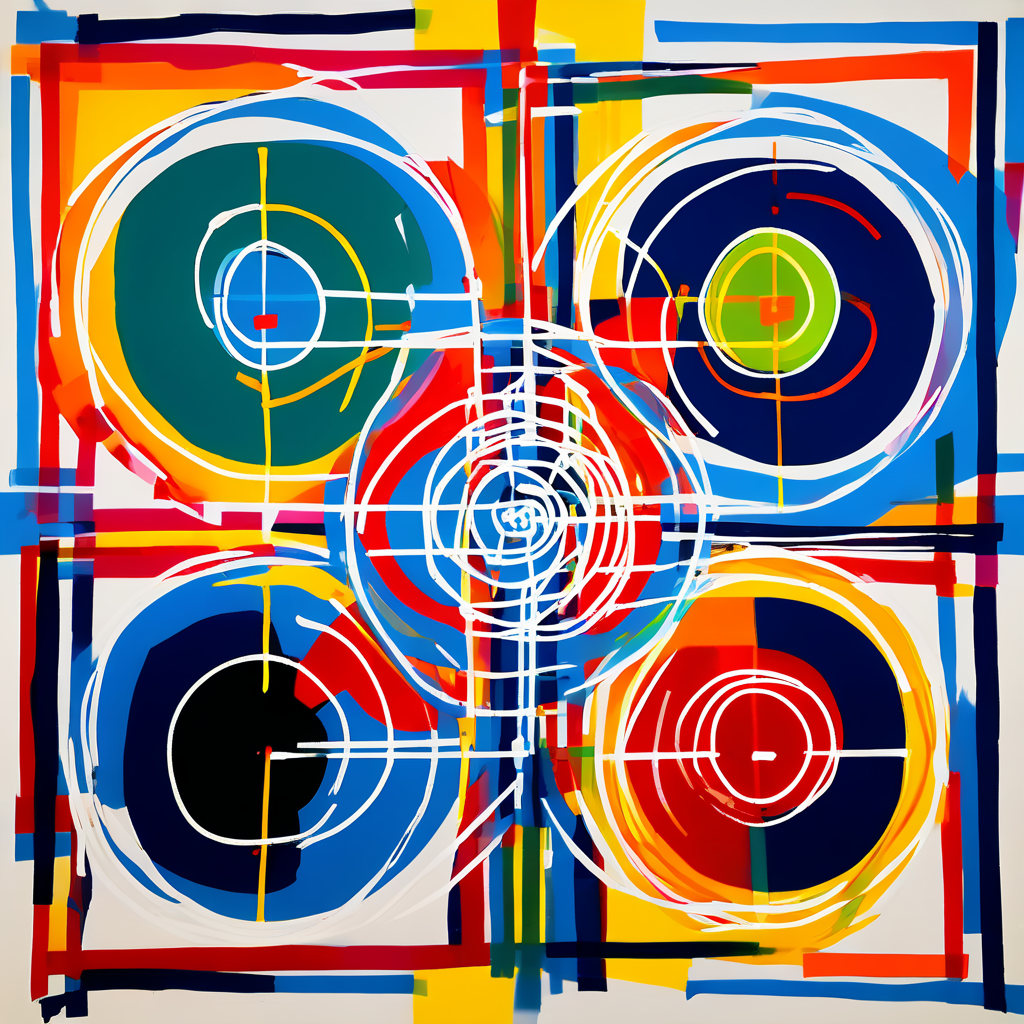
In the realms of Integral Theory, our perception of reality is intricately divided into four primary dimensions or perspectives: the subjective (‘I’), the intersubjective (‘We’), the objective (‘It’), and the interobjective (‘Its’). These perspectives serve as the foundational pillars through which we navigate our relative existence, framing our experiences, relationships, and understanding of the world around us. These quadrants, when represented graphically, are not just abstract concepts but are reflective of the comprehensive ways in which we engage with reality.

However, the journey toward spiritual awakening introduces a profound transformation in this perception. As one advance towards the state of Turiyatitta, a term deeply rooted in Eastern philosophy signifying a state beyond the waking, dreaming, and deep sleep states, a remarkable unification occurs. In Turiyatitta, the boundaries that once separated the ‘I’ from ‘We’, the ‘We’ from ‘It’, and the ‘It’ from ‘Its’, dissolve into a seamless oneness. This state transcends the distinctions between the subjective and the objective, the individual and the collective, and the observer and the observed.


The exploration of Turiyatitta challenges the compartmentalized view of reality presented by Integral Theory. It invites us into a realm where the delineations between the upper-left (I), lower-left (We), upper-right (It), and lower-right (Its) quadrants blur, suggesting that these divisions are merely constructs of a relative reality. In the ultimate reality experienced through Turiyatitta, these quadrants converge, revealing that at the most profound level, there is no distinction between ‘I’ and ‘We’, ‘We’ and ‘It’, ‘It’ and ‘Its’—everything becomes interconnected, a unified whole.

This revelation has significant implications for our spiritual and philosophical journeys. It suggests that the ultimate truth lies not in the separation and analysis of reality into distinct quadrants but in the recognition of the inherent oneness that underlies all existence. The experience of Turiyatitta offers a direct encounter with this oneness, an experiential understanding that transcends intellectual comprehension and invites us into a direct, immediate experience of unity.


Engaging with this perspective does not invalidate the usefulness of the four quadrants in navigating our relative reality. Instead, it enriches our understanding by adding depth to our perception, allowing us to see beyond the surface distinctions and appreciate the underlying unity that connects all aspects of existence. This holistic view fosters a deeper sense of empathy, interconnectedness, and a profound appreciation for the mystery that is life itself.

As we navigate our spiritual path, the exploration of Turiyatitta and the convergence of the four quadrants invite us to reconsider our understanding of reality. It encourages us to look beyond the apparent separations and to embrace the unity that encompasses all aspects of our existence. In doing so, we open ourselves to a more profound, interconnected, and unified experience of reality, one that transcends the limitations of our conventional perspectives and guides us toward a deeper realization of the ultimate truth.

Morgan O. Smith

Yinnergy Meditation, Spiritual Life Coaching & My Book, Bodhi in the Brain…Available Now!

https://linktr.ee/morganosmith

The Breath

A Gateway to Inner Tranquility

“The comfort you seek is only one breath away.”

In the realm of our bustling existence, where the cacophony of the outer world often drowns out our inner peace, there lies a simple, yet profoundly powerful tool for returning to a state of serenity: our breath. This elemental act, so often taken for granted, holds the key to unlocking a wellspring of comfort and tranquillity within us.

Consider the breath more than just a biological necessity; envision it as a bridge connecting the seen with the unseen, the material with the spiritual. Each inhalation invites us to draw in the world around us, not just the air, but the very essence of life itself. With every exhalation, we release more than just carbon dioxide; we let go of the stress, the worries, and the relentless speed of life that keeps us from our deeper selves.

The ancient practice of mindful breathing, deeply rooted in Eastern philosophies, offers us a pathway to rediscover the peace that resides within. This is not a peace that must be sought in the external world or through the attainment of material possessions. Rather, it is a peace that is always present, patiently waiting just beneath the surface of our frenetic minds. It is a peace that can be accessed at any moment, with each conscious breath we take.


Engaging in this practice does not require us to abandon our responsibilities or retreat from the world. On the contrary, it empowers us to face life’s challenges with a renewed sense of calm and clarity. By centring ourselves in the breath, we cultivate an inner sanctuary that remains undisturbed by the ever-changing circumstances of our lives.

This understanding invites us to embark on a journey of self-discovery, where the simple act of breathing becomes a profound act of self-empowerment. As we learn to navigate our existence with the breath as our compass, we uncover the boundless potential for personal growth and spiritual awakening.

In this space of breathing and being, we find that the comfort we seek is indeed only one breath away. It is a comfort that does not depend on external validation or fleeting pleasures. It is a comfort that springs from the deep well of our being, offering solace and strength that is both timeless and universal.


Let us then embrace the breath as our most faithful guide on this journey toward inner tranquillity. With each breath, we are reminded of our connection to something greater than ourselves, a reminder that in the simplicity of being, we find the profound answers to the complexities of living.

Morgan O. Smith

Yinnergy Meditation, Spiritual Life Coaching & My Book, Bodhi in the Brain…Available Now!

https://linktr.ee/morganosmith

The Symphony of Existence

How Your Thoughts Contribute to the Universe

In the grand orchestra of the cosmos, every note, every silence, and every crescendo plays a pivotal role in the composition of existence. It’s a symphony where not just the celestial bodies and the forces of nature perform, but also where your thoughts—those subtle, often overlooked whispers of your inner being—contribute to the universal melody. This concept may seem abstract, yet it underpins the profound interconnectedness of all things, a cornerstone of Eastern philosophical wisdom and nondual understanding.

The Ripple Effect of Thought

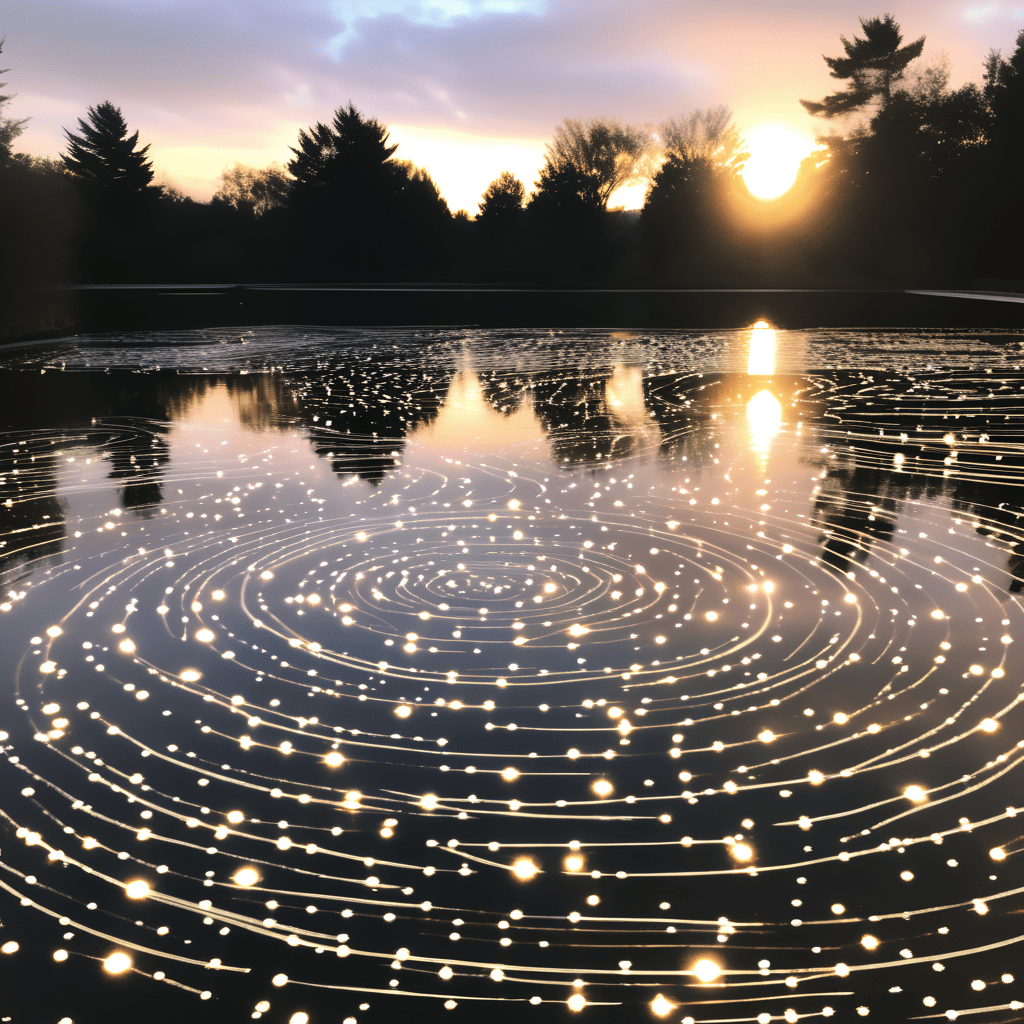
Imagine a tranquil pond, its surface smooth as glass. Each thought you harbour is akin to a pebble tossed into this pond, generating ripples that extend far beyond the initial point of impact. These ripples represent the influence of your thoughts on the universe’s continuous becoming. They are not isolated; rather, they interact with the ripples created by the thoughts of others, weaving an intricate dance of cause and effect, action and reaction.

The Creative Power of Consciousness

Your consciousness is not a passive observer but a dynamic creator. The thoughts you nurture and the focus you hold act as brushes and colours in the painting of your reality. This isn’t about manifesting in the materialistic sense often touted by pop-culture spirituality but about the subtle yet profound impact your inner world has on the external. Through mindfulness and intention, you can shift from unconscious creation, where thoughts are automatic and unexamined, to conscious creation, where awareness guides your mental processes.

Nonduality and the Illusion of Separateness

At the heart of this understanding is nonduality—the recognition that separation is an illusion. In the nondual view, there is no distinction between the observer and the observed, the creator and the creation. Your thoughts, then, are not merely yours but are part of the universal consciousness experiencing itself. This realization brings with it a profound sense of responsibility and empowerment. By aligning your thoughts with compassion, love, and unity, you contribute to universal harmony.

Practical Implications for Daily Life

What does this mean for your daily life? It means living with intention and choosing thoughts that nurture growth, harmony, and understanding. It means being mindful of the mental energies you cultivate and project into the world. This mindfulness transforms not only your personal experience but also contributes to the collective energy that shapes our shared reality.

It encourages a shift from ego-centric thinking to a more holistic, interconnected perspective. This shift fosters a deep sense of peace and fulfillment, arising from the understanding that you are an integral part of the cosmos, actively participating in its unfolding narrative.

Conclusion

The notion that your thoughts contribute to the manifestation of the universe invites a reevaluation of the inner dialogues we entertain and the mental attitudes we embody. In recognizing the power and responsibility inherent in our thoughts, we open the door to a more conscious and intentional existence. This journey of awareness is not just about personal enlightenment but about contributing to the universal harmony that orchestrates the symphony of existence.

Morgan O. Smith

Yinnergy Meditation, Spiritual Life Coaching & My Book, Bodhi in the Brain…Available Now!
https://linktr.ee/morganosmith

I Am the Beauty That Comes Out of My Own Chaos

In the vast, intricate dance of existence, chaos often seems like an unwelcome guest. Yet, from this very chaos, beauty arises, like a phoenix emerging from the ashes. To perceive oneself as the beauty that emerges from chaos is to embrace a profound truth about the nature of reality and the self.

Chaos is often misunderstood. It is seen as disorder, confusion, and disruption. However, chaos is the birthplace of creativity and transformation. It is the fertile ground from which new patterns, understandings, and ways of being emerge. In the crucible of chaos, the old is dissolved, allowing the new to take shape.

Our personal lives are no different. Each of us encounters moments of chaos, those times when life seems to fall apart when our carefully constructed worlds crumble. It is in these moments that we are offered a rare opportunity: the chance to reconstruct ourselves anew, to find beauty in our brokenness.

Embracing chaos requires a shift in perspective. Rather than resisting or fearing it, we can learn to welcome it as a necessary part of our evolution. This shift is rooted in the understanding that chaos and order are not opposites but are part of a dynamic interplay that drives the universe. In every storm, there is a hidden order; in every upheaval, there is a silent harmony waiting to be discovered.


When we see ourselves as the beauty that emerges from chaos, we acknowledge our inherent resilience and capacity for growth. We recognize that our greatest strengths are often forged in the fires of adversity. The scars we bear are not marks of defeat but symbols of our journey through chaos to a deeper, more profound beauty.

This perspective aligns closely with the wisdom of nonduality, which teaches that all dualities are ultimately illusory. Chaos and order, beauty and ugliness, success and failure—these are simply different expressions of the same underlying reality. By transcending these dualities, we come to see ourselves not as fragmented beings caught in the struggle between opposites, but as whole, complete, and inherently beautiful.

As we navigate the chaos in our lives, we can draw upon the insights of Eastern philosophy to guide us. The Taoist concept of Wu Wei, or effortless action, teaches us to flow with the natural rhythms of life rather than against them. By surrendering to the flow, we allow the beauty of our true nature to emerge spontaneously from the chaos.

In the stillness of meditation, we can find a refuge from the turmoil. By turning inward, we reconnect with the unchanging essence of who we are—a presence that remains untouched by the vicissitudes of life. This inner stillness is the eye of the storm, the center of the cyclone where chaos transforms into clarity and beauty.


Ultimately, to see oneself as the beauty that comes out of chaos is to live in harmony with the ever-changing dance of life. It is to trust in the process of transformation and to embrace every moment, no matter how chaotic, as an integral part of our journey toward greater self-discovery and enlightenment.

Morgan O. Smith

Yinnergy Meditation, Spiritual Life Coaching & My Book, Bodhi in the Brain…Available Now!

https://linktr.ee/morganosmith

The Eternal Now

Understanding the Convergence of Time and Causality

In the realm of spiritual and philosophical inquiry, the concepts of time and causality often lead us down intricate paths of understanding. Consider the profound idea that the past, present, and future are not separate entities, but rather simultaneous occurrences, manifesting in the eternal ‘now’. This perspective invites us to view every event, every situation, and every action as interconnected and existing within the same infinite moment.

The notion that every cause is simultaneously an effect, and every effect a cause, further deepens our exploration into the cyclical nature of existence. This idea challenges the linear perspective of time and causality that dominates Western thought. Instead, it aligns with the Eastern philosophical understanding that everything in the universe is interdependent and in constant flux, yet fundamentally unified.


Such an understanding reshapes our perception of life’s events. It suggests that our actions are both the result of past influences and the creators of future conditions, all interwoven into the continuous fabric of the present. This holistic view can empower us to live more fully in the moment, appreciating the interconnectedness of all that is.

By embracing this perspective, we open ourselves to the myriad possibilities that each moment holds. It encourages us to live with greater awareness, recognizing that our thoughts and actions are potent contributors to the fabric of our lives and the universe at large.


In reflecting on this unity of time and causality, we might find ourselves more attuned to the subtle, yet profound, essence of life’s continuous unfolding. This realization can be a gateway to deeper spiritual awakening and enlightenment, offering a fresh lens through which to view our existence and our role within it.

Morgan O. Smith

Yinnergy Meditation, Spiritual Life Coaching & My Book, Bodhi in the Brain…Available Now!

https://linktr.ee/morganosmith

The Paradox of Divinity

Navigating the Infinite Within

In exploring the divine, we often encounter a profound paradox that challenges our linear understanding of existence. The assertion that “God is everything, and everything is God” serves as a gateway to a realm where dichotomies dissolve, and absolutes become fluid. This perspective invites us to consider the omnipresence of the divine in all aspects of existence, transcending the binaries of good and evil, presence and absence, creation and void.

The essence of this assertion lies not just in acknowledging the divine in all that is seen and unseen but also in embracing the inherent contradictions it presents. When we say “God is everything,” we affirm the divine’s presence in every particle of the universe, from the majestic galaxies to the smallest grain of sand. This omnipresence suggests a unifying essence that binds all of creation in a single, divine continuum.

However, the journey does not end with the recognition of divinity. The statement “everything is God” simultaneously opens the door to its negation, implying that if everything embodies the divine, then the divine must also encompass the concepts of non-existence, absence, and even the dualities of good and evil. This paradox challenges us to expand our understanding of divinity beyond the confines of human morality and logic, urging us to embrace a more holistic view of existence where opposites are not in conflict but in an eternal dance.


The notion that “God is both good and evil” invites us to explore the divine not as a judge presiding over a moral dichotomy but as the totality of existence itself, where light and darkness are part of the divine play. It compels us to question our perceptions of morality, good, and evil, suggesting that these are not absolute but relative concepts that emerge from our engagement with the world.

In this light, the divine is not a distant entity governing from above but a presence that permeates every aspect of our reality, inviting us to find the sacred in the mundane, the extraordinary in the ordinary, and the unity in the apparent disarray. It calls us to a deeper understanding of nonduality, where the lines that separate self from other, sacred from profane, and creator from creation blur into insignificance.


This exploration of divinity challenges us to live with paradox, to find comfort in the discomfort of uncertainty, and to seek the divine not just in temples and texts but in the very fabric of our daily lives. It beckons us to see the world with new eyes, where every moment is an opportunity to encounter the infinite in the finite, the eternal in the ephemeral.

Morgan O. Smith

Yinnergy Meditation, Spiritual Life Coaching & My Book, Bodhi in the Brain…Available Now!
https://linktr.ee/morganosmith

Exploring the Infinite

Beyond Religion’s Scope of God

In the vast expanse of human understanding and belief, the concept of God often finds itself neatly packaged within the confines of religious doctrine. Yet, to equate God solely with religion is to overlook the boundless essence that the idea of a supreme being or ultimate reality embodies. This exploration ventures beyond the traditional religious frameworks to understand God as an encompassing presence that transcends our conventional beliefs.

#### Unveiling the Divine Beyond Temples and Texts

Religion, with its rituals, scriptures, and edifices, serves as a vessel for many in their quest to connect with the divine. However, it represents merely one avenue through which the essence of what we term ‘God’ can be experienced. The divine, or the ultimate reality, is an omnipresent force that permeates all aspects of existence, not limited to or by any institution or set of beliefs.

#### The Universal Fabric: A Confluence of Consciousness

At the heart of numerous Eastern philosophies is the notion of nonduality—the understanding that there is no fundamental distinction between the individual and the universe, the self and the divine. This perspective invites us to view God not as an external entity presiding over the cosmos but as the very fabric of existence itself. Here, God is seen in the interconnectedness of all things, in the energy that flows through the cosmos, and in the consciousness that animates the universe.


#### Personal Revelation: A Journey Within

The journey to understanding and experiencing the divine beyond the confines of religion is deeply personal and introspective. It requires us to transcend the external trappings of spirituality and seek connection with the divine essence that resides within and around us. Meditation, mindfulness, and contemplative practices serve as gateways to experiencing this profound unity, allowing individuals to tap into the infinite potential and wisdom that lies beyond the superficial layers of reality.

#### The Divine Dance: Interplay of the Immanent and Transcendent

To conceptualize God merely in religious terms is to overlook the dynamic interplay between the immanent and the transcendent aspects of the divine. The immanent suggests that God is present within the world, accessible and experienced through the beauty of nature, the depth of human emotion, and the complexity of the mind. Conversely, the transcendent aspect of God invites us to look beyond the material world to the vast, unknowable mystery that lies beyond our immediate perception.


#### Conclusion: Embracing the Infinite

The quest to understand and relate to God beyond the realm of religion is a testament to the human spirit’s unending search for meaning and connection. It challenges us to look beyond prescribed doctrines and explore the depths of our consciousness and the universe. In doing so, we embrace a more holistic and expansive view of the divine, one that encompasses the myriad ways in which the essence of the ultimate reality manifests in our lives and the world at large.

This exploration serves not only to broaden our conceptual horizons but to invite each individual to embark on a personal voyage of discovery, where the understanding of God is as vast and varied as the seekers themselves.

Morgan O. Smith

Yinnergy Meditation, Spiritual Life Coaching & My Book, Bodhi in the Brain…Available Now!

https://linktr.ee/morganosmith


Beyond Time

A Journey into the Infinite

In the realm of spiritual exploration, the concept of time often presents itself as a linear progression, segmented neatly into past, present, and future. Yet, if we dare to delve deeper into the essence of nonduality and Eastern philosophy, we uncover a profound truth: the linear construct of time is merely an illusion, a creation of the human mind designed to make sense of our existence. This realization beckons us to question, if even the Divine, the source of all creation, does not foresee the future, what does this imply about the nature of existence itself?

The notion that “Not even God knows the future; for there is no past, present, or future to be known” invites us into a contemplative exploration of the timeless. In this perspective, the future is not a distant realm to be foreseen or predicted, but rather a continuation of the present moment, ever-unfolding in the eternal now. This insight aligns with the core teachings of nonduality, which assert that all distinctions we perceive in the world, including the separation of time into distinct segments, are ultimately illusions.

In the vast expanse of consciousness, where the concept of time dissolves, we find ourselves in the presence of the infinite. Here, every moment is the beginning and the end, each instant a complete and whole experience of existence. This realization challenges us to live fully in the present, to embrace each moment as if it were the entirety of life itself. It encourages a state of constant awareness, where the past is not a burden to be carried, nor the future a destination to be reached, but rather, each moment is an opportunity for spiritual awakening and enlightenment.


This perspective offers a liberating view of the nature of divine omniscience. If the Divine exists beyond the confines of time, then foreknowledge becomes irrelevant. The Divine, in its infinite wisdom, is intimately connected with the unfolding moment, fully present in the eternal now. This understanding invites us to reconsider our relationship with the Divine, seeing it not as a distant overseer of our fate but as an ever-present guide on our journey through the boundless landscape of existence.

As we navigate this journey, we are called to let go of our attachment to the linear progression of time, to release our anxieties about the future, and our regrets about the past. In doing so, we open ourselves to the profound wisdom that lies in the present moment, discovering a path to personal growth and spiritual enlightenment that transcends the boundaries of time.


This exploration into the nature of time and the divine offers a fresh perspective on our spiritual journey. It challenges us to question deeply held beliefs and to embrace the mystery of the now. As we ponder the implications of a timeless existence, we are invited to experience life in its fullest expression, free from time constraints, and open to the infinite possibilities within the eternal present.

Morgan O. Smith

Yinnergy Meditation, Spiritual Life Coaching & My Book, Bodhi in the Brain…Available Now!
https://linktr.ee/morganosmith